-
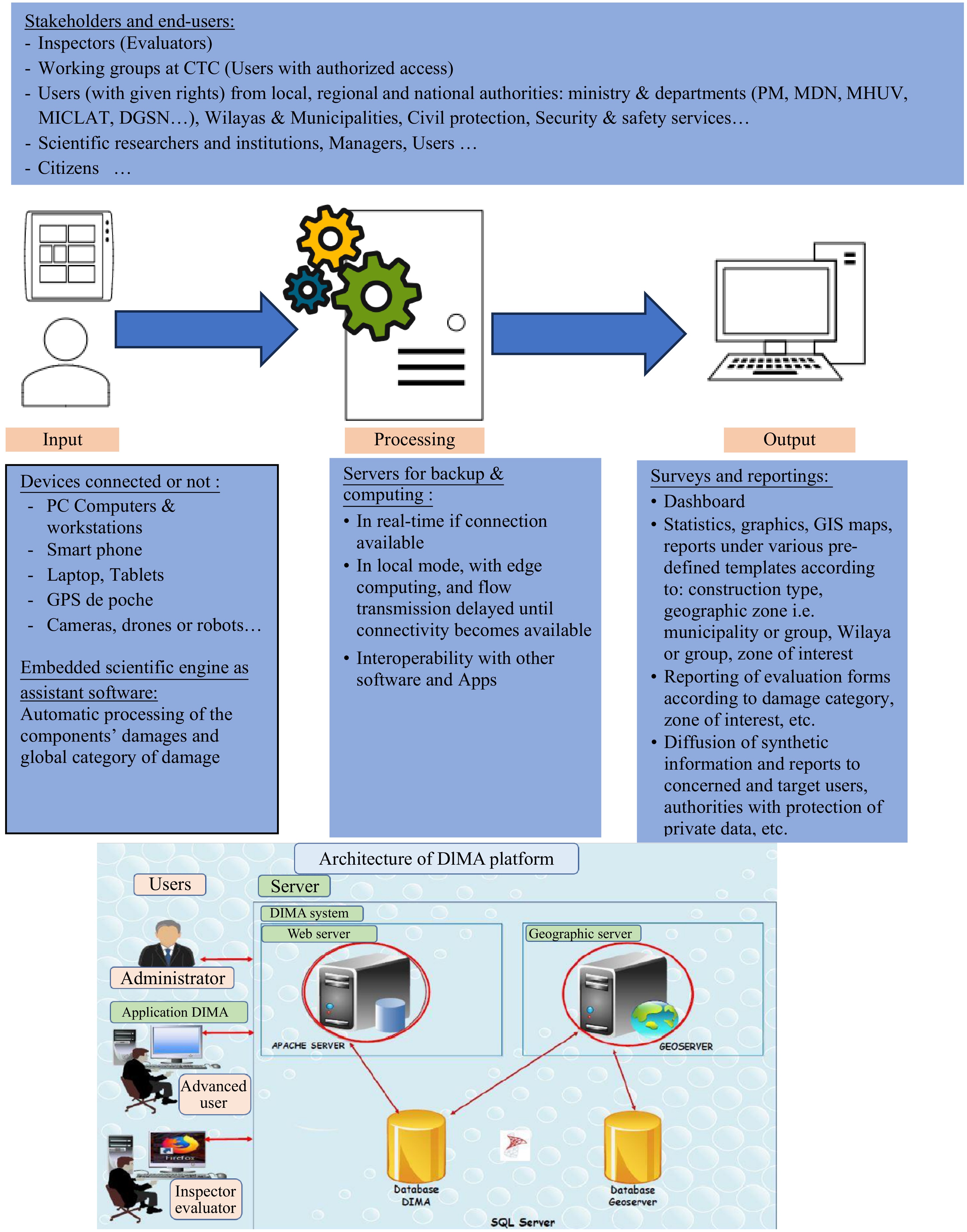
Figure 1.
General flowchart of DIMA platform and servers.
-
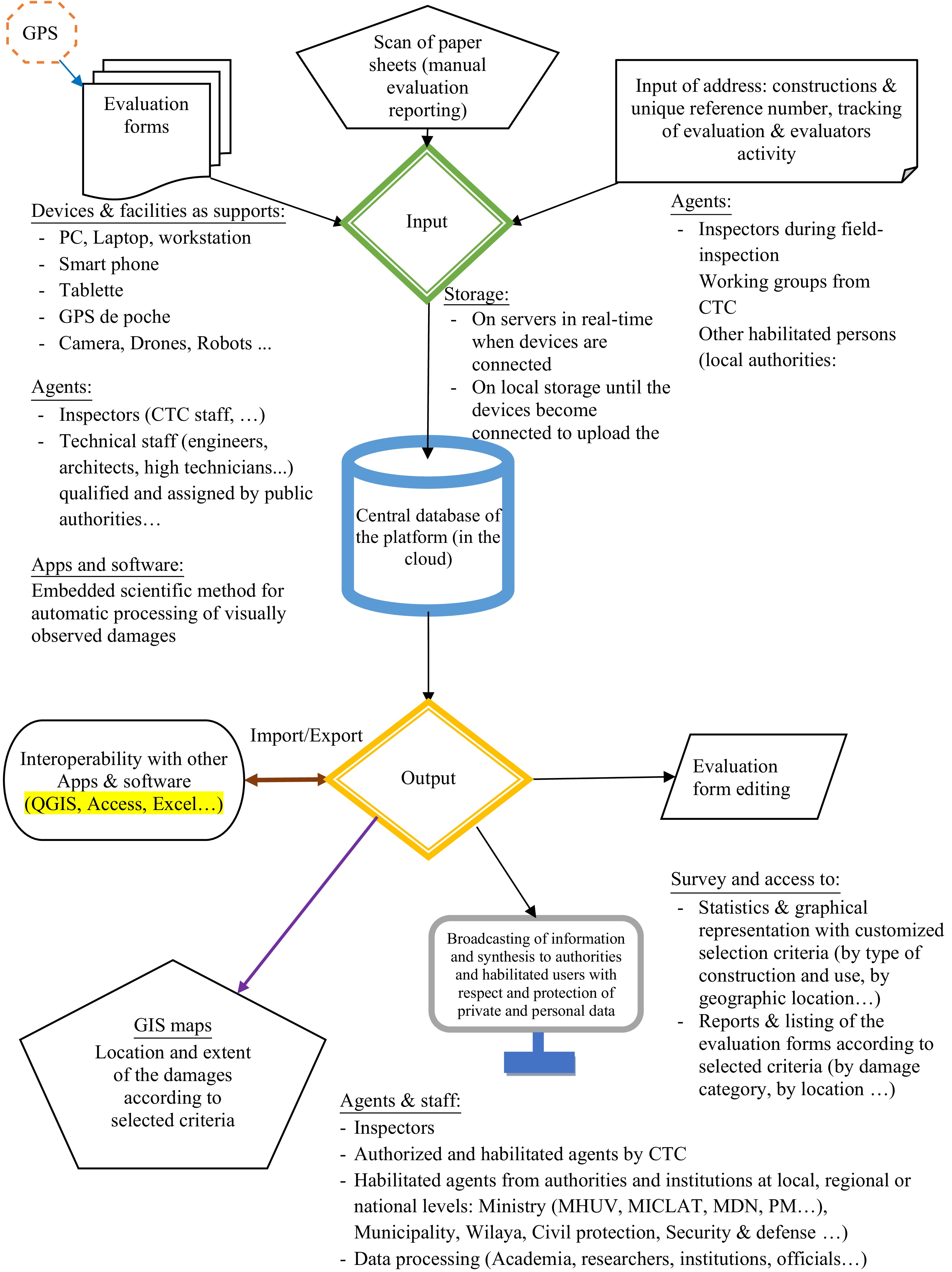
Figure 2.
Synthetic view of DIMA platform capacity.
-
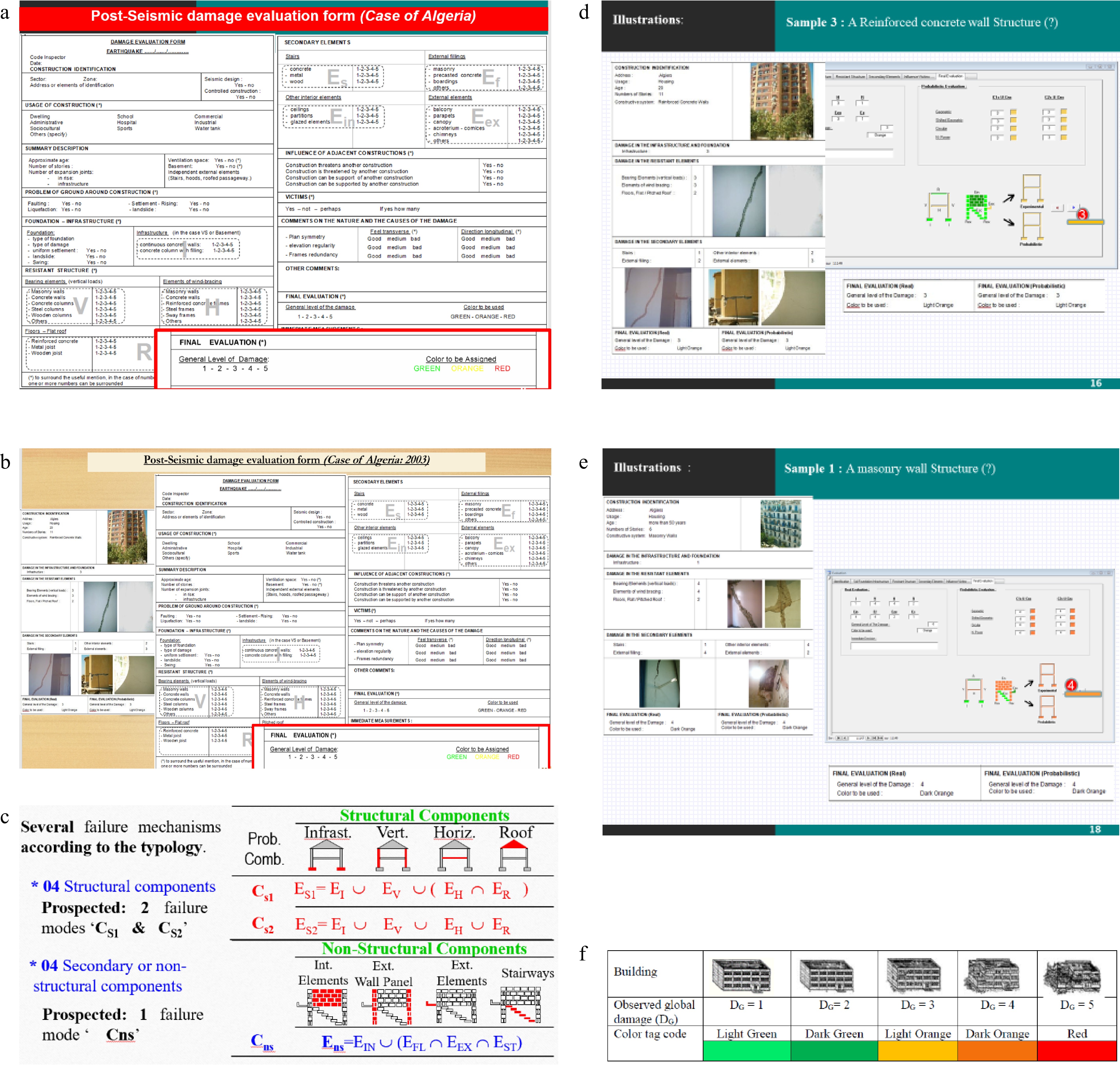
Figure 3.
Scientific methodology and engine embedded in DIMA platform. (a) Standard evaluation form in use. (b) Standard evaluation form in use: an example. (c) Events of failure combination: structural and non-structural components failures and damages. (d) Building damage category: D3. (e) Building damage category: D4. (f) Global damage category and corresponding tags.
-
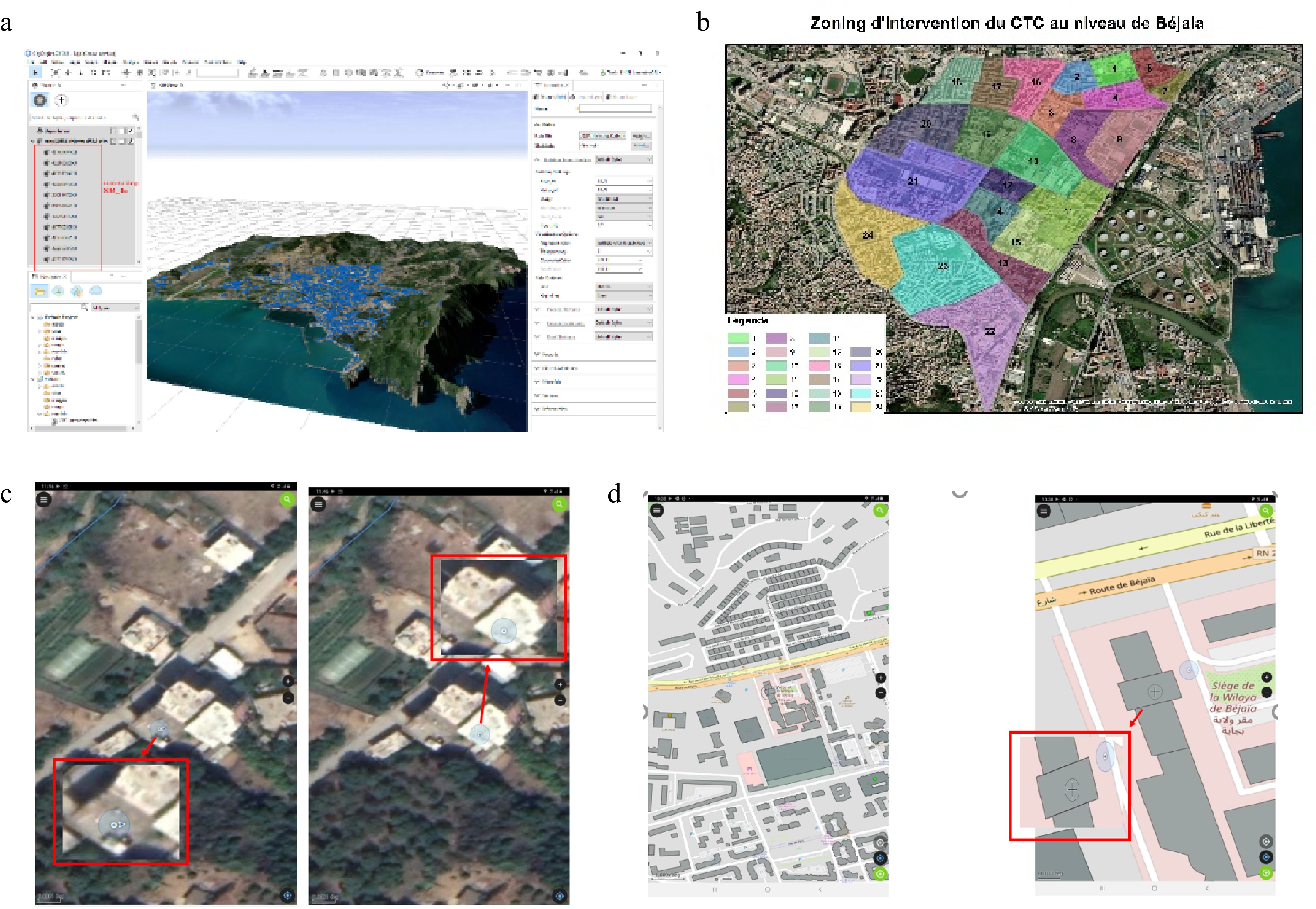
Figure 4.
Earthquake in Bejaia (Algeria) – zones of importance concerned by field inspection. (a) Download of the maps (satellite, OSM). (b) Zones of interest for the evaluation campaign. (c) Footprints and automatic selection. (d) Unit by click or polylign sketchup.
-
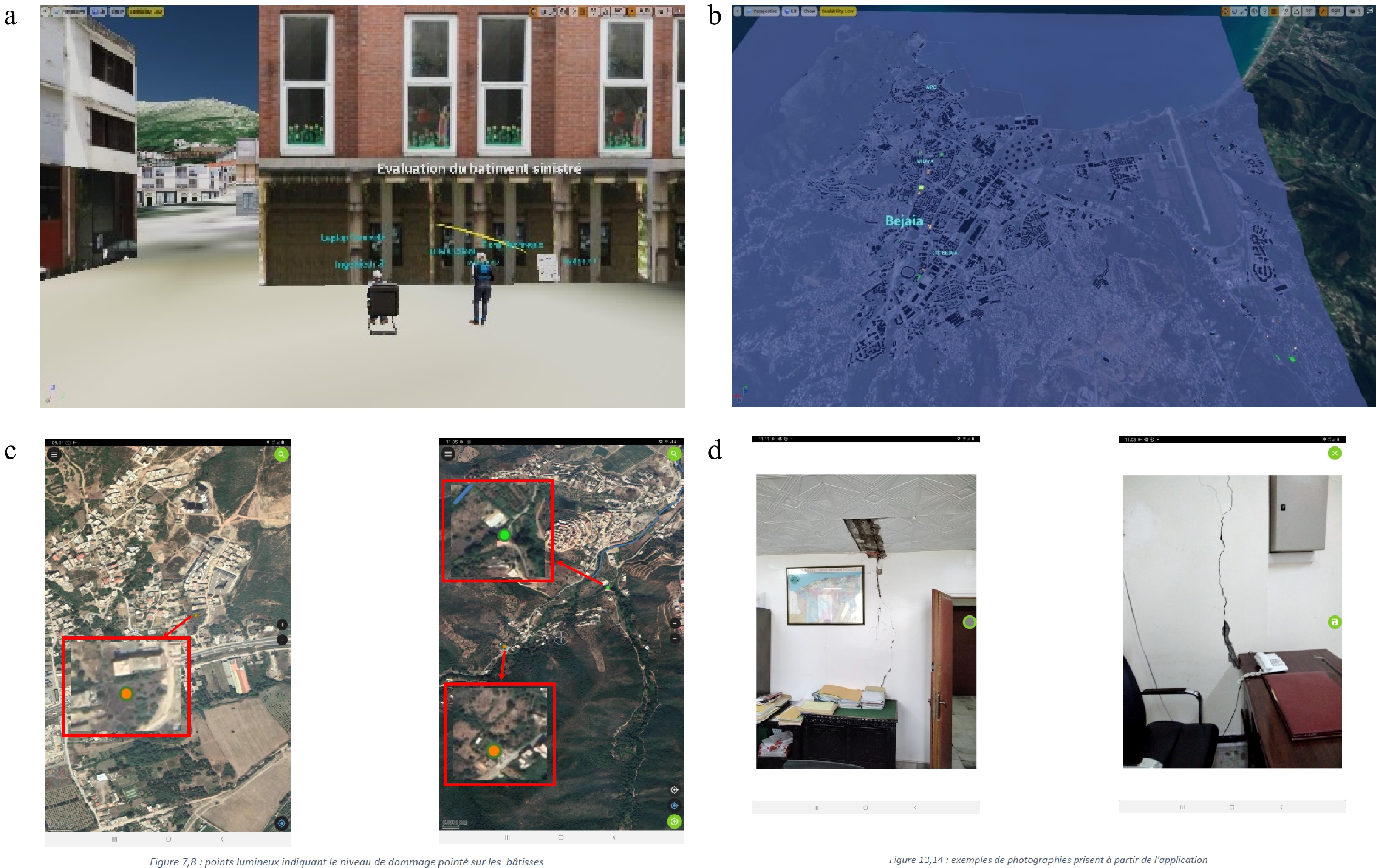
Figure 5.
Earthquake in Bejaia (Algeria) – field inspection and DIMA support. (a) Field evaluation and inspection. (b) Mapping of the damage extent and tags according to damage. (c) Evaluation and tag. (d) Photos and annotation for the database.
-
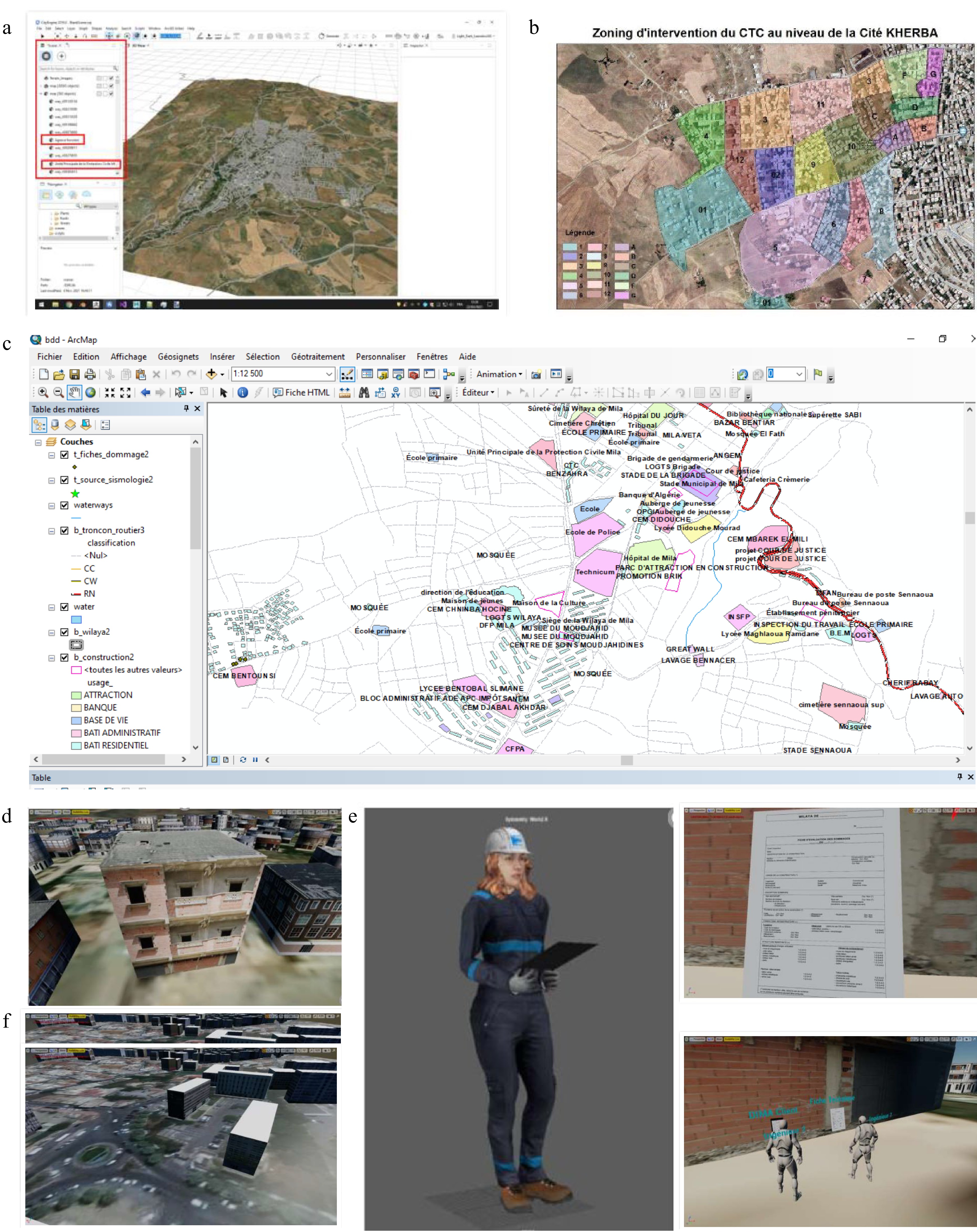
Figure 6.
Earthquake (Mila, July-August 2020, NE Algeria) – a posteriori evaluation. (a) Download of the maps (satelitte, OSM). (b) Zones of interest for evaluation campaign. (c) Footprints and automatic selection. (d) Unit to evaluate. (e) Simulation of evaluation. (f) Remote survey from the central authority for construction control (Algiers).
-
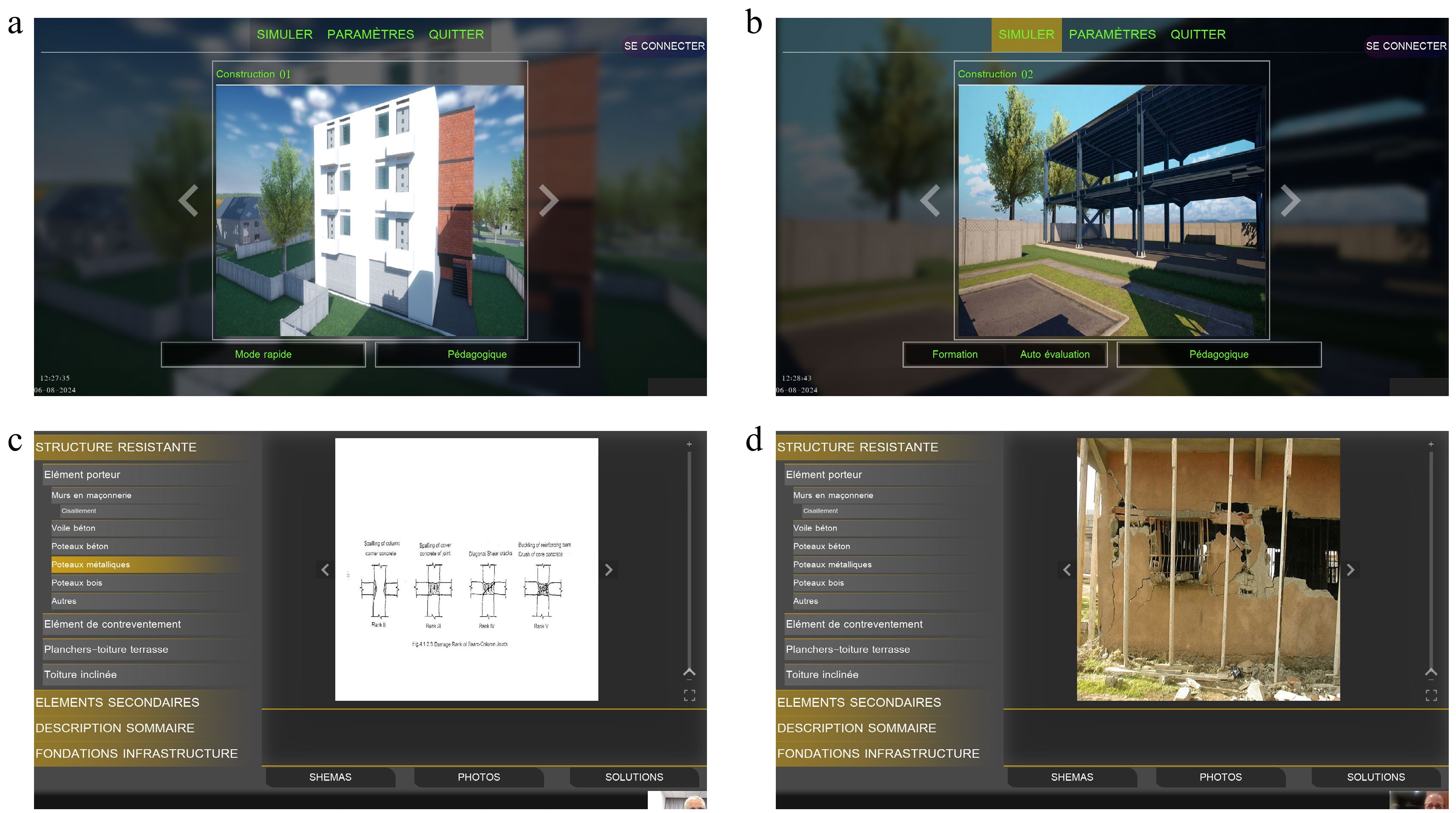
Figure 7.
DIMA virtual training and qualification centre with the purpose of learning, testing/validating, and qualifying. (a) Virtual training center: typology masonry. (b) Virtual training center: typology metal.(c) Pathology: damage of nodes. (d) Pathology: damage of walls.
-
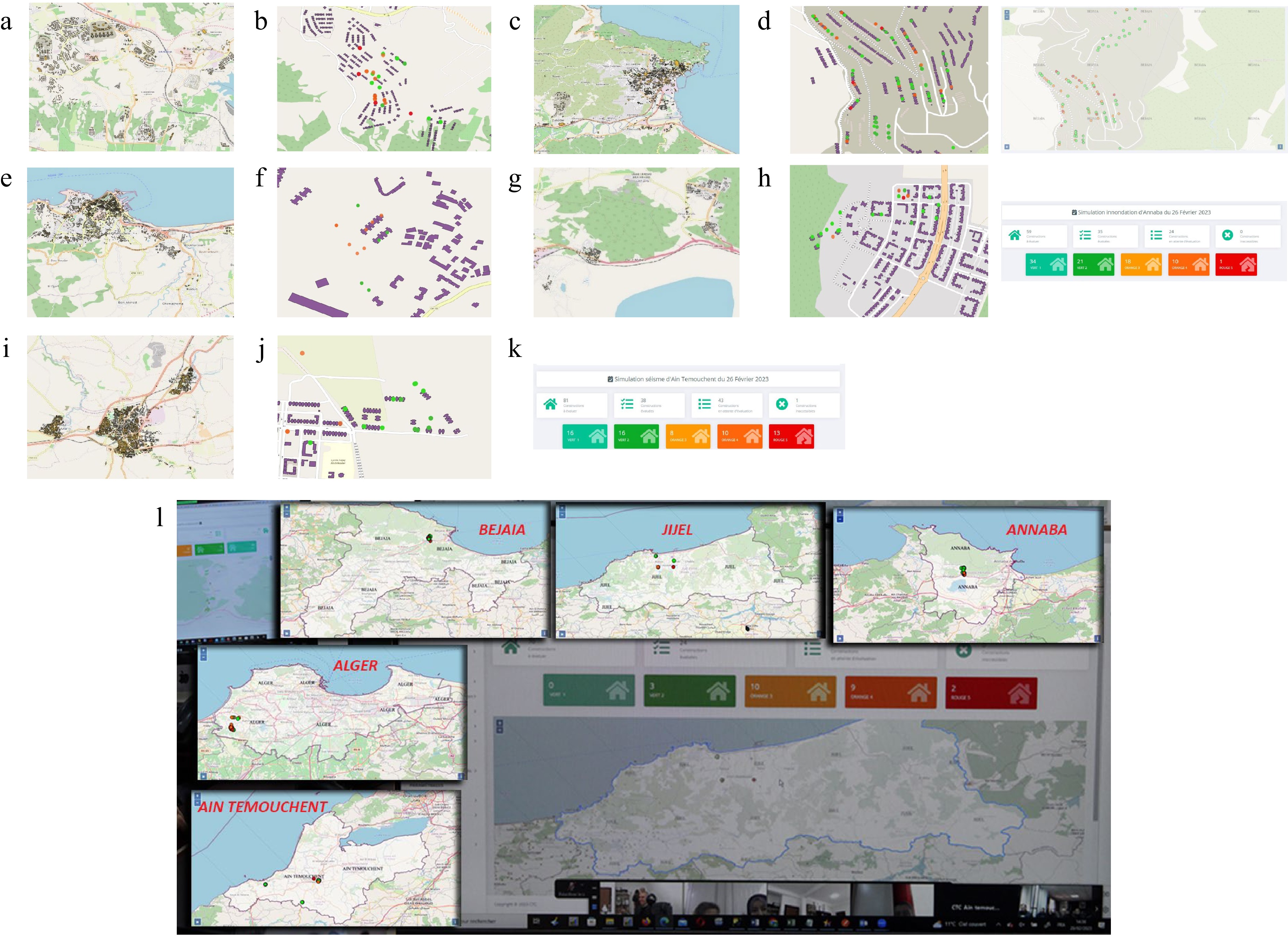
Figure 8.
Real post-seismic evaluations and stress tests run for preparatory purposes. (a) Stress-test in Sidi Abdallah (Algiers): footprints. (b) Damages extent. (c) Real earthquake (Béjaïa): footprints. (d) Damage extent. (e) Stress test (Jijel): footprints. (f) Damage extent. (g) Stress test (Annaba): footprints. (h) Damage extent and dashbord for real-time survey. (i) Stress test (Aïn Temouchent): footprints. (j) Damage extent. (k) Dashbord for real-time survey. (l) Training and qualification sessions (hundreds of engineers and technicians) with reporting from real earthquakes and stress-tests.
Figures
(8)
Tables
(0)