-
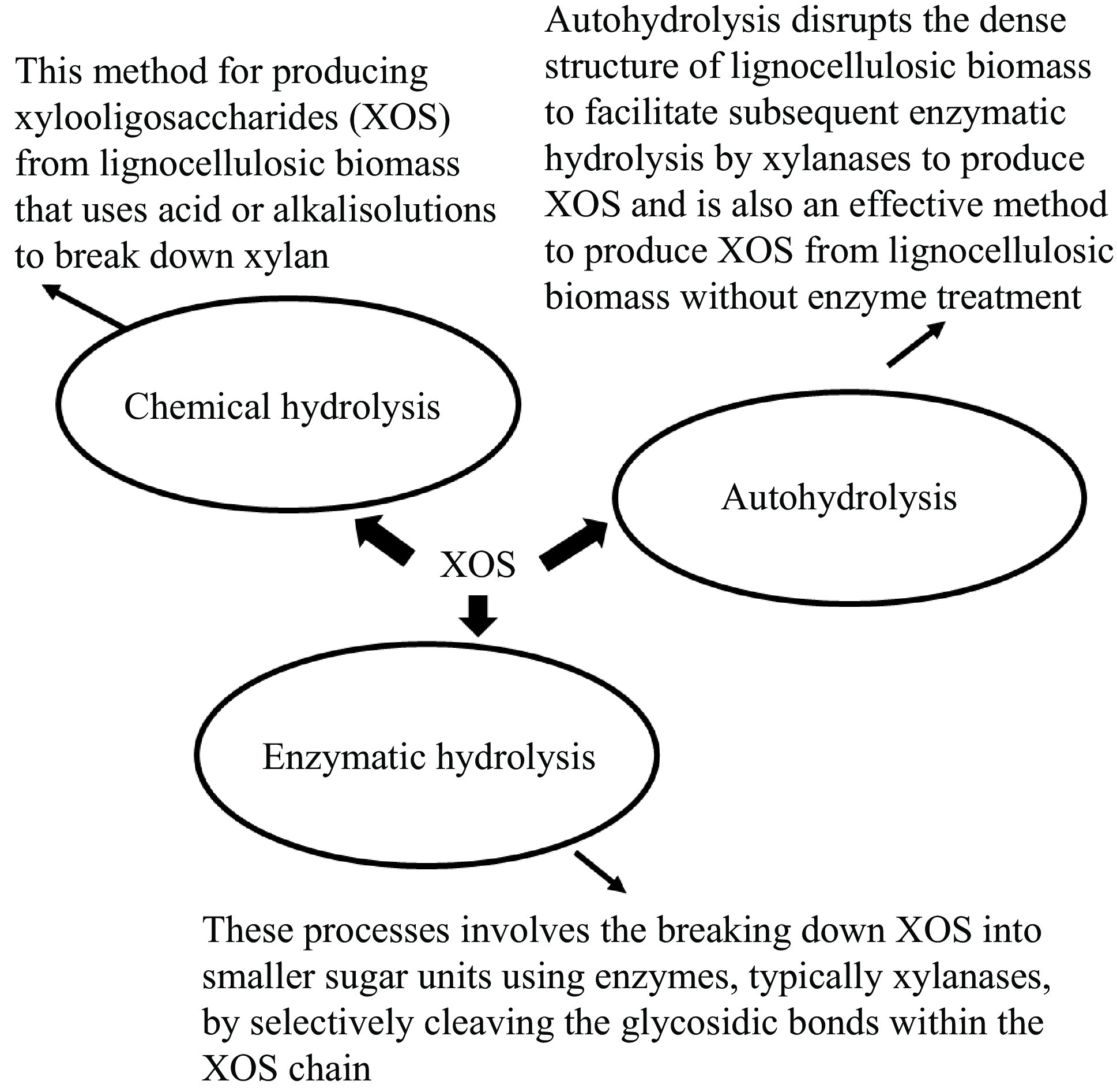
Figure 1.
Production of XOS on various hydrolysis methods.
-
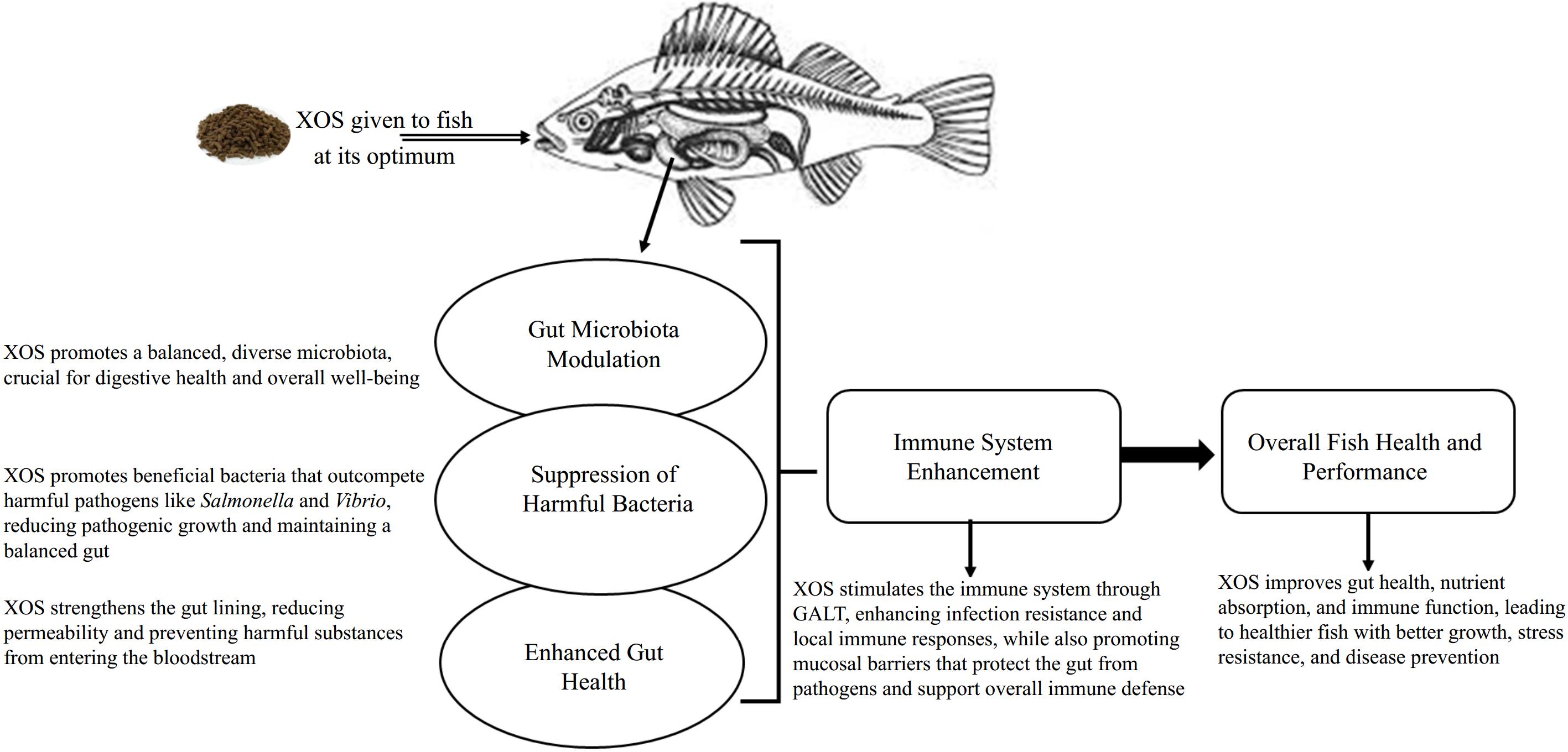
Figure 2.
Mechanistic illustration of how dietary XOS influences fish health in aquaculture.
-
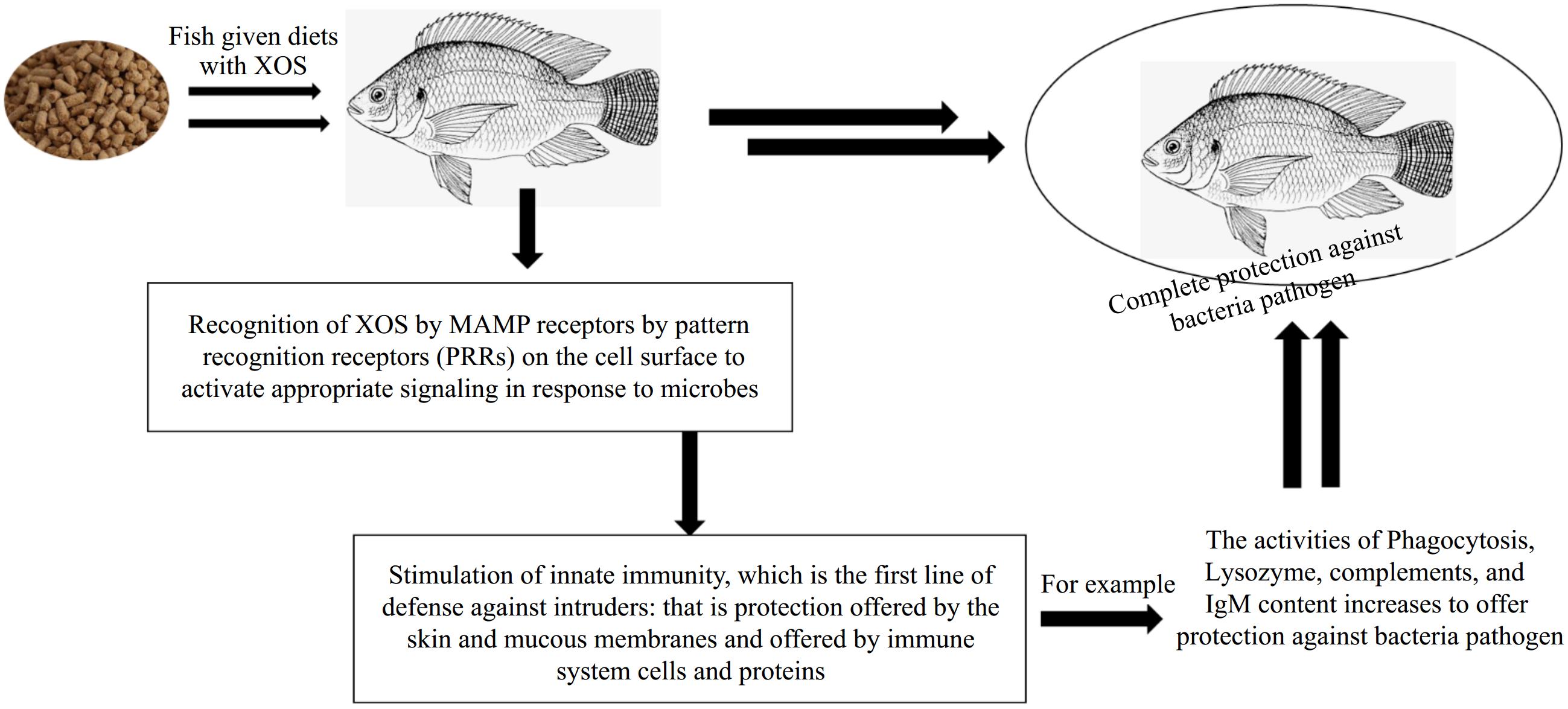
Figure 3.
The systematic presentation of XOS in immune response, producing protection against bacterial pathogens by activating the immune system cells through pattern recognition.
-
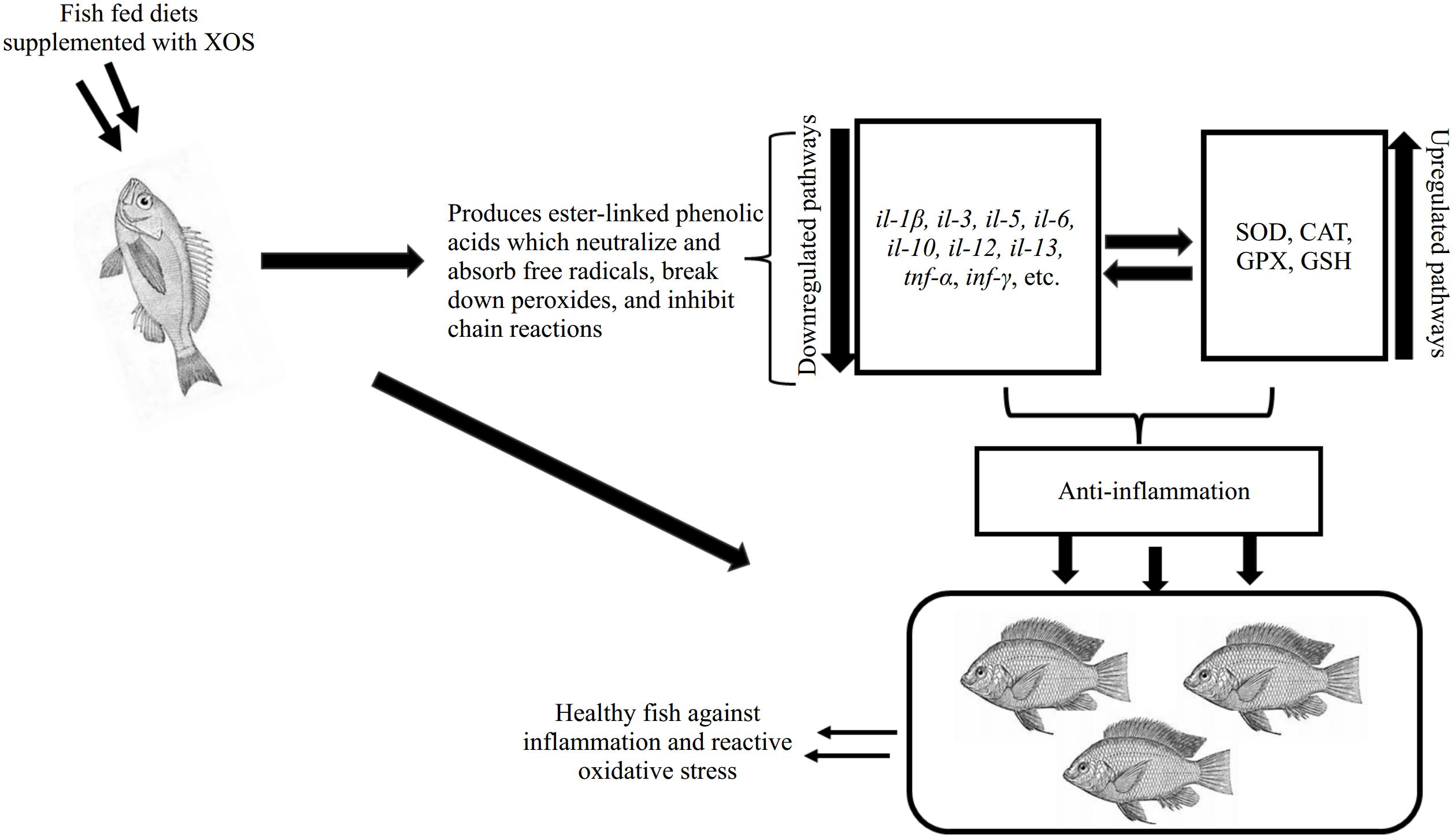
Figure 4.
Systematic presentation of XOS inhibiting inflammatory signals through the up-regulatory mechanism involves in antioxidant expression.
-
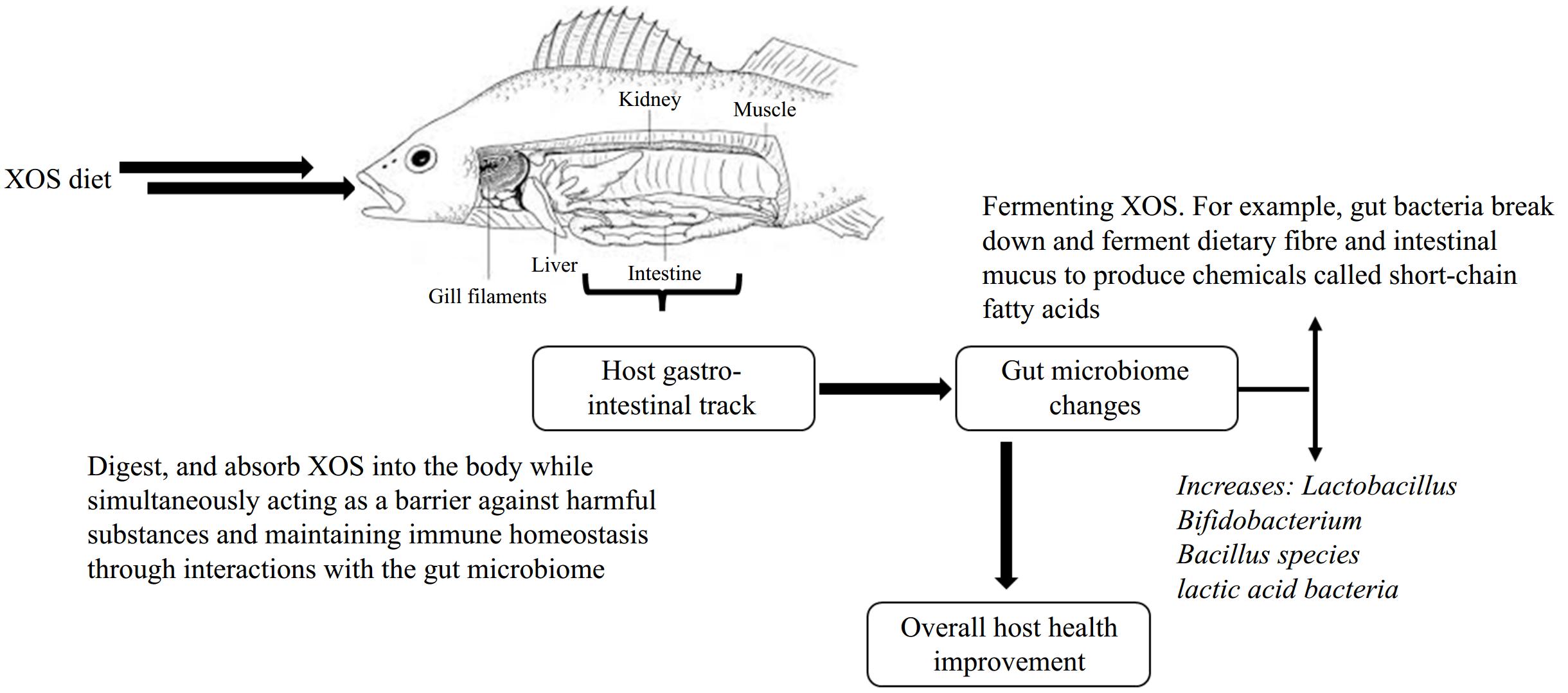
Figure 5.
An overview of XOS prebiotics from host gastrointestinal track to gut microbiome changes that lead to overall host health improvement in fish species.
-
Aquatic species Dosage in the experiment Species weight (g) Time of culturing Experimental outcome Ref. D. labrax European seabass 1% XOS 60 49 d Significantly increases weight gain (WG), feed conversion ratio (FCR), protein efficiency ratio (PER) among dietary treatment [10] Megalobrama amblycephala Blunt snout bream 0.5%, 1.5%, 2.3%, and 3% XOS 46.85 ± 0.34 8 weeks 1.5% XOS increased the daily growth index, feed efficiency ratio, nitrogen, and energy retention, and enhanced intestinal enzyme activities, including lipase, alkaline phosphatase, Na+K+-ATPase, protease, carboxypeptidase A, aminopeptidase N, and γ-glutamyl transpeptidase. [22] Megalobrama amblycephala Blunt snout bream 0.5%, 1.5%, 2.3%, and 3% XOS 46.85 ± 0.34 8 weeks Fish fed 1.5% XOS had higher FW, WG, and PER, but a lower FCR. [7] Cyprinus carpio Common carp 5, 10, 20, and 30 g/kg XOS 19.61 ± 0.96 8 weeks Fish fed 10−20 g/kg XOS showed higher FW, WG, SGR, and PER, with a lower feed conversion ratio. [17] Cyprinus carpio Common carp 0.5%, 1%, 2%, and 3% XOS 19.61 ± 0.96 56 days Fish offered 1% -2 XOS supplementation significantly obtained a higher body mass index and feed efficiency ratio, intestinal protease, lipase, creatine kinase, and sodium/potassium ATPase activities compared to other groups. [23] Rutilus frisii kutum fry Caspian white fish 1%, 2%, and 3% 1.54 ± 0.03 8 weeks Although fish fed 3% XOS had the highest final weight, weight gain, SGR. and lowest FCR, no statistically significant differences were observed between final weight, weight gain, SGR, CF, and FCR of fry fed control or XOS supplemented diets [9] Litopenaeus vannamei White leg shrimp 1, 2, 4, and 6 g/kg 0.10 ± 0.01 60-d Supplementing 4–6 g/kg of xylooligosaccharides improved feed efficiency, survival rate, and intestinal villi length and area, with no significant change in FBW or weight gain rate. [24] Ctenopharyngodon idella Grass carp 0.002%, 0.004%, 0.006%, 0.008%, and 0.010% 167.46 ± 0.61 60 d Enhanced growth performance (and intestinal growth (intestinal length (IL), intestinal weight (IW), and Intestosomatic index ISI). [25] Ctenopharyngodon idellus juvenile Grass carp 0.05%, 0.1%, 0.2%, 0.4%, and 0.6 % 3.05 ± 0.01 8 weeks Fish fed dietary 0.05%, 0.1%, and 0.2% XOS displayed significantly higher final body weight, weight gain and specific growth rate compared to the control group. [20] Oreochromis niloticus × O. aureus Blue tilapia 0.5, 1, 2, and 4 g/kg 5.00 ± 0.02 8 weeks XOS supplementation significantly improved WG and nutrient retention while reducing FCR. The 2 g/kg XOS group showed the highest WG and lowest FCR. [26] Oreochromis niloticus) fingerlings) Nile tilapia 5, 10, and 20 g/kg CDXOS 20.72 ± 0.02 4 and 8 weeks In the CDXOS groups, FW, WG, SGR, and FCR were significantly improved, with the greatest improvement in the 10 g/kg CDXOS treatment. [27] Triploid Oncorhynchus mykiss f Rainbow trout 2.5, 5.0, 7.5, and 10.0 g/kg 20.85 ± 0.48 56 d Fish fed 10 g/kg XOS showed significantly improved weight gain, enhanced intestinal lipase and amylase activity, and increased villi height in intestinal histology. [28] juvenile Pelodiscus sinensis Chinese softshell turtle 50, 100, 200, and 500 mg/kg XOS 12.26 ± 0.32 30 d XOS supplementation improved P. sinensis growth, with 200 mg/kg showing the highest growth rate. All trials had lower FCR and higher intestinal enzyme activity than the control. Amylase activity was highest in 100 mg/kg XOS, while protease activity was slightly higher. The optimal XOS supplementation is 100–200 mg/kg. [21] Carassius auratus gibelio Crussian carp Diet 1: 50 mg/kg; diet 2: 100 mg/kg; diet 3: 200 mg/kg 16.88–17.56 45 d The study found significant differences in RGR and DWG between diets 1–3 and the control, with no effect on survival rate. Fish fed diet 2 showed significantly different amylase and protease activity in their intestine and hepatopancreas compared to the control and diet 3. [29] Sparidentex hasta Silver black porgy 5 and 10 g of XOS per kg 35.64 ± 0.30 8 weeks XOS supplementation did not affect sobaity seabream growth or feed utilization. However, protease activity significantly decreased in fish fed 0.5% XOS, while lipase and amylase activities remained unaffected. [12] Labeo rohita Rohu 0.5%, 1%, and 2% 25 ± 0.05 90 d Adding 1% XOS to a 75% RPC-based diet significantly improved the growth, weight gain, specific growth rate, protein efficiency ratio, and feed conversion ratio of rohu fingerlings. Intestinal shape and digestive enzyme activity also improved. Polynomial regression indicated optimal growth at 1.25% XOS. [30] Apostichopus japonicus Selenka Japanese sea cucumber 0.015%, 0.030%, 0.045%, 0.060%, and 0.075% 6.80 ± 1.05 75 d Adding 0.030% to 0.060% XOS to juvenile sea cucumber diets increased digestive enzyme activity and promoted growth. The optimal XOS supplementation is 0.044%, with a recommended duration of about two months. [31] juvenile Litopenaeus vannamei. White leg shrimp 200, 400, and 600 mg/kg 0.67 ± 0.02 6 weeks The results showed that the WGR, SGR, ER, and protein deposition rate (PDR) were greatly enhanced while the FCR was dramatically decreased by adding 200 mg/kg in the diet. [32] Table 1.
Effect of dietary XOS on growth performance, feed utilization, and intestinal health in aquatic species.
Figures
(5)
Tables
(1)