-
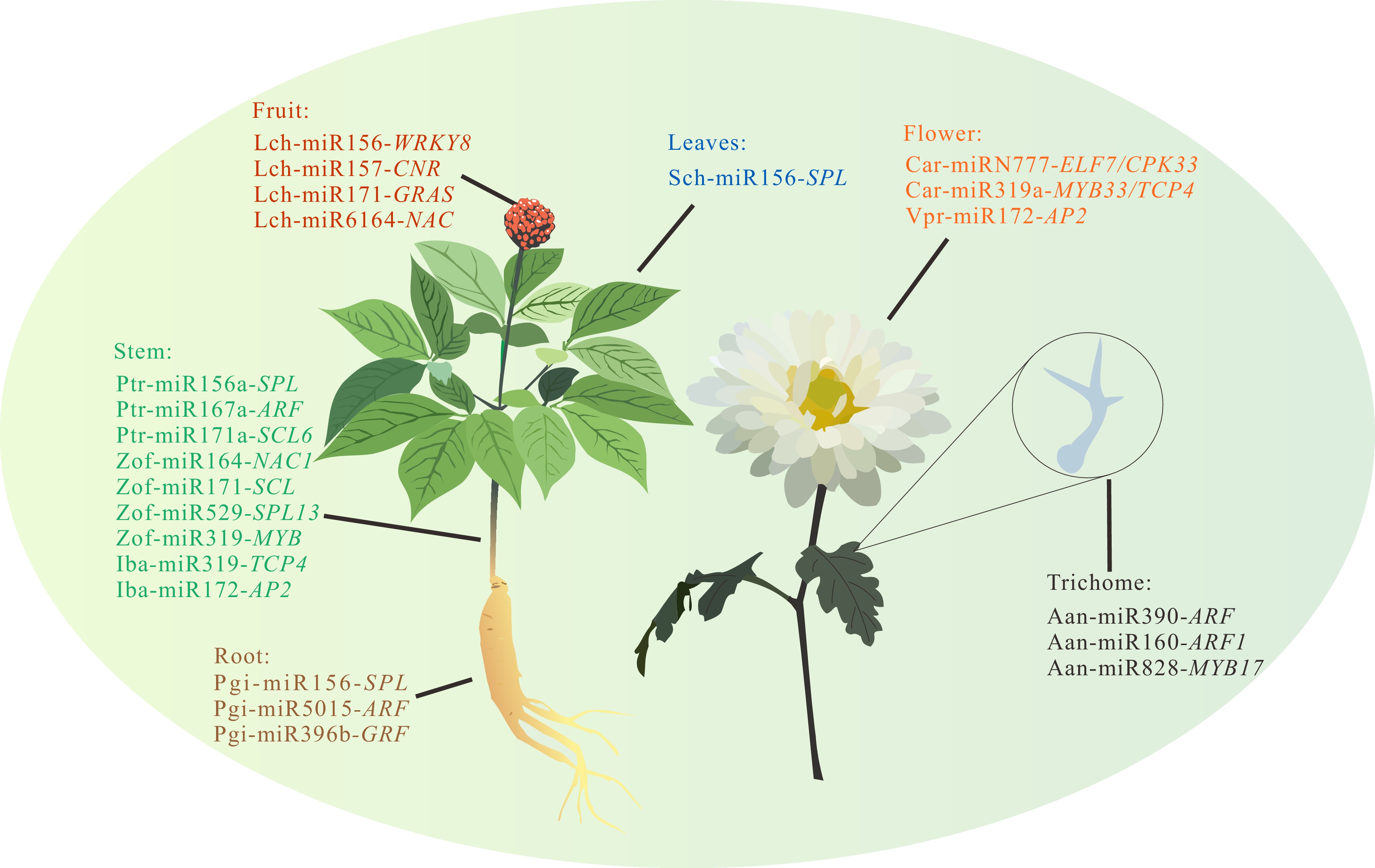
Figure 1.
MicroRNAs involved in organ development of medicinal plants. The miRNAs marked with different colors in the figure indicate their regulatory effects on different growth parts of medicinal plants: Brown miRNAs regulate root system development, green ones participate in stem morphogenesis, red miRNAs affect fruit development, blue counterparts mediate leaf development, orange markers correlate with floral organ development, while black-labeled miRNAs specifically govern the formation and developmental mechanisms of epidermal trichomes in certain medicinal plants.
-
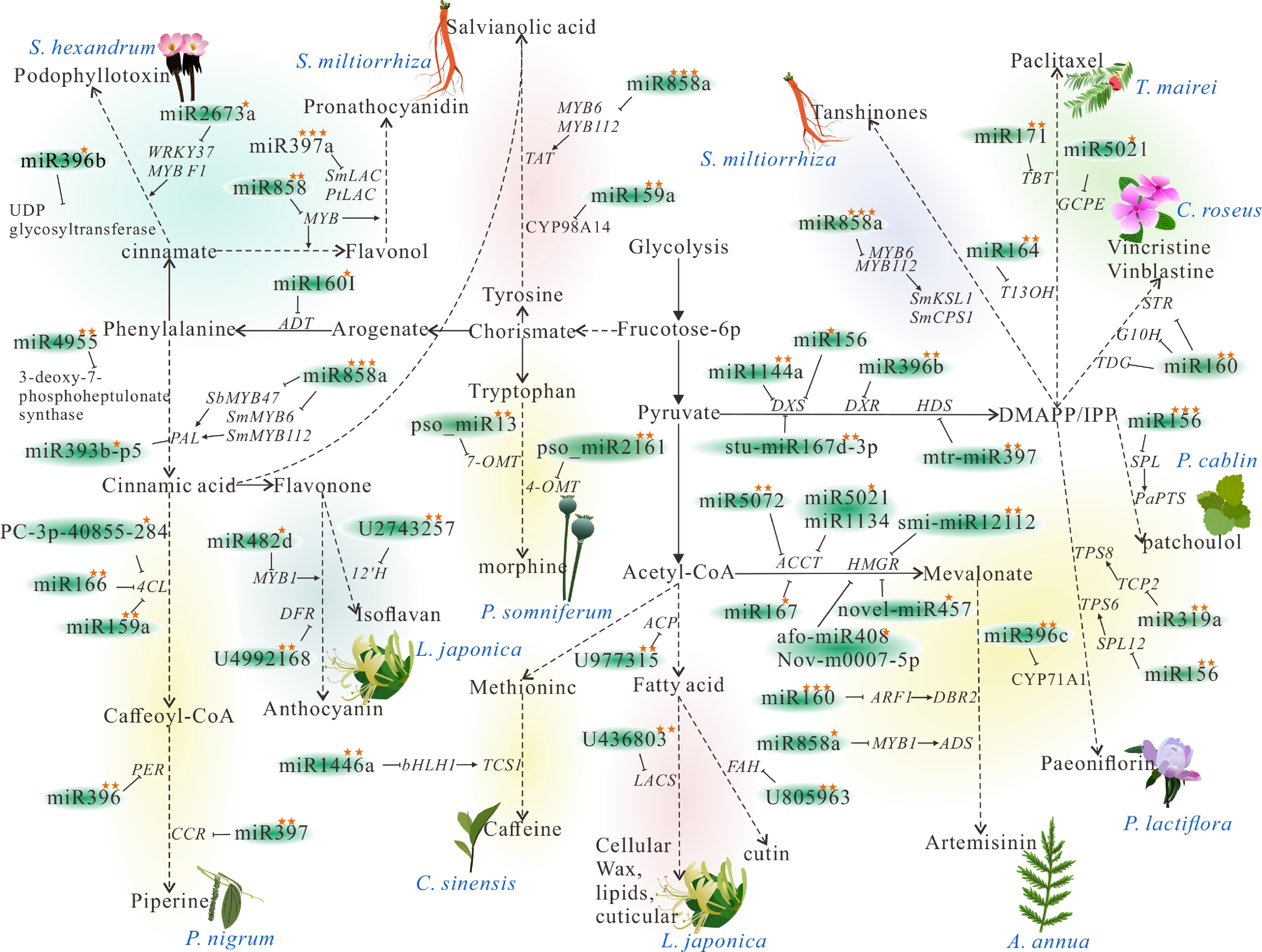
Figure 2.
microRNAs involved in secondary metabolite biosynthesis of medicinal plants. PAL, phenylalanine ammonia-lyase; TAT, Tyrosine aminotransferase; ACP, acyl carrier protein; FAH, fatty acid hydroxylase; LACS, long-chain acyl-CoA synthetase; DXR,1-deoxy-D-xylulose-5-phosphate reductoisomerase; DXS, 1-deoxy-D-xylulose-5-phosphate synthase; HDR, (E)-4-hydroxy-3-methylbut-2-en-1-yl diphosphate reductase; ACCT, Acetyl-CoA carboxylase; HMGR, 3-hydroxy-3-methylglutaryl-CoA reductase; DBR2, Artemisinic aldehydeΔ11 (13) reductase; PTS, patchoulol synthase; TDC, Tyrosine decarboxylase; STR, Strictosidine synthase; G10H, geraniol 10-hydroxylase; ADS, amorpha-4,11-diene synthase; T13OH, taxane 13α-hydroxylase; TBT, taxane 2α-O-benzoyltransferase, TCS1: caffeine synthase. A single star indicates that the miRNAs and its targets have been verified by quantitative real-time PCR (qRT-PCR) experiment. Two stars signify that the miRNAs and its targets have been verified by either the Rapid Amplification of cDNA Ends (RACE) or degradation group experiments. Three stars denote that the miRNAs and its targets have been verified by transgenic assays. The dashed lines indicates that there are multiple steps in this metabolic process, which are omitted to highlight the miRNAs and their targets.
Figures
(2)
Tables
(0)