-
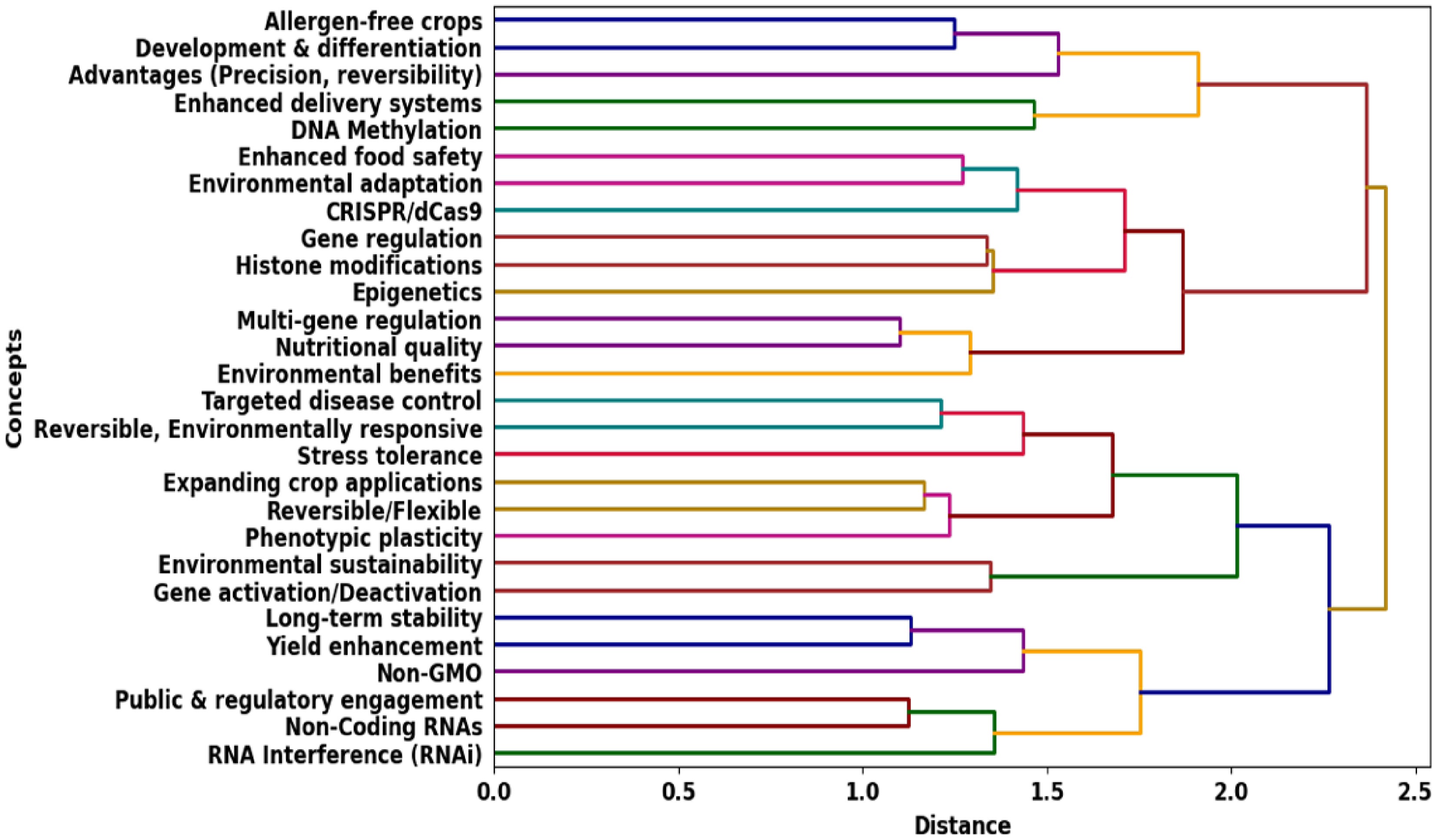
Figure 1.
Hierarchical clustering of epigenetic concepts: unveiling pathways to agricultural innovation.
-
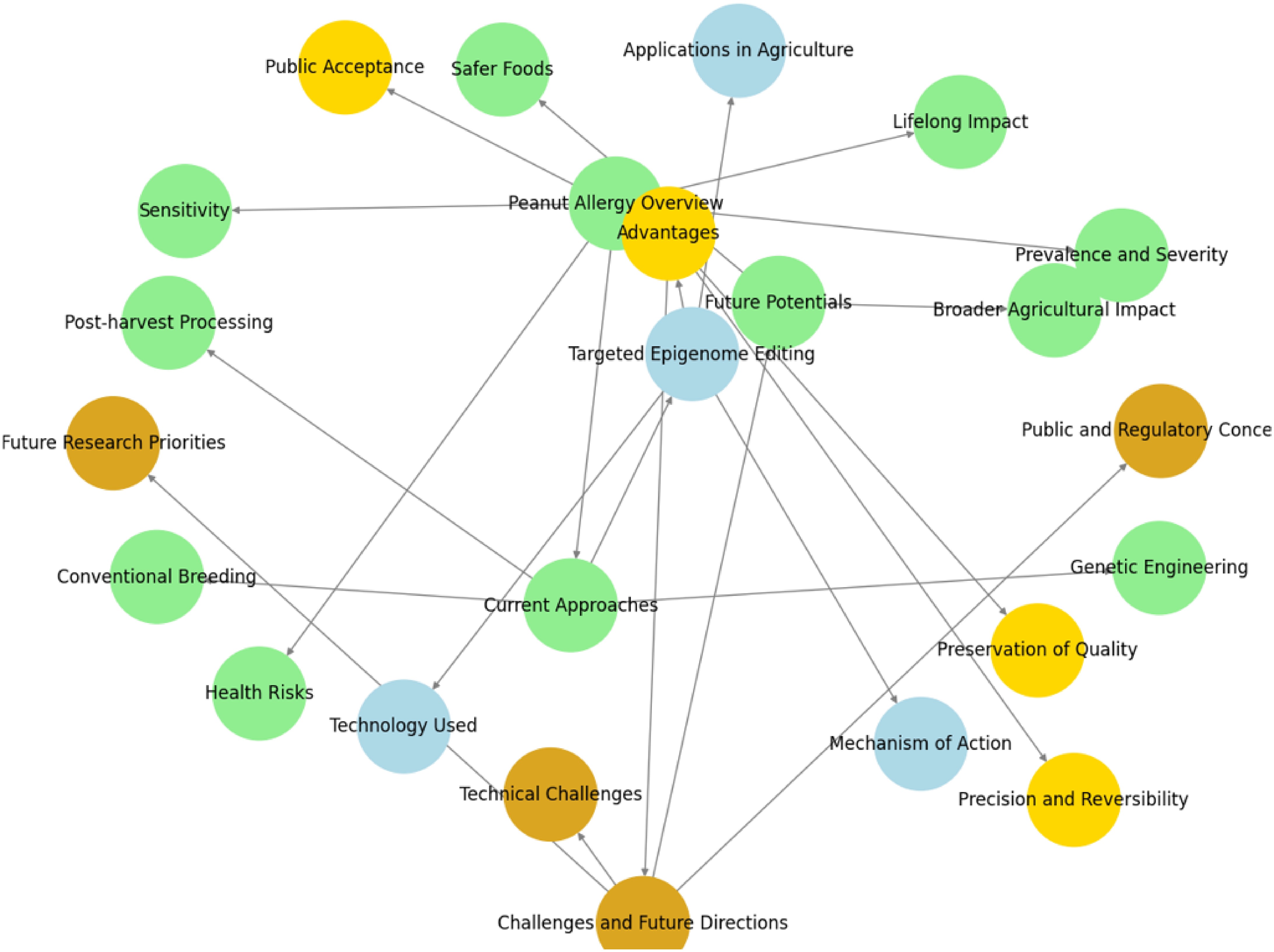
Figure 2.
Exploring approaches for peanut allergy and epigenome editing.
-
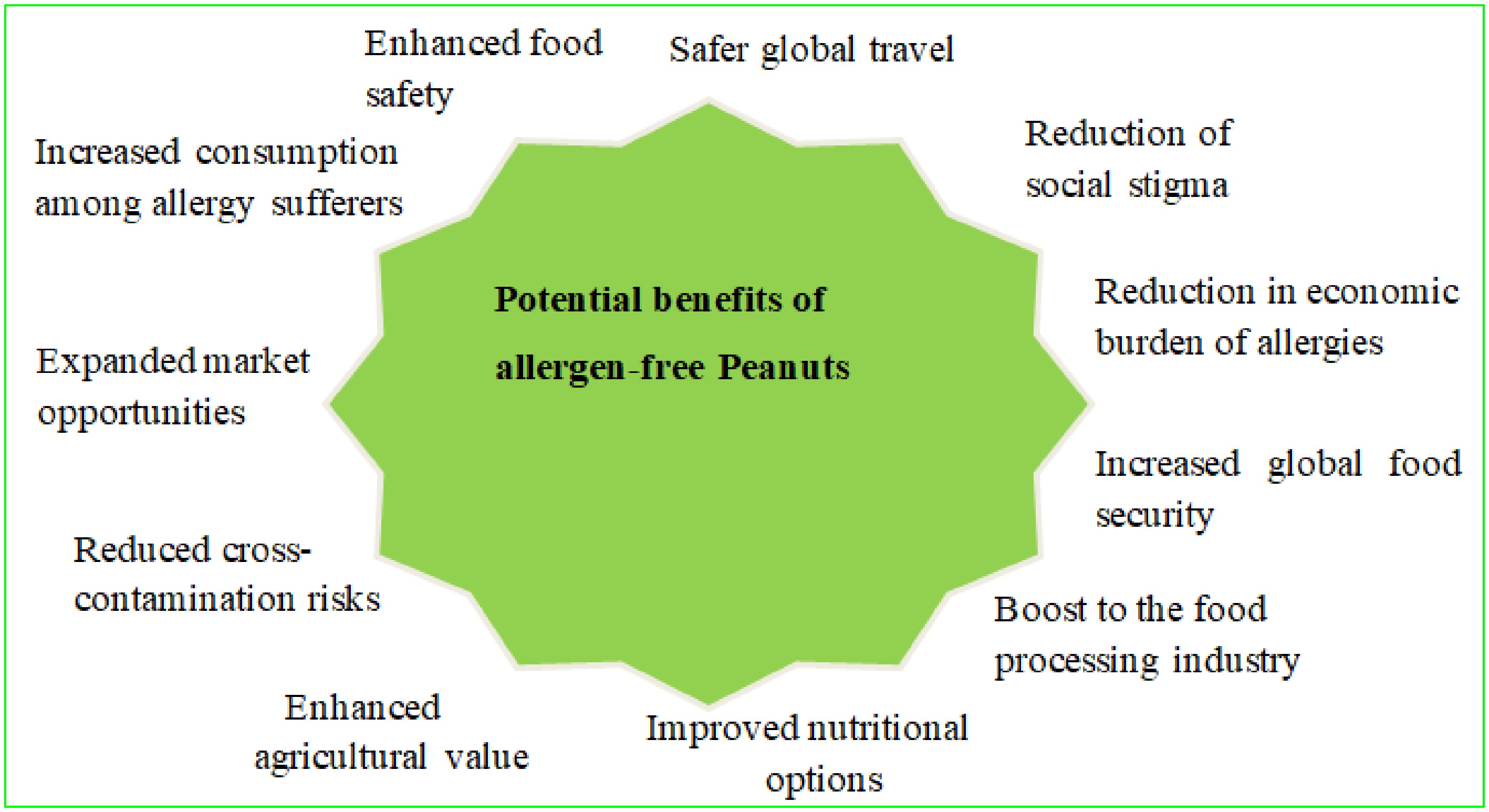
Figure 3.
Health and economic benefits of allergen-free peanuts.
-
No. Epigenetic editing tools Description summary Ref. 1 CRISPR/dCas9 (Dead Cas9) Used for targeted gene repression by modifying gene expression without cutting DNA. [49] 2 Transcription activator Engineered to precisely target DNA sequences for the epigenetic regulation of gene expression. [50,51] 3 Zinc finger nucleases Engineered proteins that target and bind specific DNA sequences to induce epigenetic changes. [52] 4 RNA interference Utilizes small RNAs to silence allergenic gene expression at the post-transcriptional level. [53] 5 DNA Methyltransferase Used to target and methylate specific gene regions, silencing allergenic genes. [54] 6 Histone deacetylase Employed to alter histone acetylation, repressing allergenic gene expression by tightening chromatin. [55] 7 CRISPR/Cas13 Used to degrade allergenic transcripts in peanuts. [56] 8 Non-coding RNA-based tools Regulate the expression of allergenic genes through epigenetic mechanisms. [57] Table 1.
Epigenetic editing tools that could be applied for allergen-free peanut production.
Figures
(3)
Tables
(1)