-
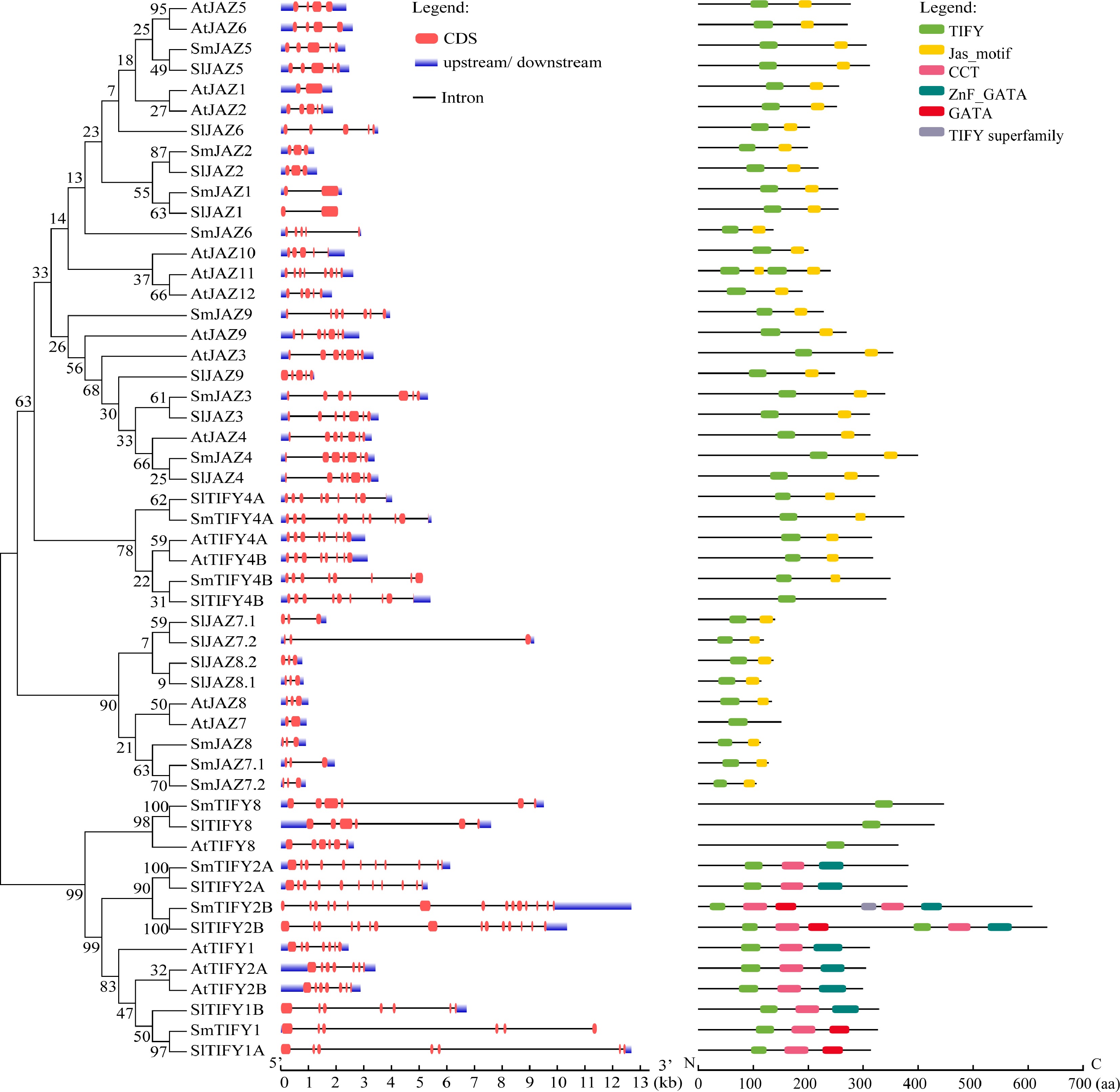
Figure 1.
Phylogenic (left), gene structure (middle), and protein conserved domain (right) analysis of JAZ proteins from eggplant, tomato, and Arabidopsis.
-
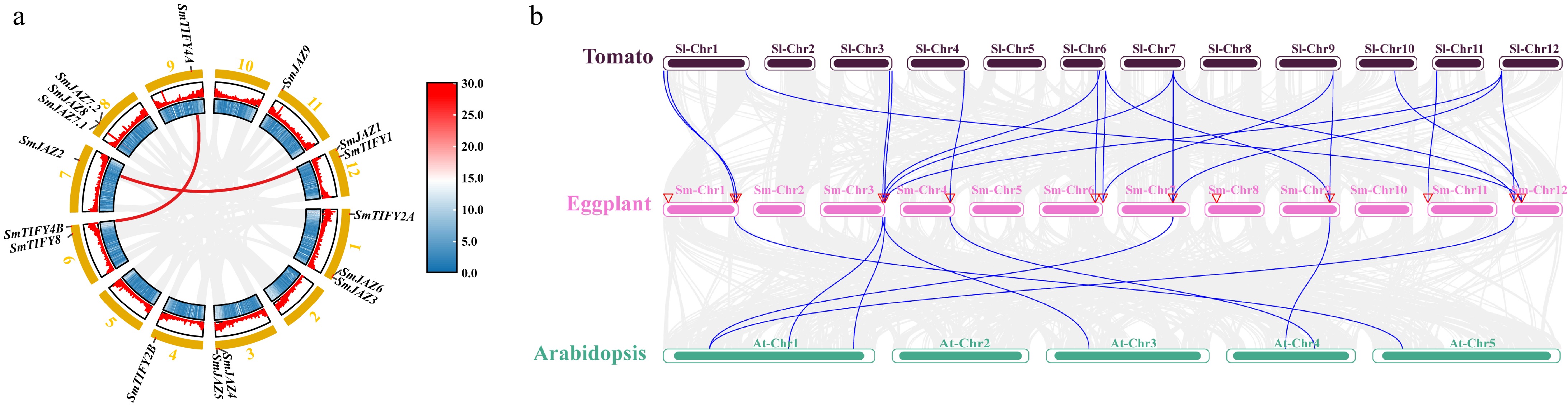
Figure 2.
The chromosome location, segmental duplication, and synteny analysis of SmJAZ genes. (a) Chromosome distribution and segmental duplication of the 16 SmJAZ genes in 12 chromosomes. Genes linked with a line are pairs of segmentally duplicated genes. (b) Syntenic relationships of JAZ genes among eggplant, tomato, and Arabidopsis. The JAZ gene pairs between different species are highlighted with different colored lines.
-
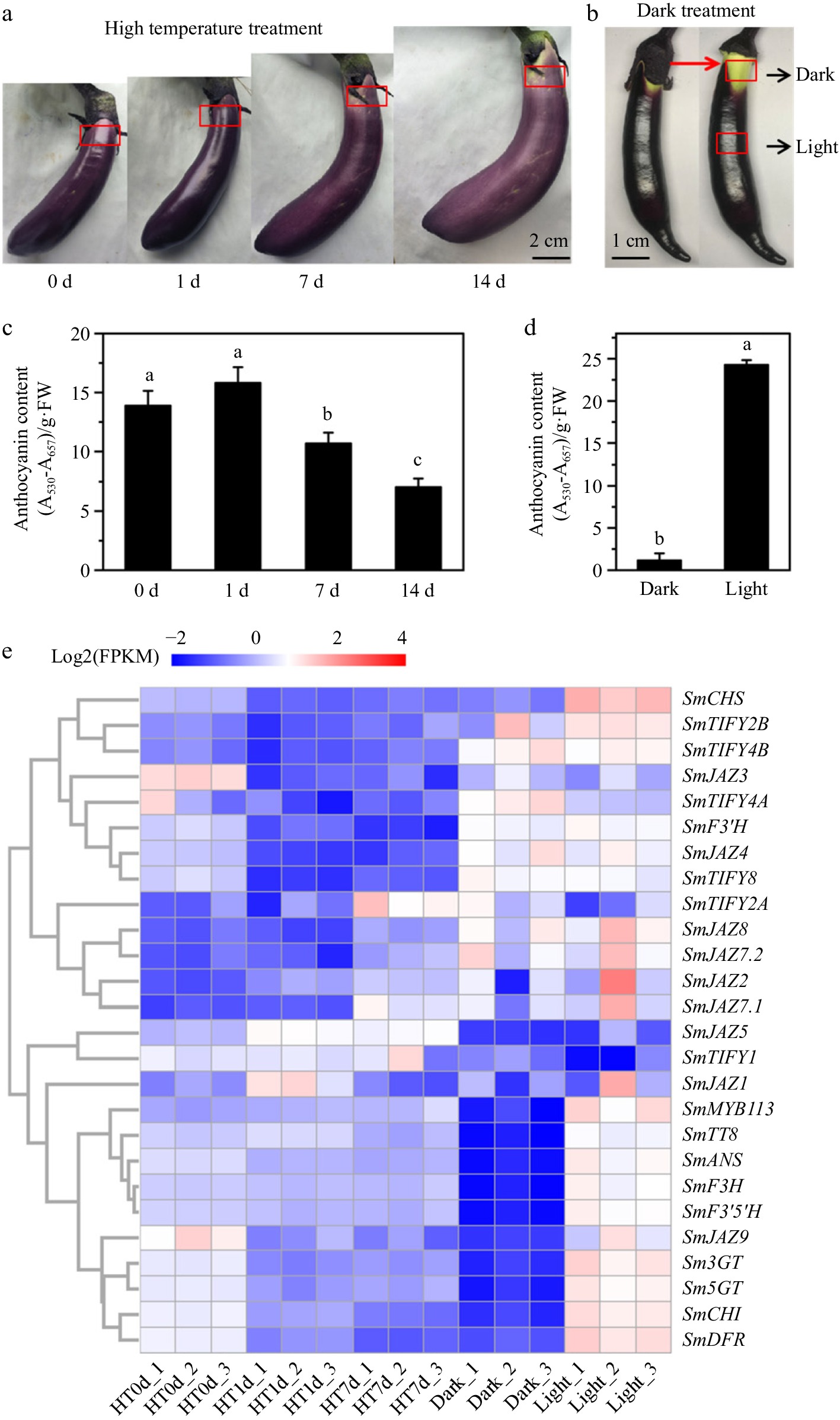
Figure 3.
Effects of high-temperature (HT), and darkness treatments on the colour, anthocyanin content, and gene expression level in the eggplant peel. (a) The peel color of eggplants after high-temperature treatment for 0, 1, 7, and 14 d. (b) The peel color of eggplant under the calyx region shielded from light, and the middle region peel of fruit exposed to light. (c), (d) The anthocyanin contents in the eggplant peel marked with a red rectangle. Data are means ± SD (n = 3 biological replicates). Different letters indicate significant differences (p < 0.05). (e) Hierarchical clustering analysis of SmJAZ genes and anthocyanin biosynthesis-related genes based on the RNA-seq data. Each row represents the log2 (FPKM) of a gene.
-
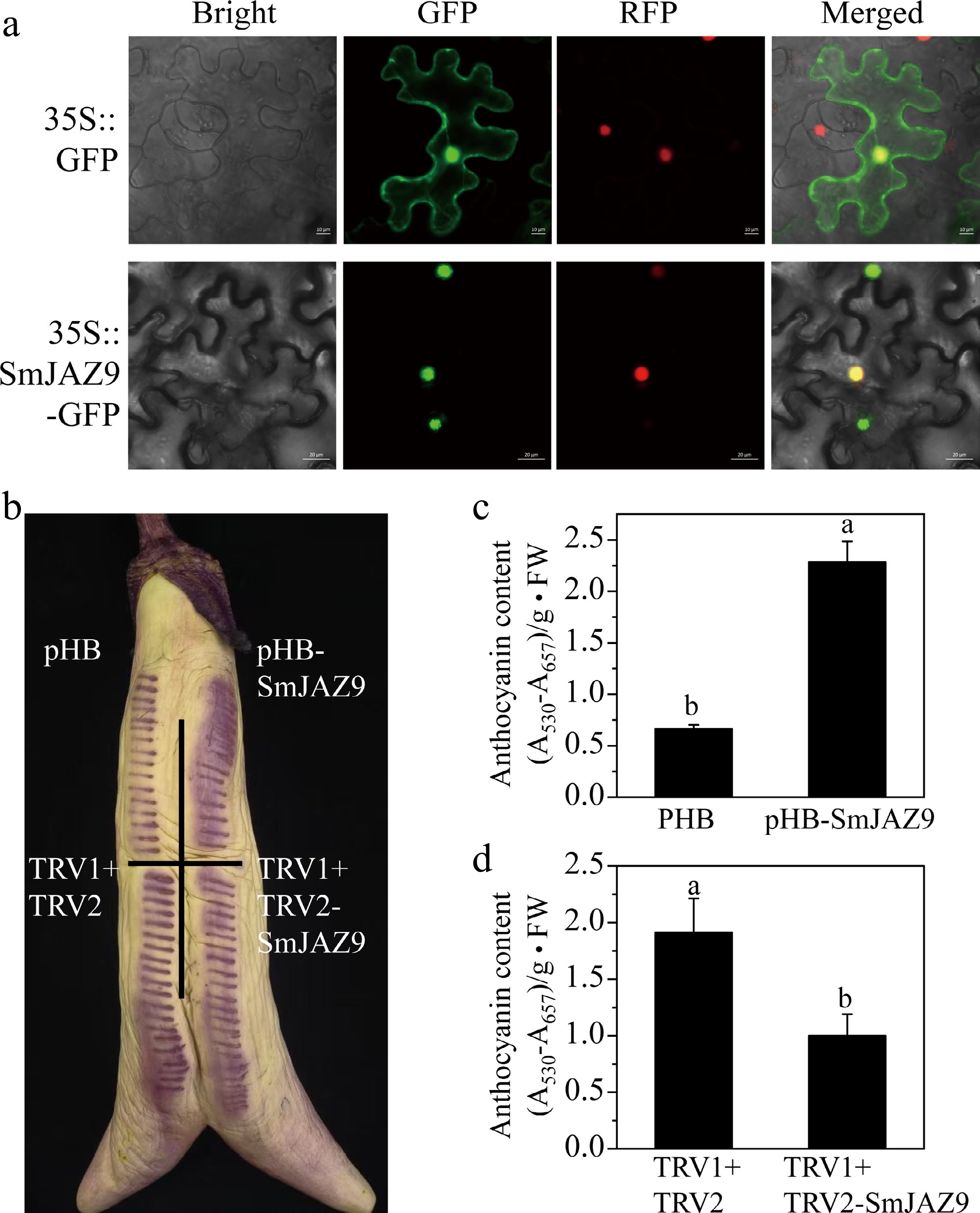
Figure 4.
Subcellular localization and functional analysis of SmJAZ9. (a) SmJAZ9 protein was located in the nucleus of tobacco cells. The 35S::GFP construct was used as the control. Bright: bright field; GFP: GFP fluorescence; RFP: RFP fluorescence. HTR12 (AT1G01370) was used as a nuclear-localized marker protein[36]; Merged: merged overlay of bright, GFP, and RFP. (b) Transient overexpression and RNAi assays in eggplant peel. (c), (d) The relative anthocyanin content in the infiltrated eggplant peel. Data are means ± SD (n = 3 biological replicates). Different letters indicate significant differences (p < 0.05).
-
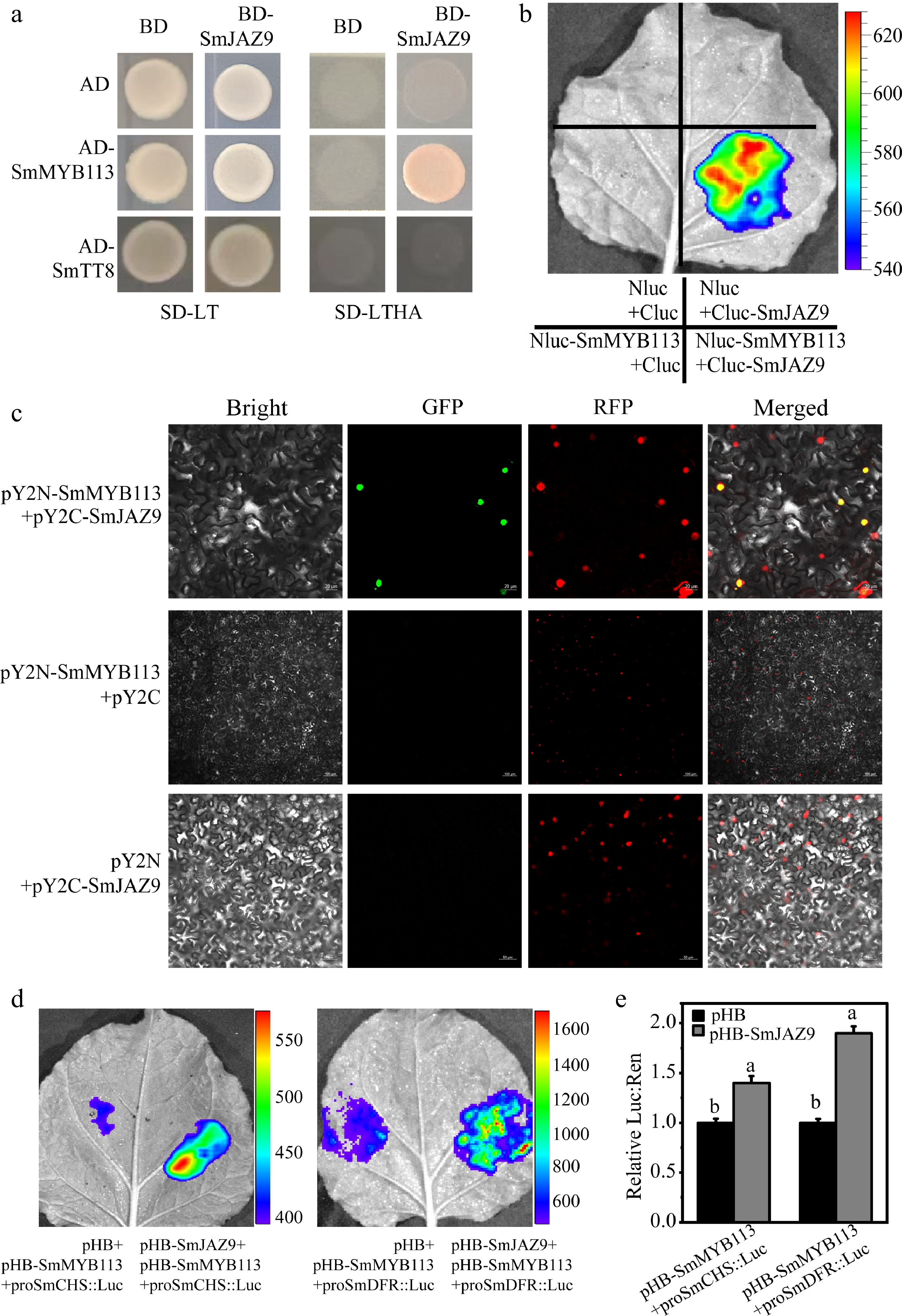
Figure 5.
SmJAZ9 interacted with SmMYB113 and enhanced the transcriptional activity of SmCHS and SmDFR promoters. (a) SmJAZ9 interacts with SmMYB113 but not SmTT8 in Y2H assays. SD-LT, SD medium without Trp/Leu; SD-LTHA, SD medium without Trp/Leu/His/Ade. (b) LCI assays results confirmed the interaction between SmJAZ9 and SmMYB113. (c) SmJAZ9 interacts with SmMYB113 in BiFC assays. (d), (e) Dual-luciferase assay analyze the activation of SmCHS and SmDFR promoters co-transfection with both SmJAZ9 and SmMYB113 or SmMYB113 only. Data are means ± SD (n = 3 biological replicates). Different letters indicate significant differences (p < 0.05).
-
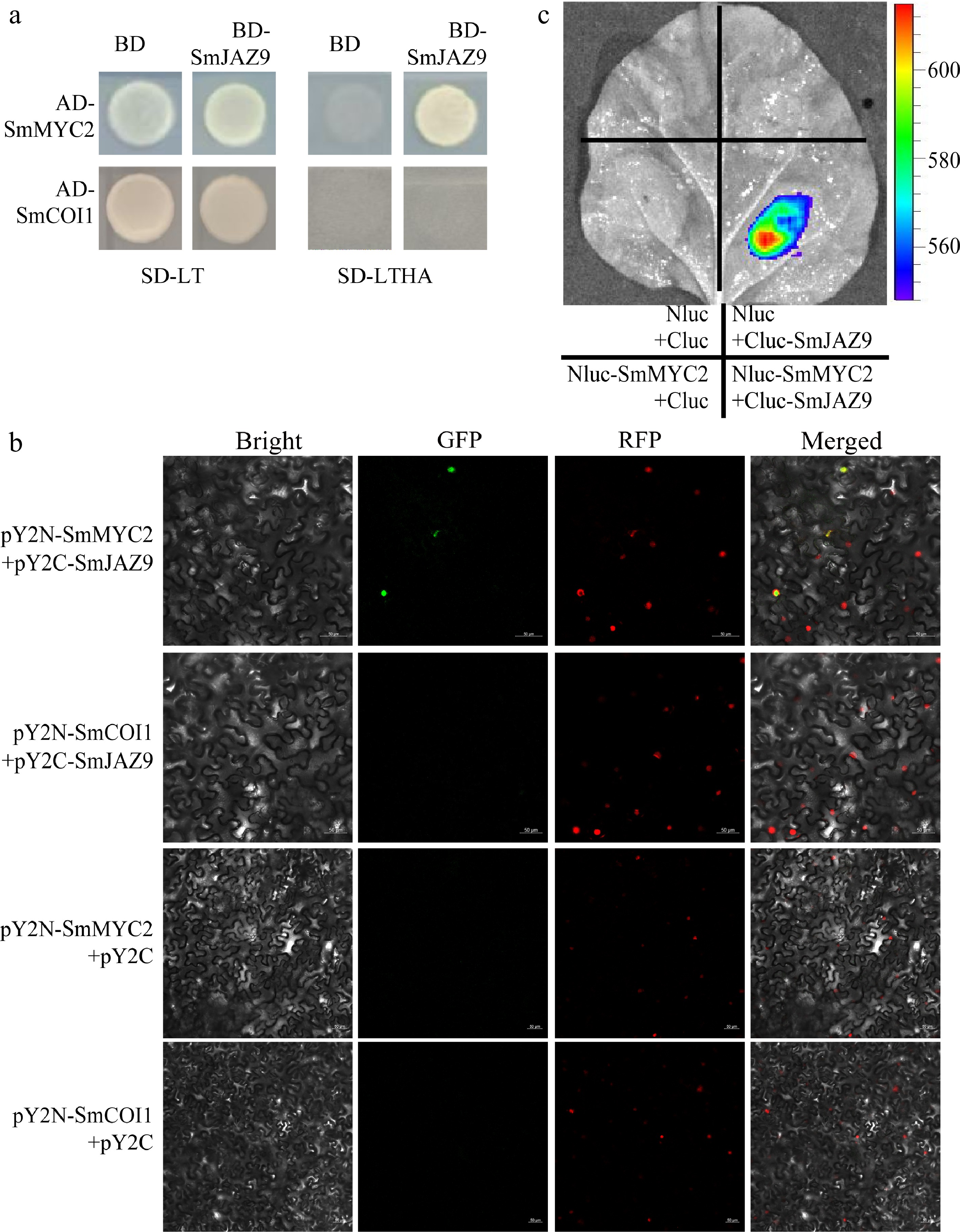
Figure 6.
SmJAZ9 interacted with SmMYC2 but not with SmCOI1. (a) SmJAZ9 interacts with SmMYC2 but not SmCOI1 in Y2H assays. (b) SmJAZ9 interacts with SmMYC2 but not SmCOI1 in BiFC assays. (c) LCI assays results confirmed the interaction between SmJAZ9 and SmMYC2.
Figures
(6)
Tables
(0)