-
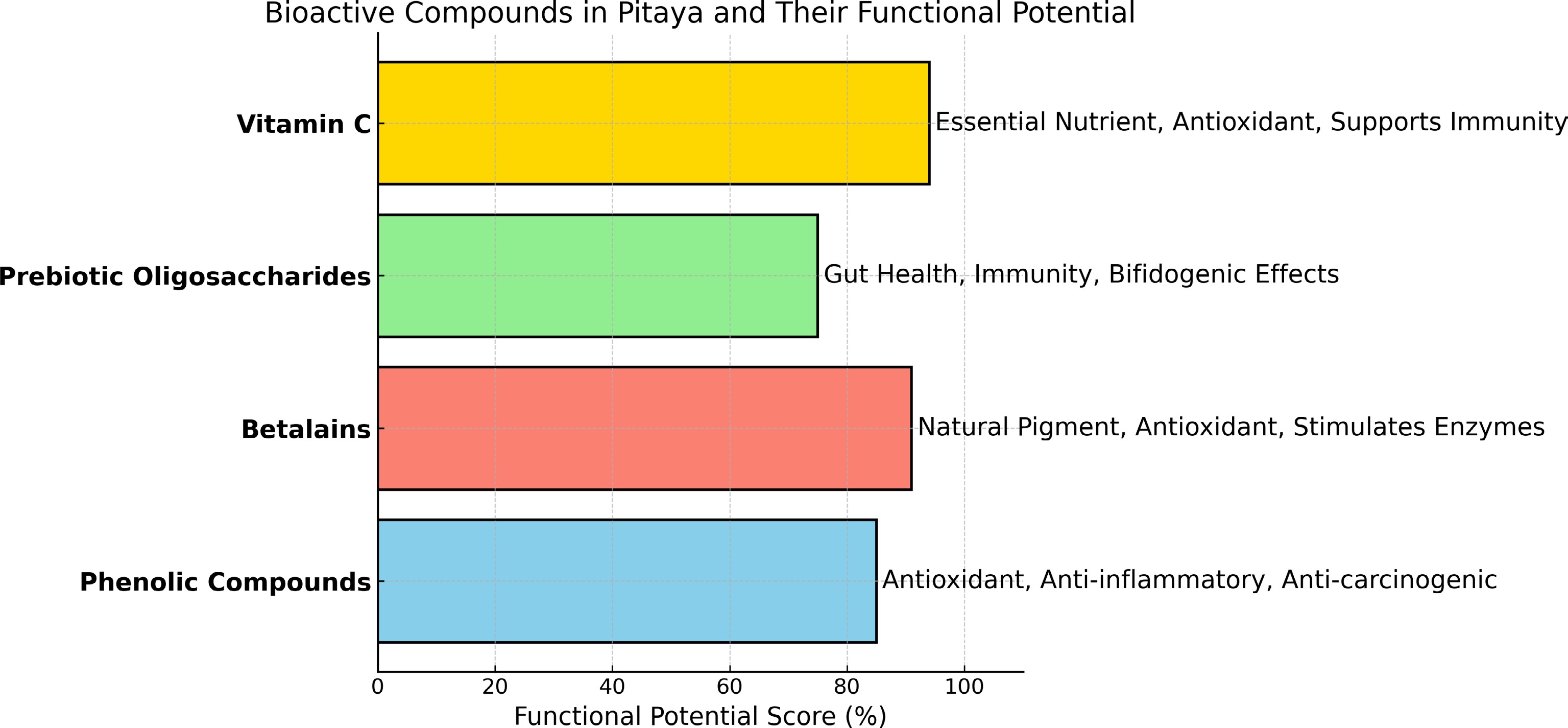
Figure 1.
Horizontal bar chart illustrating the bioactive compounds present in pitaya and their functional potential, based on published literature. Each bar represents a specific compound: phenolic compounds, betalains, prebiotic oligosaccharides, and vitamin C, along with their associated health benefits, including antioxidant, anti-inflammatory, gut health enhancement, and immunity support. The functional potential score is represented as a percentage, providing a comparative view of the importance of each compound.
-
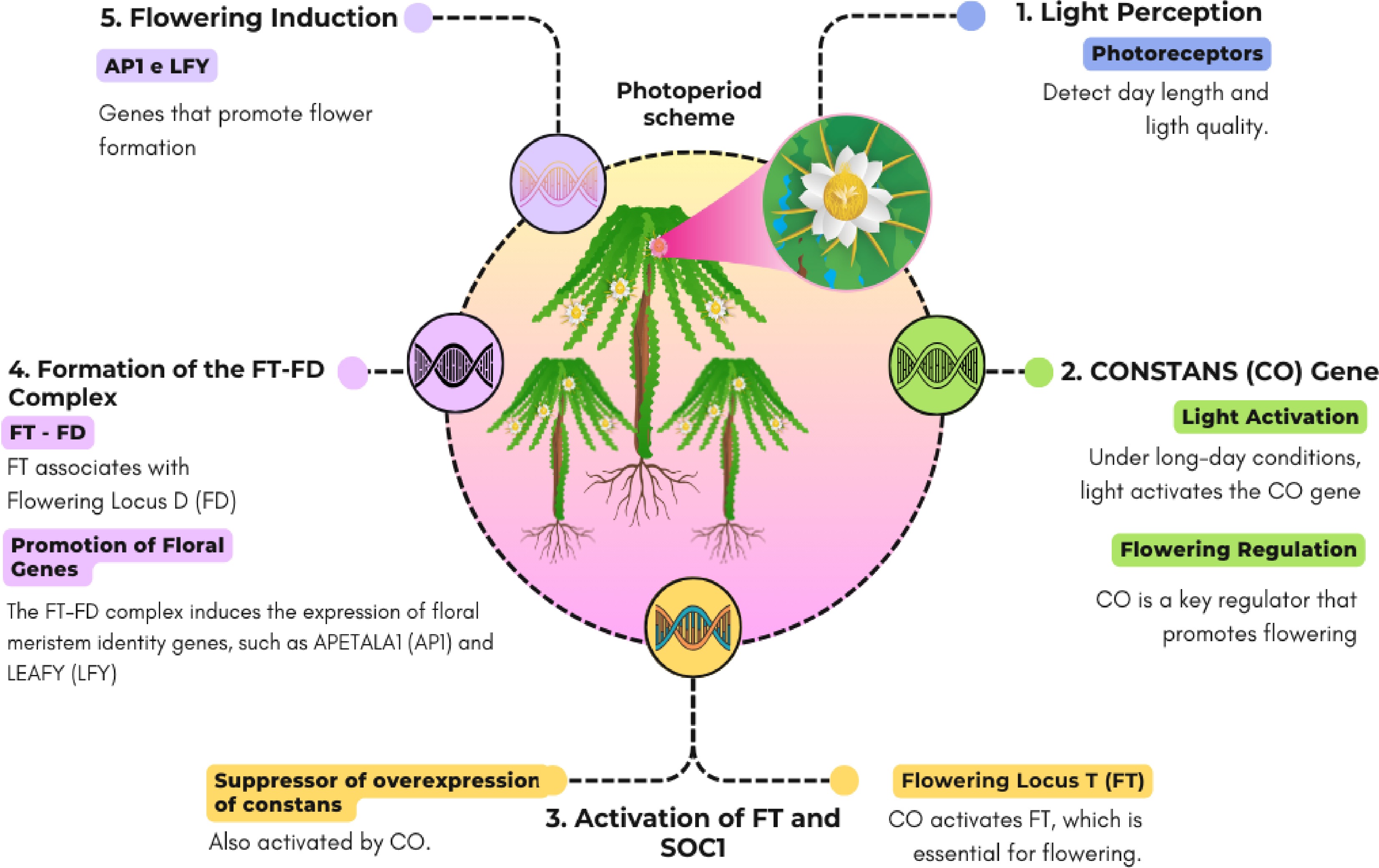
Figure 2.
Schematic representation of the photoperiod pathway regulating pitaya flowering. Photoreceptors perceive day length and light quality, initiating a molecular cascade involving CONSTANS (CO), which activates FLOWERING LOCUS T (FT) and SUPPRESSOR OF OVEREXPRESSION OF CONSTANS 1 (SOC1). Once formed, the FT-FD complex promotes the expression of floral meristem identity genes, notably APETALA1 (AP1) and LEAFY (LFY), thereby inducing flower formation.
-
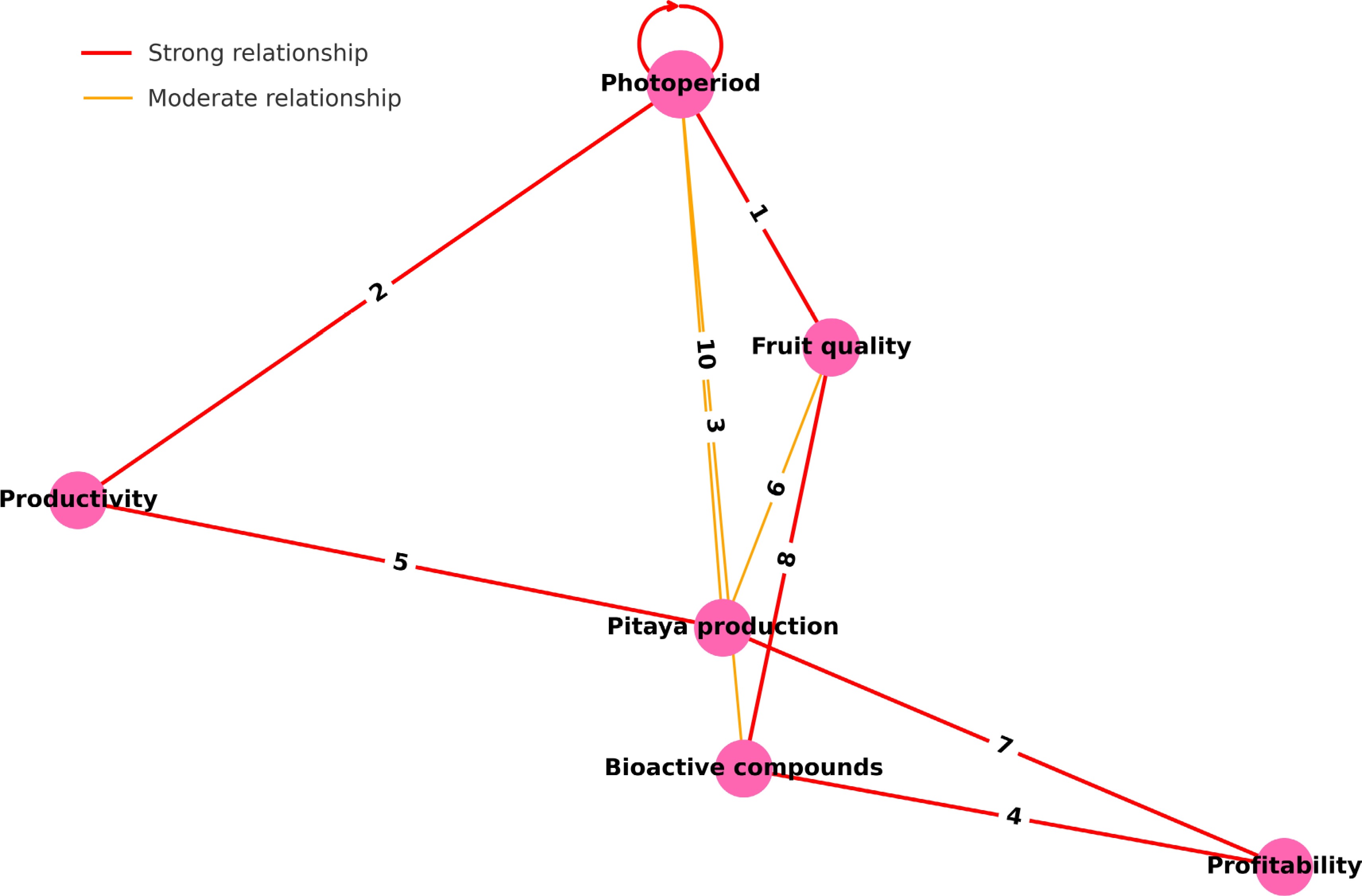
Figure 3.
Network representation of relationships among photoperiod, pitaya production, productivity, fruit quality, bioactive compounds, and profitability based on literature related to light supplementation in pitaya. Strong relationships are indicated by red edges, while moderate relationships are shown in orange. The numbered connections represent specific studies supporting each link: (1) the production gap for dragon fruit[39], (2) the induction of off-season flowering using light[40], (3) the effect of LED spectrum on in vitro pitaya plantlets[16], (4) the influence of light on bioactive compounds and their bioaccessibility[12], (5) the role of light in pitaya production and commercialization[4], (6) its effect on postharvest physiology and fruit quality[5], (7) the economic return of pitaya in 29 Brazilian cities[3], (8) antioxidant activity modulated during fruit development[15], (9) light-induced promotion of hormone biosynthesis[7], and (10) the application of LED lighting in off-season cultivation[41].
Figures
(3)
Tables
(0)