-
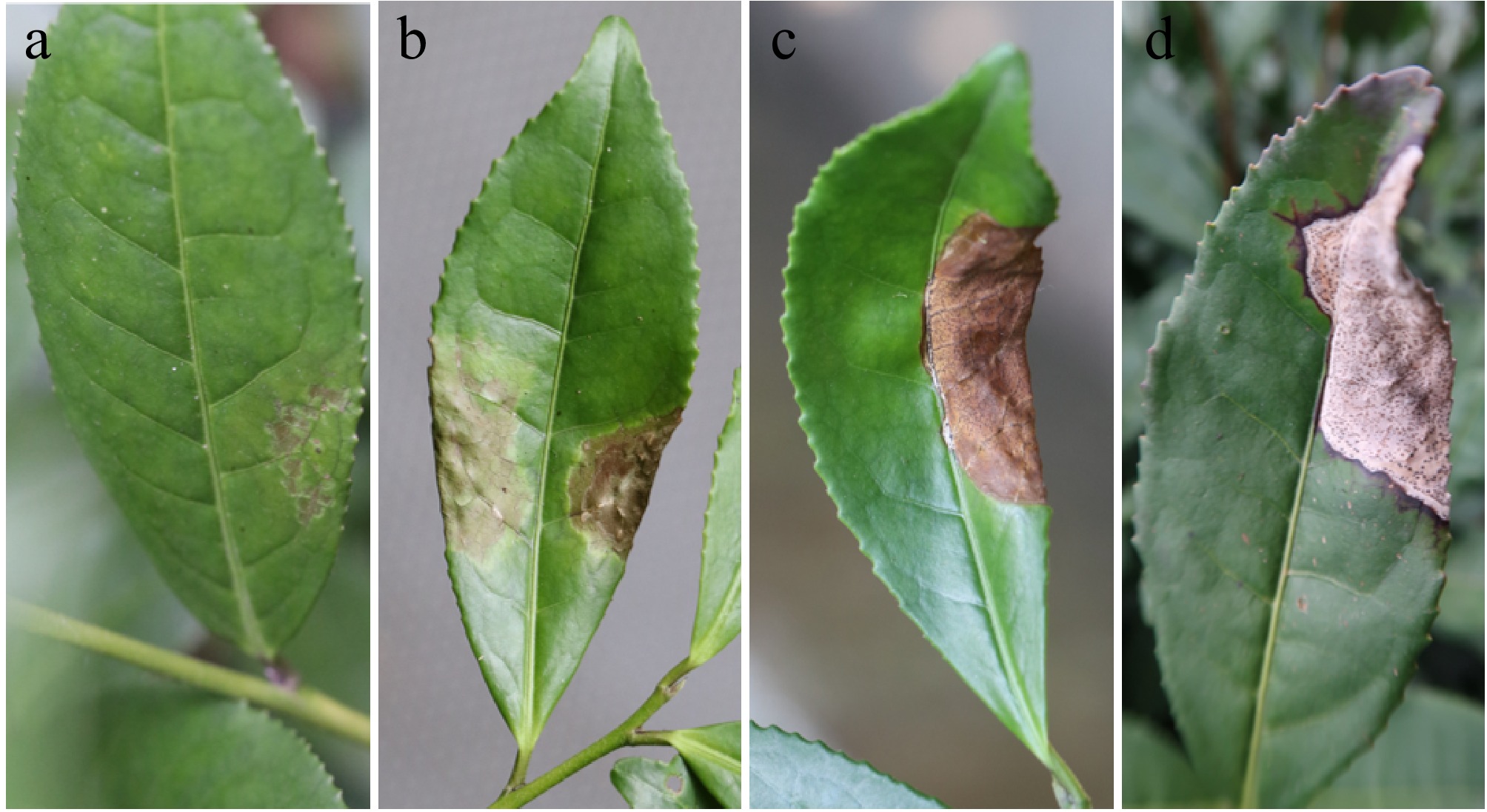
Figure 1.
Symptoms of naturally occurring tea anthracnose in the field. (a) Initial lesion. (b) Initial lesion enlargement. (c) Typical lesion. (d) Advanced stages of diseases.
-
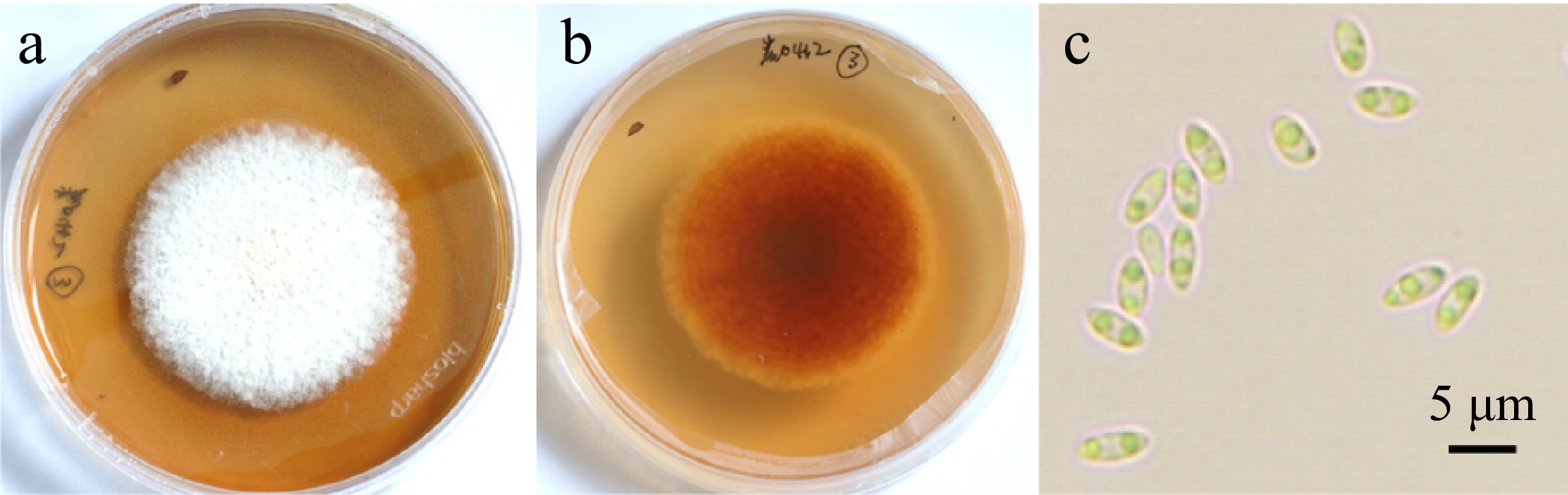
Figure 2.
Colony morphology and spore morphology of pathogen isolate cultured on TDA medium for 15 d. (a) Upper side of colonies. (b) Reverse side of colonies. (c) Conidia. Scale bar = 5 μm.
-
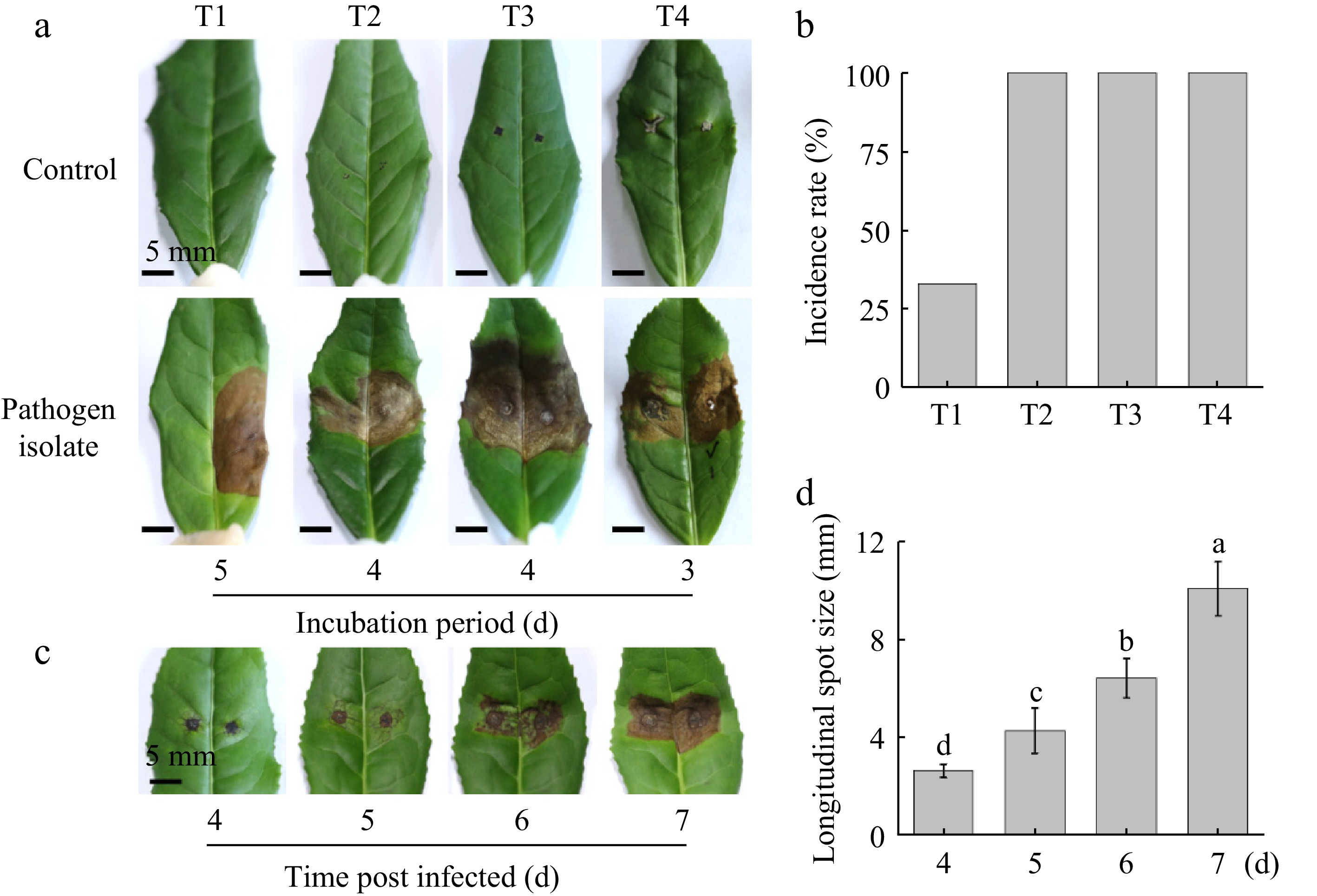
Figure 3.
Pathogenicity of the isolate tested in the laboratory. (a) Symptoms and incubation period of different inoculation methods, T1: Inoculation with spores on non-wounded leaves; T2: Inoculation with spores on pin prick wounded leaves; T3: Inoculation with spores on cross wounded leaves; T4: Inoculation with mycelium disc. T1−T3: Symptoms on the 13th-d post inoculation; T4: Symptoms on the 7th-day post inoculation. (b) Disease incidence rate of different inoculation methods. (c) Appearance changes of lesion post inoculation with T3 method. (d) Longitudinal diameter of the lesion post inoculation with T3 method. The mean denoted by the different lowercase letters indicates statistically significant differences between the treatments according to Duncan's Multiple Range Test (DMRT) at p < 0.05. Scale bars: (a) = 5 mm.
-
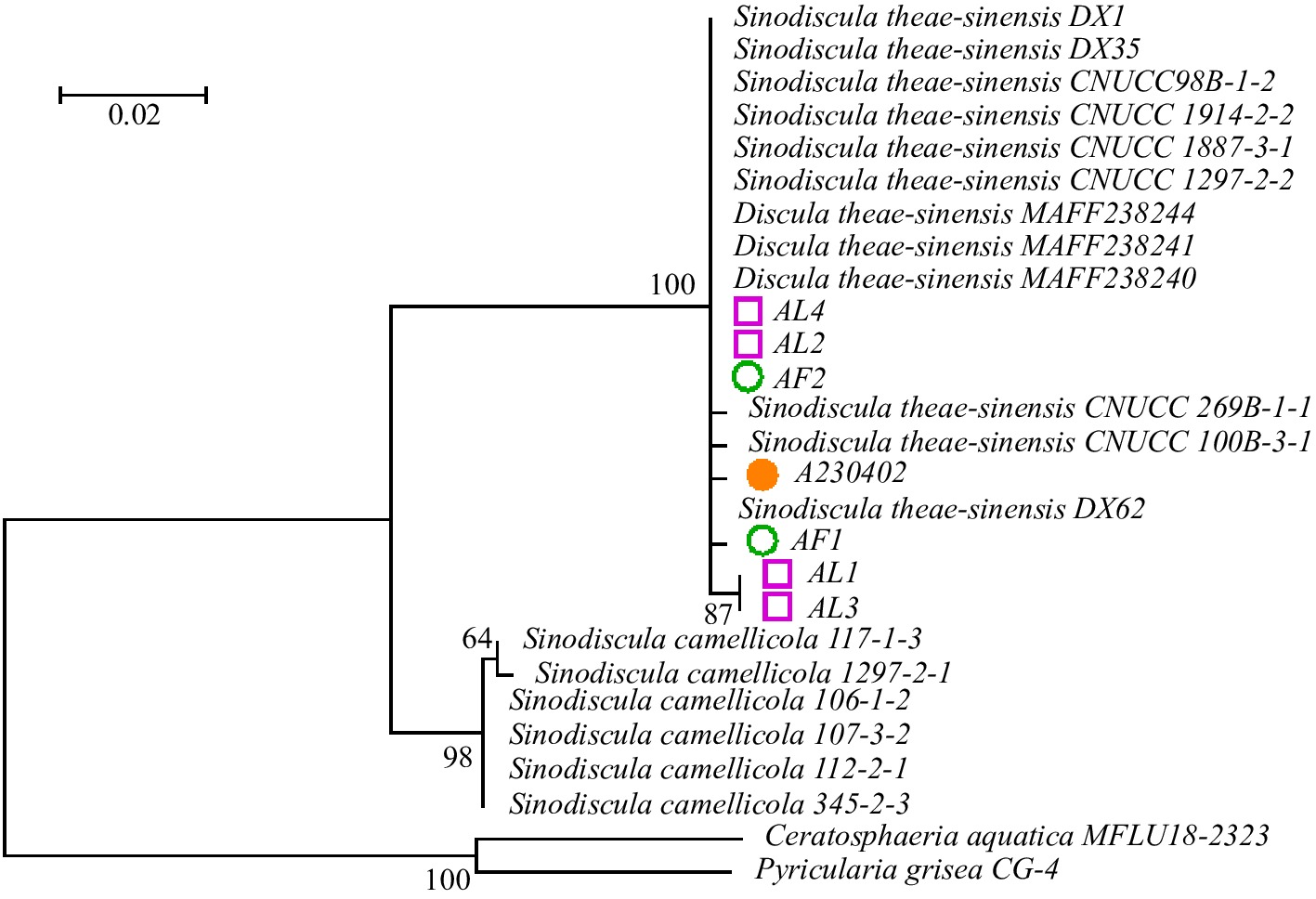
Figure 4.
Phylogenetic analysis of seven isolates obtained in this study and related isolates. The phylogenetic tree was constructed using maximum likelihood (ML) method based on the combined dataset of ITS, LSU, and TEF sequences of Discula sp. isolates and related species. The bootstrap values generated from the ML analyses are indicated at nodes.
-
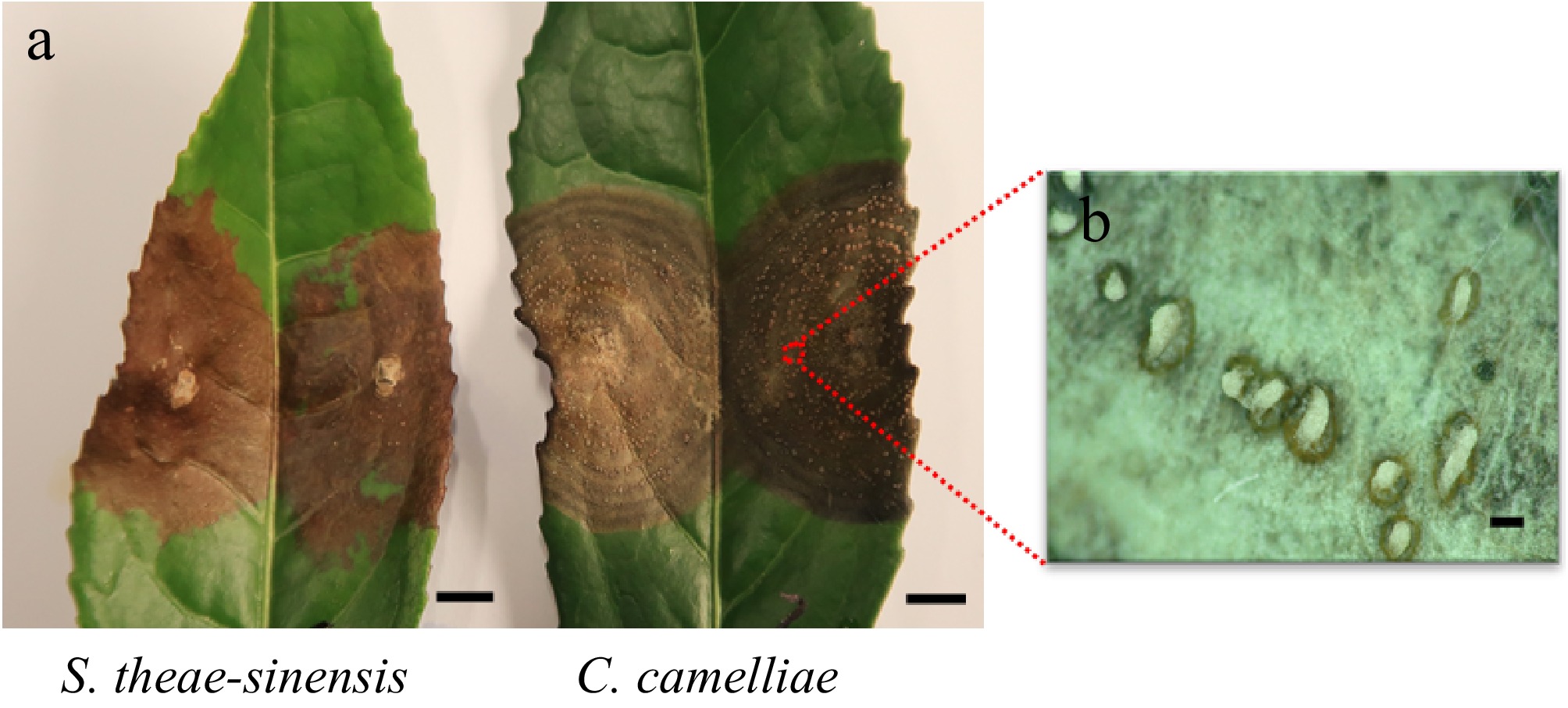
Figure 5.
Comparison of symptoms caused by S. theae-sinensis and C. camelliae. (a) Leaf symptoms induced by S. theae-sinensis and C. camelliae 10-d post-inoculation. (b) Conidial masses of C. camelliae exuded from acervuli on the lesion. Scale bars: (a) = 5 mm, (b) = 100 μm.
-
No. Inoculation method Incidence of shoots (%) Incidence of leaves (%) 7 d 14 d 20 d 7 d 14 d 20 d 1 Without wounding 0 20.0 ± 0b 33.3 ± 11.5b 0 8.9 ± 3.8b 13.3 ± 6.7b 2 With wounding 0 66.7 ± 11.5a 66.7 ± 11.5a 0 26.7 ± 6.7a 26.7 ± 6.7a Each treatment has three replications. Each replication consisted of five tea shoots; each shoot inoculated three leaves under the bud. Different lowercase letters in same column indicate significant difference at 0.05 levels. Table 1.
Disease incidence via different inoculation methods in the field.
Figures
(5)
Tables
(1)