-
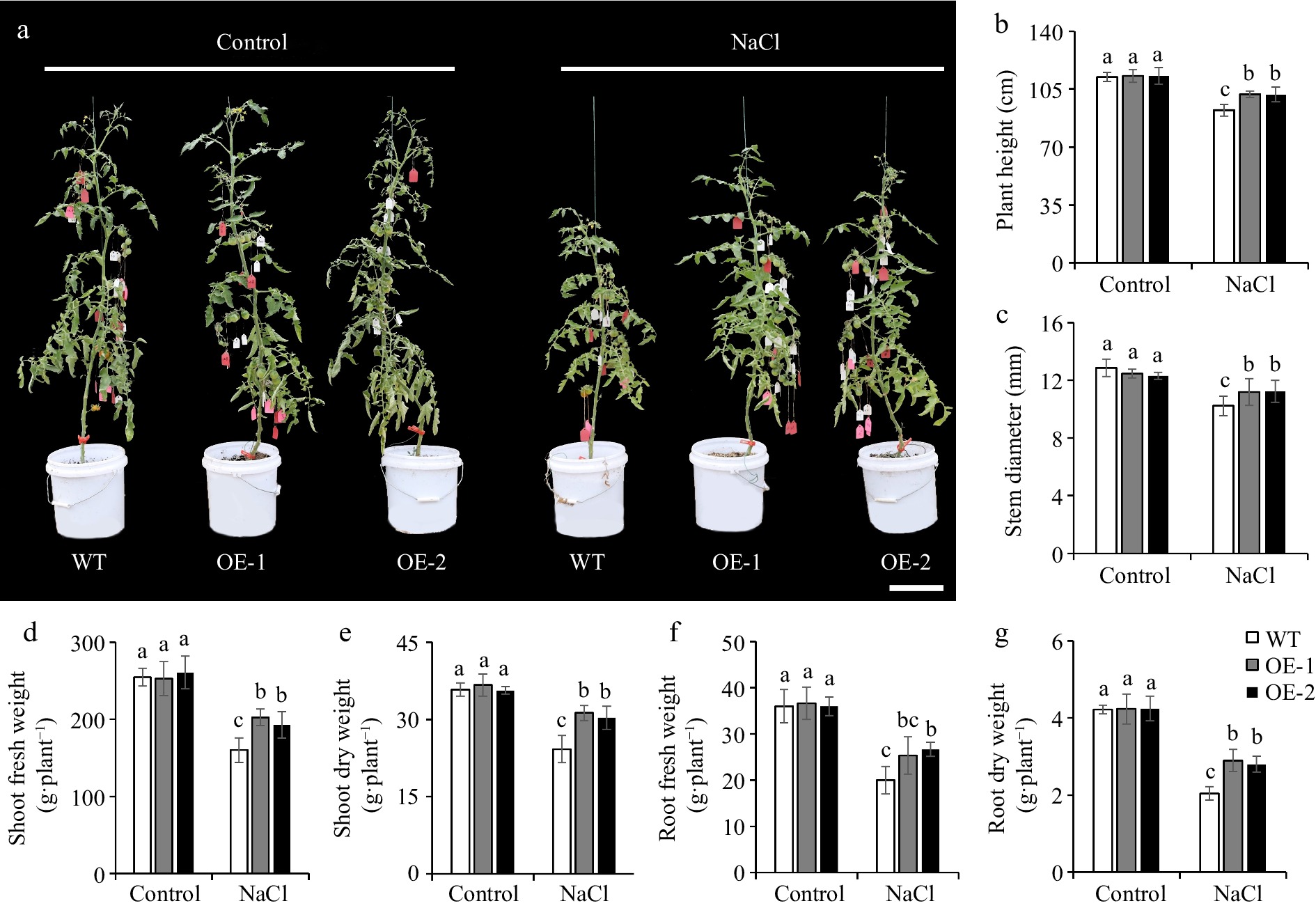
Figure 1.
Overexpression of SlSAMS1 improves salt tolerance in adult tomato plants. (a) The growth phenotype of wild-type (WT) and SlSAMS1 overexpressing (OE) lines under control and NaCl treatment. Bar = 20 cm. (b) Plant height, (c) stem diameter, (d) fresh aboveground weight, (e) dry aboveground weight, (f) fresh underground weight, and (g) dry underground weight of WT and OE lines under control and NaCl treatment. Values are the mean ± SD of three biological replicates, and four plants are included in each replicate. The letters indicate significant differences (Tukey's test, p < 0.05).
-
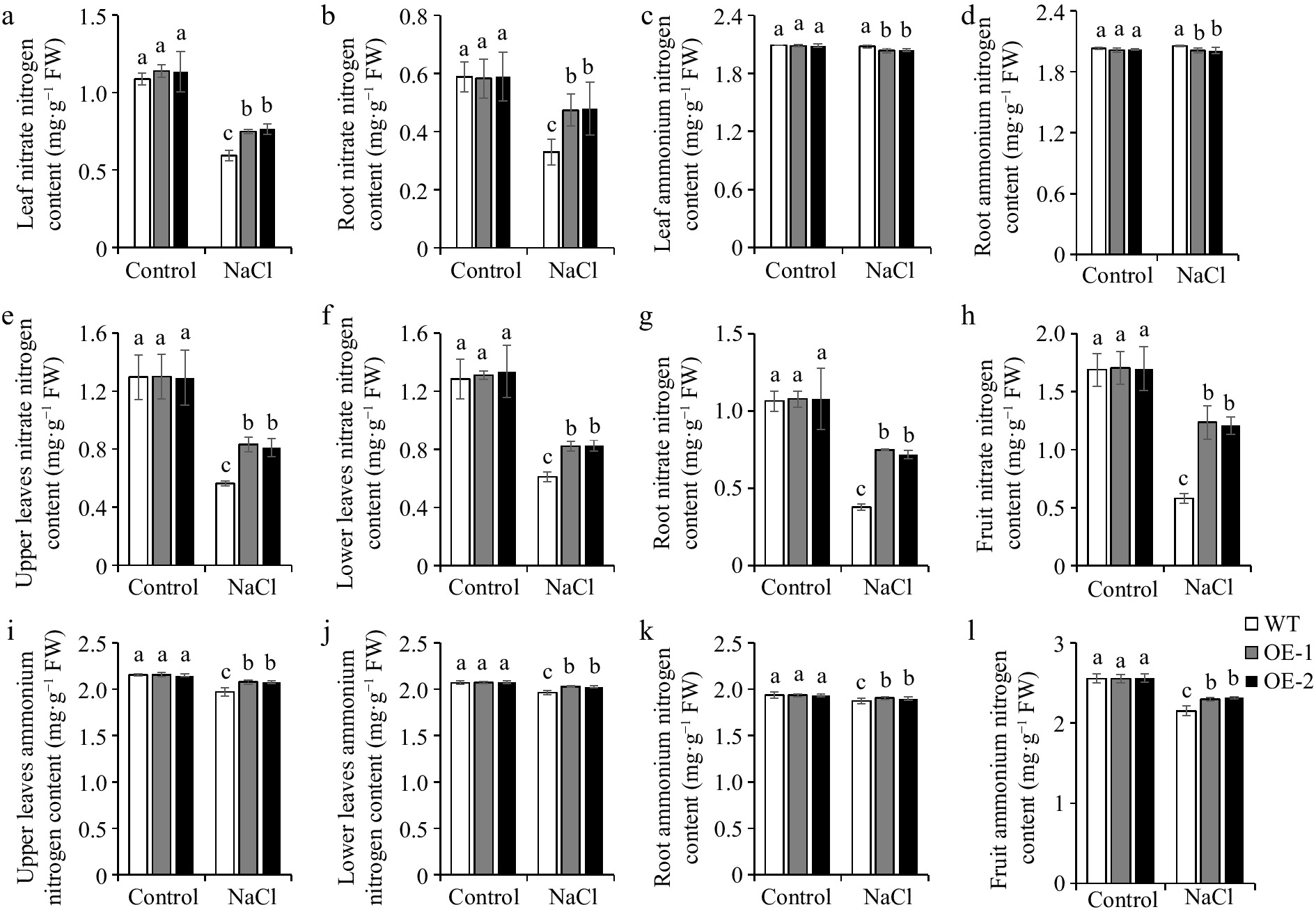
Figure 2.
The effect of overexpression of SlSAMS1 on nitrogen content in tomato seedling leaves and roots, adult plants upper leaves, lower leaves, roots, and fruits under salt stress. (a), (b), (e)−(h) The nitrate nitrogen content and the (c), (d), (i)−(l) ammonium nitrogen content of WT and OE lines under control and NaCl treatment. Values are the mean ± SD of three biological replicates, and four plants are included in each replicate. The letters indicate significant differences (Tukey's test, p < 0.05).
-
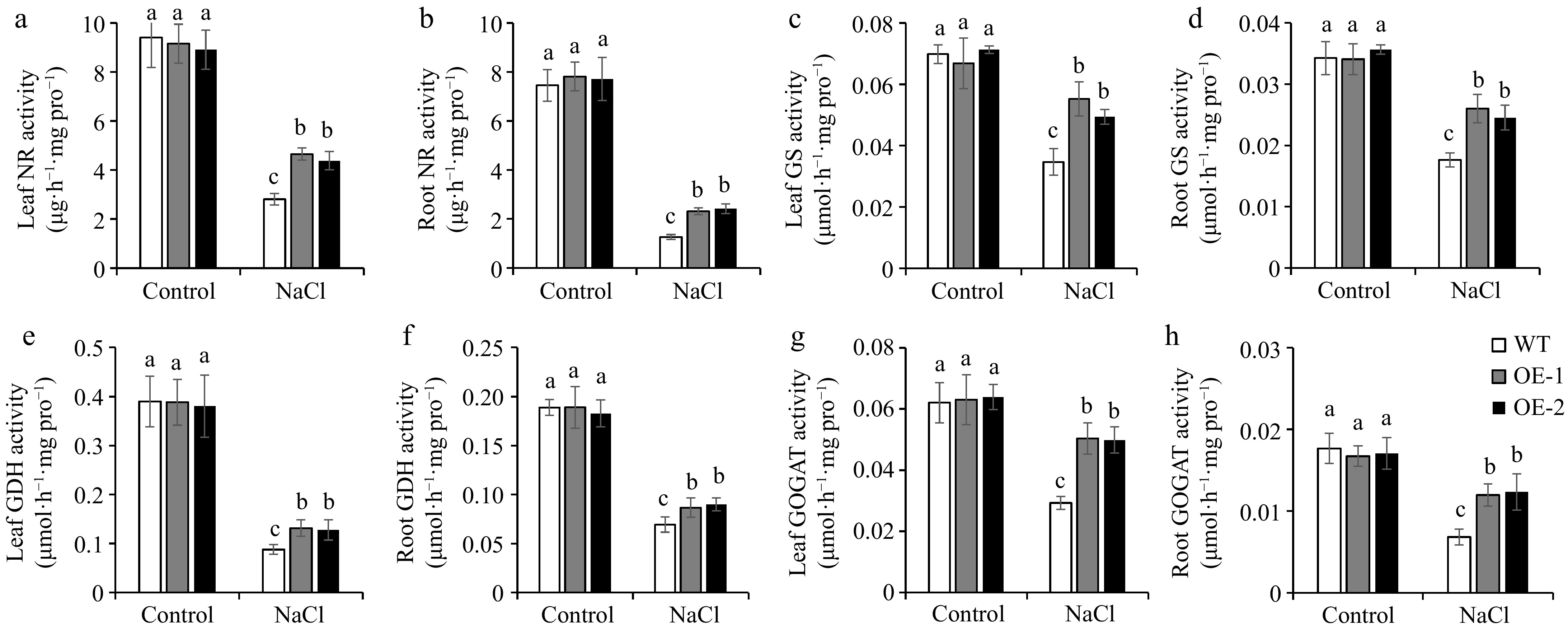
Figure 3.
Overexpression of SlSAMS1 regulates nitrogen metabolism-related enzyme activities in tomato seedling leaves and roots under salt stress. (a), (b) Nitrate reductase (NR), (c), (d) glutamine synthetase (GS) activity, (e), (f) glutamate dehydrogenase (GDH) activity, and (g), (h) glutamine-2-oxoglutarate aminotransferase (GOGAT) activity of WT lines and OE lines under control and NaCl treatment. Values are the mean ± SD of three biological replicates, and four plants are included in each replicate. The letters indicate significant differences (Tukey's test, p < 0.05).
-
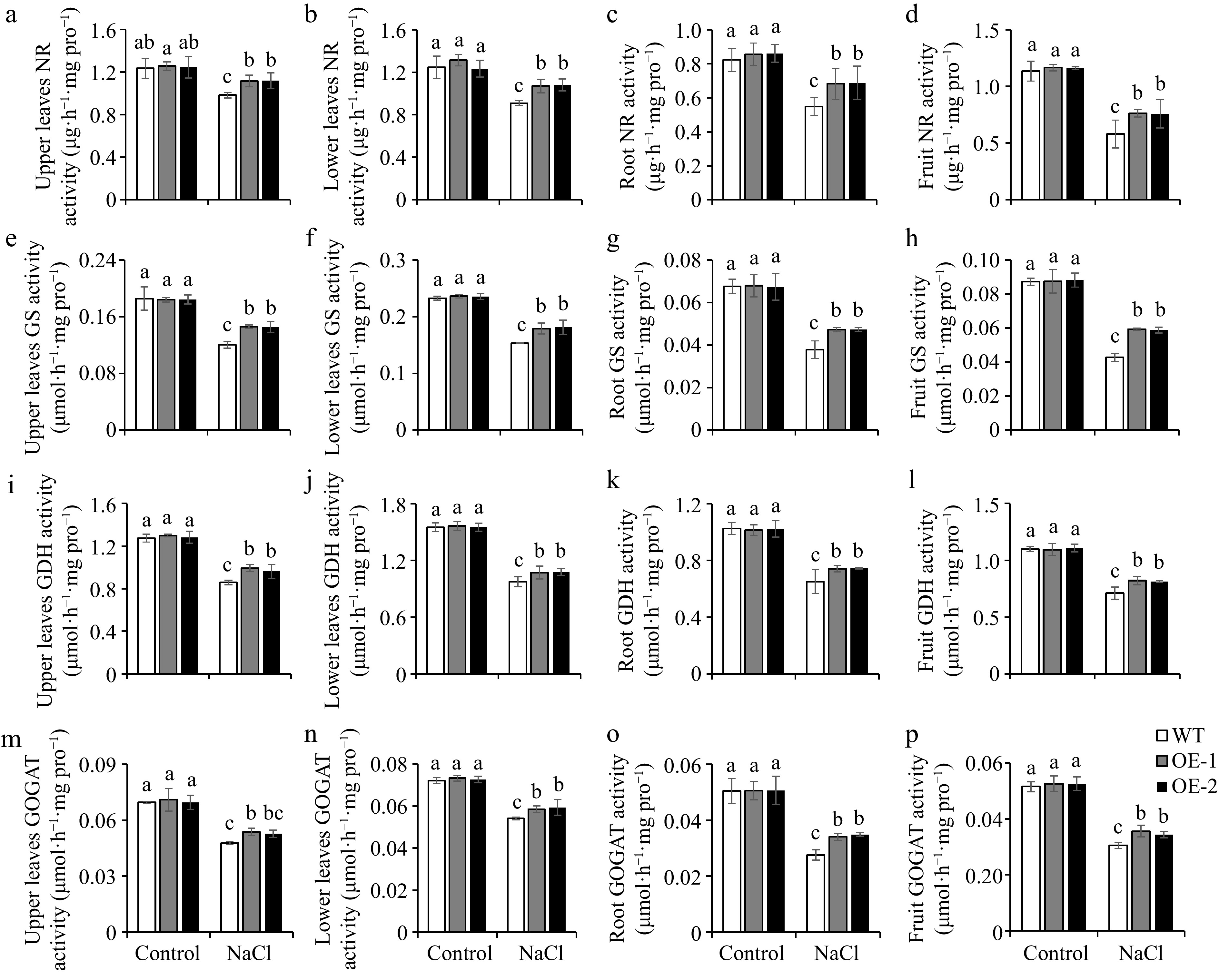
Figure 4.
Overexpression of SlSAMS1 regulates nitrogen metabolism-related enzyme activities in the upper leaves, lower leaves, roots, and fruits of adult tomato plants under salt stress. (a)−(d) Nitrate reductase (NR) activity, (e)−(h) glutamine synthetase (GS) activity, (i)−(l) glutamate dehydrogenase (GDH) activity, and (m)−(p) glutamine-2-oxoglutarate aminotransferase (GOGAT) activity of WT and OE lines under control and NaCl treatment. Values are the mean ± SD of three biological replicates, and four plants are included in each replicate. The letters indicate significant differences (Tukey's test, p < 0.05).
-
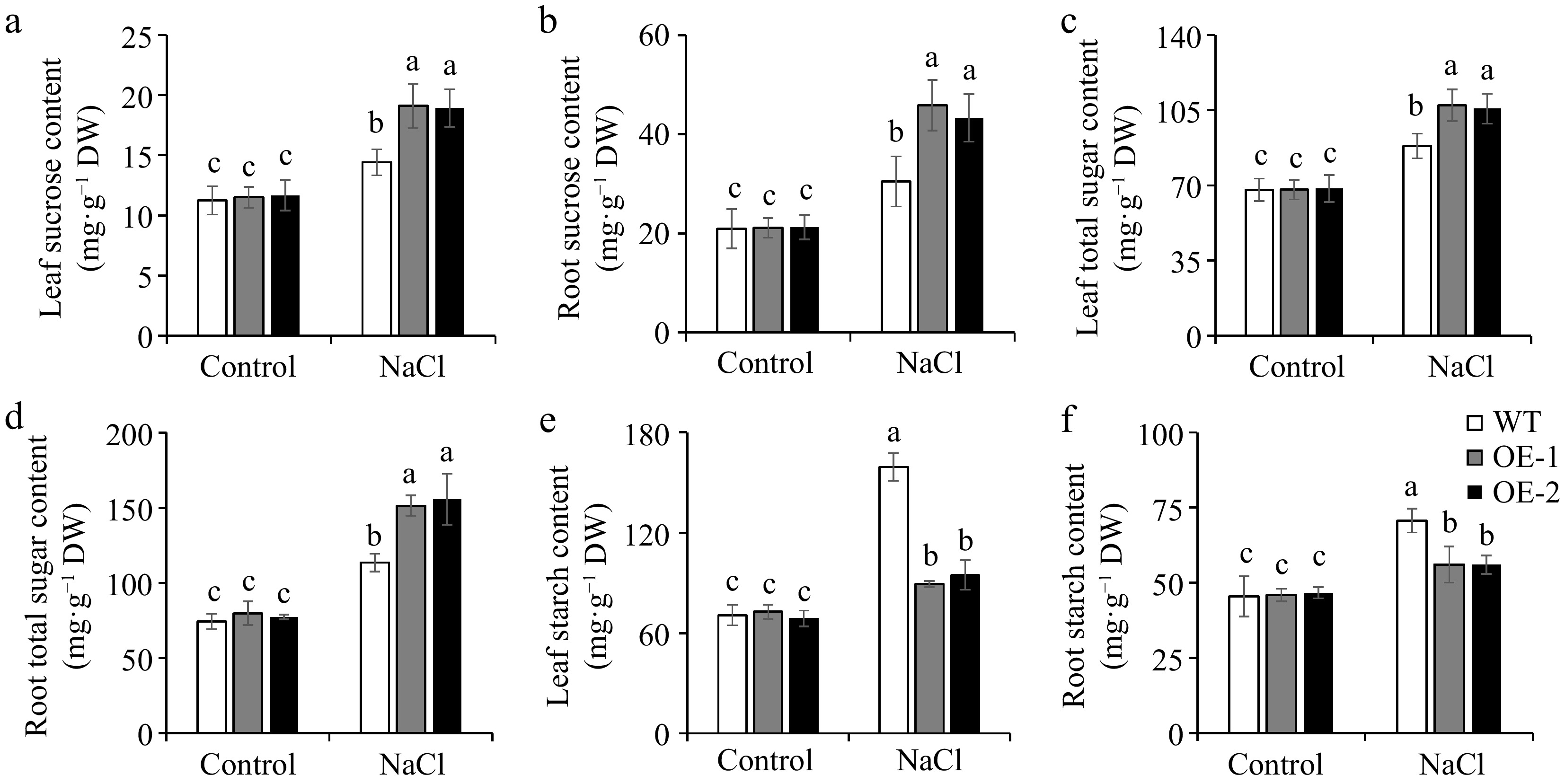
Figure 5.
The influence of overexpression of SlSAMS1 on sugar contents in tomato seedling leaves and roots under salt stress. (a), (b) Sucrose content, (c), (d) total sugar content, and (e), (f) starch content of WT and OE lines under control and NaCl treatment. Values are the mean ± SD of three biological replicates, and four plants are included in each replicate. The letters indicate significant differences (Tukey's test, p < 0.05).
-
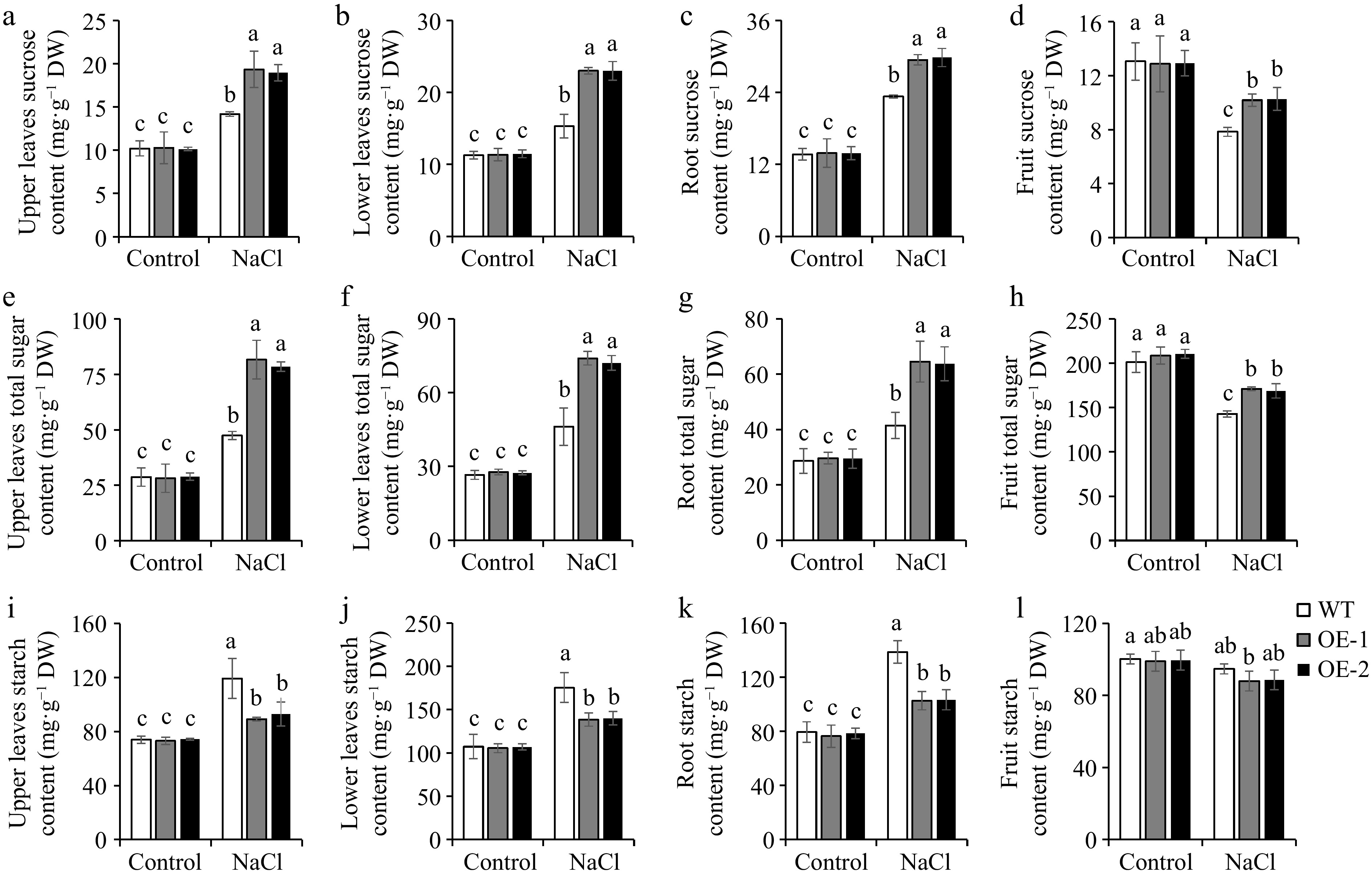
Figure 6.
The influences of overexpression of SlSAMS1 on sugar contents in the upper leaves, lower leaves, roots, and fruits of tomato adult plants under salt stress. (a)−(d) Sucrose content, (e)−(h) total sugar content, and (i)−(l) starch content of WT lines and OE under control and NaCl treatment. Values are the mean ± SD of three biological replicates, and four plants are included in each replicate. The letters indicate significant differences (Tukey's test, p < 0.05).
-
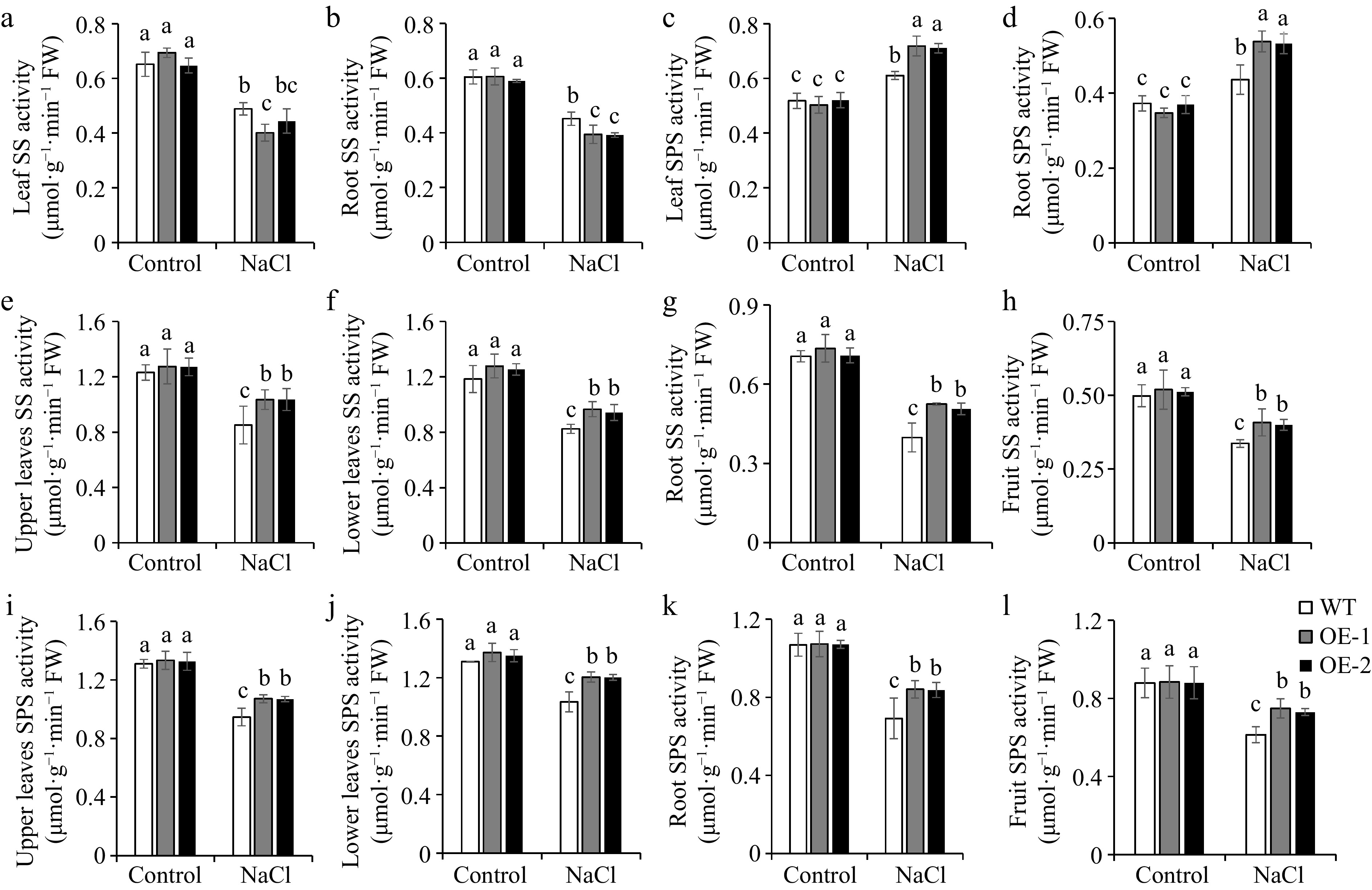
Figure 7.
Overexpression of SlSAMS1 adjusts carbon metabolism-related enzyme activities in the leaves and roots of tomato seedlings, and upper leaves, lower leaves, roots, and fruits of adult plants under salt stress. (a), (b), (e)−(h) Sucrose synthase (SS) and (c), (d), (i)−(l) sucrose phosphate synthase (SPS) activity of WT and OE lines under control and NaCl treatment. Values are the mean ± SD of three biological replicates, and four plants are included in each replicate. The letters indicate significant differences (Tukey's test, p < 0.05).
-
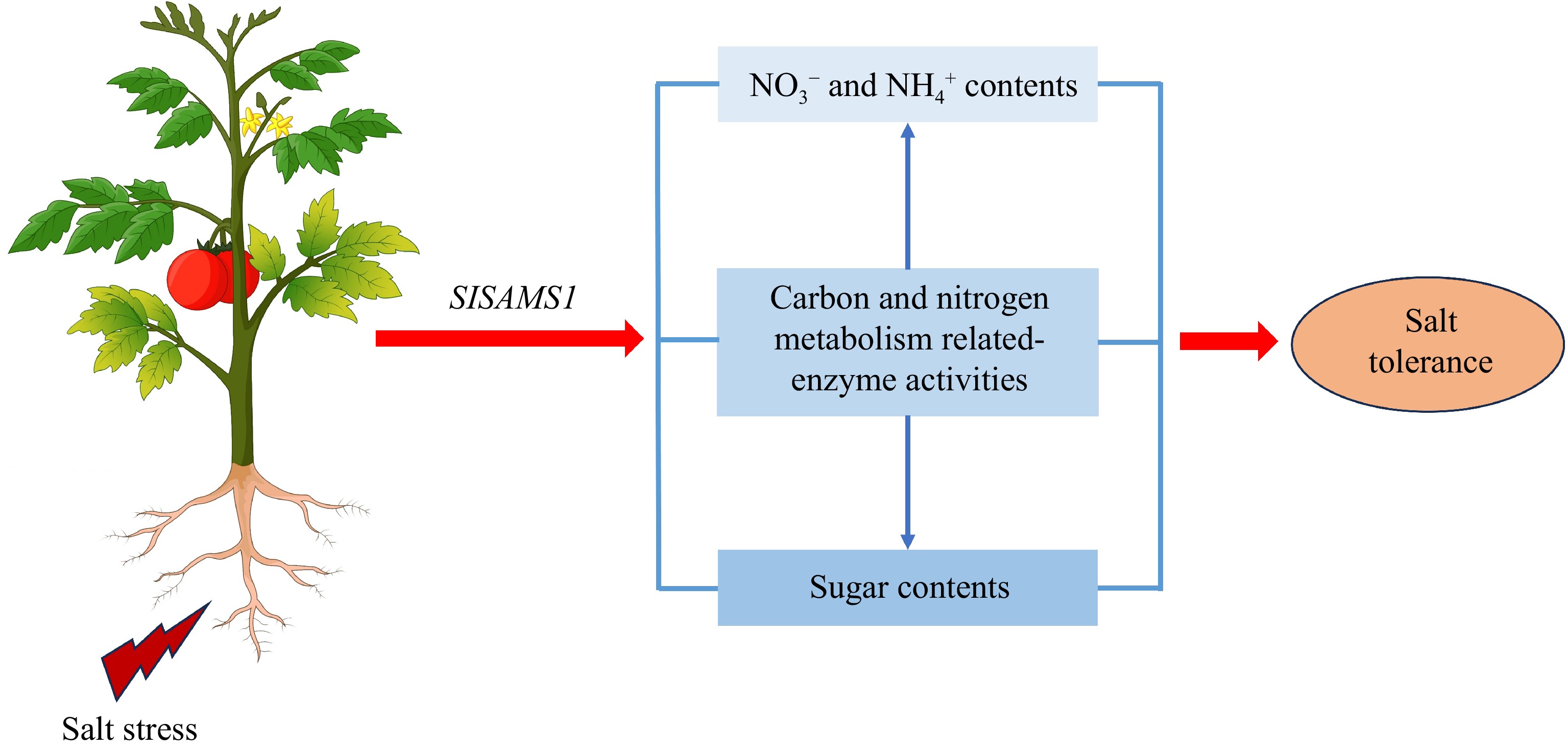
Figure 8.
Proposed model showing that SlSAMS1 overexpression enhances tomato salt tolerance by regulating carbon and nitrogen metabolism. Under salt stress, the SlSAMS1 expression is activated; overexpression of SlSAMS1 maintains high levels of energy metabolism, as evidenced by increased NO3−, NH4+, and sugar content, and carbon and nitrogen metabolism-related enzyme activities, thus enhancing tomato salt tolerance. In this pathway, the altered enzyme activities are also responsible for the changes of nitrogen and sugar levels.
Figures
(8)
Tables
(0)