-
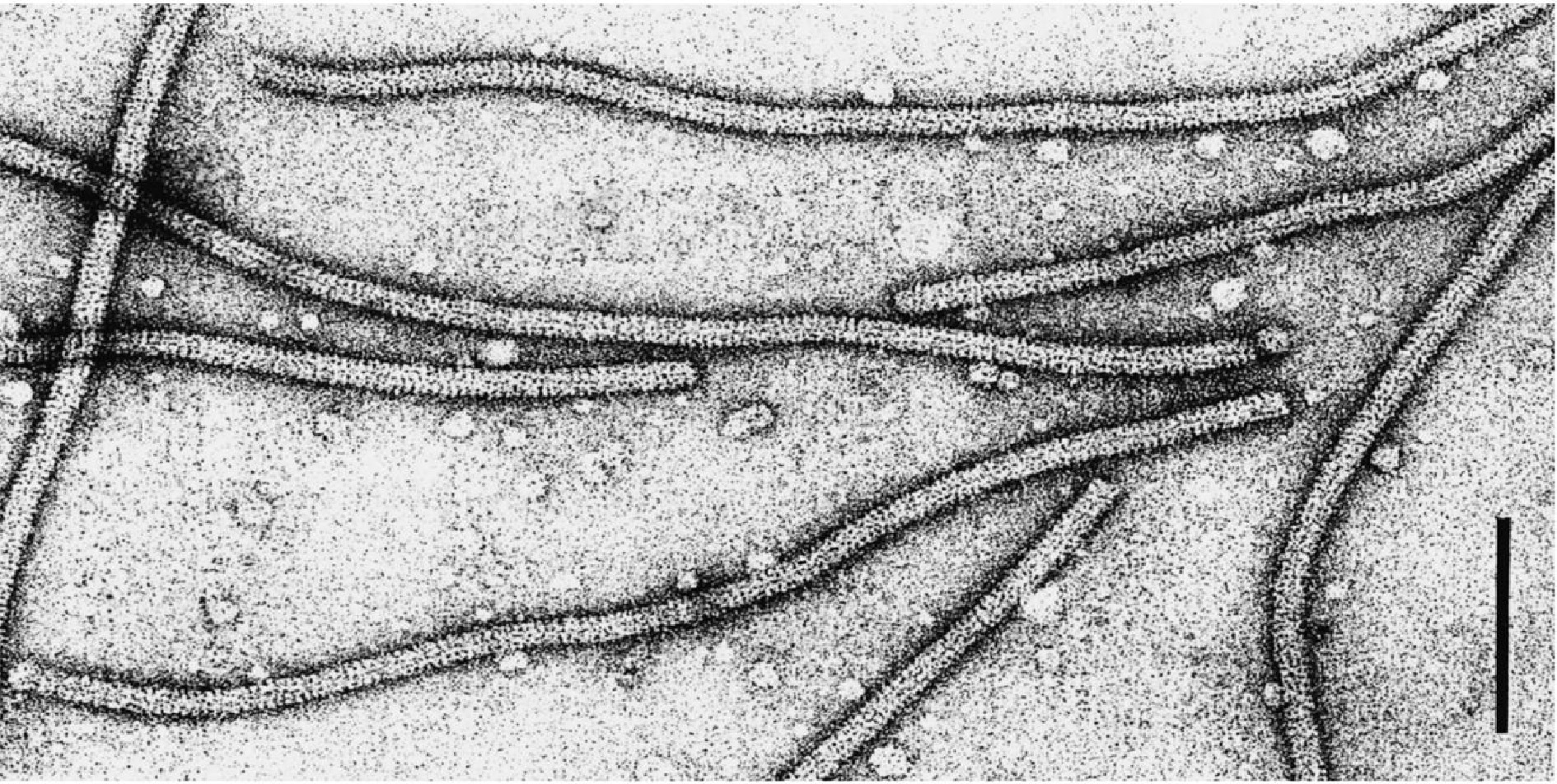
Figure 1.
Potexvirus viral particles. Negative-contrast electron micrograph of particles of an isolate of potato virus X. The bar represents 100 nm (Courtesy of D.-E. Lesemann). The picture was downloaded from the International Committee on Taxonomy of Viruses (ICTV),
https://ictv.global/report/chapter/alphaflexiviridae/alphaflexiviridae/potexvirus . -
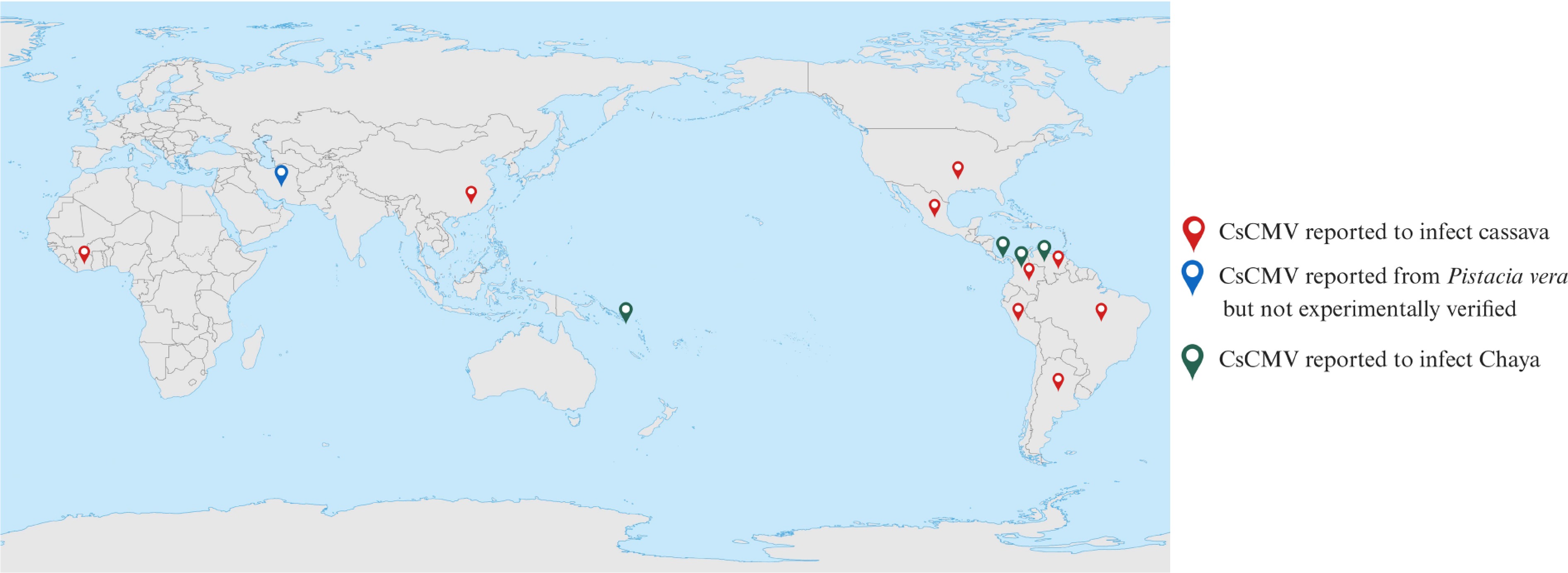
Figure 2.
Geographical distribution of cassava common mosaic virus (CsCMV). CsCMV viral genomes were reported mainly from Latin America and Asia in countries such as Brazil, Argentina, Venezuela, Colombia, Paraguay, Peru, and China. In addition, CsCMV was reported in Côte d'Ivoire and Tuvalu. CsCMV has also been identified in chaya (Cnidoscolus chayamansa or Cnidoscolus aconitifolius) in Mexico, Venezuela, Tuvalu, Florida, Costa Rica, and Colombia.
-
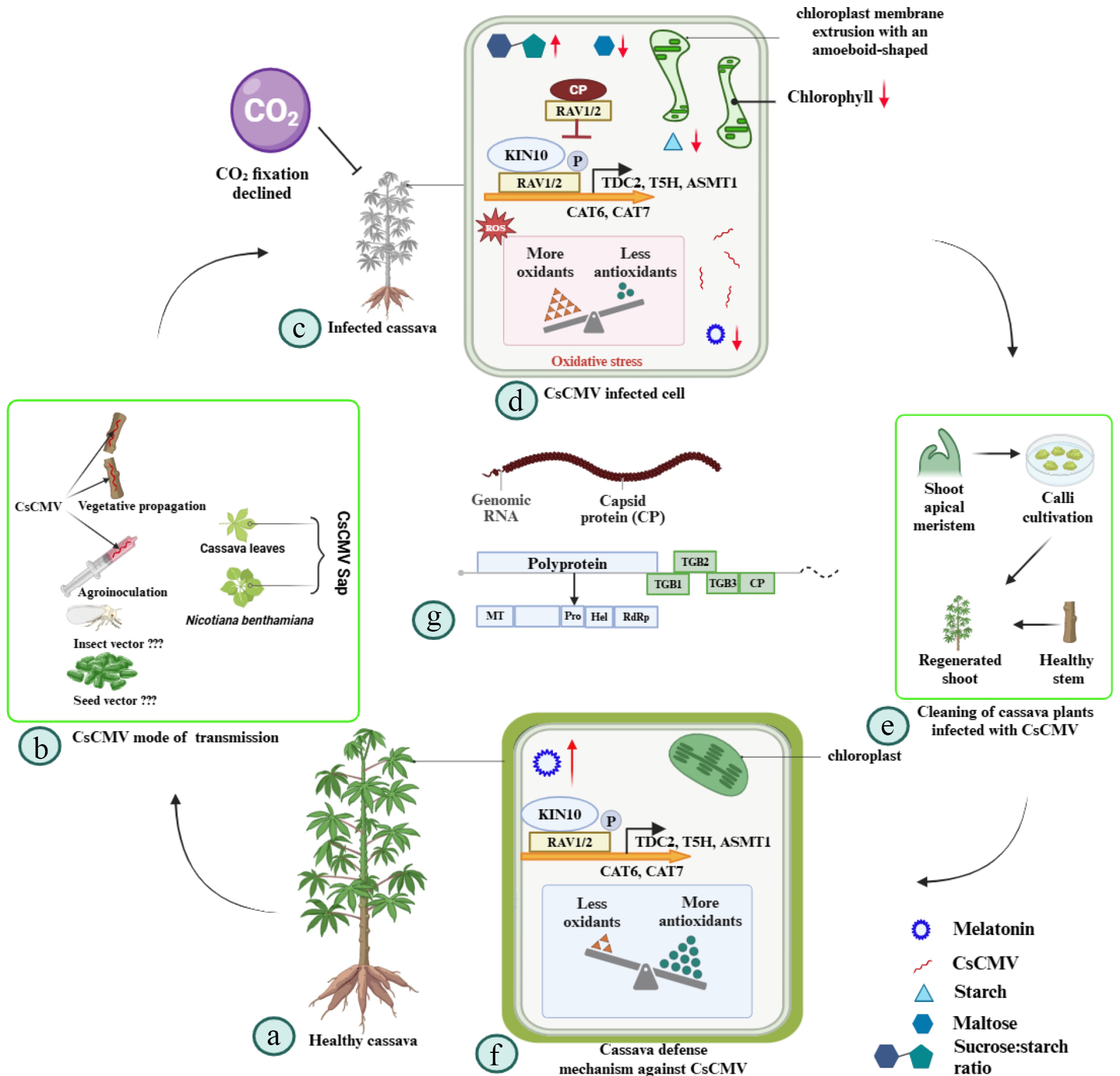
Figure 3.
Advances in research into cassava common mosaic virus (CsCMV). (a) Healthy cassava. (b) Mode of transmission. (c) Infected cassava. (d) Infected cell. (e) Cleaning of cassava-infected plants. (f) Defense mechanism. (g) Genome organization of Potexvirus. RNA-dependent RNA polymerase (RdRp); triple gene block (TGB); coat protein (CP); helicase (Hel); methyltransferase (MT). CsCMV can be transmitted through agroinoculation, vegetative propagation, and sapping, although no seed or insect transmission vectors have been identified. Cassava infected with CsCMV exhibits various physiological effects, including chloroplast membrane extrusion with ameboid-like shapes, oxidative stress, reduced CO2 fixation, and diminished chlorophyll levels, negatively impacting photosynthesis. Additionally, infections lead to decreased maltose and starch content in the plant. Melatonin positively regulates cassava's resistance to CsCMV. CsCMV infections can be addressed by isolating and regenerating the shoots' apical meristem. Furthermore, only healthy plants or stems should be used for vegetative propagation. The cutting tools should be regularly disinfected to minimize the risk of transmission.
Figures
(3)
Tables
(0)