-
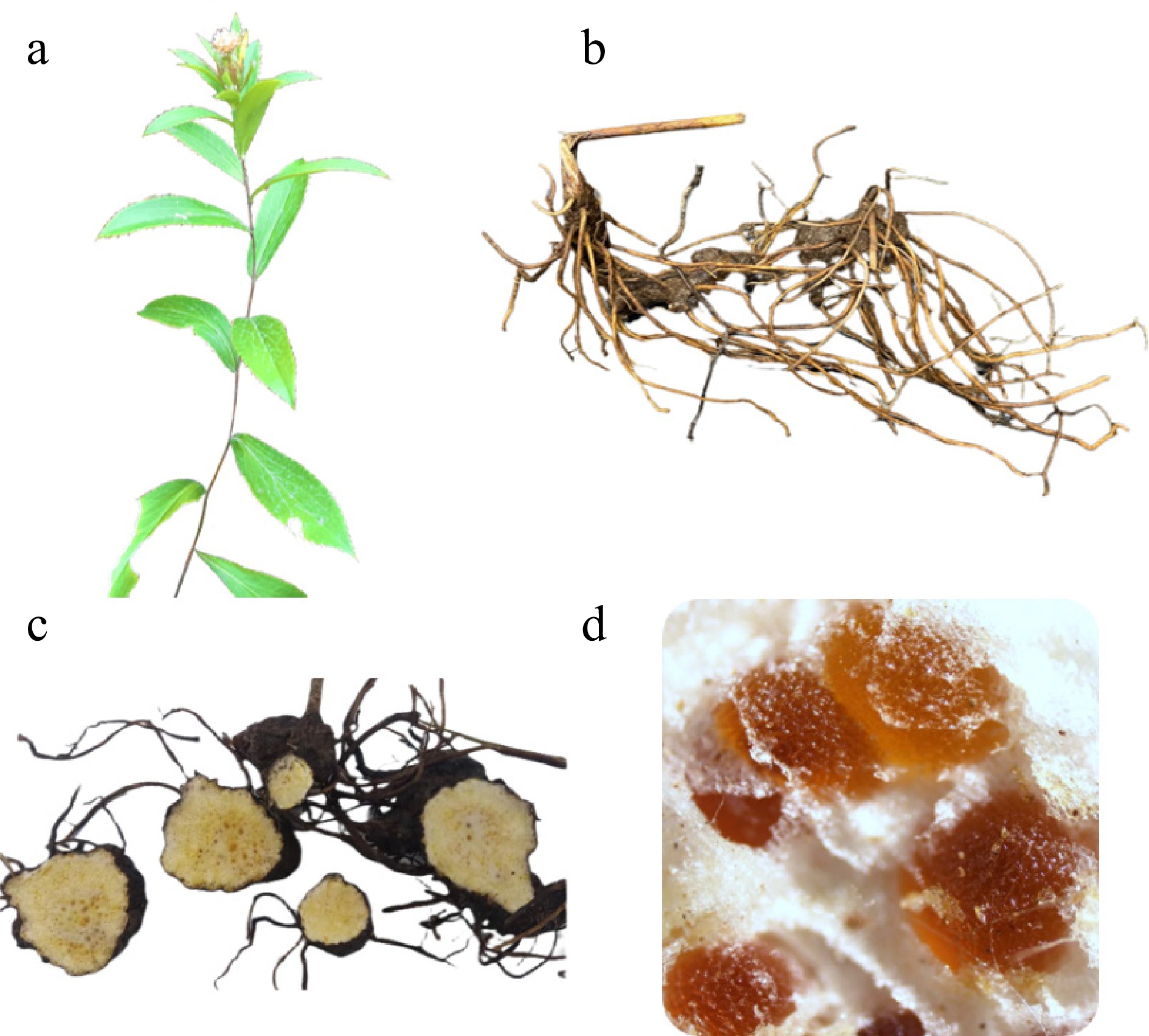
Figure 1.
Characteristics of plant morphology and rhizome traits of Atractylodes lancea. (a) Plant morphology of wild A. lancea. (b) Rhizome traits. (c) Cross-section of rhizome. (d) Cinnabar-like oil glands in A. lancea rhizome.
-
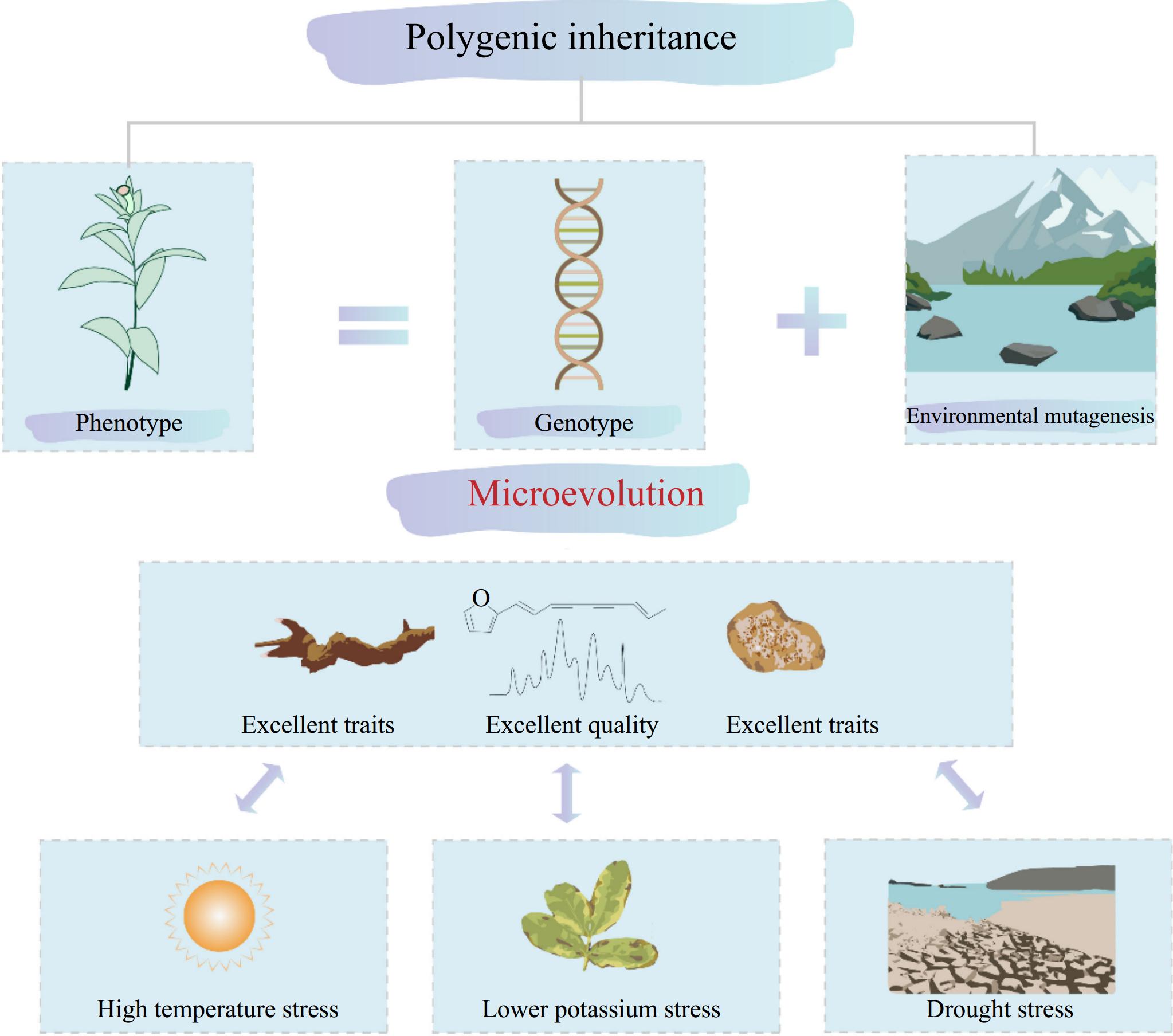
Figure 2.
The microevolutionary processes of the quality formation of Dao-di Atractylodes lancea.
-
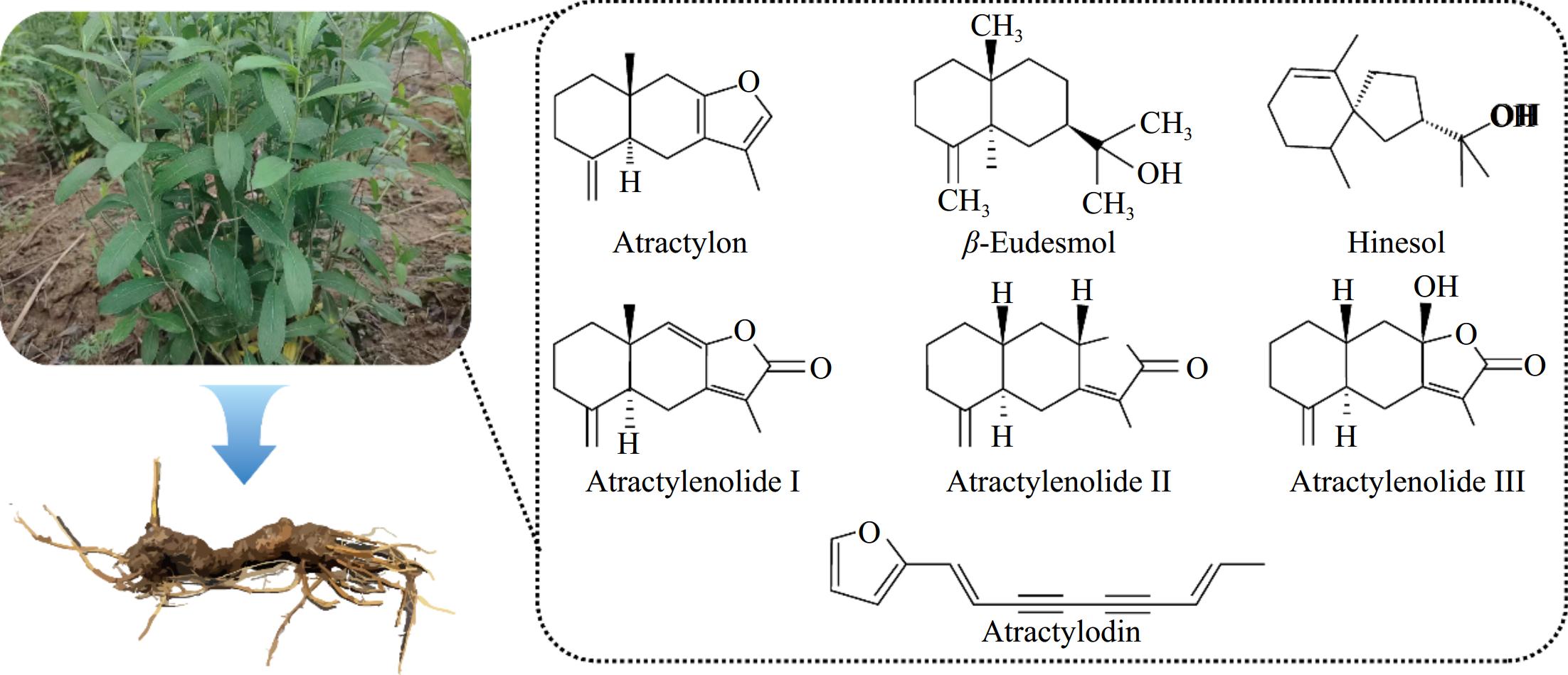
Figure 3.
The main volatile oil components of Atractylodis rhizoma.
-
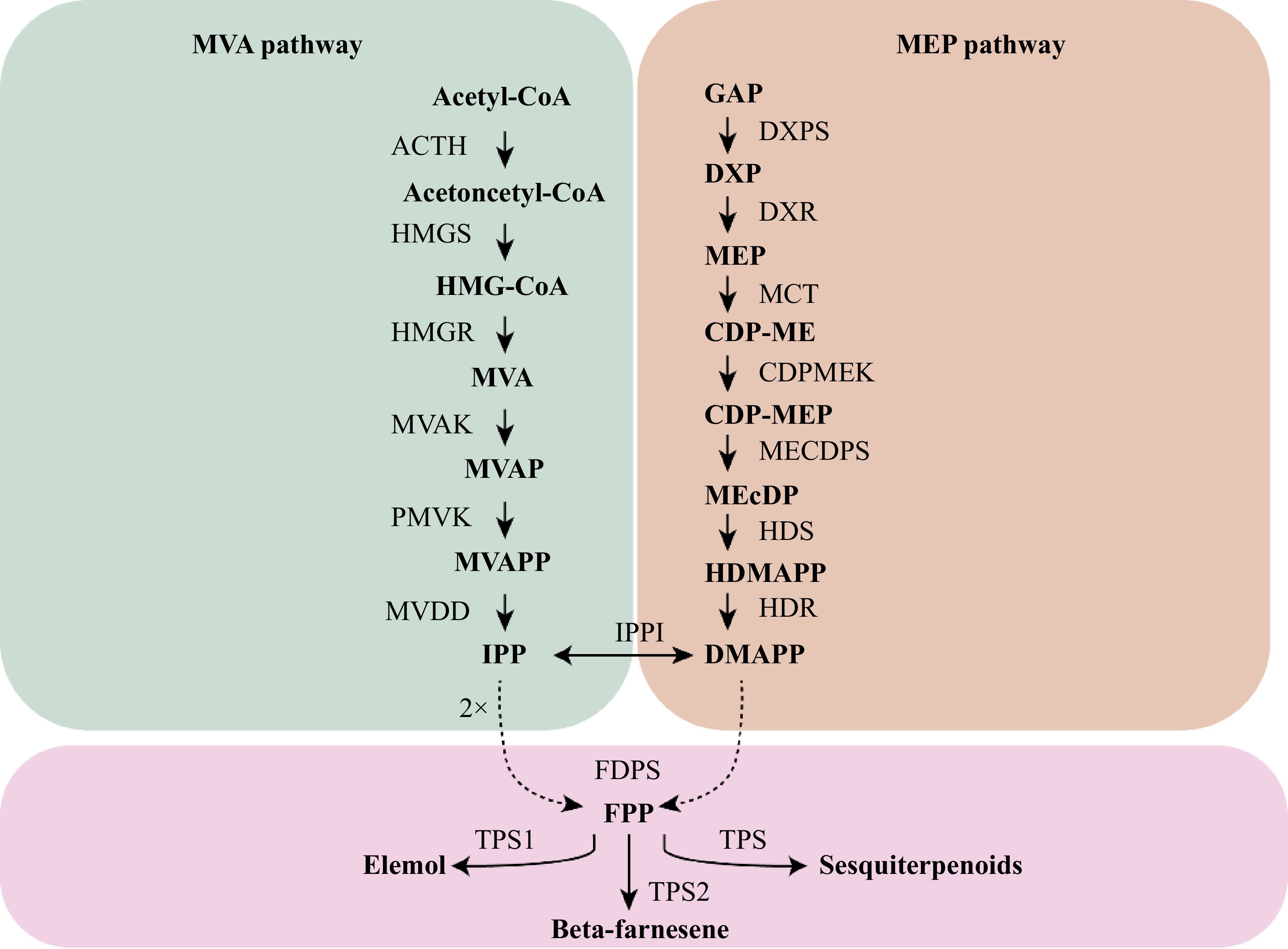
Figure 4.
Biosynthetic pathways of sesquiterpenoids in A. lancea.
-
Grade 1 Grade 2 Grade 3 Dao-di producing areas
of A. lanceaNon-Dao-di producing areas
of A. lanceaMorphological characteristics Excellent traits Spot of oil cavity Much Less Moniliform Moniliform, mostly long cylindrical Mostly nodular or mass-like in shape Quality Chemical type Atractylone : atractylodin : hinesol :
β-eudesmol0.70–2.00 : 1 : 0.04–0.35 : 0.09–0.40 0–7 : 1 : 9–147 : 6–100 Climate Temperature Annual average temperature 15–15.4 °C 8.8–15.4 °C The average lowest temperature
of the coldest month–2 to 1 °C –15 to 1 °C The average highest temperature
of the hottest month32 °C 27–32 °C Extreme minimum temperature –17.5 to –15.5 °C –25 to –13 °C Precipitation Annual average precipitation 1,000–1,160 mm 530–1,740 mm Soil Inorganic elements Potassium (K) element 146.0 mg/kg 279.5 mg/kg Soil microorganism Fungi Predominant bacteria: Fusarium, Ankylobacter, and Penicillium genera Predominant bacteria: Trichoderma, Fusarium, Aspergillus, and unclassified Ascomycota fungi Bacterium Predominant bacteria: Gallales and Burkholderia genera Predominant bacteria: Bacillus and Burkholderia genera Table 1.
Chemical and biogeographic fingerprints of Dao-di herbs and the habitats of Atractylodes lancea.
Figures
(4)
Tables
(1)