-
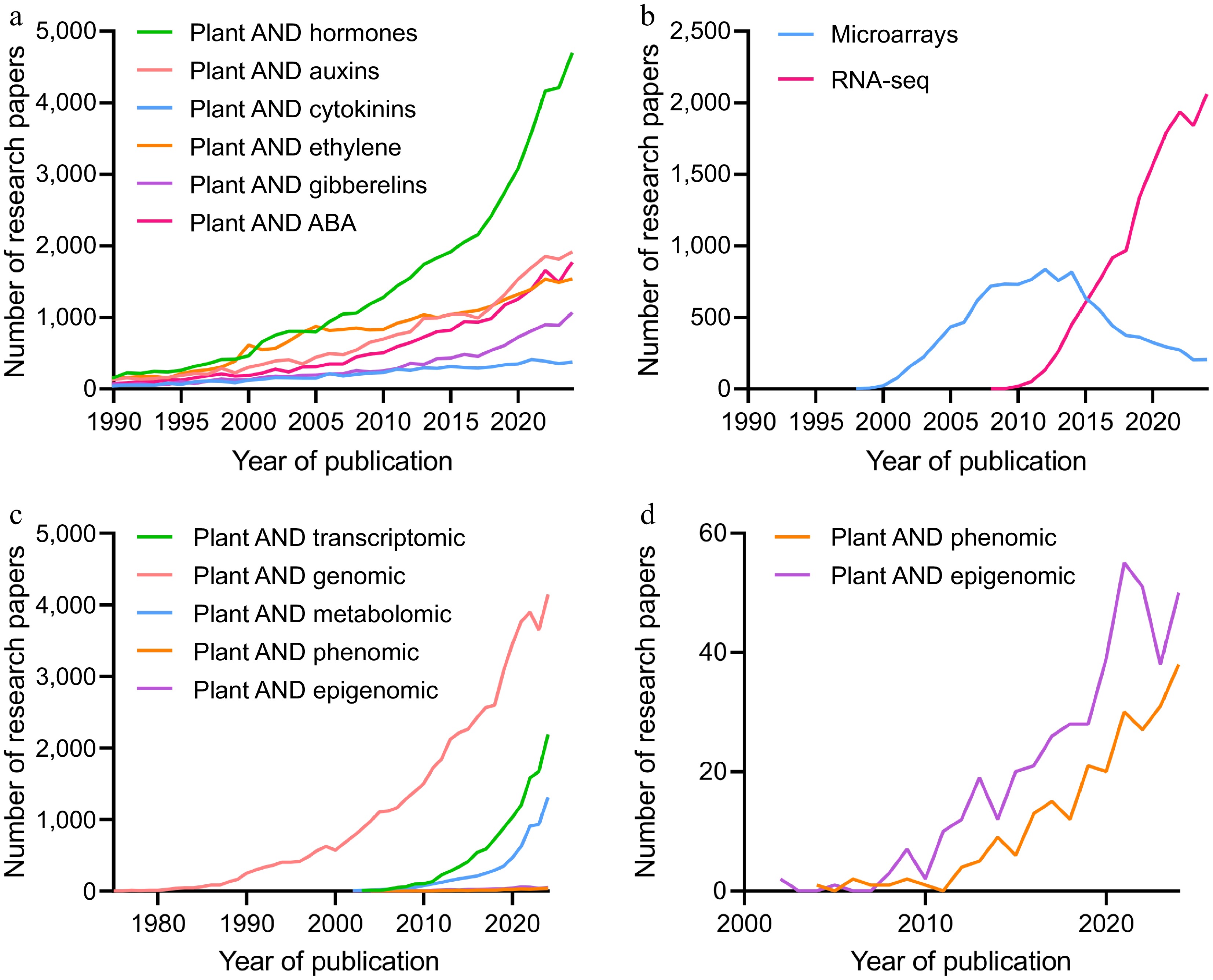
Figure 1.
(a) Number of research papers published on plant hormones, (b) transcriptional data, and (c) plant omics over the past 40 years. (d) A close-up view of 'plant AND phenomic' and 'plant AND epigenomic'. Data were obtained from Scopus on February 13, 2025, based on the number of publications containing the indicated keywords in titles, abstracts, or keywords.
-
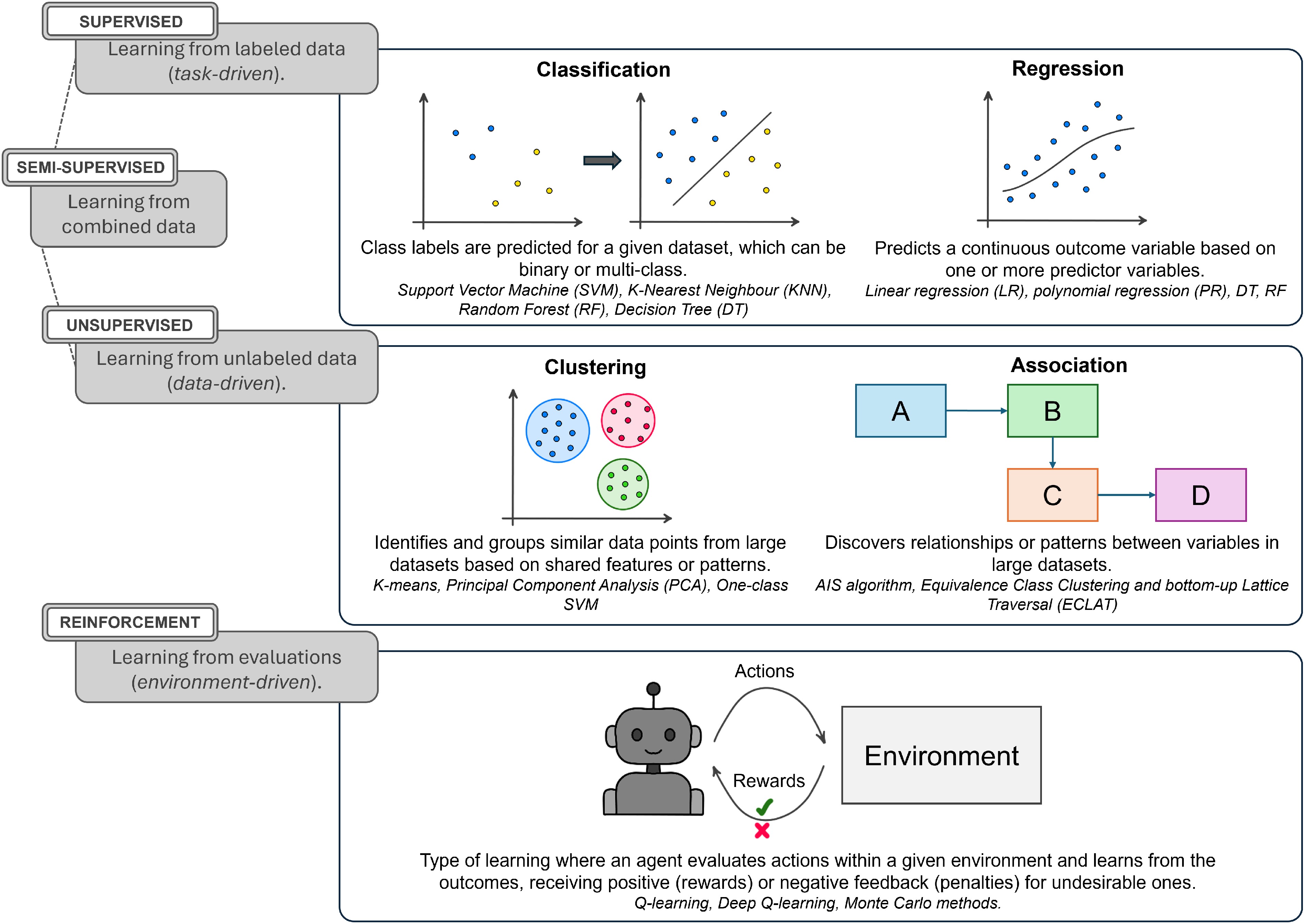
Figure 2.
Schematic representation of different machine learning (ML) approaches, categorized by learning type and functionality.
-
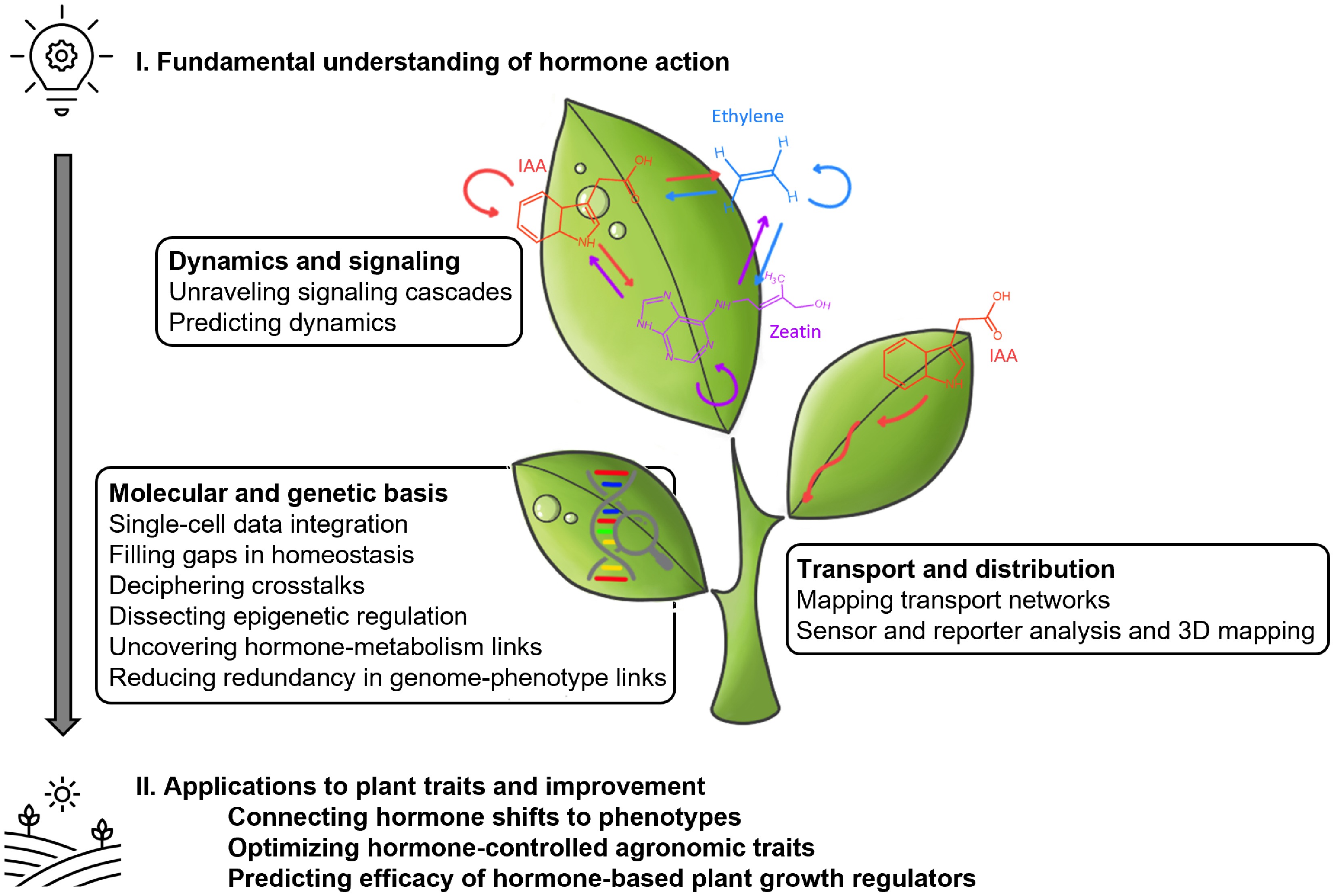
Figure 3.
Schematic representation of potential applications of AI in plant hormone research. Data from different biological layers (genomics, transcriptomics, proteomics, and metabolomics) can be integrated using artificial intelligence (AI) to unravel the complex regulatory networks underlying plant hormone function, and how a fundamental understanding of hormone action can be translated into practical applications in agriculture. Each leaf represents a key topic in hormone biology. Three representative hormones: ethylene, indole-3-acetic acid (IAA; auxin), and zeatin (cytokinin) are depicted as example molecules.
Figures
(3)
Tables
(0)