-
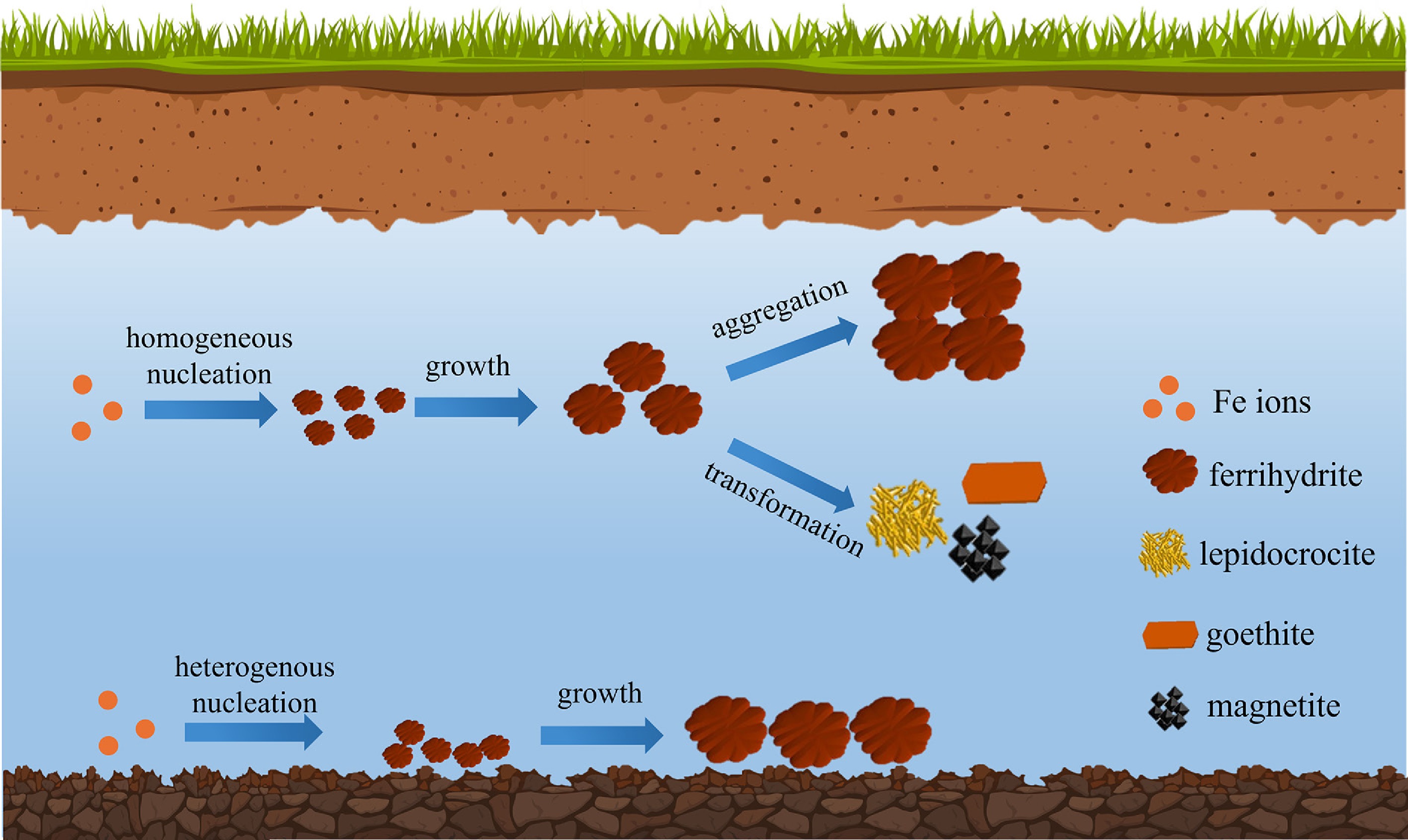
Figure 1.
The formation of IONPs through homogeneous and heterogeneous precipitation pathways, and their later growth, aggregation, and transformation.
-
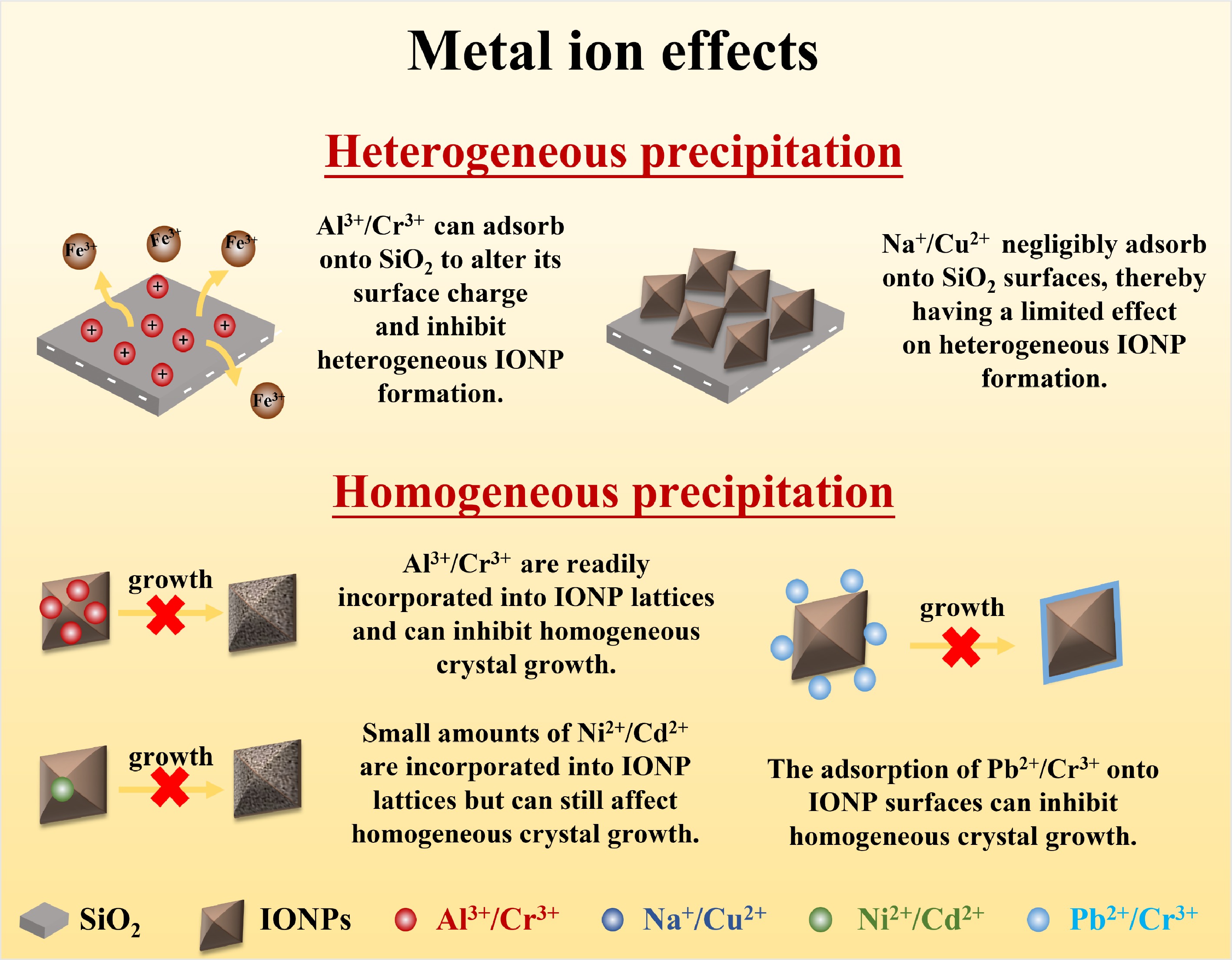
Figure 2.
Schematic diagram of mechanisms by which metal ions affect IONPs formation.
-
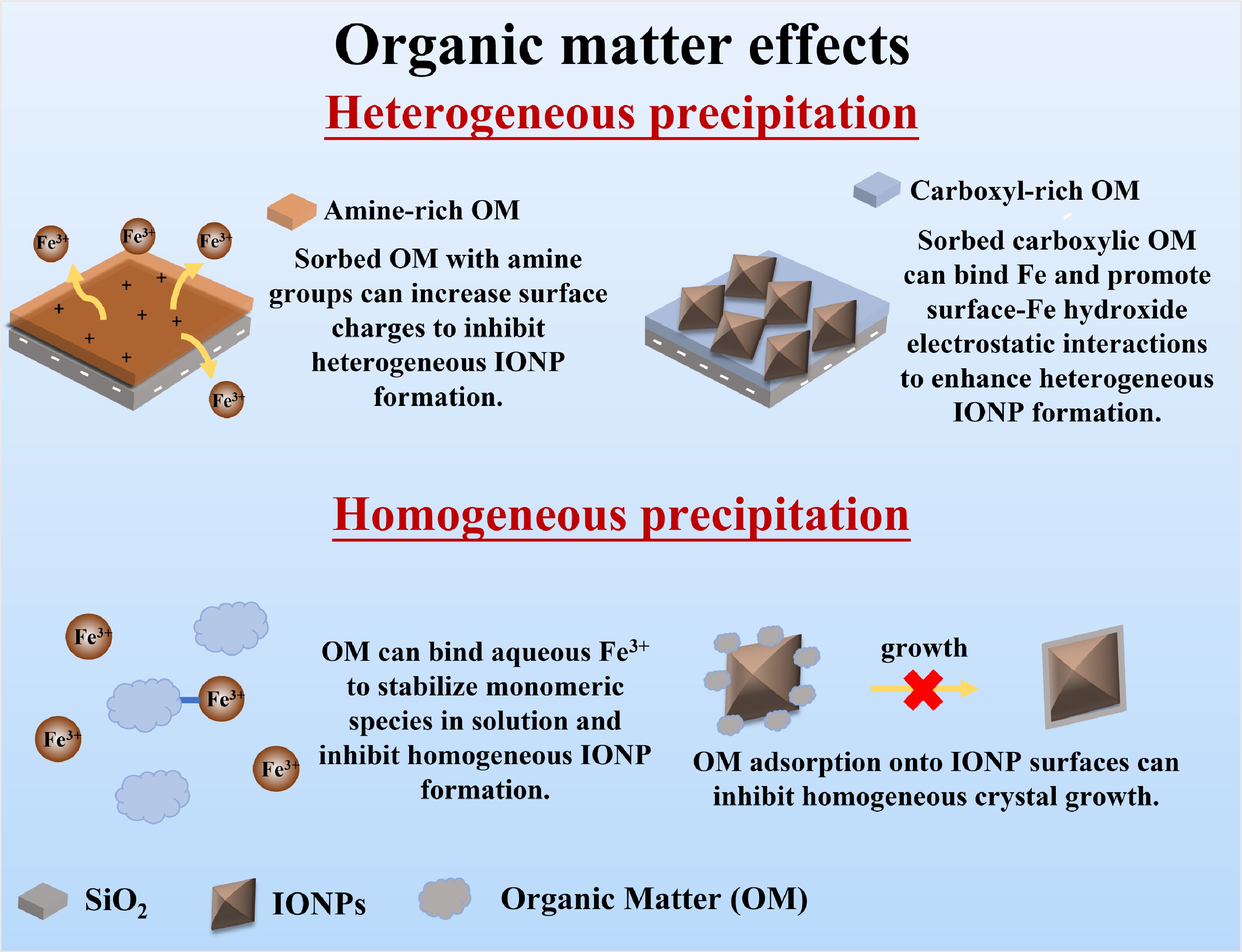
Figure 3.
Schematic diagram of mechanisms by which organics influence IONP formation.
-
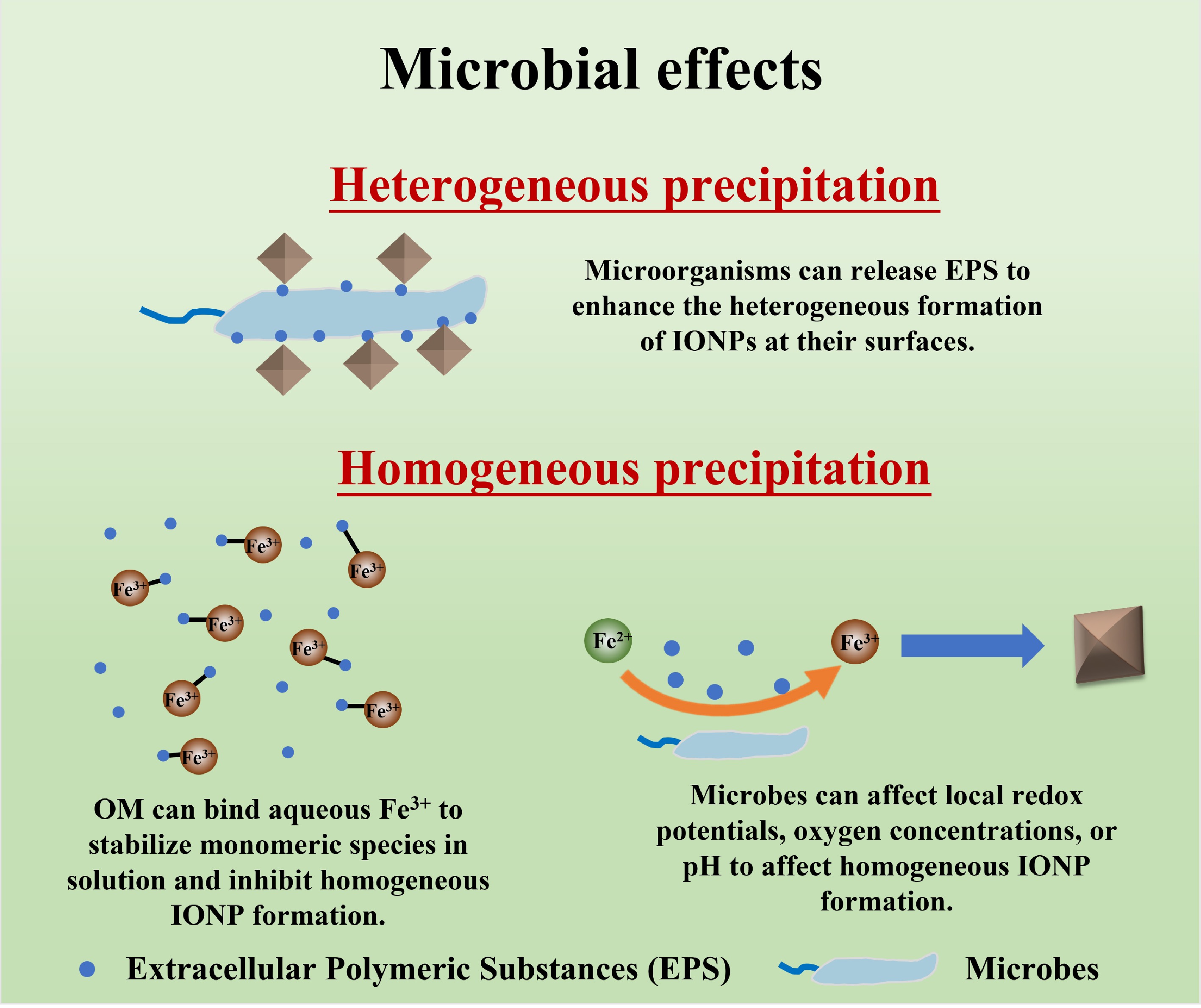
Figure 4.
Schematic diagram of the mechanisms by which microbial activity can influence IONP nucleation and growth.
-
Technique Application Strengths Limitations TEM/HRTEM Particle size, morphology, crystallinity High-resolution imaging Limited statistics, vacuum conditions XRD Crystalline phase identification Phase identification, crystallinity Poor sensitivity for amorphous or very trace crystalline phases Mössbauer spectroscopy Fe speciation, oxidation state Sensitive to Fe valence and coordination Requires specialized expertise and, in some cases, isotopic enrichment FTIR/ATR-FTIR Organic functional group interaction Identifies surface ligands and bonding Limited structural detail XPS Surface elemental composition and chemical bonding states Highly surface sensitive Shallow probing depth, vacuum conditions ICP-MS/SP-ICP-MS Elemental quantification / particle sizing High sensitivity / nanoparticle detection Requires careful calibration DLS/ζ-potential Colloidal size and surface charge Quick, aqueous-phase measurements Affected by polydispersity AFM Nucleation behavior on surfaces In situ, nanoscale resolution Limited to flat surfaces Synchrotron XAS (XANES/EXAFS) Oxidation state, local atomic structure Element-specific, coordination environment Requires beamtime access, long analysis times. Cryo-TEM Imaging particles in native hydrated state Preserves original morphology Technically demanding In situ SAXS/WAXS Real-time nanoparticle nucleation/growth kinetics Time-resolved, non-destructive Requires synchrotron or advanced lab setup In-situ liquid-TEM Real-time imaging of nucleation, aggregation Direct observation in liquid; dynamic tracking Beam damage risk; low throughput High-energy X-ray scattering Amorphous or short-range ordered structure analysis Suitable for disordered materials Needs synchrotron access Table 1.
Analytical techniques currently employed in the literature for characterizing IONP formation and stability
Figures
(4)
Tables
(1)