-
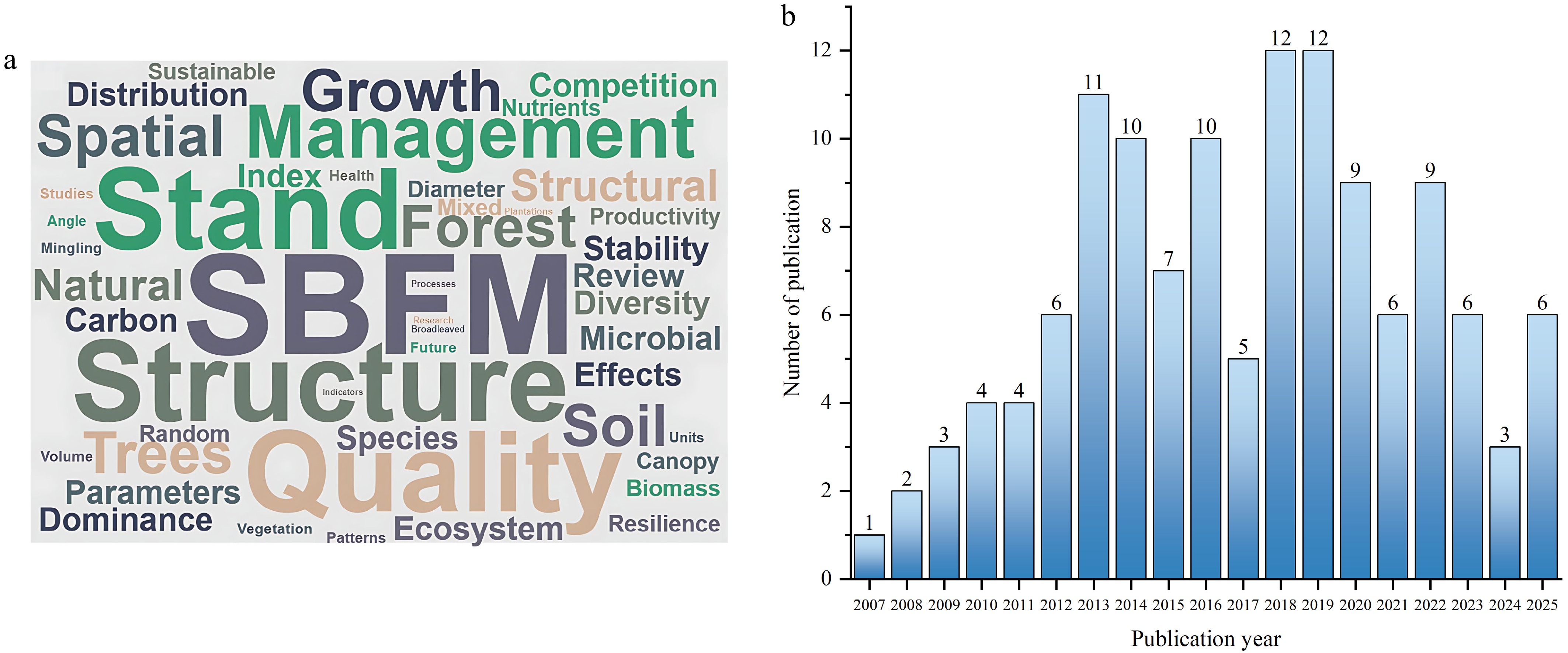
Figure 1.
Research hotspots and publication trends in structure-based forest management (SBFM). The word cloud shows the most frequent keywords from 126 studies (2007–2025), highlighting major themes such as stand structure, soil quality, and productivity (a). The line chart indicates a steady rise in SBFM publications, reflecting growing global interest in its application to sustainable forest management (b).
-
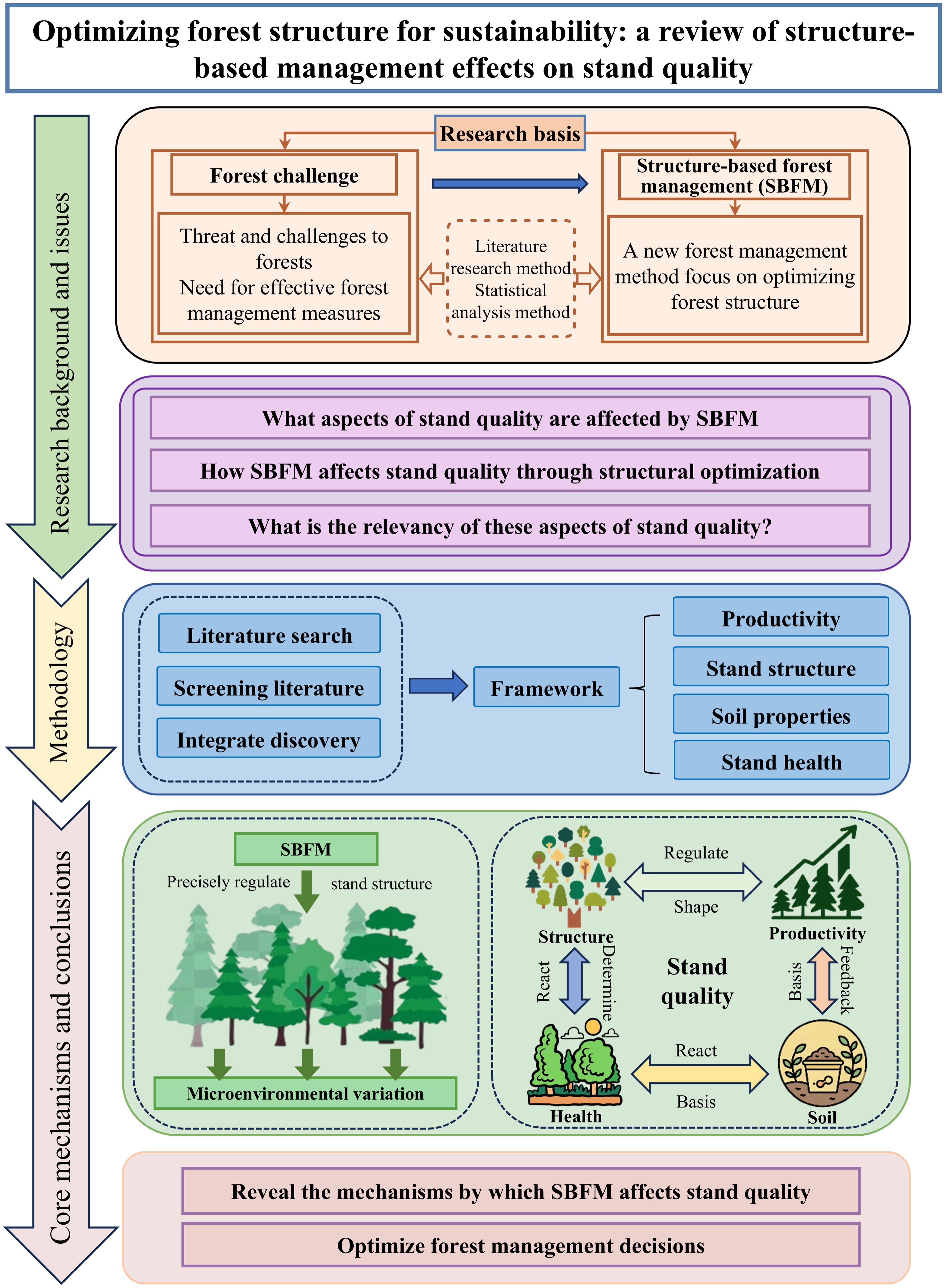
Figure 2.
The diagram summarizes the analytical framework linking SBFM practices with four interrelated components (stand productivity, structure, soil, and health), illustrating how spatial optimization enhances forest quality through feedback between above- and below-ground processes.
-
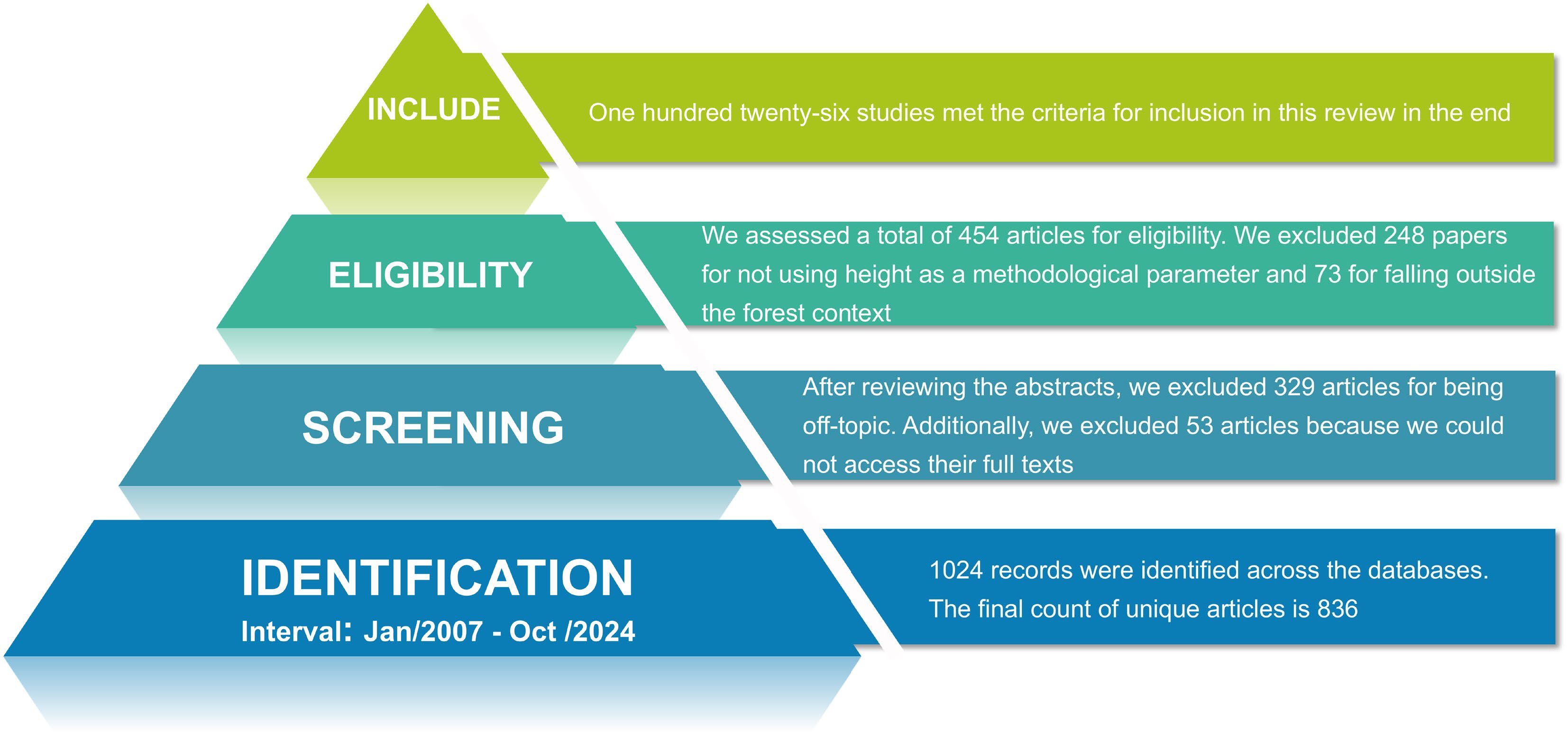
Figure 3.
PRISMA-compliant literature screening process for the systematic review.
-
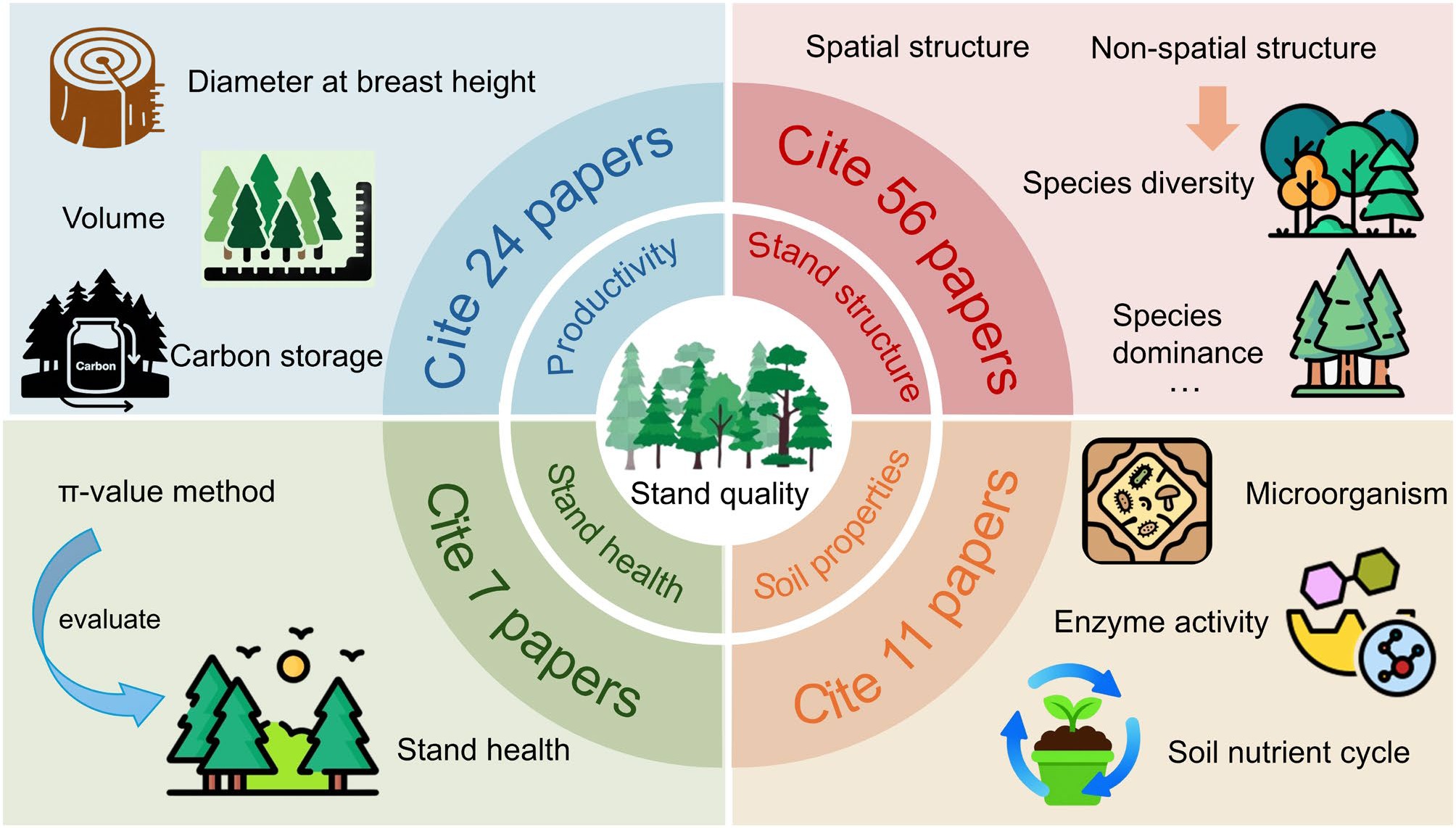
Figure 4.
The number of references cited for each aspect of forest stand quality in the review. The π-value method, used for assessing stand health, standardizes the evaluation by calculating the ratio of observed to ideal optimal states
-
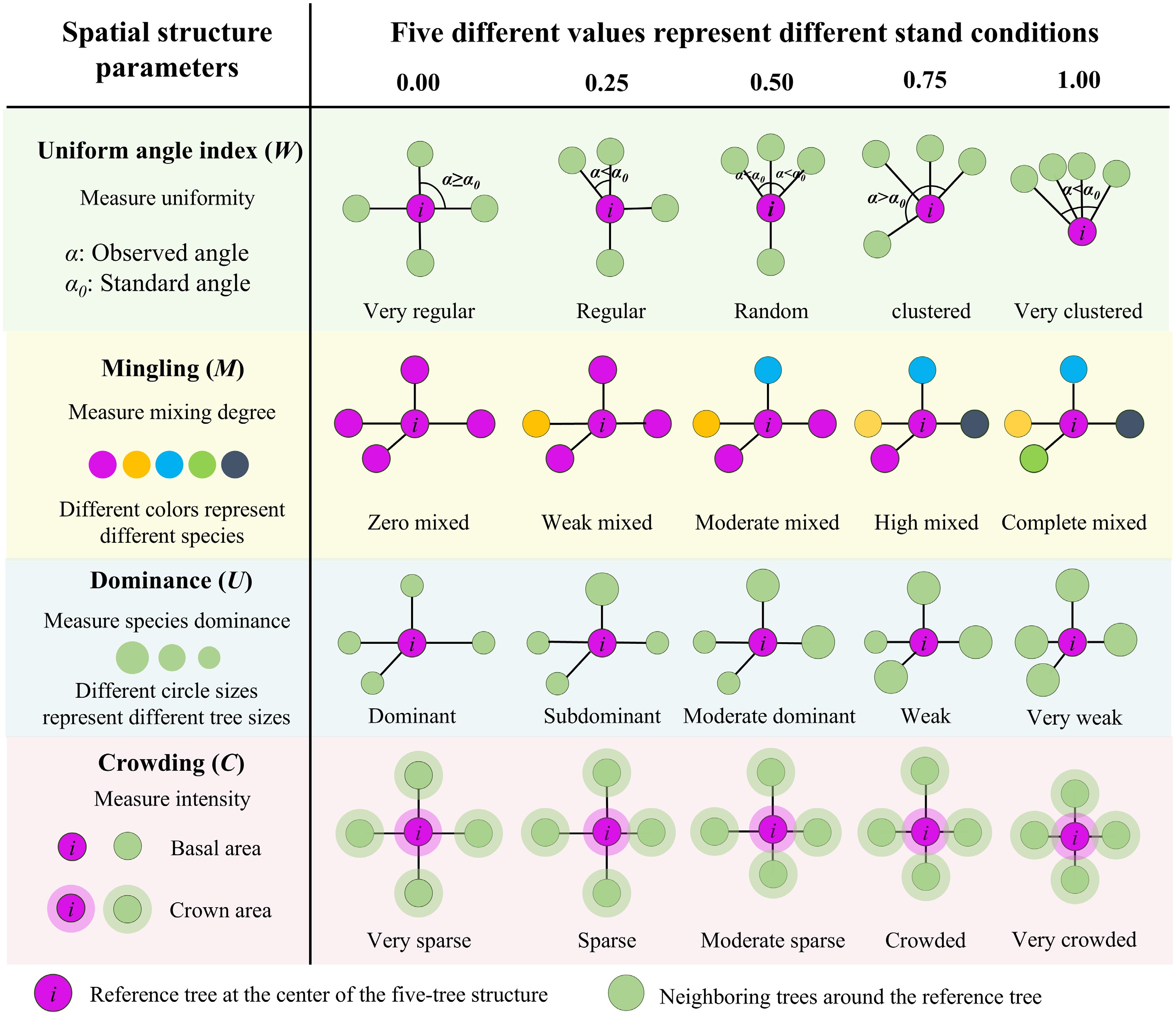
Figure 5.
Schematic diagram of spatial structure parameters based on five-tree structural units. This figure illustrates four key parameters for quantifying stand spatial structure: (1) The uniform angle index (W), where W = 0.5 represents an ideal random distribution typical of natural forests; (2) mingling (M), where M = 1 indicates the greatest level of species segregation; (3) dominance (U), where U = 0 identifies trees with significant competitive dominance; and (4) crowding (C), where C = 1 represents the strongest competitive stress. Through these four parameters, structure-based forest management can achieve precise diagnoses of stand spatial structure, thereby regulating it to an ideal state.
-
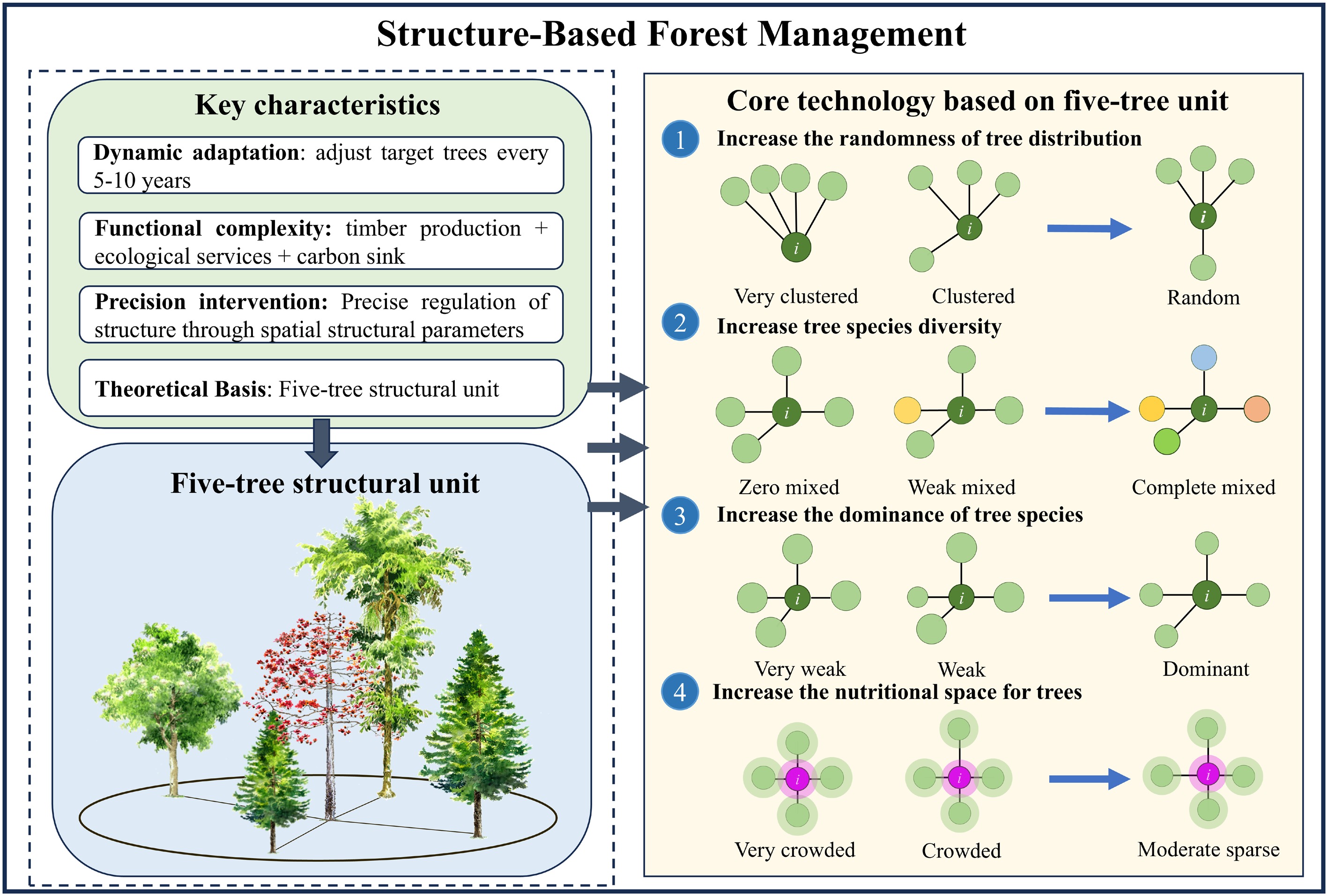
Figure 6.
Schematic diagram illustrating structure-based forest management (SBFM). The five-tree structural unit consists of a central tree and the four nearest trees within its unit cell. Based on the "five-tree structural unit," stand structure can be precisely regulated and optimized through spatial structural parameters, guiding forest development toward natural forests characteristics such as random distribution, complete species mixed, dominant tree species, and moderate sparse spacing.
-
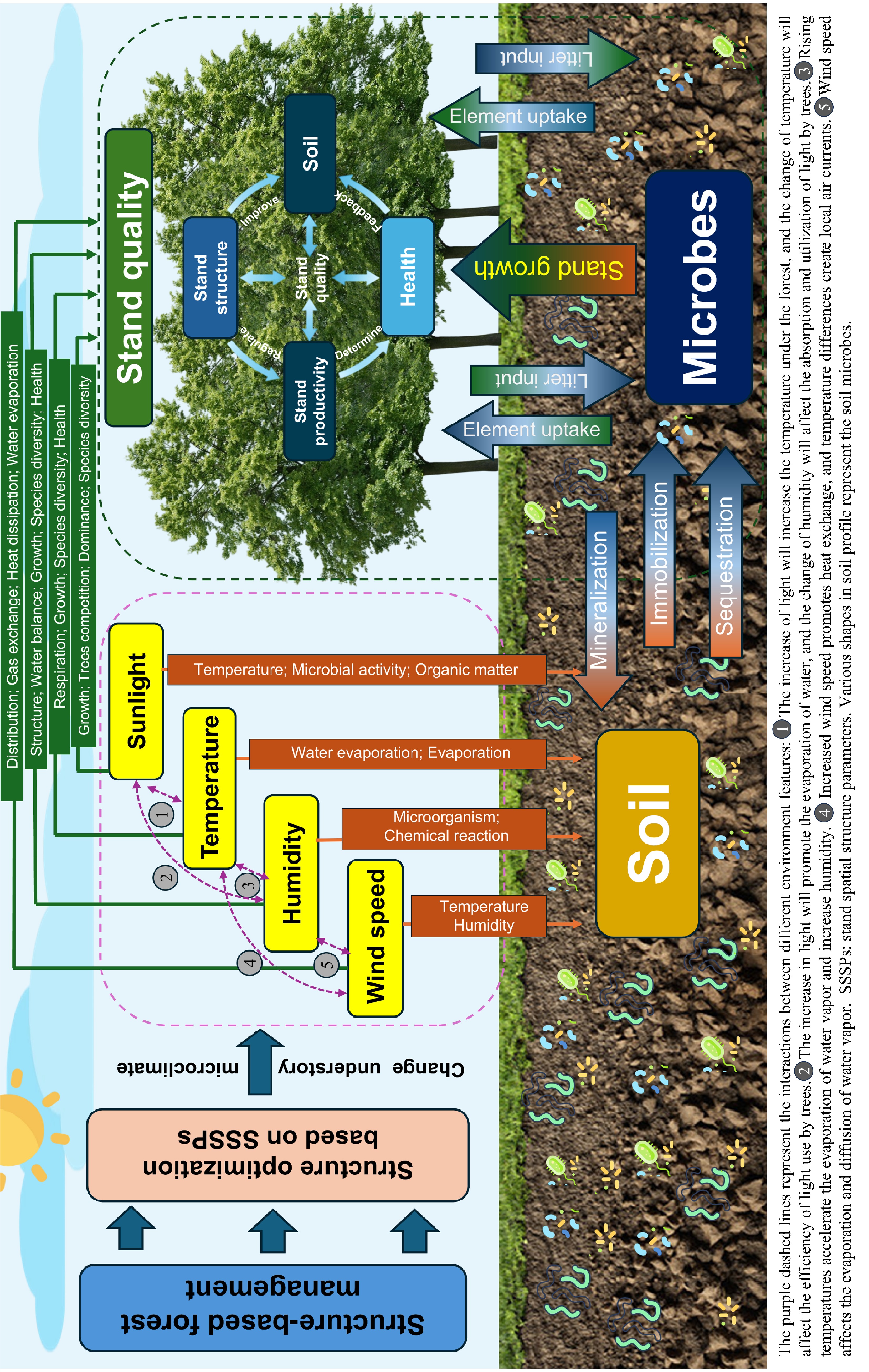
Figure 7.
This figure illustrates the interaction mechanism of structure, environment, and function in the forest ecosystem. The core pathway is as follows: SBFM optimizes the stand's spatial structure, which regulates the understory microclimate (light, temperature, humidity, wind speed), subsequently influencing soil and microbial processes (mineralization, immobilization, sequestration, litter decomposition, etc.), ultimately affecting stand quality (structure, productivity and health), thus forming a complete ecological chain.
Figures
(7)
Tables
(0)