-
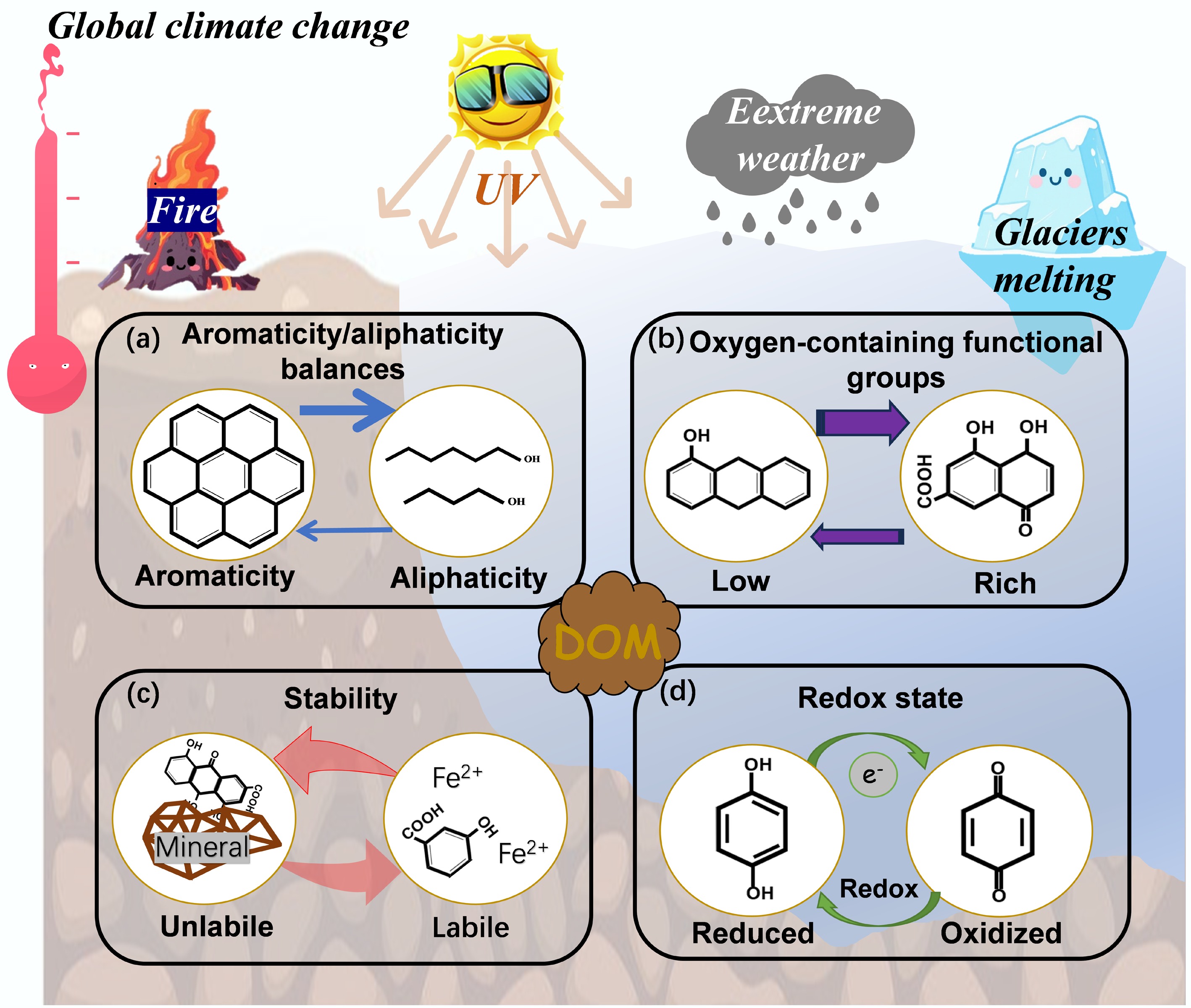
Figure 1.
Conceptual model illustrating climate change-induced alterations to DOM quality, driving transformations across key molecular characteristics: (a) aromaticity vs aliphaticity, (b) oxygen-functional group content, (c) stability (labile vs nonlabile), and (d) redox state. The larger arrows denote transformation pathways under a broader range of global climate change scenarios.
-
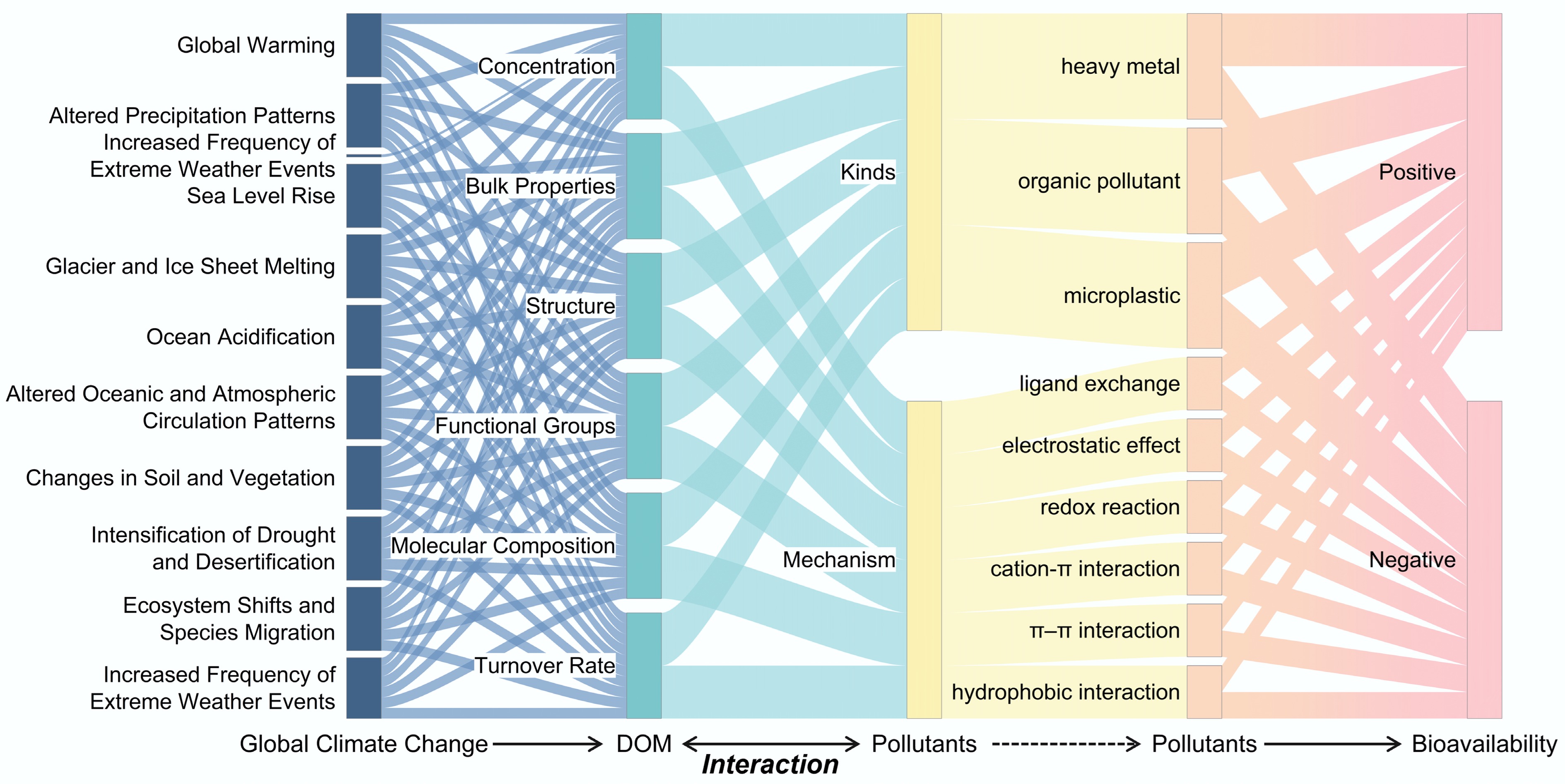
Figure 2.
Influence of global climate change on DOM properties and interaction with pollutants. Global climate change includes ten common events. DOM properties include concentration, bulk properties, structure, functional groups, molecular composition, and turnover rate. The interactions between DOM and pollutants include ligand exchange, electrostatic effect, redeox reaction, and cation–π/π–π/hydrophobic interactions.
-
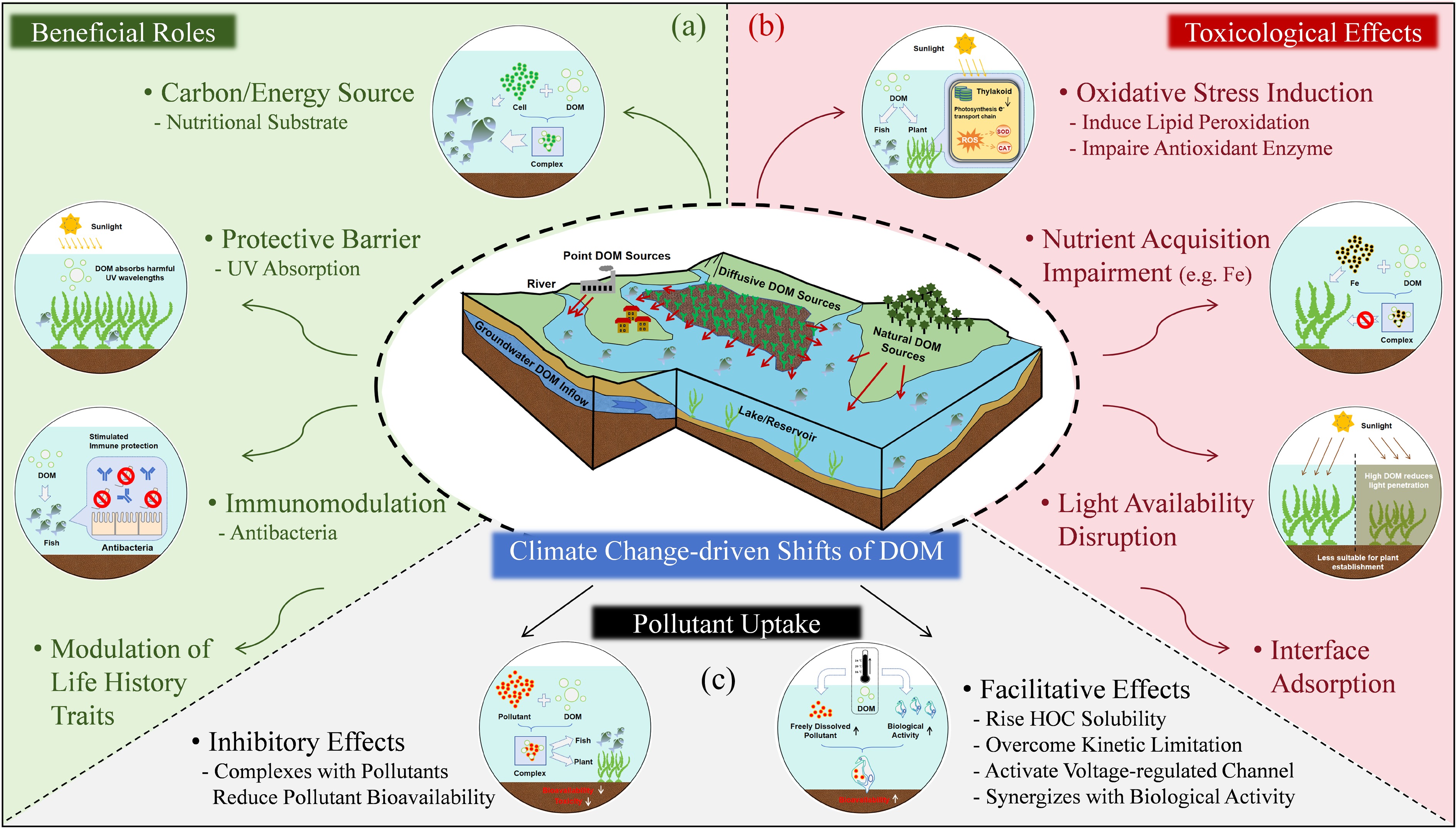
Figure 3.
Biological effects of DOM under climate change, illustrated through three aspects: (a) Beneficial roles as a carbon/energy source, protective barrier, immunomodulation, and modulation of life history traits; (b) Toxicological effects including oxidative stress induction, nutrient acquisition impairment, light availability disruption, and interface adsorption; and (c) Complex effect on the uptake of pollutants by organisms.
-
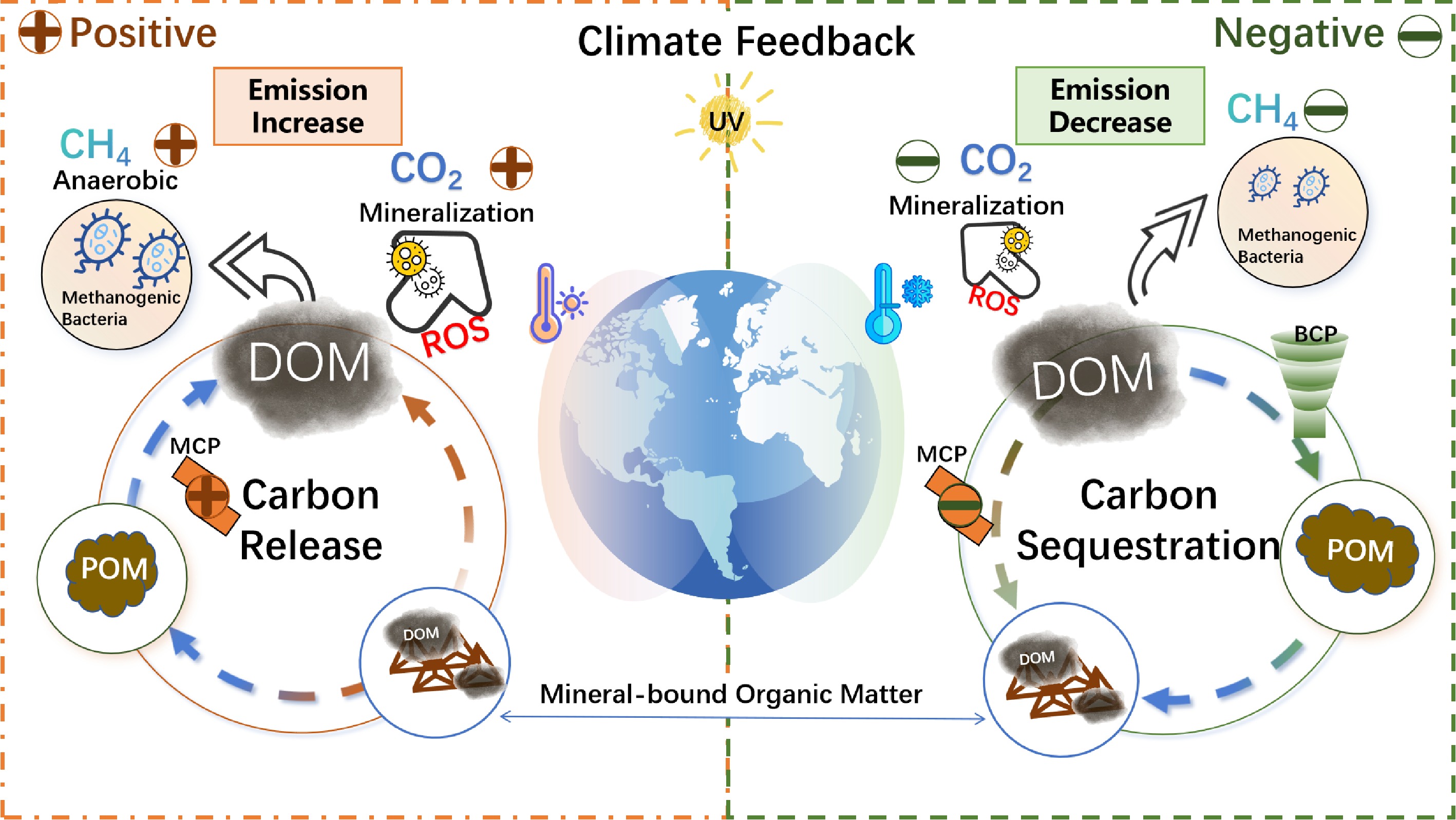
Figure 4.
Dual feedback mechanisms in climate regulation mediated by DOM dynamics. Global climate change modulates DOM transformation pathways, generating antagonistic climate feedbacks: positive feedback through greenhouse gas amplification (Positive) and negative feedback via carbon sequestration (Negative).
-
Classification Effect type Mechanism Ref. Beneficial role Carbon/energy source (i) Acts as a fundamental carbon/energy source; [83] (ii) Provides a nutritional substrate with low-nutrition-level organisms. [84] Protective barrier (i) Stimulates mucus secretion and antibacterial effectors; [91] (ii) Reshapes mucosal microbiota; [93] (iii) Absorbs harmful UV wavelengths to reduce DNA damage and maintain photosynthetic efficiency. [94] Protection Delay the aging of photosynthetic apparatus. [96] Modulation of life history traits Concentration- and quality-dependent effects:
(i) Low-to-moderate levels: enhance immune competence, antioxidative protection;[97] (ii) Increase hatching of fish larvae; [87] (iii) Induce multiple and transgenerational stress resistance; [88] (iv) Extends lifespan of invertebrates; [121] (v) Increase offspring numbers; (vi) Hydroxybenzene-enriched DOM improves thermal stress. [86] Toxicological effect Oxidative stress induction Generates ROS via redox-active functional groups (e.g., quinones), inducing lipid peroxidation and impairing antioxidant enzymes. [99,122] Nutrient acquisition impairment Complexes with essential elements (e.g., Fe(III) via -COOH, -OH groups) to form non-labile complexes, reducing free nutrient availability and inhibiting photosynthetic electron transport. [101] Light availability disruption (i) Chromophoric DOM absorbs sunlight, reducing its transmission depth and bioavailability; [102] (ii) High levels of humic substances enhance light absorption, constraining photosynthesis of submerged plants. [105] Interface adsorption (i) Adsorbs on mineral surfaces: Reshapes microenvironments and reduces microbial colonization. [106] (ii) Adsorbs on biological surfaces: Impairs physiological processes. [107] Pollutant
uptakeInhibitory effects Binds/complexes with pollutants, decreasing their free dissolved fraction and bioavailability, thus lowering bioavailability/bioaccumulation. [108] Facilitative effects (i) Increases solubility of HOCs via complexation, facilitating uptake by filter feeders; [112,114] (ii) Overcomes kinetic limitations: Rapidly donates pollutants to transporters, accelerating uptake; [117] (iii) Activates voltage-regulated channels for pollutant (mostly ionic pollutant) uptake; [119] (iv) Synergizes with biological activity: Warming-induced metabolic acceleration increases uptake of both free and DOM-associated pollutants. [120] Table 1.
Biological effects of DOM
Figures
(4)
Tables
(1)