-
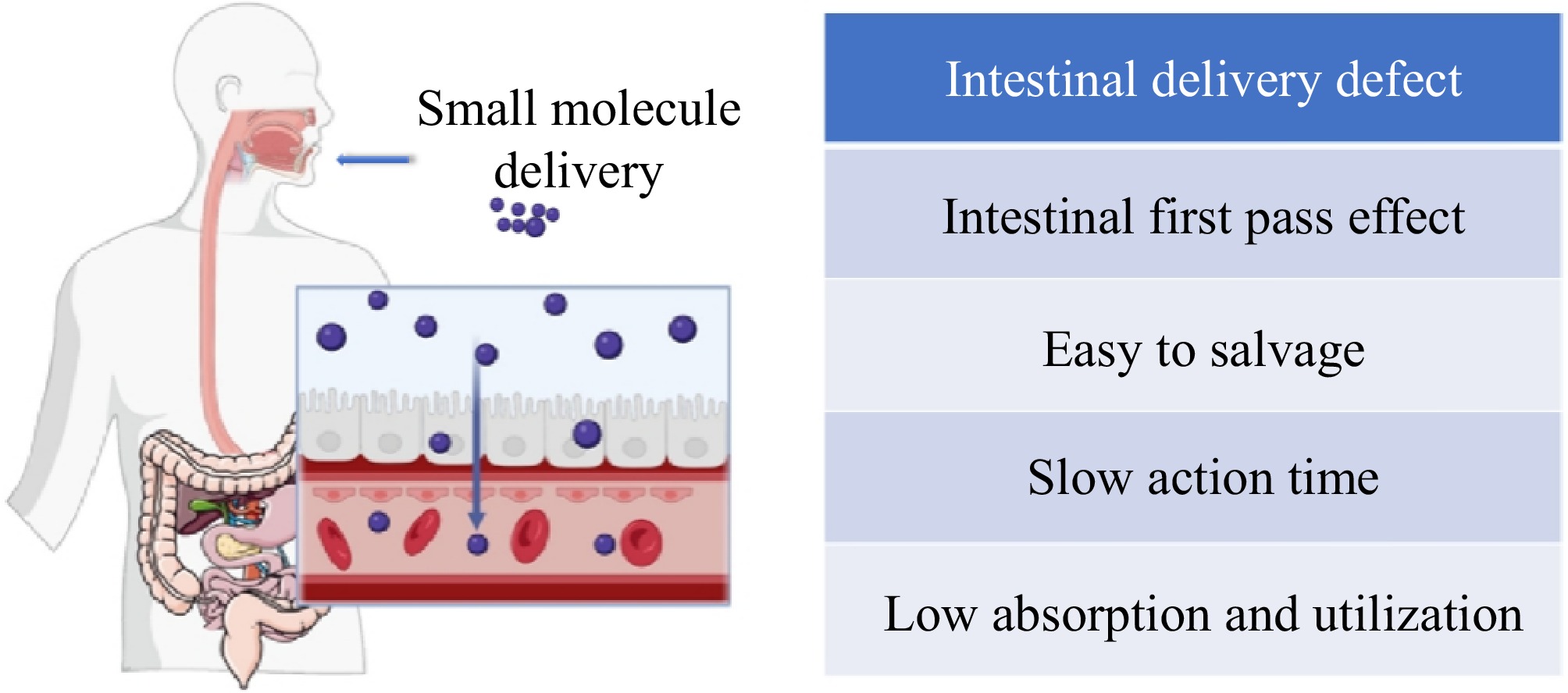
Figure 1.
Intestinal delivery defect.
-
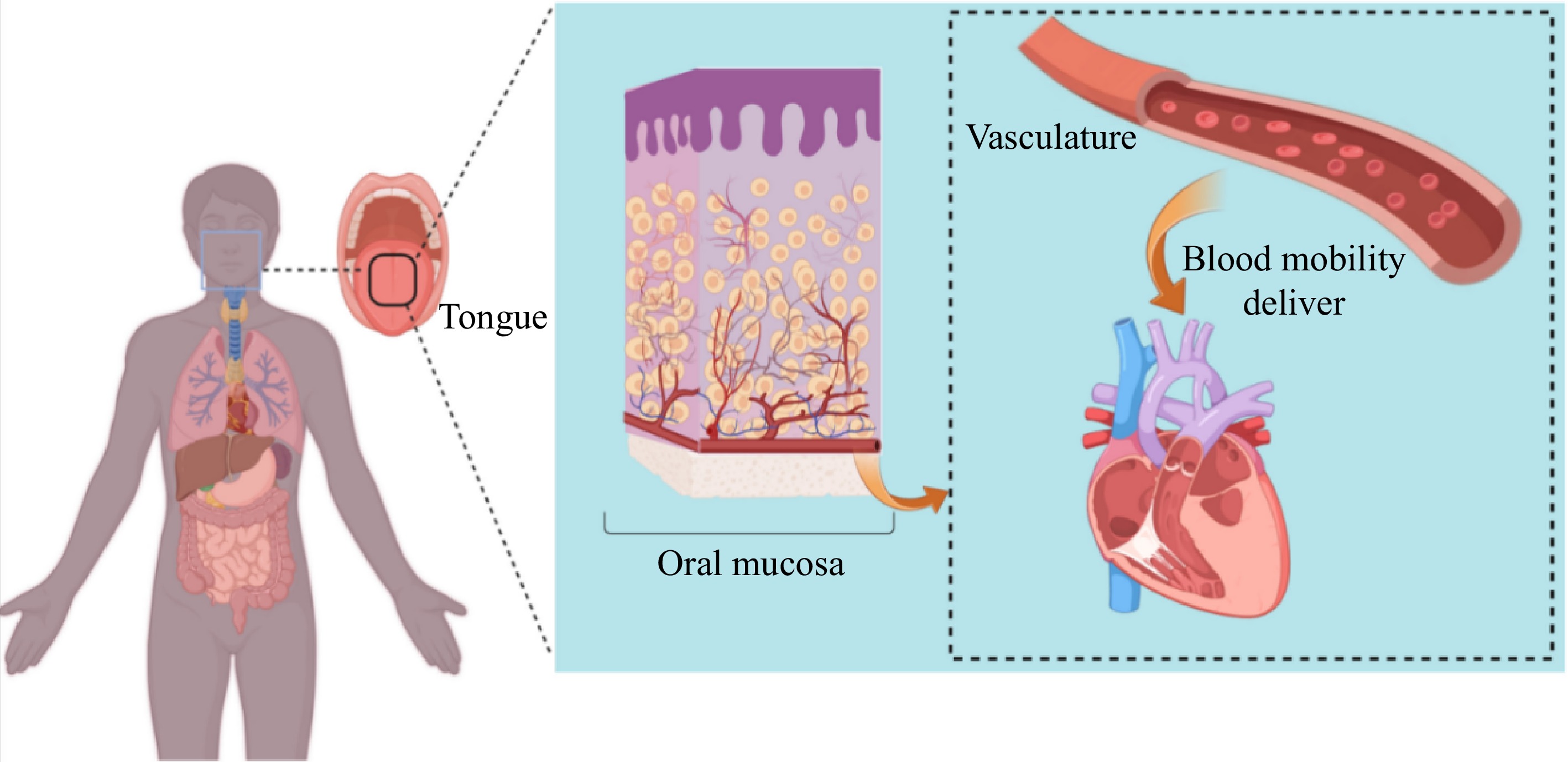
Figure 2.
Oral delivery and absorption.
-
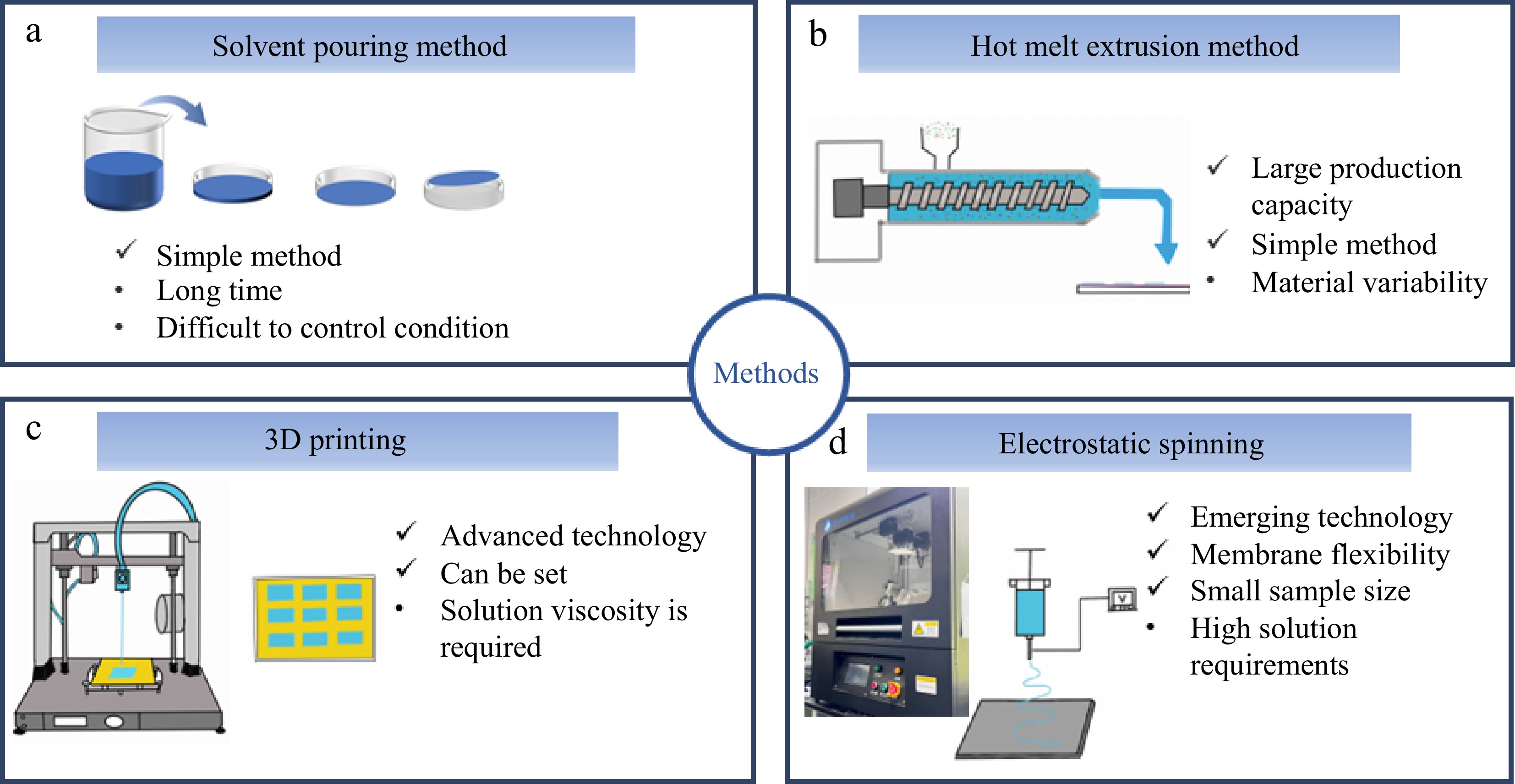
Figure 3.
Several common film making methods and their advantages and disadvantages.
-
Type Immediate release Adhesive type Slow release adhesion type Area (cm2) 2–8 2–7 2–4 Quality (g) 0.02–0.2 0.02–0.2 0.02–0.2 Thickness (μm) 10–70 50–500 50–250 Structure Monolayer Single/multilayer Multilayer Ingredients Water-soluble polymer Water-soluble polymer Low solubility polymer Part used Tongue Buccula Other parts of mouth Releasing time 60 s A few minutes Maximum 8–10 h Take effect Local/whole body Local/whole body Local/whole body -
Purpose Frequent species Effect Plasticizer Glycerin, polyethylene glycol, propylene glycol Enhanced intermolecular crosslinking[51] Colorant Natural pigments, synthetic pigments Protect the substance[52] Condiment Citric acid, sucralose, xylitol The substance is protected to improve the bad odor carried by the substance itself[53] Table 2.
Film forming auxiliary materials and their functions.
Figures
(3)
Tables
(2)