-
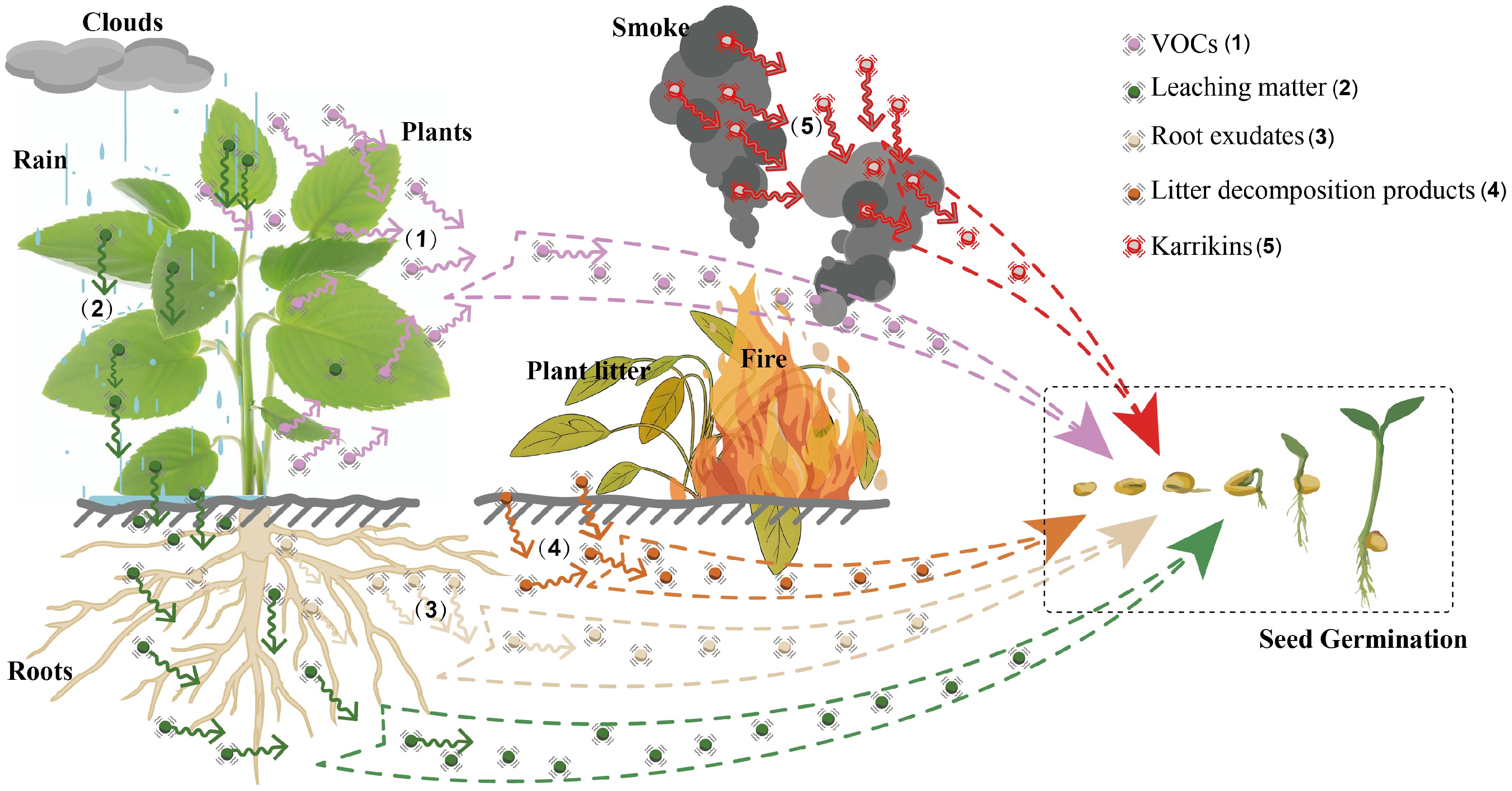
Figure 1.
Release pathways of plant allelochemicals into the environment. Plant allelochemicals originate from intrinsic plant metabolism and are released into the environment through five primary pathways: (1) VOCs are emitted into the atmosphere through volatilization; (2) water-soluble phytochemicals enter the soil via leaching by precipitation (rain or dew); (3) diverse metabolites are secreted into the rhizosphere through root exudation; (4) low-molecular-weight compounds are produced and released into the soil through microbial decomposition of dead plant tissues; and (5) allelopathic compounds such as karrikins are generated and released into the environment through the combustion of plant residues. These released small molecules subsequently come into contact with seeds in the surrounding environment, influencing their germination.
-

Figure 2.
Multilevel mechanisms of allelochemical-mediated regulation of seed germination. (1) Interference with signal transduction: allelochemicals can modulate oxidative stress responses by inducing ROS bursts or enhancing ROS scavenging systems. They may also disrupt the balance of endogenous hormones, particularly the GA to ABA ratio, thereby influencing the decision to initiate germination. (2) Disruption of energy metabolism: allelochemicals can impair the mobilization of stored reserves (e.g., carbohydrates, proteins, lipids), and inhibit key metabolic processes such as respiration and photosynthesis. By blocking the supply of energy and biosynthetic precursors, they effectively starve the seed of the resources essential for germination. (3) Damage to subcellular structures and function: allelochemicals can compromise seed germination by damaging the structure and function of cellular organelles, including the cell membrane, mitochondria, chloroplasts, and ribosomes, leading to a breakdown in cellular homeostasis. (4) Inhibition of embryonic tissue growth: allelochemicals can directly suppress the growth of embryonic structures such as the radicle, plumule, and hypocotyl. This physical restraint on the expansion and development of the embryo presents a final barrier to the completion of germination.
Figures
(2)
Tables
(0)