-
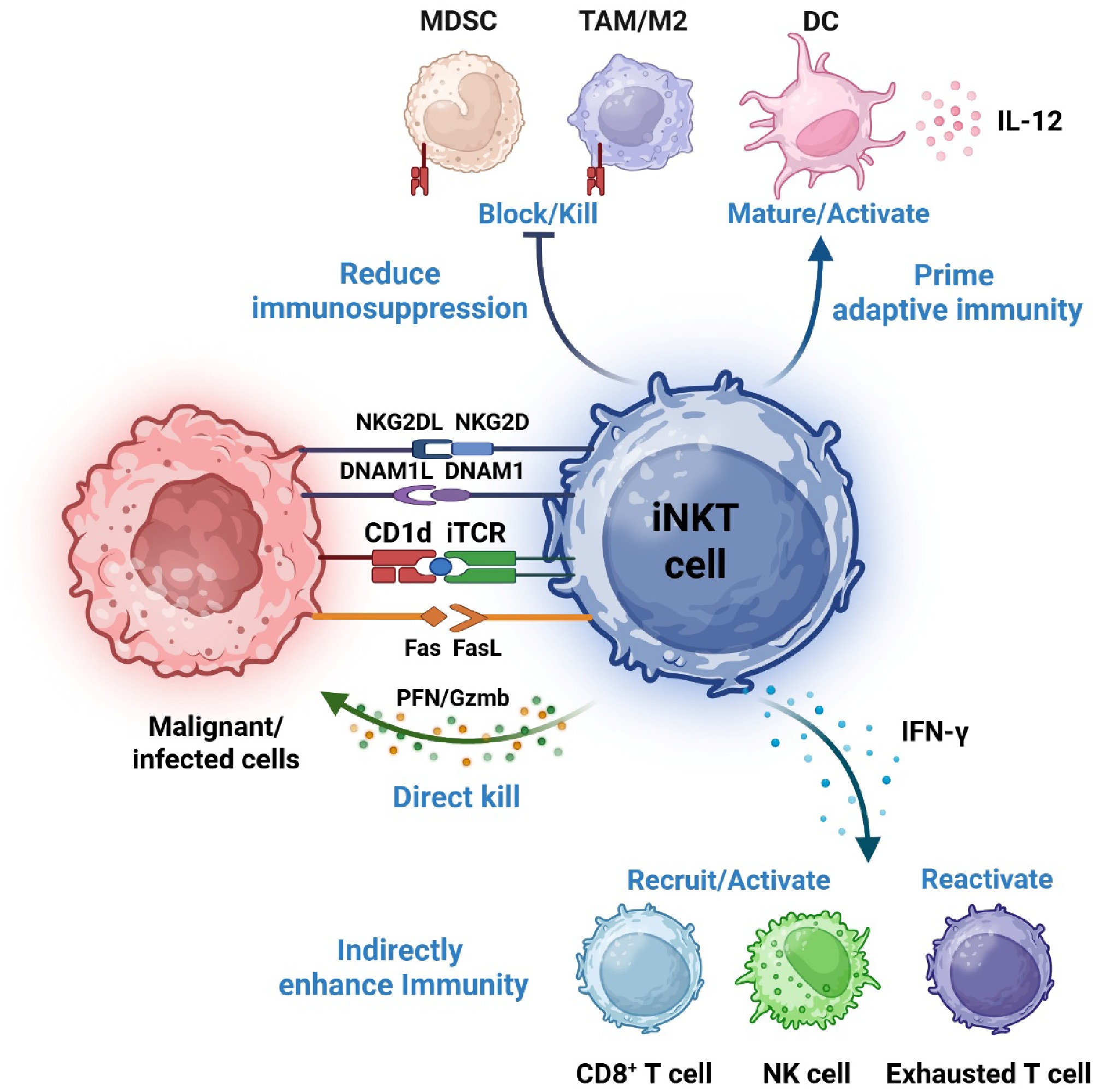
Figure 1.
Mechanisms of iNKT cell-mediated anti-viral and anti-cancer immunity. iNKT cells identify stressed and dying cells via T-cell receptor (TCR)-mediated recognition of endogenous CD1d-presented lipid antigens, as well as engagement of NKG2D and DNAM-1 ligands. Upon activation, iNKT cells directly eliminate target cells and secrete abundant cytokines. These cytokines subsequently recruit and activate additional immune effectors, thereby intensifying anti-pathogen and anti-tumor responses. Additionally, iNKT cells can suppress immuno-regulatory myeloid cells, including macrophages and myeloid-derived suppressor cells (MDSCs), further bolstering immune activation.
-
Cell therapies Target and mechanisms Advantages Disadvantages Applications CAR-T[15] Targeting tumor antigen with genetically engineered receptors, (MHC-independent) through scFv-CD3ζ. High target specificity, long-lasting efficacy, well-established manufacturing platform. Risk of Cytokine Release Syndrome (CRS), tumorigenicity, immune effector cell–associated neurotoxicity syndrome (ICANS), graft-versus-host disease (GVHD, allogeneic), high cost and long production time. Hematological malignancies, particularly B cell malignancies and multiple myeloma. Mesenchymal cells[16] Direct migration towards diseased tissues through chemokine receptor and ligand, paracrine secretion, and immune modulation. Wide sources, modulating inflammatory effects, promoting tissue regeneration. Functional heterogeneity, difficulties in preparing quality-controlled cells in vitro, inconsistent response. Inflammatory and debilitating diseases. iNKT cells[17] Targeting CD1d-presented lipid antigens with invariant TCR, possessing both direct killing and immune re-orchestration. HLA-independent, durable responses due to memory function, safer toxicity profile (low GVHD risk, minimal CRS and negligible ICANS), potent activity with only one single dose and low costs. Limited number obtainable at their source, require specific manufacturing processes, limited targets. Allogeneic cell therapy for solid tumors, virus-associated diseases. NK cells[18,19] Non-specific cytotoxicity and recognition of NKG2DL on tumor. No need for antigen priming, good safety with low GVHD, CRS and ICANs. Low persistence in the absence of cytokine, subject to immunosuppressive barriers in the tumor microenvironment. Adoptive transfer of allogeneic NK cells for leukemia, lymphoma and solid tumors. Table 1.
Comparative analysis of different cell therapies.
Figures
(1)
Tables
(1)