-
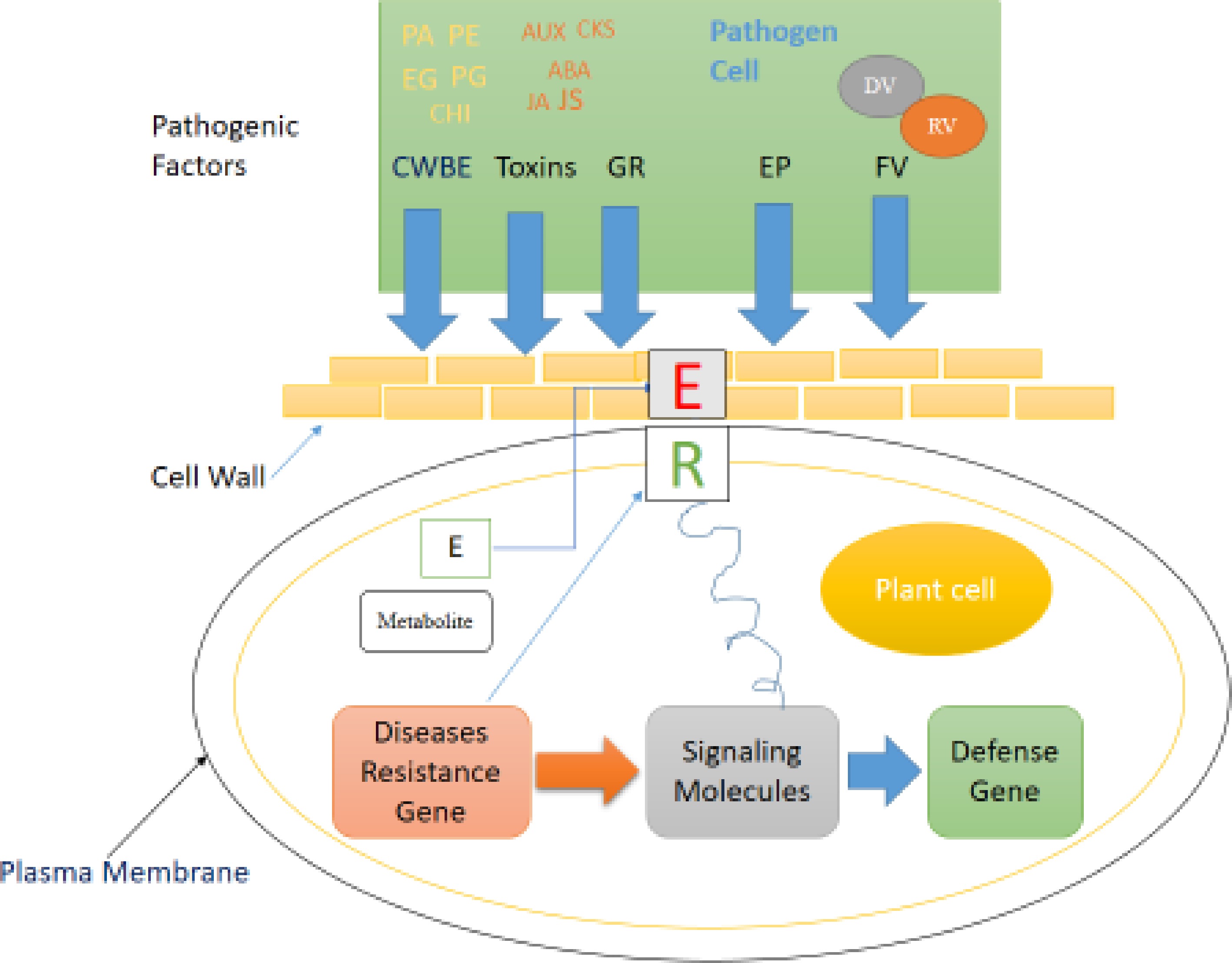
Figure 1.
The pathogenic factors of phytopathogenic fungi CWBE, cell wall-degrading enzymes. PG, pectin polygalacturonase; PE, pectin methylesterase; EG, Endo-1,4-β-D-glucanase; PA, protease; CHI, chitinase; GR, growth regulator; AUX, auxin; CKs, cytokinins; ABA, abscisic acid; GA, gibberellic acid; JA, jasmonic acid; FV, fungal virus; DV, DNA virus; RV, RNA virusn[9,19].
-

Figure 2.
Alkaloids isolated from Datura stramonium[28].
-
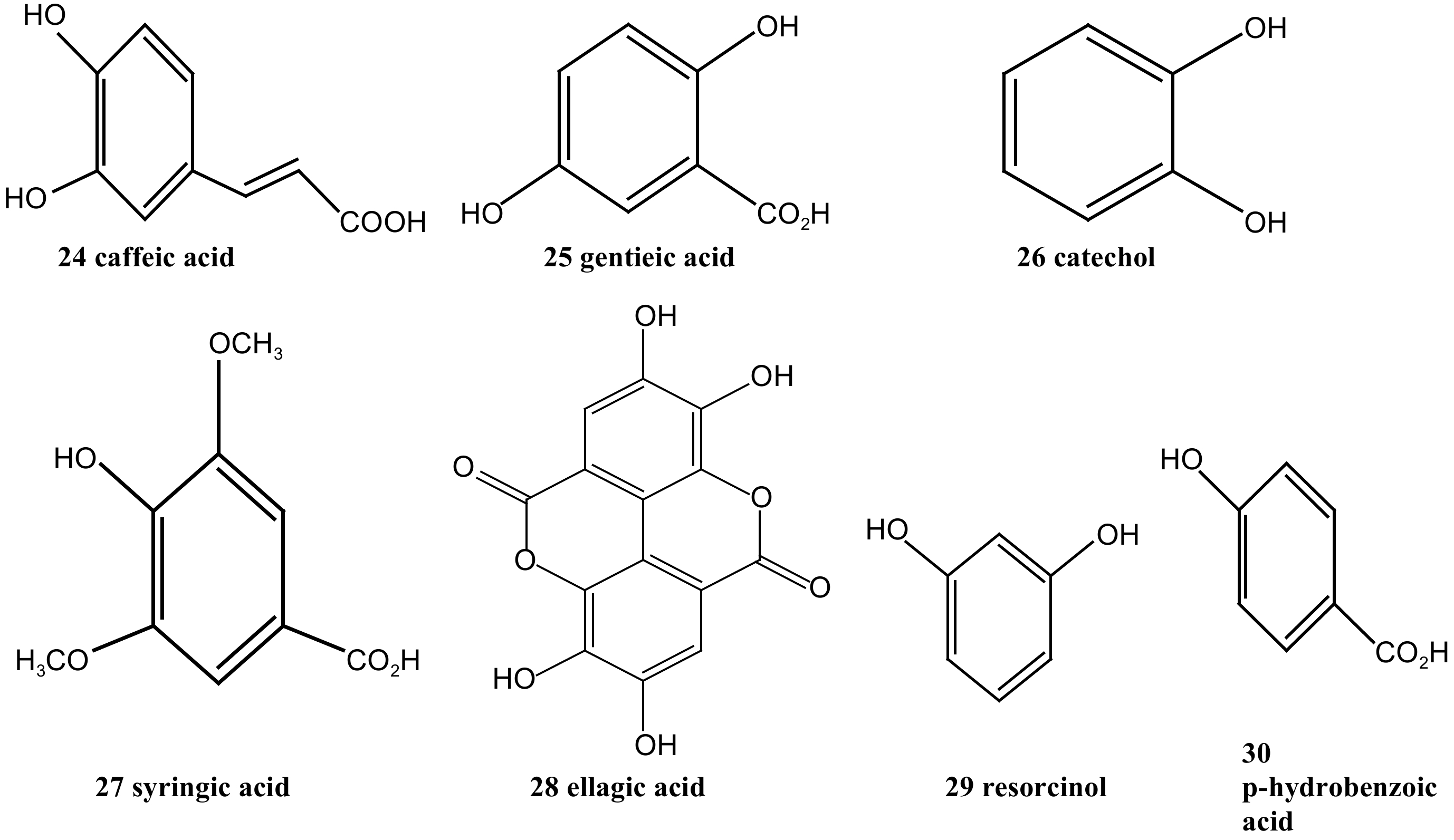
Figure 3.
Chemical structures of Calotropis gigantea represent antifungal activity against fungi[52].
-
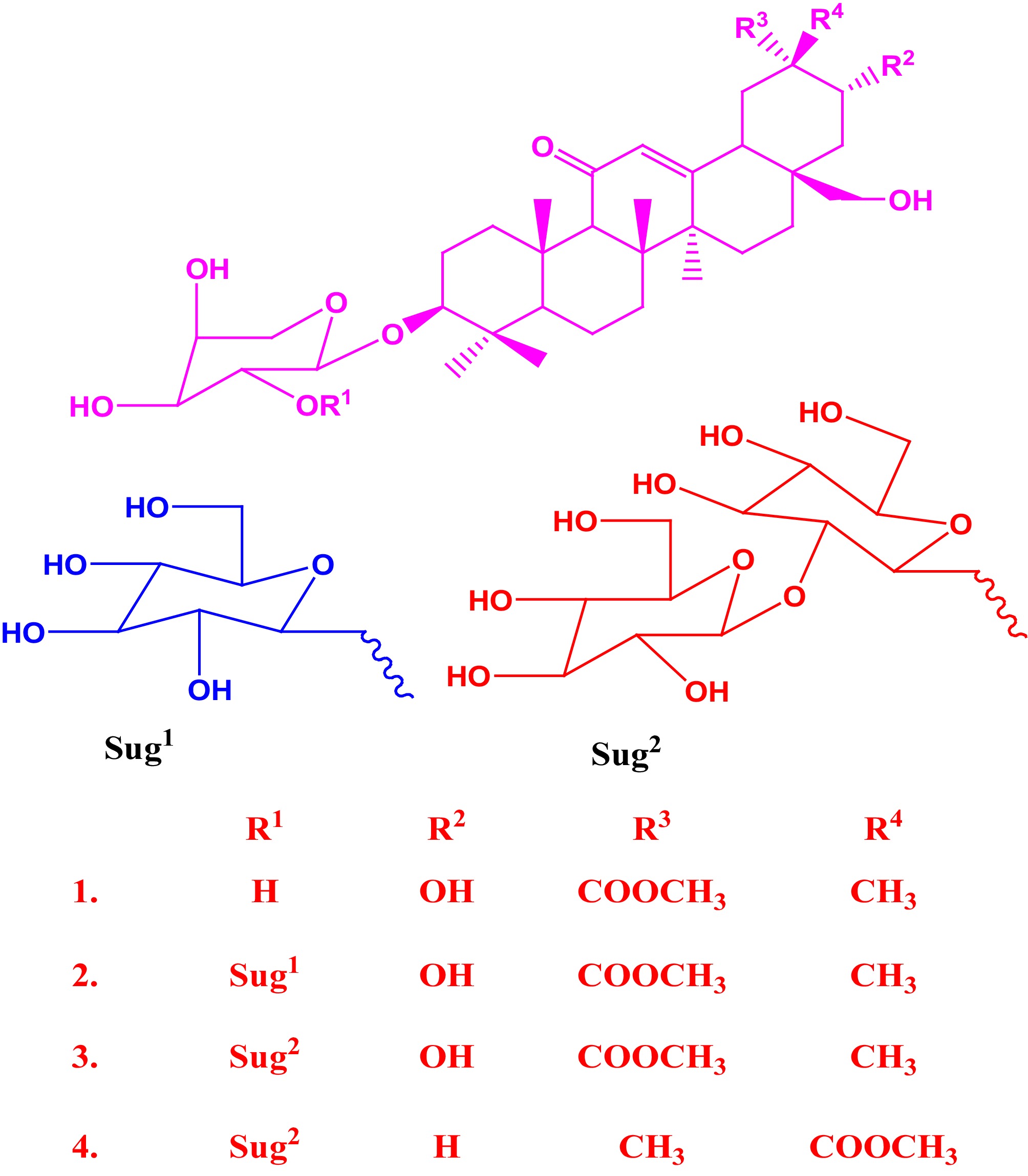
Figure 4.
Chemical constituents present in Chenopodium album (glycosides)[51].
-
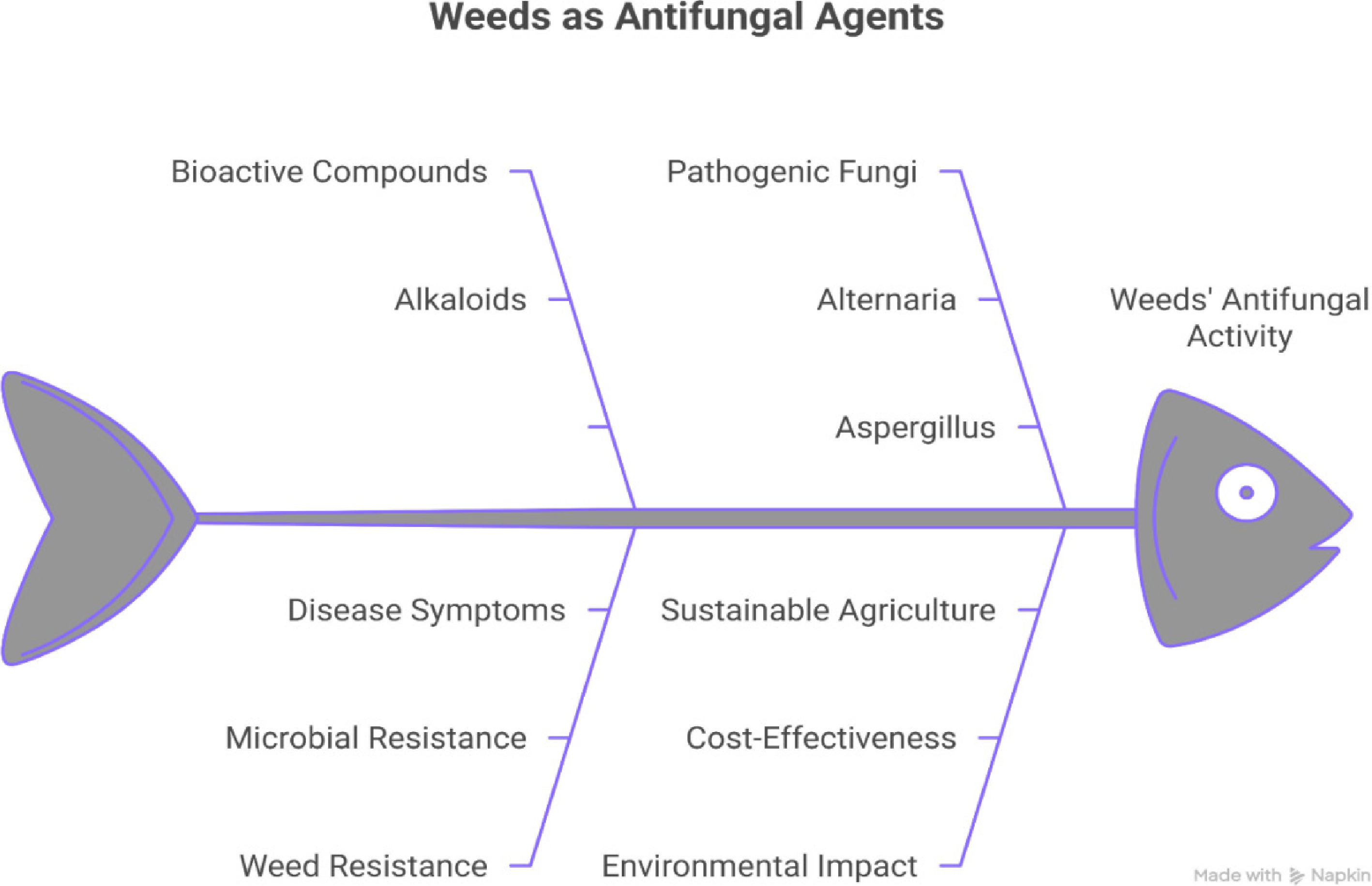
Figure 5.
Weeds as antifungal agents and factors Influencing their activity and implications.
-
Sr. No. Plant name Common name Causing agent Diseases Symptoms 1. Ipomoea batata Sweet potato Alternaria solani Early blight Leaves start to exhibit small irregular dark brown spots on lower parts. 2. Solanum tuberosum Potato Phytophthora infestans Late blight Pale-greenish spots 3. Solanum lycopersicum Tomato Phytophthora infestans Late blight Pale-greenish spots 4. Solanum lycopersicum Tomato Alternaria solani Early blight On leaves circular lesions are produced. 5. Cicer arentinum Chickpea Fusarium oxysporum Fusarium wilt Grayish-green chlorish 6. Zea mays Maize Bipolaris maydis Leaf blight Veins light brown to brown border 7. Triticum aestivum Wheat Puccinia triticina Leaf rust Rust-colored 8. Malus domestica Apple Erwinia amylovora Fire blight Red-brown or black spot outword 9. Pennisetum glacucum Pearl millets Siclerospora graminicola Downy mildew Pale color, broad streaks spreading from bottom to top of leafs. 10. Arachi shypogaea Ground nuts Puccinia arachidis Leaf rust Orange pustules on lower leaflet. Table 1.
The phytopathogenic fungi and their symptoms[27].
-
Sr. No. Botanical name Common name Family Part used Antifungal compound Ref. 1. Calotropis gigantea Aak Apocynaceae Whole parts Cardiac glycosides [33] 2. Withinia somnifera Ashwagandha Solanaceae Whole parts Withanic acid, withaniol [34] 3. Achyranthes aspera Ola kanda Amaranthaceae Whole parts Alkaloids 17-pentatriacontanol [35] 4. Ziziphus jujube Ber Rhamnaceae Whole parts Polyphenols [36] 5. Cannabis sativa Bhang Cannabaceae Whole parts Cannabinoids γ-sitosterol [31] 6. Chenopodium album Bathwa Amtranthaceae Leaves Palmitic acid methyl ester, 2(3H)-furanone [37] 7. Datura stromonium Datura Solanaceae Whole parts Cardiac glycosides [30] 8. Parthanium hysterophrous Congress grass Asteraceae Leaves Terpenoids [32] 9. Citrulus colicynthus Gadumba Cucurbitaceae Whole parts Terpenoids and cardiac glycosides [38] 10. Lantana camara Lantana Verbenaceae Leaves Cyclopropane [39] 11. Tinospora cordifolia Giloy Menispermaceae Stem Phenolic group [40] 12 Ocimum tenuiflorum Tulsi Lamiaceae Whole plant t-methyl cinnamate [41] 13. Phalaris minor Blauri Poaceae Whole plants iso-ovatodiolide, b-sitosterol [42] 14. Canada thistle Corn thistle Asteraceae Leaves 15-octadecatrienoic acid [43] 15 Agremone maxicana Satyanshi Papaveraceae Leaves Berberine, protopine, sarguinarine [44] 16. Ageratum conyzoides Chick weed Asteraceae Whole plants Polymethoxyflavones [45] 17. Sidaacuta Wire weed Malvaceae Whole plants Flavonoids [46] 18. Cynoden dactylon Doobgrass Poaceae Whole plant Cyclopassiflosides, saponins [47] 19. Boerhavia diffusa Punarnava Nyctaginaceae Whole plant Anthracenedione [48] 20. Eichhorni acrassipes Jalkumbhi Pontedericeae Whole plants Glicosídeos, taninos [49] 21. Adiantum capillus-veneris L. Maidenhair Fern Pteridaceae-Vittarioideae Whole plants 1,2-Benzene dicarboxylic acid [50] Table 2.
A selected list of weeds showing antifungal activity against pathogenic fungi.
Figures
(5)
Tables
(2)