-
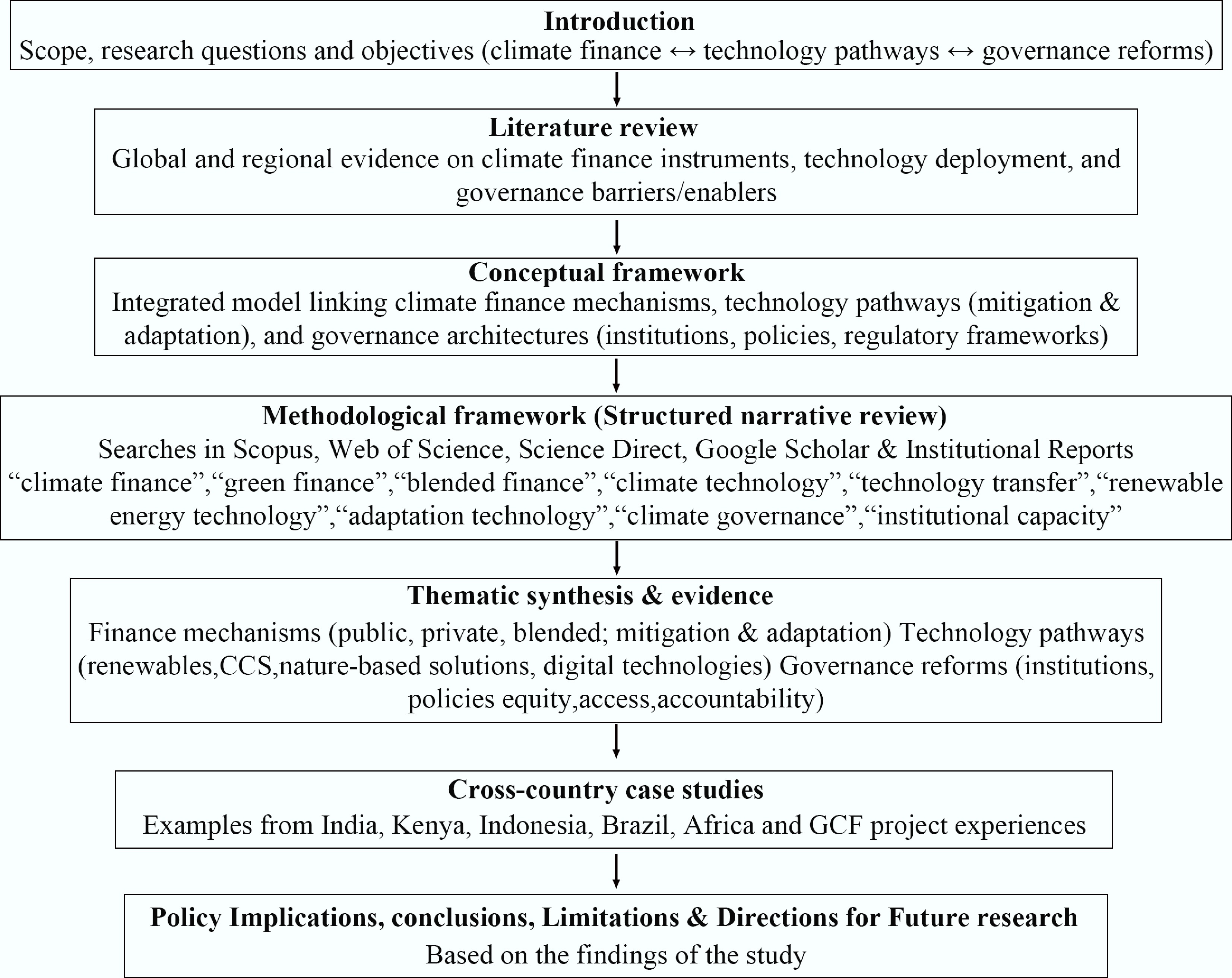
Figure 1.
Roadmap of the study. Flow diagram showing the structure of this review: (1) introduction and research questions, (2) literature review, (3) conceptual framework, (4) methodological framework (structured narrative review and search strategy), (5) thematic synthesis of financial mechanisms, technology pathways and governance reforms, (6) Cross-country case studies, and (7) policy implications, conclusions, limitations and directions for future research.
-
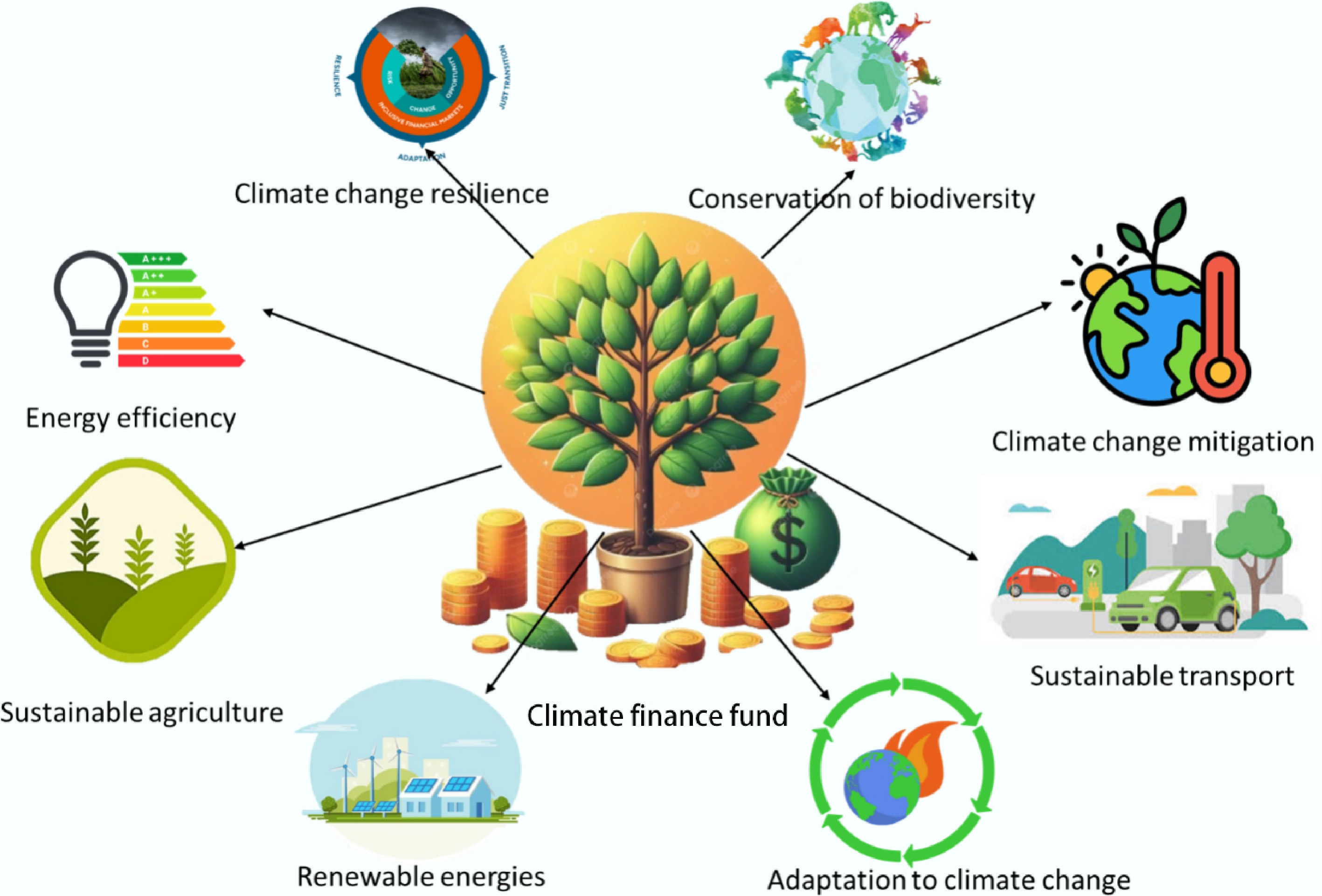
Figure 2.
Activities supported by climate finance funds.
-
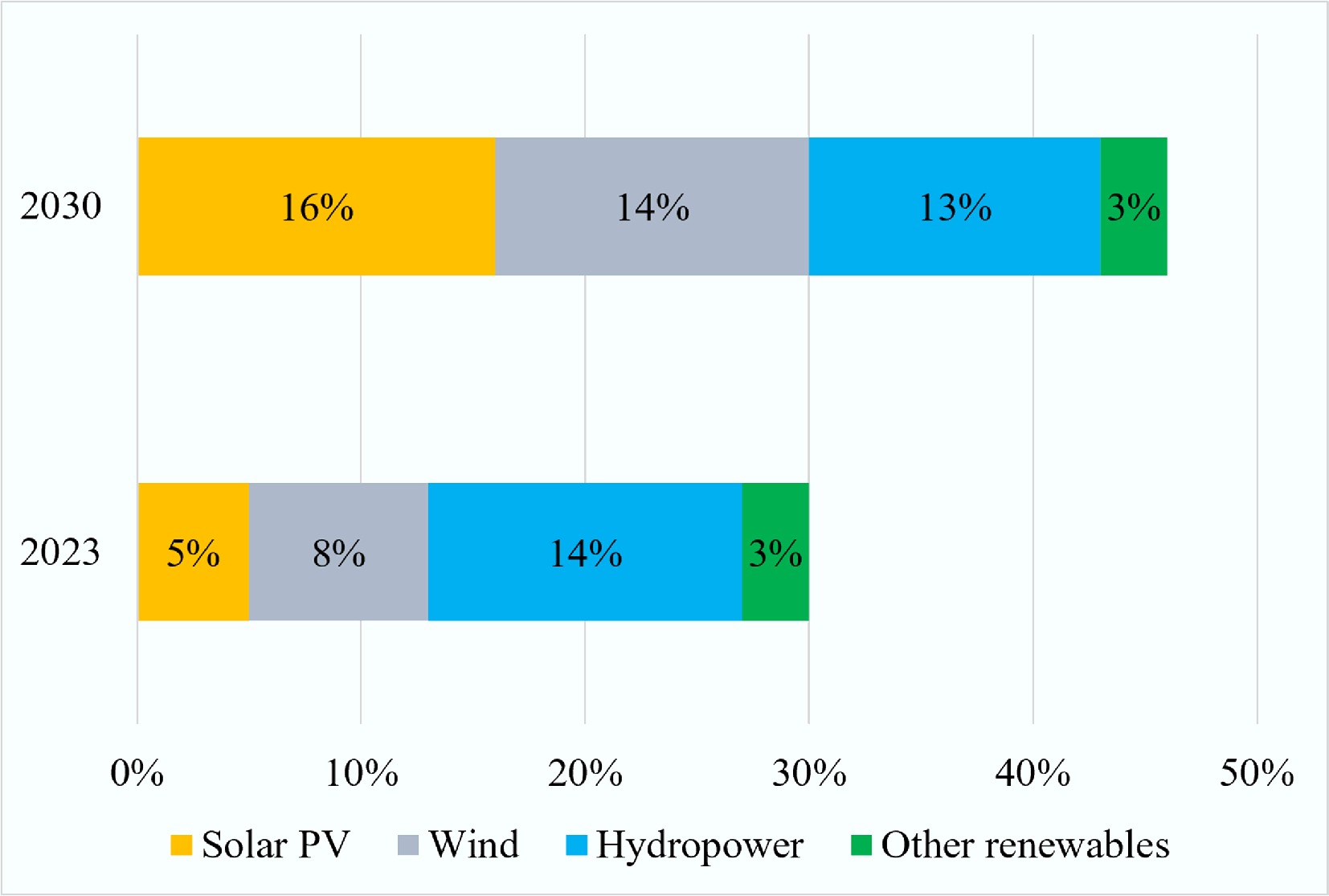
Figure 3.
Global electricity generation by renewable energy technology.
-
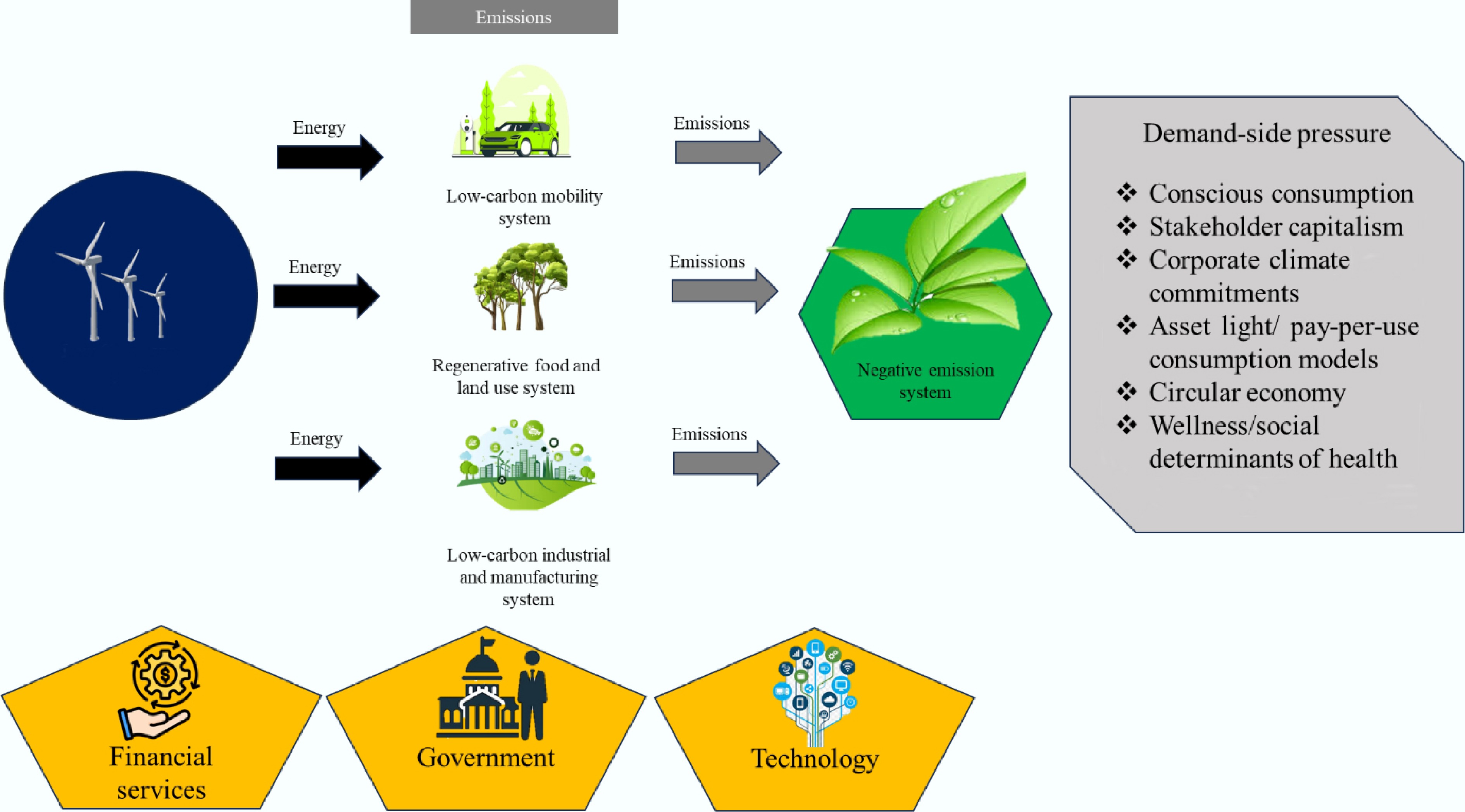
Figure 4.
The building blocks of the low-carbon economy.
-
RQ Existing reviews and their contributions Identified gaps in existing reviews Distinctive contributions of this review RQ1. How do existing climate finance mechanisms operate, and to what extent do they support equitable mitigation and adaptation needs in developing countries? • Chen et al. review institutional development of global climate finance architecture[39].
• OECD provides financial flows and mobilization trends[43].
• CPI assesses global climate finance volumes and gaps[122,184].
• Lee et al. examine environmental outcomes of climate finance[42].
• Nakhooda et al. evaluate multilateral fund effectiveness[109].
• UNDP explains access challenges and definitions[36].
• Nedopil & Sun analyze debt-for-climate swaps[38].
• Maltais & Nykvist and Nguyen & Le analyze green bond effectiveness[103,104].• Financial instruments (grants, concessional loans, guarantees, insurance, bonds) are treated separately rather than as a unified system.
• Lack of comparative analysis of mitigation vs adaptation finance outcomes across regions.
• Limited assessment of distributional equity, debt stress, and challenges faced by LDCs and SIDS (only partially addressed by UN/OHRLLS reports[180,181]).
• Insufficient integration of finance instruments with technology readiness and governance capacity.
• Limited cross-country synthesis linking institutional quality to finance absorption.• Develops an integrated typology of climate finance instruments (public, private, blended) directly linked to mitigation and adaptation functions.
• Provides a cross-regional comparative analysis (Africa, South Asia, LDCs/SIDS) using multiple evidence sources[36,42,43,81,122,180].
• Introduces an Finance–Technology–
Governance (FTG) Alignment Framework explaining context-specific variability in finance outcomes.
• Integrates equity, vulnerability, and debt-risk considerations into climate finance assessment, an overlooked dimension in prior reviews.RQ2. Which low-carbon and climate-resilient technology pathways are essential for 1.5–2 °C-aligned transitions, and how can climate finance accelerate their deployment? • IEA and IEA/IRENA reports outline solar, wind, hydro, and renewable energy transitions[24,62,111,112].
• Meylani et al. and other CCS/CCUS reviews synthesize deployment constraints[68,114].
• Wang et al. and Griscom et al. review blue carbon and natural climate solutions[70,71].
• Acosta-Silva et al. review renewable energy use in agriculture[169].
• Alharbi et al. provide global evidence on green finance and renewables[46].
• Khan & Khan and Sarku & Kranjac-Berisavljevic discuss technology adoption impacts in South Asia and Africa[171,172].
• Ojadi et al. discuss digital MRV, blockchain, and transparency tools[173].• Existing reviews examine technologies in silos (renewables OR CCS OR NbS OR digital systems).
• No cross-technology synthesis linking technology maturity (TRL) to appropriate financing instruments.
• Limited integration of digital MRV technology needs into climate finance discussions.
• Weak evidence connecting institutional absorptive capacity and technology uptake.
• Lack of prioritization of 'high-impact technology clusters' for maximizing mitigation/adaptation returns.• Provides cross-technology synthesis integrating CCS/CCUS, renewables, blue carbon/NbS, climate-smart agriculture, urban resilience technologies, and digital MRV tools.
• Proposes a finance-sensitive TRL pathway mapping grants → concessional finance → blended finance → private capital based on technology maturity.
• Identifies high-impact technology clusters where climate finance yields the highest marginal benefits (based on evidence from References[24,46,68,70,71,169,172]).
• Integrates digital technologies (AI, remote sensing, blockchain) into climate finance debates, addressing a major gap in prior literature[173].RQ3. What governance reforms and institutional architectures are required to strengthen climate finance access and accelerate technology deployment in developing countries? • Ha et al evaluate finance–technology alignment gaps in developing countries[30].
• Lakatos et al. and Kweyu et al. review institutional and governance barriers to technology uptake[31,32].
• Obahor & Asibor synthesize institutional bottlenecks in Africa[33].
• UNFCCC TEC/CTCN updates (2021–2023) detail governance requirements for technology transfer[8,97].
• Nega et al. examine inclusive governance for community adaptation[194].
• Tomlinson reviews accountability and governance failures in climate finance[198].
• Minas examines systemic global finance alignment with Article 2.1(c)[121].• Governance literature remains fragmented, with finance, technology transfer, and adaptation governance analyzed separately.
• No integrated framework linking governance quality, MRV systems, procurement capacity, and finance mobilization.
• Limited cross-country comparative evidence for SIDS, LLDCs, and high-vulnerability regions.
• No prior review links governance failures directly to technology under-absorption and finance inefficiency.
• Limited analysis of how institutional reforms improve access to climate finance.• Introduces a three-pillar governance architecture integrating regulatory systems, MRV governance, public-financial management, and technology deployment pathways.
• Synthesizes multi-region evidence (Africa, South Asia, SIDS) using
References[30−33,97,98,121,194].
• Explains how governance reforms—direct access modalities, de-risking frameworks, procurement transparency—improve finance mobilization and technology uptake.
• Presents the FTG Systems Integration Framework, offering a comprehensive governance-centric explanation absent in previous reviews.Table 1.
A summary of the comparative analysis of existing reviews, identified research gaps, and the distinctive contribution of this review, aligned with the research questions
-
Section Key focus Instruments Key institutions Challenges Ref. Sources and instruments Types and structures of climate finance Green bonds, debt-for-climate swaps, guarantees, concessional loans, grants UNDP, GCF, GEF (SCCF, LDCF), UN-REDD, JICA, USAID Fragmentation, slow disbursement, over-reliance on loans [103−105] Activities supported Sectors receiving climate finance Renewable energy, energy efficiency, sustainable agriculture, reforestation, EVs, circular economy OECD, World Bank, GEF, IADB Benefits: GHG reduction, improved health, food security, jobs [106−108] Challenges in climate finance Barriers to efficient climate finance Delayed disbursement, loan-heavy finance, fragmented projects, poor integration with budgets CGD, ODI, IPCC, Yale Environment Review Lack of impact assessments, low national ownership, inequitable mitigation finance distribution [43,56,109] Renewable energy technologies Role of renewable energy in climate mitigation Solar PV, wind turbines, hydropower, biomass IEA, IPCC, IRENA, DOE Fastest growth in solar; innovation in bifacial/perovskite PV, turbine efficiency [43,110,111] Carbon capture technologies Carbon capture & storage (CCS) methods Biological and geological CCS, CO2 injection, air purification towers, ionic liquids IEA, IPCC Vital for net-zero goals; supports hard-to-decarbonize sectors [113−115] Disaster management and monitoring Climate-resilient disaster response via technology Satellite remote sensing, GIS, microsatellite constellations, AI-driven mapping NDMI, MDPI, Nature Sci. Reports, Korean Space Agency Real-time hazard monitoring; shift to decentralized, private-led space infrastructure [89,116] Technology transfer and capacity Technology diffusion mechanisms and institutional support for developing nations CTCN, TEC, UN Technology Bank, UNEP CCC, UNOSSC, UNIDO UNFCCC, WIPO, WTO, TRIPS Supportive frameworks for tech transfer, IP rights balance, capacity-building focus [43,117] Table 2.
Climate finance landscape
-
Initiative/country Financial mechanism Technology/practice Stakeholders involved Environmental impact Economic impact Social impact Ref. Tesla (global) Private equity, carbon credits Electric vehicles (EVs), lithium batteries (decline in battery cost by 87% by 2010–2022) Investors, regulators, consumers CO2 emission reduction (more than 40 million tons per year) Industry transformation, EV affordability Behaviour change, job creation [152,153] Ørsted (Denmark) Green bonds, climate loans Offshore wind (7.6 GW installation), power grids Gov., banks, utilities Fossil fuel replacement Profitable green investment Clean energy access (Renewable energy's share rose substantially, expanding from 17% in 2006 to 90% by 2023) [154,155] DeHaat (India) Impact investment, agri-loans Organic and digital agriculture Farmers, investors, NGOs Soil health, lower emissions Yield rise (10 to 25%), lower input cost Farmer empowerment (supported two million farmers) [156,157] The Edge (Netherlands) Sustainable real estate finance Solar PV, smart energy tech Developers, tenants Net energy positive, carbon neutral (reduction of emission of 85 tons CO2 per year) Asset value ↑, O&M cost ↓ Worker wellness, innovation [158,159] BRAC (global south) Green microfinance (given to seven million stakeholders) Solar homes, climate-smart farming MFIs, rural poor Deforestation ↓, renewable access ↑ Household income ↑ Financial inclusion [160,161] Caiman Refuge (Brazil) Ecotourism revenue Biodiversity restoration (53,000 hectares area protected) NGOs, local tribes Jaguar habitat recovery Community infrastructure Environmental education [162,163] Shea and PACOFIDE (Africa) Blended finance, CSR funds Agroforestry, sustainable processing Women's co-ops, buyers Tree cover ↑, carbon sinks Global market entry Gender equity [164−166] Tmatboey (Cambodia) Revenue recycling Avian protection, eco-tourism Villagers, tourists Forest conservation Tourism income ↑ Eco-governance [167] Mpingo (Tanzania) REDD+, timber certification Controlled harvesting Locals, NGOs, buyers Carbon sequestration ↑ Certified timber premium Community training [162,163] Yaeda Valley (Tanzania) Carbon credits (50,000–70,000 tons CO2/year) Wild honey, forest protection Hadza community, investors Ecosystem
services ↑Product sales ↑ Indigenous land rights [162,163] Alto Mayo (Peru) PPPs, Starbucks funds Shade coffee, agroforestry (182,000 hectares forest area conserved) Gov., farmers, brands Deforestation ↓ Carbon credits, coffee yield ↑ Fair trade, resilience [164−166] Katingan Mentaya (Indonesia) Verified offsets Peatland restoration (149,800 hectares restored) Local villages, buyers Methane emission ↓ Carbon revenue Infrastructure upliftment [168] Northern Rangelands (Kenya) REDD+, ecotourism Wildlife monitoring Conservancies (6.3 million hectares), donors Habitat preservation Tourism and carbon finance Youth jobs, anti-poaching [162,163] Mara Naboisho (Kenya) Conservation leases Wildlife conservation, eco-tourism Maasai owners, tour ops Biodiversity protection Eco-tourism profits Cultural sustainability [164−166] Table 3.
Comprehensive global case study
-
Challenge area Key issues identified Implications Ref. Funding source imbalance Disproportionate reliance on public funding in developing countries; private finance concentrated in developed regions Limits equitable investment; risks marginalization through conditional private capital [178,179] Geographic disparities Majority of finance remains within donor countries; minimal flow to LDCs and SIDS Undermines global equity; vulnerable regions underfunded despite higher exposure to climate risks [180,181] Debt-dominated instruments 61% of finance delivered through debt (mostly non-concessional); grants only 6% Increases debt burden in low-income countries; limits developmental alignment [182,183] Adaptation vs mitigation gap 90% of finance goes to mitigation; only 7.4% to adaptation Fails to meet urgent local needs; adaptation underfunded despite importance for resilience [184,185] Sectoral concentration High funding for energy and transport; low investment in agriculture, forestry, land use Neglects rural livelihoods and land-based mitigation co-benefits [56,186] Governance fragmentation Fragmented decision-making; lack of Global South representation; weak transparency Reduces legitimacy and trust; impedes coordination and inclusive implementation [56,186] Table 4.
Challenges in climate governance
-
Section Theme Key points Ref. Enhancing resilience in vulnerable regions Urban resilience • Rapid urbanization and aging infrastructure increase climate risks
• Requires inclusive planning, resilient infrastructure, and adaptive architecture
• Focus on green spaces, early warning systems, and equitable services[202,203] Rural resilience • Limited access to basic services and high dependence on agriculture
• Need for diversified livelihoods, digital infrastructure, sustainable farming
• Mitigate migration by promoting local entrepreneurship and disaster preparedness[204,205] Empowering communities through localized adaptation Community empowerment • Enhance climate literacy through education, dialogues, and awareness
• Capacity-building in resource governance, energy, and agriculture
• Collaborative governance ensures local knowledge integration[206,207] Financial access and local tech • Bridge funding gaps via donor/NGO/government support
• Promote climate insurance and localized technologies (e.g., solar microgrids, cool roofs)
• Example: India's Cool Roof Project and Miami's insurance scheme[129,195] Scalable models • Mahila Housing Trust shows success in women-led, grassroots climate planning
• Emphasis on local ownership and community-led resilience[39,198] Scaling climate finance and technology deployment Financing needs and gaps • ${\$} $
• Developed nations must exceed${\$} $ [199,200] Policy and investment reform • Align financial incentives with green outcomes via reforms, pricing, and subsidies
• Strengthen public finance systems, standardize data and disclosure frameworks[197] Private sector and innovation • Use de-risking tools: guarantees, blended finance, insurance
• Flexible financial models improve inclusivity and national alignment[203] Nature-based solutions (NbS) • Integrate climate goals with biodiversity and equity
• Support NbS markets; ensure Indigenous and local participation[201] Governance and coordination • Phase out harmful subsidies; redirect funds to nature-positive outcomes
• Use GPEDC to institutionalize climate finance reviews
• Future frameworks must ensure accessibility, equity, and coordination[198−200] Table 5.
Strengthening resilience and scaling climate finance
-
Sector Required transitions Decarbonization strategies Energy supply Upgrade grid systems to integrate demand-side and renewable resources; eliminate coal and gas from the electricity mix; enhance power generation for fuel switching; restructure utility markets to favor decentralized energy. Build resilient transmission infrastructure; enforce policies for renewable energy scale-up; apply grid-balancing algorithms; incentivize solar, wind, and hybrid systems through regulatory frameworks. Transportation Improve fuel efficiency and engine performance; promote electrification and fuel-cell vehicles; decarbonize fuels; reduce vehicle-miles travelled. Integrate e-mobility infrastructure; develop green logistics networks; implement mileage-based taxation; utilize low-carbon fuels in aviation and shipping sectors. Residential and commercial Increase energy efficiency in end-use applications; promote electrification of heating and water systems; improve thermal insulation and appliance efficiency. Integrate smart building systems; deploy rooftop solar; incentivize net-zero energy buildings; adopt performance-based energy codes. Industry Enhance process energy efficiency; recover and reuse waste heat; transition to low-carbon fuels and electrified manufacturing processes. Promote industrial symbiosis; deploy carbon capture and utilization (CCU) in heavy industry; finance energy-as-a-service models for small enterprises. Agriculture and waste Reduce methane from livestock and landfills; optimize nutrient management; enhance carbon sequestration; develop anaerobic digestion systems. Establish climate-smart agriculture programs; finance bio-digesters and composting units; support regenerative farming practices through subsidies and carbon markets. Land use and forestry Preserve carbon sinks; limit deforestation; expand afforestation and reforestation; manage urban natural habitats for carbon storage. Design REDD+ compliant land policies; integrate forestry in national climate plans; support community-based forest governance; incentivize agroforestry and wetland restoration. Table 6.
Sectoral roadmap toward a low-carbon economy
Figures
(4)
Tables
(6)