-
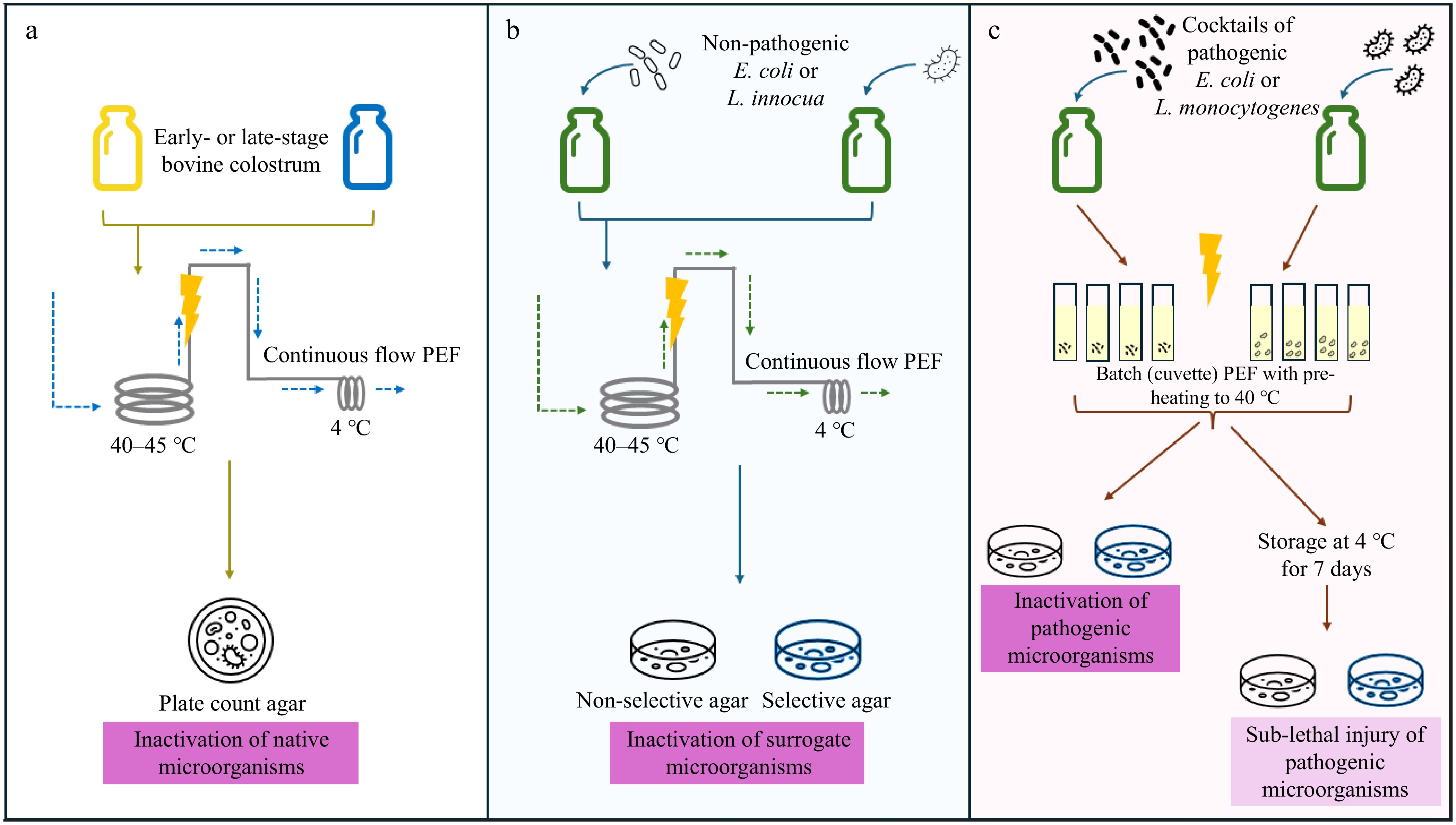
Figure 1.
Overview of the three experimental trials conducted in this study. (a) To assess the inactivation of native microorganisms, early- (up to 48 h lactation) and late- (up to 7 d lactation) stage colostrum samples were pre-heated and treated with pulsed electric fields (PEF) in continuous flow before assessing microbial inactivation. (b) Bovine colostrum was inoculated with surrogate microorganisms (E. coli or L. innocua). Colostrum samples were similarly pre-heated prior to continuous flow PEF, and microbial inactivation was assessed via plating on both selective and non-selective agar. (c) Bovine colostrum was inoculated with cocktails of pathogenic microorganisms (E. coli or L. monocytogenes). Due to the pathogenicity of the bacteria, PEF treatment was conducted in batch mode, with colostrum samples contained in cuvettes. Half the PEF-treated samples were assessed immediately for microbial inactivation via plating on selective and non-selective agar, while the other half were assessed following storage for 7 d at 4 °C to assess sub-lethal injury.
-
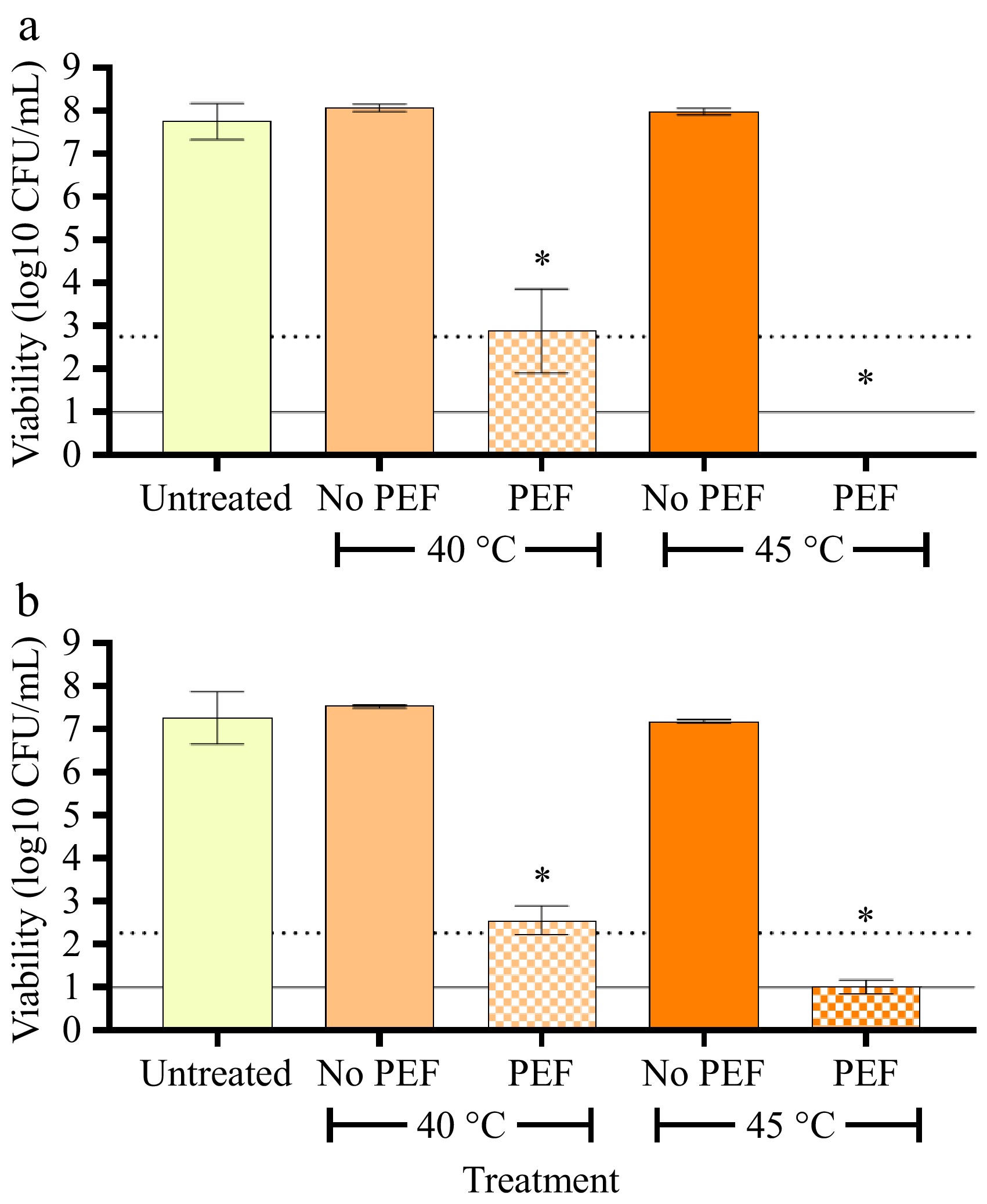
Figure 2.
Viability of native bacteria in (a) early (up to 48 h post-birth), and (b) late (up to 7 d post-birth) colostrum following combined PEF and pre-heating treatment. Colostrum samples were pre-heated to either 40 or 45 °C and treated with or without PEF (~13 kV/cm, 229–287 kJ/L). Bacterial viability following treatment was determined via total plate count on PCA. Bars represent the mean ± SD of four independent experiments. The dotted line represents the threshold for a 5-log reduction in bacterial viability, and the solid line represents the threshold of detection. Data were analysed via one-way ANOVA with Tukey's post-hoc test. * Significantly different from all treatment groups (p < 0.05).
-
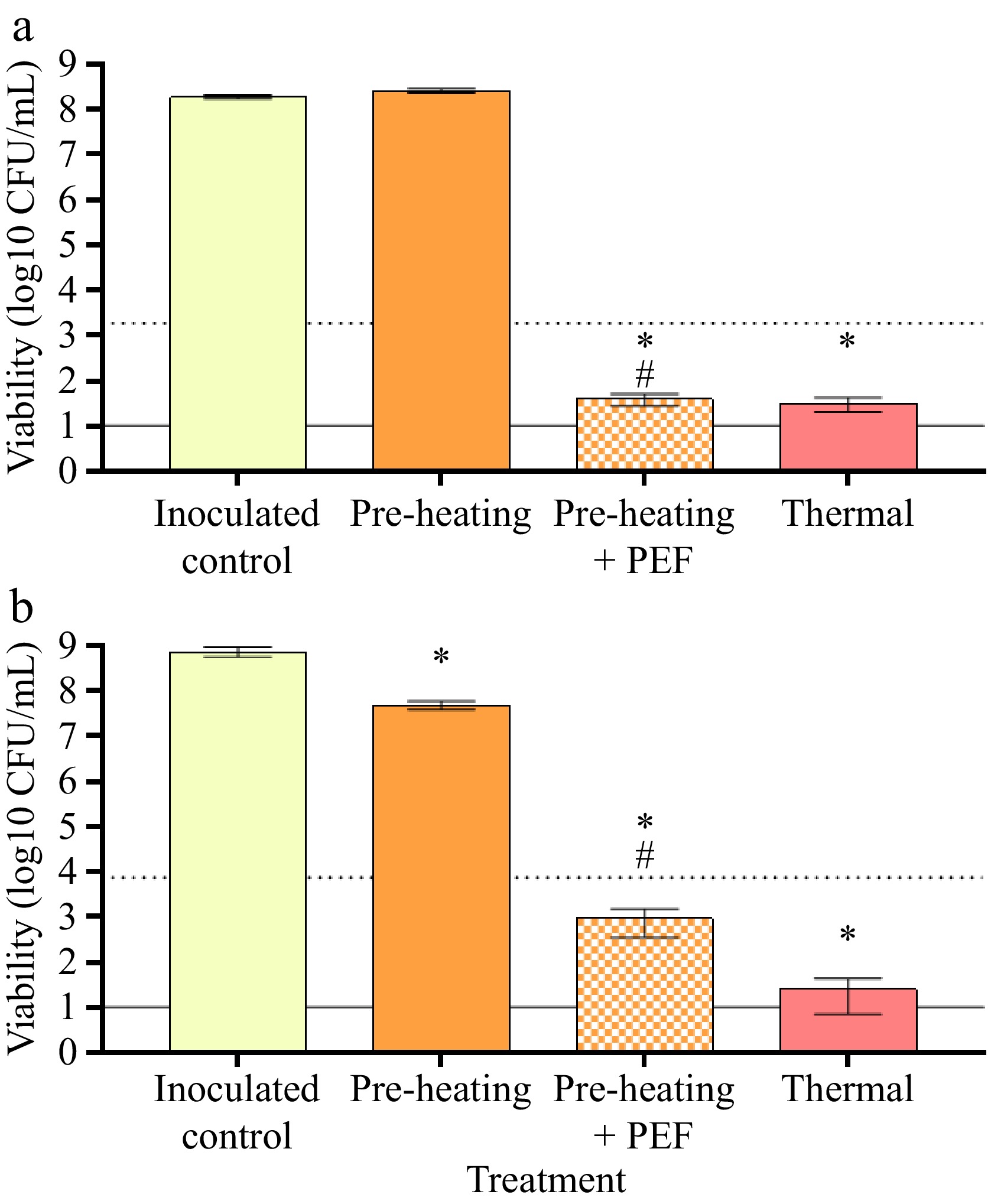
Figure 3.
Viability of surrogate microorganisms in colostrum. Bovine colostrum was inoculated with (a) E. coli (ATCC 25922) or (b) L. innocua and treated with pre-heating (40 °C) only, pre-heating + PEF (11 kV/cm, 209 kJ/L), or thermal treatment at 62.5 °C for 30 min. Viability was determined via plating on EMB or Oxford agar, respectively, after 48 h incubation. Bars represent the mean ± SD of five experiments. The dotted line represents the threshold for a 5-log reduction in bacterial viability, and the solid line represents the threshold of detection. Data were analysed via one-way ANOVA with Tukey's post-hoc test. * Significantly different from inoculated control (p < 0.05); # significantly different to pre-heating control (p < 0.05).
-
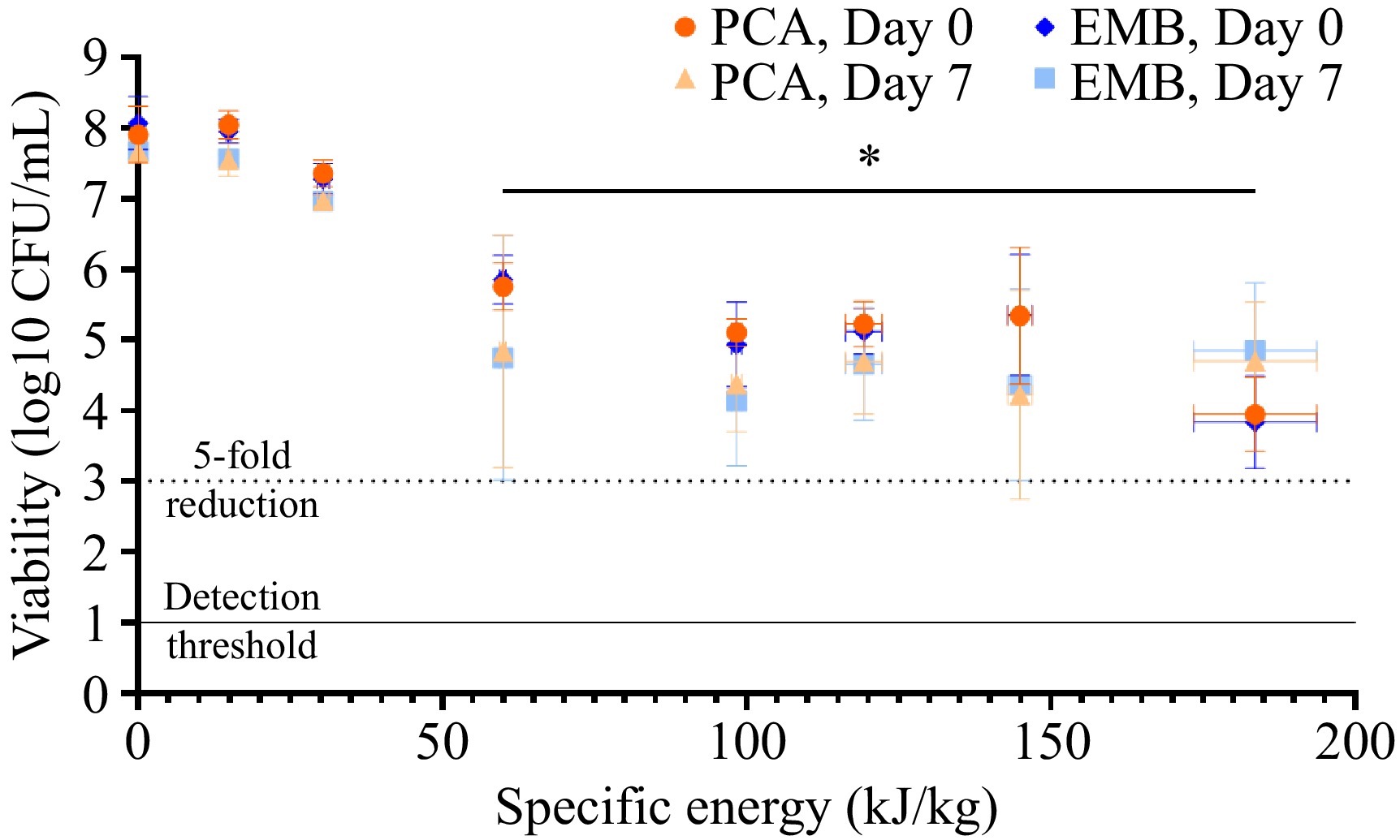
Figure 4.
Viability of E. coli in colostrum following PEF treatment at increasing specific energies. Bovine colostrum was inoculated with a cocktail of pathogenic E. coli, pre-heated to 40 °C, and underwent PEF treatment at a field strength of 9 kV/cm and varying specific energies. Bacterial viability was determined immediately after PEF treatment (day zero) or following a one-week incubation at 4 °C (day seven) using non-selective (PCA) and selective (EMB) agar. Each point represents the mean ± SD (of both the specific energy generated by the PEF machine [horizontal] and resulting microbial viability [vertical]) of three independent experiments. The dotted line represents the threshold for a 5-log reduction in bacterial viability, and the solid line represents the threshold of detection. The effects of specific energy and/or agar media on microbial numbers at a given time point were determined via two-way ANOVA with Tukey's post-hoc test, while paired t-tests were used to compare differences in microbial numbers between days zero and seven for a given type of media. * Significantly different from control (0 kJ/kg) for both PCA and EMB agar.
-
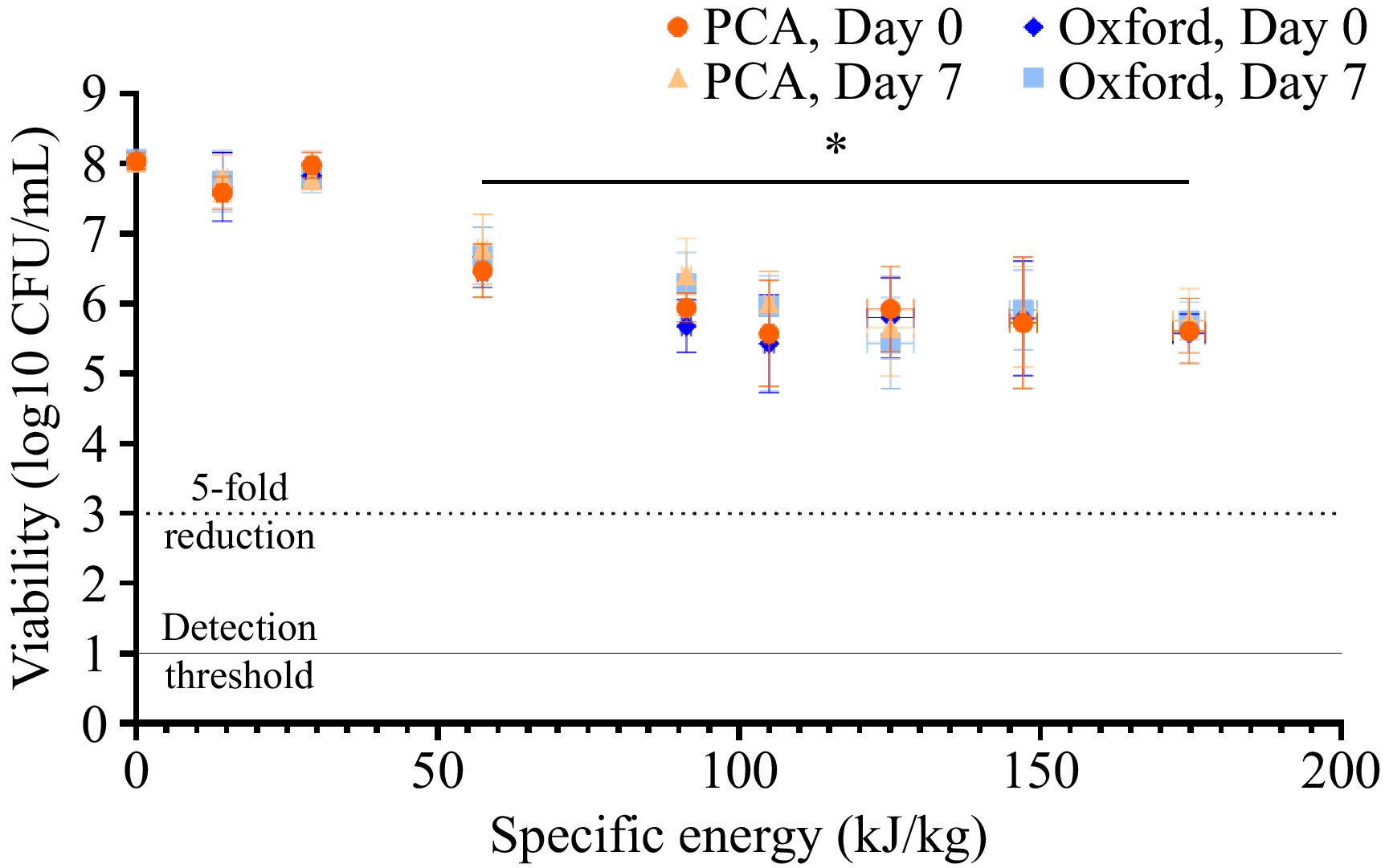
Figure 5.
Viability of L. monocytogenes in colostrum following PEF treatment at increasing specific energies. Bovine colostrum was inoculated with a cocktail of pathogenic L. monocytogenes, pre-heated to 40 °C, and underwent PEF treatment at a field strength of 8.10 kV/cm and varying specific energies. Bacterial viability was determined immediately after PEF treatment (day zero) or following a one-week incubation at 4 °C (day seven) using non-selective (PCA) and selective (Oxford) agar. Each point represents the mean ± SD (of both the specific energy generated by the PEF machine (horizontal) and resulting microbial viability (vertical) of three independent experiments. The dotted line represents the threshold for a 5-log reduction in bacterial viability, and the solid line represents the threshold of detection. The effects of specific energy and/or agar media on microbial numbers at a given time point were determined via two-way ANOVA with Tukey's post-hoc test, while paired t-tests were used to compare differences in microbial numbers between days zero and seven for a given type of media. * Significantly different from control (0 kJ/kg) for both PCA and EMB agar.
Figures
(5)
Tables
(0)