-
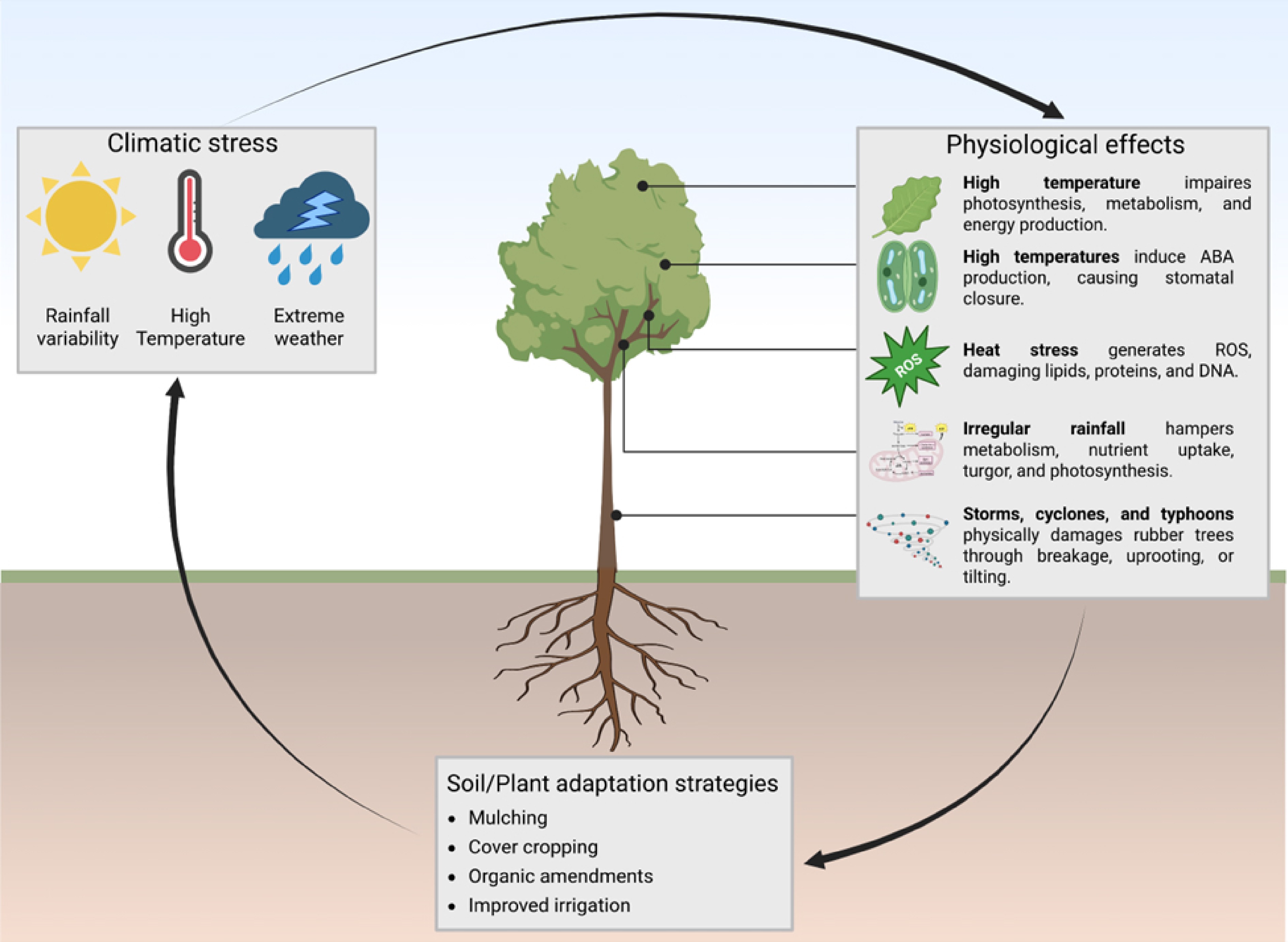
Figure 1.
Climate indices influence on rubber tree physiology and productivity.
-
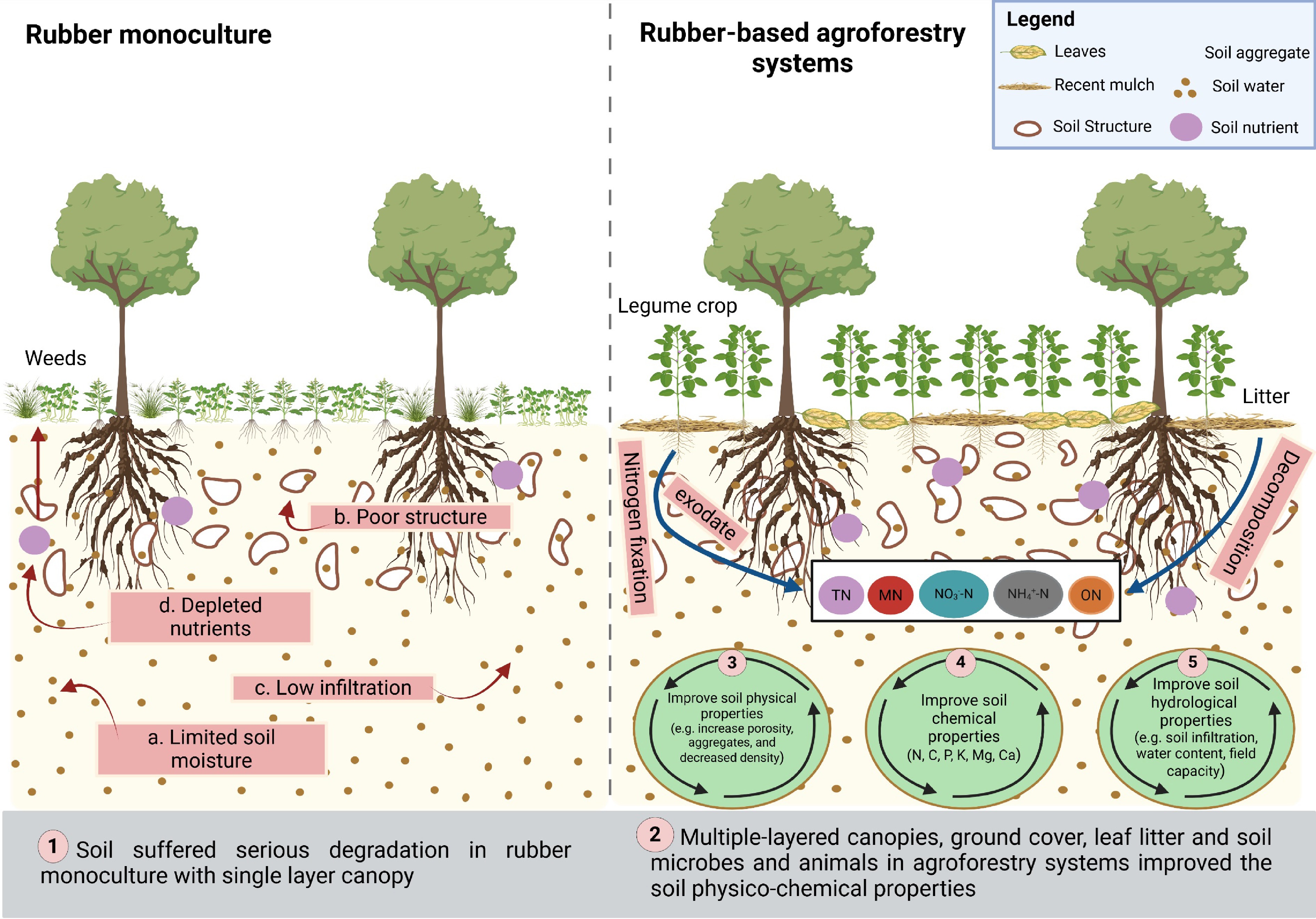
Figure 2.
Rubber monoculture and rubber agroforestry response to soil conservation practices.
-
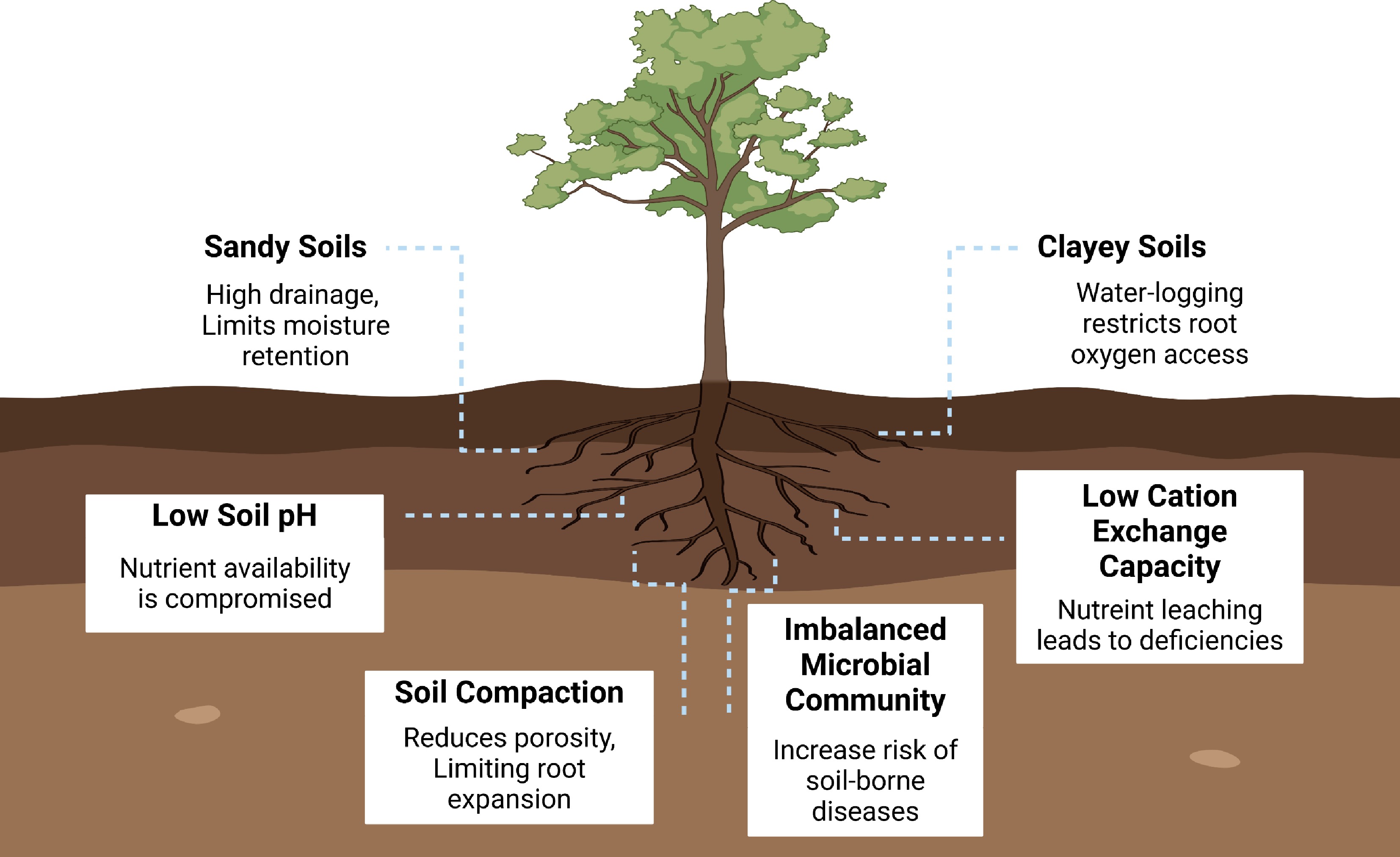
Figure 3.
Soil characteristics and their influence on a rubber plantation.
-
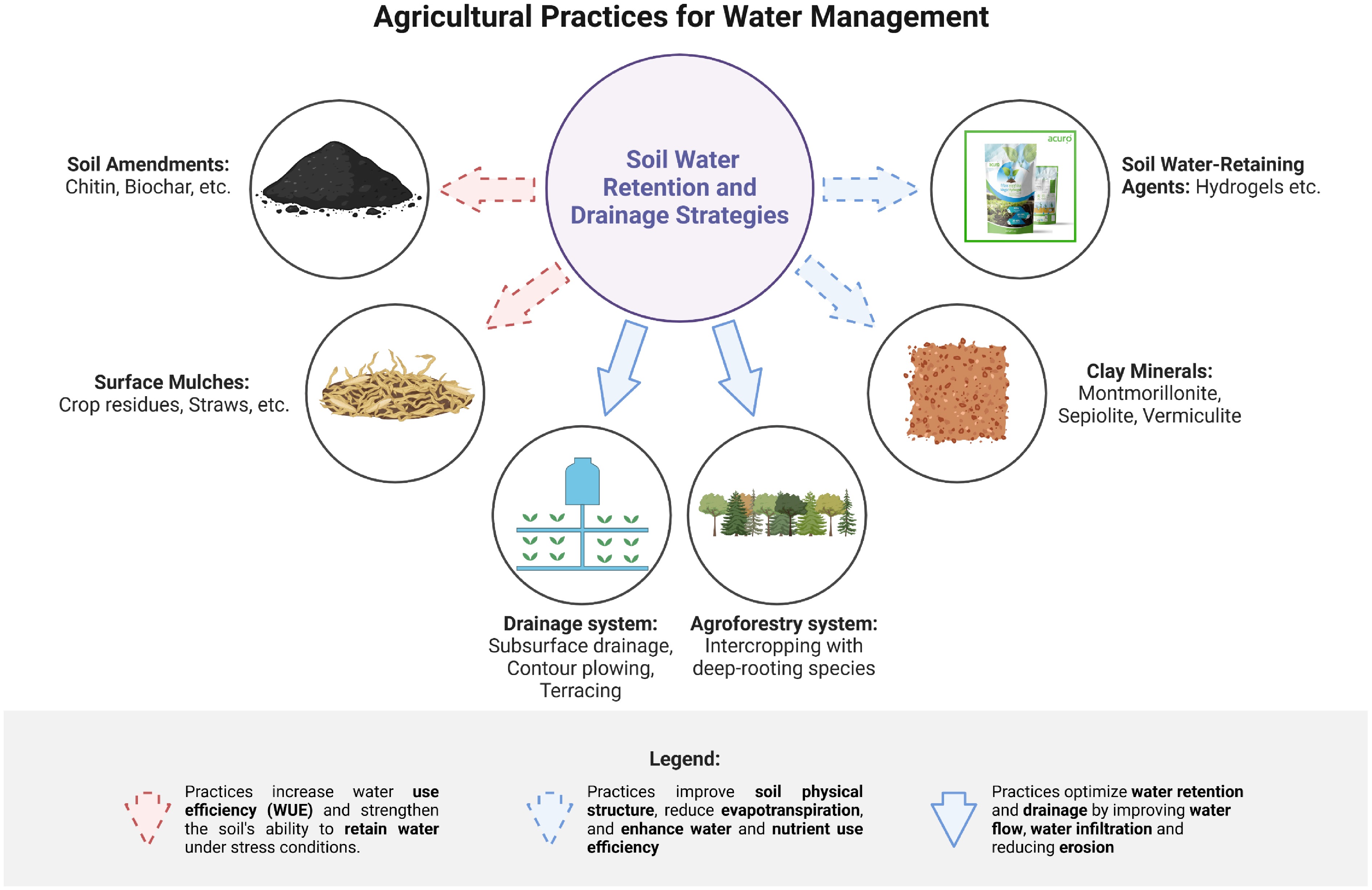
Figure 4.
Soil water retention and drainage improving strategies in rubber plantations.
-
Stress factor Critical threshold Physiological/soil response Impact on growth and yield Ref. High temperature > 35 °C Rubisco and latex-biosynthesis enzyme denaturation; chlorophyll degradation; ABA-induced stomatal closure ↓Photosynthesis; ↓carbon assimilation; ↓latex yield [26] > 40 °C Rapid ROS accumulation; destabilized respiration enzymes; impaired ATP production Severe growth reduction; canopy dieback [27] Low temperature < 15 °C Impaired enzymatic activation; reduced phloem flow and latex fluidity Reduced tapping efficiency; slowed growth [20] Annual rainfall deficit < 1,100 mm yr−1 Soil moisture deficit; reduced turgor and PSII activity 10%–15% latex yield decline [20, 28] Dry-season length > 20–25 consecutive
dry daysABA-mediated stomatal closure; microbial suppression Growth stagnation; yield loss [18] Soil moisture threshold < 20% VWC Reduced nutrient diffusion; lower microbial mineralization ↓Nutrient uptake; ↓latex flow [5, 29] Waterlogging > 48–72 h saturated soil Root hypoxia; risk of Phytophthora infection Sharp yield decline; wilting [30] Heat–drought interaction > 33–35 °C with soil moisture deficit Synergistic ROS increase; PSII repair collapse Severe canopy stress; strong yield depression [31] Soil pH constraint pH < 5.5 Al toxicity; P fixation Nutrient deficiency; impaired root growth [32] Low SOC SOC < 1.5% Low microbial activity; poor aggregate stability Low climatic resilience [33] Table 1.
Critical climatic thresholds affecting rubber tree physiology, soil processes, and latex production.
-
Monitoring method Resolution Cost level Robustness Key outputs/applications Spectral methods (e.g., Sentinel-2, UAV hyperspectral, proximal VIS–NIR sensors) Medium to high (10–30 m for Sentinel-2; cm-scale for UAV) Low–Medium High for spectral stability; sensitive to cloud cover SOC estimation, moisture mapping, nutrient status, spatial variability Genomic/Metagenomic techniques (DNA sequencing, qPCR) Very high (microbial taxa & functional genes) High Medium (requires lab conditions; sensitive to contamination) Microbial diversity, nutrient cycling potential, disease-related microbial shifts In-situ soil sensors (moisture, EC, pH, temperature; IoT networks) Point-scale, continuous temporal data Medium Very high (field-ready; long-term monitoring) Real-time moisture tracking, fertigation scheduling, early stress detection Table 2.
Comparative overview of spectral, genomic, and sensor-based methods for soil monitoring in rubber plantations.
Figures
(4)
Tables
(2)