-
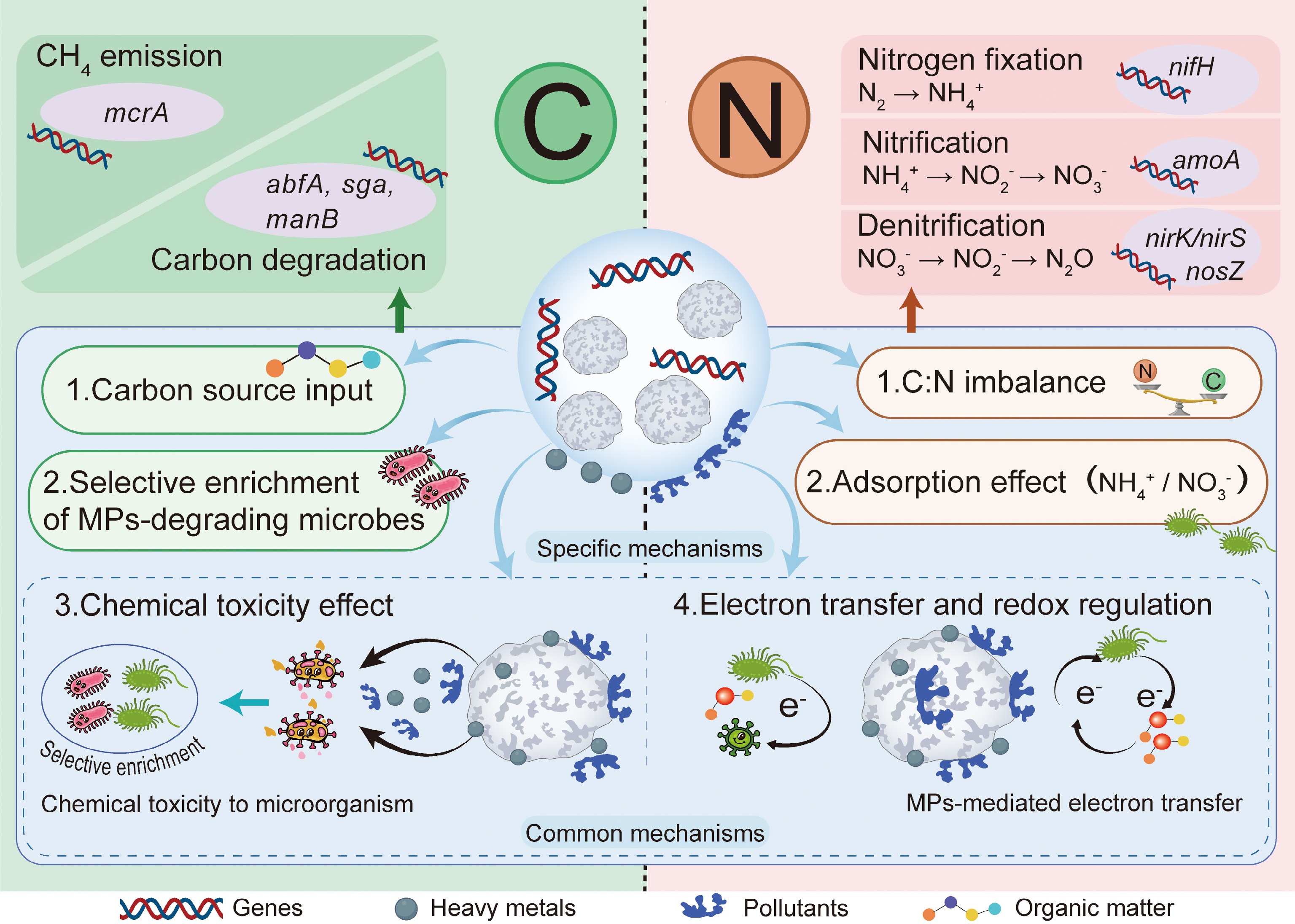
Figure 1.
Microplastics affect soil carbon and nitrogen cycling and related gene expression through multiple pathways. In the carbon cycle, MPs serve as an exogenous carbon input (1) and selectively enrich microbial communities capable of degrading MPs (2). These changes alter the abundance of functional genes involved in carbon metabolism, such as those for carbon degradation (abfA, sga, manB) and methane emission (mcrA), collectively influencing carbon turnover and methane release. In the nitrogen cycle, the carbon input disrupts the soil C:N balance (1), while MP surfaces adsorb ammonium ions (2). These processes jointly alter nitrogen availability and regulate the expression of genes associated with nitrogen fixation (nifH), nitrification (amoA), and denitrification (nirS, nirK, nosZ). Furthermore, MPs selectively shape microbial communities by adsorbing heavy metals and organic pollutants (3), and mediate electron transfer and redox reactions (4). Together, these mechanisms reshape microbial metabolic activity and the expression of genes related to carbon and nitrogen transformations.
-
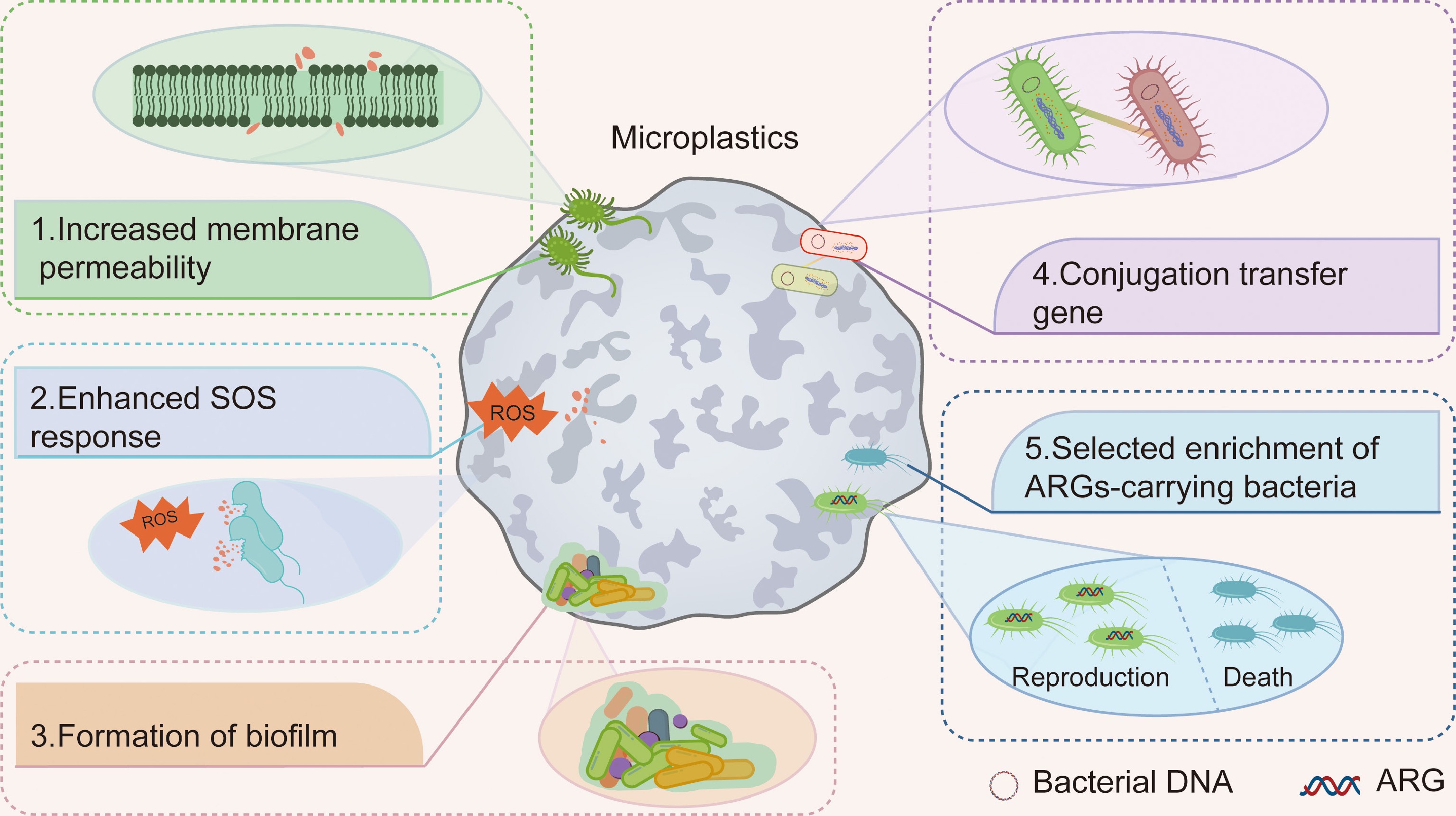
Figure 2.
Mechanisms by which microplastics (MPs) facilitate the dissemination of ARGs. MPs promote ARGs dissemination through five primary mechanisms: (1) increasing bacterial membrane permeability; (2) enhancing the SOS response; (3) facilitating biofilm formation; (4) promoting conjugation-mediated gene transfer; and (5) selectively enriching ARGs-carrying bacteria.
Figures
(2)
Tables
(0)