-
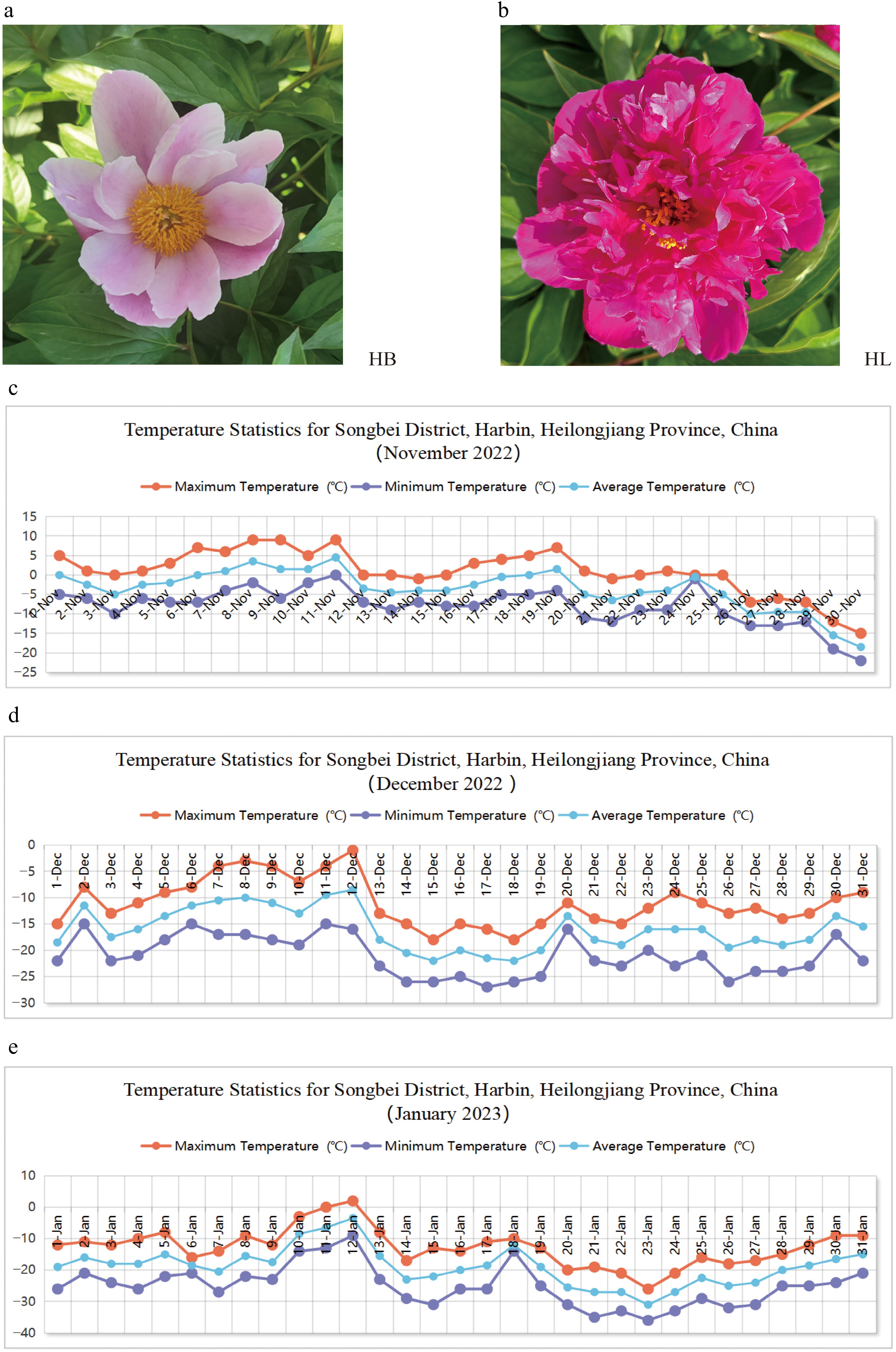
Figure 1.
Experimental materials: (a) 'Hang Baishao' (HB). (b) 'Hongling Chijin' (HL). Temperature statistics for Songbei district, Harbin, Heilongjiang Province, China. (c) November 2022. (d) December 2022. (e) January 2023.
-
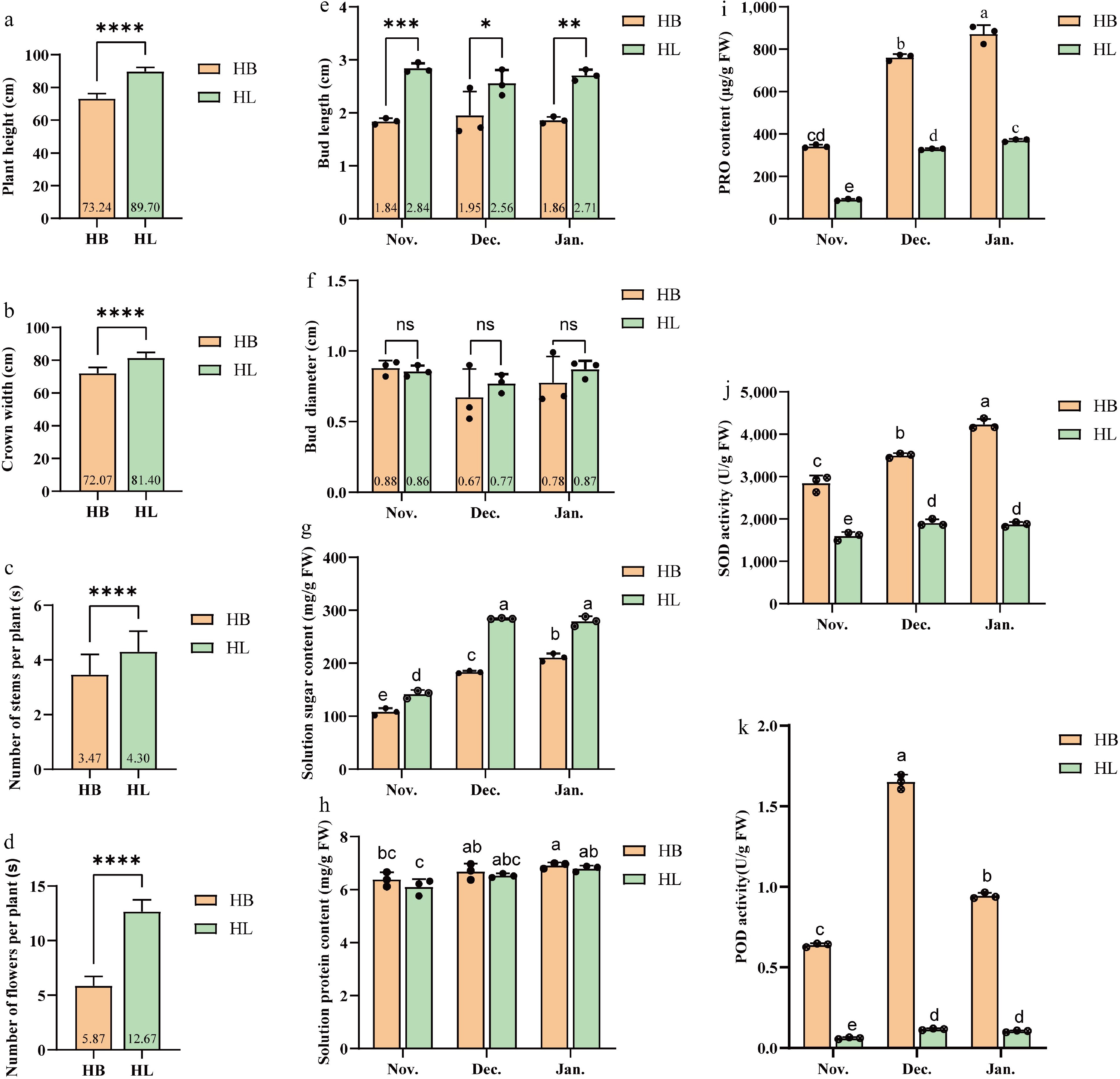
Figure 2.
Morphological and physiological data in 'Hang Baishao' (HB) and 'Hongling Chijin' (HL) during the winter of Harbin. (a) Plant height. (b) Crown width. (c) Number of stems per plant. (d) Number of flowers per plant. (e) Bud length. (f) Bud diameter. (g) Soluble sugar content. (h) Soluble protein content. (i) PRO content. (j) SOD activity. (k) POD activity. All data are the means of three replicates with standard deviations, and different letters indicate significant differences among the data according to Duncan's multiple range test. * indicates significant difference at the 0.05 probability level, ** indicates extremely significant difference at the 0.01 probability level, *** indicates extremely significant difference at the 0.001 probability level, **** indicates extremely significant difference at the 0.0001 probability level, and ns indicates non-significant. Different lowercase letters above the bars of Fig. 2g–k show significant differences at the 0.05 probability level; n = 3.
-
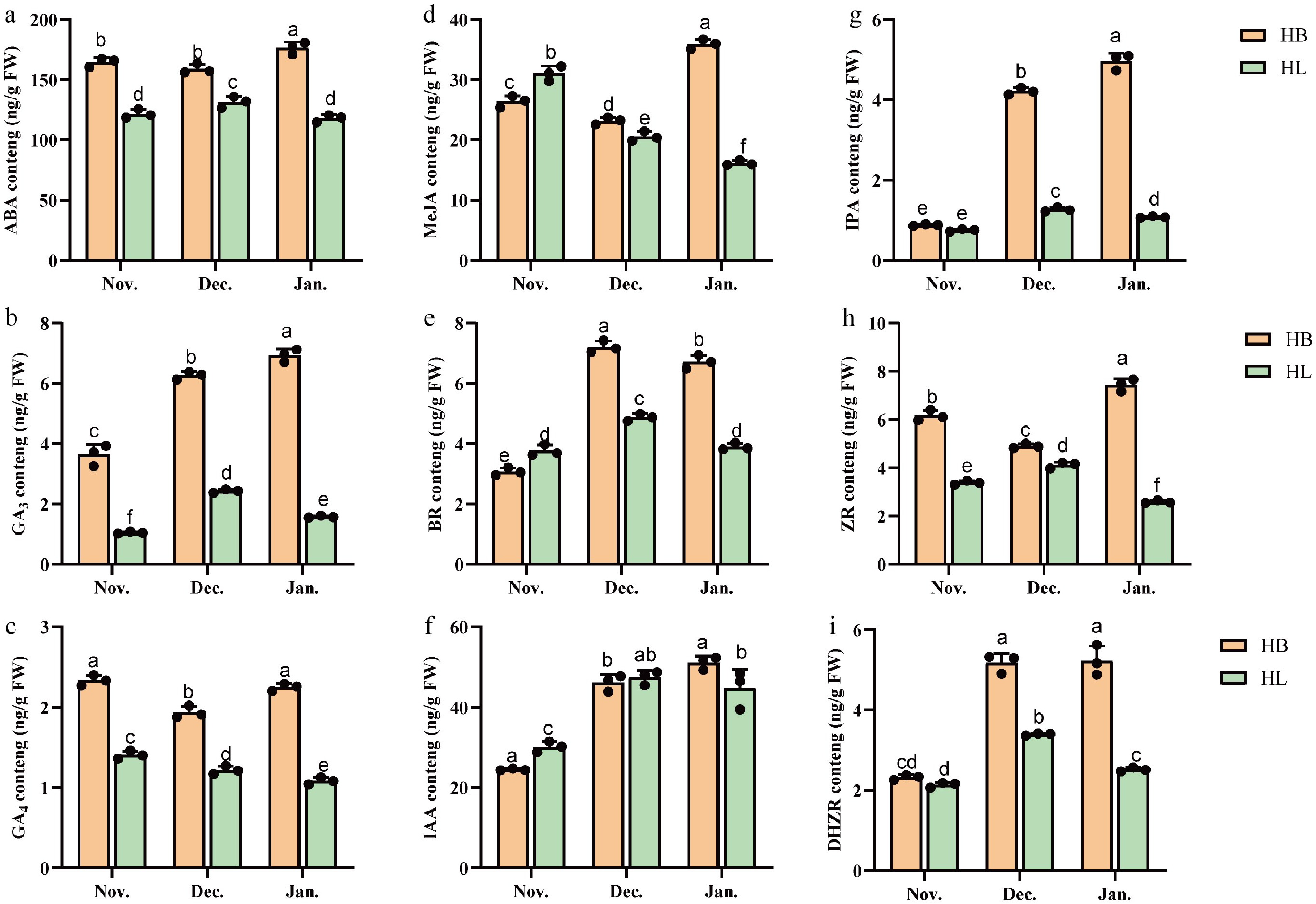
Figure 3.
Hormone content in three periods in 'Hang Baishao' (HB) and 'Hongling Chijin' (HL) under cold stress. (a) ABA content. (b) GA3 content. (c) GA4 content. (d) JA content. (e) BR content. (f) IAA content. (g) IPA content. (h) ZR content. (i) DHZR content. Different lowercase letters above the bars of Fig. 3a–i show significant differences at the 0.05 probability level; n = 3.
-
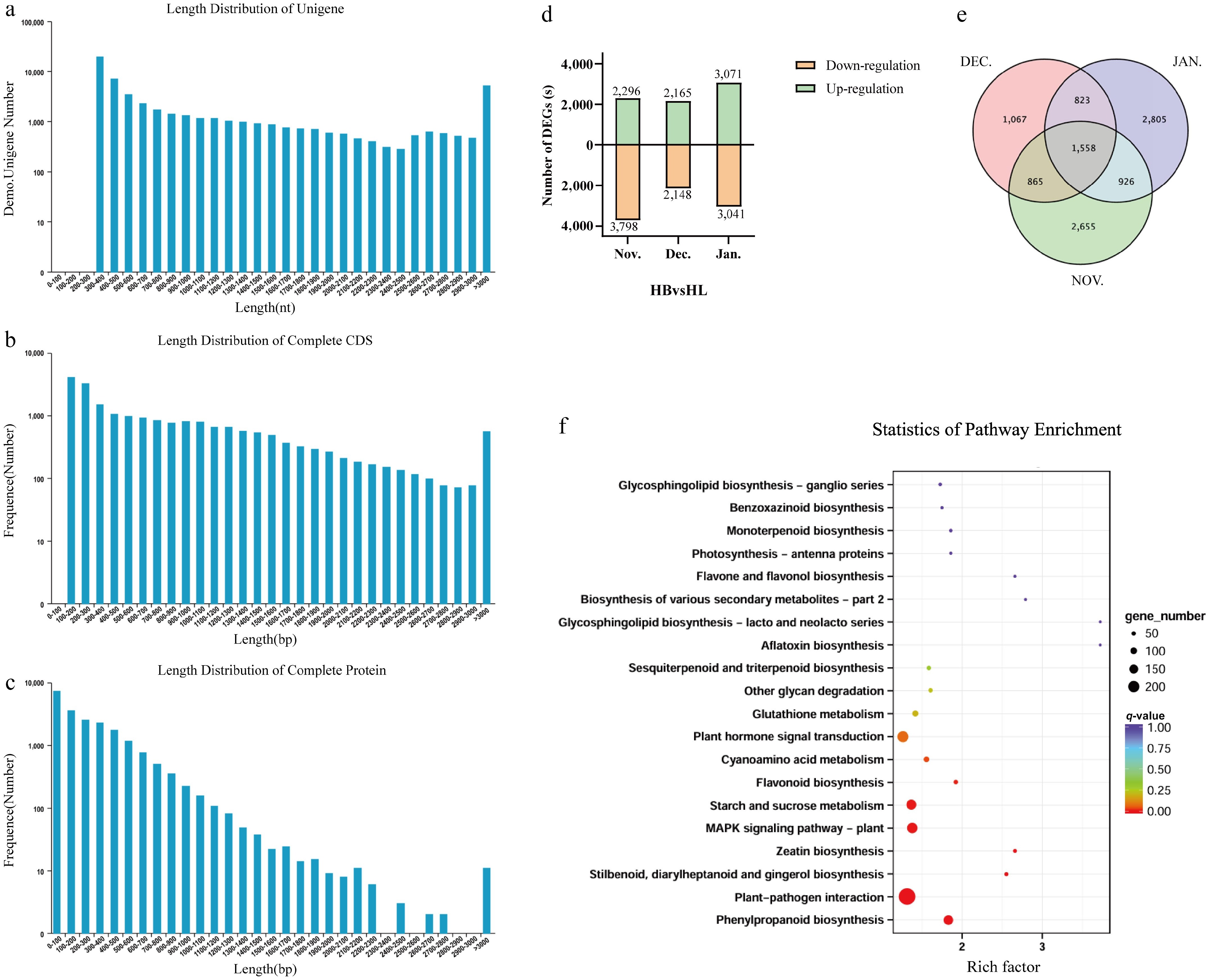
Figure 4.
Statistics and functional analysis of DEGs in HB and HL transcriptome during the winter of Harbin. (a) Length distribution of Unigene. (b) Length distribution of complete CDS. (c) Length distribution of complete protein. (d) Number of DEGs in three periods of HB and HL under cold stress. (e) Venn diagram of DEGs in three periods of HB and HL under cold stress. (f) KEGG enrichment of DEGs.
-
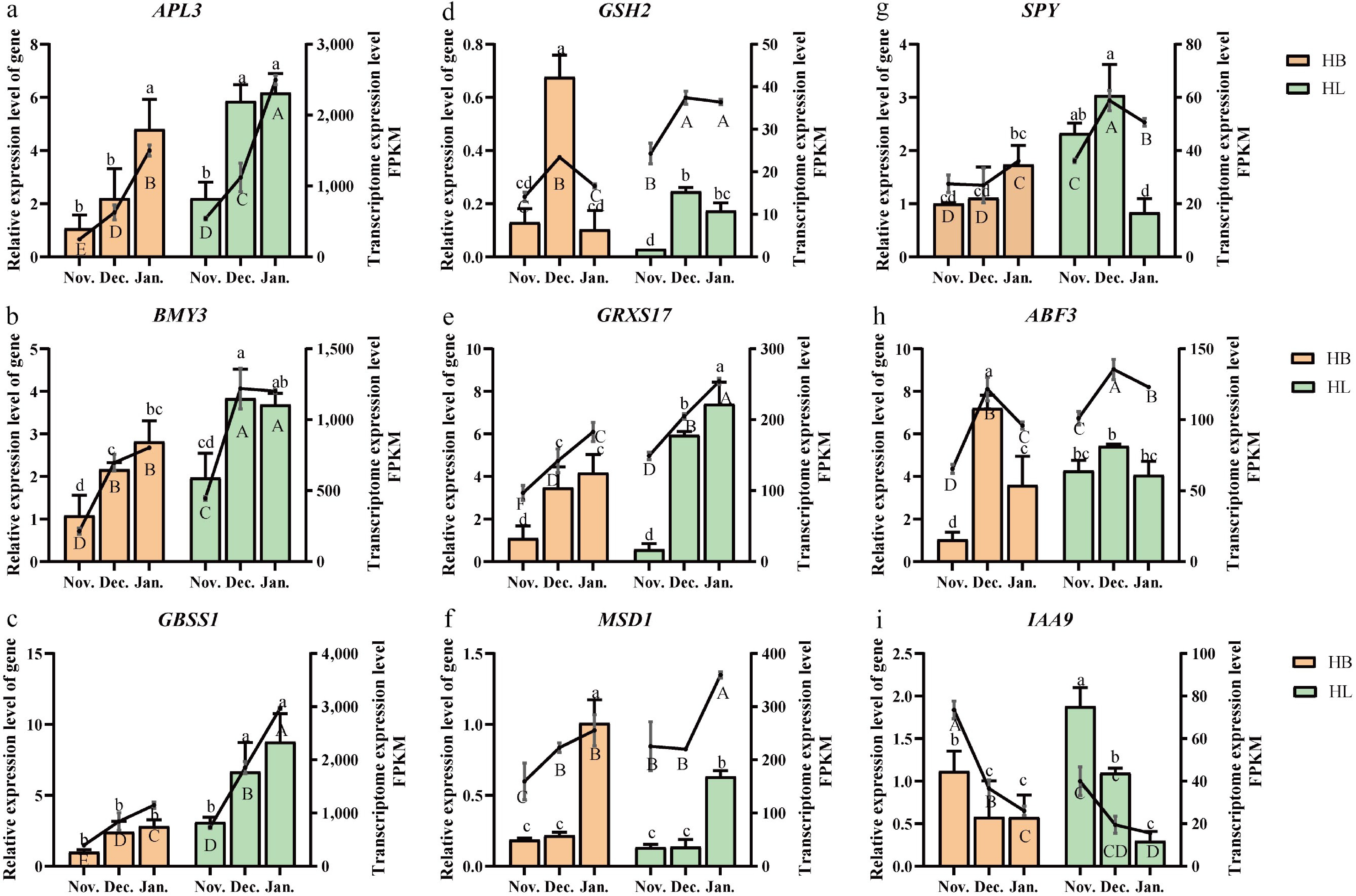
Figure 5.
The qRT-PCR analysis and transcriptomic expression of cold-tolerance related genes in 'Hang Baishao' (HB) and 'Hongling Chijin' (HL). (a) APL3. (b) BMY3. (c) GBSS1. (d) GSH2. (e) GRXS17. (f) MSD1. (g) SPY. (h) ABF3. (i) IAA9. The bar chart represents the gene relative expression level, and the line chart represents the transcriptome expression level. FPKM: Fragments per kilobase of exon model per million mapped reads. Different lowercase letters above the bars of Fig. 5a–i show significant differences at the 0.05 probability level; n = 3.
-
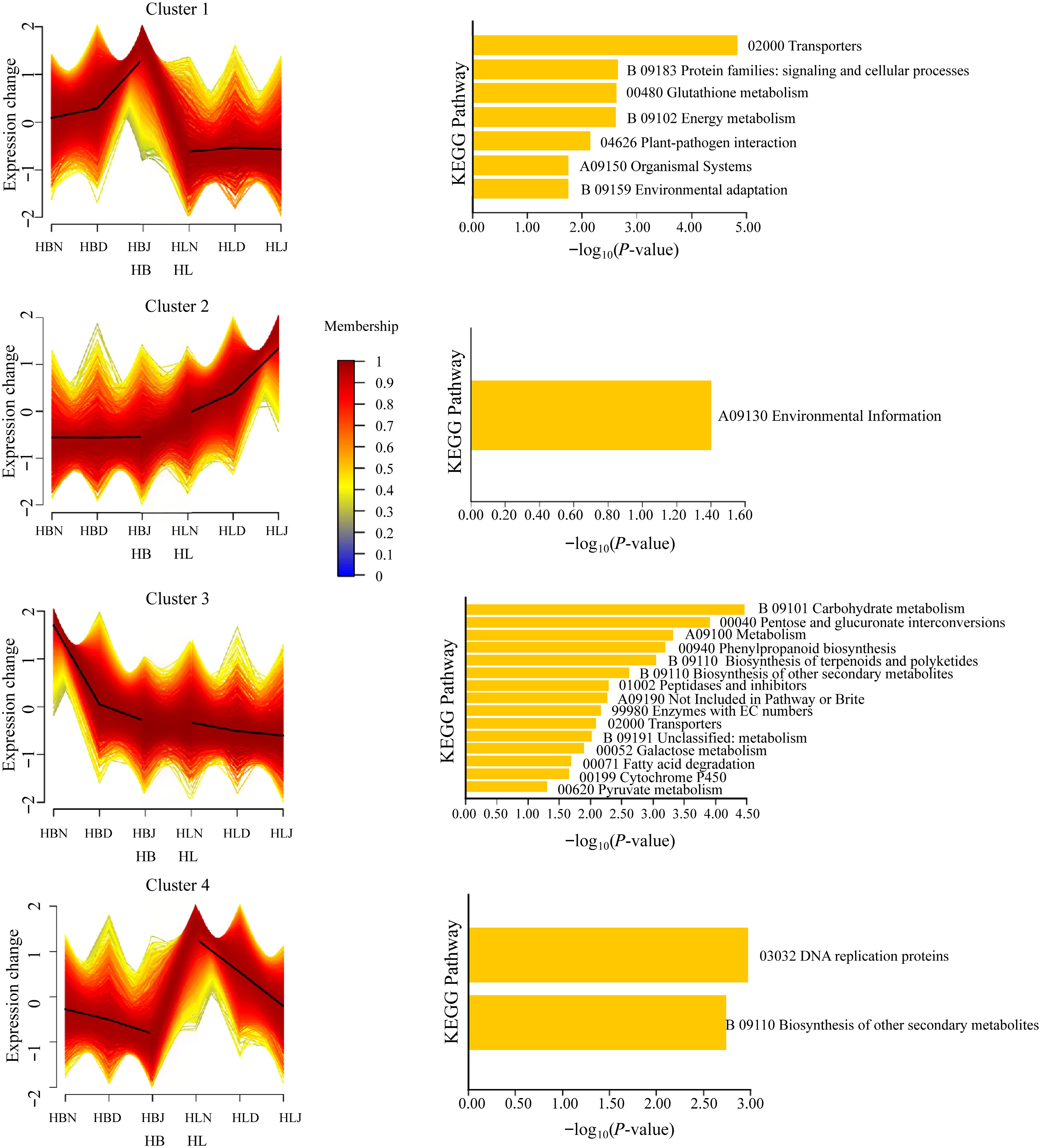
Figure 6.
Clustering and KEGG enrichment analysis of DEGs of HB and HL during the winter of Harbin; The x-axis labels represent cultivar names combined with sampling months, using the following nomenclature: HBN denotes the HB cultivar sampled in November (N), HBD indicates the HB cultivar in December (D), and HBJ corresponds to the HB cultivar in January (J). Similarly, HLN, HLD, and HLJ refer to the HL cultivar sampled in November, December, and January, respectively.
-
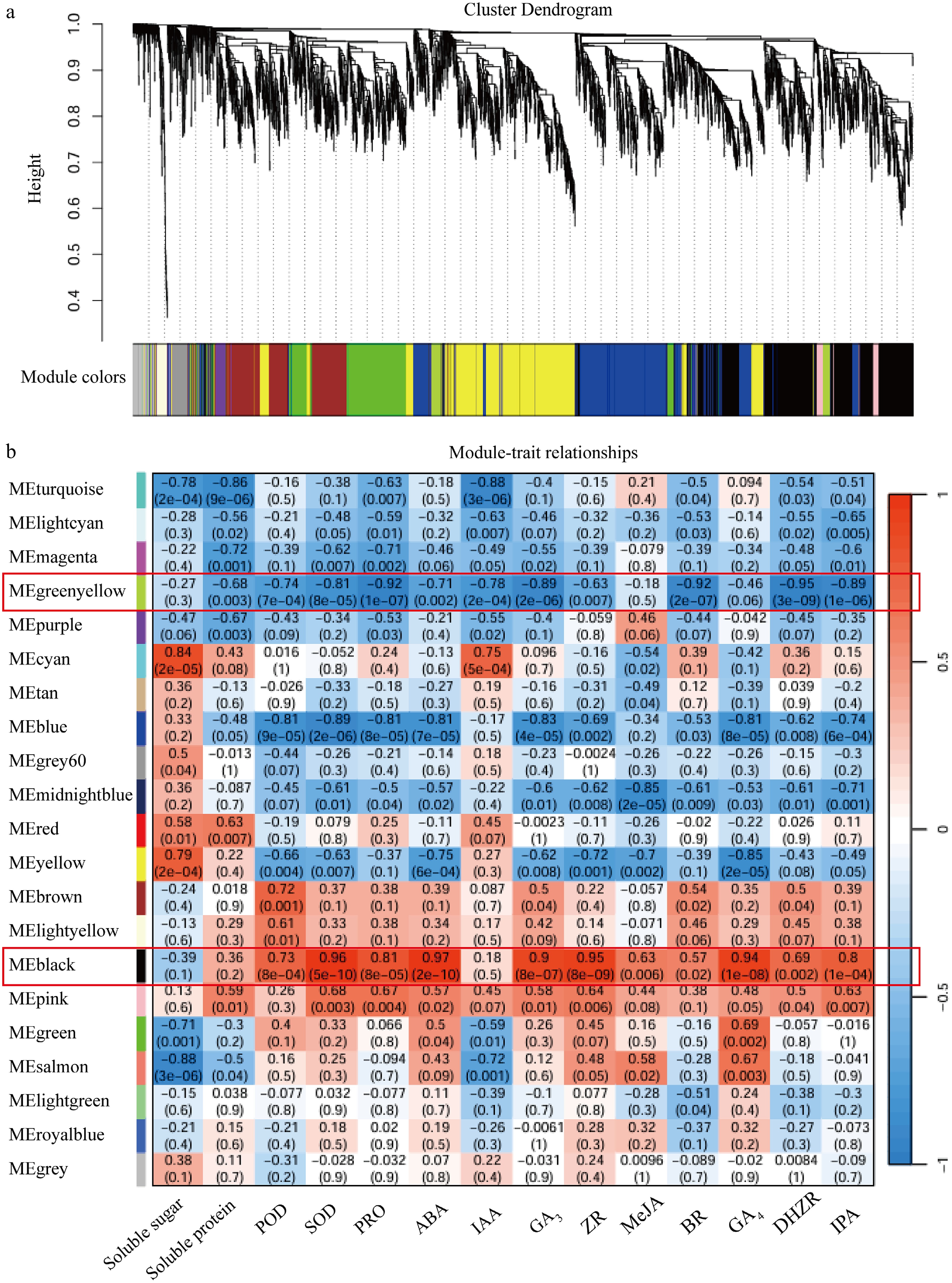
Figure 7.
WGCNA analysis. (a) Cluster dendrogram. (b) Module-trait relationships.
-
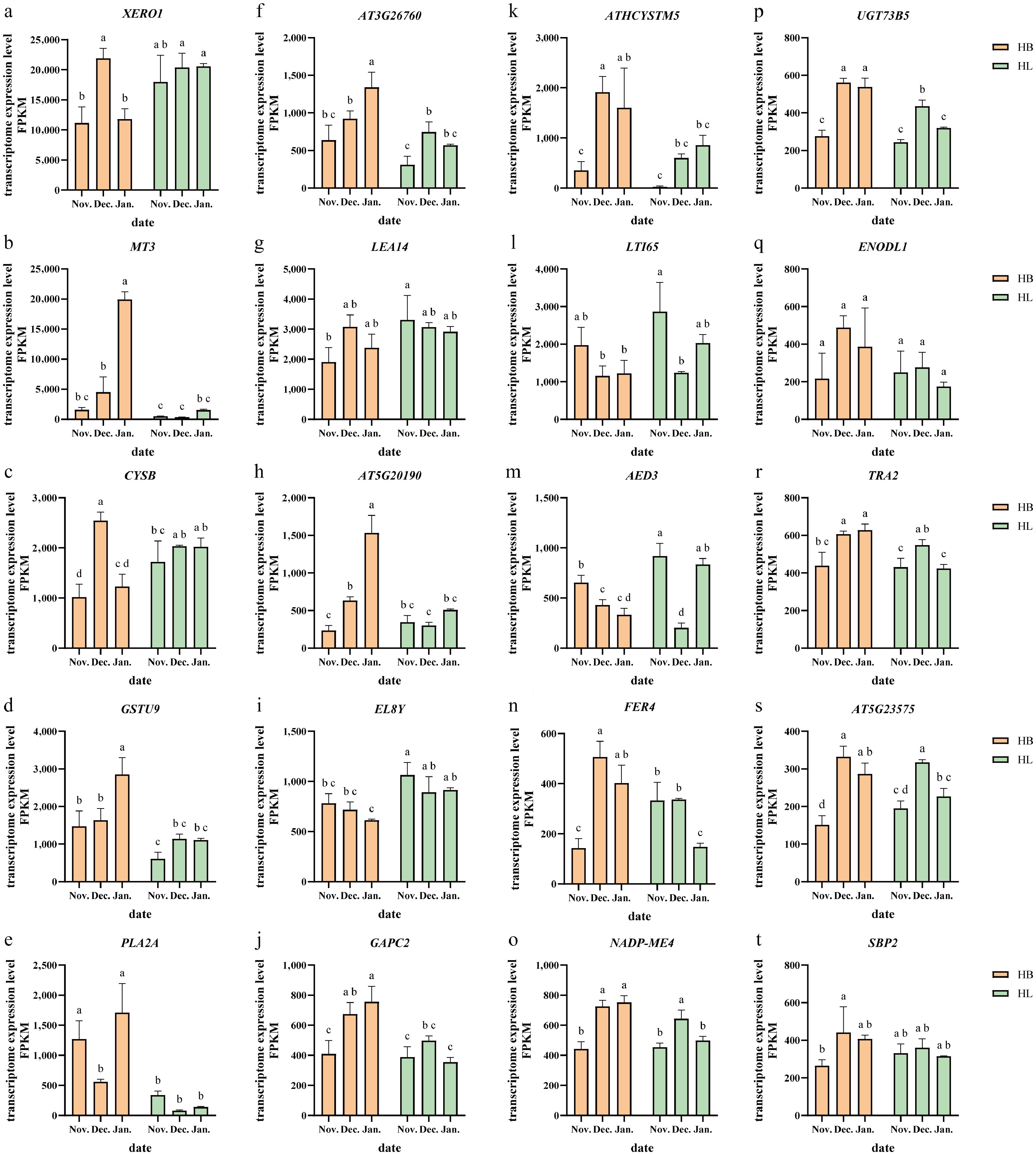
Figure 8.
Transcriptome expression levels of genes potentially involved in cold stress response are shown for 'Hang Baishao' (HB) and 'Hongling Chijin' (HL). (a)–(j) Genes from Me black modules, and (k)–(t) Me greenyellow modules are displayed in the left and right panels, respectively. Different lowercase letters above the bars of (a)–(t) show significant differences at the 0.05 probability level; n = 3.
-
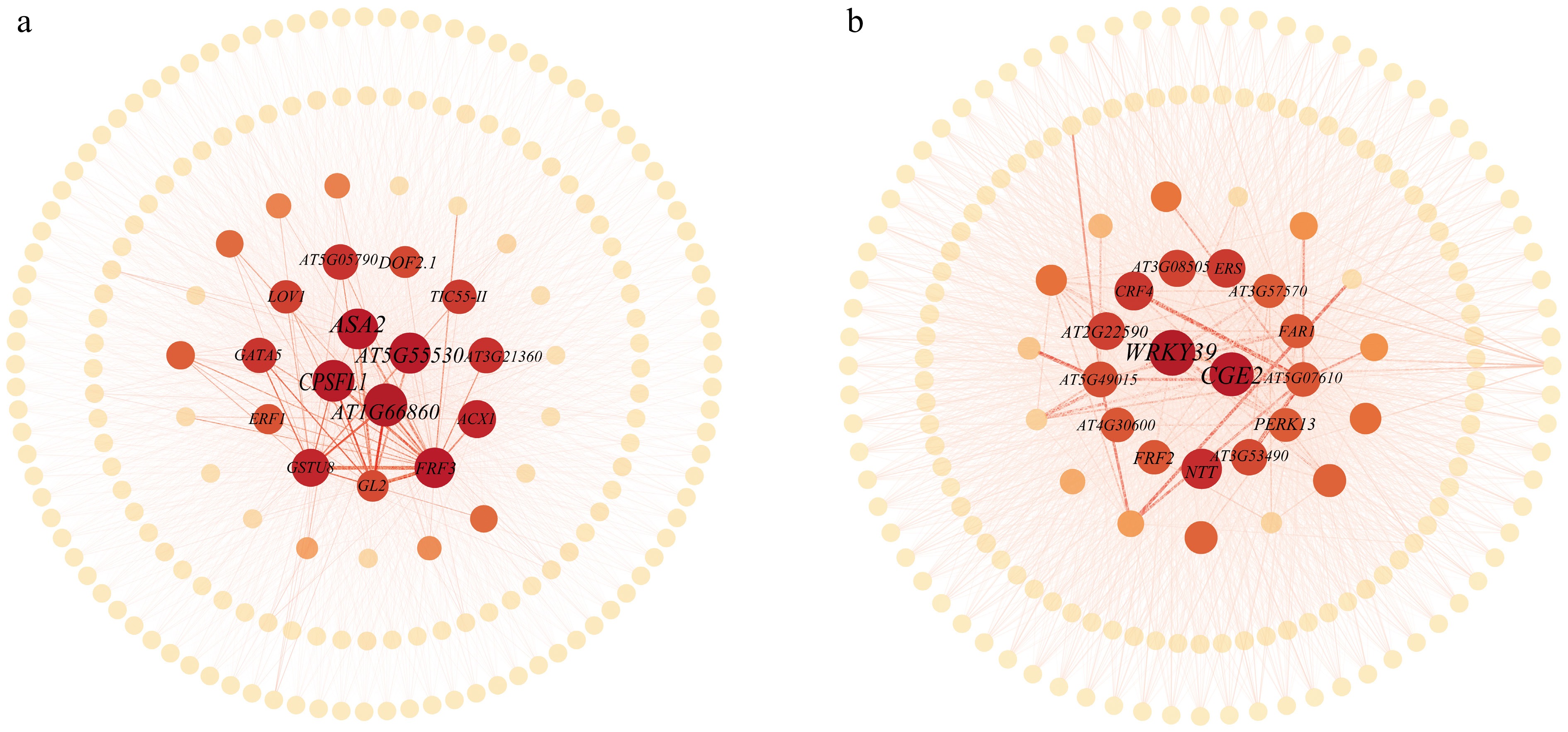
Figure 9.
Co-expression networks of important genes in the (a) ME black, and (b) ME yellowgreen modules. In the network visualization, both the size and color intensity of each gene node are determined by its degree value. Larger node sizes and darker colors represent higher degree values.
-
Cultivar Location Latitude Flower type Feature Hang Baishao (HB) Pan'an, Zhejiang Province N 28°49′–29°19′ Single-petal type The Chinese southernmost peony cultivar with weak cold resistance that has been cultivated and produced intensively in Zhejiang for more than 1,000 years Hongling Chijin (HL) Heze, Shandong Province N 44°04′–46°40′ Single-petal type A cultivar with strong cold resistance that was discovered after being introduced and screened in Harbin, the northernmost metropolis city in China Table 1.
Detailed information on experimental materials HB and HL.
-
Abbreviations Full names Forward primer sequences (5' to 3') Reverse primer sequences (5' to 3') ATUBA ABA-Triggered Ubiquitin ligase for Cold Adaptation GACGTGGGCTCGATCTGAAT ATCCCTTGCCTGAGCATCAC APL AQUAPORIN-LIKE PROTEIN AGGCGAAGCAGGAATGAAGT CAACTGACCTGTCACCCGTT BMY β-AMYLASE GENE CCAATTGGGGACTTGGTGGT GCCATGGTTGGTAAAAGCGG GBSS Granule-Bound Starch Synthase ATGTTCTAGGGGGACTGCCA GCACAGCAAGCTGAAACGAA GRXS17 GLUTAREDOXIN S17 ATCTGGTCTTCCCAACACGC TCAACCCTTCACGAACCTCG GSH2 GLUTATHIONE SYNTHETASE 2 TTGATGCAGAAGGGGAGCTT GTTGGTGCATACCCAGCTCT MSD1 MALONYL-CoA SYNTHETASE DEFECTIVE 1 CCTATTCGTGAAGGAGGCGG GGTCCTGATTGGCAGTGGTT ABF3 Abscisic Acid-Responsive Element-Binding Factor 3 GGTTGGTTTAGGACCAGGGG ATGTACCTGCTTACGAGCCC IAA9 Indole-3-Acetic Acid 9 ACATGAGGAGAAGCCGTTGT TGAGTGGTGGAAGCCCTAGA SPY SPINDLY ACTGGGGTAGGCGCTTTATG GCATCTGCCTTCACAACTGC Table 2.
The primers for qRT-PCR.
-
Anno_database Annotated number 300 ≤ length length ≥ 1,000 COG_Annotation 7,083 2,043 5,040 GO_Annotation 23,472 10,166 13,301 KEGG_Annotation 18,798 7,536 11,262 KOG_Annotation 15,395 6,023 9,372 Pfam_Annotation 18,418 5,915 12,503 Swissprot_Annotation 17,014 5,811 11,203 TrEMBL_Annotation 28,594 12,928 15,666 eggNOG_Annotation 23,573 9,933 13,640 nr_Annotation 29,753 14,007 15,746 All_Annotated 30,838 14,889 15,944 Table 3.
Statistics of Unigene annotation.
-
Gene name Full name HB vs HL Nov. vs Dec. vs Jan. Potential function APL3 HL↑ Jan.↑ Positive BMY3 BETA-AMYLASE 3 HL↑ Dec. or Jan.↑ Positive GBSS1 granule bound starch synthase 1 HL↑ Jan.↑ Positive GSH2 GLUTATHIONE SYNTHETASE 2 HB↑ Dec. ↑ Uncertain GRXS17 Arabidopsis thaliana monothiol glutaredoxin 17 HL↑ Jan.↑ Positive MSD1 ARABIDOPSIS MANGANESE SUPEROXIDE DISMUTASE 1 HB↑ Jan.↑ Uncertain SPY SPINDLY HL↑ Dec. or Jan.↑ Uncertain ABF3 ABSCISIC ACID RESPONSIVE ELEMENTS-BINDING FACTOR 3 HL↑ Dec. ↑ Uncertain IAA9 INDOLE-3-ACETIC ACID INDUCIBLE 9 HL↑ Nov. ↑ Uncertain 'HL↑' means the gene expression level of 'Hongling Chijin' HL is higher than 'Hang Baishao' HB; 'HB↑' means the gene expression level of HB is higher than HL; 'Nov.↑' means the gene expression level in Nov. is higher than the other two months overall. 'Dec.↑' means the gene expression level in Dec. is higher than the other two months overall. 'Jan.↑' means the gene expression level in Jan. is higher than the other two months overall. 'Potential function' means the possible function of a gene in the regulation of cold stress of herbaceous peony. Table 4.
qRT-PCR validation of candidate genes.
-
Abbreviations Full name Function XERO1 DEHYDRIN XERO 1 Dehydrin MT3 METALLOTHIONEIN 3 Limiting oxidative damage CYSB ARABIDOPSIS THALIANA PHYTOCYSTATIN 6 Encodes a protein with cysteine proteinase inhibitor activity GSTU9 glutathione S-transferase tau 9 Encodes glutathione transferase belonging to the tau class of GSTs PLA2A PHOSPHOLIPASE A 2A Contributes to resistance to virus AT3G26760 NAD(P)-binding Rossmann-fold superfamily protein LEA14 LATE EMBRYOGENESIS ABUNDANT 14 Encodes late-embryogenesis abundant protein AT5G20190 Tetratricopeptide repeat (TPR)-like superfamily protein EL8Y RIBOSOMAL PROTEIN EL8Y Ribosomal protein L7Ae/L30e/S12e/Gadd45 family protein GAPC2 GLYCERALDEHYDE-3-PHOSPHATE DEHYDROGENASE C2 The expression level is upregulated in Arabidopsis seedlings exposed to cadmium ATHCYSTM5 CYSTEINE-RICH TRANSMEMBRANE MODULE 5 Cysteine-rich/transmembrane domain A-like protein LTI65 LOW-TEMPERATURE-INDUCED 65 Encodes a protein that is induced in expression in response to water deprivation such as cold AED3 APOPLASTIC EDS1-DEPENDENT 3 Eukaryotic aspartyl protease family protein FER4 ferritin 4 Encodes FERRITIN 4, AtFER4 NADP-ME4 NADP-malic enzyme 4 Localized to chloroplasts and expressed throughout the whole plant and during embryogenesis and germination, limiting oxidative damage UGT73B5 UDP-glucosyl transferase 73B5 Involved in response to insect oral secretions ENODL1 early nodulin-like protein 1 Early nodulin-like protein 1 TRA2 TRANSALDOLASE 2 Transaldolase which contributes to ROS homeostasis in response to Glc during early seedling growth AT5G23575 Transmembrane CLPTM1 family protein SBP2 SELENIUM-BINDING PROTEIN 2 Selenium-binding protein 2 The information presented in this table was obtained from the publicly available Arabidopsis Information Resource website at www.arabidopsis.org .Table 5.
Summary of gene abbreviations, full names, and functions.
-
Abbreviations Full name Function ASA2 ANTHRANILATE SYNTHASE 2 Expression was not induced by wounding nor bacterial pathogen infiltration CPSFL1 CHLOROPLAST-LOCALIZED SEC14- LIKE PROTEIN Sec14p-like protein involved in chloroplast vesicle transport and required for photoauxotrophic growth AT1G66860 Class I glutamine amidotransferase-like superfamily protein AT5G55530 Calcium-dependent lipid-binding family protein GSTU8 glutathione S-transferase TAU 8 Encodes glutathione transferase belonging to the tau class of GSTs FRF3 FAR1-RELATED SEQUENCES-RELATED FACTOR3 Encodes one of four FRS factor-like genes in Arabidopsis ACX1 ACYL-COA OXIDASE 1 Encodes a medium to long-chain acyl-CoA oxidase GATA5 GATA TRANSCRIPTION FACTOR 5 Involved in regulating carbon and nitrogen metabolism AT5G05790 Duplicated homeodomain-like superfamily protein AT3G21360 2-oxoglutarate (2OG) and Fe(II)-dependent oxygenase superfamily protein DOF2.1 DOF PROTEIN 2.1 DOF transcription factor with a conserved zinc finger (ZF) DNA-binding domain TIC55-II TRANSLOCON AT THE INNER ENVELOPE MEMBRANE OF CHLOROPLASTS 55-II Translocon at the inner envelope membrane of chloroplasts 55-II ERF1 ETHYLENE RESPONSE FACTOR 1 Involved in ethylene signaling cascade GL2 GLABRA2 A homeodomain protein affects epidermal cell identity including trichomes, root hairs, and seed coat LOV1 LOCUS ORCHESTRATING VICTORIN EFFECTS1 A disease susceptibility gene The information presented in this table was obtained from the publicly available Arabidopsis Information Resource website at www.arabidopsis.org .Table 6.
Summary of gene abbreviations, full names, and functions in the ME black module.
-
Abbreviations Full name Function WRKY39 WRKY DNA-BINDING PROTEIN 39 Member of WRKY Transcription Factor; Group II-d CGE2 CHLOROPLAST GRPE 2 Chloroplast GrpE protein NTT NO TRANSMITTING TRACT Involved in transmitting tract development and pollen tube growth CRF4 CYTOKININ RESPONSE FACTOR 4 Encodes a member of the ERF subfamily B-5 of ERF/AP2 transcription factor family AT3G08505 Zinc finger family protein ERS ETHYLENE RESPONSE SENSOR 1 Ethylene receptor, subfamily 1 and has histidine kinase activity AT2G22590 UDP-Glycosyltransferase superfamily protein AT5G49015 Expressed protein AT4G30600 Signal recognition particle receptor alpha subunit family protein FRF2 FAR1-RELATED SEQUENCES-RELATED FACTOR2 Encodes one of four FRS factor-like genes in Arabidopsis AT3G53490 Valine-tRNA ligase PERK13 Proline-rich extensin-like receptor kinase 13 Modulates phosphate deficiency-induced root hair elongation AT5G07610 F-box family protein FAR1 FATTY ACID REDUCTASE 1 Are shown to generate the fatty alcohols found in root, seed coat, and wound-induced leaf tissue AT3G57570 ARM repeat superfamily protein The information presented in this table was obtained from the publicly available Arabidopsis Information Resource website at www.arabidopsis.org .Table 7.
Summary of gene abbreviations, full names, and functions in the ME yellowgreen module.
Figures
(9)
Tables
(7)