-
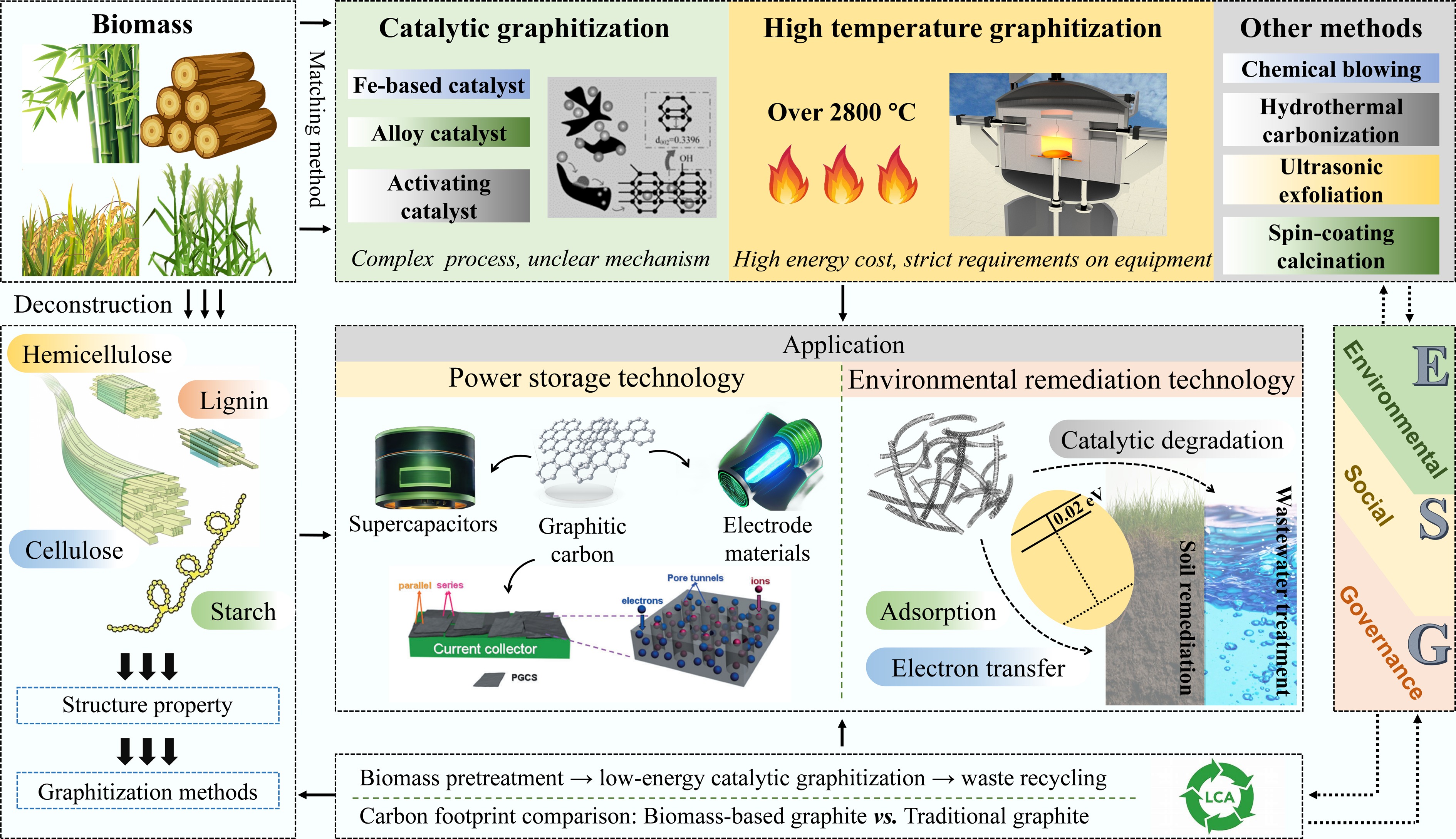
Figure 1.
The graphitization potential of biomass.
-
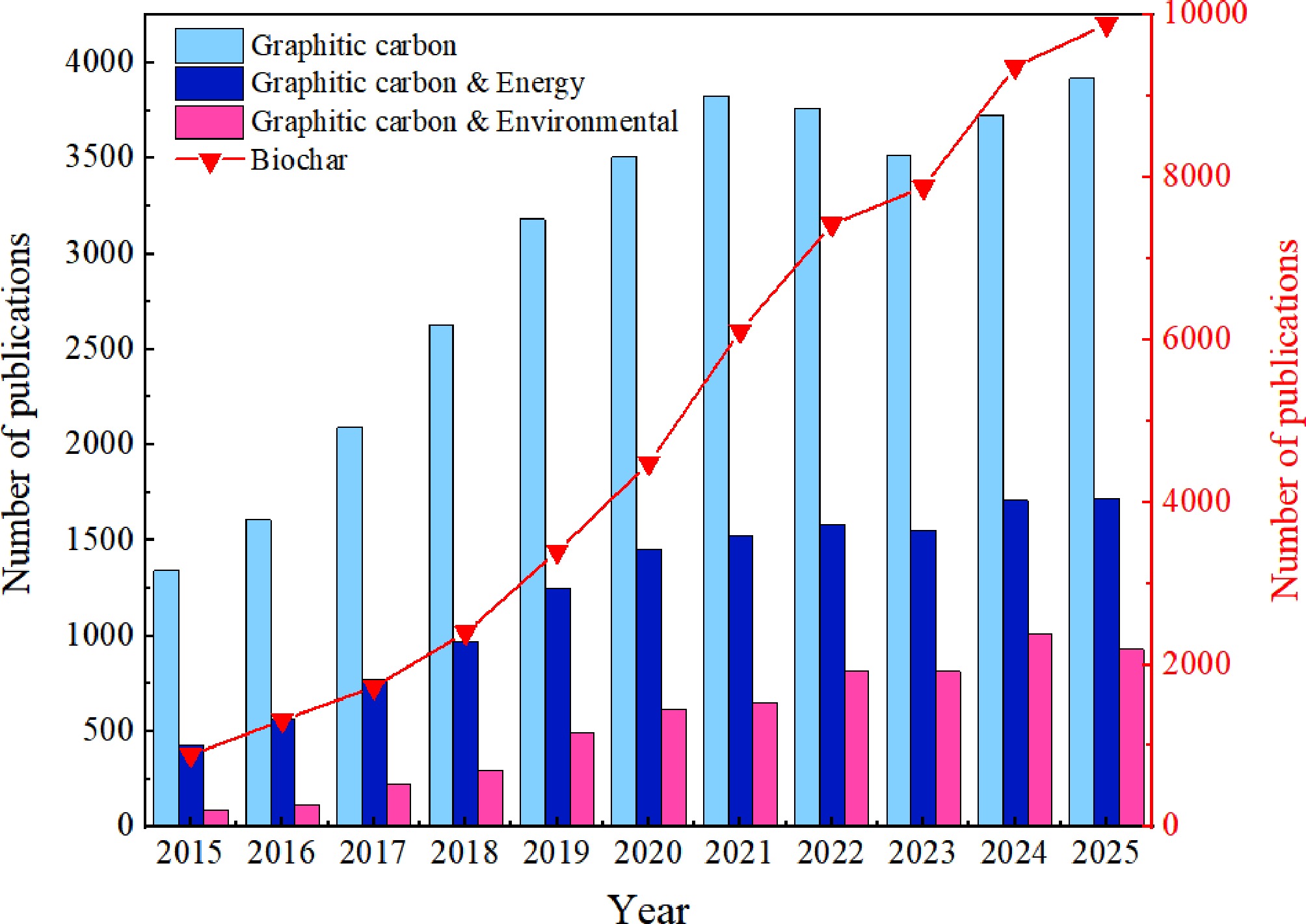
Figure 2.
The publication status of articles related to the application of graphitic carbon in the energy and environmental fields from 2015 to 2025, as of March 02, 2026 (from the Web of Science).
-
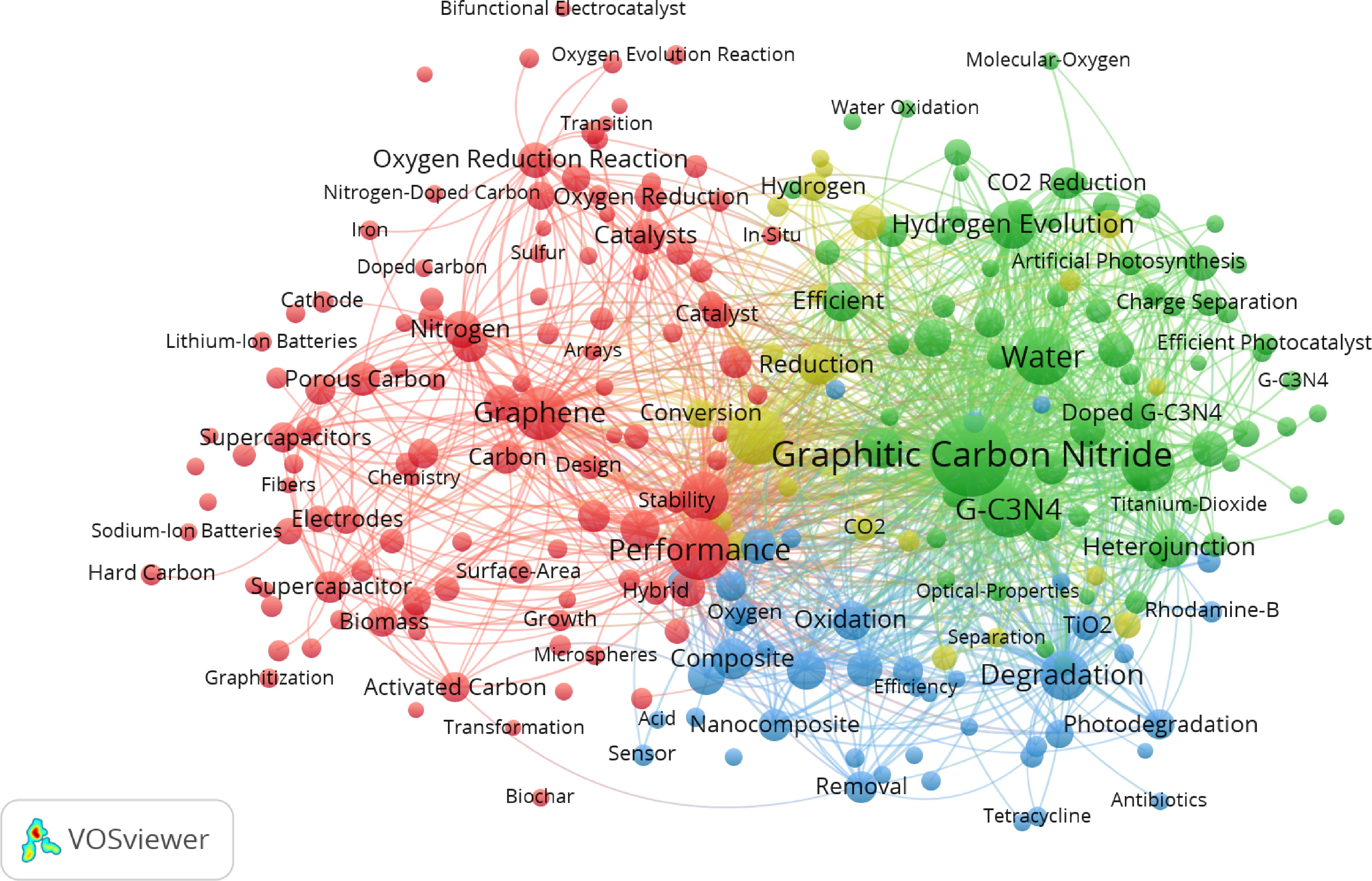
Figure 3.
Scientometric visualization of the top 251 keywords of all peer-reviewed publications related to BBGC released from 2015 to 2025. A total of 6,000 publications were retrieved from the Web of Science Core Collection (as of March 02, 2026) with 'Graphitic carbon', 'Graphitic carbon & Energy', or 'Graphitic carbon & Environmental' as the search keywords. Collected data were analyzed using the built-in function of co-occurrence of all keywords and plotted in 'overlay visualization' using VOSviewer. Each circle stands for a keyword, while its size represents the number of times a pair of keywords co-occurred in the publications.
-
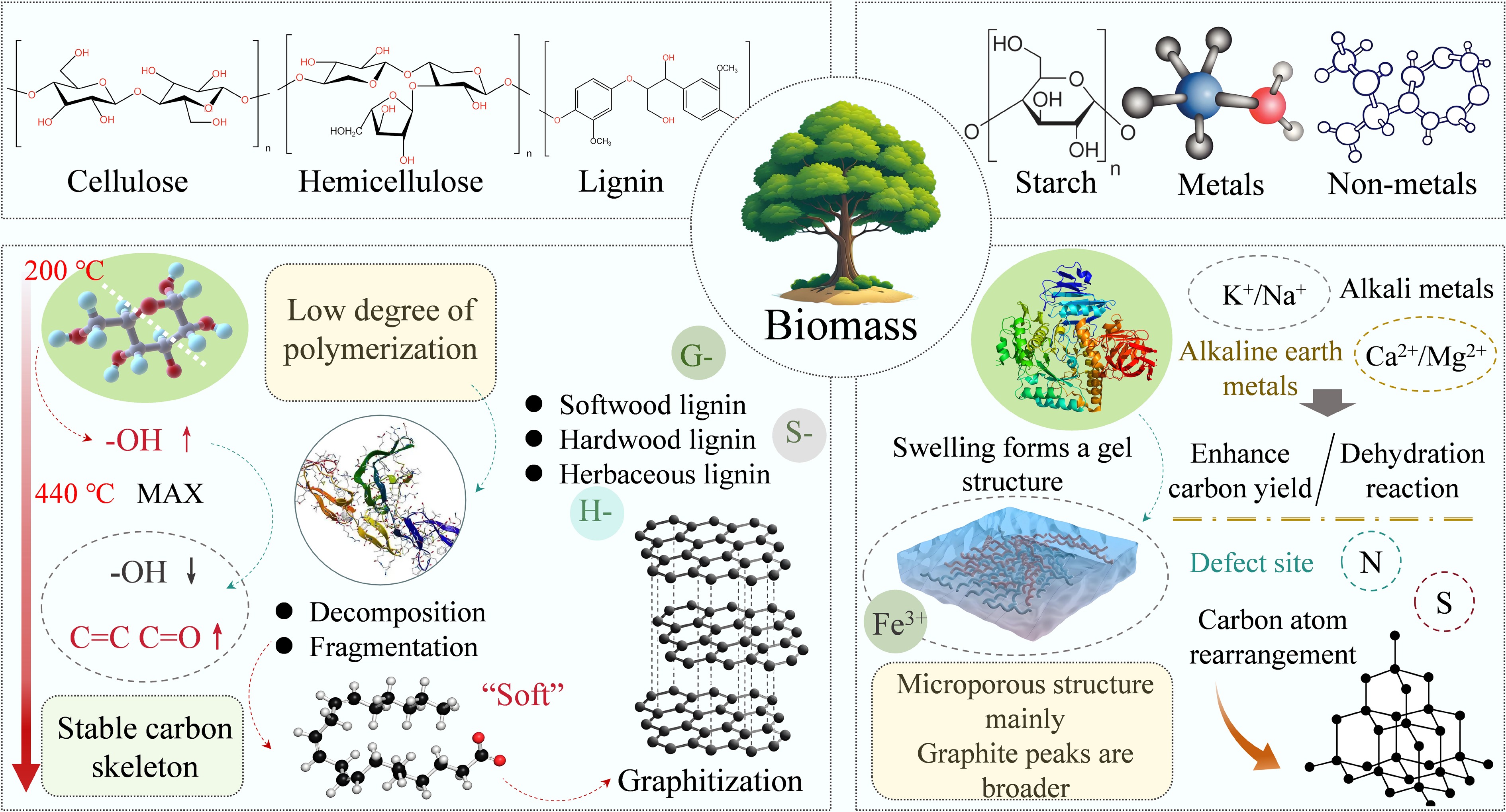
Figure 4.
The role of biomass components in graphitization.
-
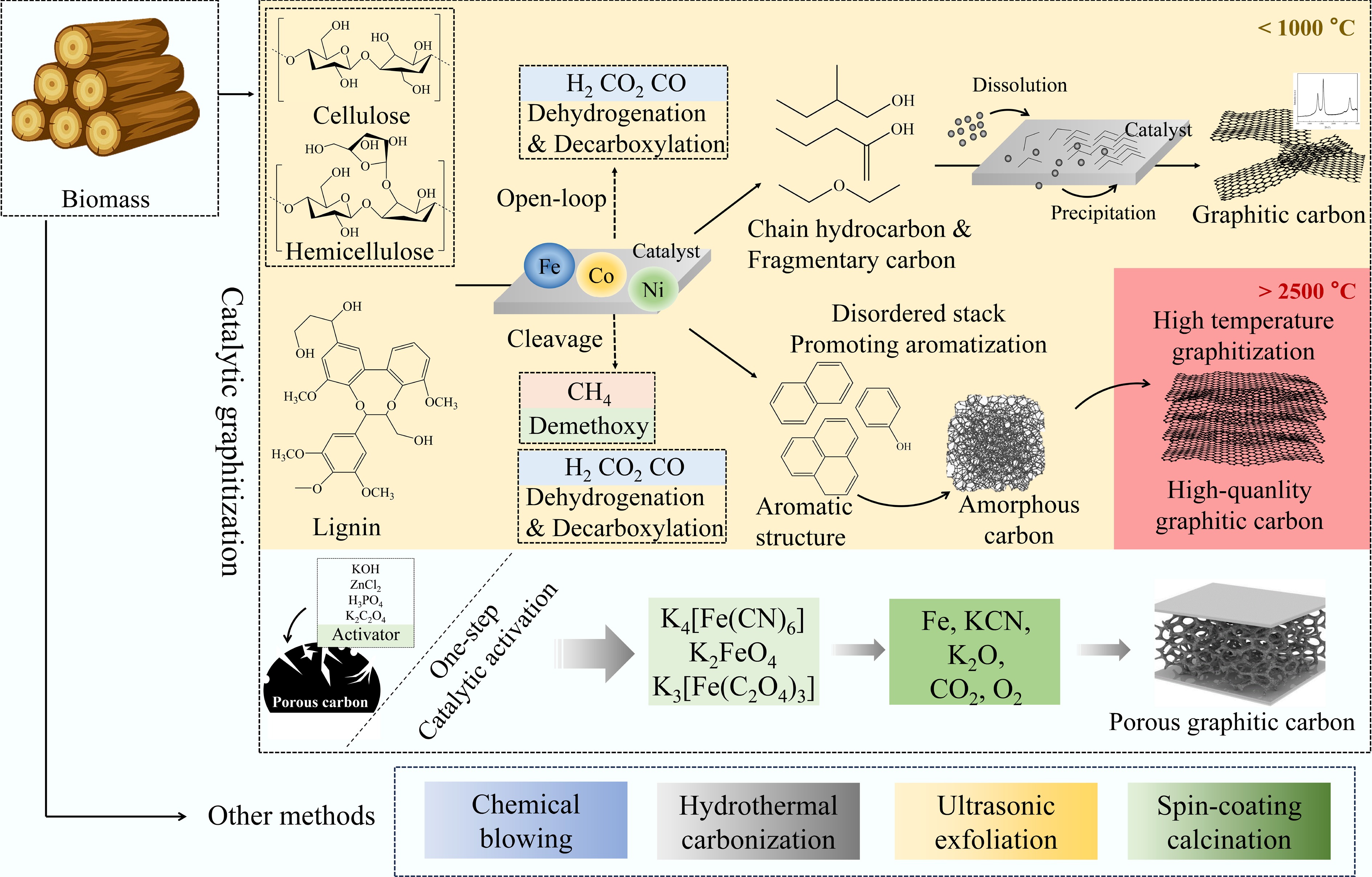
Figure 5.
Biomass graphitization and activation methods.
-
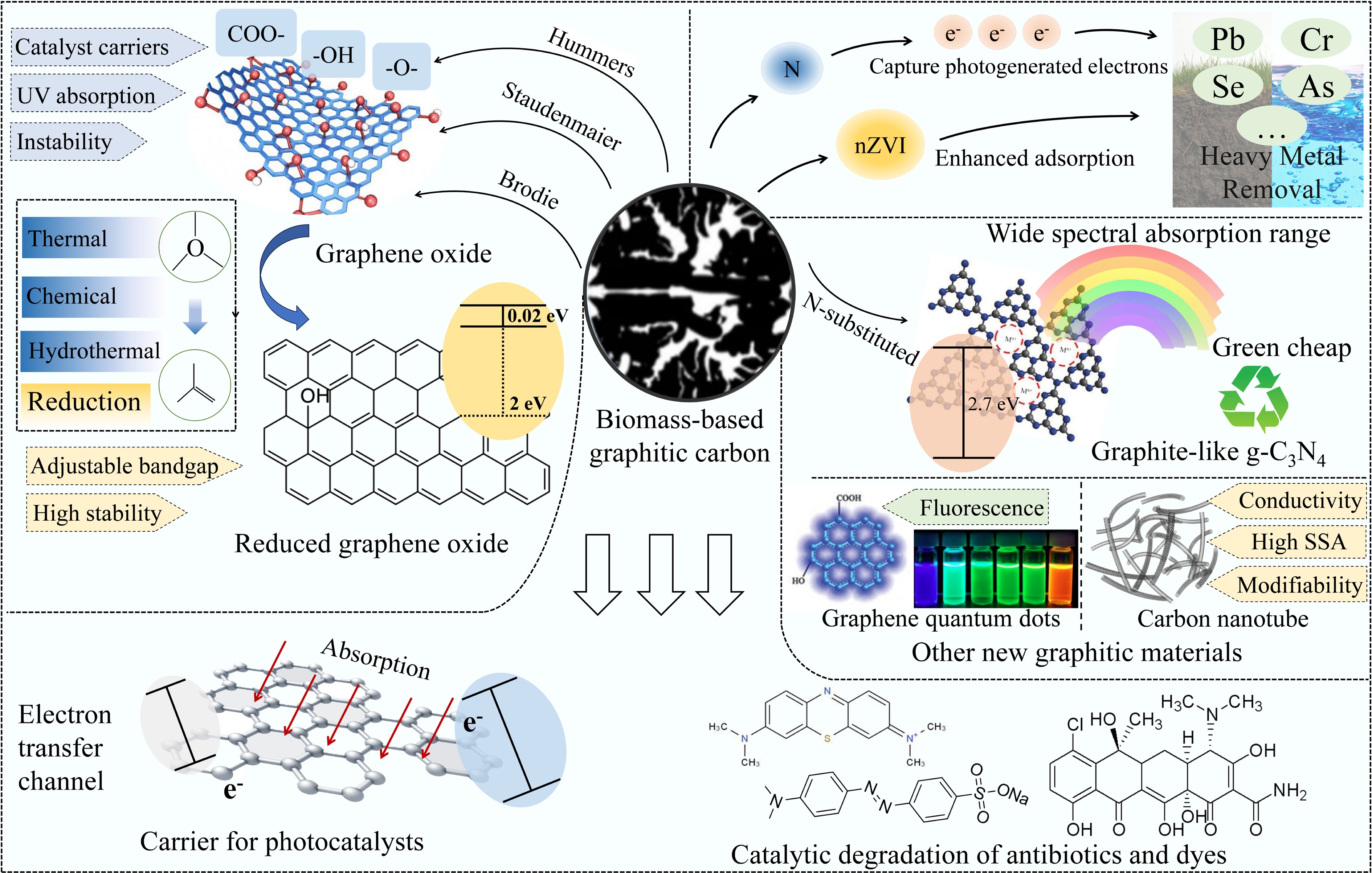
Figure 6.
Application of graphitic carbon in the field of catalytic degradation of pollutants.
-
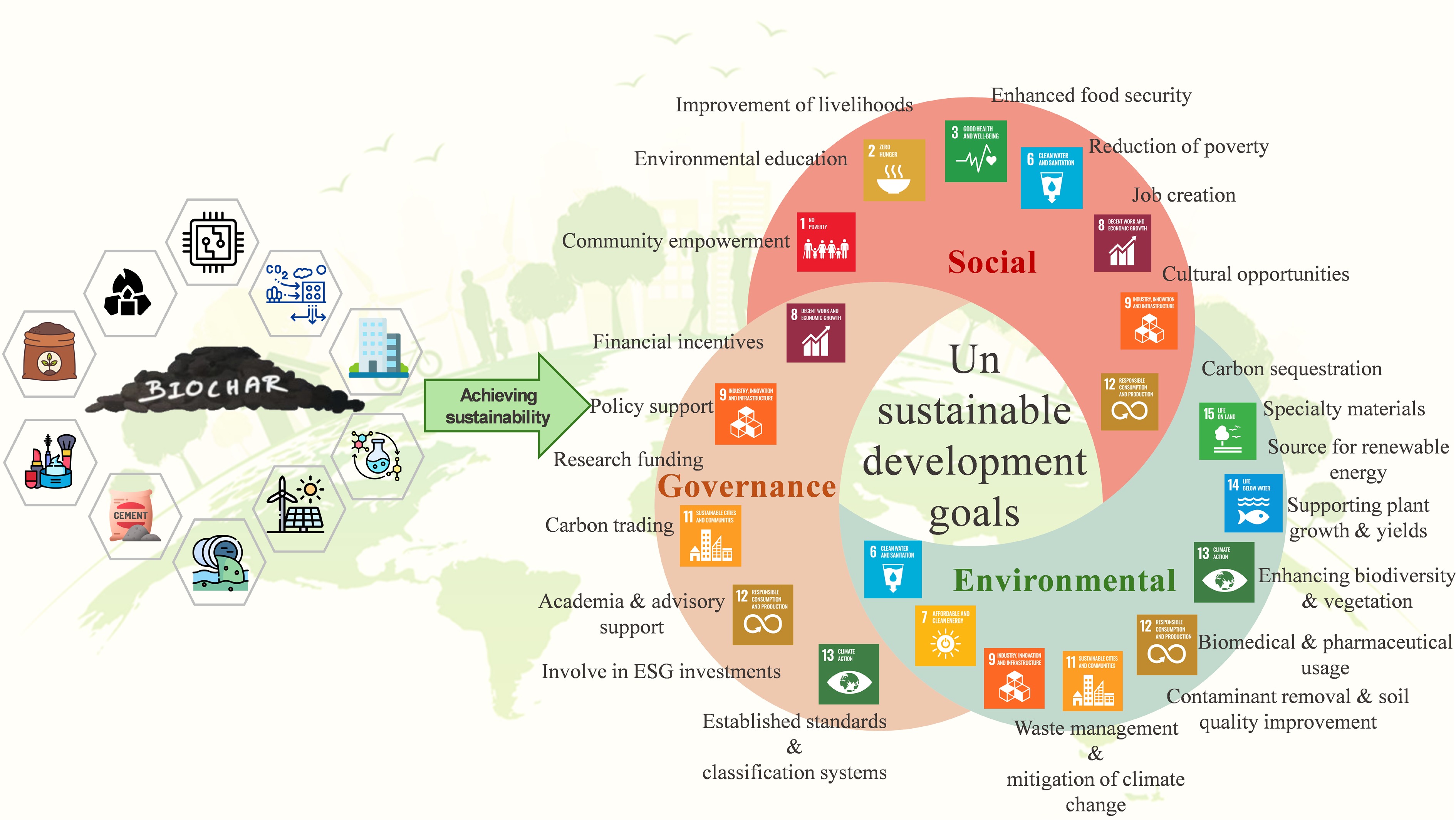
Figure 7.
BBGC from the perspective of ESG.
-
Review title Main content Citation Ref. Bilayer nanographenes: structure, properties, and synthetic challenges This review explores the synthesis, structural characteristics, and functional significance of bilayer and multilayer nanographene. It investigates how the degree of π-π overlap governs key properties—including the highest occupied molecular orbital (HOMO)-lowest unoccupied molecular orbital (LUMO) energy gap, redox behavior, photoluminescence shift, and quantum yield, as well as chiral optical response—and reveals synthetic approaches for obtaining enantiomerically pure bilayer graphene. − [33] Probing the evolution in catalytic graphitization of biomass-based materials for enduring energetic applications This review aims to bridge the gap between the diverse feedstocks and processing conditions employed in different studies by exploring the potential of biomass materials as raw materials for catalytic graphitization, with a commitment to achieving sustainable and efficient energy applications. 32 [34] Biomass-derived carbon applications in the field of supercapacitors: progress and prospects This paper analyzes recent advances in biomass-derived carbon electrodes for supercapacitors, introduces carbon electrodes from various biomass resources, and comprehensively reviews carbonization, activation, and heteroatom doping techniques for biomass carbon. 98 [35] Biochar: from by-products of agro-industrial lignocellulosic waste to tailored carbon-based catalysts for biomass thermochemical conversions This review explores research on preparing biochar from agricultural and forestry residues as carbon-based catalysts and catalyst supports, along with their applications. By systematically examining biochar formation mechanisms, catalytic mechanisms, synthesis conditions, catalyst or support modification techniques, and application scenarios, it provides guidance for preparing application-oriented biochar catalysts and supports for use in biorefinery thermochemical reactions. 129 [36] Recent advances of 3D graphene-based adsorbents for sample preparation of water pollutants: a review The review emphasizes the significance of employing biomass waste and various techniques to synthesize graphitic carbon. The discussion encompasses recent advancements in the conversion of biomass wastes into carbon-rich precursors, as well as methods for the synthesis of graphitic carbon. Additionally, the article addresses the importance of utilizing agricultural biomass waste, types of potential biomass waste carbon precursors, and their pretreatment methods. 143 [37] Porous and graphitic structure optimization of biomass-based carbon materials from 0D to 3D for supercapacitors: a review The review presents the latest advancements in the preparation methods of BPGCs, with a particular focus on the mechanisms of structural evolution during activation and graphitization processes. Furthermore, it discusses the progress made in optimizing and reconstructing the microstructure from 0D to 3D. 238 [38] From biomass to energy storage: a review on lignocellulosic biomass-derived hard carbon anodes for sodium-ion batteries This review explores the precursors employed and their impact on the final properties of carbon materials—including structure, texture, and surface chemistry—as well as their influence on the electrochemical performance of sodium-ion batteries. It introduces research on heteroatomic doping for hard carbon and elucidates strategies for overcoming performance bottlenecks in sodium-ion batteries. − [39] Iron-catalyzed graphitization for the synthesis of nanostructured graphitic carbons The review presents an overview of the current state of research on iron-catalyzed graphitization, with a particular focus on molecular organic or biomass precursors. Biomass-derived precursors are identified as particularly promising options for the sustainable production of graphitic carbon. It discusses the challenges currently faced by iron-catalyzed graphitization, with a particular focus on the limitations in understanding the mechanisms of graphitization. 188 [27] Upcycling of plastic wastes and biomass for sustainable graphitic carbon production: a critical review The review examines methods for transforming plastic waste and biomass into high-value graphitic carbon materials through co-pyrolysis techniques. It examines the factors influencing the quality of graphitic carbon and discusses its potential applications in electronics, energy storage, and other fields. 44 [40] A route towards graphene from lignocellulosic biomass: technicality, challenges, and their prospective applications The review considers methods for the production of graphene using lignocellulosic biomass as a sustainable and cost-effective feedstock. It examines a range of synthesis techniques, including carbonization, graphitization, and hydrothermal carbonization, and the challenges associated with these methods. It also outlines the extraordinary properties of graphene and its wide range of potential applications in electronics, energy storage, environmental technology, and healthcare. It also considers the environmental impact, economic benefits, and sustainability issues in the production process. 50 [41] Graphene-like carbon structure synthesis from biomass pyrolysis: a critical review on feedstock-process-properties relationship The review presents a summary of the most recent developments in the synthesis of graphene-like carbon (GLC) structures through microwave-assisted pyrolysis of biomass. It includes discussions on biomass selection, the effect of pyrolysis process parameters on product characteristics, and a comparison between microwave pyrolysis and traditional pyrolysis methods. It places particular emphasis on the potential of microwave pyrolysis as a cost-effective and renewable method for the production of graphene. 72 [42] Carbon-based materials derived from green and sustainable chemistry: current perspectives for electrocatalysis and energy applications This review focuses on the application prospects of emerging eco-friendly carbon-based materials derived from renewable or waste biomass resources in the fields of electrocatalysis and energy storage. This paper explores green synthesis routes aligned with sustainable practices (such as hydrothermal carbonization, pyrolysis, and low-energy chemical processing), while also delving into recent advances in heteroatom doping (e.g., N, S, P), and hierarchical structure engineering. It demonstrates that porous carbon materials, graphene, carbon nanotubes (CNTs), and carbon dots can significantly enhance the efficiency of fuel cells, supercapacitors, and rechargeable batteries. 5 [43] Table 1.
Review papers on recent research on BBGC
-
Component Function and impact Key property Cellulose As the core precursor, regulates carbon skeleton restructuring and double bond formation, significantly enhancing product order and crystallinity. Stable microfibril structure and bond transformations during pyrolysis (e.g., dehydration, C=C formation). Hemicellulose Readily depolymerizes during pyrolysis to generate small carbon species, driving carbon skeleton aromatization. Facilitate the formation of high-surface-area carbon materials, providing space for graphite microcrystal growth. Amorphous, low polymerization degree, soft properties, and branched structure. Lignin Provides an inherent aromatic carbon source, with benzene rings directly converting to graphitic carbon at high temperatures, facilitating the formation of high-quality graphitized carbon. Native aromatic polymer structure;
cleavable ether bonds and stable C–C bonds.Starch Provides microporous space, maintains the carbon framework, and optimizes graphitization levels, enabling low-cost preparation of porous carbon and offering a favorable environment for graphite growth. Gel structure, thermal stability, and high branching content. AAEMs Alkali metals: enhance carbon yield, pyrolysis efficiency and product quality.
AEMs: reduce the activation energy of graphitization and lower the graphitization temperature.Alkali metals: primarily weaken the hydrogen-bonding network.
AEMs: facilitate dehydration reactions.
Both types promote cross-linking of cellulose into char.Non-metal elements N: promotes structural ordering, enhances electrical conductivity and electrochemical activity, modifies surface functional groups.
S: promotes the formation of more ordered graphitic structures, alters the electronic properties and chemical reactivity of graphitic carbon materials, and modulates the surface characteristics of graphitic carbon.N and S: incorporate into the carbon matrix through doping, introducing defective sites and altering the local electron density and charge distribution. Table 2.
Influence mechanisms of various biomass components on the graphitization process
-
Composite photocatalyst Light source Photocatalytic applications Ref. Pure GO Visible light xenon lamp Degradation of phenol [239] 2D GO nanosheets Solar irradiation Degradation of methyl blue (MB) [240] TiO2/GO Visible light xenon lamp Degradation of Rhodamine B [241] SiO2-ZrO2@rGO Visible light xenon lamp Degradation of Bisphenol A (BPA) [242] ZnO-GO UV light xenon lamp Degradation of MB [243] ZnO-rGO UV light xenon lamp Degradation of MB [244] TiO2 nanotube array-RGO Visible light xenon lamp Degradation of MB [245] TiO2/GO/Ag Solar irradiation MO [246] Persulfate-rGO UV light xenon lamp Degradation of BPA [247] Ag/AgCl/GO Visible light xenon lamp Degradation of MO [248] BiVO4/TiO2/GO Visible light xenon lamp C.I. Reactive Blue 19 (RB-19) [249] TiO2-Pt/GO UV light xenon lamp & Natural sunlight Sunset yellow and Tartrazine [250] TiO2/Fe3O4/GO Visible light xenon lamp Degradation of MB [251] rGO-Au Visible light xenon lamp Degradation of BPA [252] Table 3.
GO and its derivative materials for various photocatalytic applications
Figures
(7)
Tables
(3)