-
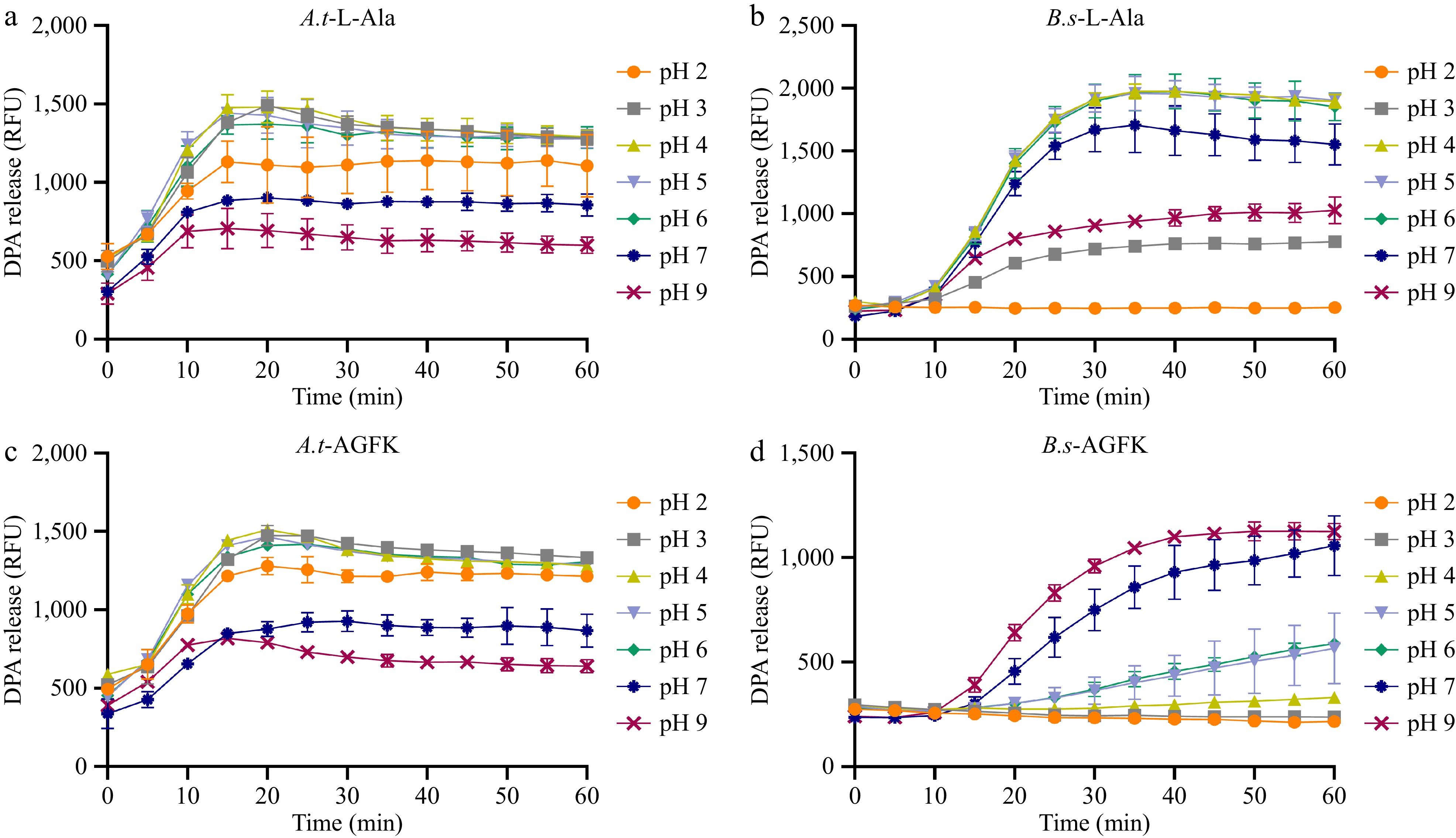
Figure 1.
Germination of A. acidoterrestris (A.t) and B. subtilis (B.s) spores induced by nutrient germinants under pH conditions. (a) DPA release from A. acidoterrestris spores induced by 10 mM L-alanine. (b) DPA release from A. acidoterrestris spores induced by 10 x AGFK; DPA release from B. subtilis spores induced by (c) 10 mM L-alanine, and (d) 10 x AGFK. Each experiment in the figure included three replicate groups.
-
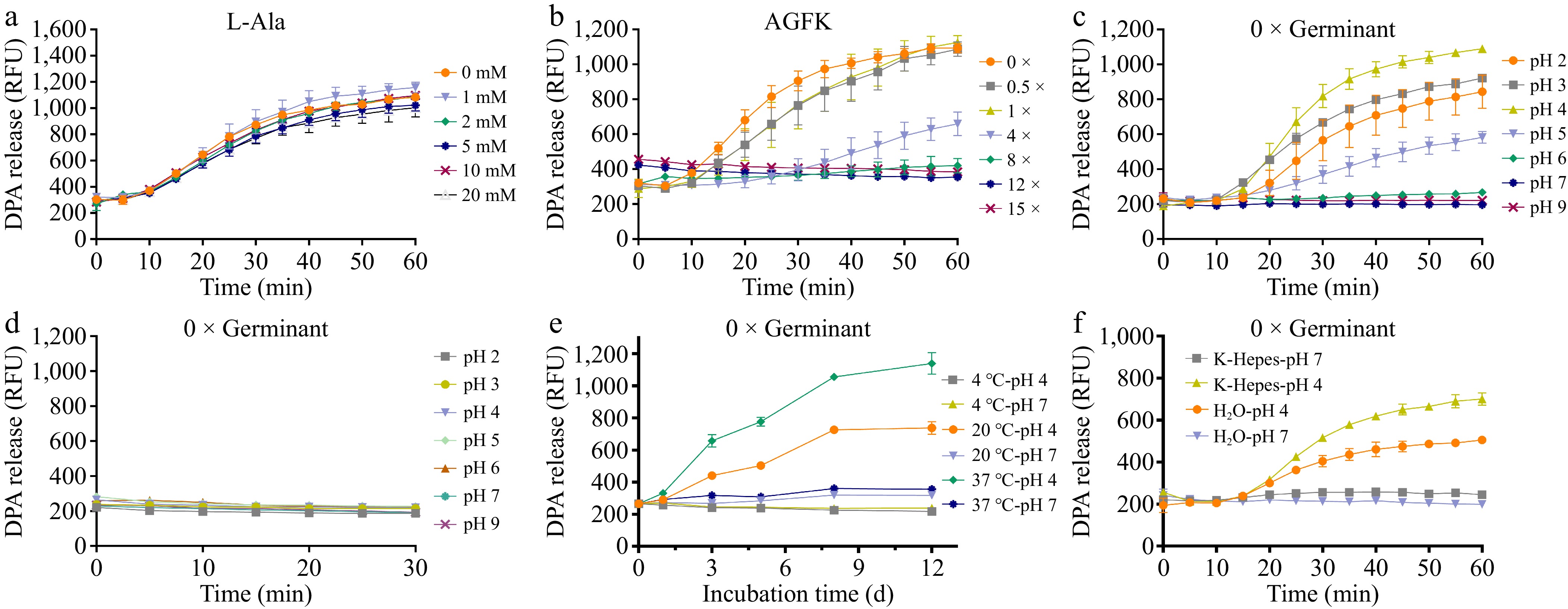
Figure 2.
Germination of A. acidoterrestris spores under varying nutrient germinant concentrations and pH conditions. DPA release from heat-activated spores induced by different concentrations of (a) L-alanine, and (b) AGFK in pH 4 K-Hepes; DPA release from (c) heat-activated spores, and (d) non-heat-activated spores under pH 2–9 conditions in the absence of nutrient germinants; (e) DPA release of spores incubated in pH 4 and 7 systems at 4, 20, and 37 °C for 1, 3, 5, 8, and 12 d. (f) DPA release from spores was monitored in germinant-free sterile water and K-Hepes buffers at pH 4 and 7. Each experiment in the figure included three replicate groups.
-
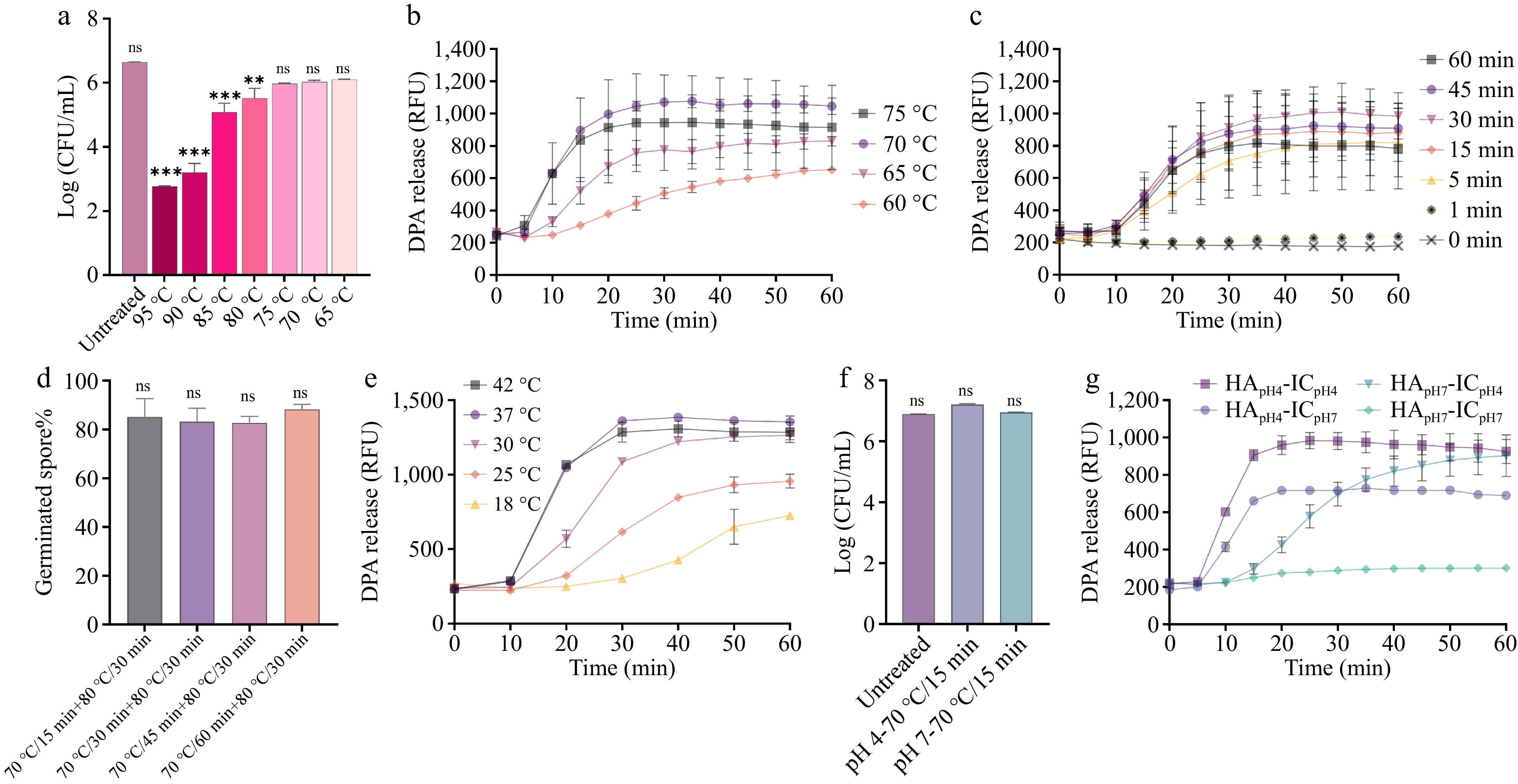
Figure 3.
Optimization of heat activation conditions for A. acidoterrestris spore germination. (a) Heat resistance of A. acidoterrestris spores at 95, 90, 85, 80, 75, 70, and 65 °C for 60 min; (b) DPA release from spores after heat activation at 75, 70, 65, and 60 °C for 30 min in pH 4; (c) heat activation at 70 °C for 1, 5, 15, 30, 45, and 60 min; (d) spores were heat activated at 70 °C for 15, 30, 45, or 60 min, then divided into two groups: one was directly plated for colony enumeration, and the other underwent an additional 80 °C/30 min treatment prior to plating. Percentage of germinated spores was calculated as: (CFU after heat activation-CFU after 80 °C treatment)/CFU after heat activation × 100%; (e) DPA release from spores heat-activated at 70 °C for 15 min and incubated at 18, 25, 30, 37, and 42 °C; (f) viable counts of untreated spores and spores heat activated at 70 °C for 15 min in pH 4 and 7; (g) DPA release from spores heat activated at pH 4 or 7, then immediately incubated (IC) at 37 °C and pH 4 or 7. Each experiment in the figure included three replicate groups.
-
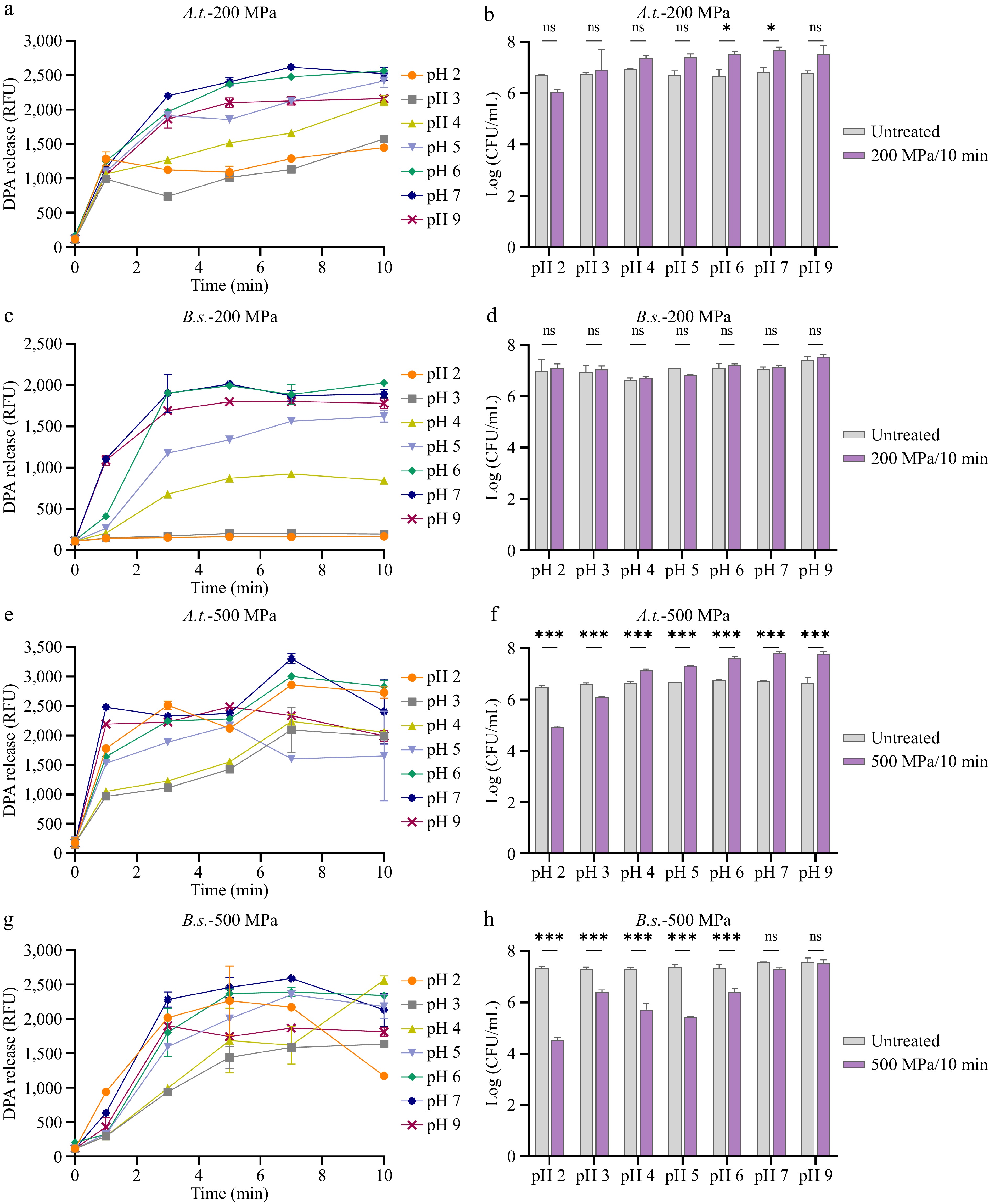
Figure 4.
Germination and viability of A. acidoterrestris (A.t) and B. subtilis (B.s) spores under HHP at various pH conditions. At 200 MPa/30 °C: (a) DPA release, and (b) colony counts of A. acidoterrestris spores; (c) DPA release, and (d) colony counts of B. subtilis spores. At 500 MPa/30 °C: (e) DPA release, and (f) colony counts of A. acidoterrestris spores; (g) DPA release, and (h) colony counts of B. subtilis spores. Each experiment in the figure included three replicate groups.
-
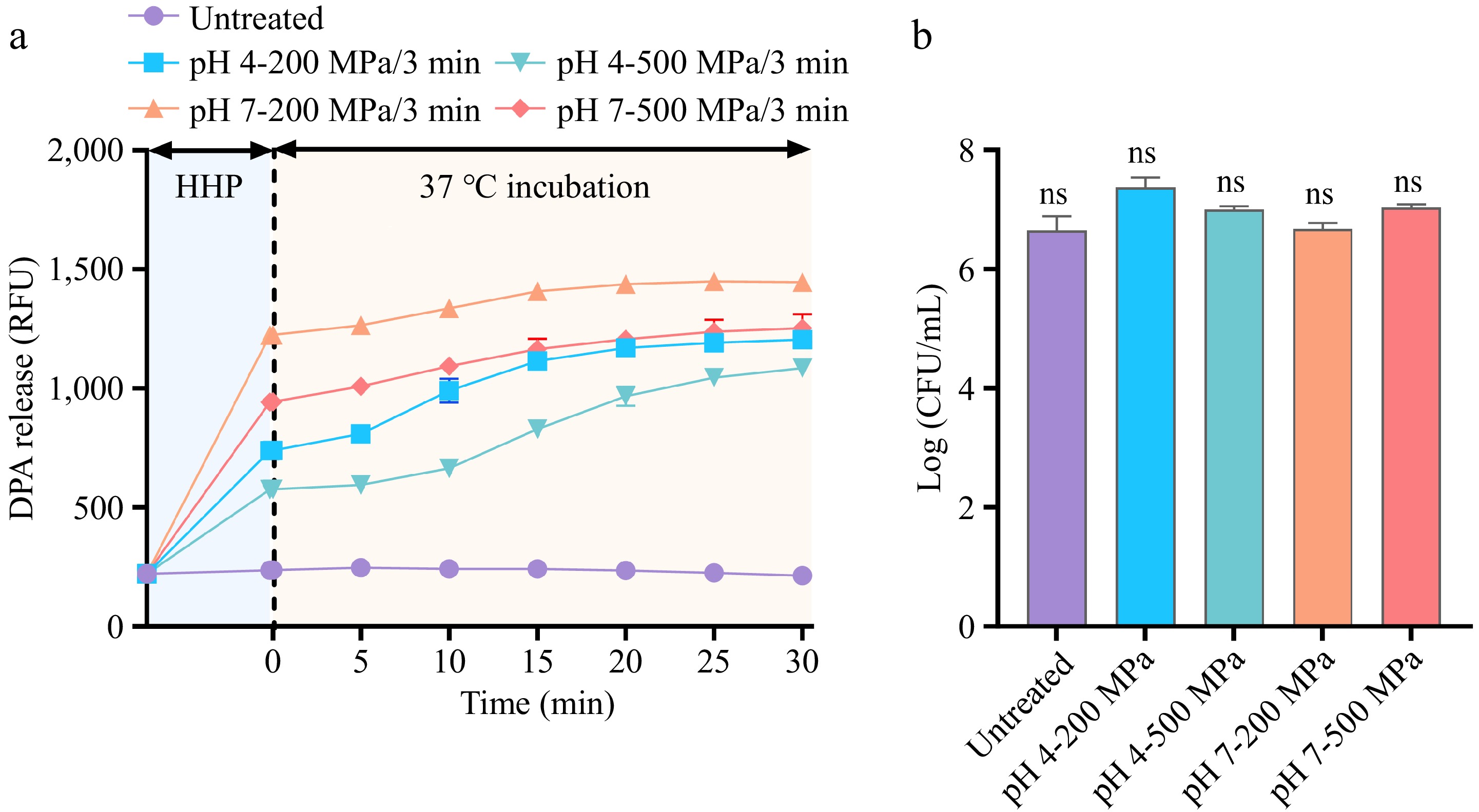
Figure 5.
Spontaneous germination and viability of A. acidoterrestris spores under acidic and neutral conditions. (a) After HHP (200 or 500 MPa/3 min/30 °C) , DPA release in the supernatant was measured immediately, the pellet was subsequently incubated at 37 °C to monitor DPA release over a 30 min period. (b) Colony counts of spores at pH 4 and 7 immediately after the HHP treatment. Each experiment in the figure included three replicate groups.
-
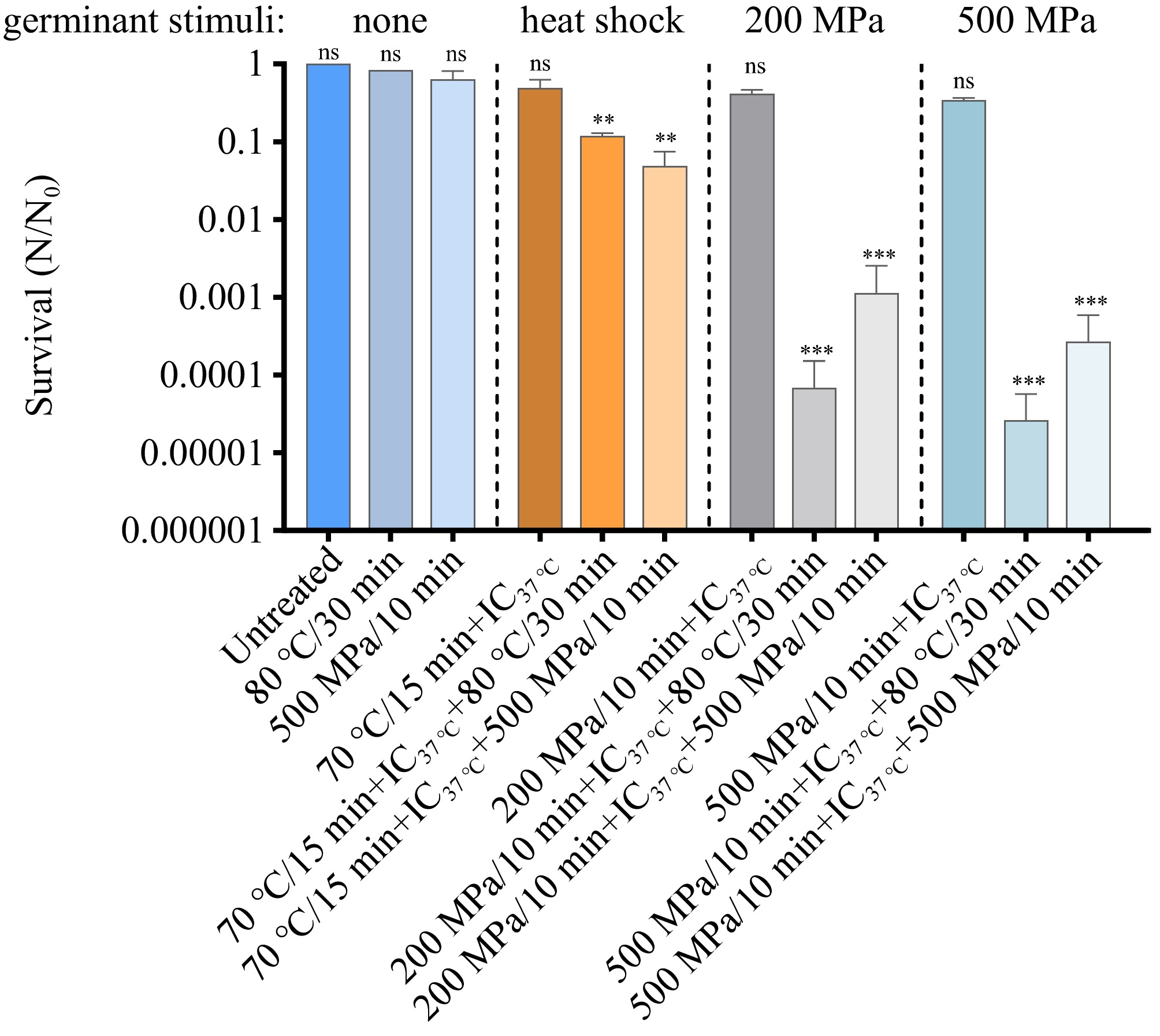
Figure 6.
Inactivation of A. acidoterrestris spores using germination-inactivation strategy. Spores were first subjected to heat activation at 70 °C for 15 min, followed by incubation at 37 °C for 1 h, then application of 80 °C/30 min or HHP (500 MPa/10 min). The second approach began with HHP treatment (200 Mpa/10 min or 500 MPa/10 min), followed by incubation at 37 °C for 1 h, then application of 80 °C/30 min or HHP (500 MPa/10 min). Control groups included untreated spores, spores treated only at 80 °C for 30 min, only at 200 MPa for 10 min, or only at 500 MPa for 10 min. Each experiment in the figure included three replicate groups.
Figures
(6)
Tables
(0)