-
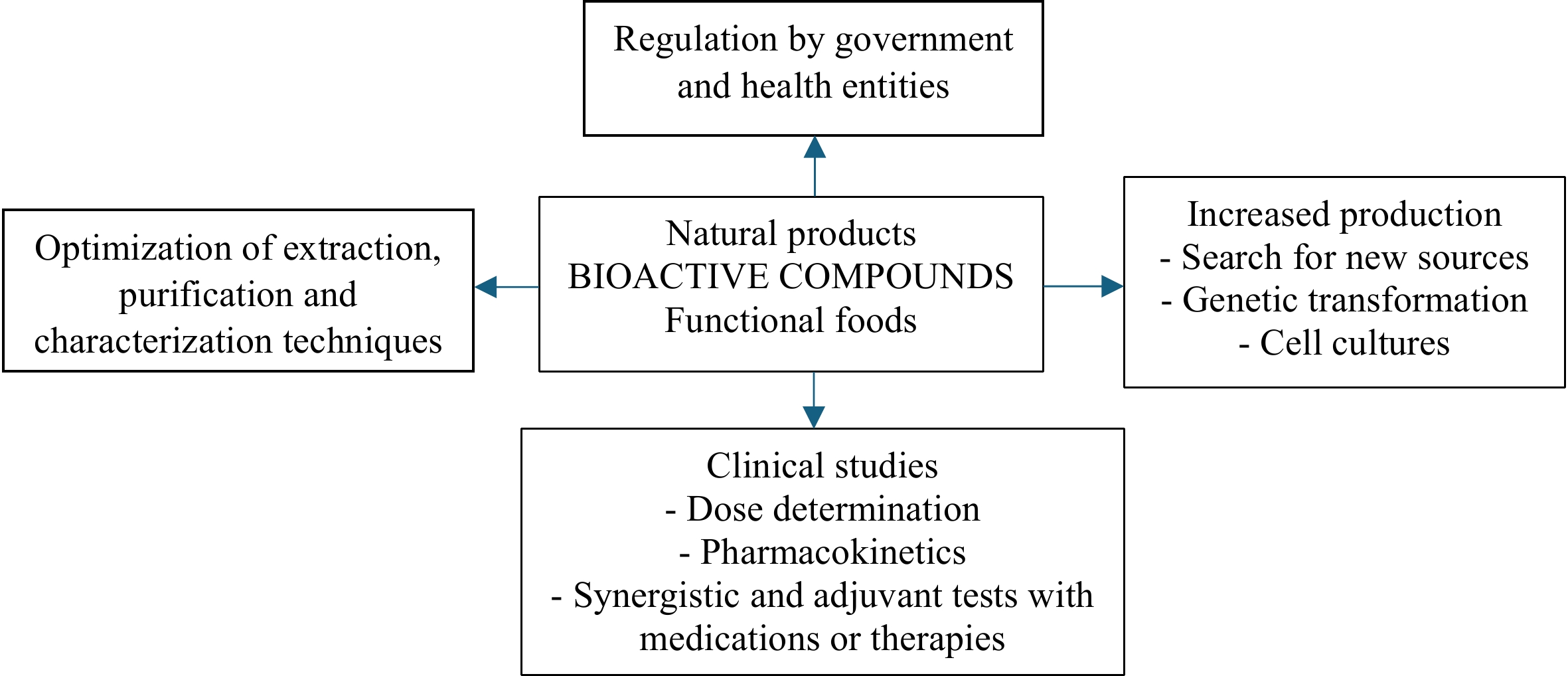
Figure 1.
Main challenges and perspectives in the use of natural products with anticancer activity.
-
Compound Natural source Mechanism of action Ref. Vinblastine, vincristine Catharanthus roseus Blocks tubulin polymerization, stopping cell division.
Inhibition of microtubules, mitotic arrest, thus halting mitosis in metaphase and promoting apoptosis.[1,28] Paclitaxel, docetaxel Taxus brevifolia Microtubule stabilization, cell apoptosis. [30] Camptothecin Camptotheca acuminata Topoisomerase I inhibition, DNA damage. [4] Caffeic acid phenethyl ester (CAPE) Propolis Inhibition of NF-κB, caspases, angiogenesis. [5] Melittin Bee venom Cytolytic action, inhibition of signaling pathways such as NF-κB, and promoting apoptosis. [5,31] 10-Hydroxy-2-decenoic acid (10-HDA) Royal jelly Regulation of p53, Bax/Bcl-2, and caspases.
Inhibition of angiogenesis.[32] Curcumin Curcuma longa (turmeric) Reduces P-gp expression by inhibiting PI3K/Akt/NF-κB caspase activation.
Regulation of cyclins, CDKs and p21, causing arrest in the G1/S or G2M phase of the cell cycle.[7,13,19] Resveratrol Grapes, red wine and red fruits p53 activation, vascular endothelial growth factor (VEGF) suppression, induction of apoptosis.
Reverses multidrug resistance (MDR).
Inhibits the expression of MDR1 and P-gp at both the transcriptional and protein levels.[7,33,34] Genistein Soybean Inhibition of angiogenesis and tyrosine kinase.
Induction of apoptosis in hormone-dependent tumor cells.[2,5] Glucosinolates Cruciferous vegetables (Cabbage, broccoli) Histone deacetylase (HDAC) inhibition, apoptosis.
Inhibition of CDKs and tumor suppressor gene's expression; also modulates the expression of microRNAs and epigenetic enzymes such as DNA methyltransferases (DNMTs).[33,35] Epigallocatechin gallate (EGCG) Green tea Functional inhibition of P-gp, reduced expression of P-gp, substrate competition, or blockage of adenosine triphosphatase (ATPase) activity.
Inhibitor of proliferation and angiogenesis.
Modulates detoxifying enzymes such as superoxide dismutase (SOD), catalase (CAT), and glutathione peroxidase (GPx), reducing oxidative damage and modulating cellular redox balance.[2,7,13,34,36] Quercetin Flavonoid (onion, broccoli, apple) Inhibition of key pathways such as PI3K/Akt/mTOR, NF-κB and STAT3, apoptosis by modulating reactive oxygen species metabolism. [37] Naringenin, apigenin, kaempferol, chrysin, luteolin, and quercetin Honey Inhibition of cell proliferation, stimulating apoptosis, blocking NF-κB and promoting cell cycle arrest. [5,38] Cinnamaldehyde Cinnamomum cassia (Chinese cinnamon) Apoptosis is limited to tumor cells and significantly decreases the activity of NF-κB and AP 1, as well as the expression of their target genes (Bcl-2, Bcl-xL). [39] Lycopene Solanum lycopersicum (tomato) Inhibition of the NF-κB pathway, activation of apoptosis, decreasing antiapoptotic proteins, and inhibition of cell proliferation. [2,40] Table 1.
Some bioactive compounds with anticancer activity.
Figures
(1)
Tables
(1)