-
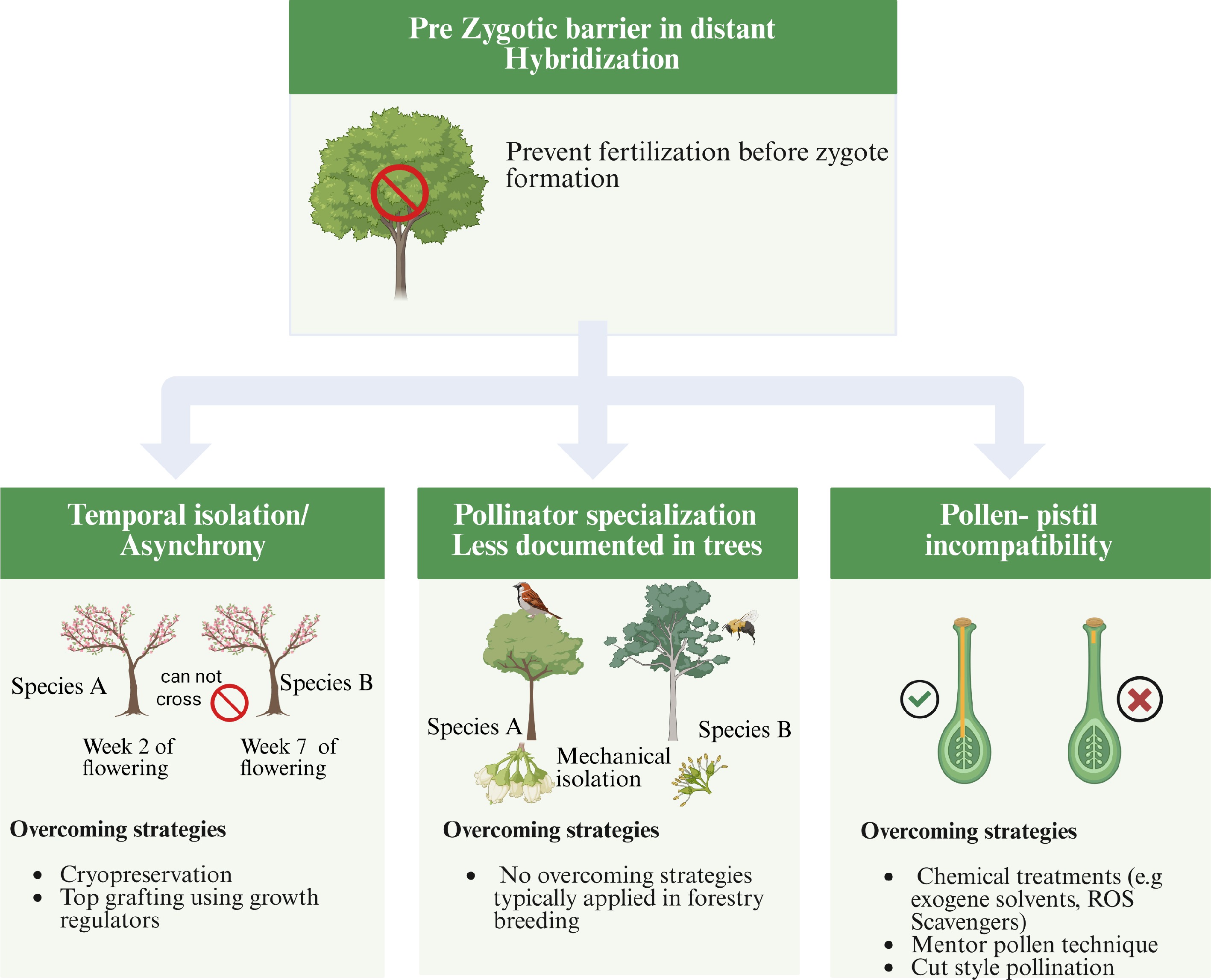
Figure 1.
Schematic illustration of major pre-zygotic barriers encountered in distant hybridization of forest trees, including temporal isolation/asynchrony, pollen–stigma incompatibility, and mechanical isolation. Each barrier prevents fertilization before zygote formation and limits hybrid success. Strategies such as controlled pollination, hormonal treatment, and style manipulation are used to overcome these reproductive obstacles and facilitate successful hybrid formation.
-
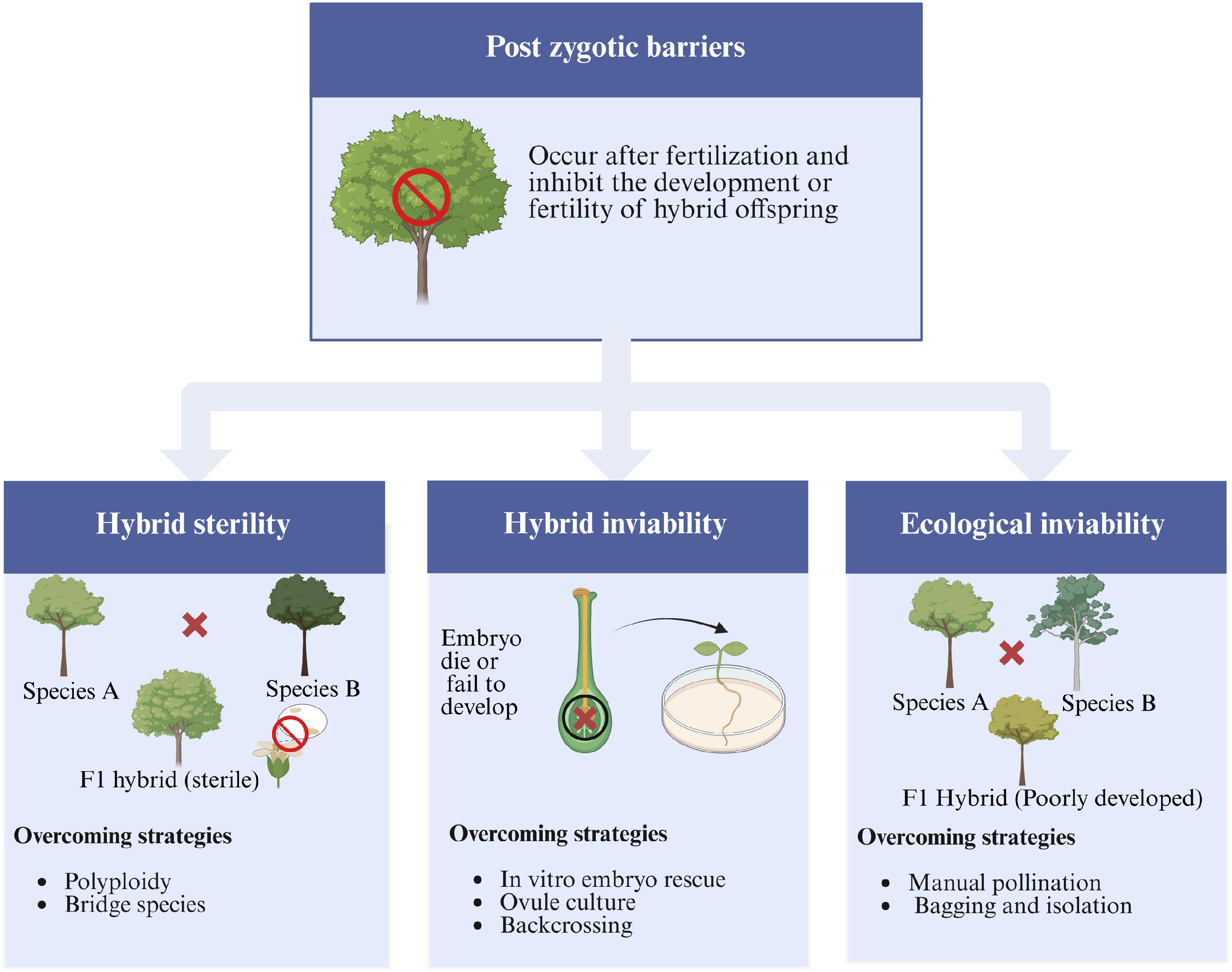
Figure 2.
Conceptual framework illustrating major post-zygotic barriers encountered in distant hybridization of forest tree species. The figure highlights three primary forms: (1) Hybrid sterility, where F1 hybrids are unable to produce viable gametes; (2) Hybrid inviability, characterized by embryo abortion or failure to develop; and (3) Ecological inviability, where hybrids are maladapted to environmental conditions. Associated strategies to overcome these barriers include polyploidization, embryo rescue, and ecological modeling approaches aimed at improving hybrid establishment and performance.
-
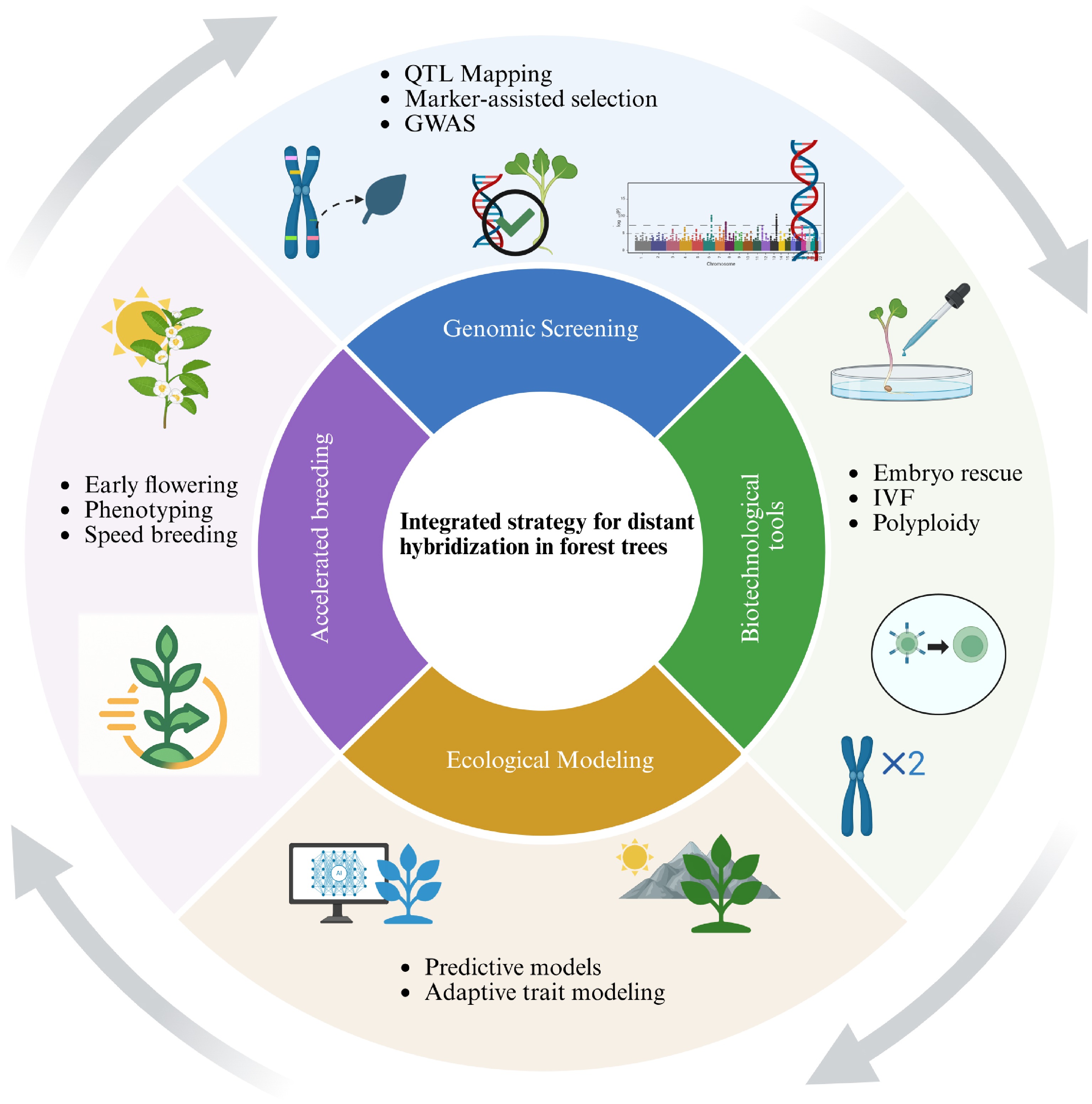
Figure 3.
Integrated strategy for distant hybridization in forest trees. This schematic outlines a multidisciplinary approach combining genomic screening (e.g., QTL mapping, GWAS, marker-assisted selection), biotechnological tools (e.g., embryo rescue, in vitro fertilization, polyploidy induction), ecological modeling (e.g., predictive and adaptive trait modeling), and accelerated breeding (e.g., early flowering, phenotyping, speed breeding). Together, these strategies enhance the success and efficiency of distant hybridization efforts in forest tree improvement programs.
-
Hybrid example Pre-zygotic barrier Solution/approach Ref. Salix viminalis × Populus spp. Stylar blockage: pollen tubes germinate but fail to penetrate the style due to incompatibility in transmitting tissue. Placental (cut-style) pollination to bypass the style and allow direct ovule access, enabling micropyle entry and embryo initiation. [83] Salix × Populus Extremely short stigma receptivity (1–2 d) and reduced pollen germination on Salix stigmas, resulting in low fertilization efficiency. Pollination on day 1 of anthesis using high pollen loads to maximize successful germination and improve crossability. [84] Catalpa × Catalpopsis Pollen–stigma incompatibility leading to failed pollen germination. preventing normal pollen tube growth and fertilization; cross failures occur at the initial stigma interface. Grafting onto dwarf Catalpopsis rootstocks; low-temperature storage of floral branches; mixed pollen application under high temperature; stamen removal. [85] Populus
intersectional crosses (e.g., Leuce × Aigeiros, Leuce × Tacamahaca)Species-specific stigma-level incompatibility; In Populus tremuloides, pollen from Aigeiros and Tacamahaca sections fails to germinate or induces callose deposition, indicating rejection. In P. trichocarpa, Leuce pollen germinates, but pollen tubes are arrested within the stigma before entering transmitting tissue. Use of mentor pollen (heat-treated compatible pollen mixed with incompatible pollen) to soften recognition barriers; stigma treatments with organic solvents that disrupt lipid-based incompatibility signals and temporarily enhance receptivity. [86−88] Table 1.
Pre-zygotic barriers documented in distant hybridization of forest trees and related genera, together with the approaches developed to overcome them.
-
Hybrid example Post-zygotic barrier Solution/approach Ref. × Cupressocyparis leylandii Near-complete sterility caused by meiotic irregularities and unbalanced gamete formation; hybrids fail to set viable seeds. Vegetative propagation via cuttings; rooting improved using wounding + auxin (IBA) treatments to enable large-scale clonal production. [90] × Chitalpa tashkentensis Hybrid sterility and early embryo abortion; cytological studies confirm absence or irregular seed development. Polyploid induction (oryzalin) restoring partial fertility through tetraploid and cytochimeric plants; embryo rescue to recover hybrid embryos; routine propagation via stem cuttings. [91,92] Salix viminalis × Populus sp. Embryo abortion due to defective endosperm development, preventing normal seed maturation. In vitro pollination and embryo rescue at globular–cotyledonary stages to recover viable hybrid plantlets. [83] × Gordlinia grandiflora Poor hybrid viability and reduced fertility; hybrids exhibit malformed and non-functional pollen. Controlled pollination (emasculation + stored pollen), seed stratification and culture to obtain viable seedlings; vegetative propagation used to maintain hybrid lines. [93] Table 2.
Representative examples of distant hybrids in forest trees and related genera, the post-zygotic barriers encountered, and the strategies applied to circumvent them.
-
Tree species/hybrid Key findings Main contribution to distant hybridization research Ref. × Cupressocyparis leylandii Spontaneous intergeneric hybrid with strong post-zygotic sterility; hybrids exhibit vigorous growth and adaptability. Demonstrated how complete sterility can be overcome through vegetative propagation (cuttings + auxin), enabling large-scale deployment of hybrid trees. [94,95] × Chitalpa tashkentensis Hybrid sterility and embryo abortion confirmed by cytology and DNA evidence; fertility partially restored by induced polyploidy. Provided a model system showing that polyploid induction (oryzalin) + embryo rescue can restore fertility and generate advanced hybrid progeny (triploids, tetraploids). [91,96] × Gordlinia grandiflora Early hybrid attempts failed due to post-zygotic inviability; viable hybrids later obtained via controlled pollination. Demonstrated that emasculation + stored pollen, seed stratification, and clonal propagation can overcome hybrid inviability and maintain partially sterile hybrids. [93] Salix viminalis × Populus spp. Embryo abortion caused by defective endosperm development; hybrid embryos rarely develop naturally. Showed that embryo rescue at globular–cotyledonary stages can recover viable intergeneric hybrid plantlets. [83,89] Populus intersectional crosses (Leuce × Aigeiros; Leuce × Tacamahaca) Strong stigma-level rejection; pollen fails to germinate or tubes arrest early due to incompatibility. Identified species-specific incompatibility patterns and demonstrated effective use of mentor pollen and stigma solvent treatments to bypass pre-zygotic barriers. [86,87] Catalpa × Catalpopsis Severe pollen–stigma incompatibility prevents normal fertilization; natural hybridization almost impossible. Developed a multistep method involving grafting, temperature-controlled floral storage, mixed pollen under high temperature, and emasculation to achieve viable seedlings. [85] Populus alba × Populus euphratica Early embryo inviability due to endosperm failure; natural seed recovery very low. Demonstrated high success of ovule culture (> 90% plantlet recovery), highlighting ovule culture as a powerful tool for wide Populus crosses. [60] Eucalyptus interspecific hybrids Reduced hybrid viability in early generations due to developmental incompatibility. Provided evidence that post-zygotic inviability is widespread in distant tree hybrids; emphasized need for embryo rescue and large-scale selection. [11, 67] Table 3.
Summary of selected studies illustrating major advances and methodological approaches in distant hybridization of forest trees.
Figures
(3)
Tables
(3)