-
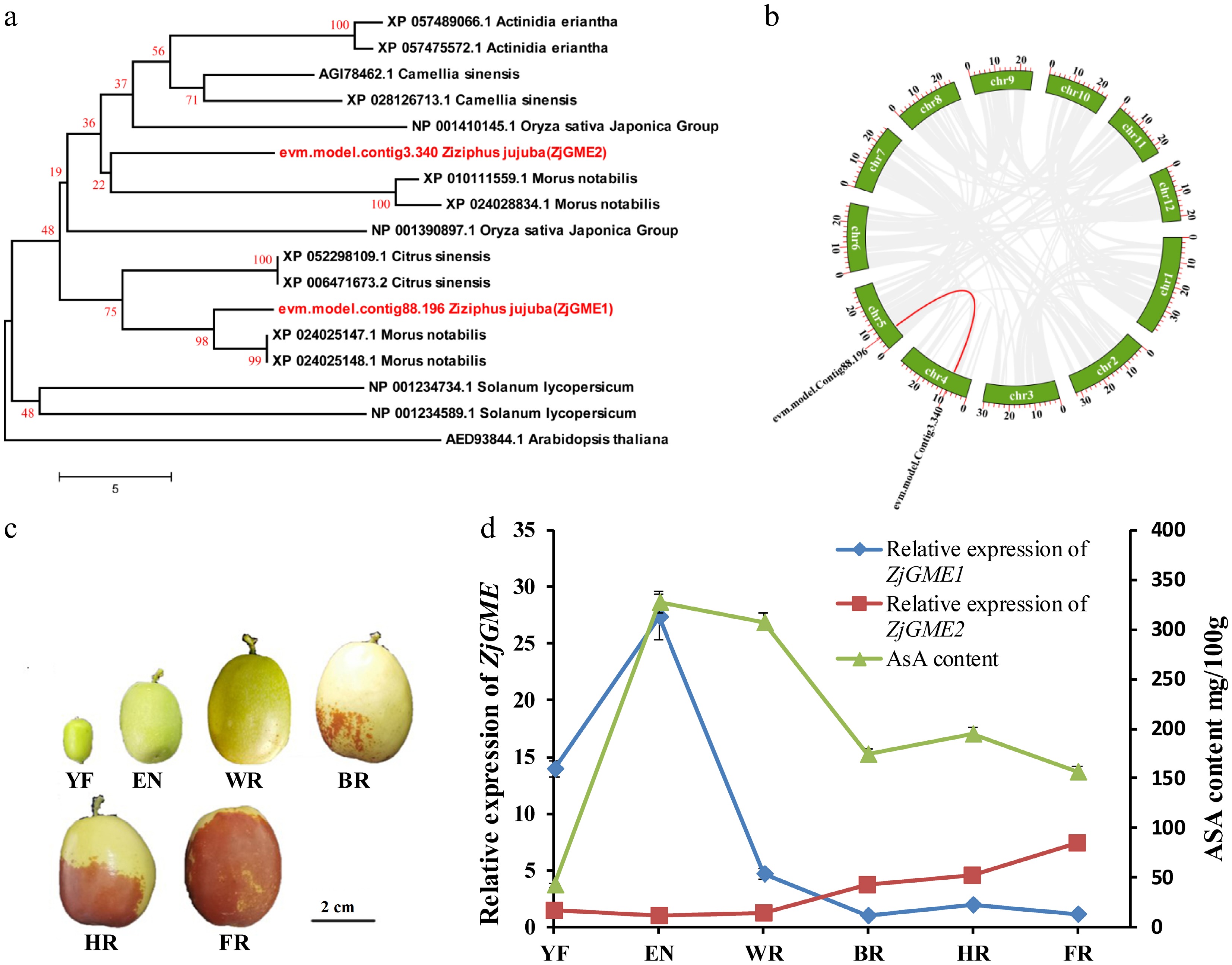
Figure 1.
Phylogenetic evolution and expression of GME genes in jujube. (a) Phylogenetic analysis of ZjGMEs and homologous genes from Morus notabilis, Citrus sinesis, Oryza sativa, Camellia sinensis, Actinidia eriantha, Solanum lycopersicum, and Arabidopsis thaliana. (b) Collinearity analysis of the two jujube GMEs within the jujube genome. (c) Phenotypic characteristics of the jujube fruits during different development stages. Scale bar = 2 cm. (d) ZjGMEs (ZjGME1 and ZjGME2) mRNA abundance and AsA content at six fruit developmental stages. YF: young stage; EN: enlargement stage; WR: white mature stage; BR: early red stage; HR: half red stage; FR: full red stage.
-
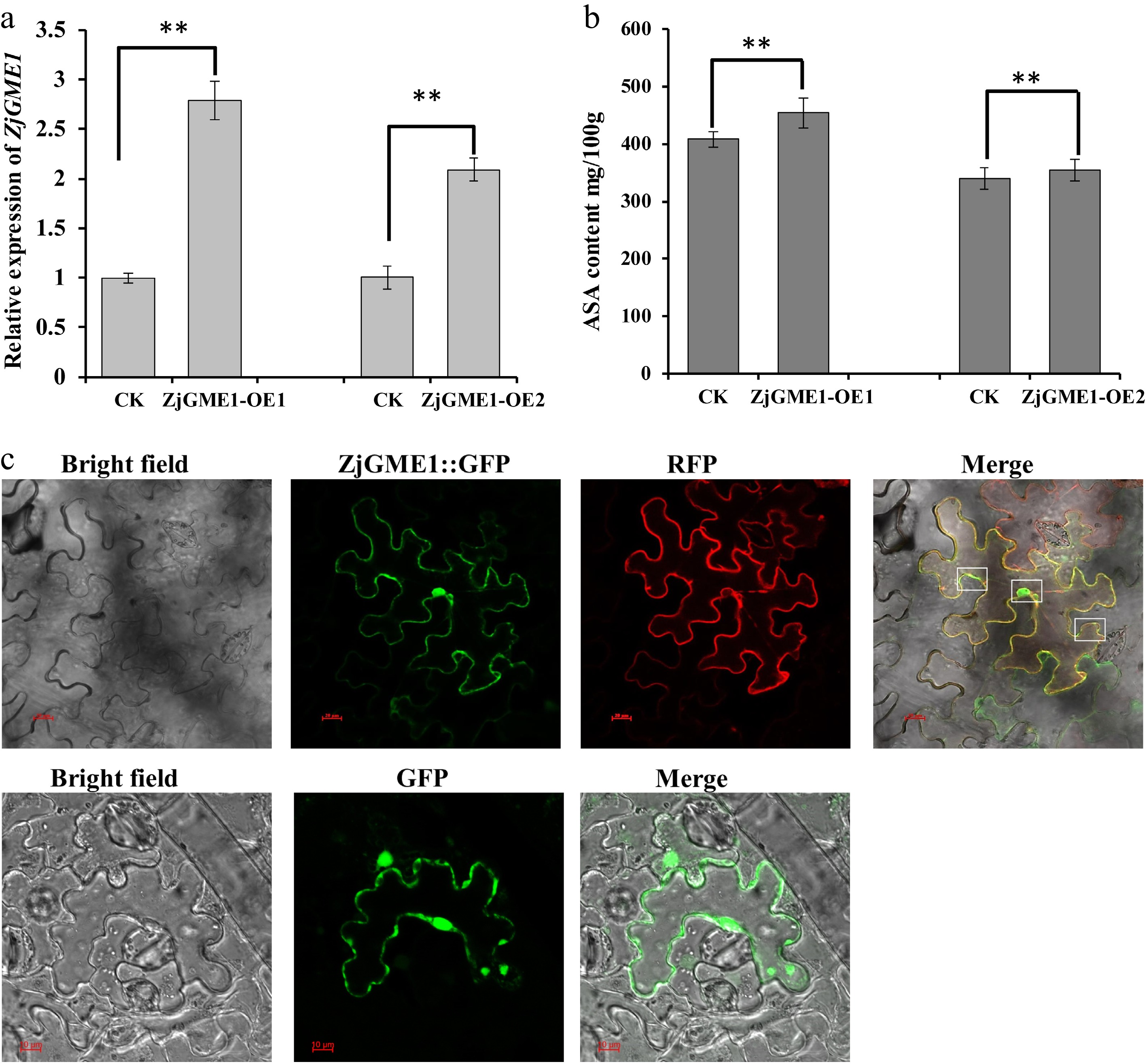
Figure 2.
Transient overexpression of ZjGME1. (a) Overexpressed ZjGME1 improved AsA content. (b) ZjGMEOE1 represents the IL60-ZjGME vector; ZjGMEOE2 represents the 35S::ZjGME1 vector. (c) Subcellular colocalization of the ZjGME1-GFP fusion protein with a AtCBL3 tonoplast marker. Boxes highlight the position of green fluorescence localized partially in the nucleus and cytoplasmic (outside the red vacuole member). Values are presented as the mean ± standard deviation (SD) on the basis of three repetitions. ** p < 0.01.
-
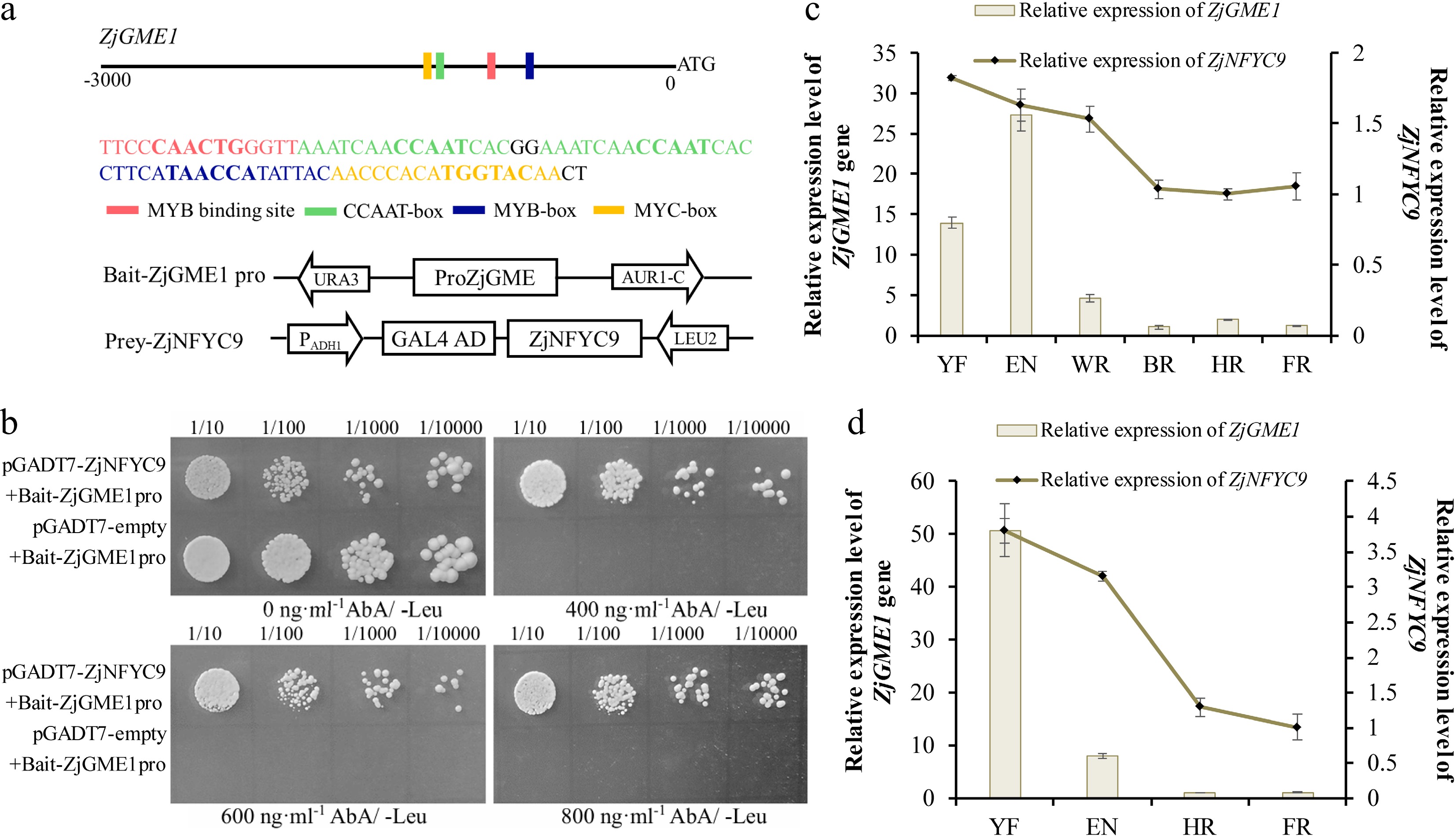
Figure 3.
Binding of ZjNF-YC9 to the promoter of ZjGME1 from jujube. (a) Schematic diagrams of the bait and prey vectors that were used for the Y1H analysis. (b) Y1H assay of ZjNF-YC9 binding to the ZjGME1 promoter fragments of jujube. Yeast cells grown on SD/-Leu medium with different ABA concentrations (0, 400, 600, or 800 ng·mL–1). (c) and (d) Abundance of ZjNF-YC9 mRNA at different fruit development stages. YF: young stage; EN: enlargement stage; WR: white mature stage; HR: half red stage, FR: full red stage.
-
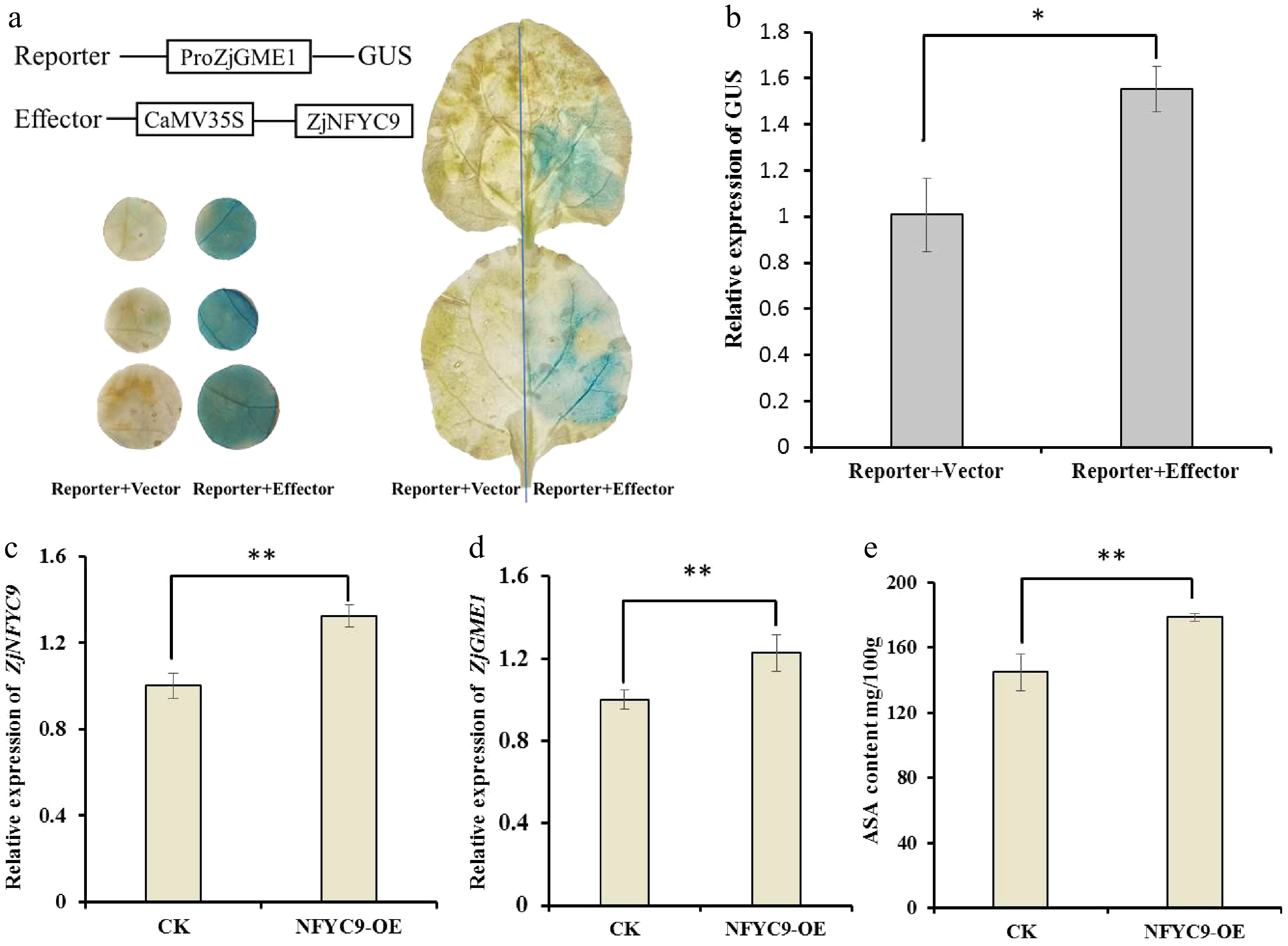
Figure 4.
ZjNF-YC9 activates ZjGME1 expression and promotes AsA accumulation. (a) Schematic of the effector and reporter constructs used in the GUS staining assay. (b) Relative expression analysis of the GUS reporter gene demonstrated that that ZjNF-YC9 significantly activates the promoter of ZjGME1. (c) ZjNF-YC9, (d)ZjGME1, and (e) AsA content around the injection sites in jujube fruits via ZjbNF-YC9 (NFYC9-OE) overexpression vector-based transformation. The empty vector (CK) was used as a control. Data are shown as the mean ± SD of three repetitions. Statistical significance was detected by Student's t-test. ** p < 0.01, * p < 0.05.
Figures
(4)
Tables
(0)