-
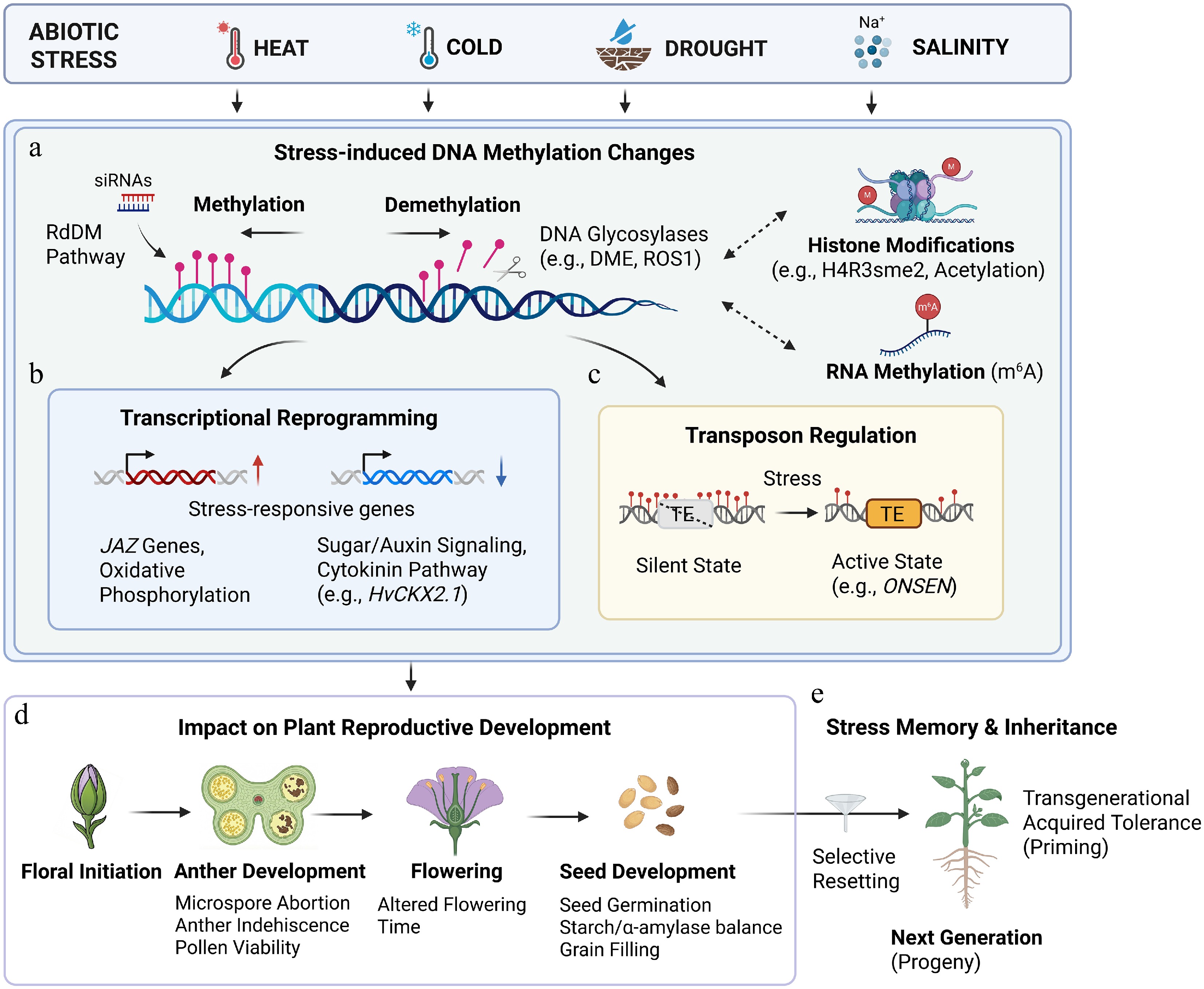
Figure 1.
Abiotic stress-induced DNA methylation dynamics and their roles in plants' reproductive development and stress memory. (a) Abiotic stresses including heat, cold, drought, and salinity trigger dynamic changes in DNA methylation patterns. The regulation involves a balance between the RdDM pathway and active demethylation catalyzed by DNA glycosylases (e.g., DME and ROS1). These dynamic DNA methylation changes interact with histone modifications (e.g., H4R3 symmetric dimethylation and histone acetylation) and RNA methylation (m6A) to modulate the state of chromatin and gene regulation. (b) Stress-induced methylation changes lead to transcriptional reprogramming, including the upregulation of stress-responsive genes (e.g., JAZ genes, oxidative phosphorylation-related genes) and the downregulation of developmental pathways (e.g., sugar/auxin signaling, cytokinin pathway). (c) Altered methylation states also affect transposon regulation, enabling transitions from silenced to active states under stress conditions, exemplified by the activation of the heat-responsive retrotransposon ONSEN. (d) Stress-induced epigenetic alterations affect reproductive development, causing defects such as microspore abortion, anther indehiscence, pollen viability, altered flowering time, and impaired seed germination and grain filling. (e) Epigenetic modifications can form a somatic memory within the same generation or be transmitted to the next generation. Although some stress-induced epigenetic marks contribute to somatic memory or transgenerational acquired tolerance (priming) in the progeny, others undergo selective resetting to maintain genomic integrity. Created in BioRender.
https://BioRender.com/zj6e1eq . -
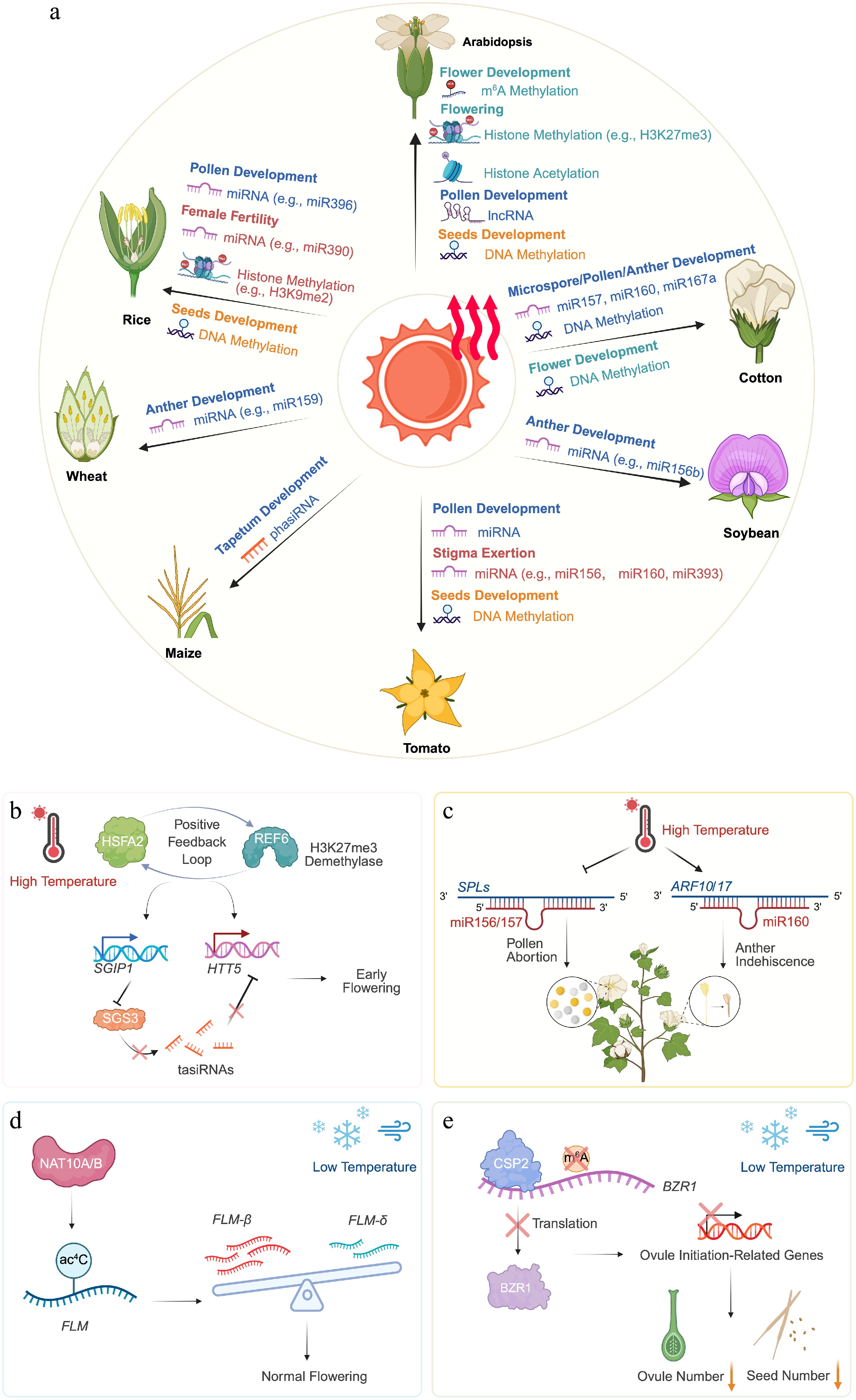
Figure 2.
Epigenetic mechanisms safeguarding plant reproduction under abiotic stress. (a) Epigenetic regulation plays a pivotal role in maintaining the proper progression of sexual reproduction in plants under heat stress. Multiple epigenetic mechanisms are involved in modulating heat stress responses, including DNA methylation, histone methylation, and histone acetylation, as well as noncoding RNAs such as lncRNAs, miRNAs, and siRNAs. Together, these regulatory mechanisms influence flowering time and the development of floral organs and seeds. (b) The H3K27me3 demethylase REF6 establishes a positive regulatory feedback loop with the heat-responsive transcription factor HSFA2. This loop induces the expression of SGIP1, promotes degradation of SGS3, and consequently derepresses the tasiRNAs target HTT5, thereby contributing to heat-induced flowering. (c) In cotton, overexpression of miR157 or miR160 compromises auxin signaling, thereby enhancing the sensitivity of male fertility to heat stress and leading to microspore abortion or anther indehiscence. (d) Under low ambient temperatures, Arabidopsis NAT10A/B promote temperature-responsive ac4C deposition on FLM transcripts, thereby modulating alternative splicing of FLM and preventing extremely late flowering. (e) In Arabidopsis, brief exposure to chilling induces the RNA-binding protein CSP2, which binds to BZR1 mRNA and modulates its m6A modification, thereby reducing the mRNA translation efficiency of BZR1, inhibiting ovule initiation, and decreasing seed number. Created in BioRender.
https://BioRender.com/l6d6j9a .
Figures
(2)
Tables
(0)