-
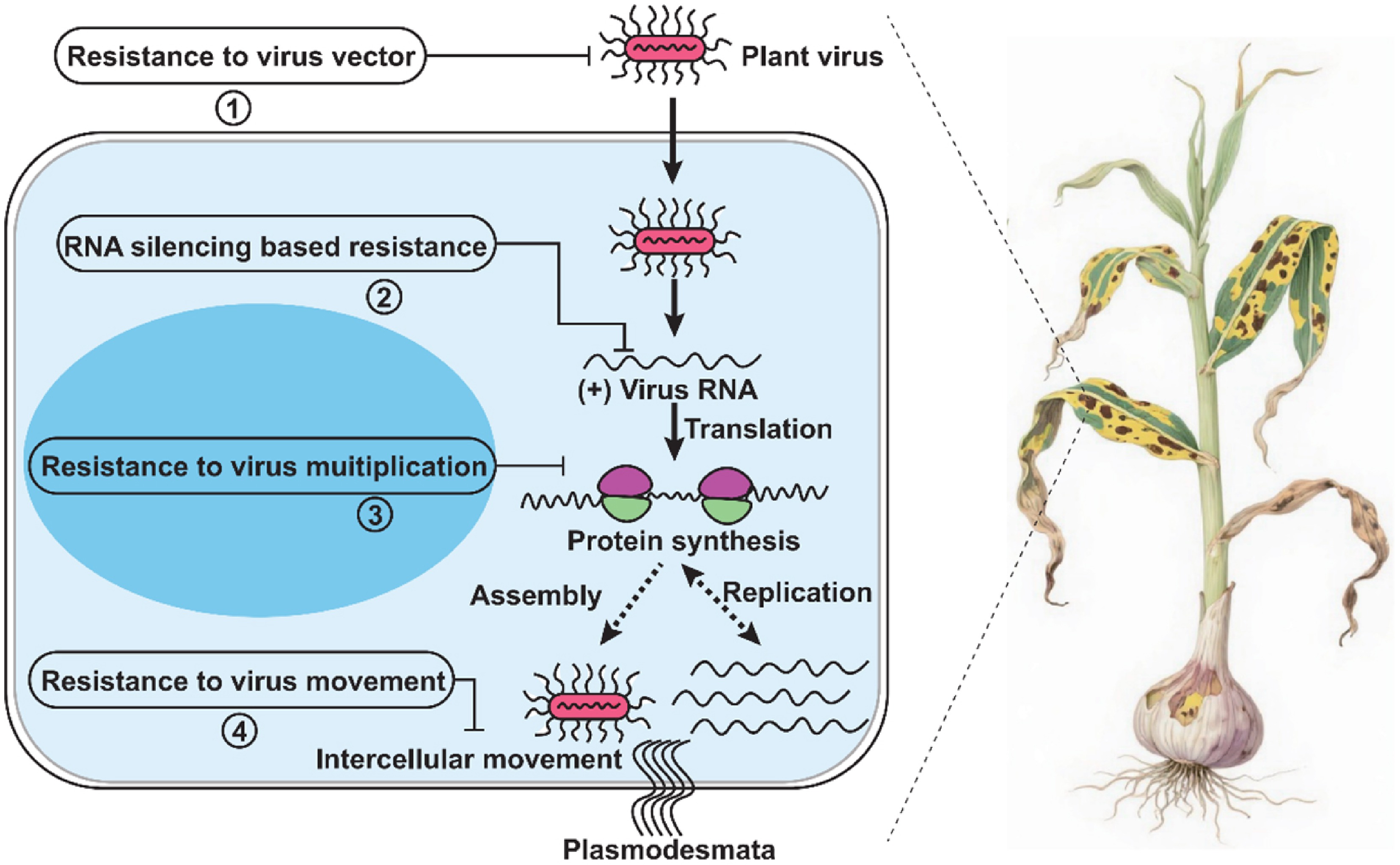
Figure 1.
Viral infection approaches and plant resistance mechanisms. Plant viruses infect Allium host cells through insect vectors or mechanical damage, undergo initial replication in the initially infected cell, and spread through plasmodesmata and systemically through vascular tissues. Allium foliage activates various antiviral defense mechanisms, such as recognition of viral particles via RLK receptors, prevention of viral replication, limitation of cell-to-cell movement, inhibition of viral movement proteins, and degradation of viral genomes and RNA silencing. These coordinated actions lead to acquired systemic resistance and limit the virus's spread in host tissues. RLK: receptor like kinases, M: movement protein.
-
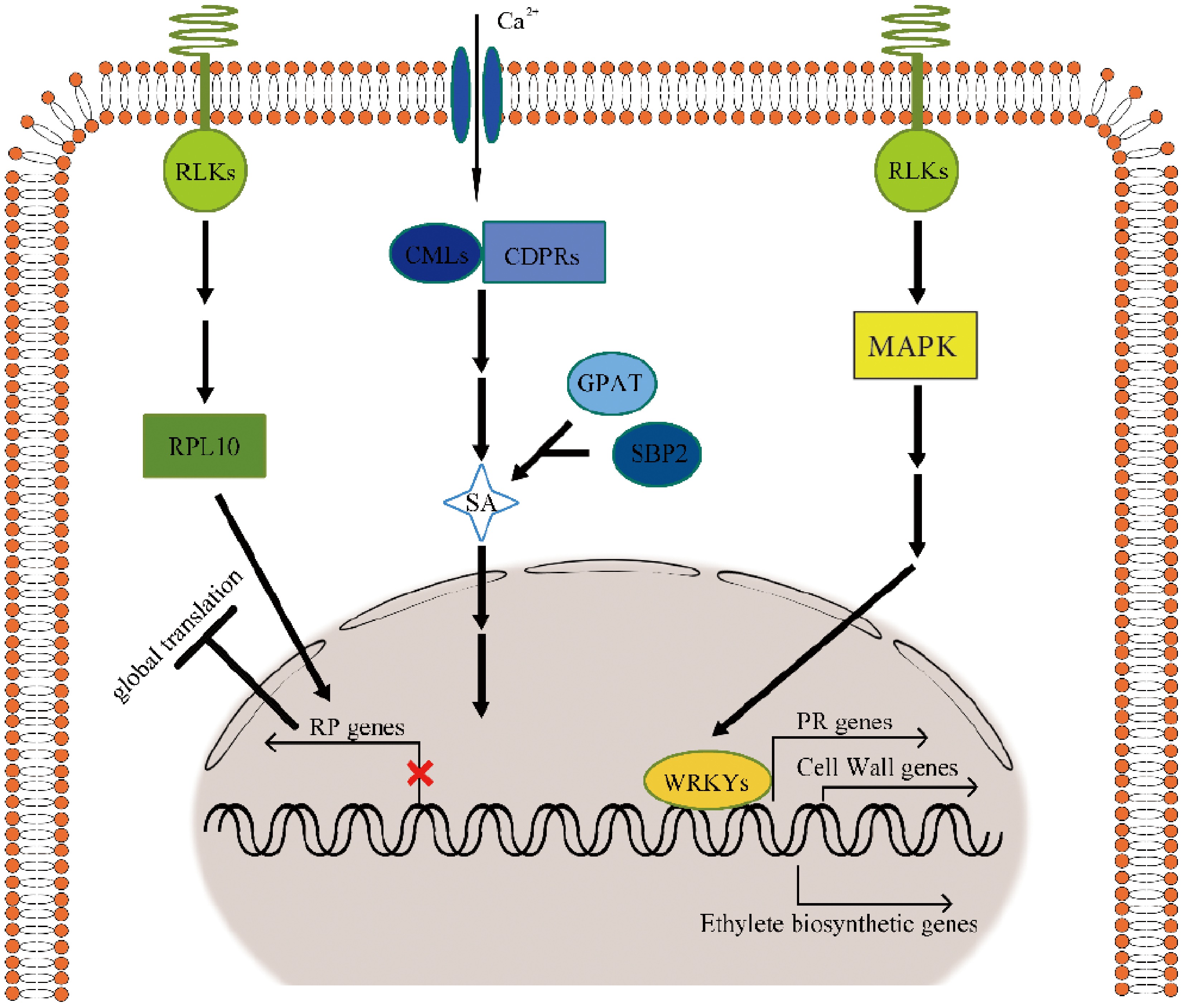
Figure 2.
Garlic genes potentially involved in antiviral immunity. Differentially expressed genes between virus-accumulating (V), and virus-free (VF) garlic, potentially involved in at least three signaling pathways of antiviral immunity to modulate the expression of downstream WRKY genes, PR genes, SA, and ethylene biosynthesis-related genes.
-
Virus Symptoms Yield losses Major vector transmission Ref. Onion yellow dwarf virus (OYDV) The leaves are yellow and curling, interrupting the vascular system 40%−60% Aphids [18,19] Leek yellow stripe virus (LYSV) Yellow-striped patterns, leaf mosaic, and leaf deformations 25%−50% Aphids [20,21] Shallot yellow stripe virus (SYSV) Mosaic, deformation − Aphids [22,23] Iris yellow spot virus (IYSV) Straw bleaching, diamond-shaped lesions, and necrotic spots resembling eyes on lower leaves or scapes 30%−50% Thrips [25] Garlic common latent virus (GCLV) Smaller bulb, late maturity 40%−50% Aphids [26,27] Cucumber mosaic virus (CMV) Chlorosis with a mosaic pattern, stunted growth 20%−50% Aphids [28,29] Garlic virus A, B, C, D, and X Yellowing leaves, leaf stripping, stunting, lower plant vigor − Mites [30,31] Table 1.
Basic information of several prevalent viruses in Allium plants.
Figures
(2)
Tables
(1)