-
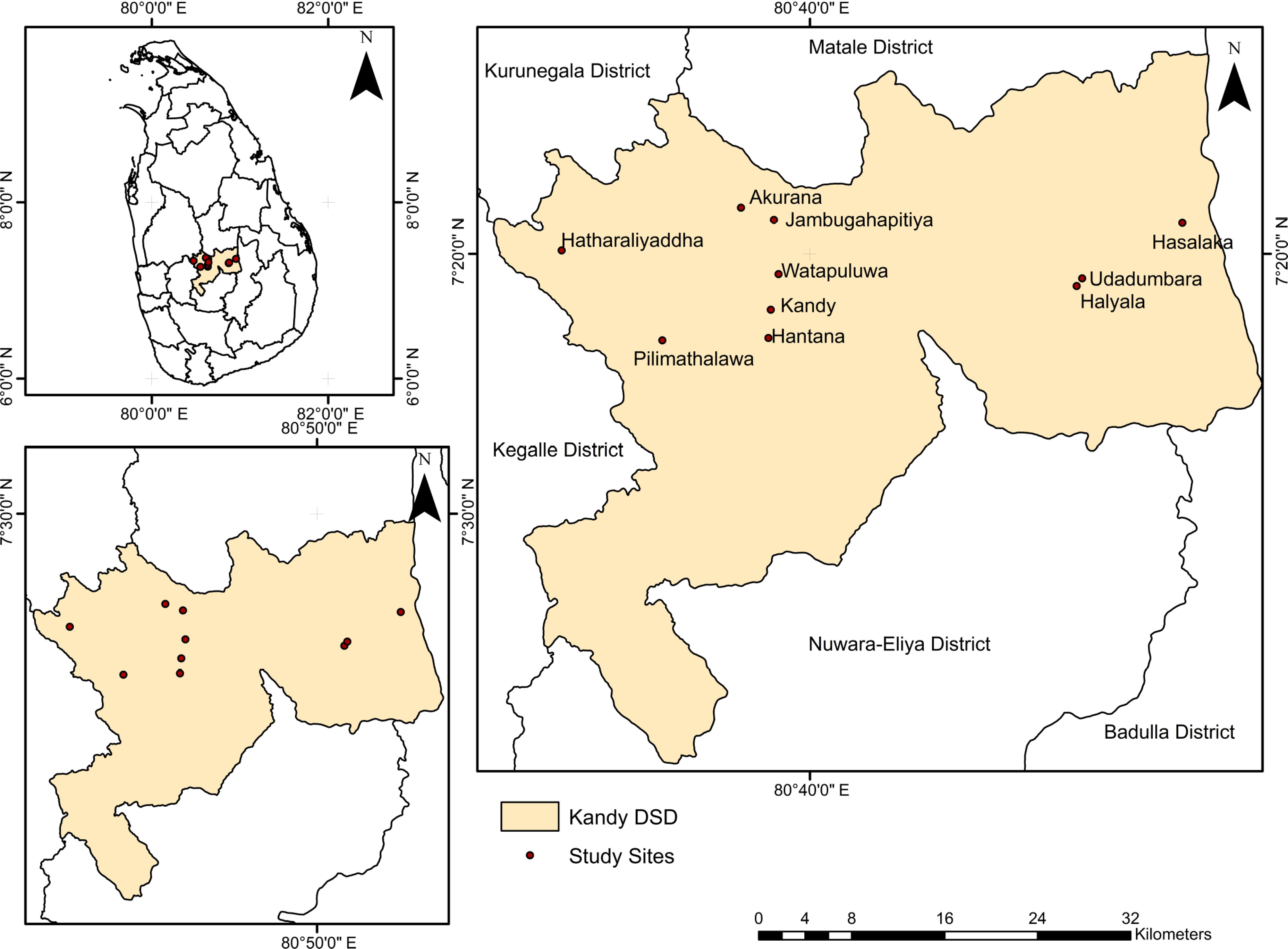
Figure 1.
Ten selected villages in which the present survey was conducted in the Kandy District, Sri Lanka. Source: Prepared by Uthpala Premarathna in 2025 using ArcGIS.
-
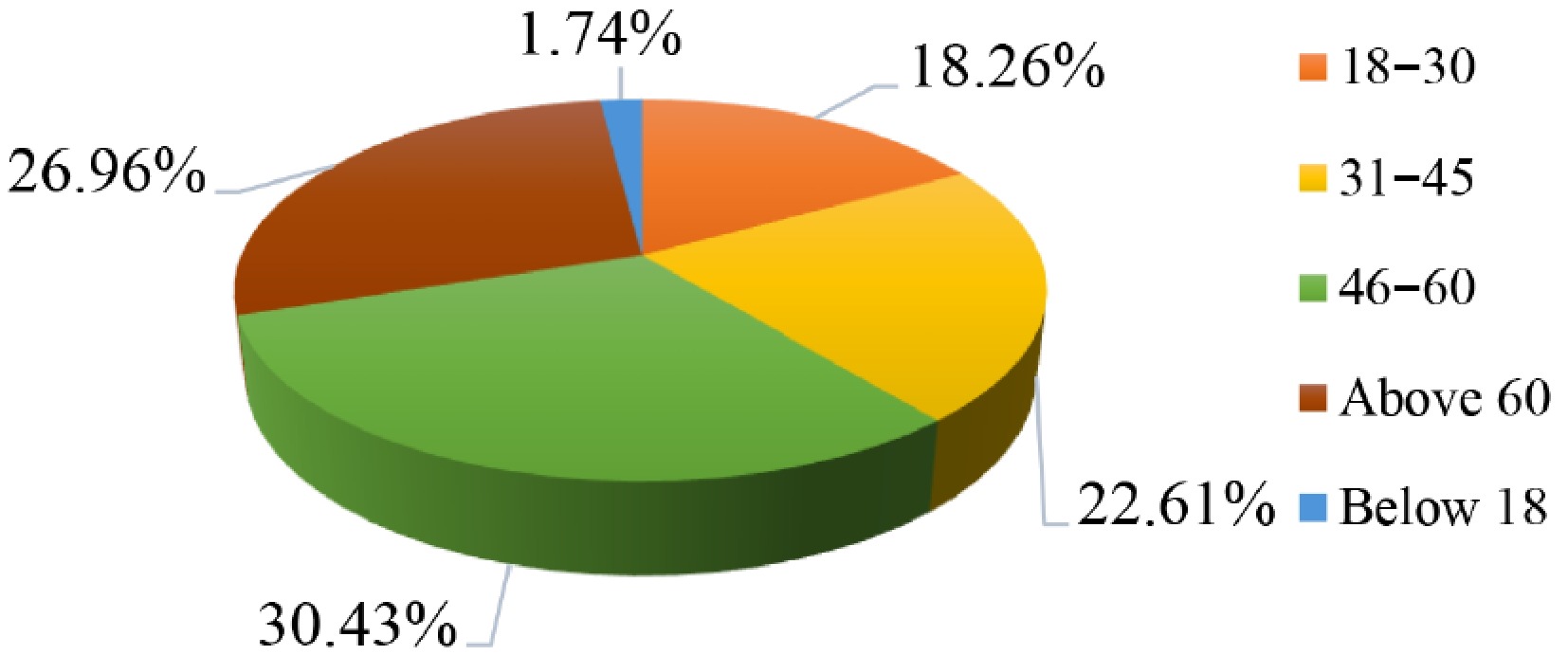
Figure 2.
Respondents as a percentage of the total test population, grouped by age.
-
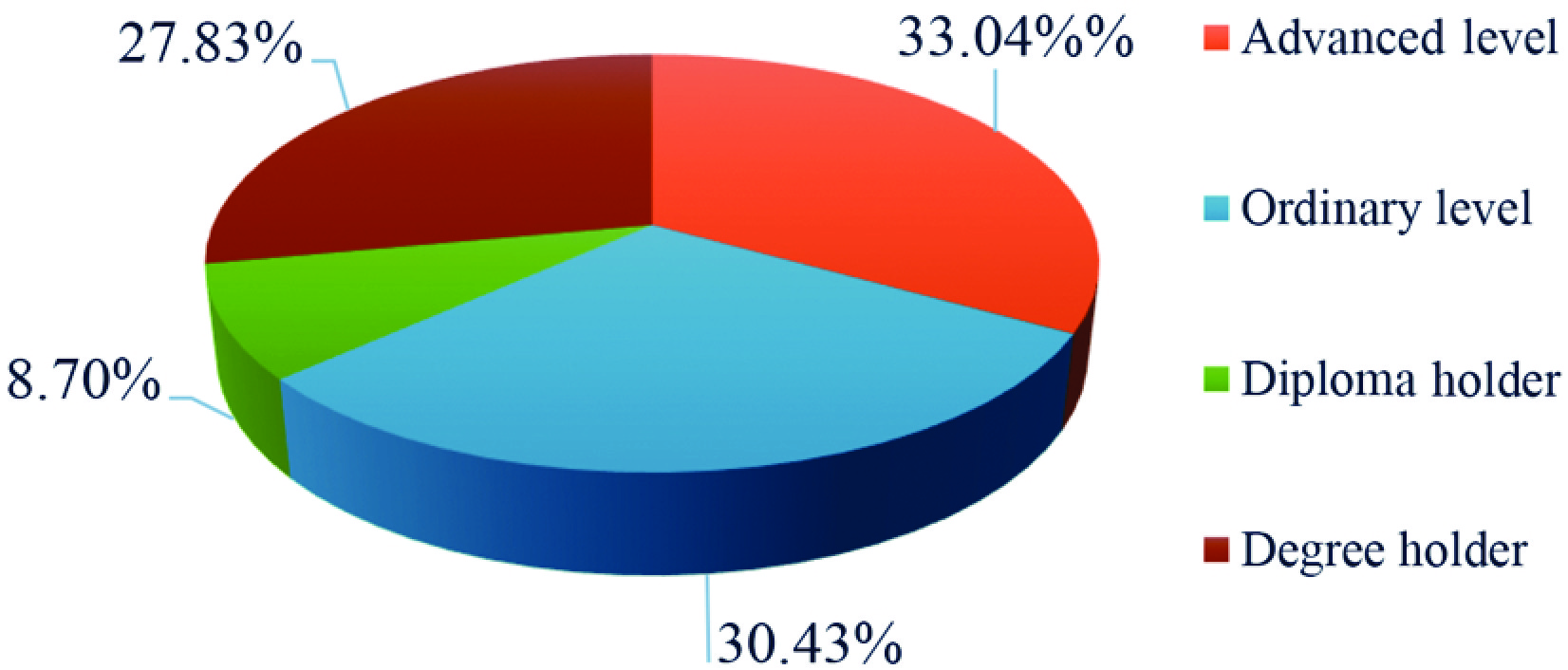
Figure 3.
Respondents as a percentage of the total population, grouped by their education level.
-
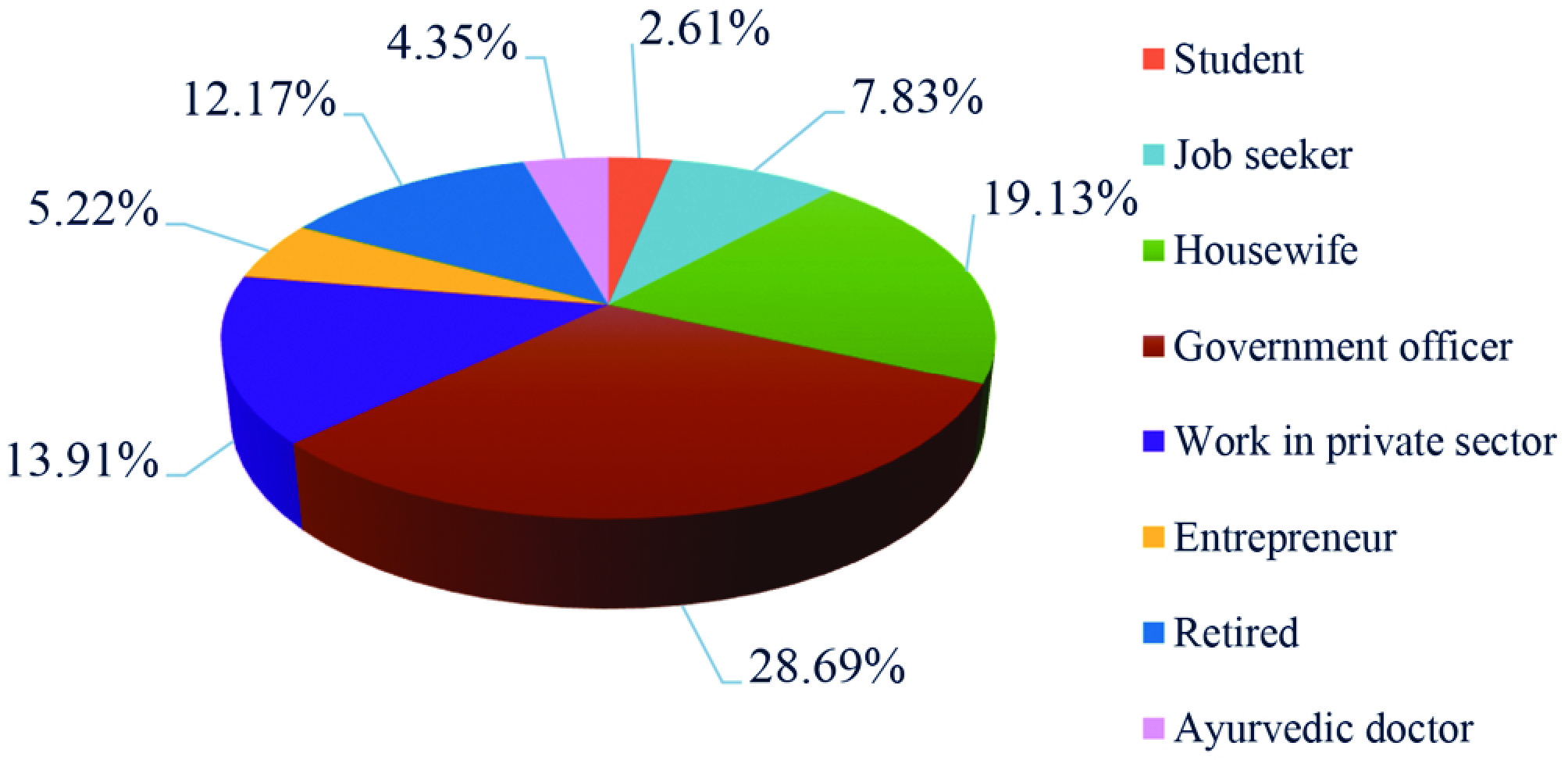
Figure 4.
Respondents as a percentage of the total population, grouped by their occupation.
-
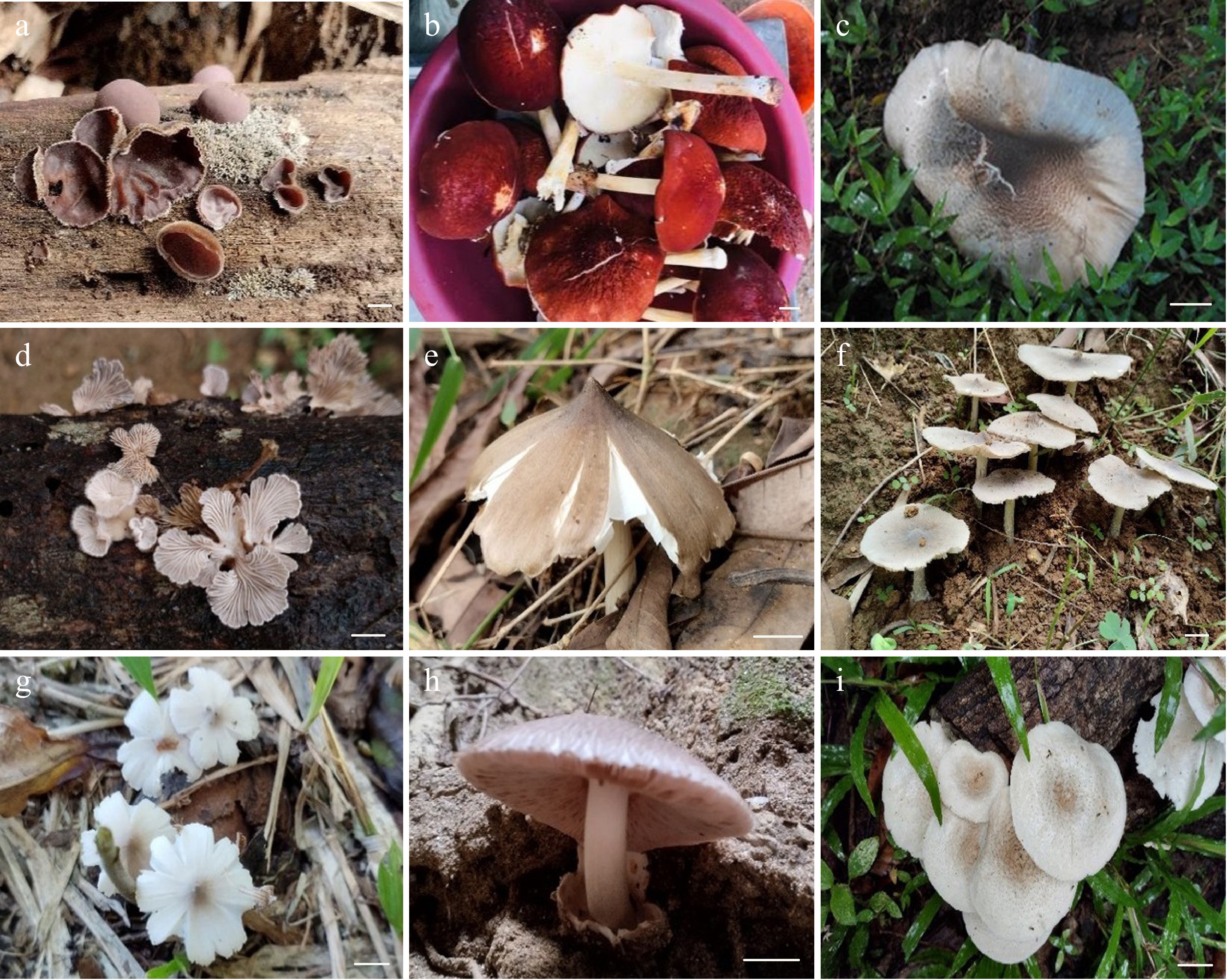
Figure 5.
Sri Lankan wild edible mushrooms in their natural habitats. (a) Auricularia sp. ("kankotiya hathu"), (b) Flammulaster fulvoalbus ("athuru hathu") (Photo credit: Amila Perera), (c) Pleurotus giganteus (Photo credit: Thiloshi Agalawela), (d) Schizophyllum commune ("lena hathu"), (e) Termitomyces eurrhizus ("indalolu"), (f) Termitomyces heimii ("humbas bimmal"), (g) Termitomyces microcarpus ("heenveli hathu"), (h) Volvariella volvacea ("piduru bimmal/piduru hathu"), and (i) Lentinus squarrosulus ("kotan bimmal"). Scale bar = 1 cm.
-
Parameters Informant groups Engagement in wild mushroom
consumption as a foodYes No Gender Female 41 (35.65%) 18 (15.65%) Male 40 (34.79%) 16 (13.91%) Age Below 18 − 2 (1.74%) 18−30 7 (6.08%) 14 (12.17%) 31−45 18 (15.65%) 8 (6.95%) 46−60 29 (25.21%) 6 (5.21%) Above 60 28 (24.34%) 3 (2.60%) Education level Ordinary level 26 (22.60%) 9 (7.82%) Advanced level 26 (22.60%) 12 (10.43%) Diplomatist 8 (6.95%) 2 (1.72%) Degree holder 22 (19.13%) 10 (8.69%) Residential type Rural 43 (37.39%) 15 (13.04%) Suburban 32 (27.82%) 13 (11.30%) Urban 9 (7.82%) 3 (2.60%) Family income Low income 18 (15.65%) 4 (3.5%) Middle income 64 (55.65%) 29 (25.21%) High income − − Table 1.
Percentage of respondents engaged in wild mushroom consumption according to sociodemographic factors.
-
Age group Observed frequency (O) Row total Expected frequency (E) Yes No Yes No Below 18 − 2 2 1.43 0.57 18−30 7 14 21 14.97 6.03 31−45 18 8 26 18.54 7.46 46−60 29 6 35 24.96 10.04 Above 60 28 3 31 22.10 8.89 Column total 82 33 115 Table 2.
Chi-square test data for engagement in wild mushroom consumption and knowledgeability in different age groups.
-
Gender Observed frequency (O) Row total Expected frequency (E) Yes No Yes No Female 41 18 59 41.55 17.44 Male 40 16 56 39.44 16.55 Column total 81 34 115 Table 3.
Chi-square test data for engagement in wild mushroom consumption and knowledgeability by gender.
-
Phylum Order Family Species (Scientific name) Respondent-reported vernacular names Basidiomycota Agaricales Tubariaceae Flammulaster fulvoalbus (Berk. & Broome) Pegler Athuru hathu, mukalan hathu, kevum hathu Pleurotaceae Pleurotus giganteus (Berk.) Karun. & K.D. Hyde Uru paha Schizophyllaceae Schizophyllum commune Fr. Lena hathu, lena pahuru, lena pala Lyophyllaceae Termitomyces eurrhizus (Berk.) R. Heim Indalolu Termitomyces heimii Natarajan Humbas bimmal Termitomyces microcarpus (Berk. & Broome) R. Heim Heenveli hathu, heenveliya, iha bimmal Termitomyces sp. Veli hathu Pluteaceae Volvariella volvacea (Bull.) Singer Piduru bimmal, piduru hathu Auriculariales Auriculariaceae Auricularia sp. Kannoriya, kankotiya hathu, korikan Polyporales Polyporaceae Lentinus squarrosulus Mont. Kotan bimmal, kandha mal Table 4.
Taxonomic details of the wild edible mushroom species reported by the respondents during the survey.
-
Varnacular names Residential type Total RFC Rural Suburban Urban Kotan bimmal, kandha mal 15 8 − 23 0.20 Humbas bimmal 23 14 3 40 0.35 Veli hathu 23 14 2 39 0.34 Heenveli hathu, heenveliya, iha bimmal 12 11 2 25 0.22 Piduru bimmal, piduru hathu 16 13 2 31 0.27 Lena hathu, lena pahuru, lena pala 9 8 − 17 0.15 Indalolu 1 2 1 4 0.03 Athuru hathu, mukalan hathu, kevum hathu 1 1 2 4 0.03 Uru paha 3 − 1 4 0.03 Kannoriya, kankotiya, korikan 3 − − 3 0.02 Total 106 71 13 Table 5.
Frequency of wild edible mushroom species identified by respondents in rural, suburban, and urban residential areas.
Figures
(5)
Tables
(5)