-
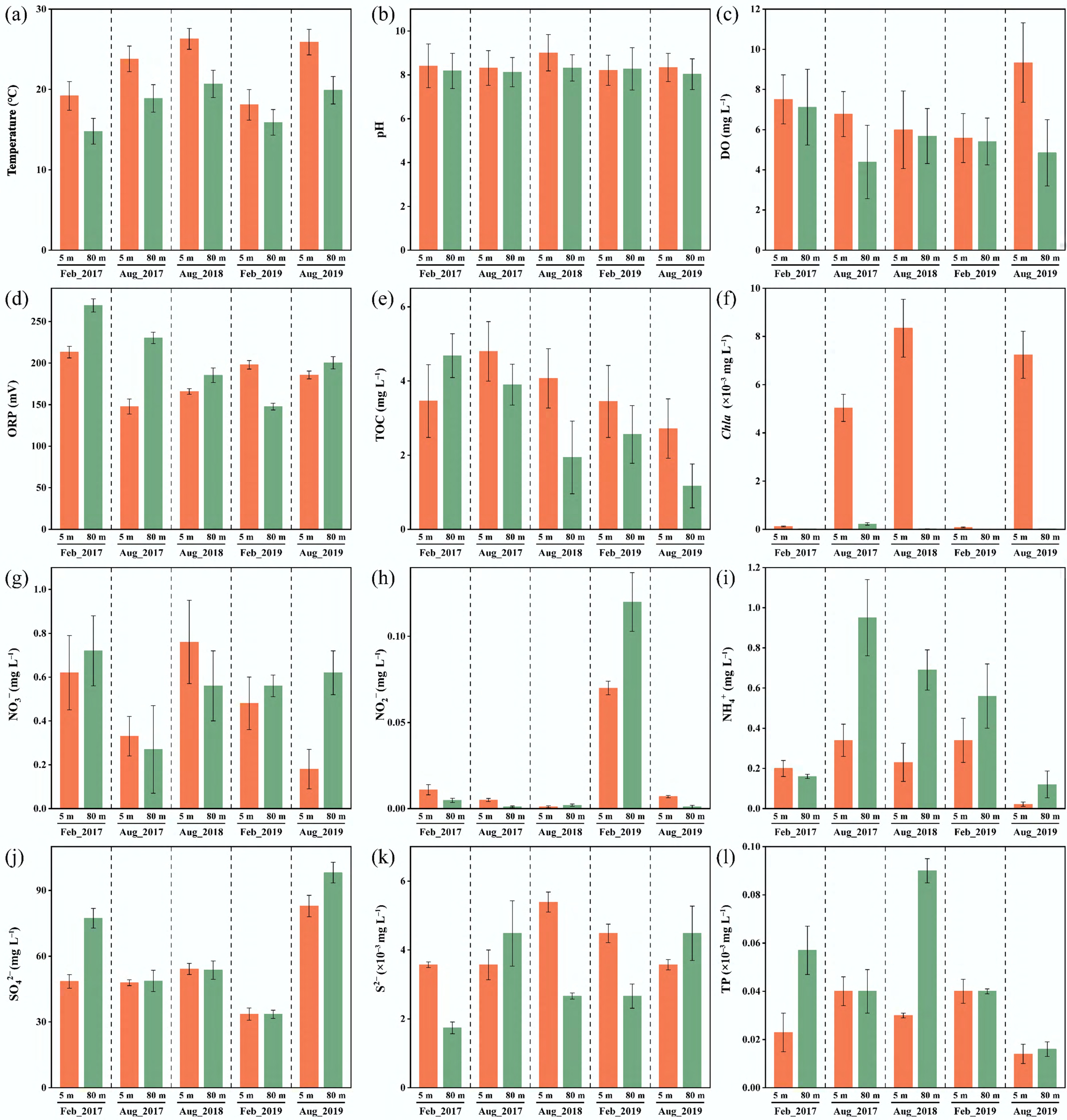
Figure 1.
Environmental variables of water samples in the Xiaowan Reservoir. (a) Temperature (T), (b) pH, (c) dissolved oxygen (DO), (d) oxidation-reduction potential (ORP), (e) total organic carbon (TOC), (f) Chlorophyll a (Chla), (g) nitrate (NO3−), (h) nitrite (NO2−), (i) ammonium (NH4+), (j) sulfate (SO42−), (k) sulfide (S2−), and (l) total phosphorus (TP).
-
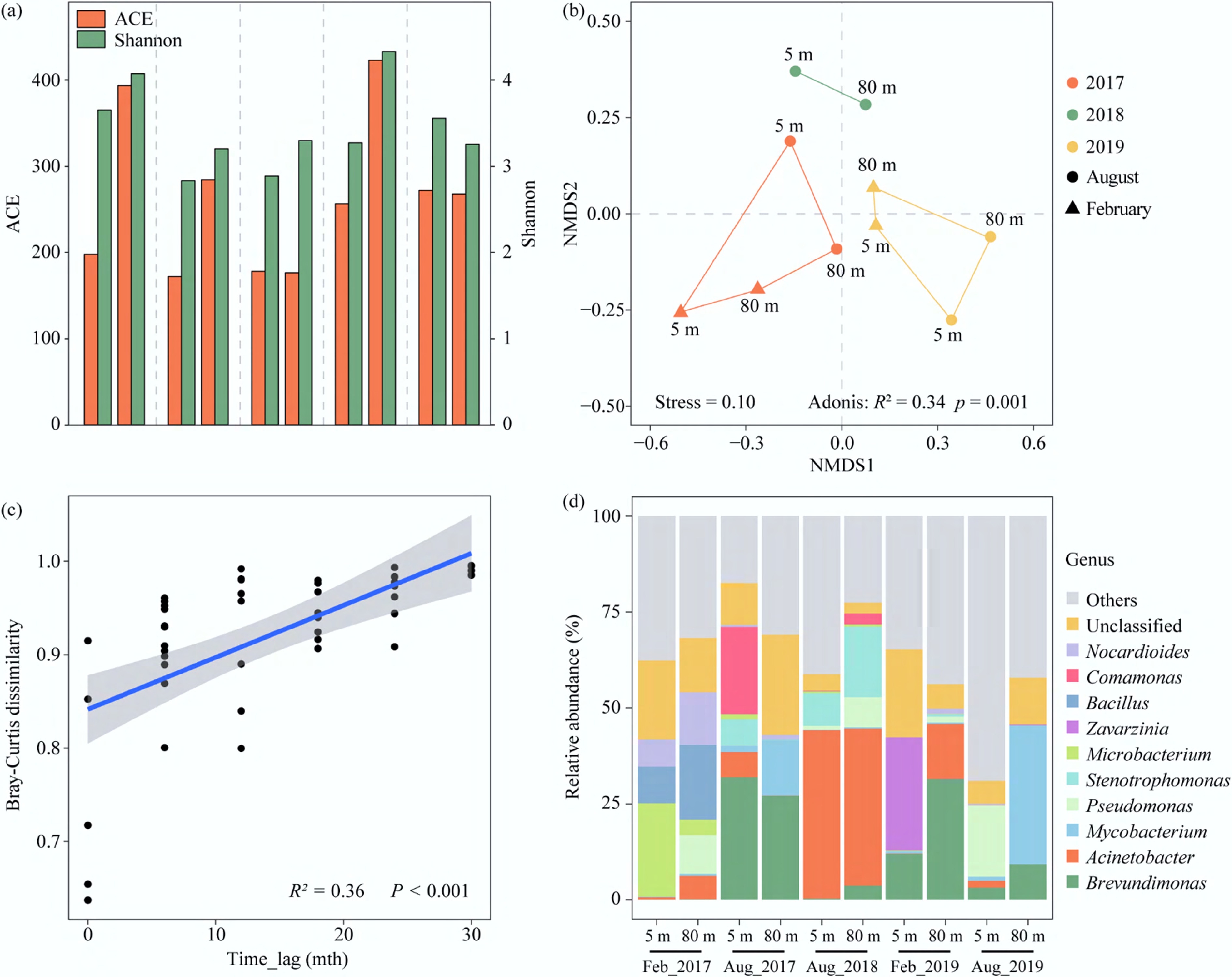
Figure 2.
Microbial community structure in the Xiaowan Reservoir. (a) Alpha diversity of microbial community; (b) non-metric multidimensional scaling (NMDS) based on Bray-Curtis distances of the relative abundances of microbial community; (c) Bray-Curtis similarity of microbial community against time lag; (d) microbial composition at the genus level.
-
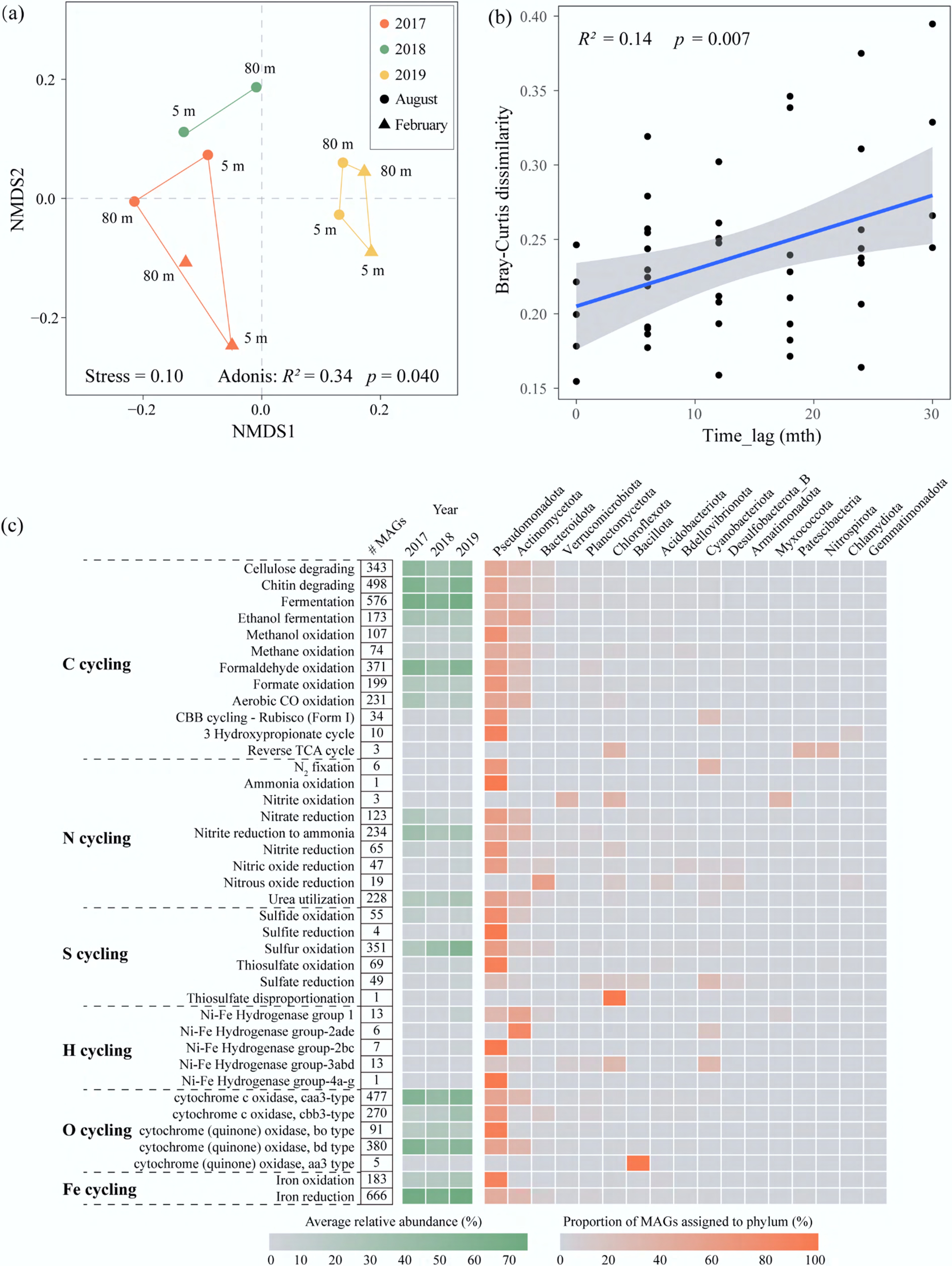
Figure 3.
Microbial function in the Xiaowan Reservoir. (a) Non-metric multidimensional scaling (NMDS) based on Bray-Curtis distances of the relative abundances of microbial functional genes; (b) Bray-Curtis similarity of microbial function against time lag; (c) key metabolic and biogeochemical cycling traits of MAGs in the Xiaowan Reservoir. From left to right: the numbers of MAGs that carry genetic markers for each functional trait are shown as numerals; the average relative abundance for corresponding MAGs across each year are displayed in the green heatmap; and the proportion of MAGs assigned to each phylum is shown in the orange heatmap.
-
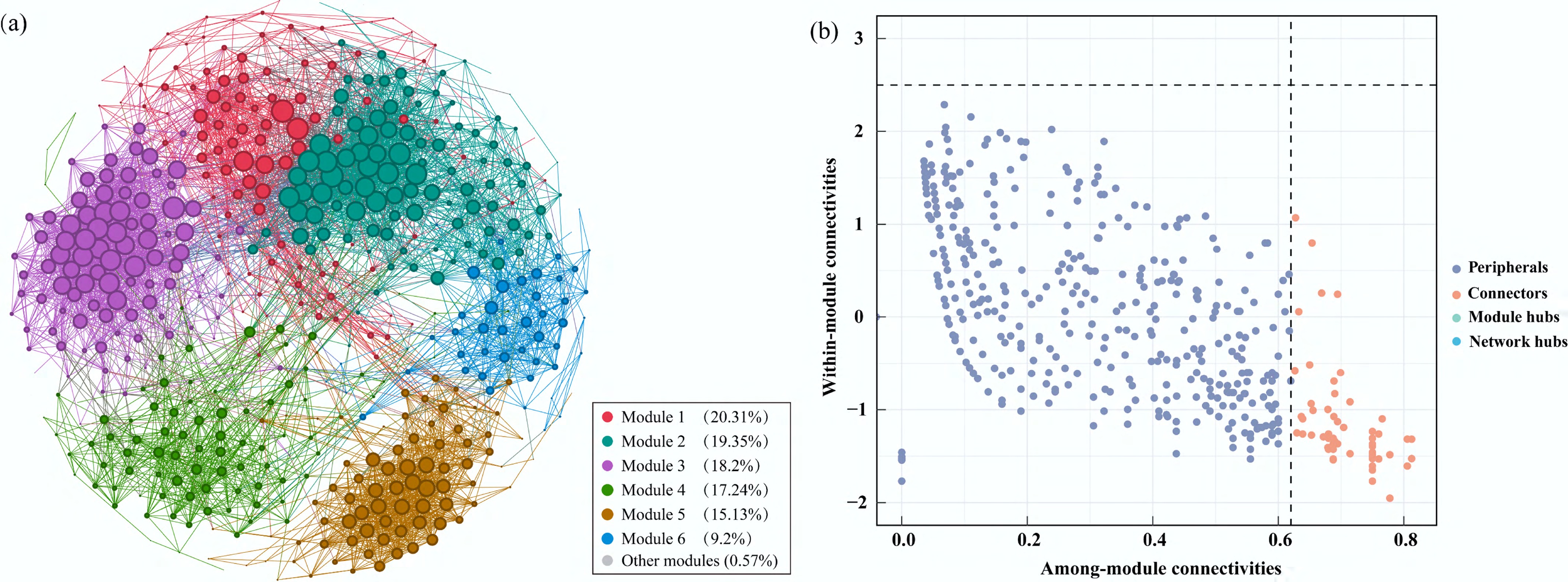
Figure 4.
Co-occurrence network analysis. (a) Biological interactions of MAGs in the Xiaowan Reservoir; (b) the scatter plot showed the criteria for selecting the keystone MAGs. Nodes represent MAGs and are colored by module. Node size corresponds to the number of interactions.
-
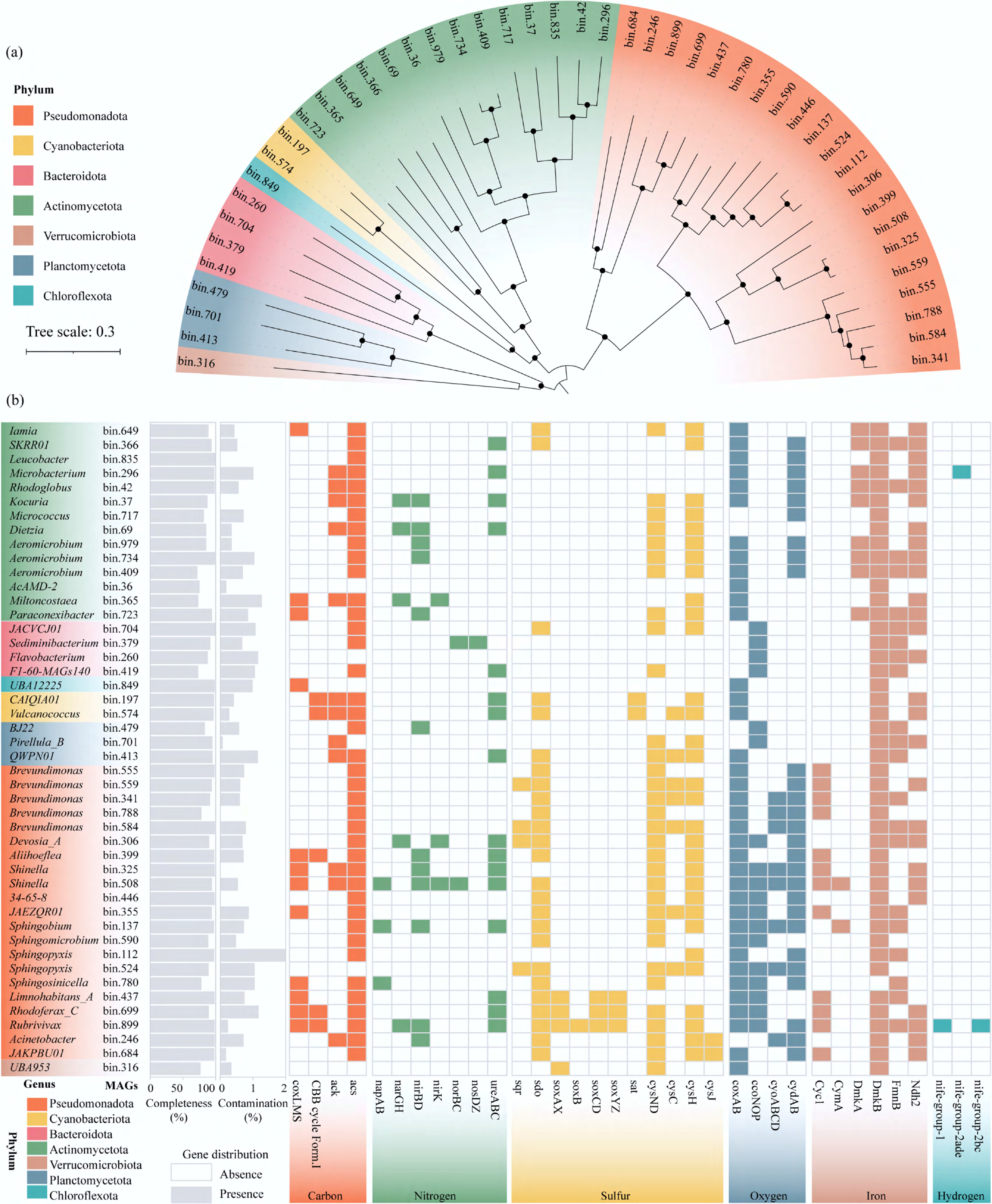
Figure 5.
Genomic characterization of keystone metagenome-assembled genomes (MAGs). (a) Phylogenetic tree, and (b) metabolic traits of the 46 metagenome assembled genomes (MAGs) (completeness > 70%, and contamination < 2%).
-
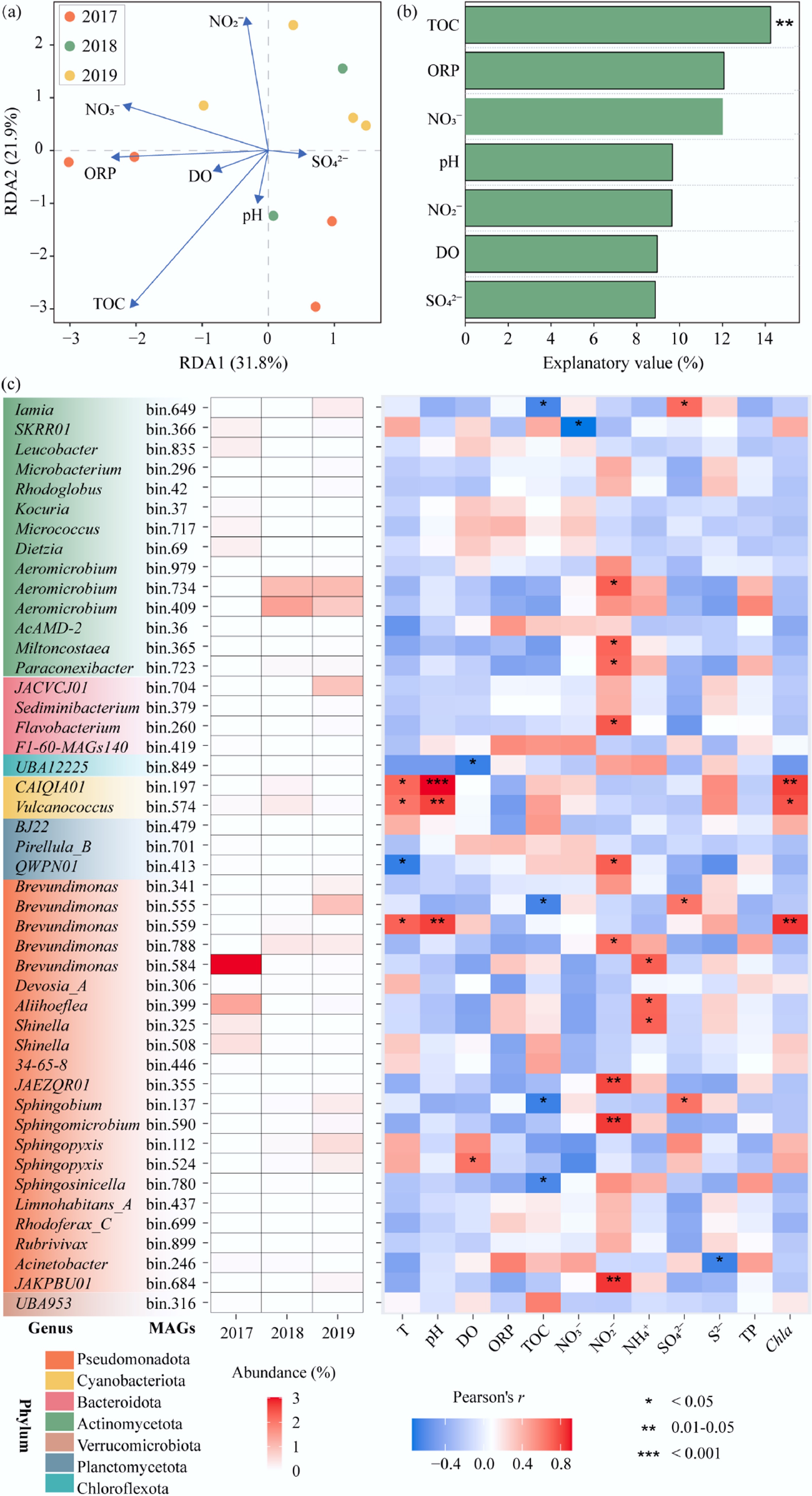
Figure 6.
The effects of geochemical properties on keystone MAGs. (a) Redundancy analysis (RDA) of the relationship between geochemical properties and keystones MAGs; (b) the proportion of variation in keystone MAGs distribution explained by each geochemical property; (c) heatmap showing the relative abundance of keystone metagenome-assembled genomes (MAGs) among different years and their pearson correlations with geochemical properties.
Figures
(6)
Tables
(0)