-
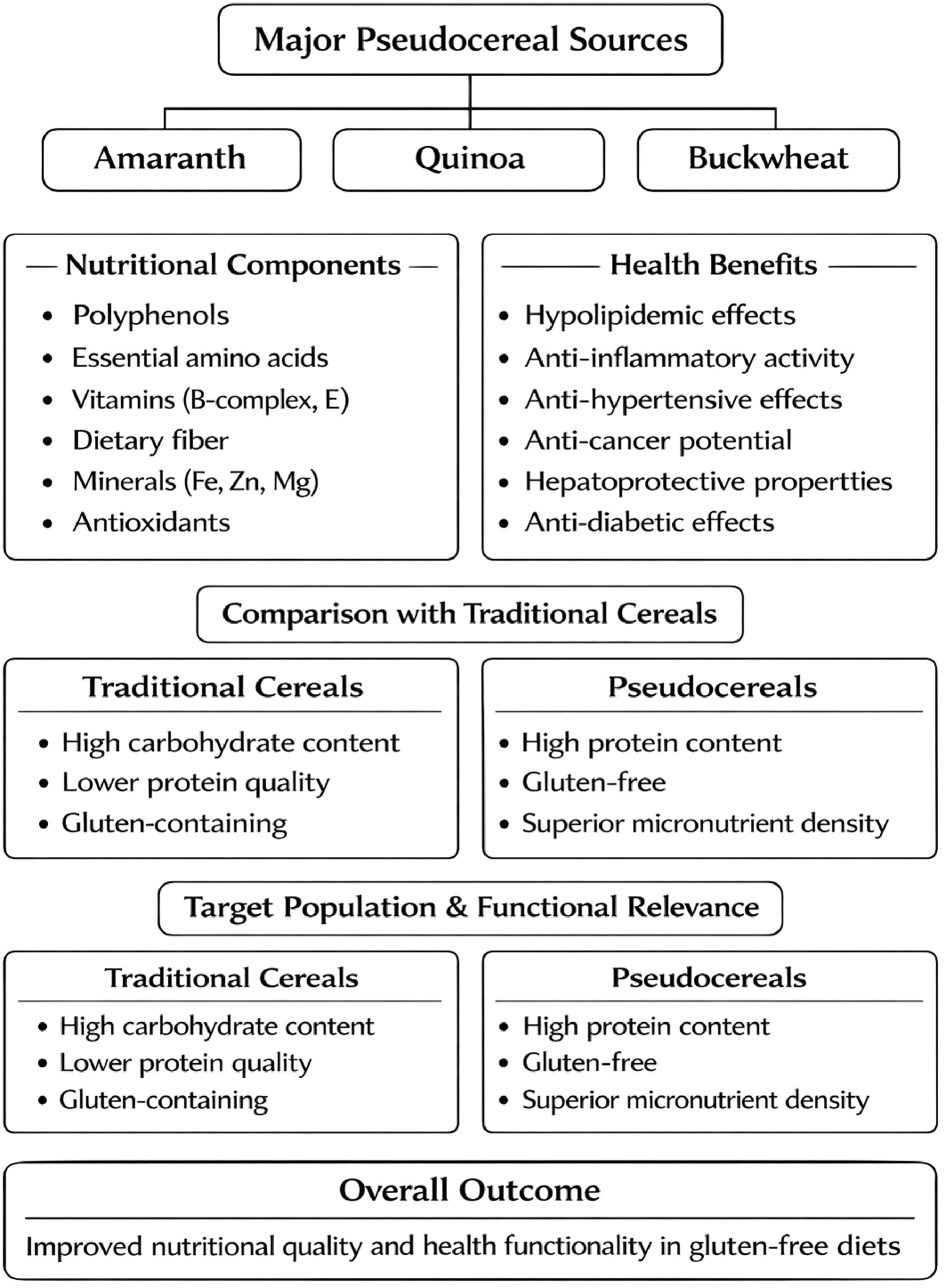
Figure 1.
Major pseudocereal sources (amaranth, quinoa, buckwheat), highlighting their key nutritional components and health benefits. The figure compares pseudocereals with traditional cereals, emphasizing the former's superior protein quality, gluten-free nature, and higher micronutrient density, and illustrating their functional relevance for improving nutritional quality and health outcomes in gluten-free diets.
-
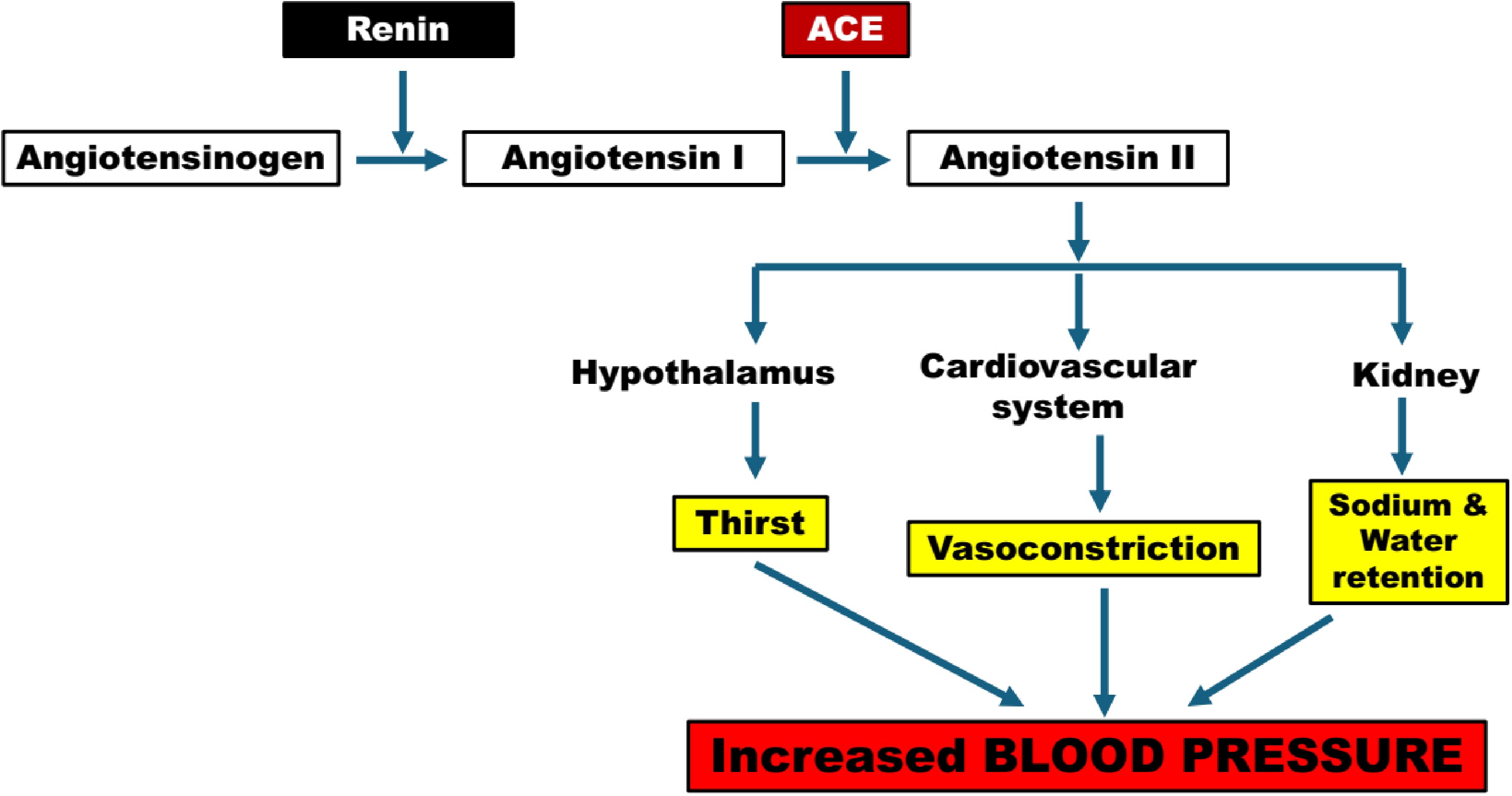
Figure 2.
Role of ACE in the elevation of blood pressure. ACE converts inactive angiotensin I into potent angiotensin II. This conversion is a critical step that triggers the following downstream effects: stimulation of thirst via the hypothalamus, vasoconstriction of blood vessels, and sodium and water retention in the kidneys. By enabling angiotensin II formation, ACE directly drives the rise in blood pressure and fluid balance control.
-
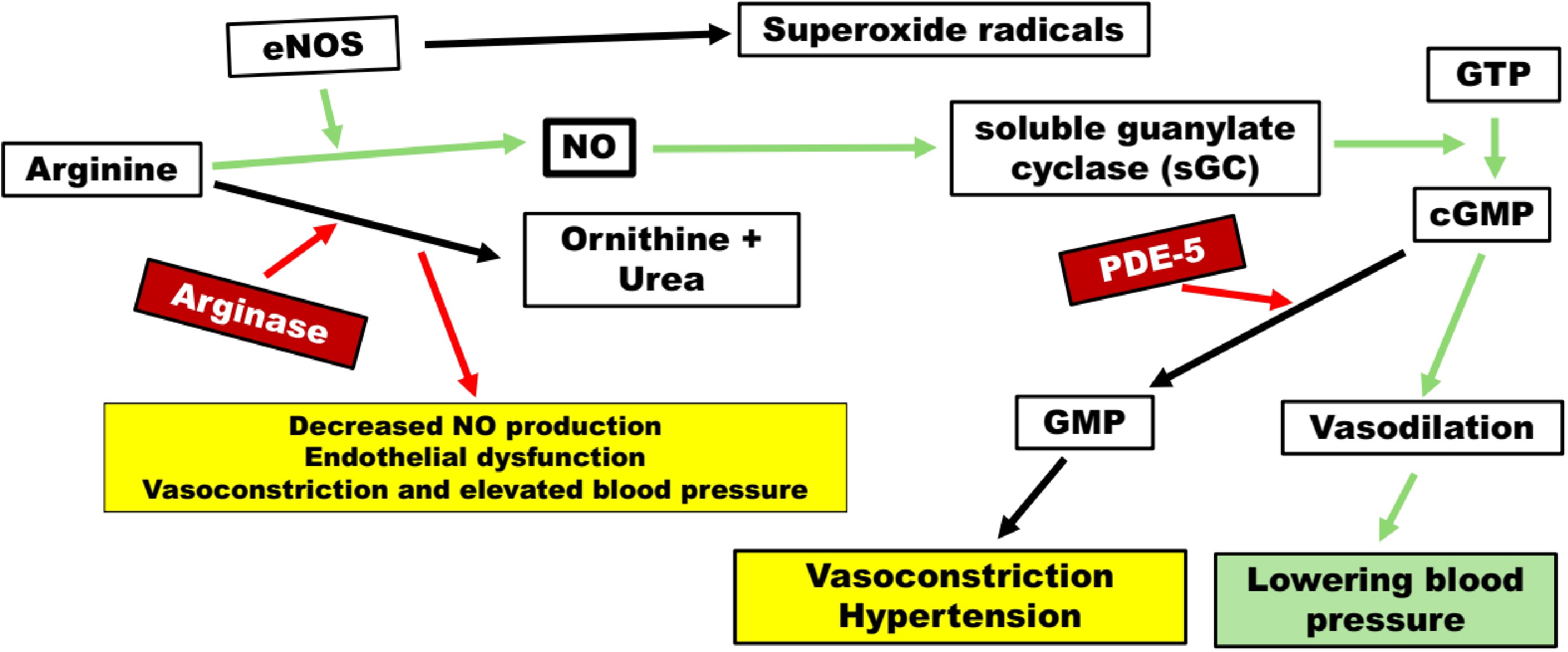
Figure 3.
Role of arginase and phosphodiesterase-5 in increasing the blood pressure. Arginase plays a critical role in regulating nitric oxide (NO) availability by competing with endothelial nitric oxide synthase (eNOS) for L-arginine, the shared substrate needed for NO production. When arginase activity is elevated, it reduces L-arginine availability, leading to diminished NO synthesis, endothelial dysfunction, and increased blood pressure. Even when NO is produced, its vasodilatory effect depends on cyclic guanosine monophosphate (cGMP), which relaxes the smooth muscle cells. However, phosphodiesterase-5 (PDE-5) breaks down cGMP, limiting NO's action. When eNOS lacks sufficient L-arginine, it becomes "uncoupled", generating superoxide radicals instead of NO. This leads to oxidative stress, further vascular damage, and worsening of hypertension.
-
Flour category Examples Potassium content (mg/100 g) Sodium content (mg/100 g) Key nutritional implication Cereals Maize, sorghum ~113 (rice flour) to higher values depending on cereal As low as ~0.5 (maize flour) Low sodium, moderate potassium Whole grains Brown rice, millet, teff, oatmeal Variable; teff up to ~1,200 Up to ~16 (teff flour) Favorable K/Na ratio Pseudocereals Amaranth, quinoa, buckwheat 740–970 (quinoa); up to ~1,200 (amaranth) < 20 High potassium, very low sodium Legumes Peas, lentils, soybeans, chickpeas, gram ~1,140 (chickpea flour) < 10 Potassium-dominant mineral profile Seeds Flax seeds, pumpkin seeds Generally high Low Supports cardiovascular health Nuts Almonds, walnuts, peanuts Generally high Low High K/Na ratio Tuberous rhizomes Tiger nuts, Jerusalem artichokes Generally high Low Potassium-rich Other raw materials Plantain, coconut Up to ~1,175 (plantain flour) Low Beneficial for HT management Table 1.
Comparative potassium and sodium composition of selected alternative flours.
Figures
(3)
Tables
(1)