-
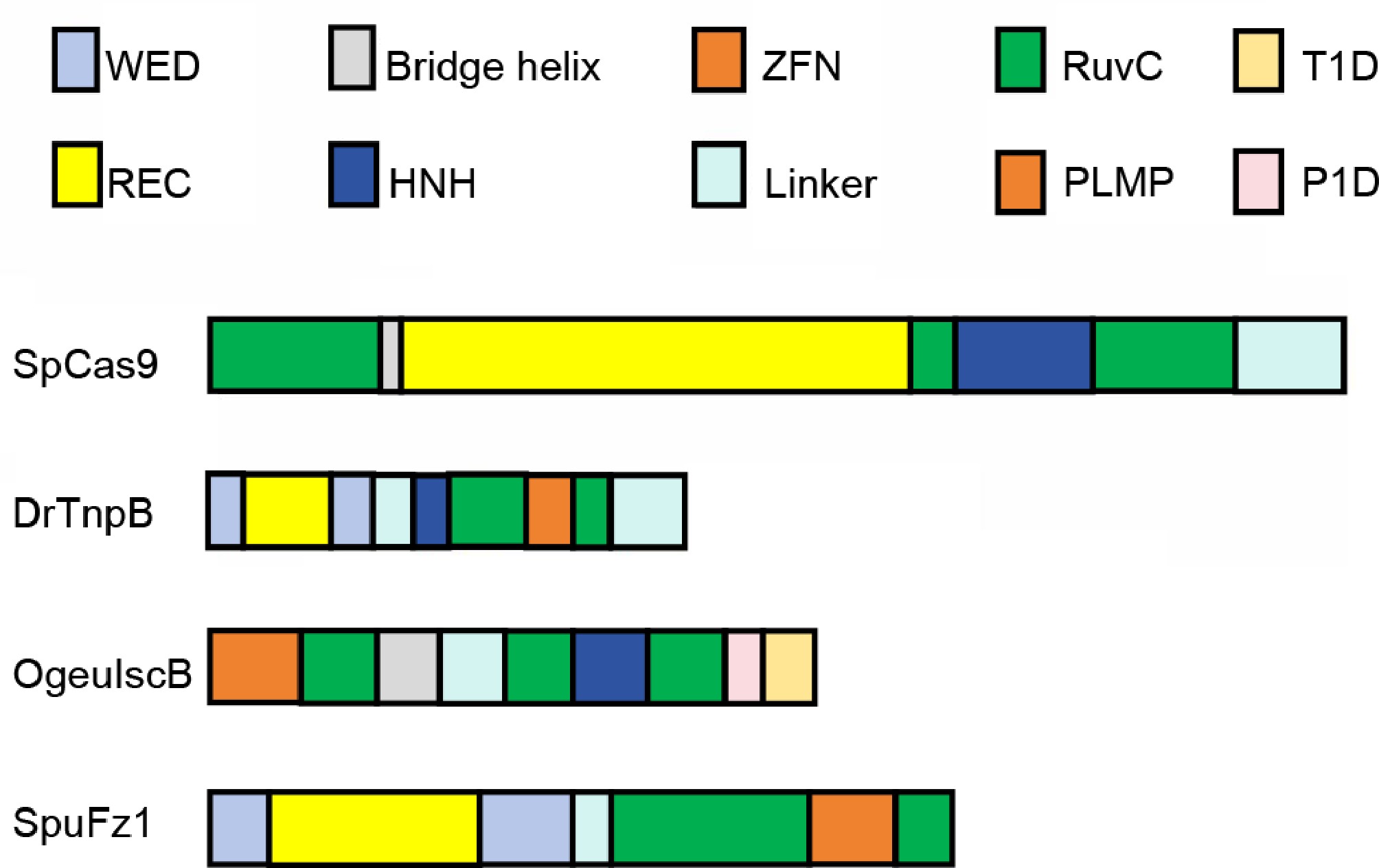
Figure 1.
Common structural domains of Cas9, TnpB, IscB, and Fanzor. WED, wedge domain; REC, recognition domain; RuvC, RuvC domain; ZFN, zinc-finger domain. All sequences are drawn approximately to scale.
-
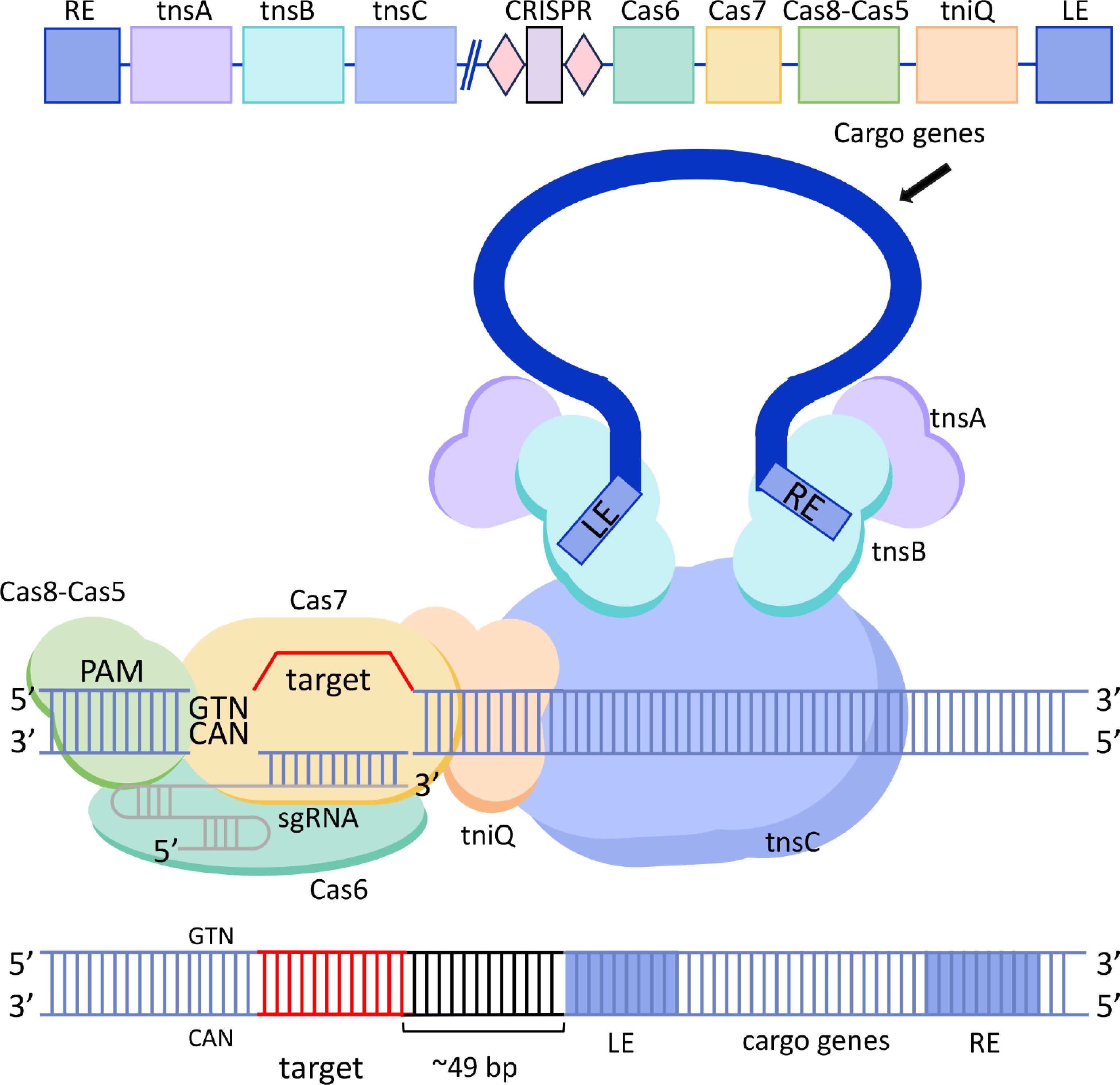
Figure 2.
Model of excision and targeted insertion of CRISPR/Cas systems (types I-F). RNA-guided TniQ–Cas complexes recruit the non-sequence-specific DNA-binding protein TnsC to the target site, inducing the excision of the transposon from its donor site and its targeted integration at a fixed distance downstream of DNA-bound TniQ–Cas.
-
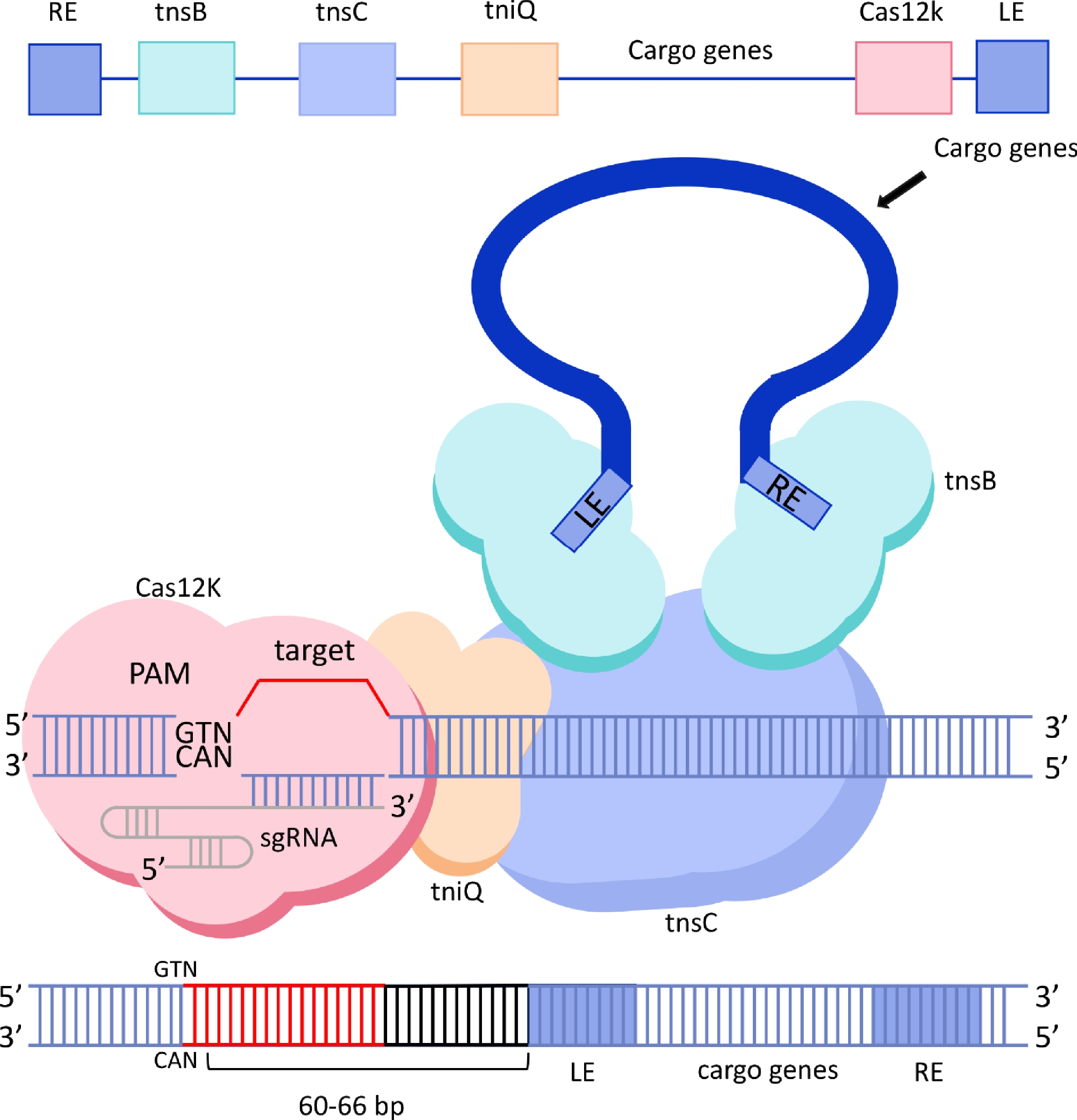
Figure 3.
Model of excision and targeted insertion of CRISPR/Cas systems (types V–K) . The Cas12k–TnsB–TnsC–TniQ complex directs the integration of donor DNA 60–66 bp downstream of the protospacer-adjacent motif (PAM). The inserted sequence, flanked by left-end (LE) and right-end (RE) transposon terminal repeats, results in a 5-bp target-site duplication upon integration.
-
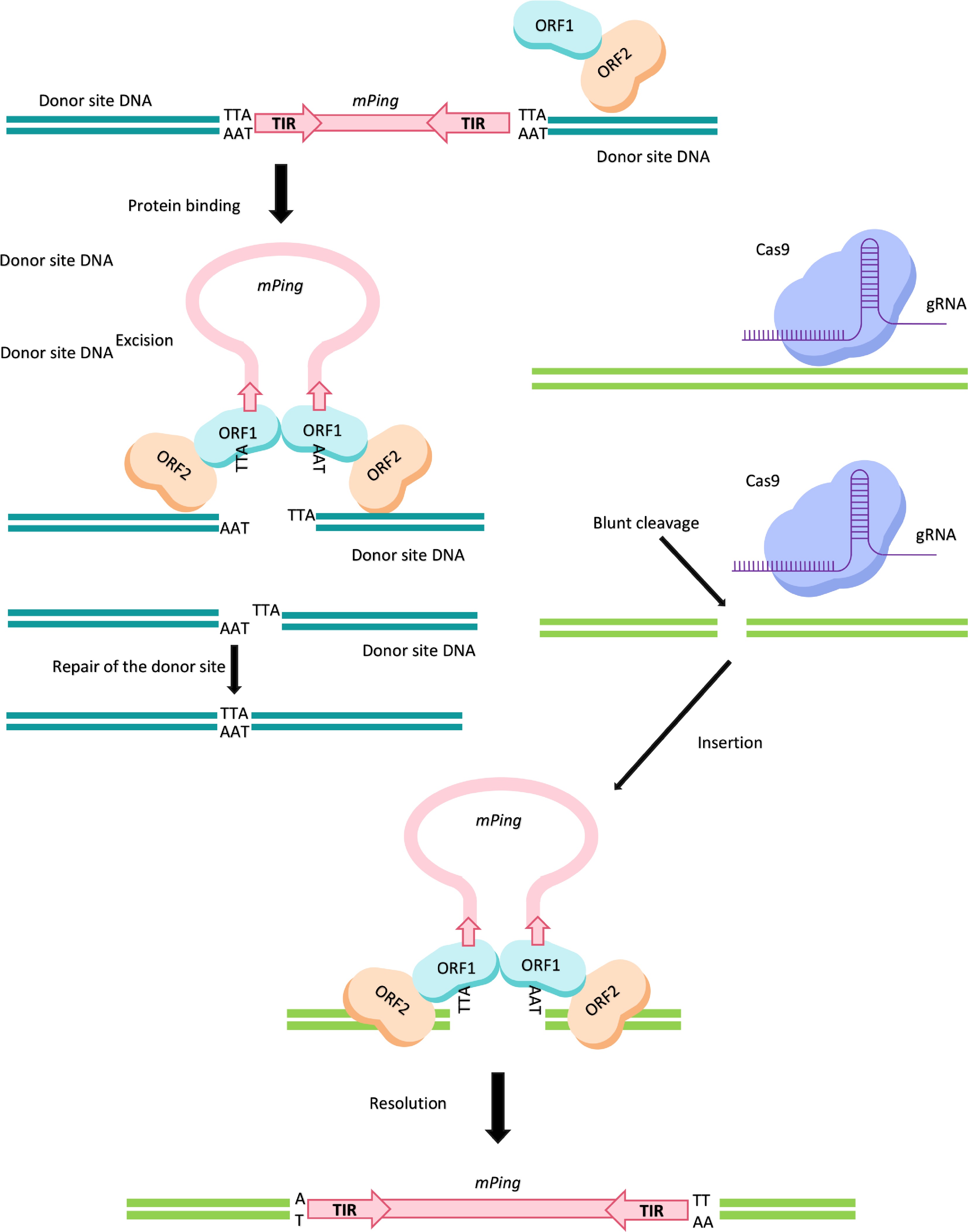
Figure 4.
Model of excision and targeted insertion of mPing–Cas9. The open reading frame 1 (ORF1) and ORF2 proteins, encoded by the Pong transposon, associate with the mPing element to form a functional transposition complex. This complex is recruited to double-strand breaks generated by Cas9-mediated cleavage, where it catalyzes mPing integration. Mechanistically, ORF1 binds specifically to at least 15 bp of the mPing terminal inverted repeat (TIR) sequence, while ORF2 is responsible for the subsequent excision and insertion of the transposon. Excision occurs precisely at the flanking nucleotide sites (TTA or TAA) of the donor DNA.
-
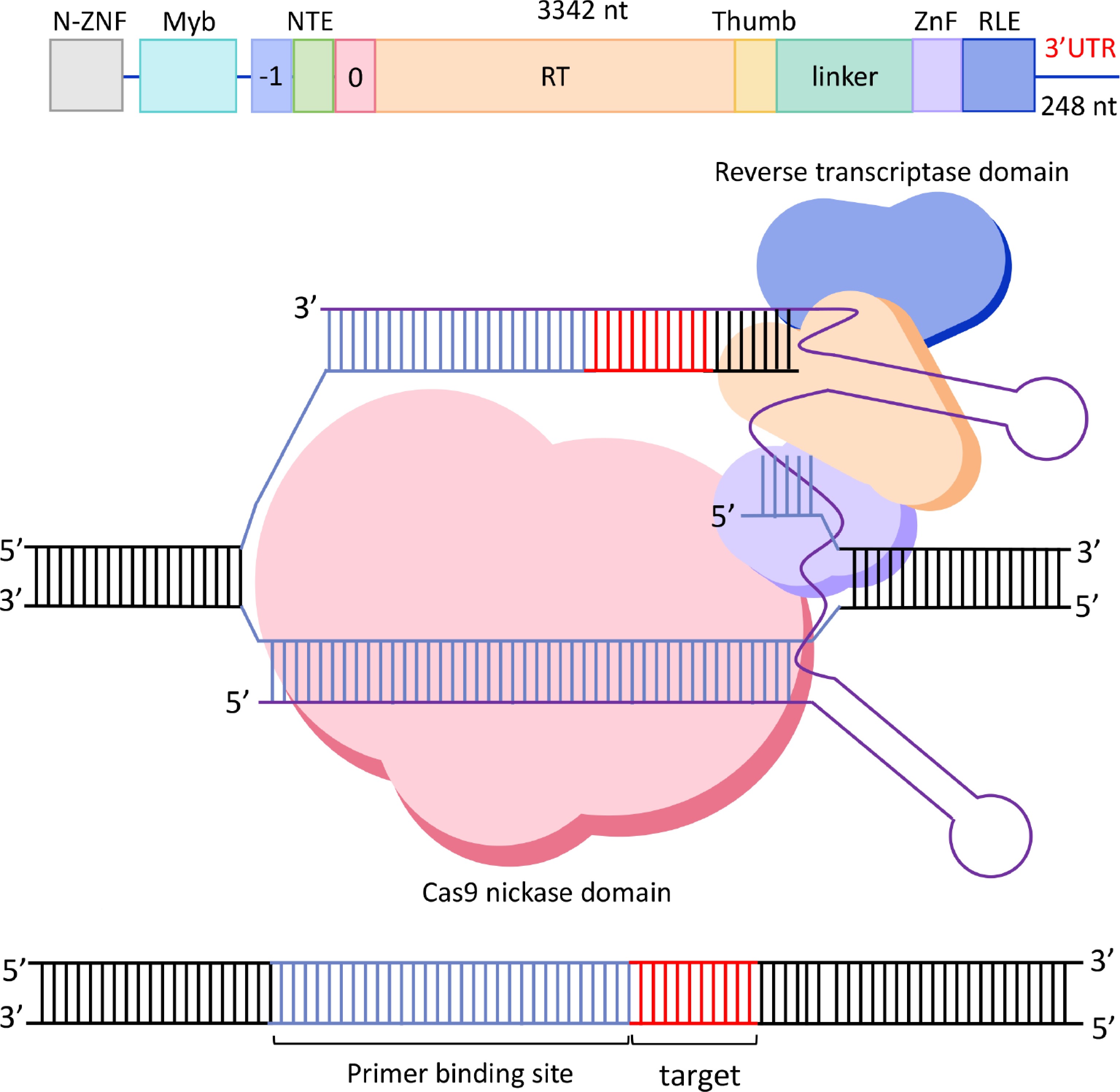
Figure 5.
Domains of the R2Bm retrotransposon and diagram illustrating target-primed reverse transcription (TPRT). ZnF, zinc finger; NTE, N-terminal extension; R, reverse transcriptase; RLE, restriction-like endonuclease.
-
Characteristics Cas9 TnpB and IscB Fanzor Plant genome editing Size ~1,000–1,400 aa (e.g., SpCas9: 1,368 aa) ~400–500 aa (TnpB);
~350–450 aa (IscB)~400–600 aa Delivery advantage: easier packaging into size-limited vectors (e.g., AAV, plant viral vectors); suitable for multiplex editing Guide RNA crRNA + tracrRNA (or fused sgRNA) Single ωRNA (simpler structure) Single ωRNA (eukaryotic origin) Simplified design: easier expression and optimization in plants PAM specificity Stringent (e.g., SpCas9: NGG) Relaxed (e.g., TTN, NG) Moderately relaxed
(e.g., T-rich)Expanded targeting scope: enables editing of genomic regions previously inaccessible due to PAM constraints Cleavage pattern Blunt-ended DSB Staggered DSB (5-nt overhang) Staggered DSB Potential for precise integration: staggered ends may facilitate homologous recombination or specific repair pathways System origin Bacterial CRISPR immune system Prokaryotic transposon (IS200/IS605) Eukaryotic transposon (first eukaryotic-derived programmable nuclease) Eukaryotic compatibility (Fanzor): may reduce plant cytotoxicity and holds potential for organellar genome editing Immunogenicity High (bacterial origin; may trigger plant immune responses) Potentially lower (still prokaryotic-derived) Likely lowest (eukaryotic origin; more 'familiar' to plant cells) Improved editing efficiency: reduced suppression by plant defense responses crRNA, CRISPR RNA; tracrRNA, transactivating CRISPR RNA; PAM, protospacer adjacent motif; DSB, double-strand break; aa, amino acid. Table 1.
Summary of compact transposon-encoded editors.
-
TnpB PAM or TAM Species Engineering strategy Mutation efficiency Spot Ref. ISYmu1 TTGAT Arabidopsis protoplasts and plants Wild type 0.1%–4.2% in protoplasts;
8.5% in plantsDelivery with tobacco rattle virus; transgene-free editing [30] ISYmu1 TTGAT Rice Wild type 6.3%–4.5% Produces edited plants with no off-target mutations [27] Ymu1 TTGAT Arabidopsis plants Mutated amino acids 8.2%–24.1% Virus-mediated delivery without Tissue culture [46] eTnpBc TTGAT Tobacco Mutated amino acids 100% Virus-mediated delivery without Tissue culture [31] eTnpBe TTGAT pepper Mutated amino acids 10% High editing efficiency [24] eTnpBe TTGAT rice Mutated amino acids 29.3% High editing efficiency [24] eTnpBc TTGAT Tobacco Mutated amino acids 55% High editing efficiency [24] ISDra2 TTGAT Arabidopsis protoplasts Wild type 0–4.8% – [30] ISDra2 TTGAT Rice Wild type 5.6–41.9% Produces edited plants with no off-target mutations [27] ISDra2 TTGAT Rice Wild type 33.6% Produces edited plants [26] ISAam1 TTTAA Arabidopsis protoplasts Wild type 0%–0.3% – [30] ISAam1 TTTAA Rice Wild type 4.5%–6.3% – [27] ISAam1(N3Y) TTTAA Soybean hairy roots Mutated amino acids 1.5% – [47] ISAam1(T296R) TTTAA Soybean hairy roots Mutated amino acids 1.3% – [47] TnpB TTGAT Arabidopsis Wild type 14% Works in multiple species [12] IsDge10 TTAT Rice Mutated amino acids 4.2%–25% Multiple sites edited [28] enIscB TGCTAA Rice Combination of mutated IscB and ωRNA 41.9% Fused to T5E [44] enIscB CAGGAA Rice protoplasts Mutated amino acids and truncated ωRNA 2.05%–8.3% – [28] SpuFz1 CATA Rice protoplasts Wild type 0 No activity observed [28] NlovFz2-STU CCG Rice Uses STU 2.8% in rice protoplast;
22.5%–50.0% in riceUses the enhanced editing efficiency of STU [48] SpuFz1-STU CATA Rice Uses STU 1.4% in rice protoplasts; 24.8%–34.6% in rice Uses the enhanced editing efficiency of STU [48] MmeFz2-STU TAG Rice Uses STU 0.9% in rice protoplasts; 17.8%–18.8% in rice Uses the enhanced editing efficiency of STU [48] GtFz1-STU TTAAN Rice protoplasts Uses STU 0 – [48] PAM, protospacer adjacent motif; TAM, target adjacent motif; STU, single-transcript unit. Table 2.
Summary of compact transposon-based systems used in plants.
-
System CASTs (Type I–F) CASTs (Type V–K) TATSI (mPing-Cas9) TPRT STITCHR Organism Vibrionaceae[14,62] Cyanobacteria[15,62] Rice[13] Bombyx mori[16] Taeniopygia guttata[63] Targeting strategy RNA-guided[14,62] RNA-guided[15,62] RNA-guided[13] RNA-guided[16] RNA-guided[63] Transposition mechanism Cut-and-paste[14,62] Cut-and-paste[15,62] Cut-and-paste[13] Cut-and-paste[16] Cut-and-paste[63] Targeting effector Cas8–Cas5, Cas6, Cas7,
and crRNA[14,62]Cas12k, tracrRNA, and crRNA (sgRNA)[15,62] Cas9, dCas9[13] Cas9, dCas9[16] Cas9, dCas9[63] PAM CC[14,62] GT[15,62] NGG[13] NGG[16] NGG Transposase TnsA and TnsB[14,62] TnsB[15,62] mPing[13] R2 retrotransposon[16] R2 retrotransposon[63] Integration efficiency 100% in E. coli BL21(DE3);
1% in HEK293T cells[57,62,64]95% in E. coli BL21(DE3);
< 1% in HEK293T cells[58,62,65]8.3% in Arabidopsis for 8.6-kb insert; 9.8% in soybean 9.8% for 1.5-kb insert[13] < 300 bp in vitro[16];
80% in human cells for
1.3-kb insert[66]6%–12% in HEK293T cells for 1-bp to 12.7-kb insert[63] Highlight Highly specific targeting with complex effector composition Compact yet sophisticated targeting effector composition Insertion into specific target precisely R2 can be retargeted with CRISPR/Cas9 and inserts small DNA fragments at the cleavage site in vitro R2 can be retargeted with CRISPR/Cas9 and adds a single base to 12.7 kb DNA fragments at the cleavage site in vivo Table 3.
Summary of the molecular and functional characteristics of programmable transposon systems.
-
Plant type Representative species Transformation/editing efficiency Key achievement Ref. Model and bioenergy dicots Russian dandelion, Coronilla varia, Platycodon grandifloras, Atractylodes macrocephala, Codonopsis pilosula, Dihuang, Cannabis High efficiency; demonstrated CRISPR/Cas9 editing Established CDB as a rapid, efficient platform for root-based metabolic engineering [103,105,
112,113]Tuber crops Sweetpotato (Ipomoea batatas) High; CRISPR-mediated editing efficiency up to 100% in some cultivars Overcame severe genotype dependence, enabling editing of multiple farmer-preferred varieties [103] Woody perennials Ailanthus altissima, Aralia elata, Clerodendrum chinense Moderate to high transformation rates Provided a viable transformation method for tree species where tissue culture is extremely difficult or non-existent [103] Succulent dicots Kalanchoe
(Kalanchoe blossfeldiana)Exceptionally high, up to 74% transformation efficiency and 70% editing efficiency Achieved the highest reported efficiency for any succulent, enabling functional genomics in ornamentals [104] Succulent monocots Snake plant (Sansevieria trifasciata) Moderate, ranging from 3.9% to 7.8% Reported the first-ever efficient genetic transformation system for this globally important ornamental monocot [104] Table 4.
Application of the CDB system in diverse plant species.
Figures
(5)
Tables
(4)