-
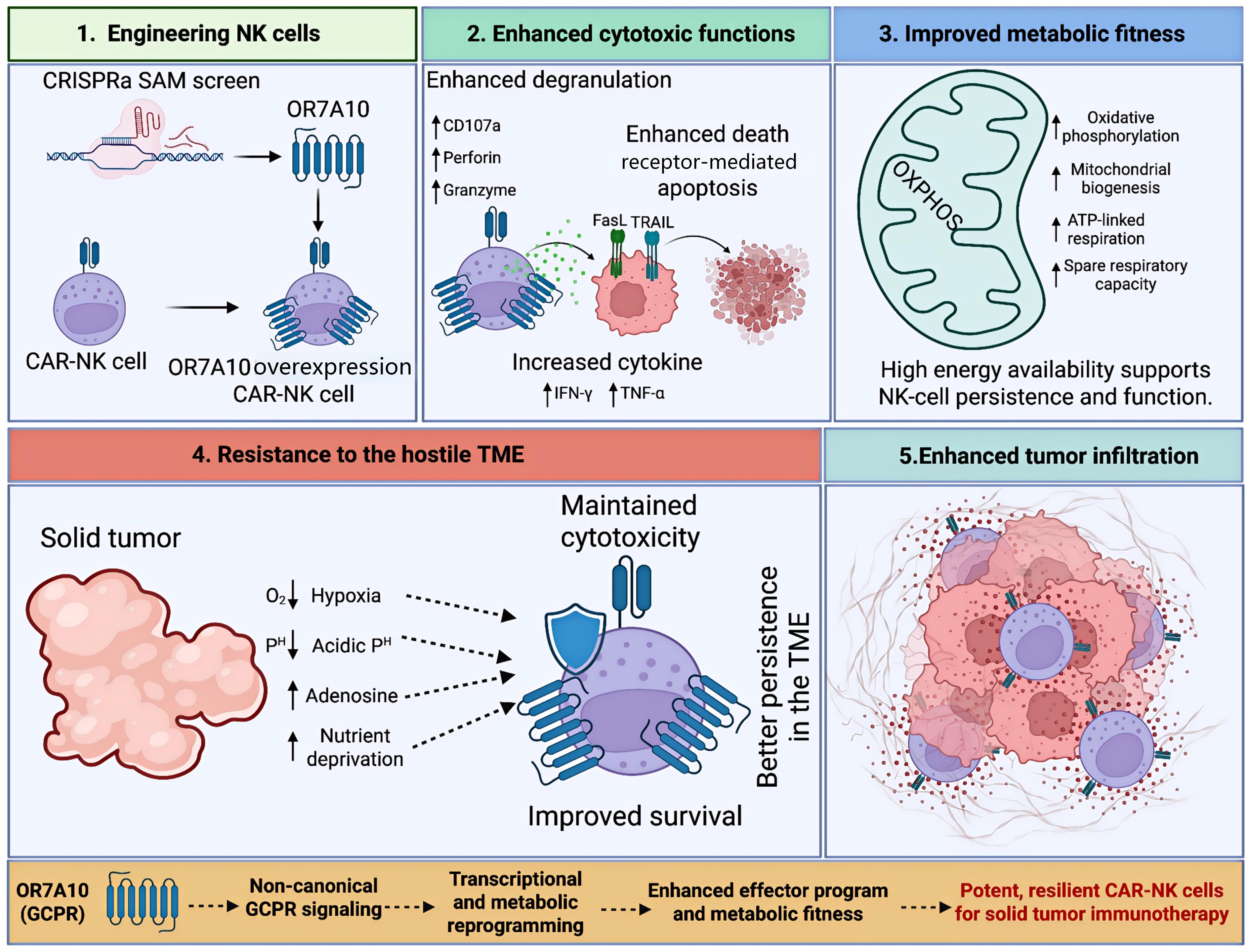
Figure 1.
OR7A10 engineering enhances CAR-NK cell effector function, metabolic fitness, and resistance to the tumor microenvironment. Schematic illustration showing the therapeutic impact of OR7A10 overexpression in CAR-NK cells. (1) A CRISPRa SAM screening strategy identified OR7A10 as a candidate GPCR for NK-cell engineering, leading to the generation of OR7A10-overexpressing CAR-NK cells. (2) OR7A10-engineered CAR-NK cells exhibit enhanced cytotoxic activity characterized by increased degranulation markers (CD107a), elevated perforin and granzyme release, enhanced death receptor–mediated apoptosis through FasL/TRAIL signaling, and increased cytokine secretion including IFN-γ and TNF-α. (3) OR7A10 expression promotes improved metabolic fitness through increased oxidative phosphorylation (OXPHOS), mitochondrial biogenesis, ATP-linked respiration, and spare respiratory capacity, thereby supporting sustained NK-cell persistence and function. (4) OR7A10-engineered CAR-NK cells demonstrate resistance to the hostile tumor microenvironment (TME), maintaining cytotoxicity and survival under conditions of hypoxia, acidic pH, elevated adenosine, and nutrient deprivation, resulting in improved persistence within the TME. (5) Enhanced tumor infiltration by OR7A10-overexpressing CAR-NK cells facilitates improved antitumor activity in solid tumors. Collectively, OR7A10-mediated non-canonical GPCR signaling drives transcriptional and metabolic reprogramming, leading to enhanced effector function, metabolic resilience, and the generation of potent CAR-NK cells for solid tumor immunotherapy.
-
NK cell engineering strategy Cytotoxicity Persistence TME resistance Engineering complexity Safety concerns OR7A10-enhanced CAR-NK[1]. Strongly enhanced High Strong resistance to hypoxia, acidity, and adenosine Moderate Long-term GPCR effects unknown IL-15-armored CAR-NK[12] Enhanced Very high Moderate Moderate–high Cytokine-related toxicity Checkpoint-edited NK cells[12] Enhanced Improved Improved High (CRISPR-based) Off-target editing risk Metabolically engineered NK cells[12] Enhanced under stress Improved Strong High Metabolic dysregulation Memory-like NK cells (IL-12/15/18)[12] Moderate-high Moderate Partial Low-moderate Generally safe iPSC-derived CAR-NK[12] Potent High Variable High Genomic instability concerns Multi-specific/logic-gated CAR-NK[12] Highly specific Variable Improved Very high Off-target signaling complexity Table 1.
Comparison of OR7A10-engineered CAR-NK cells with other advanced NK cell-based immunotherapy strategies for solid tumors, highlighting differences in cytotoxicity, persistence, TME resistance, engineering complexity, and safety considerations.
Figures
(1)
Tables
(1)