-
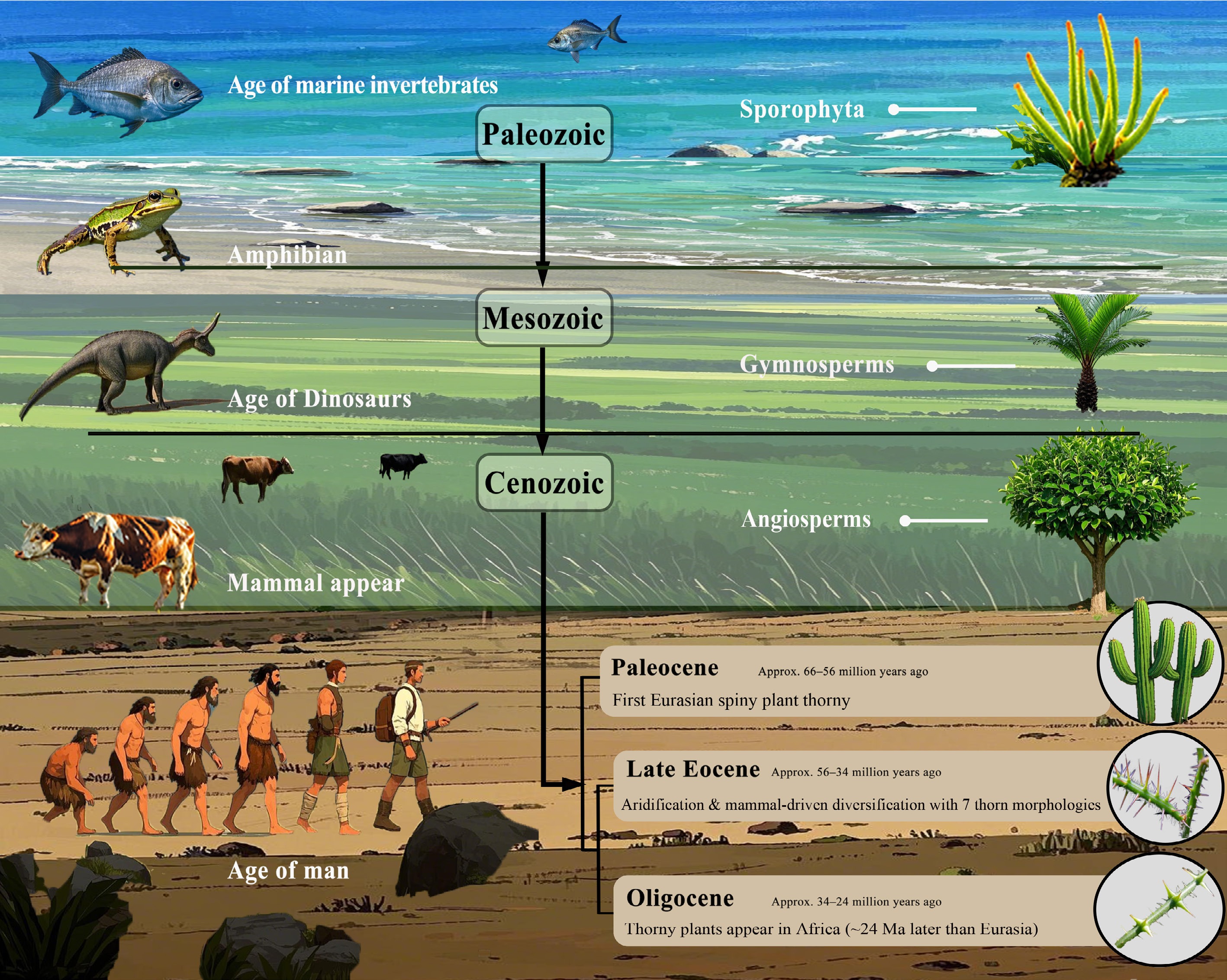
Figure 1.
Coevolution of plants and other organisms drives the adaptive evolution of thorns.
-
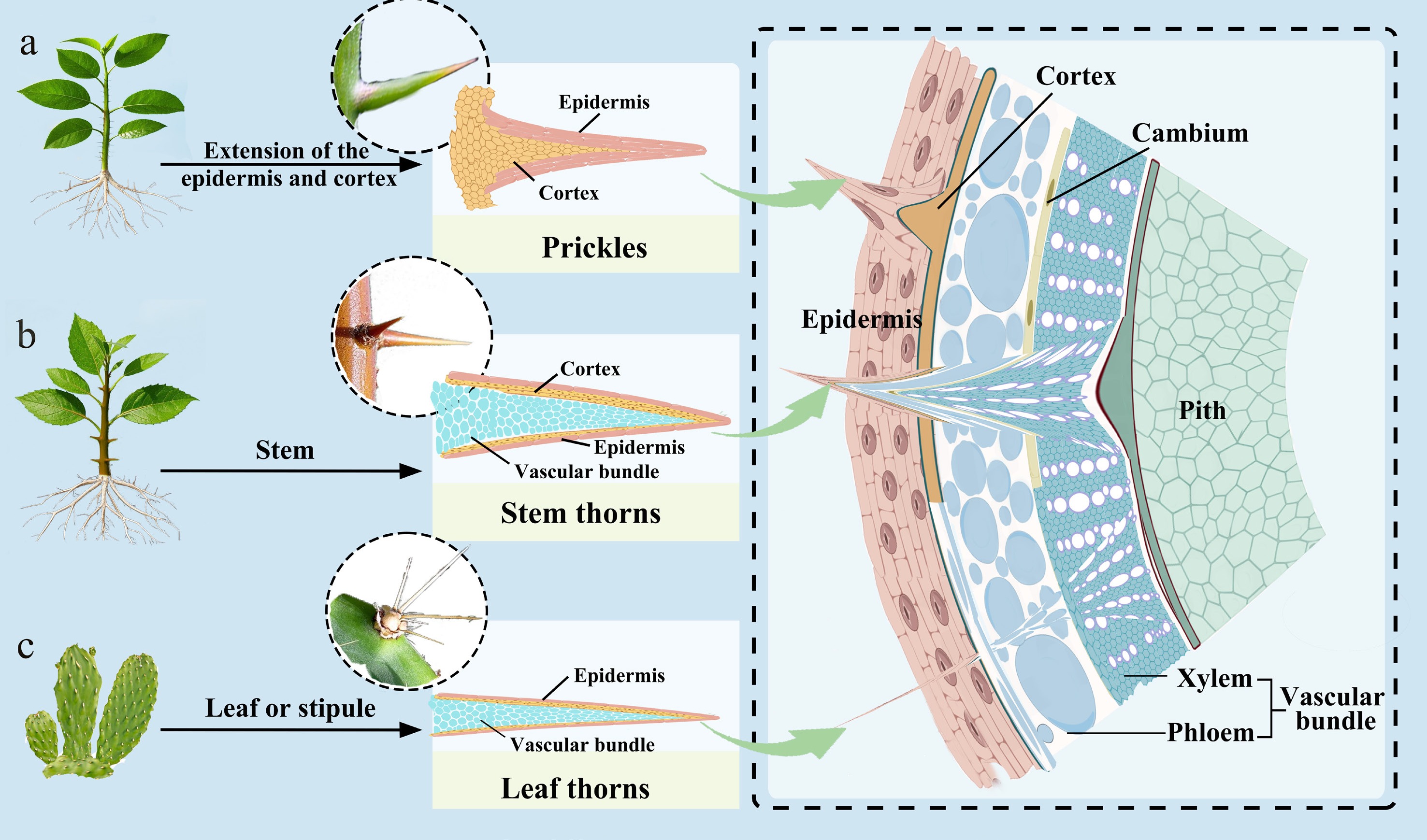
Figure 2.
Tissue structure of different types of thorns. (a) Prickles originate from the epidermis and superficial cortical tissues of the stem and are irregularly conical or hooked in shape. They have a thick cuticle on the surface and contain densely packed lignified cells within, lacking vascular tissue. (b) Stem thorns originate from the metamorphosis of branches and have vascular tissue and fully developed xylem within them. (c) Leaf thorns are modified leaves or stipules and usually retain vascular tissue, although their organization differs from that of typical laminar leaves.
-
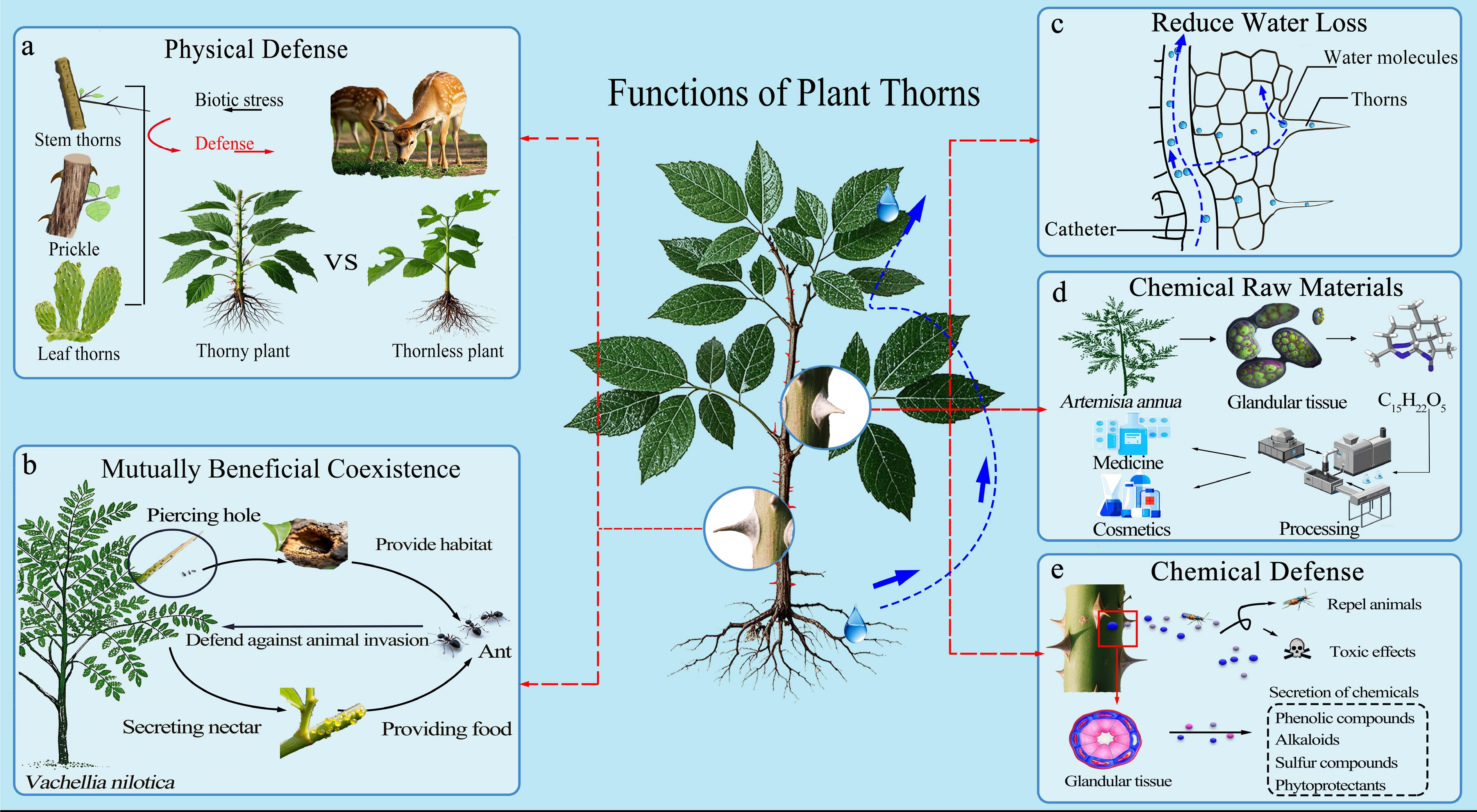
Figure 3.
Diverse ecological and economic functions of plant thorns. (a) Physical defense: Various types of thorns serve as both visual deterrents and mechanical barriers, thereby reducing herbivory. (b) Symbiotic interactions: In Acacia species, thorns participate in mutualistic associations with ants. The thorns provide nesting sites and are often associated with extrafloral nectaries, whereas the ants protect the host plant from herbivores. (c) Water conservation: By reducing leaf surface area and transpiration, thorns contribute to minimizing water loss, while water continues to be transported upward from the roots. (d) Utilization of metabolites: Secondary metabolites stored in glands associated with thorns can be exploited for the production of spices, essential oils, pharmaceuticals, and food additives. (e) Chemical defense: Glandular thorns synthesize and accumulate diverse secondary metabolites, which have repellent or toxic effects to herbivores.
-
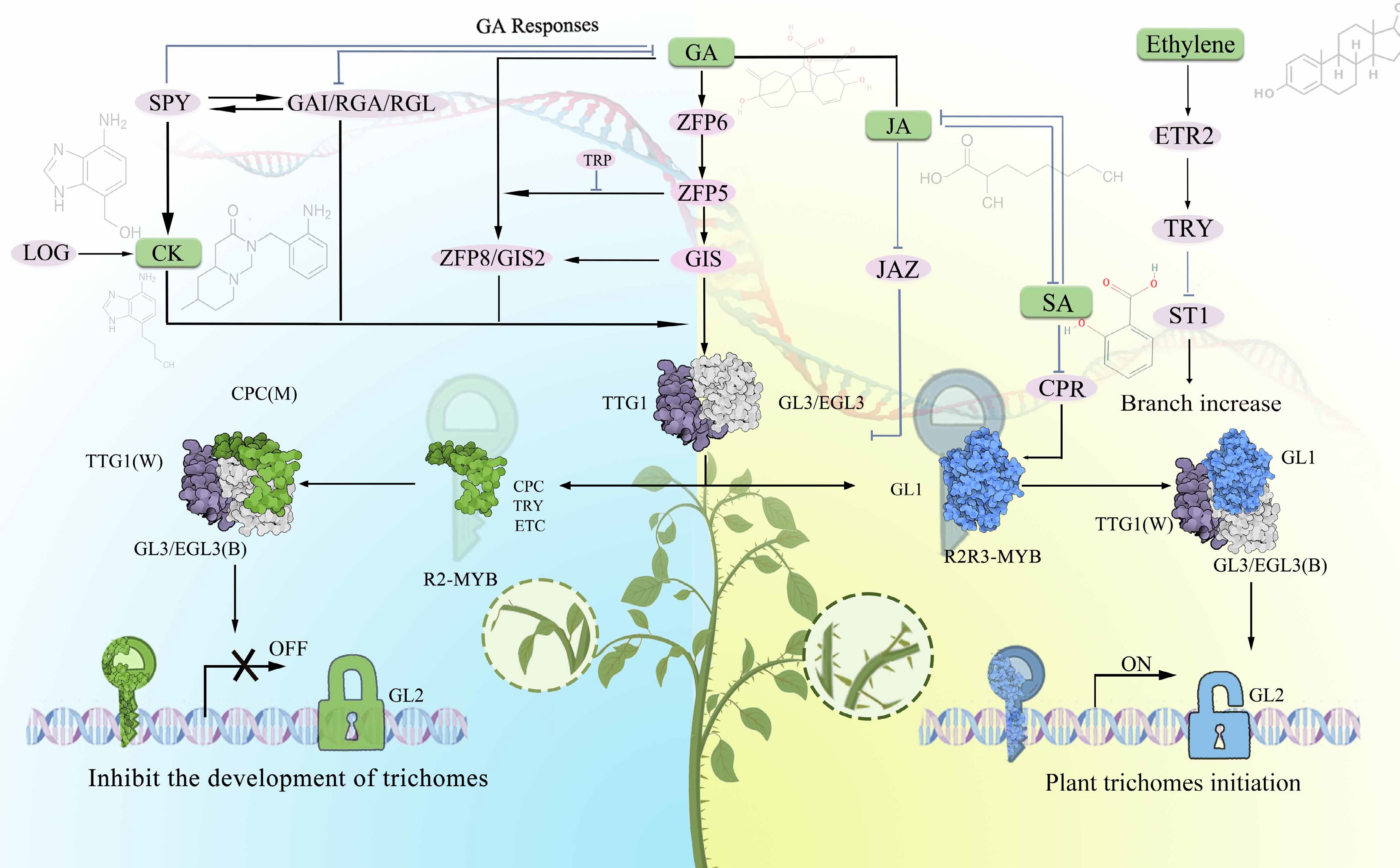
Figure 4.
Molecular regulatory model of plant trichomes' differentiation and development.
-
Species Thorn type Key regulator Regulatory role Experimental evidence Regulatory relationship Ref. Rosa rugosa Prickles RrCPC Negative regulatory factor Functional validation (transgenic in Arabidopsis) RrCPC and MBW complex exhibit significant competitive inhibitory effects [52] Rosa roxburghii Prickles RrTTG1 Positive regulatory factor Functional validation (transgenic in Arabidopsis) Interaction between RrTTG1 and RrEGL3 [53] Oryza sativa L. Trichomes OsSPL10 Positive regulatory factor Functional validation (gene editing, knockout, hybrid analysis) OsSPL10 positively regulates trichome development through auxin signaling pathways [54] Arabidopsis thaliana Trichomes GLABRA2 Positive regulatory factor Functional validation (transgenic analysis) GL2 determines trichome cell fate downstream of the MBW complex [55] TRICHOMELESS2 Negative regulatory factor Functional validation (overexpression and knockout in Arabidopsis) TCL2 competes with GL1 for binding to GL3/EGL3, inhibiting trichome initiation [45] GCN5 Positive regulatory factor Functional validation (overexpression and knockout in Arabidopsis) GCN5 promotes trichome initiation through histone acetylation [56] GLABROUS INFLORESCENCE STEMS (GIS) Positive regulatory factor Functional validation (overexpression and knockout in Arabidopsis) GIS promotes trichome initiation and enhances GL1 expression in transgenic Arabidopsis thaliana [57] TTG1 Positive regulatory factor Genetic evidence (genetic interaction analysis) TTG1, GL3, and GL1 form complexes in vivo to positively regulate the formation of trichomes [58] CPC Negative regulatory factor Functional validation (transgenic analysis) CPC negatively regulates the expression of GL2, and transgenic plants overexpressing the CPC gene exhibit the same phenotype as GL2 mutants [59] TRIPTYCHON Negative regulatory factor Functional validation (transgenic analysis) Inhibits trichome initiation through competitive inhibition within the MBW complex [60] GLASSY HAIR (GLH) Positive regulatory factor Functional validation (transgenic analysis) Involved in the metabolism or deposition of trichome cell wall components [61] Citrus reticulata Stem thorns THORN IDENTITY1, THORN IDENTITY2 Positive regulatory factor Functional validation (transgenic overexpression in citrus) Promotes the conversion of axillary branches into thorns [22] CENTRORADIALIS Negative regulatory factor Functional validation (transgenic overexpression in Citrus) CsCEN antagonizes TI1/TI2 and regulates the transition between thorn and branch identity [62] Solanum lycopersicum Trichomes SlCD2 Positive regulatory factor Genetic evidence (mutant phenotype analysis) CD2 is a major regulator of tomato epidermal cell function [63] SlMIXTA Positive regulatory factor Functional validation (overexpression) Primary metabolism can be reprogrammed to produce specialized metabolites and form trichomes as storage compartments [64] SlZFP8, SlZFP6 Positive regulatory factor Functional validation (overexpression and knockout) SlZFP8 is involved in the control of trichome elongation and SlZFP6 is a downstream target for the control of trichome elongation [65] SlARF3 Positive regulatory factor Genetic evidence (knockout) SlARF3 plays an important role in epidermal cell formation and differentiation [66] Zanthoxylum bungeanum Prickles ZaHDZ16 Positive regulatory factor Correlative evidence (gene structure and motif analysis) ZaHDZ16 is associated with thorns' development on branches [67] ZaMYB86 Negative regulatory factor Functional validation (transgenic in Arabidopsis) ZaMYB86 may regulate prickle development through hormone signaling pathways [68] Table 1.
Reported regulators and candidate genes associated with thorns' development, together with comparative evidence from trichome systems.
Figures
(4)
Tables
(1)