-
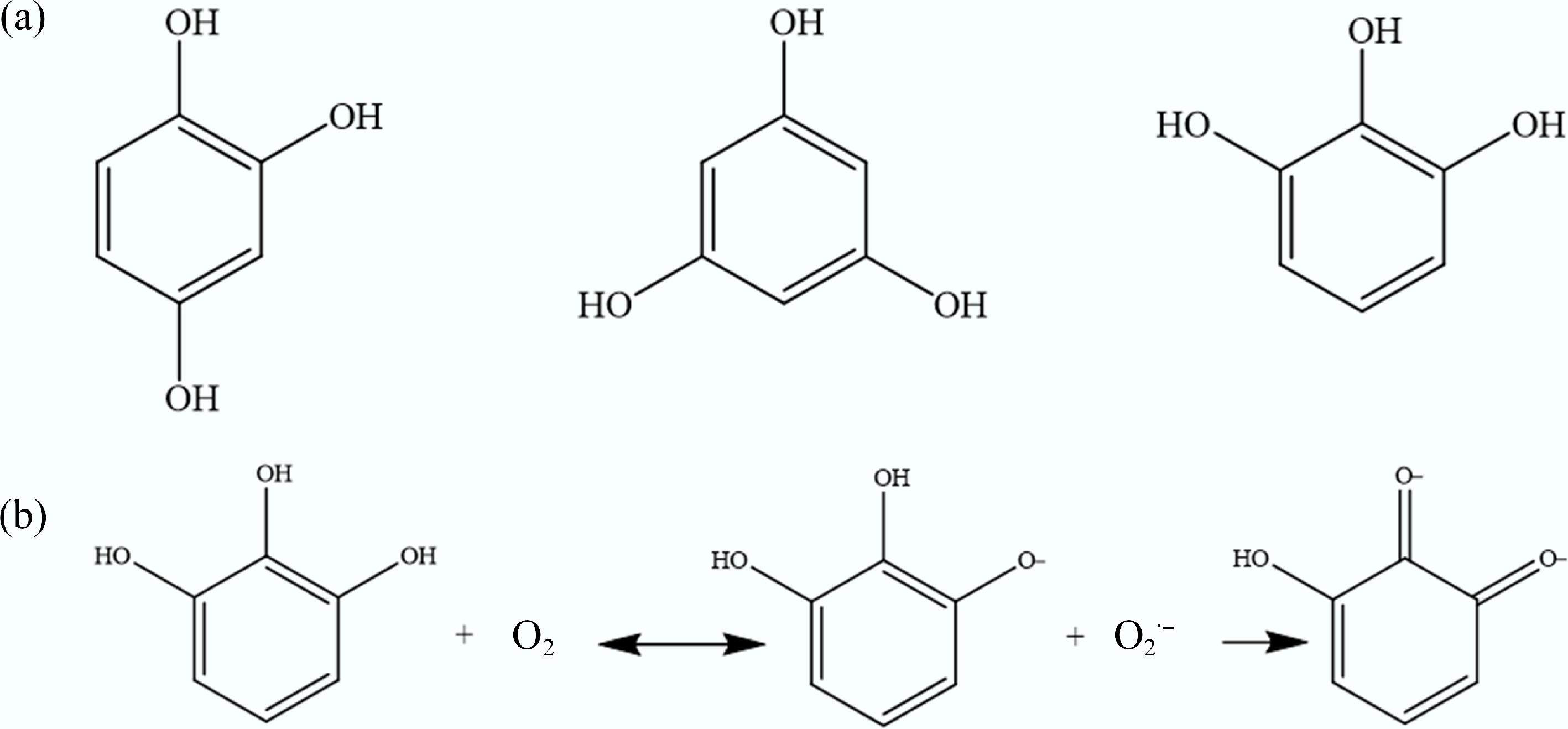
Figure 1.
(a) Structures of trihydroxybenzene and (b) the reaction of pyrogallol with oxygen.
-
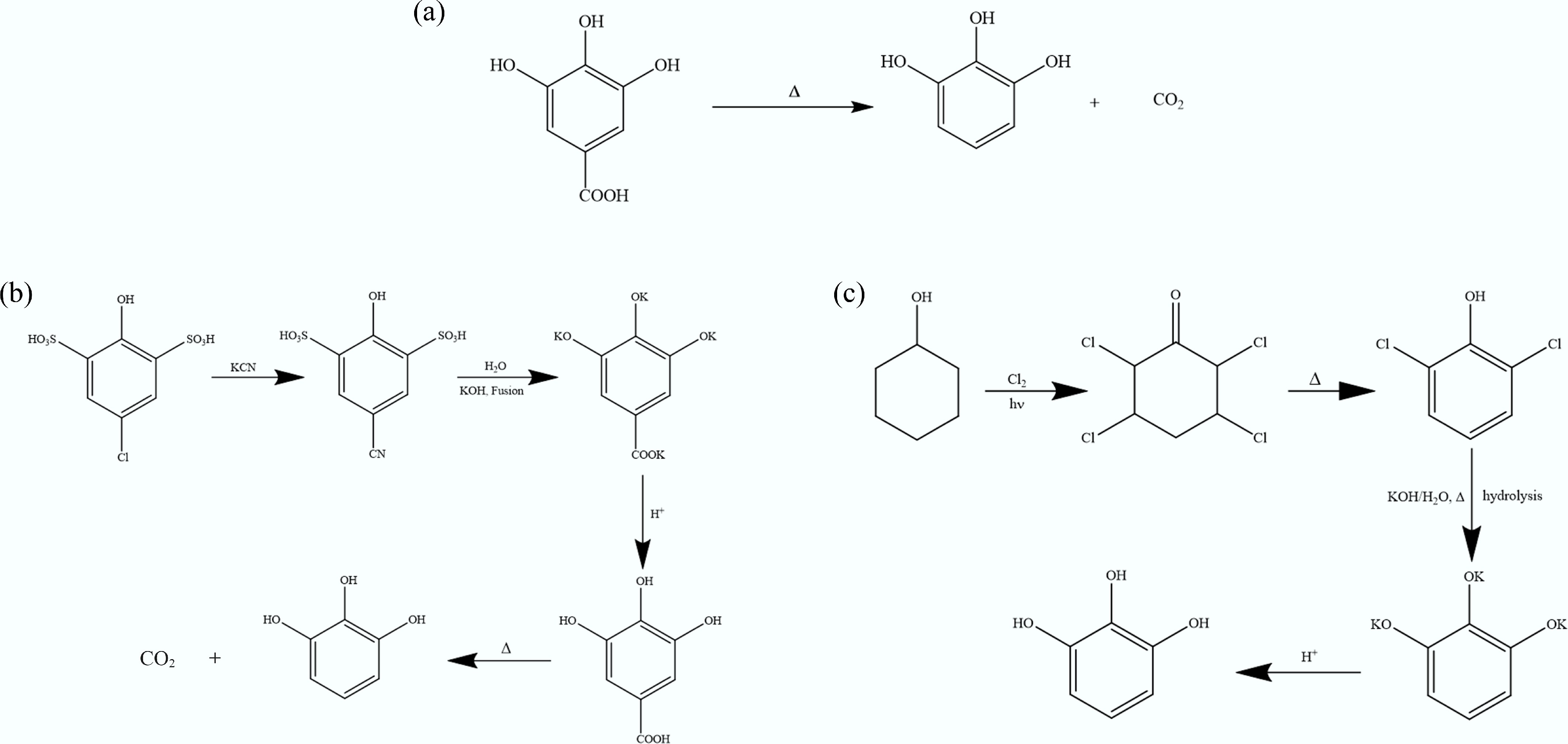
Figure 2.
Synthesis of pyrogallol from (a) gallic acid, (b) para-chlorophenoldisulfonic acid, and (c) cyclohexanol.
-
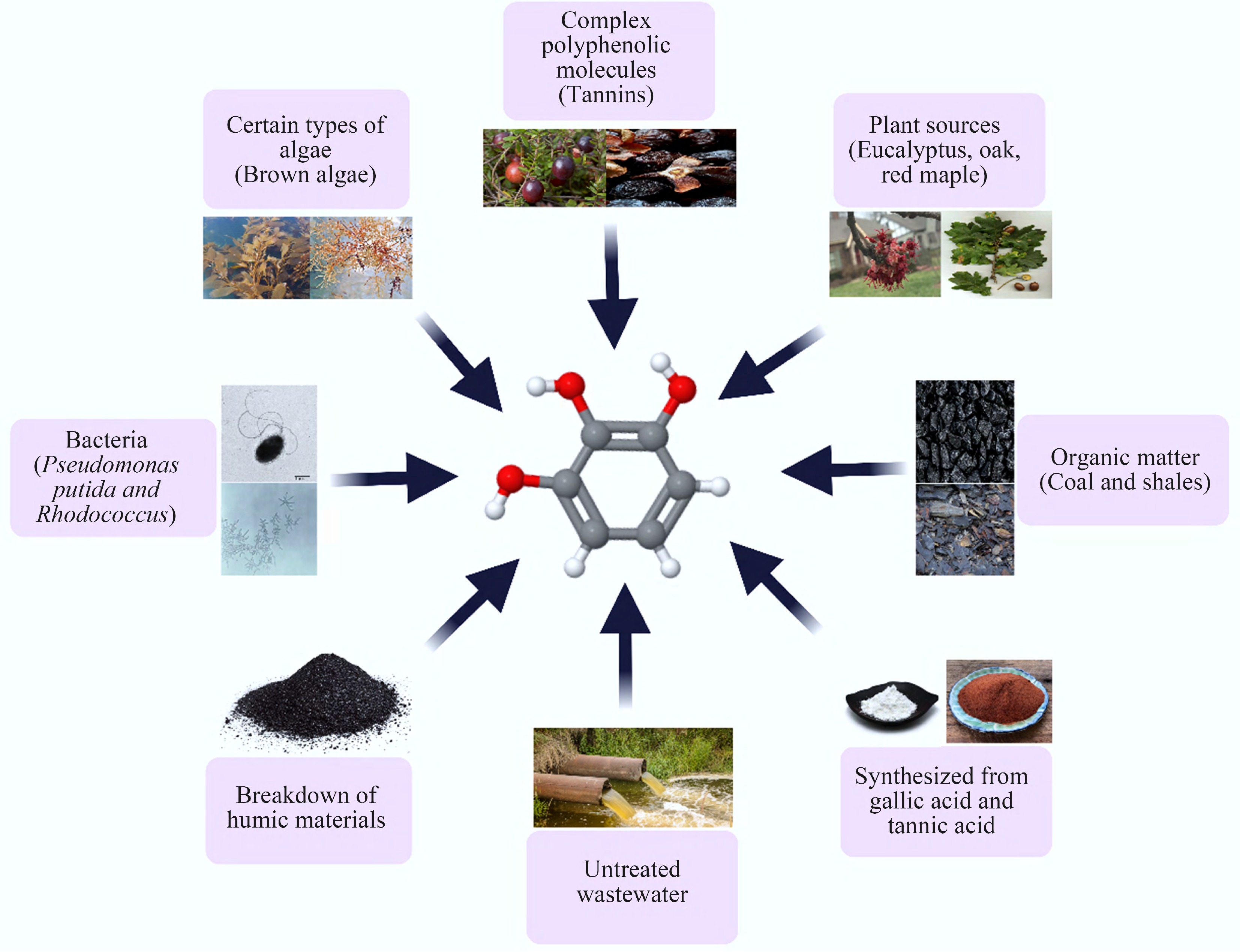
Figure 3.
Potential sources of pyrogallol in the environment.
-
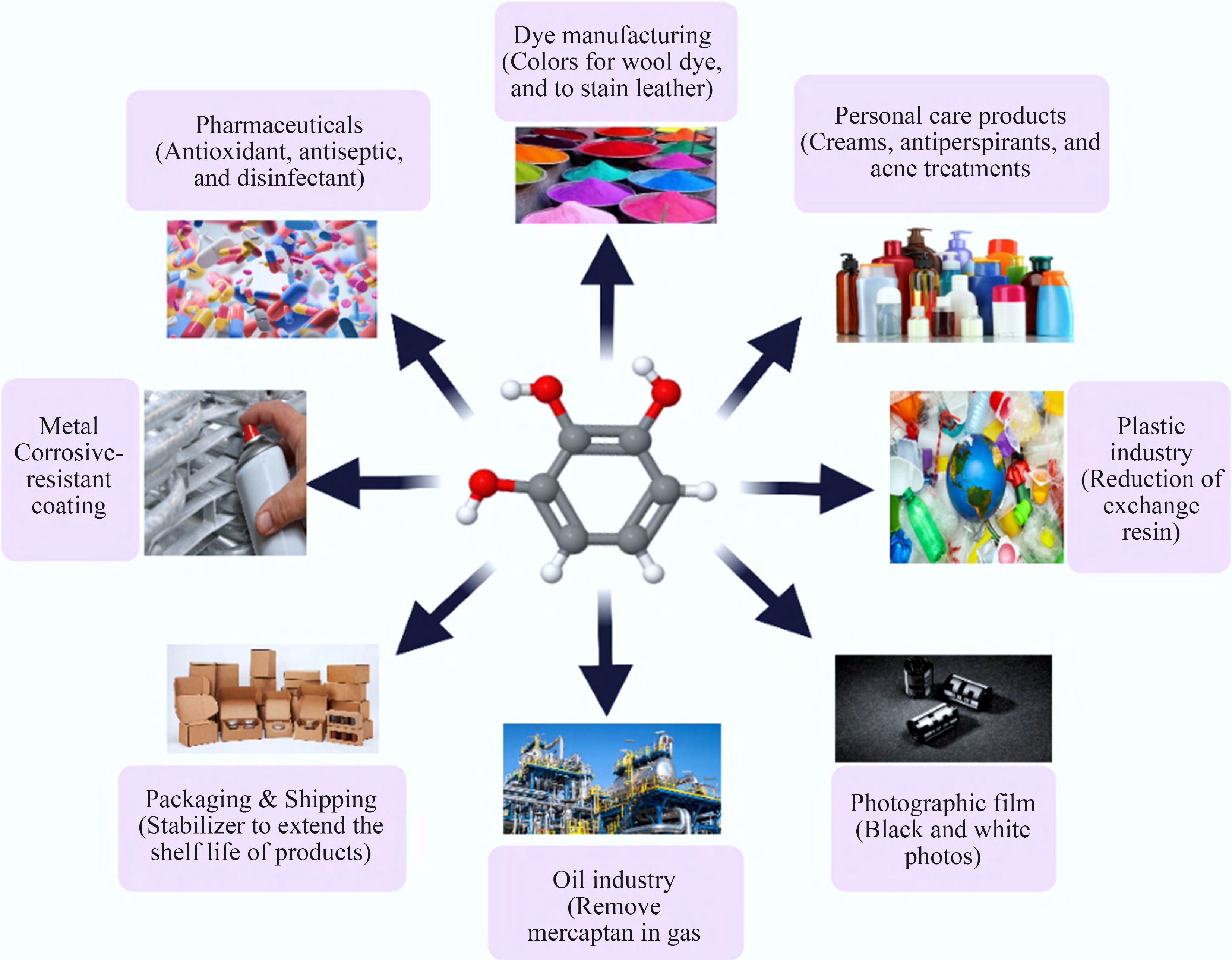
Figure 4.
Industrial applications of pyrogallol.
-
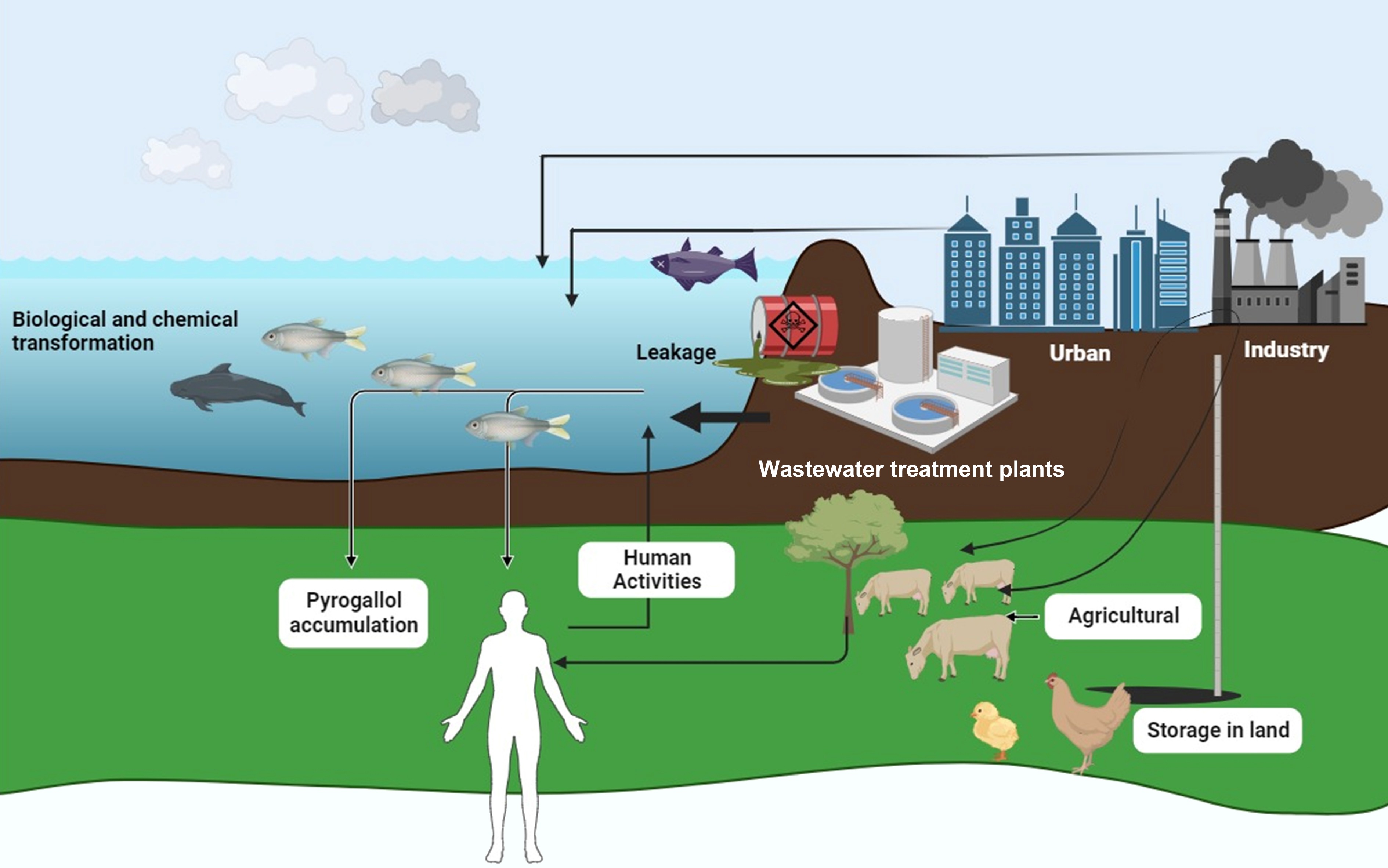
Figure 5.
Potential pathways of pyrogallol in the environment.
-
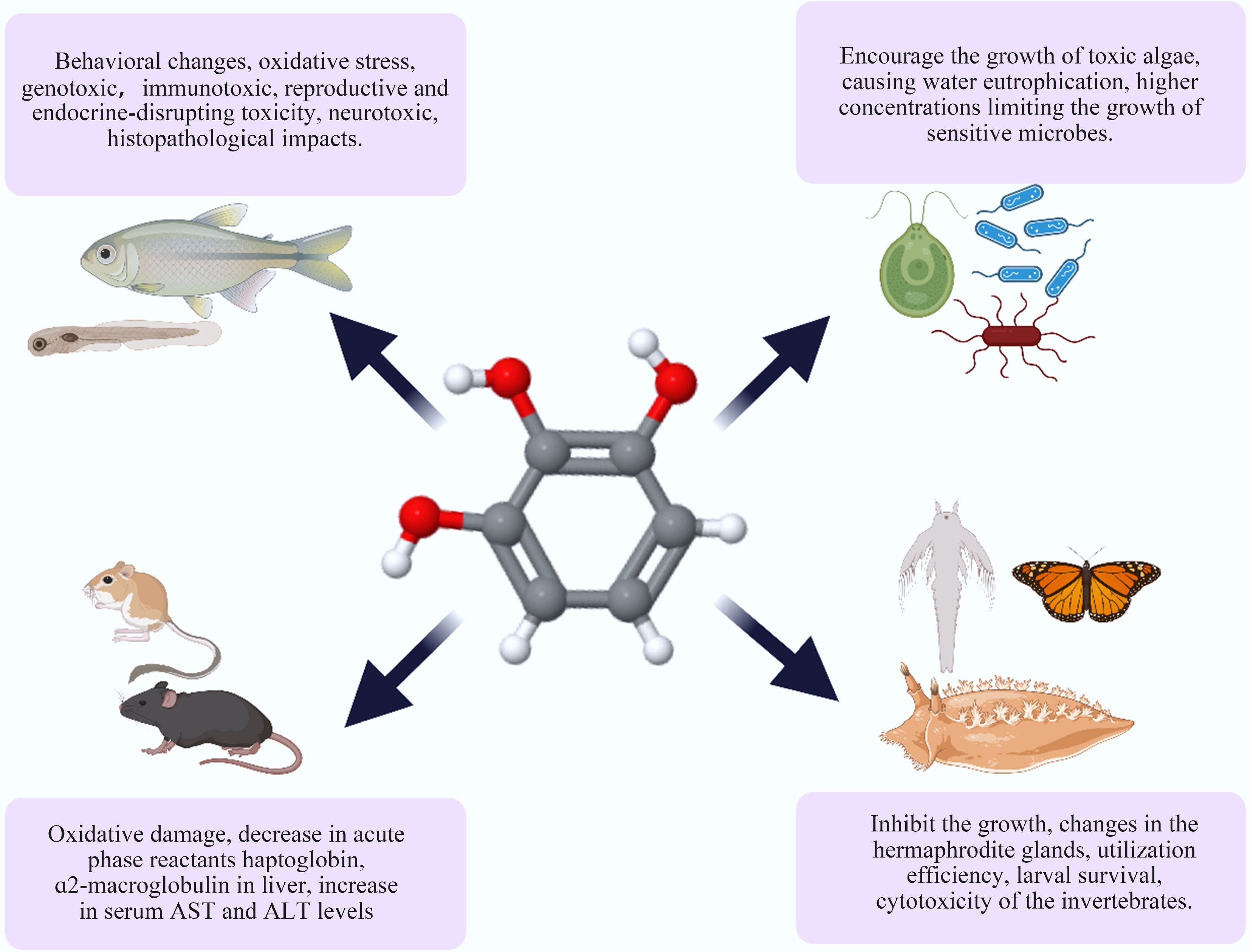
Figure 6.
Pyrogallol impacts both terrestrial and aquatic organisms.
-
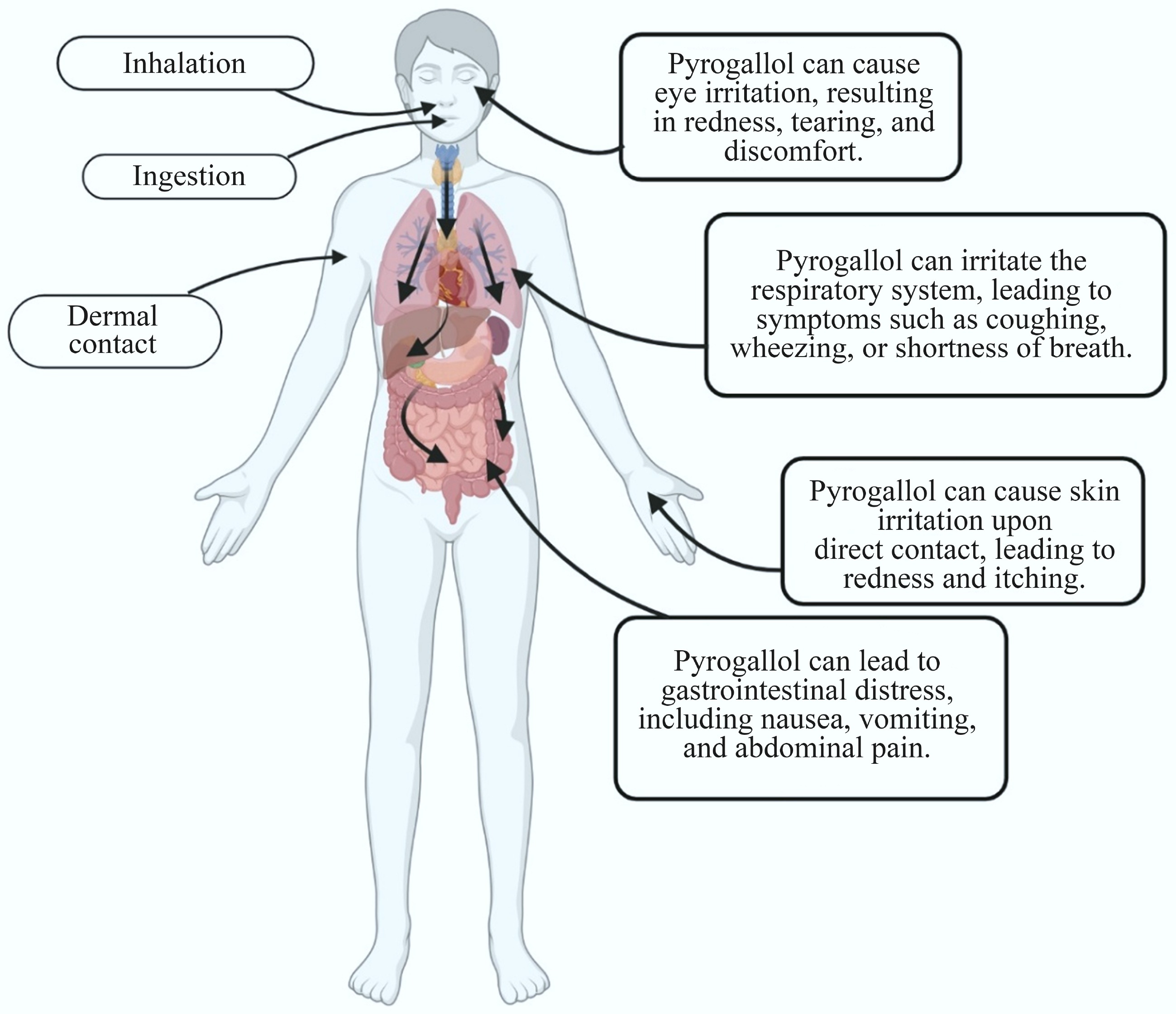
Figure 7.
Impacts of pyrogallol in vivo.
-
Concentration of pyrogallol Ref. 1 - Field study Tap water 0.012, 0.066, 0.119 mg/L Rao et al.[37] River water 0.012, 0.061, 0.121 mg/L Domestic wastewaters 1.19, 2.28, 3.54 mg/L Rajkumar & Kim[38] Industrial area 1.15, 2.46, 3.66 mg/L Sewage 1.00, 2.38, 3.52 mg/L 2 - Experimental study Fish exposure 1, 5, and 10 mg/L Hamed et al.[13−15] Invertebrate exposure 10 mg/L Hamed et al.[17] Table 1.
Concentration of pyrogallol in various aquatic environments and experimental studies
-
Species Conc. Time Effects Ref. C. gariepinus 0, 1, 5, 10, 20, 30, 40, 50, 75, and
100 mg/L96 h No mortality with exposure to 0, 1, 5, 10, and 20 mg/L at 96 h. At 96 h, the mortality rates for exposure to 30, 40, and 50 mg/L concentrations were 20%, 50%, and 75%, respectively. At 75 and 100 mg/L, mortality was 100% after 24 h. [13,15] 1, 5, and 10 mg/L 15 d • Water quality (dose-dependent):
DO ↓ (11.5 → 5.9 mg/L), pH ↓ (7.01 → 5.3), Temperature ↑ (26.7 → 28.7 °C)
• Behavior and feeding:
↓ Daily food intake; altered swimming/striking
• Repulsive behavior: bottom dwelling, reduced movement
•↓ RBCs, Hb, PCV, MCH, MCHC, thrombocytes, lymphocytes (large and small), monocytes, HCO3−, Na+, Cu2+, Cl−, Ca2+
•↑ MCV, WBCs, neutrophils, eosinophils, creatinine, uric acid, AST, ALT, G6PDH, glucose, total protein, cholesterol, K+, Fe2+, anion gap, % poikilocytosis, % RBC nuclear abnormalitiesC. gariepinus 1, 5, and 10 mg/L 15 d •↓ Lysozyme activity, immunoglobulin (Ig), phagocytic activity
•↑ Nitro blue tetrazolium (NBT), IL-1β, IL-6
• Semi-quantitative histopathological scoring: liver, spleen
• Liver: melanomacrophages, vacuolated hepatocytes, blood clots, severe architectural distortion, haemorrhage
• Spleen: inflammatory cell infiltration, shrunken white pulp, ↑ red pulp, enlarged melanomacrophage centers, ellipsoid formations (dose-dependent)[14,69] C. gariepinus 1, 5, and 10 mg/L 15 d •↑ Catalase, MDA, hydroperoxides, lipid peroxidation, oxidized proteins, DNA fragmentation
•↓ SOD activity and total antioxidant capacity (TAC)
• Semi-quantitative histopathological scoring: intestine, kidney, muscle
• ↑ Collagen fiber deposition (kidney, muscle, intestine) at 1, 5, 10 mg/L pyrogallol (Masson's trichrome)
• Significant fibrosis associated with observed histological alterations[15] C. gariepinus 1, 5, and 10 mg/L 15 d •↓ Follicle-stimulating hormone (FSH), testosterone, sperm count, spermatocrit
•↑ Luteinizing hormone (LH), 17β-estradiol
• Testes: necrosis, spermatozoa loss, vacuolation, thickened basement membrane, hypertrophied seminiferous tubules, melanomacrophage aggregation, distorted tubules
• Ovary: atretic follicles, degraded yolk globules, deteriorating mature oocytes, ↑ perinucleolar oocytes[14] C. gariepinus 1, 5, and 10 mg/L 15 d •↓ Acetylcholinesterase (AChE), nitric oxide (NO)
•↑ Monoamine oxidase (MAO), aldehyde oxidase (AO) (brain & serum)
• Brain: neuropile deformities, ↓ Purkinje cells
• Heart: cardiomyocyte degeneration, ↑ collagen fibers
• Dose-dependent histopathological alterations[16]
Procambarus clarkii10 mg/L 15 d •↓ Lysozyme (LYZ), phenoloxidase (PO), acid phosphatase (ACP), acetylcholinesterase (AChE), nitric oxide (NO)
• Intestine: epithelial disorganization, tissue tearing, necrosis, enlarged lamina propria, disrupted epithelium, connective tissue rupture[17]
Procambarus clarkii10 mg/L 15 d • Hemocytes: altered granular and semigranular cell counts (vs control)
•↑ AST, ALT, total protein → hepatopancreatic stress/damage
•↓ SOD, GSH, TAC; ↑ CAT, MDA → oxidative stress
• Hepatopancreas: vacuolation, degraded tubules, eosinophilic deposits, hemocytic infiltration, abnormal tubule structure[70] Zebrafish (Danio rerio) 100, 50, 20, 10, and 2 nM 5-d post fertilization • High toxicity to zebrafish larvae (even at nanomolar levels): ↓ survival, impaired development, altered behavior
• Time-dependent toxicity: LC50 ↓ (2.049 μM at 24 h → 0.210 μM at 96 h)
• Developmental defects: ↓ body length, yolk sac edema, body axis deformities, pigmentation defects, swim bladder defects
• Neurobehavior: ↓ acoustic response, ↑ visual response → neurological disruption[40] Table 2.
Pyrogallol toxicity and impacts on aquatic species
Figures
(7)
Tables
(2)