-
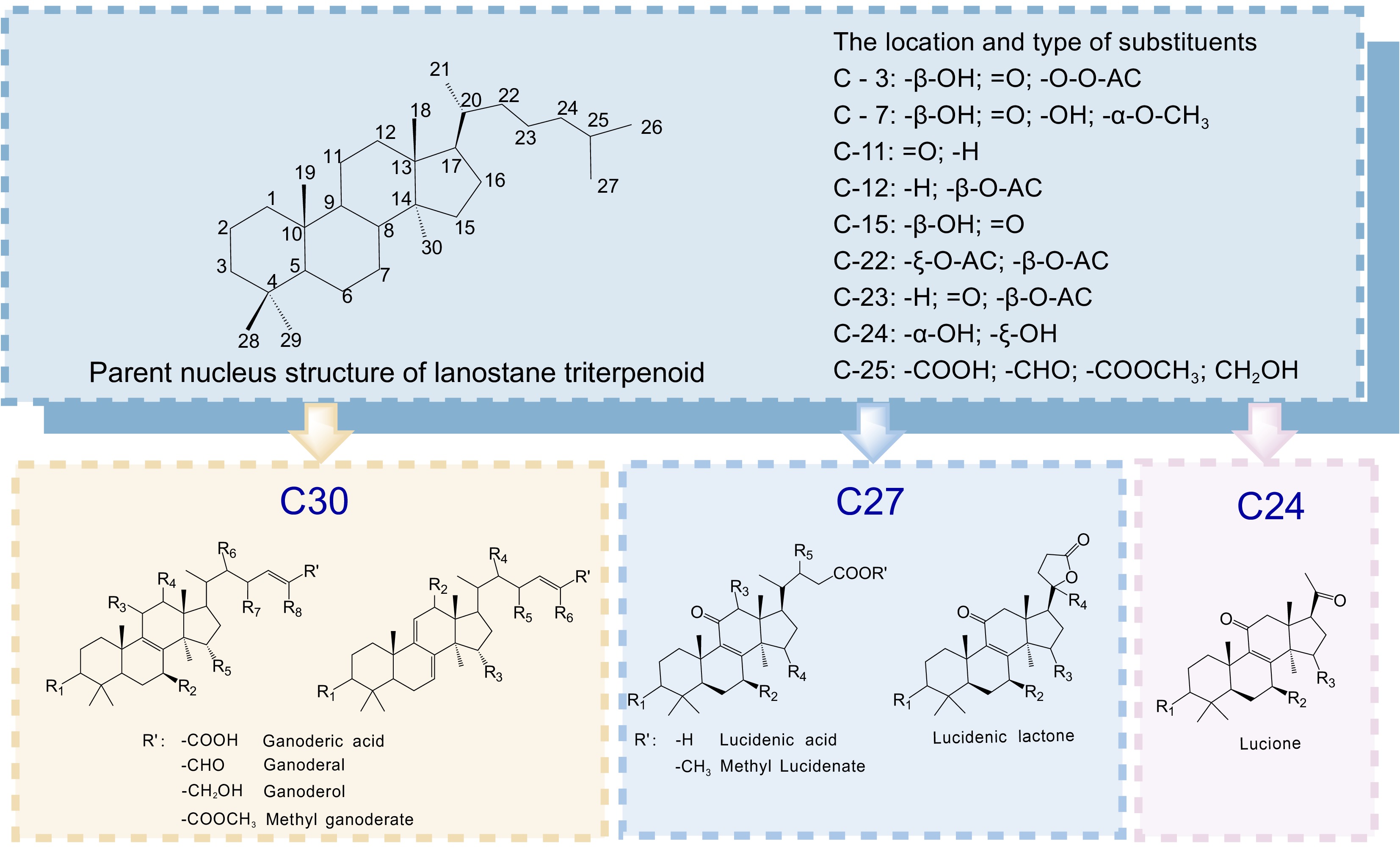
Figure 1.
Structural classification of key Ganoderma lucidum triterpenoids. The triterpenoids are categorized as C30, C27, and C24, based on their carbon-skeleton size. Variable substituents [Rn (n = 1–8) and R′] at key positions modulate their bioactivity and physicochemical properties.
-
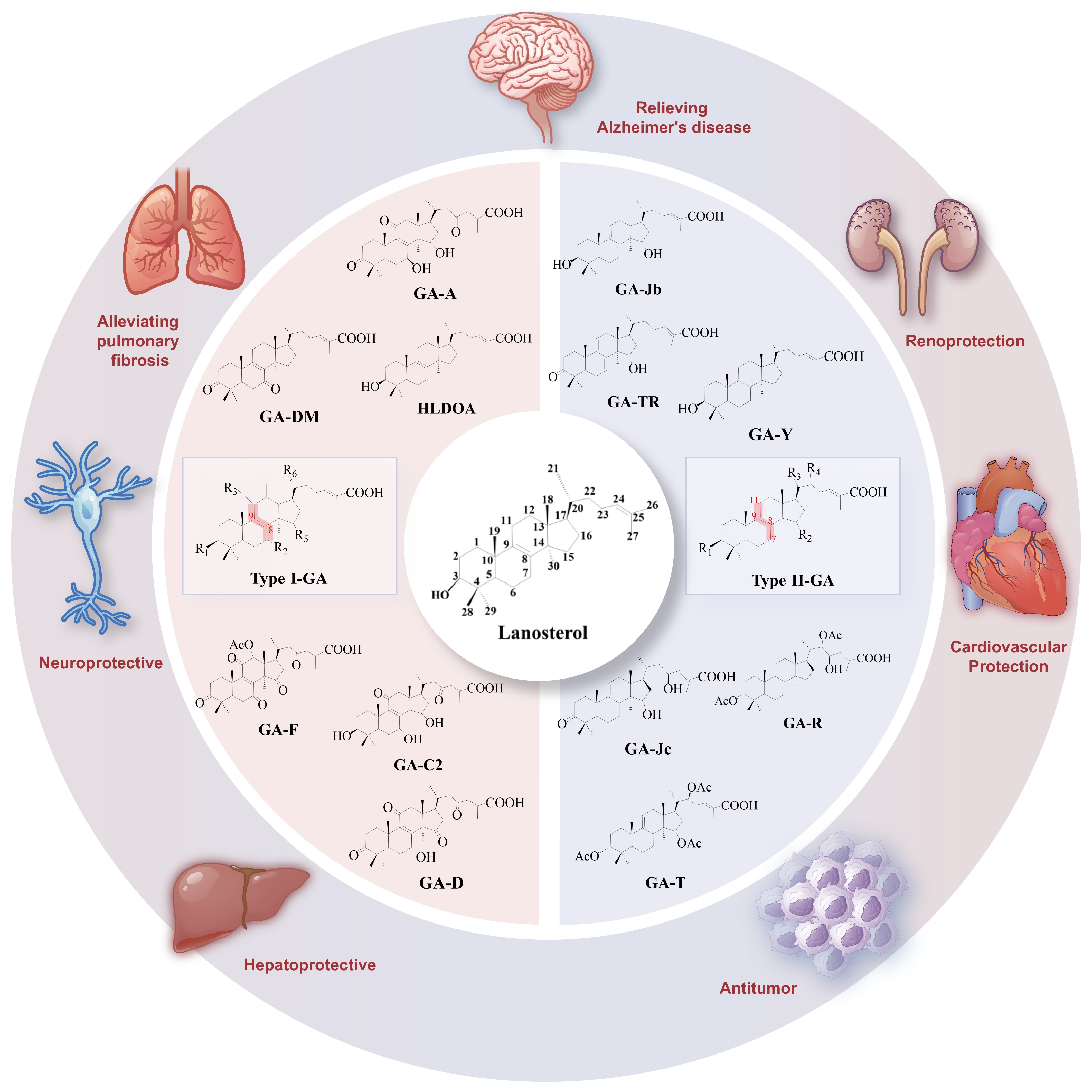
Figure 2.
Type I vs Type II GAs and representative bioactivities. The left and right fan charts summarize typical Type I and Type II scaffolds, respectively, highlighting their roles as Ganoderma actives with antioxidant, anti-inflammatory, immunomodulatory, and metabolic benefits.
-
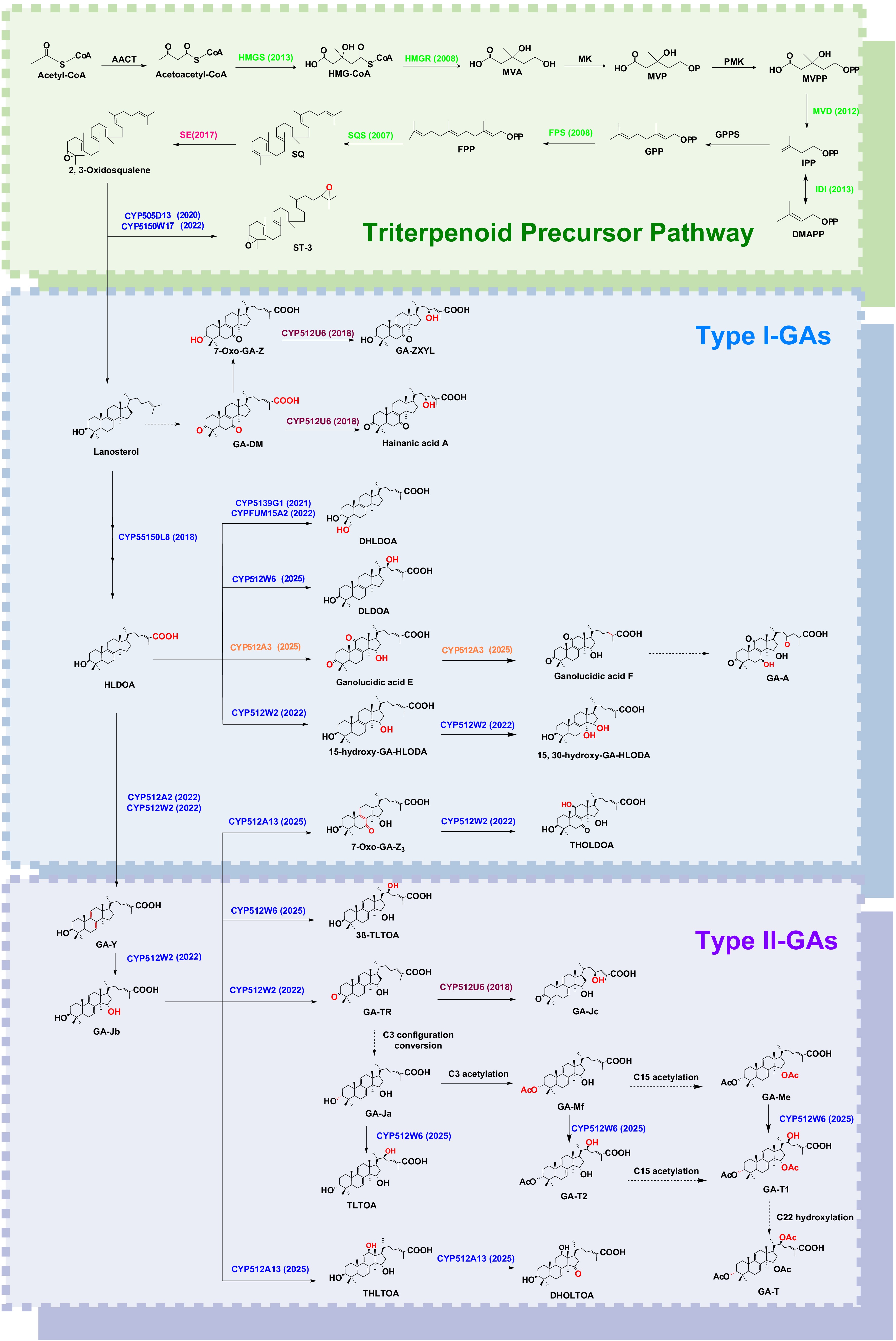
Figure 3.
Biosynthetic route to GAs and derivatives with implications for fermentation and metabolic engineering. '→' indicates a step catalysed by a defined enzyme; '
$\twoheadrightarrow $ $\dashrightarrow $ -
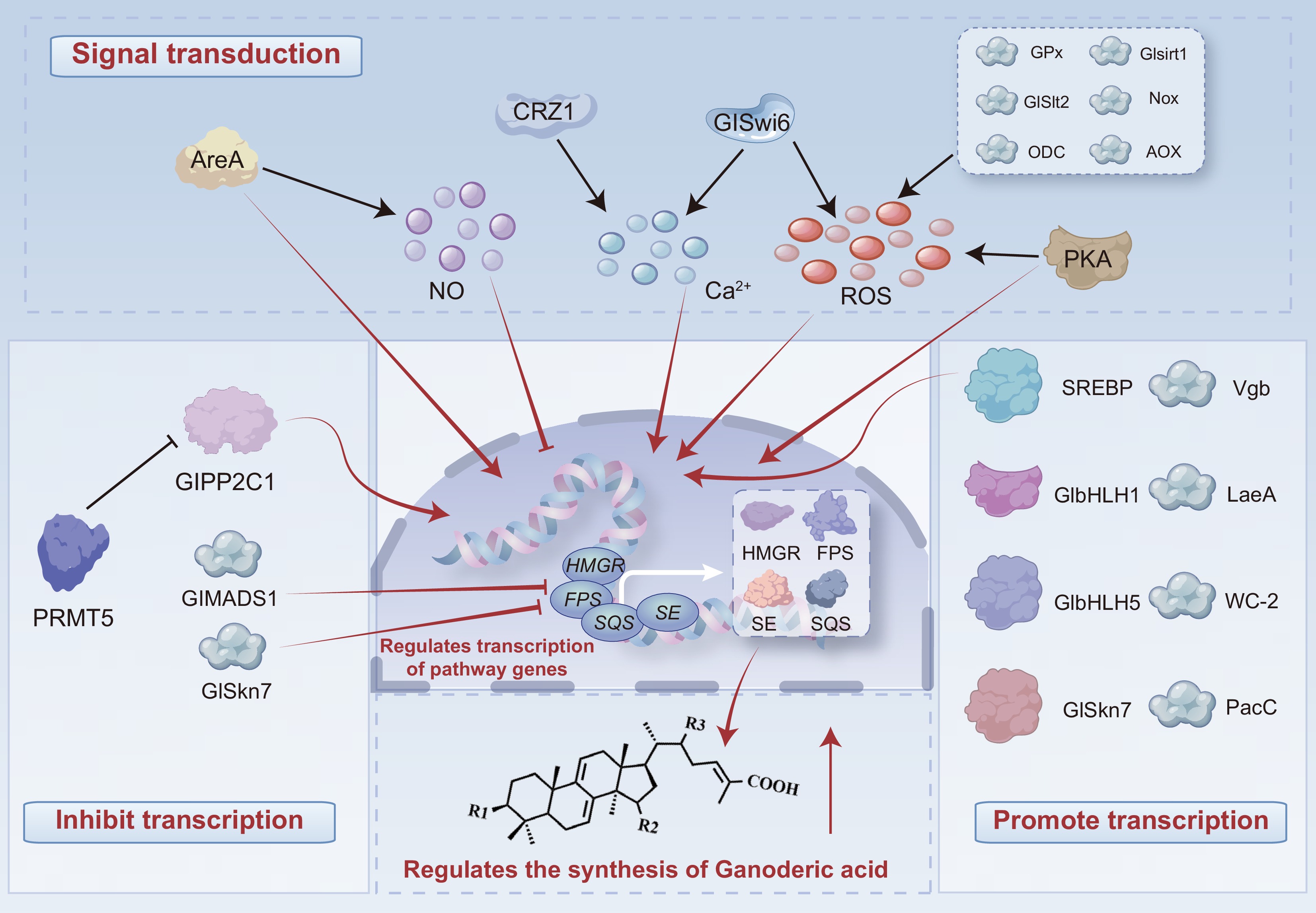
Figure 4.
Regulatory control of GA biosynthesis. Signal transduction: regulators modulate pathway-gene transcription via signaling cascades. Transcriptional repression: direct/indirect suppression of pathway genes. Transcriptional activation: direct enhancement of pathway genes. Shown targets are illustrative; regulators can influence additional nodes not depicted, informing strategies to boost yields in food-grade production.
-
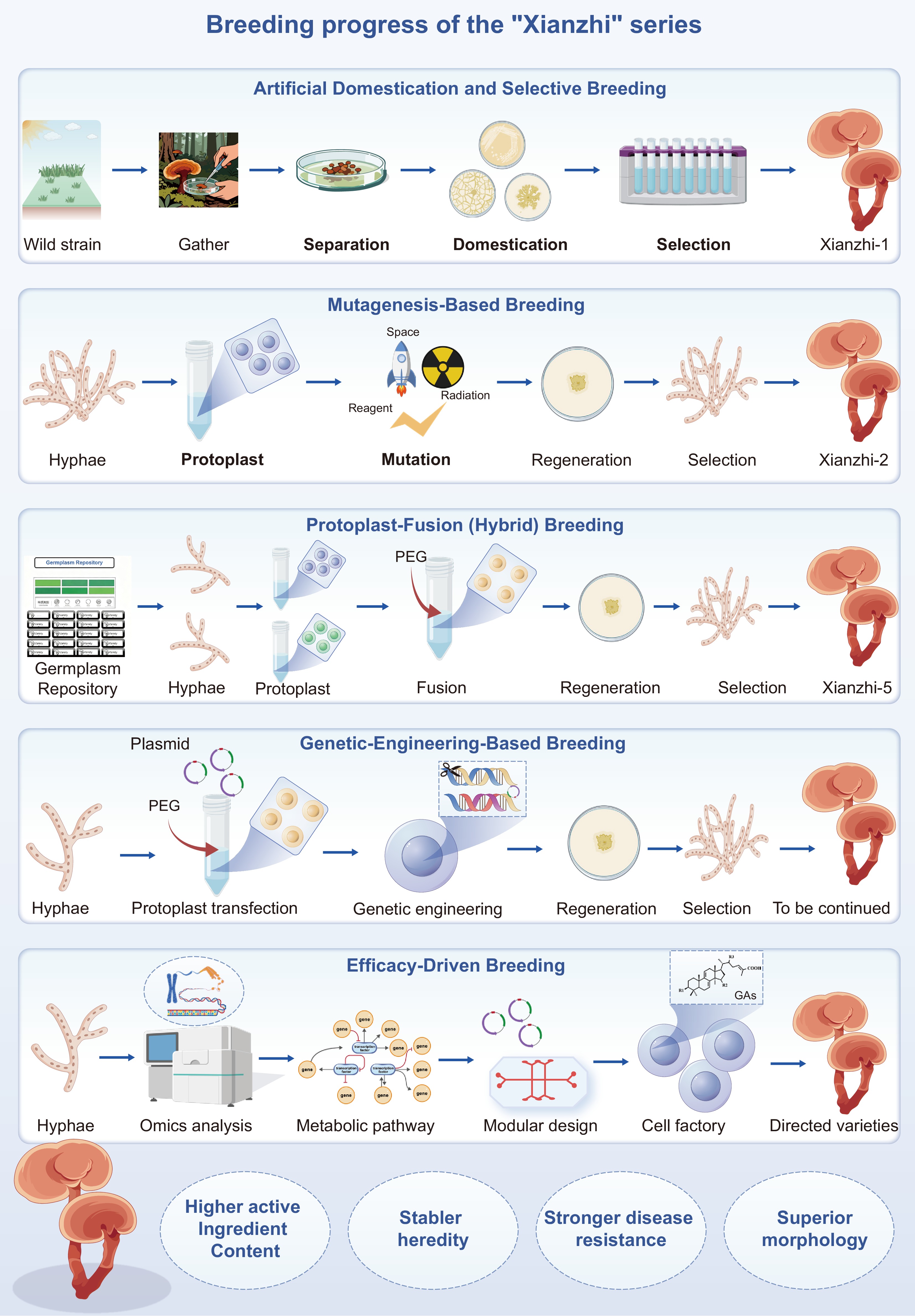
Figure 5.
Breeding pipeline for Ganoderma geared to food-technology outcomes. Using the 'Xianzhi' series as an example, the schematic outlines the germplasm development process, highlighting key breeding techniques aimed at elite edible G. lucidum lines with defined triterpenoid profiles, consistent quality, and targeted health functions for functional-food applications.
-
Gene name Mode of action Catalytic site/target gene Associated product Ref. CYP5150L8 CYP enzyme C-26 oxidation Lanosterol → HLDOA [49] CYP512U6 CYP enzyme C-23 hydroxylation GA-DM → Hainanic acid A; GA-TR → GA-Jc;
7-Oxo-GA-Z → GA-ZXYL[50] CYP5139G1
CYP FUM15A2CYP enzyme C-28 oxidation HLDOA → DHLDOA [51,52] CYP505D13
CYP5150W17CYP enzyme Oxidation 2, 3-Oxidosqualene → ST-3 [52,53] CYP512W2 CYP enzyme C-7/C-11/C-15 hydroxylation HLDOA → GA-Y; GA-Y → GA-Jb;
HLDOA → 15-/(15, 30)-hydroxy-GA-HLODA[52] CYP512V2 CYP enzyme -- GA-T [54] CYP512A3 CYP enzyme C-3/C-11/C-15 oxidation;
Δ24 (25) reductionHLDOA → Ganolucidic acid E;
Ganolucidic acid E → Ganolucidic acid F[55] CYP512A13 CYP enzyme C-7 oxidation
C-12 hydroxylation
C-15 oxidationGA-Jb → 7-Oxo-GA-Z3
GA-Jb → THLTOA
THLTOA → DHOLTOA[56] CYP512W6 CYP enzyme C-22 hydroxylation GA-Jb → 3β-TLTOA; GA-Ja → TLTOA;
GA-Me → GA-T1; GA-Mf → GA-T2;
HLODA → DLDOA[49] CsSDR Short-chain dehydrogenase C3 epimerization GA-Jb → GA-TR [49] AKR1C4 Ketone reductase C3 ketoreduction GA-TR → GA-Ja [49] GlAT Acyltransferase C15/C22 acetylation GA-Mf → GA-Me [49] BsAT Acyltransferase C3 acetylation GA-Ja → GA-Mf [49] SREBP bHLH-zip TF HMGR, MK GAs, Lanosterol, GA-C2 [57] GlbHLH1 bHLH TF HMGR, SQS, LS GAs [58] GlbHLH5 bHLH TF LS GAs [59] GlbHLH7 bHLH TF SQS, SE GAs [60] GlSwi6 APSES TF ROS GAs [61] CRZ1 Calcineurin-responsive TF Ca2+ GAs [62] PacC pH-responsive TF SQS, LS GAs [63] AreA GATA TF NO GAs [64] GlMADS1 Mads-box TF ROS [65] LaeA Methyltransferase SQS, LS GA-T, Me [66] VHb Homodimeric oxygen binding protein HMGR, SQS, LS, CYP512A2, CYP512V2, CYP512A13 GA-O, Mk, T, S, Me [67] GlSkn7 Stress-responsive TF HMGR, SQS, LS GAs [68] WC-2 Blue light photoreceptor Gl-25098, HMGR, SQS, LS GA-Mk, T, S, Me [69] Glsirt1 Lysine deacetylase ROS GAs [70] GlSlt2 mitogen-activated protein kinases ROS GAs [71] PKA protein kinase ROS GAs, GA-Mk, T, S, Me [72] Nox NADPH oxidase ROS GAs [73] GPx Glutathione peroxidase ROS GAs [74] AOX Alternative oxidase ROS GAs, Lanosterol, SQ [75] ODC Ornithine decarboxylase ROS GAs [76] PRMT5 Type II arginine methyltransferase GlPP2C1 GAs [77] GlPP2C1 Protein phosphatase SQS GAs [77] Gl-25098 Spore formation-specific genes HMGR, SQS, LS GA-T, Mk, Me [78] Table 1.
The functions of CYP enzymes and regulatory factors in the synthesis of GAs in G. lucidum.
-
Strategy Gene/inducer Product Changes in product yield Chassis Ref. RNAi GlSkn7 GAs Increased by 55.9% GM [68] RNAi AreA GAs Increased by 27% in the ammonia source;
Increased by 77% in the nitrate sourceGM [64] RNAi PRMT5 GAs Increased by 1.48-fold GM [77] RNAi Glsirt1 GAs Decreased by 41.8% GM [113] OE HMGR GAs Increased by 1-fold GM [107] OE FPS GAs, GA-T, S, and Me Increased by 1.28-, 1.27-, 1.62-, and 1.80-fold GM [109] OE SQS GA-Mk, T, Me, and S Increased by 1.86-, 1.67-, 0.95-, and 0.25-fold GM [110] OE SE GAs, GA-T, S, Mk, and Me Increased by 0.3-, 2.2-, 1.4-, 0.8-, and 1.9-fold GM [108] OE HMGR, SE GAs, GA-T, S, Mk, and Me Increased by 2.5-, 4.9-, 3.5-, 1.4-, and 4.8-fold GM [108] OE LS GA-O, Mk, T, S, M, and Me Increased by 5.1-, 1.2-, 2.2-, 3.8-, 1.0-, and 0.9-fold GM [111] OE Vgb GA-S, T, Mk, and Me Increased by 0.4-, 1.2-, 0.9-, and 1.0-fold GM [67] OE Vgb GA-O, Mk, T, S, and Me Increased by 1.01-, 0.64-, 1.03-, 1.11-, and 3.05-fold GM [120] OE, ES Vgb, Ca2+ GA-O, Mk, T, S, and Me Increased by 32%, 56%, 24%, 66%, and 48% compared with Vgb overexpression alone GM [120] OE LaeA GA-T, and Me Increased by 25%, and 20% GM [66] OE Glnmnat GAs Increased by 43.1% GM [113] OE WC-2 (combined with blue light) GA-Mk, T, S, and Me Increased by 0.92-, 1.1-, 0.75-, 1.55-, and 0.74-fold GM [121] OE GlbHLH5 GAs Increased by 45% GM [59] OE GlbHLH1 GAs Increased by 38% GM [58] OE SREBP GAs, Ergosterol, Lanosterol and GA-C2 Increased by 1.87-, 1.84-, 1.89-, and 2.75-fold GM [57] ES 100 μM PHB GA-Mk, T, S, and Me Increased by 47%, 28%, 36%,and 64% GM [114] ES 10 mM CaCl2 (Ca2+) GAs, GA-Mk, T, S, and Me Increased by 2.7-, 1.6-, 3.5-, 2.2-, and 2.8-fold GM [116] ES 20 mM ASA GAs Increased by 1.8-fold GM [119] ES 5 mM AcOH GAs, GA-A Increased by 92% GM [122] ES 254 μM MeJA GAs Increased by 45.3% GM [117] ES 100 μM SA GAs Increased by 66% GM [118] ES 4 mM NaAc GAs Increased by 28.63% G. Lucidum fruiting body [115] ES 5 mM NAD+ GAs Increase by 56.2% GM [113] ES 80 μM EGCG GAs Increased by 36.3% GM [113] ES 100 μM GT GAs Decreased by 29.9% GM [113] Comprehensive processing Add Cu2+, carbon and nitrogen sources, tertiary light GAs 4.1 mg/100 mg DW in yield GM [123] HOE CYP5150L8 HLDOA 14.5 mg/L in yield after 120-h fermentation SC [49] HOE, FO, DPAS CYP5150L8, iGLCPR HLDOA 154.45 mg/L in yield SC [112] HOE, DPAS CYP5150L8, CYP5139G1 DHLDOA 2.2 mg/L in yield SC [51] HOE, FACS CYP5150L8, iGLCPR HLDOA 51.36 mg/L in yield SC [52] HOE (Twice) CYP5150L8, iGLCPR, CYP512W2 GA-HLDOA, Y, and Jb 9.66, 51.30, and 56.44 mg/L in yield SC [52] The abbreviations in this table: OE, overexpression; HOE, heterologous overexpression; ES, exogenous stimuli; FO, fermentation optimization; FACS, fluorescence-activated cell sorting; DPAS, dual-plasmid adjustable system; PHB, phenobarbital; ASA, aspirin; SA, salicylic acid; AcOH, acetic acid; NaAc, sodium acetate; MeJA, methyl jasmonate; NAD+, nicotinamide adenine dinucleotide; EGCG, epigallocatechin gallate; GT, gallotannin; GM, Ganoderma mycelium; SC, Saccharomyces cerevisiae. Table 2.
Advancements in the synthesis and regulation of ganoderic acids.
Figures
(5)
Tables
(2)