-
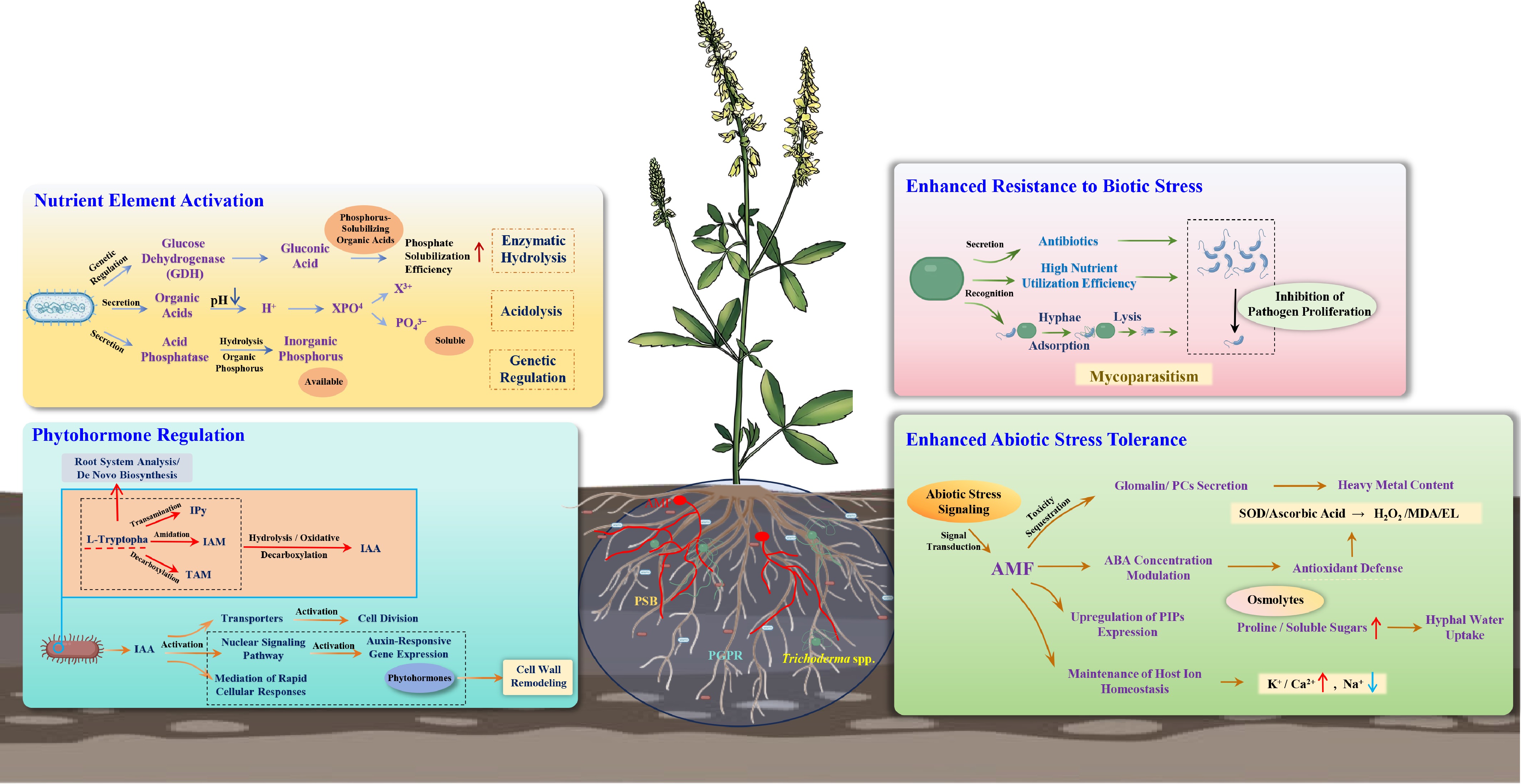
Figure 1.
Mechanisms of microbial inoculant action in medicinal plants. A simplified schematic illustrating key processes such as phytohormone synthesis (e.g., IAA), nutrient solubilization (e.g., phosphorus), antagonism against pathogens, abiotic stress mitigation, and activation of plants' secondary metabolite biosynthesis pathways.
-
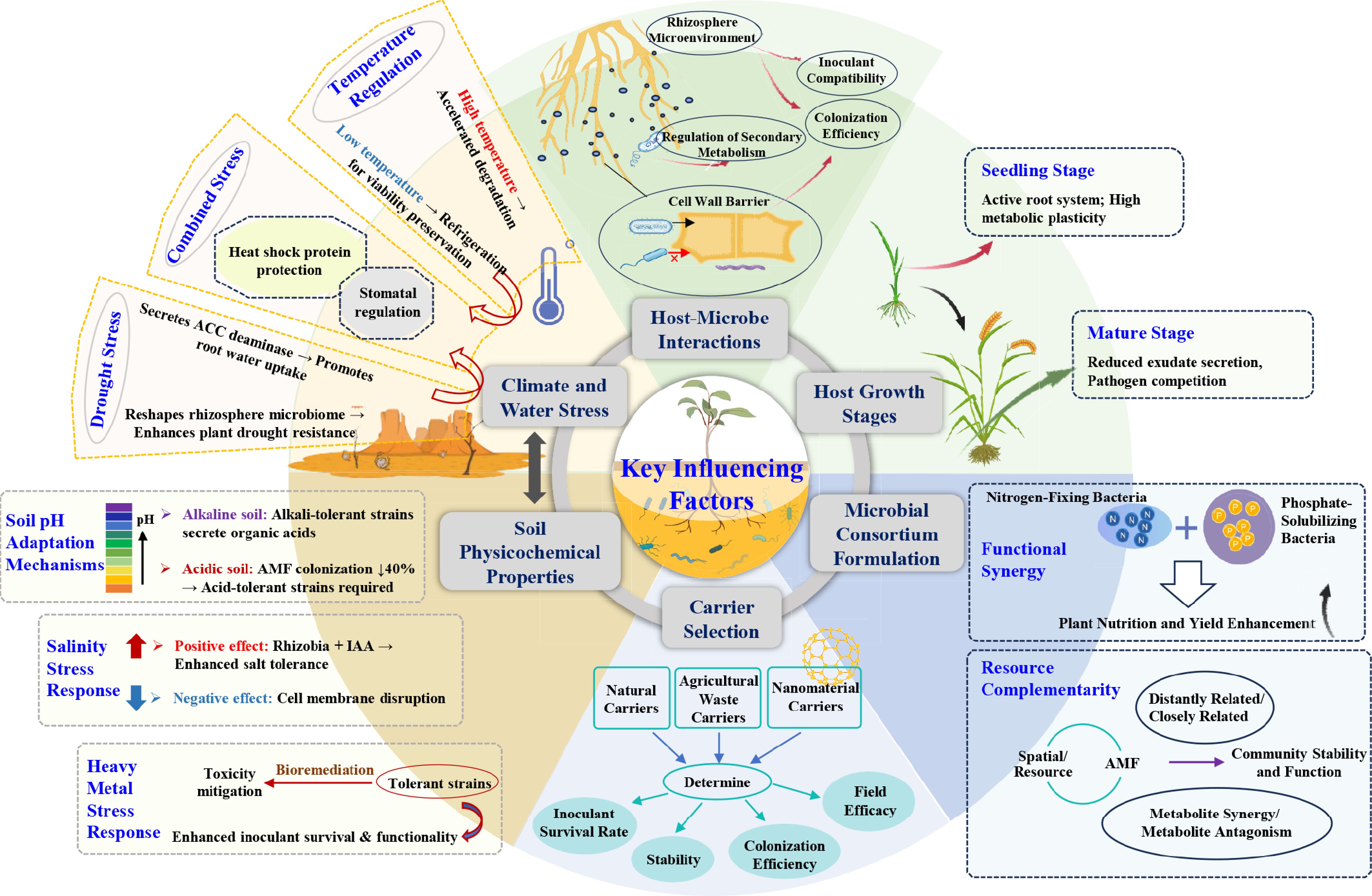
Figure 2.
Key factors influencing the efficacy of microbial inoculants. Conceptual model showing the interconnections among the inoculants' formulation and carriers, environmental stresses (e.g., climate, soil properties), and the hosts' plant properties (e.g., genetics, developmental stage).
-
Microbial category Medicinal plant Microbial inoculant(s) Documented effects (key outcomes on yield/quality/stress) Arbuscular mycorrhizal fungi (AMF) Salvia miltiorrhiza Glomus mosseae Under optimized conditions: Tanshinone IIA 0.252% (significant increase) Ginkgo biloba Glomus mosseae Leaf area +28.1%; dry weight +59.2%; flavonoid glycosides increased Perilla frutescens Glomus mosseae Leaf phenolic content +15%; root rot resistance +76.8% Plant growth-promoting rhizobacteria (PGPR) Calendula officinalis Bacillus subtilis Vanillin content in petals +50% Glycyrrhiza uralensis Bacillus cereus Activated jasmonic acid (JA) signaling; increased sodium dismutase (SOD)/catalase (CAT); enhanced glycyrrhizin Cyclocarya paliurus Bacillus megaterium + Pseudomonas fluorescens Flavonoids and polysaccharides accumulation promoted Mentha piperita Bacillus subtilis Essential oil content enhanced (via improved P uptake and terpenoid synthesis) Lonicera japonica Bacillus subtilis + Pseudomonas fluorescens Chlorogenic acid content increased synergistically Catharanthus roseus Azotobacter + Bacillus + Pseudomonas Alkaloids +30%; N, P, K uptake efficiency improved Lonicera japonica Bacillus subtilis (alone) Chlorogenic acid +18%; HQT gene expression upregulated Mentha piperita Pseudomonas fluorescens + Bacillus subtilis Volatile organic compounds (VOCs) and phenolic content synergistically increased Cicer arietinum Rhizobium spp. + phosphate-solubilizing bacteria (PSB) Pod yield +39.5%; soil-available P +2.3-fold Eleusine coracana Azospirillum + Azotobacter Plant dry weight +30%–40%; N uptake +28%; P uptake +35% Other beneficial fungi Salvia miltiorrhiza Phoma herbarum D603 Tanshinone IIA increased to 6.5× control Panax ginseng Trichoderma harzianum T22 Suppressed Rhizoctonia solani by 90%; disease incidence –65%; promoted ginsenosides Catharanthus roseus Aspergillus niger extract Upregulated ABC transporters via JA signaling; enhanced alkaloid vacuolar sequestration Microbial consortia/combined inoculants Adhatoda vasica AMF (Acaulospora scrobiculata, Glomus funneliformis and Acaulospora) + PSB + azotobacter Biomass increased by > 2-fold Panax notoginseng Trichoderma spp. + composite inoculants (e.g., effective microorganisms [EM]) Seedling emergence +35%; yield +25%; disease incidence reduced > 50%; enriched beneficial bacteria Lonicera japonica Bacillus subtilis + gibberellin (GA3) Chlorogenic acid content +40% Withania somnifera AMF (Acaulospora scrobiculata, Glomus funneliformis and Acaulospora) + PSB + Azotobacter Biomass +1.56-fold; polyphenols +266.23% Salvia miltiorrhiza Glomus spp. + Rhizopus spp. Root biomass +65.1%; phenolic acids +27%; tanshinones +34% Others (Actinobacteria, rare earth elements) Salvia miltiorrhiza Actinomyces bovis + Streptomyces spp. Root-knot nematode infection –50%; soilborne pathogens inhibited Salvia miltiorrhiza PGPR + praseodymium (rare earth) Tanshinone content +40% (at 100 μM Pr) Panax ginseng Rhizobium panacihumi DCY116T Root biomass +25%; saponin content significantly enhanced Table 1.
Effects of microbial inoculants on the growth and metabolism of medicinal plants.
-
Category Representative plants Major active compounds Preferred microbial inoculant types Core mechanisms of action Representative case studies Roots/rhizomes Ginseng (Panax ginseng) Ginsenosides (triterpenoid saponins), phenolic compounds, polysaccharides Rhizobium panacihumi Rhizobia increase proline accumulation (osmoregulation), total phenolic content (antioxidants), and total soluble sugars (osmoprotection), while reducing aluminum-induced ROS levels. Upregulates antioxidant genes (PgAPX, PgCAT) and a proline synthesis gene (PgP5CS), enhancing ROS scavenging and cytoprotection. Rhizobium panacihumi DCY116T isolated from ginseng cultivation soil enhances aluminum resistance (500 μM Al) in 2-year-old ginseng seedlings by reducing oxidative stress and promoting growth biomarkers. Codonopsis (Codonopsis pilosula) Lobetyolin, polysaccharides Bacillus amyloliquefaciens B. amyloliquefaciens regulates auxin (IAA) biosynthesis and transport while inhibiting stress-related hormones like ABA and enhancing cell expansion and nutrient uptake. Improves photosynthetic efficiency, chlorophyll synthesis, and N/P assimilation, alleviating oxidative stress and ion toxicity under abiotic stresses (e.g., salinity). Inoculation of Bacillus amyloliquefaciens GB03 in Codonopsis pilosula significantly improves plant growth metrics (e.g., biomass, root length, chlorophyll content) and doubles lobetyolin accumulation. GB03 also enhances stress resistance (e.g., salt tolerance) and photosynthetic efficiency. Leaf Basil (Ocimum basilicum) Linalool, methyl chavicol (estragole), eugenol, α-terpineol Bacillus spp., Azotobacter, Azospirillum PGPR strains primarily enhance basil's growth and essential oil production by improving nutrient availability (e.g., N fixation by Azotobacter/Azospirillum, P solubilization by Bacillus), producing plant growth-promoting hormones (e.g., auxins, gibberellins), and modulating plants' physiological processes, collectively stimulating plant development and secondary metabolite biosynthesis. Coinoculation of Azotobacter, Azospirillum lipoferum, and Bacillus circulans in an ecological cropping system significantly increased basil's plant biomass (fresh/dry weight), essential oil yield, and plant height compared with uninoculated controls or single-strain applications. Hyptis (Hyptis suaveolens) β-Caryophyllene, caryophyllene oxide Bacillus amyloliquefaciens SQR9 B. amyloliquefaciens SQR9 mitigates ion toxicity by modulating sodium transporters (e.g., HKT1) to reduce Na+ accumulation in tissues. Enhances antioxidant activity (e.g., peroxidase/catalase), osmoregulation (proline/soluble sugar accumulation), and hormonal balance (e.g., reduced ethylene stress) to alleviate oxidative damage and maintain cellular integrity under osmotic stress. Inoculation of PGPR (B. amyloliquefaciens SQR9) in Hyptis suaveolens under salt stress (up to 105 mM NaCl) significantly enhanced essential oil content and physiological resilience (e.g., biomass, chlorophyll levels) compared with uninoculated plants. Peppermint (Mentha piperita) Menthol, menthone, pulegone, 1,8-cineole, linalool Pseudomonas spp. PGPR strains induce systemic resistance in mint by modulating hormone signaling pathways (e.g., jasmonates, salicylates) and increasing the density of glandular trichomes (specialized structures for monoterpene synthesis and storage). This interaction enhances photosynthetic efficiency and carbon allocation to secondary metabolism, promoting phenolic and terpenoid production, potentially via volatile or nonvolatile bacterial elicitors, even without direct pathogen attack. Inoculation of peppermint with PGPR strains (single or combined) significantly increased volatile organic compound (VOC) emissions (~3-fold) and elevated total phenolic content in leaves, with the highest induction observed in coinoculated plants (e.g., Pseudomonas WCS417r + SJ04). Fruit/flower Stevia (Stevia rebaudiana) Steviol glycosides IAA-producing PGPR strains IAA produced by PGPR acts as a phytohormone (auxin), directly stimulating plant growth by enhancing root elongation, root hair development, and nutrient uptake. This facilitates improved water and mineral absorption, increasing biomass and overall plant vigor. Bacteria primarily synthesize IAA via tryptophan-dependent pathways, utilizing root exudates as precursors, establishing a mutualistic plant–microbe relationship. IAA-producing PGPR isolated from the Stevia rebaudiana rhizosphere were optimized for IAA production (varying pH, temperature, carbon, nitrogen sources). Application of these optimized strains to stevia plants significantly increased root and shoot biomass. Tangerine peel (Citri reticulatae pericarpium) Flavonoids (e.g., nobiletin, tangeretin), volatile oils (e.g., limonene, γ-terpinene) Burkholderia spp., Streptomyces spp. Burkholderia and Streptomyces activate the plant innate immune system by secreting microbe-associated molecular patterns (MAMPs) (e.g., lipopolysaccharides, flagellin), triggering JA/ethylene (ET) signaling pathways and upregulating antioxidant enzymes (e.g., SOD, peroxidase [POD]) expression, significantly enhancing plants' tolerance to drought and salt stress. Secondary metabolites produced by Streptomyces (e.g., actinomycin) directly inhibit soil pathogens, whereas regulating plant stomatal closure reduces water loss and enhances water retention. Specific beneficial microbes (e.g., Burkholderia, Streptomyces) were inoculated during the cultivation of tangerine peel to optimize growth and medicinal quality. These microbes improved environmental stress tolerance (e.g., drought/salinity) and stimulated the synthesis of active compounds like flavonoids through microecological interactions. Table 2.
Comparative analysis of microbial inoculants' functions across medicinal plants' organs (roots, rhizomes, leaves, flowers, and fruits).
Figures
(2)
Tables
(2)