-
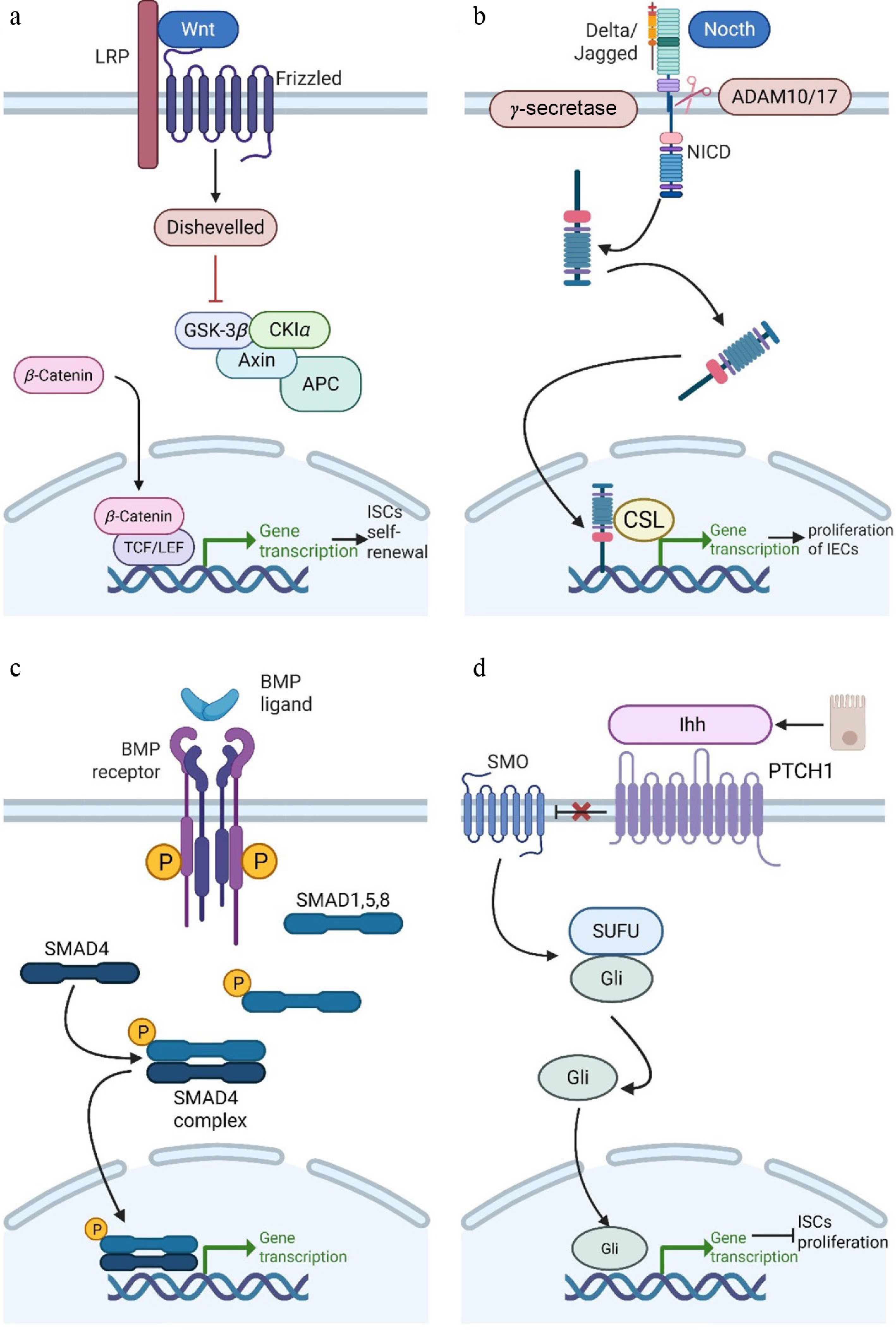
Figure 1.
Signal pathways associated with the occurrence of radiation enteritis. (a) Activation of the Wnt/β-catenin pathway promotes self-renewal and proliferation of ISCs. (b) Notch pathway activation promotes proliferation and differentiation of IECs. (c) BMP pathway activation negatively regulates self-renewal of ISCs. (d) Hedgehog pathway activation negatively regulates ISC proliferation. This figure was created with BioRender (
BioRender.com ). -
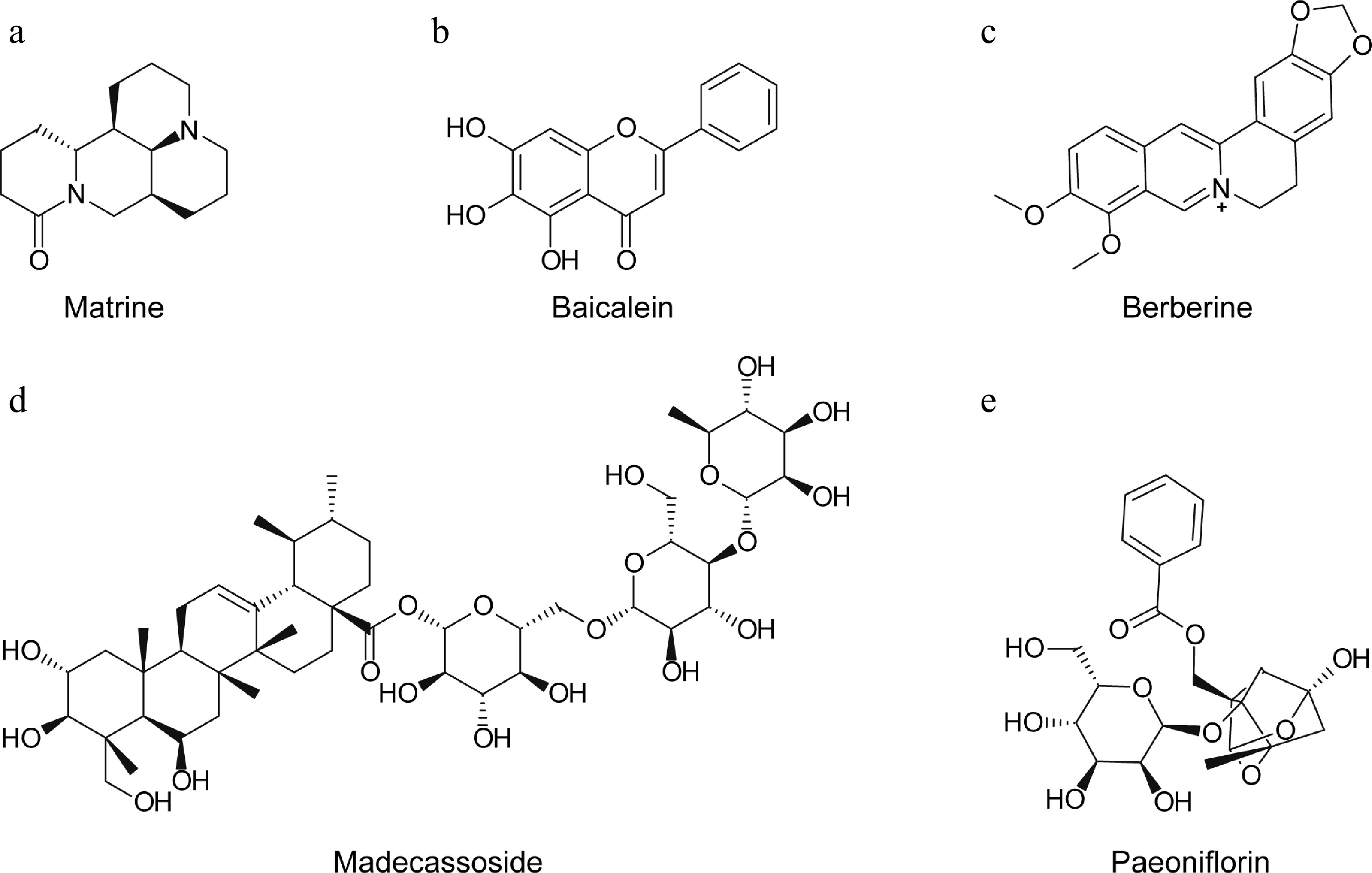
Figure 2.
The structural formula of (a) matrine, the main extract from Sophora flavescens roots, (b) baicalein, the main extract from Scutellaria baicalensis, (c) BBR, the main extract from Huanglian, (d) madecassoside, the main extract from Centella asiatica, and (e) paeoniflorin, the main extract from Paeonia lactiflora.
-
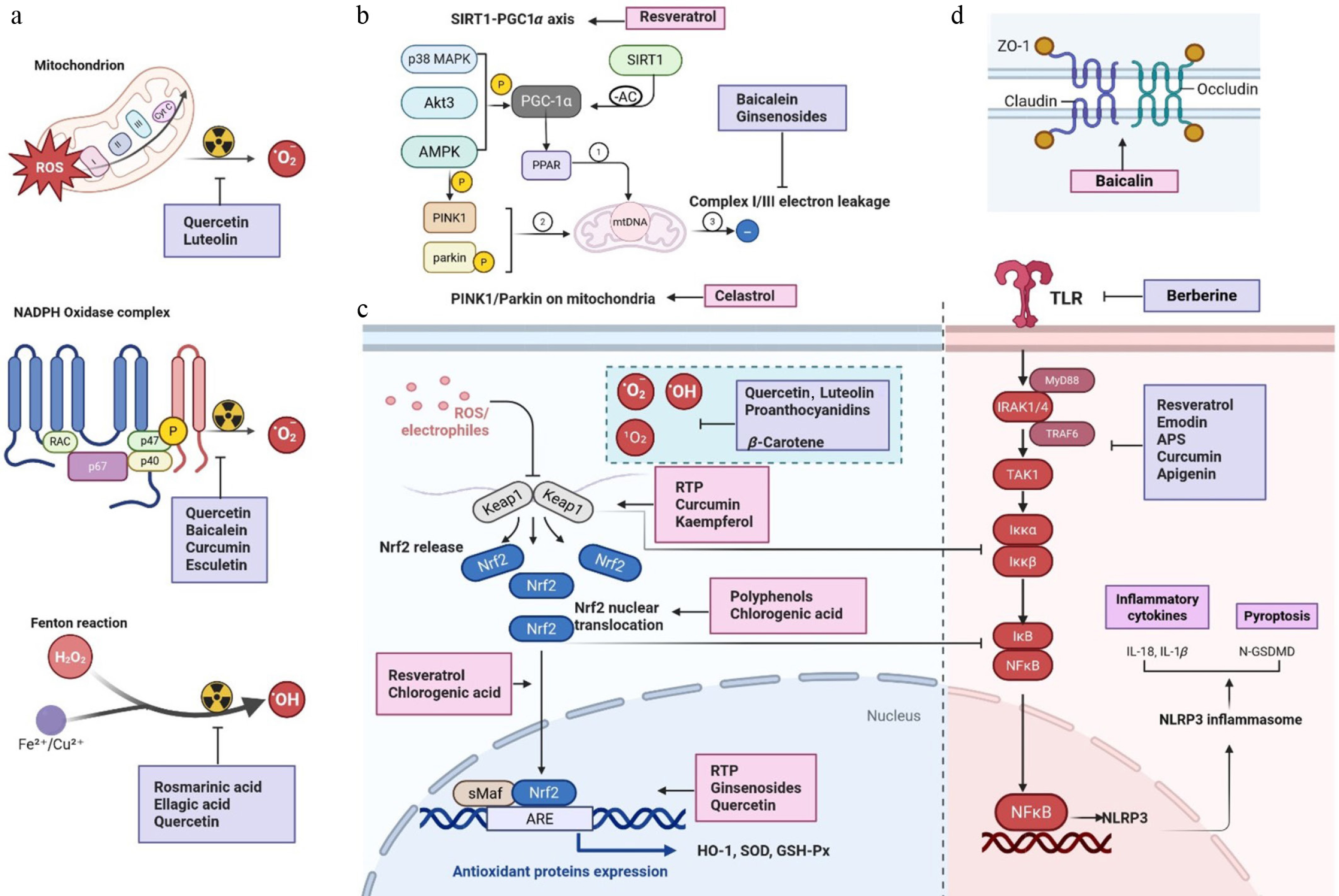
Figure 3.
Multitarget antioxidant defense network of phytochemicals against radiation-induced oxidative stress. (a) Radiation-triggered ROS sources. Ionizing radiation induces O2− generation via mitochondrial ETC leakage (Complex I/III) and NOX activation. Transition metals (Fe2+/Cu2+) catalyze ·OH formation through Fenton reactions. (b) Core antioxidant pathway and anti-inflammatory synergy. Direct scavenging, such as flavonoids (e.g., quercetin), donate electrons to neutralize O2−/·OH, while carotenoids (β-carotene) physically quench 1O2. Phytochemicals (curcumin/resveratrol) modify Keap1 cysteine residues (Cys151/Cys273), enabling Nrf2 nuclear translocation and transcriptional upregulation of antioxidant enzymes (HO-1, SOD, GSH-Px). (c) Anti-inflammatory synergy. Bioactives concurrently suppress NF-κB activation (via IKKβ inhibition) and NLRP3 inflammasome assembly, while modulating the TLR4/MyD88 and MAPK pathways to attenuate pro-inflammatory cytokine cascades. (d) Barrier repair. Tight junction reinforcement (ZO-1/occludin upregulation) further restores intestinal homeostasis. This figure was created with BioRender (
BioRender.com ). -
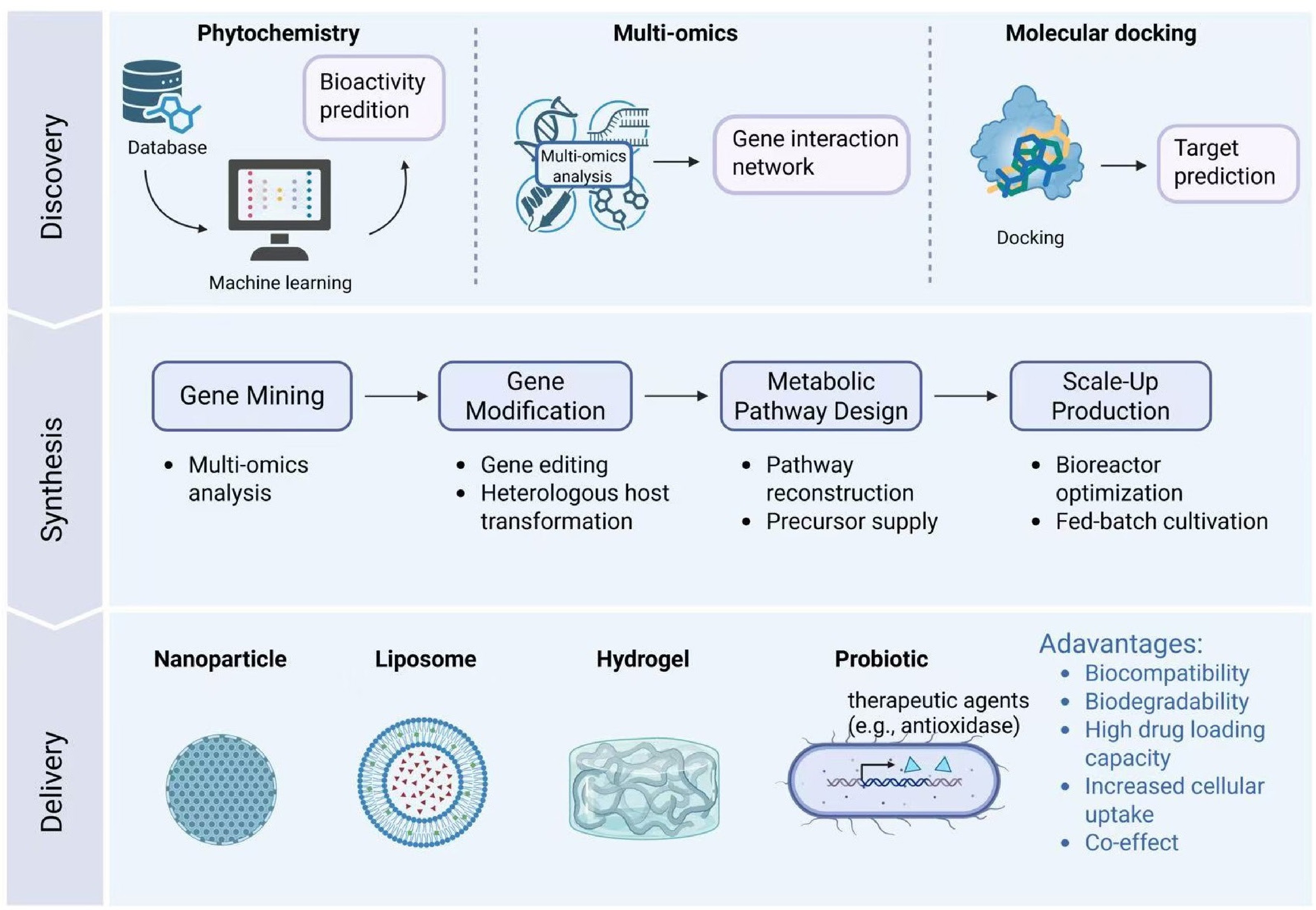
Figure 4.
Emerging technologies that facilitate the development of drugs from natural products. (a) Innovative drug discovery via AI-assisted phytochemistry, multi-omics analysis, and molecular docking. (b) Biosynthetic strategies for bioactive factors. (c) Drug delivery using nanoparticles, liposomes, hydrogels, or probiotic in situ secretion. This figure was created with BioRender (BioRender.com).
-
Plant Plant extracts Role Ref. Bletilla striata Bletilla striata extract Bletilla striata polysaccharide, the main component extracted from Bletilla striata, can inhibit the NLRP3 inflammasome and exhibit anti-inflammatory effects. It also enhances immune function by activating the Mitogen-activated protein kinase (MAPK) and NF-κB signaling pathways. [31] Glycyrrhiza uralensis Glycyrrhiza uralensis extract It can inhibit LPS-induced secretion of pro-inflammatory cytokines in macrophages and whole blood; Glycyrrhetinic acid and 18β-glycyrrhetinic acid have been shown to regulate signaling pathways associated with inflammation, such as the Janus kinase (JAK) and signal transducer and activator of transcription (STAT) (JAK/STAT) pathway and NF-κB pathways. [32] Salvia miltiorrhiza Salvianic acid A It can alleviate intestinal inflammation by regulating immune response and the production of inflammatory factors; salvianic acid A in Salvia miltiorrhiza extract and other phenolic acid components have potent antioxidant activity, which can clear free radicals and reduce oxidative stress damage; It has the effect of promoting blood circulation and removing blood stasis, which can improve microcirculation, increase intestinal blood flow, alleviate ischemic injury, and promote intestinal repair. [33] Astragalus membranaceus Astragalus polysaccharides, Astragalus saponins, isoflavones Astragalus polysaccharides can regulate immunity by modulating gut microbiota, while maintaining intestinal barrier integrity and repairing damaged intestinal mucosa. The antioxidant and anti-inflammatory properties of Astragalus saponins and isoflavones help alleviate intestinal inflammation and tissue damage. Isoflavones with estrogen-like activity have a specific promoting effect on intestinal function recovery. [34] Taraxacum mongolicum Taraxacum mongolicum extract Taraxacum mongolicum has antioxidant, anti-inflammatory, and gastrointestinal protective effects. Its essential component polysaccharides have been proven to have antioxidant and antibacterial activities. Taraxacum mongolicum extract can alleviate cell damage caused by oxidative stress. [35] Carica papaya (Papaya) Papaya seed alcohol extract, papaya fruit extract Papaya seed alcohol extract exhibits antibacterial activity, while papaya fruit extract has significant antioxidant and anti-inflammatory properties. Phenolic and flavonoid compounds in papaya can scavenge free radicals and enhance the activity of antioxidant enzymes. [36] Erigeron annuus Erigeron annuus root extract Erigeron annuus root extract can alleviate acute inflammation by inhibiting the production of NF-κB-related NO and prostaglandin E2 (PGE2). Erigeron annuus root extract has antioxidant capacity and can clear free radicals. [37] Garcinia mangostana (Mangosteen) Mangosteen peel extract The skin of mangosteen is rich in xanthones, especially α-mangostin, which are effective antioxidants that can clear excess ROS and alleviate oxidative stress damage to intestinal tissue; Mangosteen peel extract has significant anti-inflammatory activity and can inhibit the production and release of inflammatory mediators. [38] Alpinia officinarum (Galangal) Galangal extract Galangal extract is rich in antioxidant components, which can eliminate free radicals and enhance the activity of antioxidant enzymes, thereby reducing radiation-induced oxidative damage. Galangal extract can downregulate the MAPK and JAK/STAT pathways, thereby exerting anti-inflammatory effects. [39] Portulaca oleracea (Purslane) Purslane extract Purslane extract can inhibit the production of pro-inflammatory cytokines, for example, by downregulating inflammatory factors to alleviate the damage to the intestinal barrier; Purslane is rich in various antioxidant components, such as polyphenols, flavonoids, and omega-3 fatty acids, which help to eliminate excessive free radicals in the body and reduce oxidative damage; Purslane extract can regulate the structure of intestinal microbiota and improve dysbiosis. [40] Agrimonia pilosa Agrimonia pilosa extract Agrimonia pilosa extract can inhibit the inflammatory response of macrophages induced by LPS; Agrimonia pilosa is traditionally used to treat acute and chronic enteritis and diarrhea. [41] Psidium guajava (Guava) Guava leaf extract Guava leaf extract exerts anti-inflammatory effects by inhibiting the production of pro-inflammatory cytokines (e.g., IL-6, IL-1β, and TNF-α), modulating the NF-κB and other inflammatory signaling pathways, inhibiting the activity of cyclooxygenase (COX) and inducible nitric oxide synthase (iNOS), and reducing the production of ROS. [42] Table 1.
The role of plants and plant extracts in the treatment of radiation enteritis.
-
Class Subclass Specific compounds Mechanism Flavonoids Flavones Luteolin Antioxidant; blocks JAK1/JAK2 ATP binding site to inhibit STAT3[43] Apigenin Antioxidant; inhibits NLRP3 inflammasome via NIMA-related kinase 7 (NEK7) inhibition[44] Baicalein Antioxidant; suppresses TLR4 dimerization and MAPK phosphorylation[45] Flavonols Quercetin Antioxidant; blocks NF-κB nuclear translocation by disrupting p65-Importin-α interaction[46] Kaempferol Antioxidant; activates Nrf2 pathway; inhibits COX-2 expression[47] Isorhamnetin Antioxidant; actives Nrf2 pathway[48] Flavanols EGCG Antioxidant; binds c-Jun to inhibit Activator protein-1 (AP-1); repairs intestinal barrier[49] Anthocyanidins Delphinidin ROS scavenger; upregulates tight junction[50] Terpenoids Triterpene glycosides Asiaticoside Enhances epithelial regeneration; reduces oxidative stress[51] Pentacyclic triterpenoids Ursolic acid Activates Nrf2 pathway; inhibits NLRP3 inflammasome assembly[52] Celastrol Reprograms T-cell balance: inhibits T helper 17 cells (Th17) differentiation, promotes Regulatory T cells (Treg) expansion[53] Triterpene glycosides Ginsenosides Activates phosphatidylinositol 3-kinase (PI3K)/protein kinase B (Akt) signaling pathway to inhibit mitochondrial apoptosis; enhances barrier Astragaloside IV Modulates TLR4/NF-κB signaling; reduces pro-inflammatory cytokines[54] Gypenosides Attenuates oxidative stress; suppresses NF-κB[55] Diterpenoids Tanshinone Inhibits ROS; downregulates TNF-α/IL-6 expression[56] β-boswellic acid Inhibits 5-Lipoxygenase (5-LOX); reduces leukotriene-mediated inflammation[52] Andrographolide Blocks NF-κB nuclear translocation; enhances Nrf2-mediated antioxidant response[57] Tetraterpenoids β-Carotene Direct ROS scavenging; quenches ¹O2[56] Monoterpene glycoside Paeoniflorin Upregulates SOCS3; inhibits ASK1-TF axis; reduces IL-6/TNF-α and neutrophil infiltration[30] Phenylpropanoids Phenylethanoid glycosides Salidroside Activates Nrf2/ Heme oxygenase-1 (HO-1) pathway; suppresses MAPK/NF-κB signaling[48] Coumarins Esculetin Scavenges ·OH; inhibits xanthine oxidase. Umbelliferone Antioxidant; enhances Glutathione S-transferase (GST) activity[58] Scopoletin Suppresses iNOS; inhibits leukocyte migration[58] Lignans Liriodendrin Modulates pregnane X receptor (PXR) and constitutive androstane receptor (CAR) receptors to detoxify ROS[59] Terpenophenolics Cannabinoids Cannabidiol, CBD Activates CB2 receptors; reduces TNF-α/IL-6; inhibits NADPH oxidase Non-flavonoid polyphenols Polyphenolic dilactone Ellagic acid Chelates redox-active metals; upregulates Nrf2-dependent genes[46] Phenolic acids (Hydroxycinnamic acids) Chlorogenic acid ROS scavenger; inhibits NF-κB nuclear translocation[46] Rosmarinic acid, RA Suppresses COX-2/PGE2; inhibits complement activationv[60] Stilbenes Resveratrol Activates Sirtuin 1 (SIRT1) to deacetylate NF-κB p65 and Nrf2; upregulates SOCS3; inhibits Interleukin-1 receptor-associated kinase 4 (IRAK4)[61] Diarylheptanoids Curcumin Binds IκB kinase β(IKKβ) ATP-site to inhibit NF-κB; Blocks TNF receptor-associated factor 6 (TRAF6) ubiquitination; promotes M2 macrophage polarization via Signal transducer and activator of transcription 6 (STAT6)/Peroxisome proliferator-activated receptor gamma (PPARγ)[62] Condensed tannins Proanthocyanidins Antioxidant; stabilizes gut microbiota; reduces epithelial permeability[60] Polysaccharides Heteropolysaccharides Rheum tanguticum polysaccharides, RTP Enhance mucosal immunity; scavenge free radicals[63] Astragalus polysaccharides, APS competitively binds TLR4 LPS-domain; induces IL-10 secretion; inhibits MyD88 recruitment[47] Ganoderma lucidum polysaccharide Immunomodulatory; activates intestinal Dendritic cells (DCs) to promote Treg differentiation[47] Spirulina polysaccharides ROS scavenging; upregulates antioxidant enzymes[64] Jujube polysaccharide Prevents apoptosis; enhances goblet cell function[65] Alkaloids Quinolizidine Matrine Inhibits TLR4/MyD88 pathway; reduces IL-1β/IL-18 secretion[66] Isoquinoline BBR Suppresses Gram-negative bacteria growth; reduces LPS release; inhibits TLR4/NF-κB signaling Amide alkaloids Piperine Potentiates Nrf2 activation; inhibits P-glycoprotein to enhance bioavailability of other bioactives[45] Anthraquinones Hydroxyanthraquinone-carboxylic acid derivatives Rheinic acid Inhibits NF-κB pathway; activates PPARγ to downregulate COX-2/iNOS[67] Hydroxyanthraquinones Emodin Blocks NLRP3- Apoptosis-associated speck-like protein containing a CARD (ASC) interaction; inhibits inflammasome assembly[53] Sterols Phytosterols Stigmasterol stabilizes lipid membranes against oxidative damage[56] Table 2.
Active factors in plant extracts and their mechanisms.
Figures
(4)
Tables
(2)