-
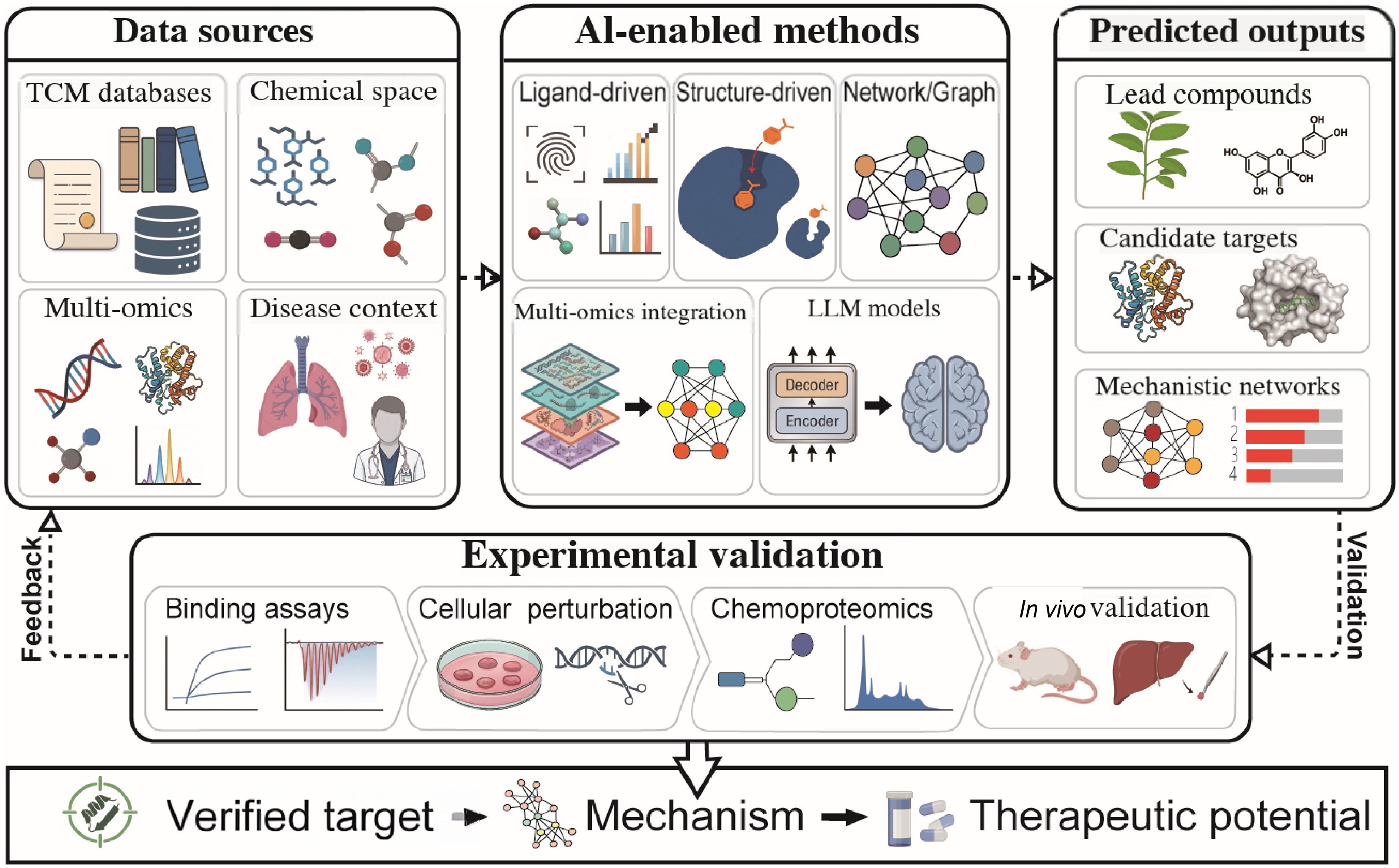
Figure 1.
Schematic diagram of AI-assisted target discovery in traditional Chinese medicine (TCM). The workflow integrates multiple data sources, including TCM databases, chemical space, multi-omics data, and clinical data, and infers potential TCM targets through ligand-driven, structure-driven, network-/graph-theory-based, multi-omics integration, large language model (LLM), and other AI-driven target prediction strategies. The predicted targets are then validated through biochemical binding experiments, cell-perturbation experiments, chemical proteomics, and in vivo pharmacological evaluation.
-
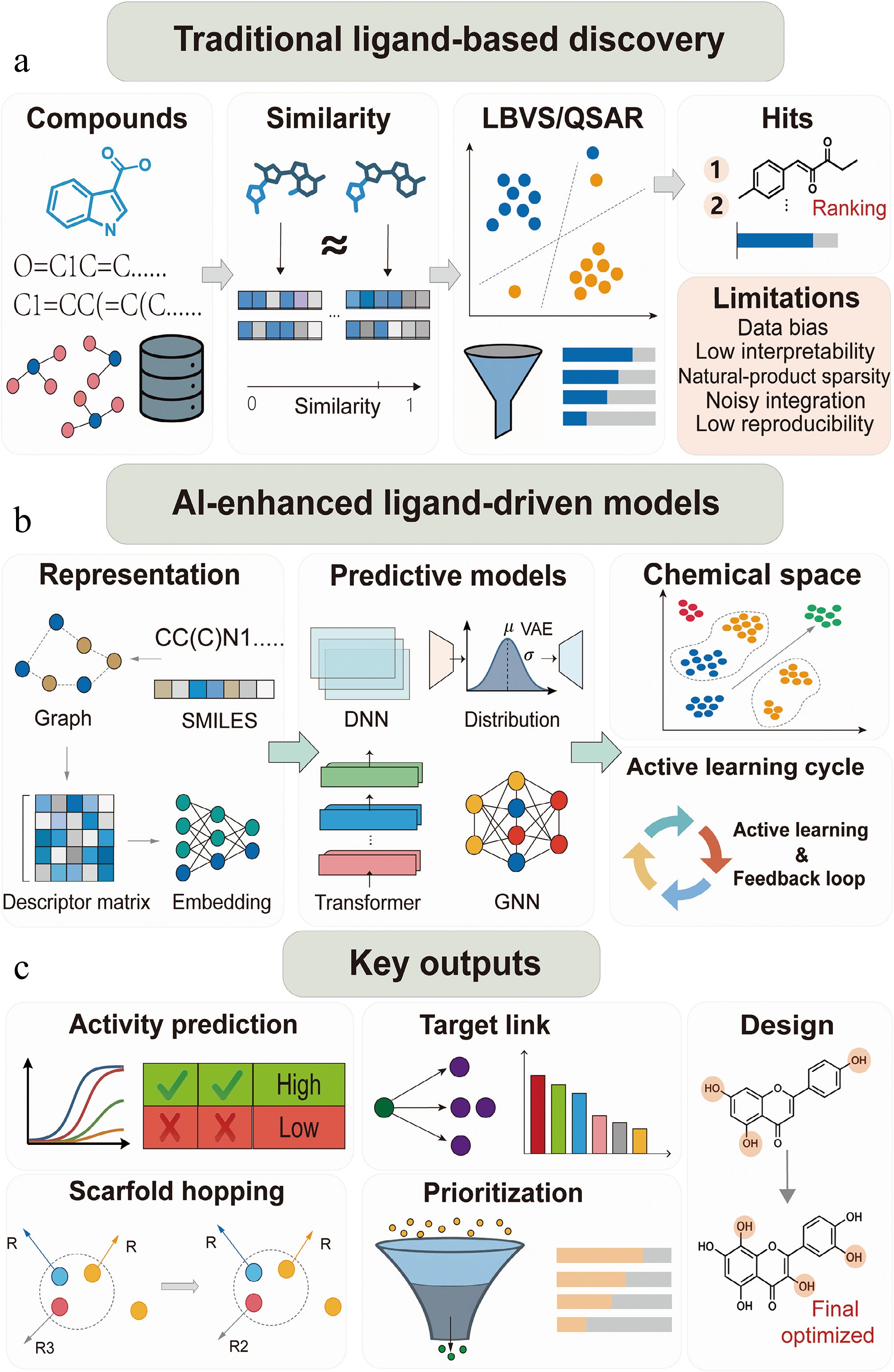
Figure 2.
Integrated ligand-driven target discovery workflow for TCM compounds. (a) Traditional ligand-based discovery: compounds from TCM libraries are screened via chemical similarity and ligand-based virtual screening (LBVS)/quantitative structure–activity relationship (QSAR) models to rank potential bioactive molecules. (b) AI-enhanced ligand-driven models: graph- or simplified molecular input line entry system (SMILES)-based embeddings feed deep neural network (DNN), graph neural network (GNN), or transformer models to predict activity, explore chemical space, and enable scaffold hopping. Active learning cycles iteratively refine predictions with experimental feedback. (c) Key outputs: generates activity predictions, target links, scaffold hopping opportunities, prioritized leads, and informs rational compound design for experimental validation.
-
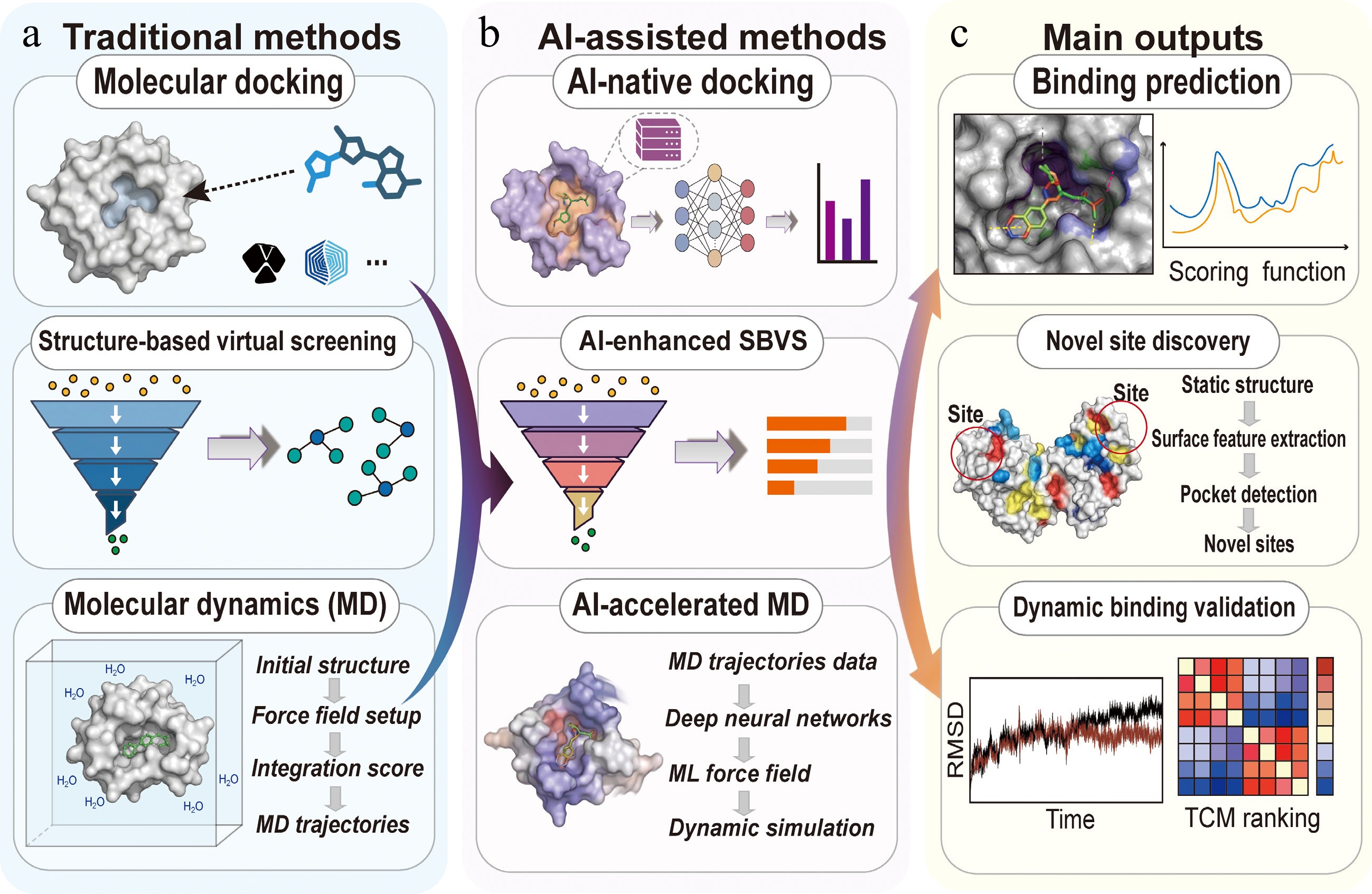
Figure 3.
Integrated structure-driven target discovery workflow. (a) Traditional methods: combines molecular docking, structure-based virtual screening (SBVS), and molecular dynamics (MD) to evaluate ligand-protein binding, rank candidate compounds, and assess interaction stability over time. (b) AI-assisted methods: integrates AI-native docking, AI-enhanced SBVS, and AI-accelerated MD to predict binding affinities, efficiently prioritize compounds, and model dynamic interactions with deep learning refinement. (c) Output applications: highlights core outcomes of target discovery, including binding prediction, binding-site discovery, and dynamic validation, supporting experimental prioritization of TCM compounds while reducing visual complexity for journal readability.
-
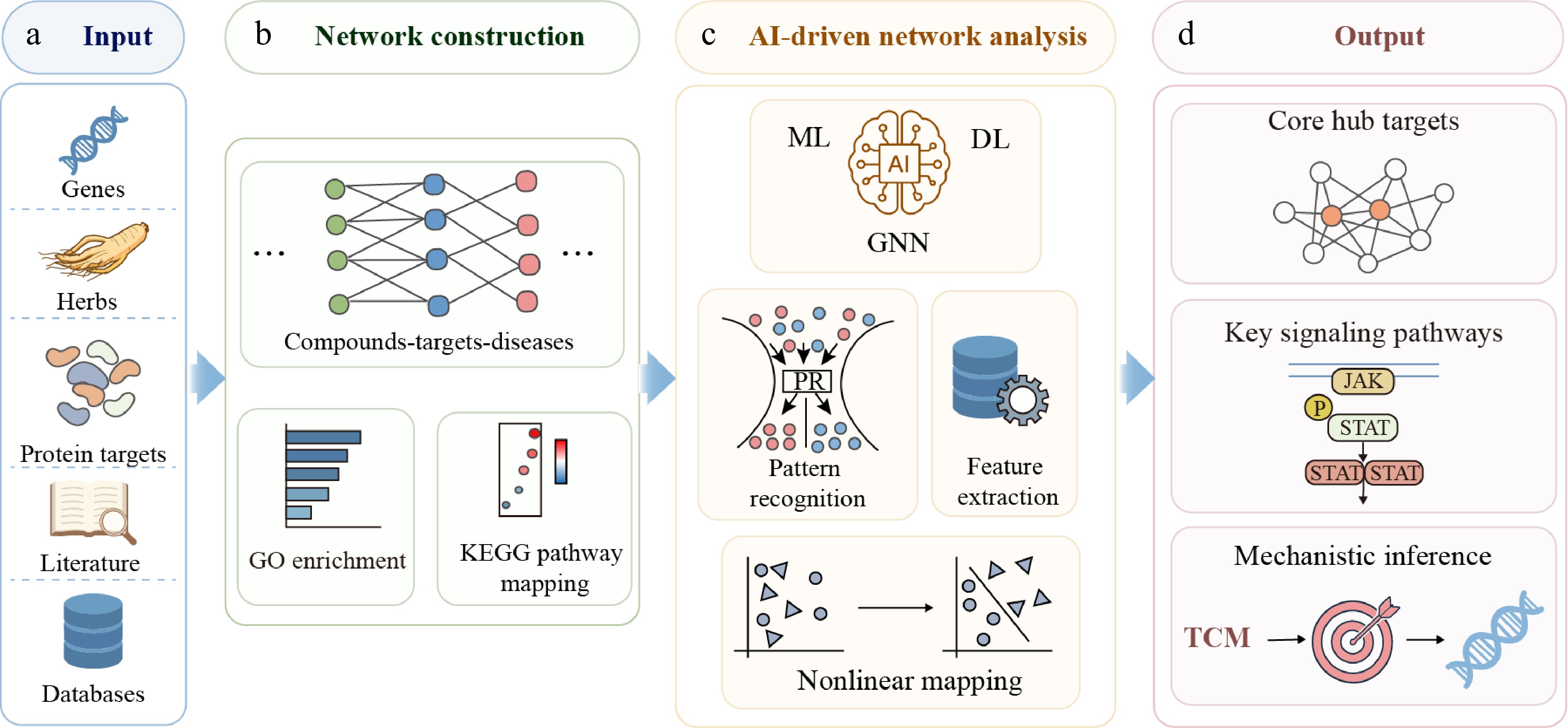
Figure 4.
Schematic workflow of AI-assisted network pharmacology for target discovery in traditional Chinese medicine (TCM). (a) Multi-source input data include genes, herbs, protein targets, literature, and databases. (b) Network construction integrates compound-target-disease associations with Gene Ontology (GO) enrichment analysis and Kyoto Encyclopedia of Genes and Genomes (KEGG) pathway mapping. (c) AI-driven network analysis incorporates machine learning (ML), deep learning (DL), and graph neural networks (GNNs) for pattern recognition, feature extraction, and nonlinear mapping. (d) The resulting outputs include core hub targets, key signaling pathways, and mechanistic inference, thereby supporting target identification and biological interpretation in TCM.
-
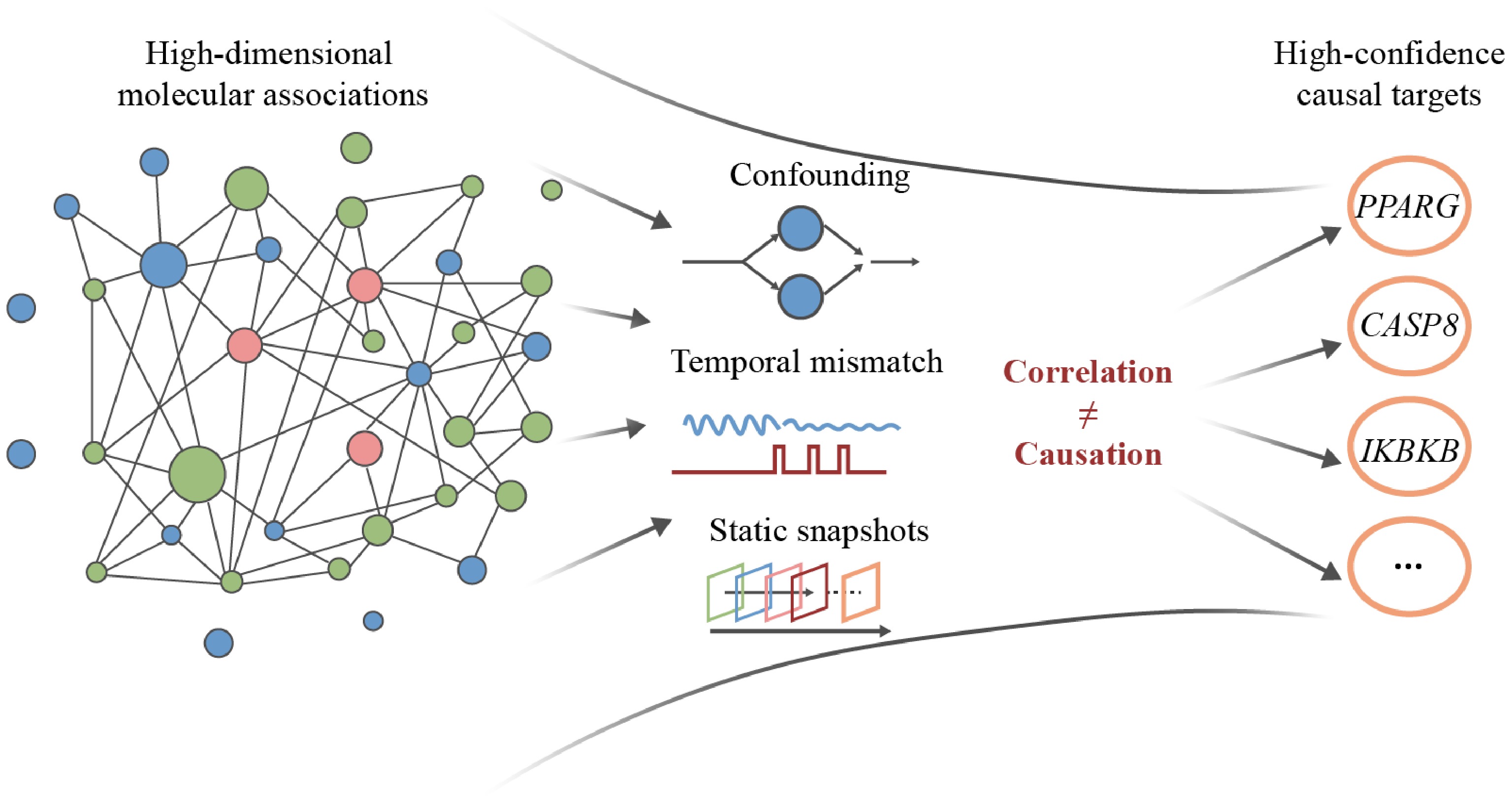
Figure 5.
Schematic overview of methodological challenges in multi-omics-based target discovery in traditional Chinese medicine (TCM). High-dimensional molecular associations are subject to confounding, temporal mismatch, and static omics snapshots, which complicate the distinction between correlation and causation and hinder the identification of high-confidence causal targets.
-
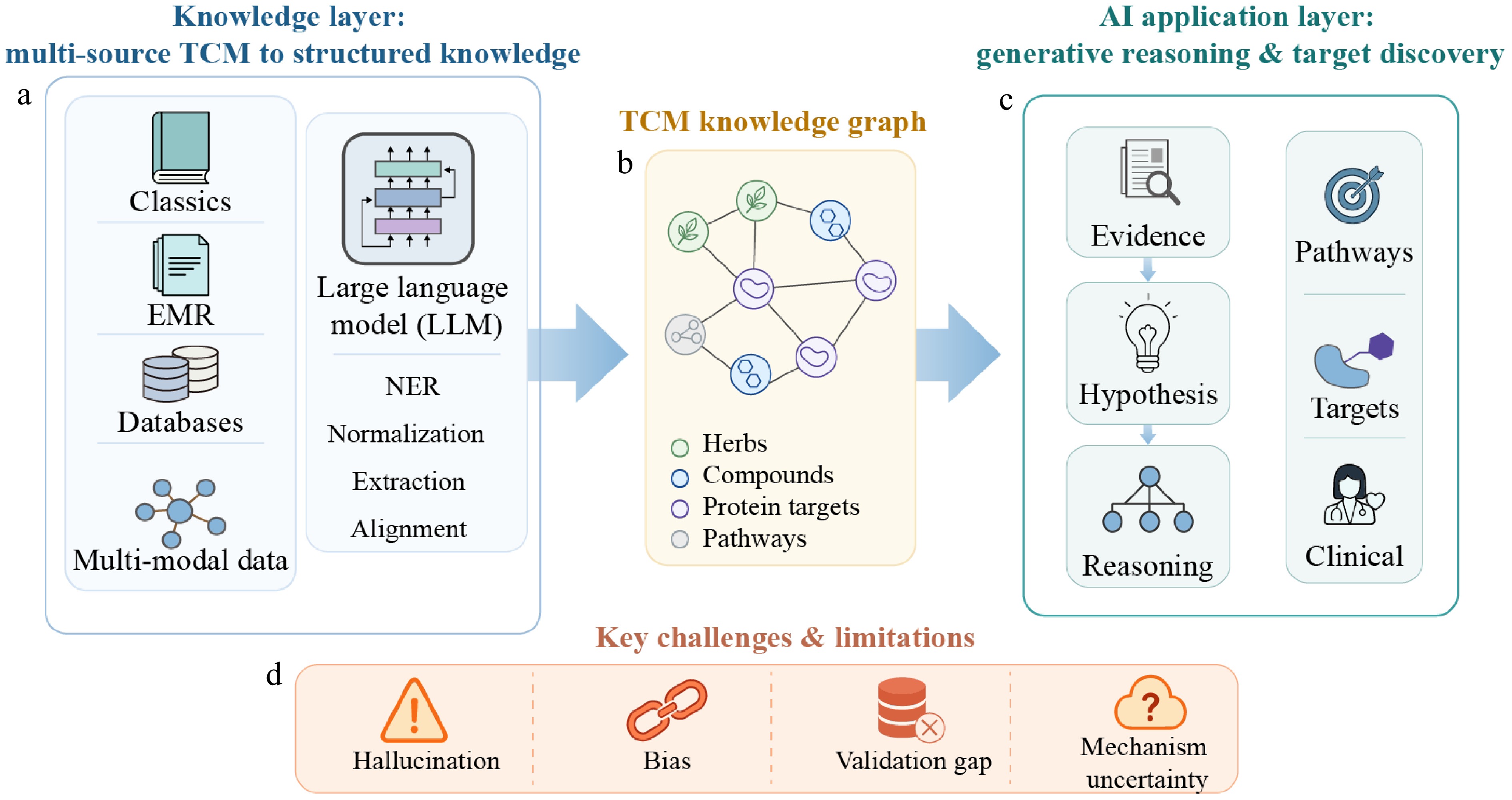
Figure 6.
Schematic framework of generative AI and knowledge graph-based modeling for traditional Chinese medicine (TCM) target discovery. (a) Knowledge layer for transforming multi-source TCM information, including classical texts, electronic medical records (EMRs), databases, and multimodal data, into structured representations with the assistance of large language models (LLMs). (b) Construction of a TCM knowledge graph linking herbs, compounds, protein targets, and pathways. (c) AI application layer for evidence integration, hypothesis generation, reasoning, and downstream applications in pathway analysis, target discovery, and clinical decision support. (d) Key challenges and limitations, including hallucination, bias, validation gaps, and mechanistic uncertainty.
-
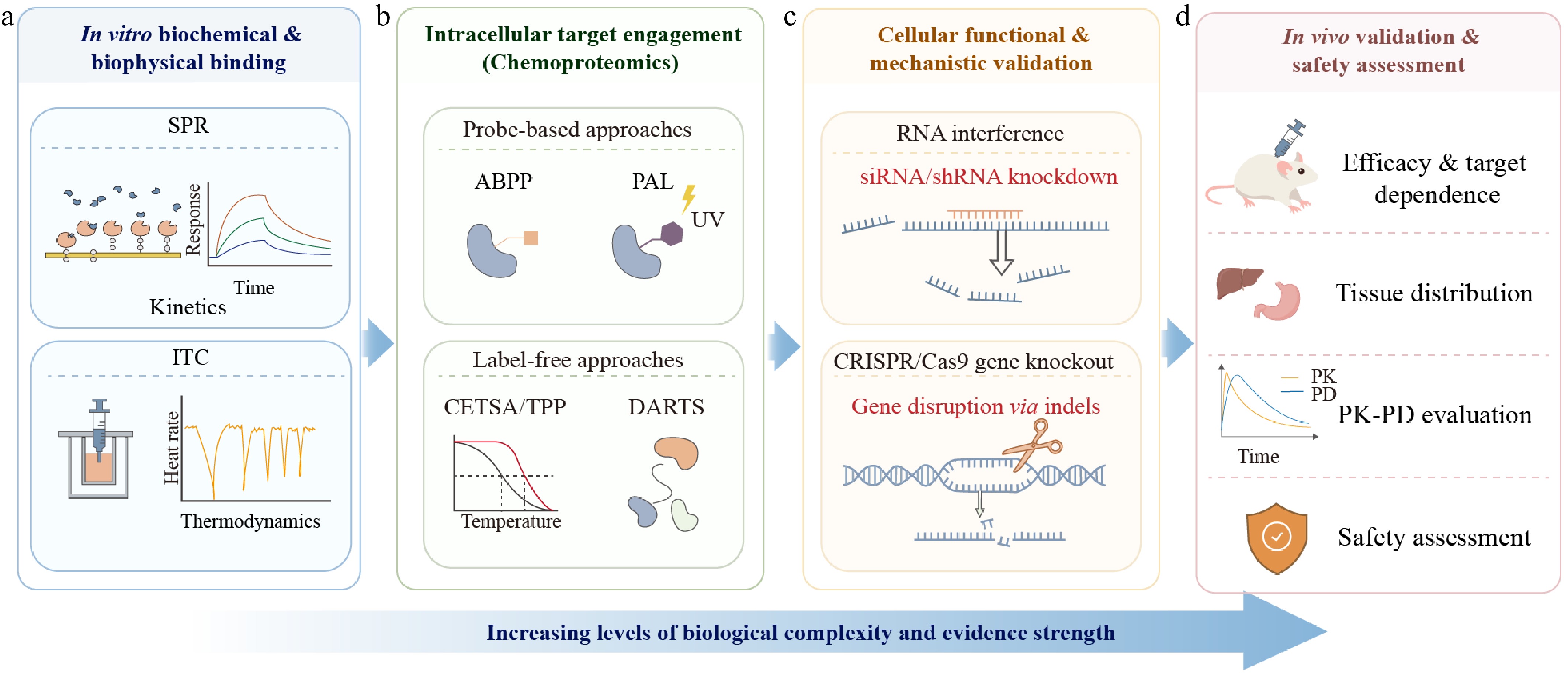
Figure 7.
Hierarchical experimental framework for validation of AI-predicted targets from traditional Chinese medicine (TCM)-derived compounds. (a) Biochemical and biophysical binding validation via surface plasmon resonance (SPR) and isothermal titration calorimetry (ITC) using purified target proteins. (b) Intracellular target engagement profiling via chemoproteomics, including probe-based (activity-based protein profiling, ABPP; photoaffinity labeling, PAL) and label-free (thermal proteome profiling, TPP/CETSA; drug affinity responsive target stability, DARTS) approaches, for intracellular target profiling under near-physiological conditions. (c) Cellular functional and mechanistic validation via gene perturbation (RNA interference, siRNA/shRNA; CRISPR/Cas9-mediated gene knockout) to confirm target necessity for the observed pharmacological effects. (d) In vivo validation and safety assessment in animal models, evaluating target-dependent efficacy, pharmacokinetic-pharmacodynamic (PK-PD) profiles, tissue distribution, and safety. From left to right, the framework indicates increasing levels of biological complexity and evidence strength.
-
Database name Last update Data types Description Websites Target types Ref. ETCM v2.0 2023 48,442 prescriptions, 38,298 ingredients, 1,040 targets, 9,872 patent drugs Links TCM formulas and herbs to targets and diseases to reveal holistic mechanisms. www.tcmip.cn/ETCM2/front Predicted and experimentally validated [35] TCM bank 2023 9,192 herbs, 61,966 ingredients, 15,179 targets, 32,529 diseases Provides chemical structures and ADMET properties for screening
and target prediction.https://tcmbank.cn/ Predicted and experimentally validated [46] HERB (v2.0) 2024 7,263 herbs, 49,258 ingredients, 12,933 targets Integrates clinical trials with experimental data to validate herb–target interactions. http://herb.ac.cn/v2 Predicted and experimentally validated [47] ITCM 2023 25,857 prescriptions, 8,454 herbs, 43,430 ingredients, 1,488 sequencing profiles Focuses on the 'herb-ingredient-target' network to explain formula mechanisms. http://itcm.biotcm.net/browse.html Predicted and experimentally validated [31] Hit 2.0 2021 1,237 ingredients, 2,208 target sites, 10,031 active pairs Offers experimentally verified ingredient-target pairs with binding affinity data. www.badd-cao.net:2345 Experimentally validated [32] TM-MC 2.0 2024 635 herbs, 34,107 compounds, 13,992 targets, 27,997 diseases Connects herbs and ingredients to molecular targets and metabolic enzymes. https://tm-mc.kr/
Predicted[48] TCM-suite 2022 DNA marker sequences, Holmes/Watson module A cloud platform for drug property prediction and network pharmacology analysis. http://tcm-suite.aimicrobiome.cn/ Predicted [49] DCABM-TCM 2023 1,816 blood-entering components, 192 prescriptions, 194 herbs Bridges TCM syndromes and
medical cases with specific biological markers.http://bionet.ncpsb.org.cn/dcabm-tcm/#/Home Predicted and experimentally validated [50] TCMSID 2022 499 herbs, 20,015 ingredients, 3,270 targets Provides structural and botanical data for identifying TCM-specific active ingredients. https://bidd.group/TCMID/ Predicted [51] SuperTCM 2021 6,516 herbs, 55,000 ingredients, 254 pathways Supports target discovery through functional enrichment and network analysis tools. http://tcm.charite.de/supertcm Predicted and experimentally validated [37] SymMap (v2) 2019 1,717 symptoms, 499 herbs, 4,302 targets Maps TCM symptoms to modern diseases and targets via a large knowledge graph. www.symmap.org Predicted and experimentally validated [52] TCMID 2.0 2018 46,929 prescriptions, 43,413 ingredients, 17,521 targets,
MS spectraMaps TCM formulas and herbs to molecular targets and diseases to facilitate network pharmacology
and mechanism study.www.megabionet.org/tcmid Predicted and experimentally validated [53] YaTCM 2018 1,813 prescriptions, 6,220 herbs, 18,697 targets, 47,696 compounds Provides associations between TCM herbs, ingredients, and targets with a focus on ADMET properties and drug-likeness evaluation. http://cadd.pharmacy.nankai.edu.cn/yatcm/home Predicted and experimentally validated [54] TCMSP 2014 499 herbs, 29,384 ingredients, 3,311 targets, ADME properties Links herbs and ingredients to targets and diseases based on ADME properties to evaluate drug-likeness and screening potentials. https://old.tcmsp-e.com/tcmsp.php Predicted [55] ccTCM 2023 273 medicinal materials, 1,449 quantitative components Integrates chemical ingredients
and molecular targets with cancer-related pathways to facilitate TCM-based anti-tumor drug discovery.www.cctcm.org.cn Predicted and experimentally validated [56] PubChem 2026 >100 million compounds, bioassay data Provides extensive chemical structures, bioactivity data, and standardized identifiers to support virtual screening and target interaction studies. https://pubchem.ncbi.nlm.nih.gov/ Experimentally validated [57] ChEMBL 2026 2.8 million substance,
1.8 million bioassaysA large-scale bioactivity database linking drug-like molecules to therapeutic targets through experimentally validated binding and functional assays. www.ebi.ac.uk/chembl Experimentally validated [58] BindingDB 2026 3.2 million data points,
1.4 million compounds, 114,000 targetsFocuses on the quantitative binding affinities of drug-like molecules
with proteins to support molecular docking and QSAR model development.www.bindingdb.org/rwd/bind/index.jsp Experimentally validated [40] DrugBank 2026 13,575 substances, comprehensive target and pathway data Provides detailed drug-target information and pharmacological data to facilitate target identification and drug repurposing for TCM ingredients. https://go.drugbank.com/ Predicted and experimentally validated [33] DrugCentral 2026 Regulatory data, indications, side effects Integrates comprehensive information on approved drugs, including molecular targets, bioactivity, and clinical indications
to support target validation.https://drugcentral.org/ Experimentally validated [41] DRESIS (v2.0) 2025 > 20,000 drugs, metabolic reprogramming data Links TCM ingredients to gene expression profiles and disease-related targets to facilitate mechanism-based drug discovery and repositioning. http://dresis.idrblab.net/ Predicted and experimentally validated [59] DrugMap 2025 33,000 drugs, 50,180 interactions, tissue expression profiles Maps the relationships between drugs, targets, and diseases through integrated network pharmacology to support target identification and mechanism study. https://drugmap.idrblab.net/ Predicted and experimentally validated [60] SuperDrug2 2017 4,587 compositions, 2D/3D structure, PBPK simulation Provides extensive structural and pharmacological data for approved and experimental drugs to facilitate target prediction and repositioning for TCM ingredients. http://bioinf.charite.de/superdrug Predicted and experimentally validated [42] GeneCards 2025 Human genome disease target annotation A comprehensive human gene database providing detailed information on functions, pathways, and associated diseases to support target identification. www.genecards.org Predicted and experimentally validated [61] TTD 2025 932 Validation targets, QSAR model library Provides comprehensive information on clinical and experimental targets, including their associated drugs and clinical trial statuses. https://ttd.idrblab.cn/ Predicted and experimentally validated [44] DisGeNET 2024 GWAS data, clinical variant association Integrates human gene-disease associations from curated databases and literature to support disease-target discovery and mechanism analysis. https://disgenet.com/ Predicted and experimentally validated [45] BATMAN-TCM (v2.0) 2023 Predictive interactions, GO/KEGG analysis An online bioinformatics tool for predicting TCM molecular targets and functional mechanisms through network-based association analysis. http://bionet.ncpsb.org.cn/batman-tcm/index.php Predicted and experimentally validated [62] NPASS 2017 35,032 NPs, 25,041 species, quantitative activity values Provides curated bioactivity and structural data for natural products and their targets to support drug discovery and mechanism studies. http://bidd2.nus.edu.sg/NPASS Experimentally validated [63] Table 1.
Summary of major TCM-related databases and biological resources for AI-driven target discovery.
-
Stage Method Measured readout Strengths and TCM-specific pitfalls Recommended application scenario Ref. In vitro binding SPR Direct binding kinetics (KD, kon, koff) real-time quantitative binding; prone to nonspecific adsorption or aggregation with some polyphenols, quinones, and flavonoids Orthogonal validation of AI-predicted binders/Single compound ★★★/Formula $\chi $ [141] ITC Binding thermodynamics (KD, ΔH, stoichiometry) Gold-standard thermodynamic readout; limited sensitivity for weak-affinity ligands; high concentrations may cause precipitation Secondary confirmation of AI-predicted binders/Single compound ★★★/Formula $\chi $ [140] Intracellular engagement (probe-based) ABPP Active-site occupancy High enzyme specificity; limited applicability to non-covalent compounds and probe-incompatible TCM ingredients Enzyme-target validation/Single compound ★/Formula $\chi $ [146,147] PAL Reversible noncovalent interactions Captures reversible binding; probe derivatization may reduce bioactivity or permeability Target fishing when chemical modification is feasible/Single compound ★/Formula $\chi $ [146,147, 149] Intracellular engagement (label-free) CETSA Cellular thermal stabilization (ΔTm) Label-free in situ engagement; low intracellular exposure may yield false negatives Cellular target engagement validation/Single compound ★★★/Formula ★ [151,152] DARTS Protease resistance shift Simple and scalable; sensitive to high-concentration artifacts and nonspecific protein protection Rapid preliminary target screening/Single compound ★★/Formula ★ [18, 147, 153] TPP Proteome-wide thermal shift profiling Unbiased proteome-wide target discovery; indirect responders or stress-related proteins may appear as hits Identification of indirect or missed targets/Single compound ★★★/Formula ★★★ [151,152] Functional necessity RNAi Knockdown-associated phenotypic change Operationally accessible; incomplete knockdown and off-target effects may compromise causal interpretation Preliminary functional validation of AI-predicted targets/
Single compound ★★/Formula★[150, 154] CRISPR knockout Knockout-dependent loss of drug response Strong causal evidence; partial attenuation may still be informative in multi-target settings Core causal validation of AI-predicted targets/Single compound ★★★/Formula ★ [150, 156, 161] CRISPR screening Functional network hub identification Supports systems-level interpretation; herbal synergy complicates hit annotation Pathway and module validation/Single compound ★★★/Formula ★★★ [156,157, 169] In vivo validation Target-dependent in vivo efficacy Target-linked pharmacological efficacy High translational relevance; multi-component exposure obscures single-ingredient contributions Final in vivo validation of AI-derived hypotheses/Single compound ★★★/Formula ★★★ [150, 161, 174] PK-PD modeling Exposure-response relationship Clarifies formula-level synergy; herb-herb PK interactions complicate modeling Validation of formula compatibility mechanisms/Single compound ★/Formula ★★★ [158, 162] Applicability was rated as follows: ★★★, highly suitable; ★★, moderately suitable; ★, limited suitability; $\chi $ Table 2.
Experimental validation strategies for AI-predicted targets in TCM research.
Figures
(7)
Tables
(2)