-
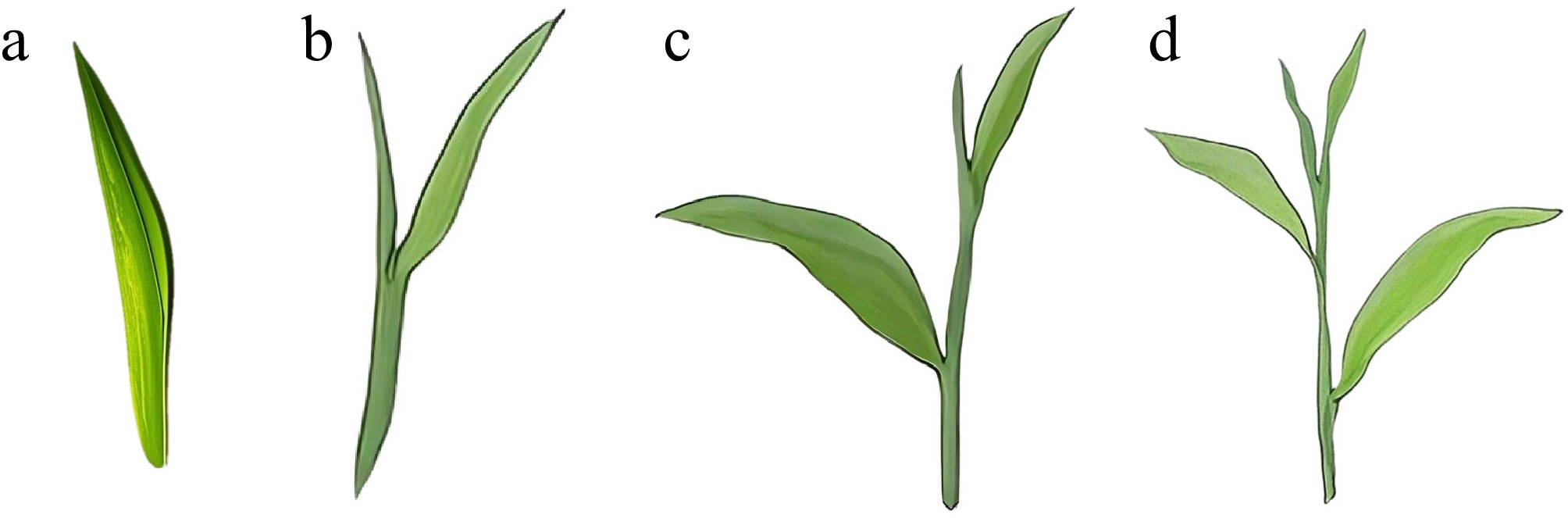
Figure 1.
Schematic diagram of tea shoot classification.
-
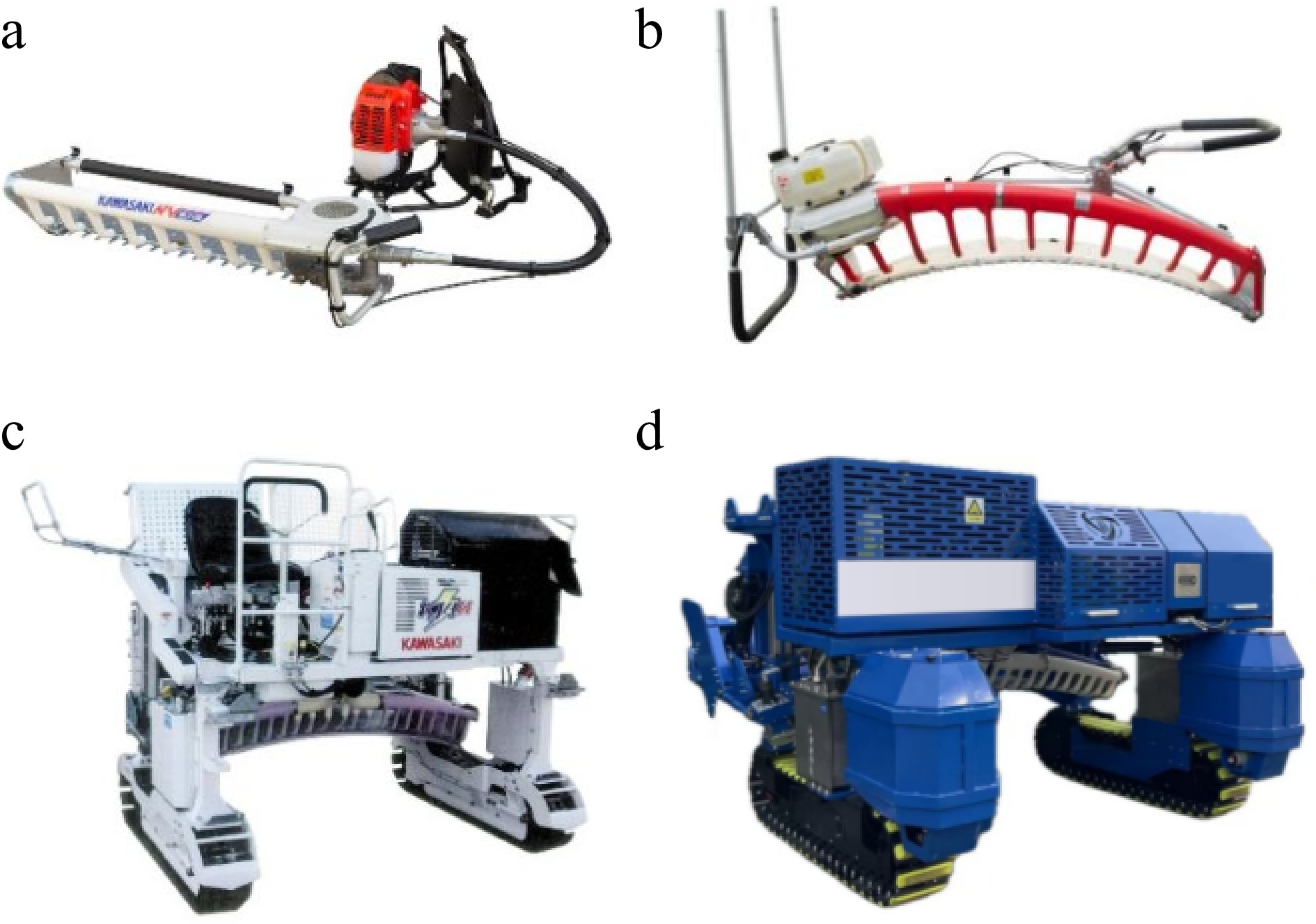
Figure 2.
Bulk tea picking equipment.
-
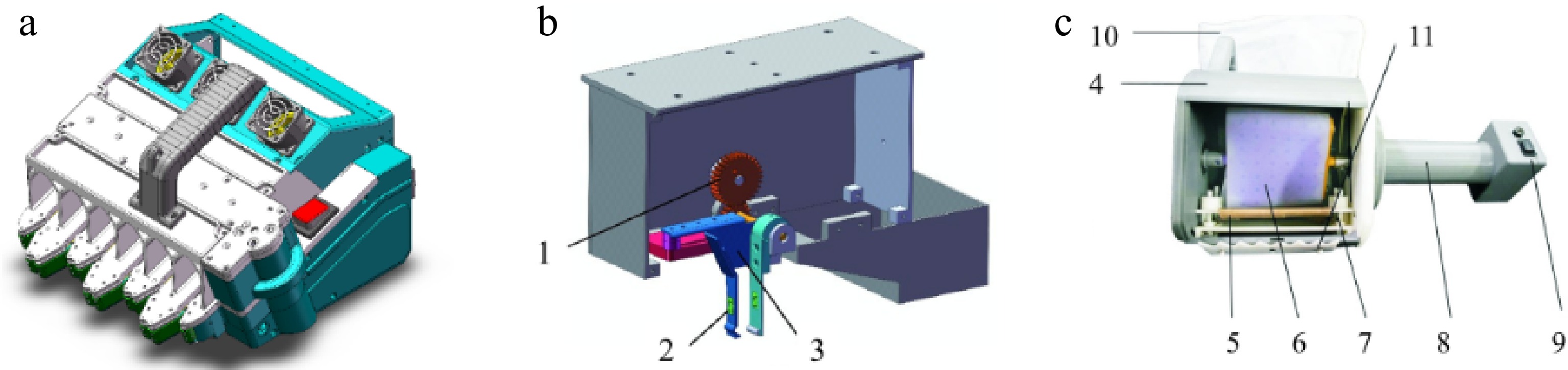
Figure 3.
Handheld picking technology for premium tea: 1. Feeding mechanism. 2. Photoswitch. 3. Picking mechanism. 4. Frame. 5. Moving plate. 6. Rolling element. 7. Pulling force adjustment mechanism. 8. DC motor (including a handle). 9. Power cabinet and controller. 10. Fresh tea leaves collection bag. 11. Old tea leaves isolation teeth.
-
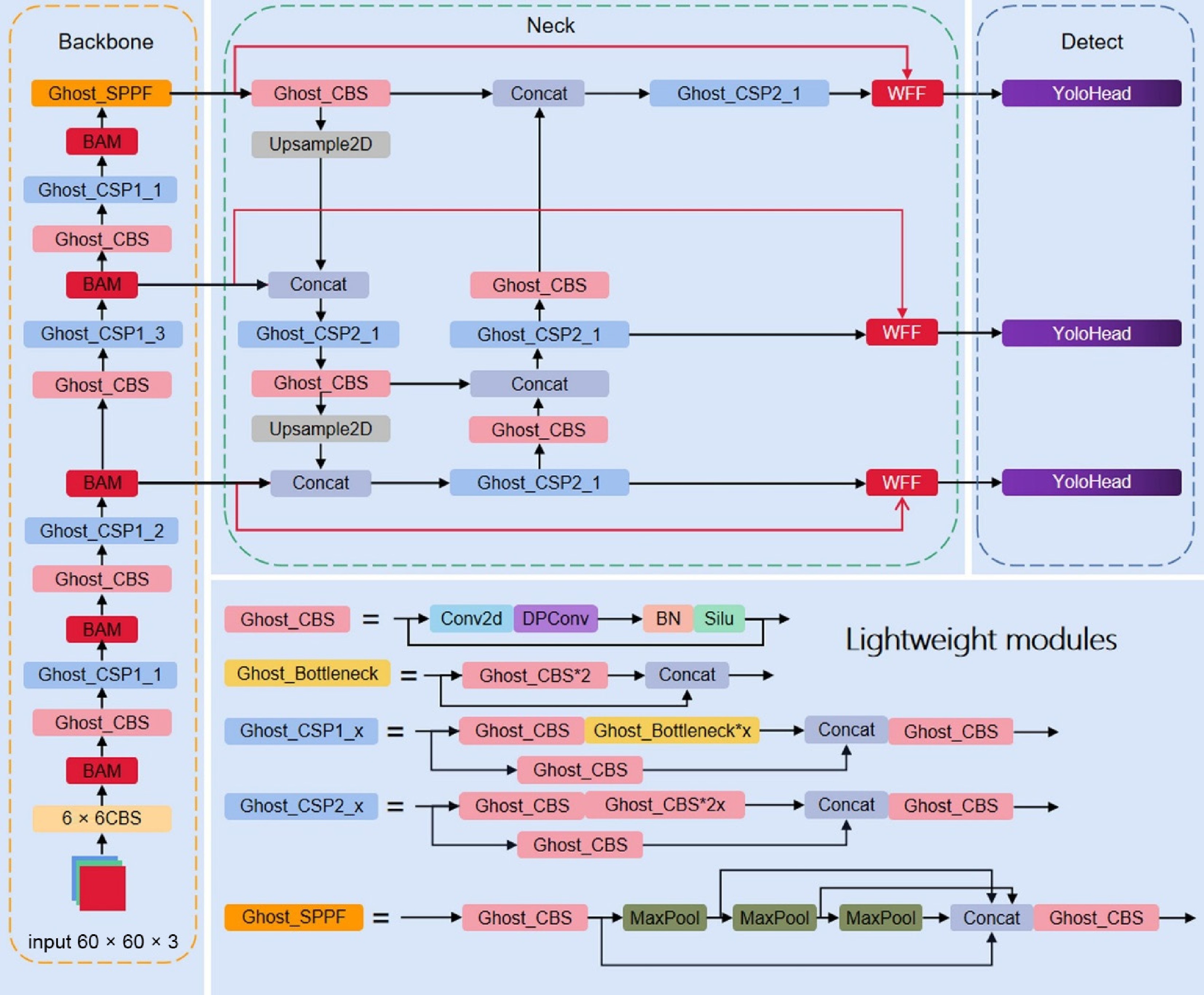
Figure 4.
Lightweight tea shoot detection model based on YOLOv5[19].
-
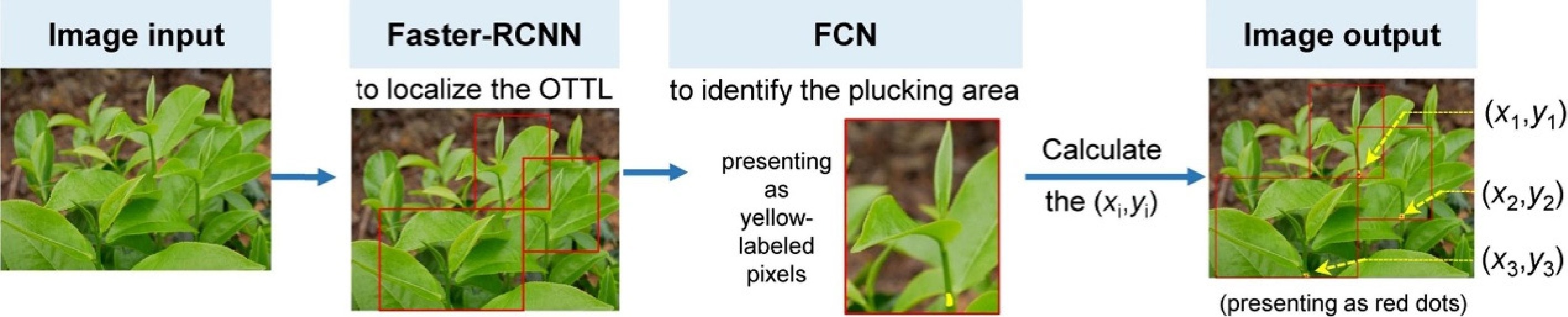
Figure 5.
Location method of tea shoots picking point based on deep learning[25].
-
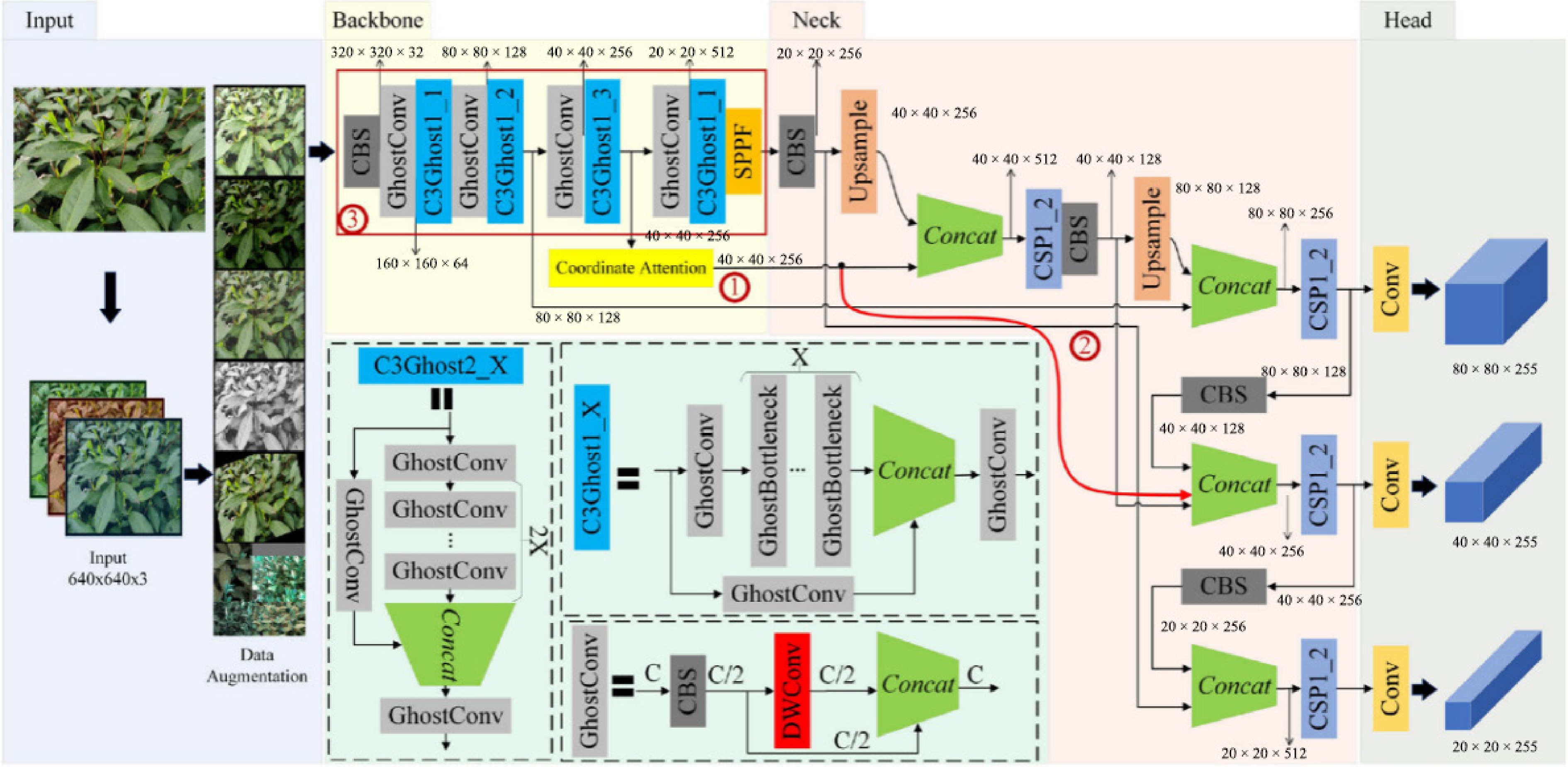
Figure 6.
Tea shoot detection and pose estimation algorithm based on depth camera and improved yolov5[30].
-
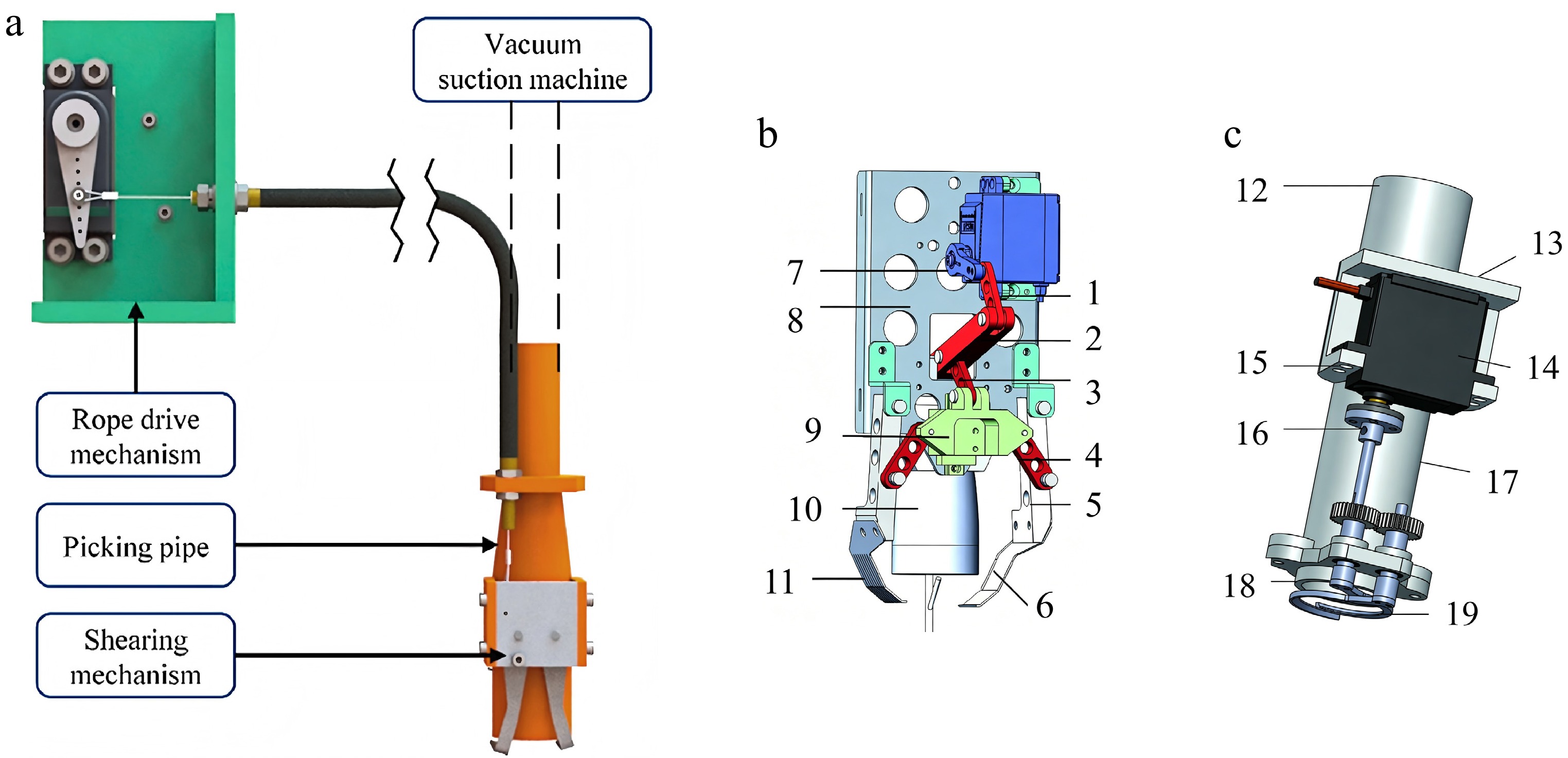
Figure 7.
Intelligent picking end-effector of premium tea: 1. Connecting rod. 2–4. Connecting rod. 5. Blade mounting plate. 6. Integrated cutter. 7. Steering gear 8. Fixed plate. 9. Slide rail. 10. Negative pressure pipe. 11. Split cutter. 12. Upper nozzle of end pipe. 13. Connecting platform. 14. Steering gear. 15. Steering gear bracket. 16. Connecting flange. 17. End pipe. 18. Lower nozzle of end pipe. 19. Annular cutter.
-
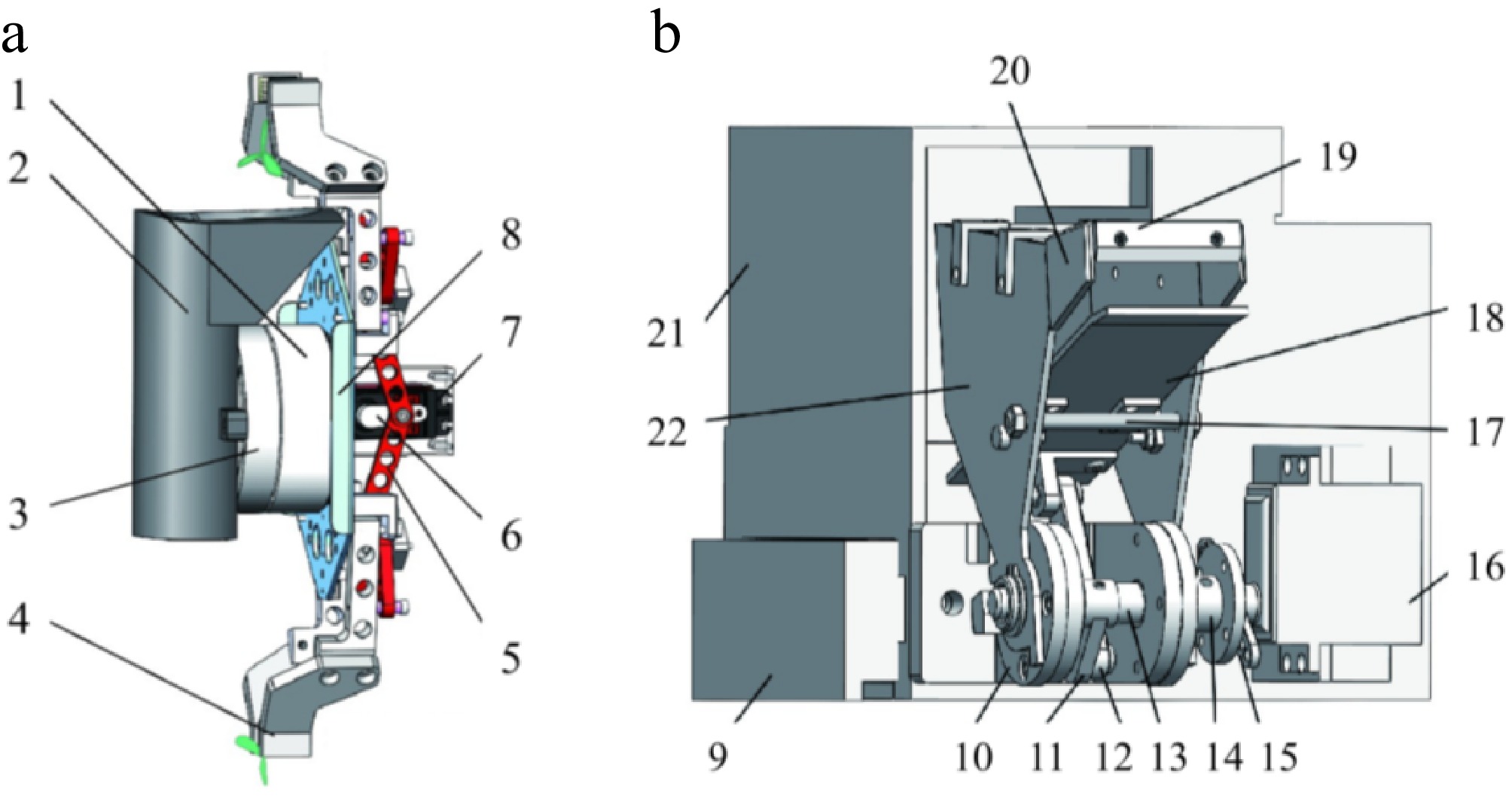
Figure 8.
Intelligent picking end-effector of premium tea. 1. Motor. 2. Temporary storage box. 3. Connecting piece. 4. Picking fingers. 5. Transmission connecting rod. 6. Steering gear arm. 7. Steering gear. 8. Mounting plate. 9. Collection drawer. 10. Stop block. 11. Crank. 12. Connecting rod. 13. Step shaft. 14. Flange. 15. Steering gear arm. 16. Steering gear. 17. Gear lever. 18. Jaw. 19. Customized blade. 20. Blade seat. 21. Leak proof fixing box. 22. Tool rest.
-
Technical approach Model/method Key performance metrics Application scenarios YOLO series improvements YOLOv3-based[18] mAP 71.96%; Picking point precision 83% Resource-constrained tea gardens (lightweight deployment on embedded end-effector) GhostNet-YOLOv5[19] Accuracy 76.31% (↑4.83%); F1 ↑under varying lighting Dynamic lighting tea garden (early morning/late afternoon picking with frequent light adjustments) TBD-Y[24] mAP 87.89% (↑2.18%);
Parameters ↓44% (TBD-Y-S)Complex canopy tea gardens (Mature tea plantations with dense foliage requiring strong feature discrimination) Segmentation &
end-to-end
localizationMR3P-TS[25] Bud mAP 0.449; Picking point precision 0.949 High-precision premium tea picking (e.g., Longjing requiring sub-millimeter accuracy) Faster R-CNN + FCN[26] Localization mAP 84.91%; cross-variety accuracy 77.27%−79.66% Mixed-variety tea gardens (fields with multiple tea Varieties) 3D point
cloud fusionTea-YOLOv8s + Point Cloud[29] Detection success 85.16%; localization success 78.90%; depth error 1.43 mm Fully automated picking robots (robotic arms requiring 3D spatial positioning) TBD-Y + OPVSM[31] mAP 85.2%; inference 87.71 FPS; 3D pose accuracy 90%; parameters 29.25 M High-speed real-time picking (balance of precision and speed) T-YOLOv8n + Hierarchical Servo[32] Close-up mAP0.5 = 93.7%; depth error 1.43 mm;
3D localization success 86.4%High-precision servo control: (e.g., Longjing requiring sub-millimeter accuracy) Table 1.
Comparison of experimental results of different models.
-
Technology/equipment type Operating efficiency Tea shoots integrity rate Applicable scenario Manual picking About 0.003 hm2/h > 85% Any type of tea garden; premium tea picking Bulk tea picking equipment (single-person type) About 0.031 hm2/h 60%−80% Small-scale tea gardens; tea gardens with complex terrain, hilly and mountainous areas; bulk tea picking Bulk tea picking equipment (two-person type) About 0.075 hm2/h 60%−80% Medium-scale tea gardens; flatland, gentle slope, and terrace tea gardens; bulk tea picking Bulk tea picking equipment (ride-on type) About 0.1 hm2/h 75%−85% Large-scale continuous tea gardens; flatland and gentle slope tea gardens; bulk tea picking Handheld premium tea picking equipment About 0.016 hm2/h 80%−90% Small-scale tea gardens; any terrain tea gardens; premium tea picking Intelligent picking technology About 0.005 hm2/h > 85% Large-scale continuous tea gardens; flatland and gentle slope tea gardens; standardized tea gardens; premium tea picking Table 2.
Operation efficiency, shoots integrity and applicable scenarios of different technologies/equipment.
-
Technology/equipment type Core advantages Main disadvantages Manual picking High picking quality, capable of precise selective picking; extremely strong terrain adaptability High labor cost; extremely low efficiency, difficult for large-scale operations; quality stability is affected by labor Bulk tea picking equipment (single-person type) Low equipment cost, small initial investment; flexible and mobile; simple operation and maintenance; quick return on investment Poor picking quality; easy to damage tea plants; requires manual sorting, increasing costs; high work intensity Bulk tea picking equipment (two-person type) Excellent balance between efficiency and cost; low work intensity; stable equipment and low maintenance cost Poor picking quality; limited adaptability; relies on two-person cooperation, efficiency affected by coordination Bulk tea picking equipment (ride-on type) Extremely high large-scale operation efficiency; significantly reduces labor and management costs; short harvesting cycle High equipment and maintenance costs; poor terrain adaptability; slightly improved picking quality, but still only applicable to bulk tea Handheld premium tea picking equipment Quality close to manual picking, suitable for premium tea; portable and flexible; low maintenance cost Low intelligence, relies on manual positioning; limited efficiency improvement; poor ergonomics; insufficient integration of agricultural machinery and agronomy Intelligent picking technology Intelligent and precise selective picking, stable quality; capable of 24-h continuous operation; convenient for digital management Extremely high equipment cost; poor adaptability to complex environments; low picking success rate; insufficient industrial application adaptability; high maintenance requirements Table 3.
Core advantages and main disadvantages of different technologies/equipment.
Figures
(8)
Tables
(3)