-
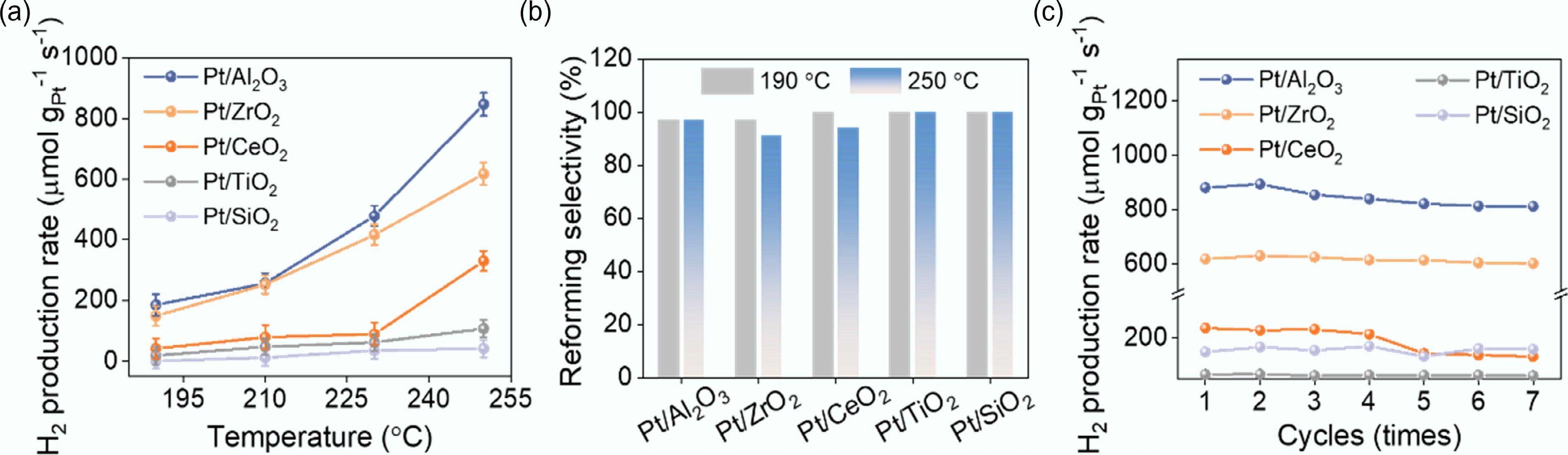
Figure 1.
Catalytic performance of 1 wt% Pt/oxide catalysts. (a) H2 production rates as a function of temperature. (b) Reforming selectivity at 190 and 250 °C. (c) Stability test over seven cycles at 250 °C. Reaction conditions: 30 mL methanol-water mixture (n[CH3OH] : n[H2O] = 1:3), 100 mg catalyst loading, 30 min, 0.5 MPa.
-
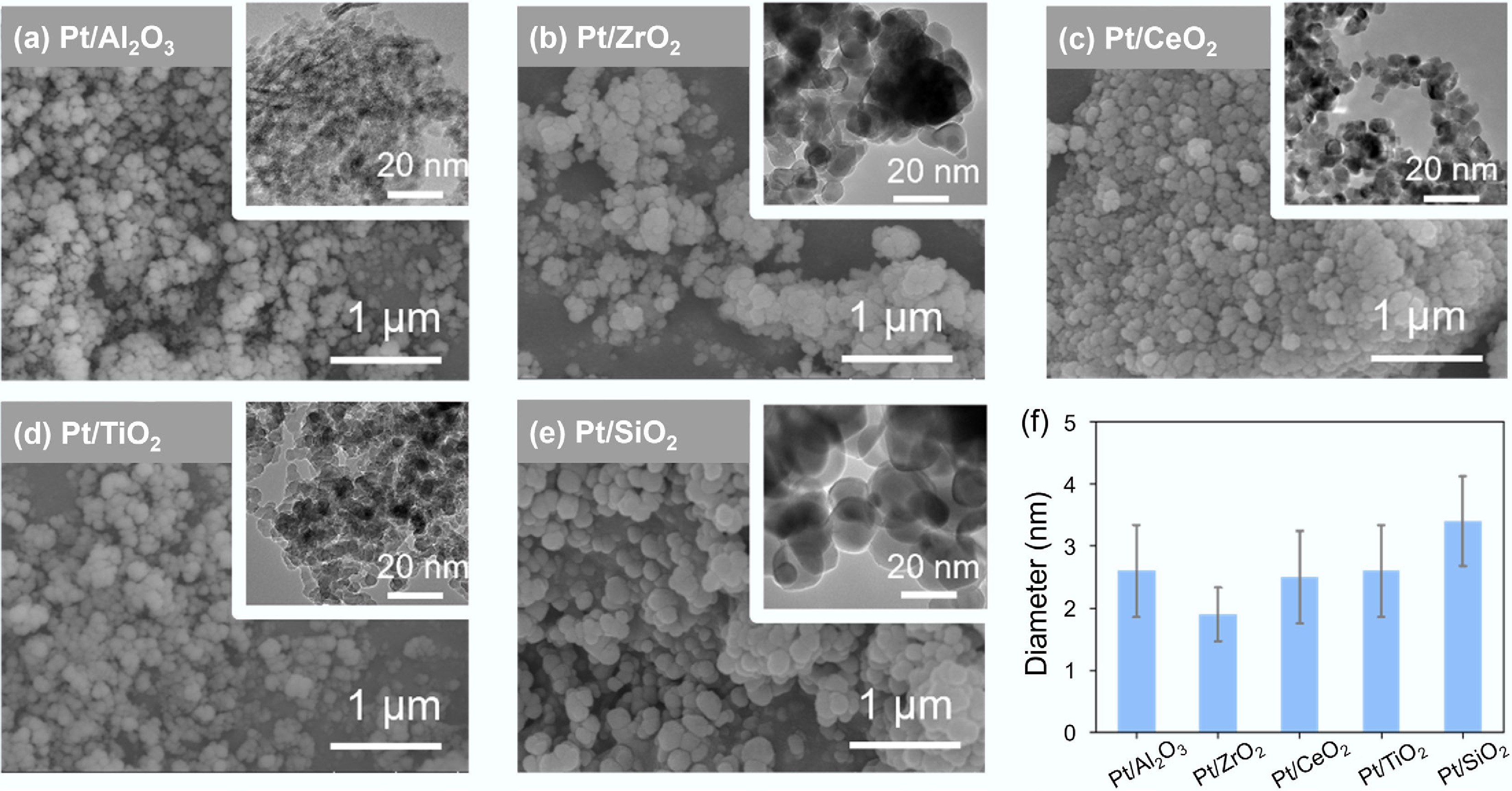
Figure 2.
The morphology characterization of catalysts. (a) Pt/Al2O3, (b) Pt/ZrO2, (c) Pt/CeO2, (d) Pt/TiO2, (e) Pt/SiO2, and (f) Pt particle size distribution.
-
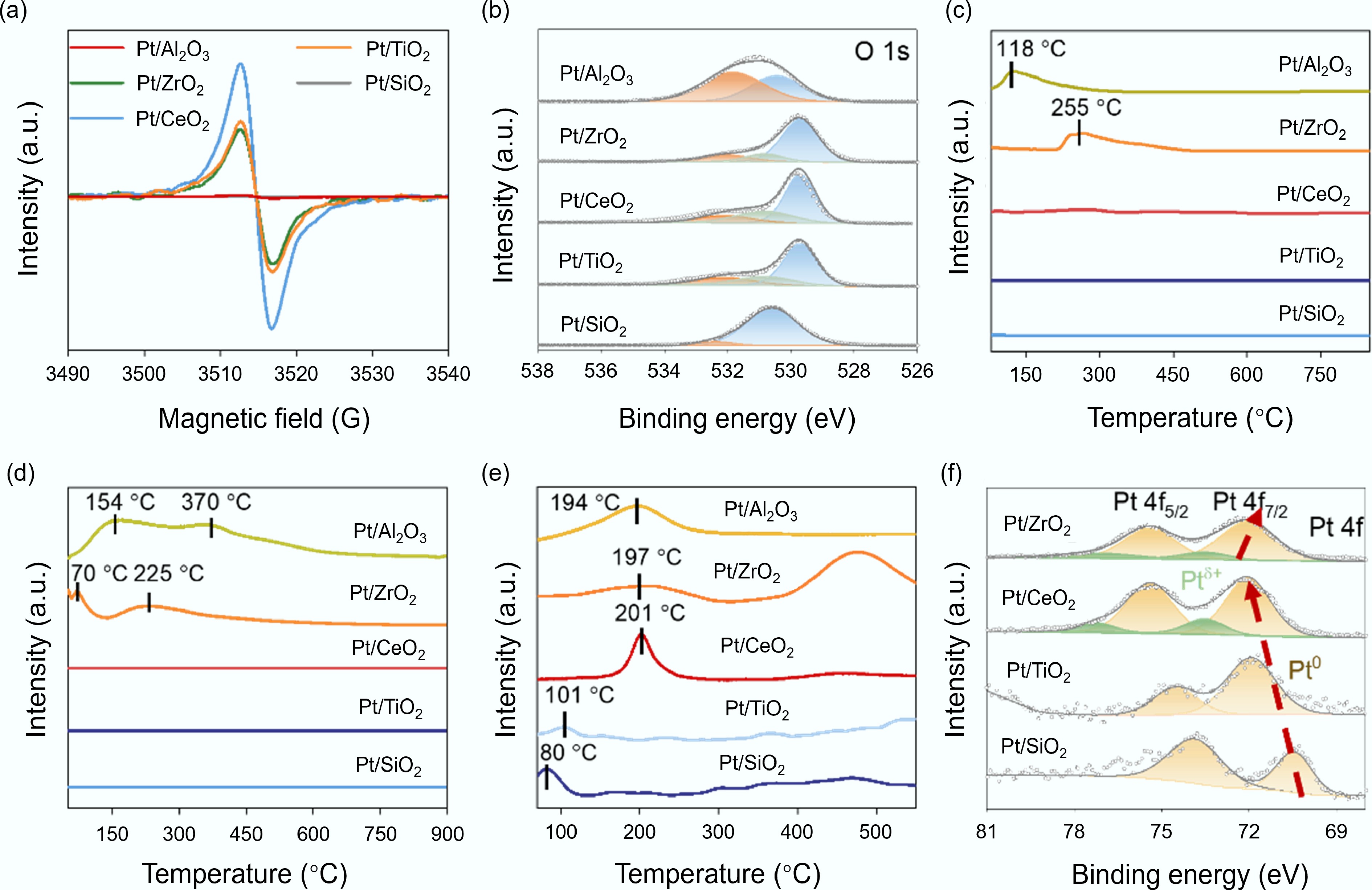
Figure 3.
The structural characterization of Pt/oxide catalysts. (a) EPR spectra, (b) O 1s XPS, (c) NH3-TPD, (d) CO2-TPD, (e) H2-TPR, and (f) Pt 4f XPS.
-
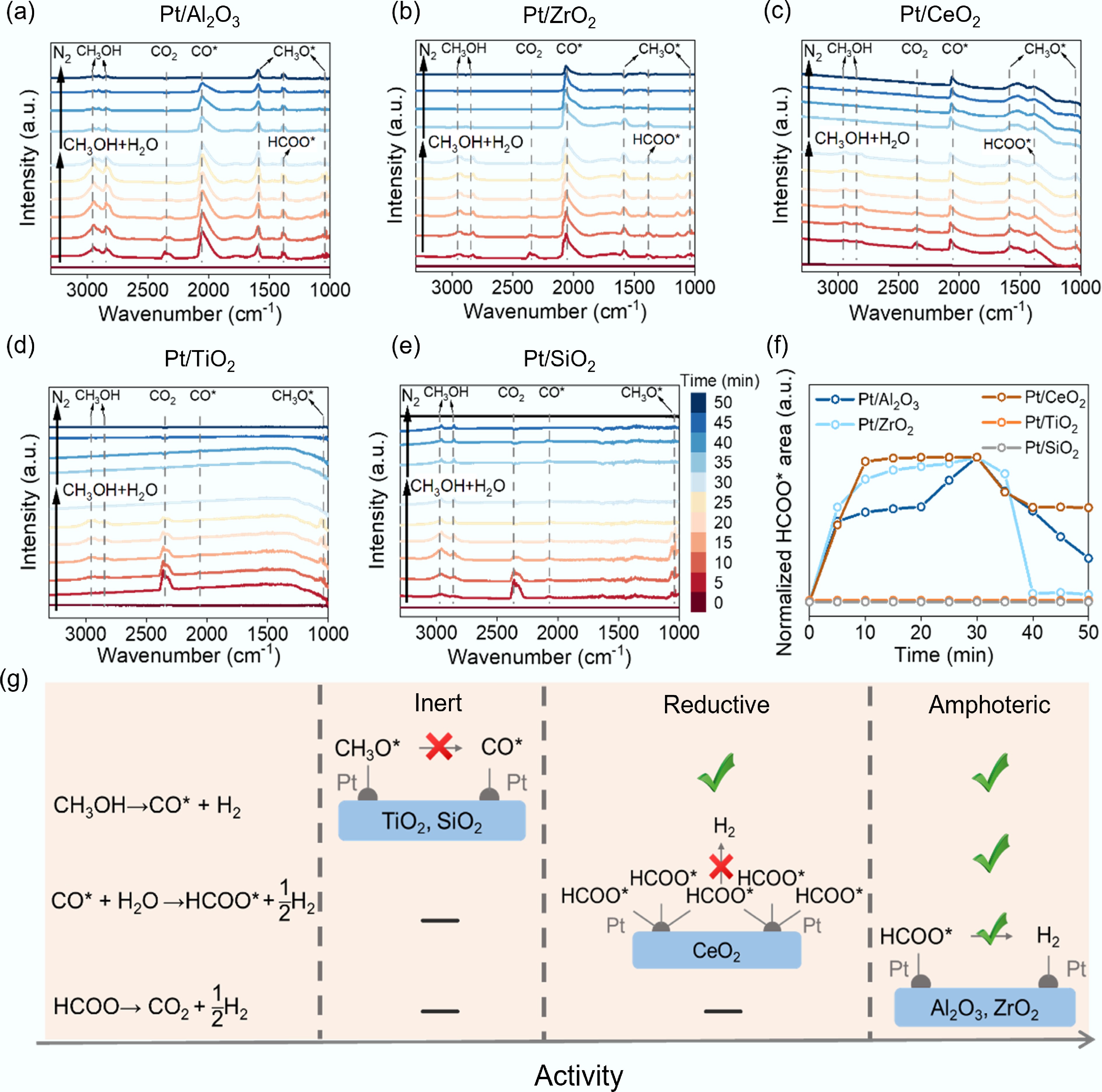
Figure 4.
The catalytic mechanism of Pt/oxide catalysts. The in-situ DRIFTS of APRM over (a) Pt/Al2O3, (b) Pt/ZrO2, (c) Pt/CeO2, (d) Pt/TiO2, and (e) Pt/SiO2 under CH3OH/H2O (1:3) at 230 °C. (f) The normalized integrated peak area of surface HCOO* (1,395 cm–1). (g) Schematic illustration of the APRM reaction pathways over Pt/oxide catalysts.
-
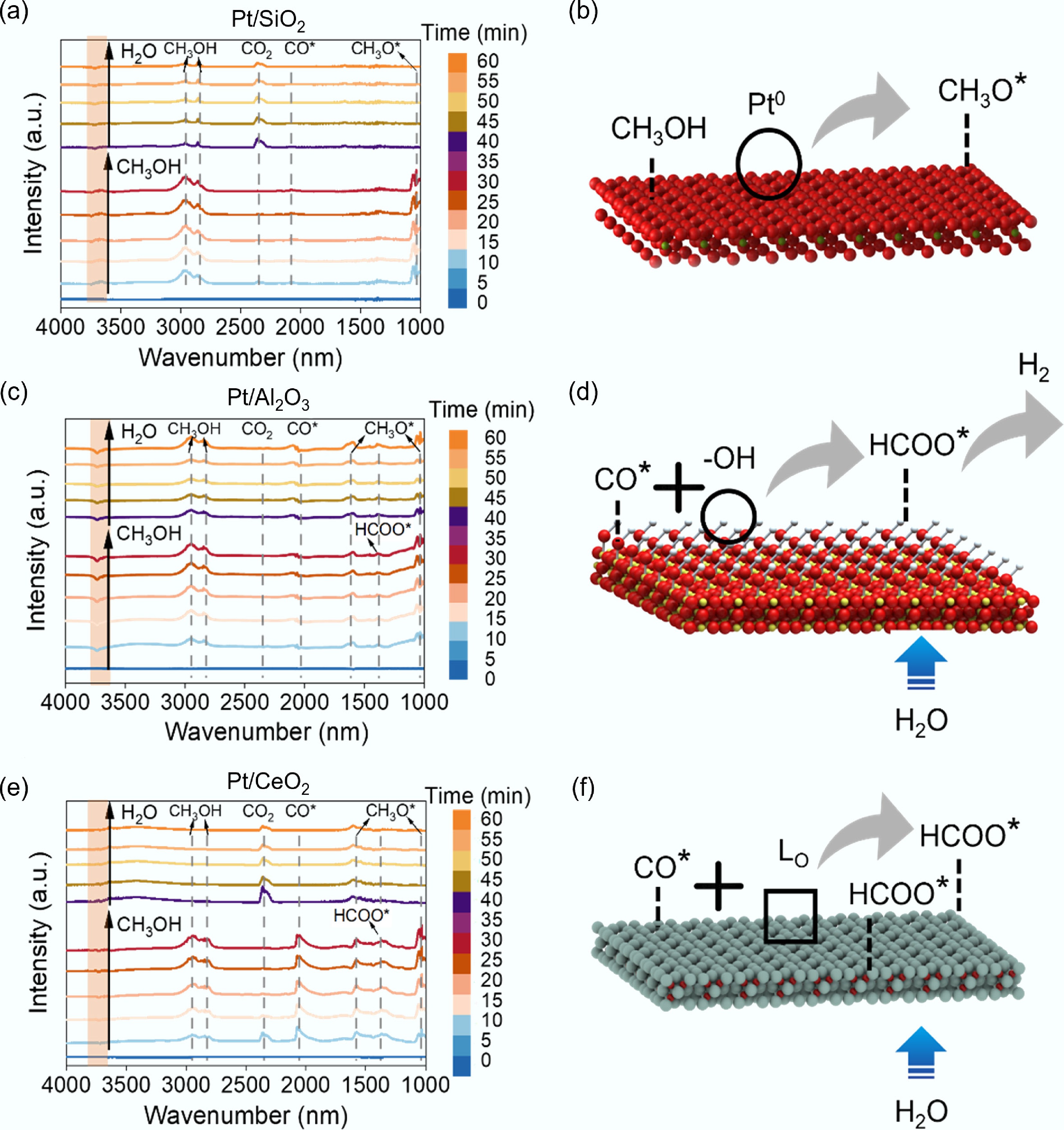
Figure 5.
Effects of surface oxygen species on APRM over Pt/oxide catalysts. (a) In-situ DRIFTS over Pt/SiO2 catalyst upon the separate introduction of methanol and water. (b) Schematic illustration of the role of inert oxygen species on Pt/SiO2 in methoxy formation. (c) In-situ DRIFTS over the Pt/Al2O3 catalyst upon separate introduction of methanol and water. (d) Schematic illustration of the role of hydroxyls on Pt/Al2O3 in formate formation. (e) In-situ DRIFTS over Pt/CeO2 catalyst upon separate introduction of methanol and water. (f) Schematic illustration of the role of reactive lattice oxygen on Pt/CeO2 in formate formation.
Figures
(5)
Tables
(0)