-
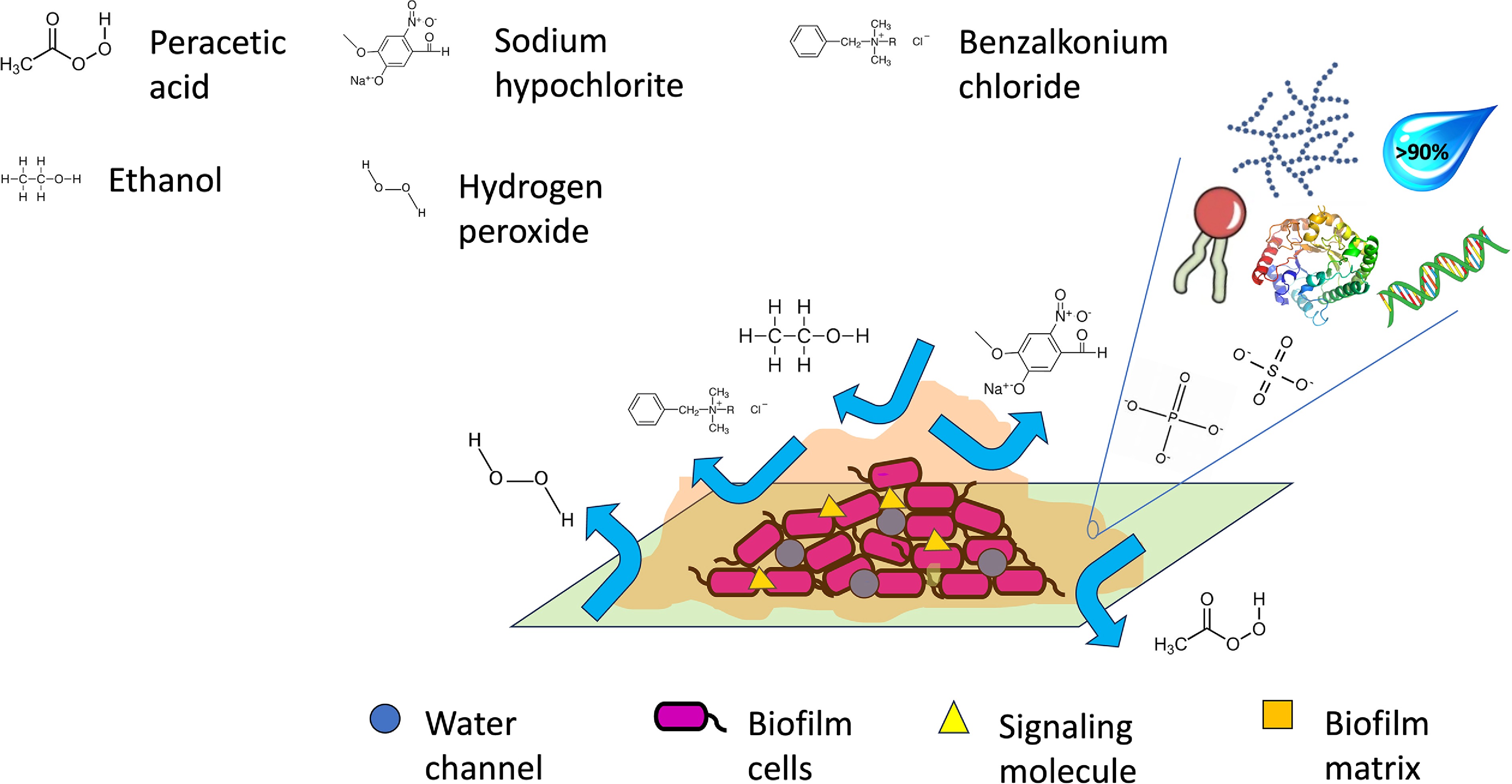
Figure 1.
Extracellular matrix provides protection against common chemical disinfectants in food processing.
-
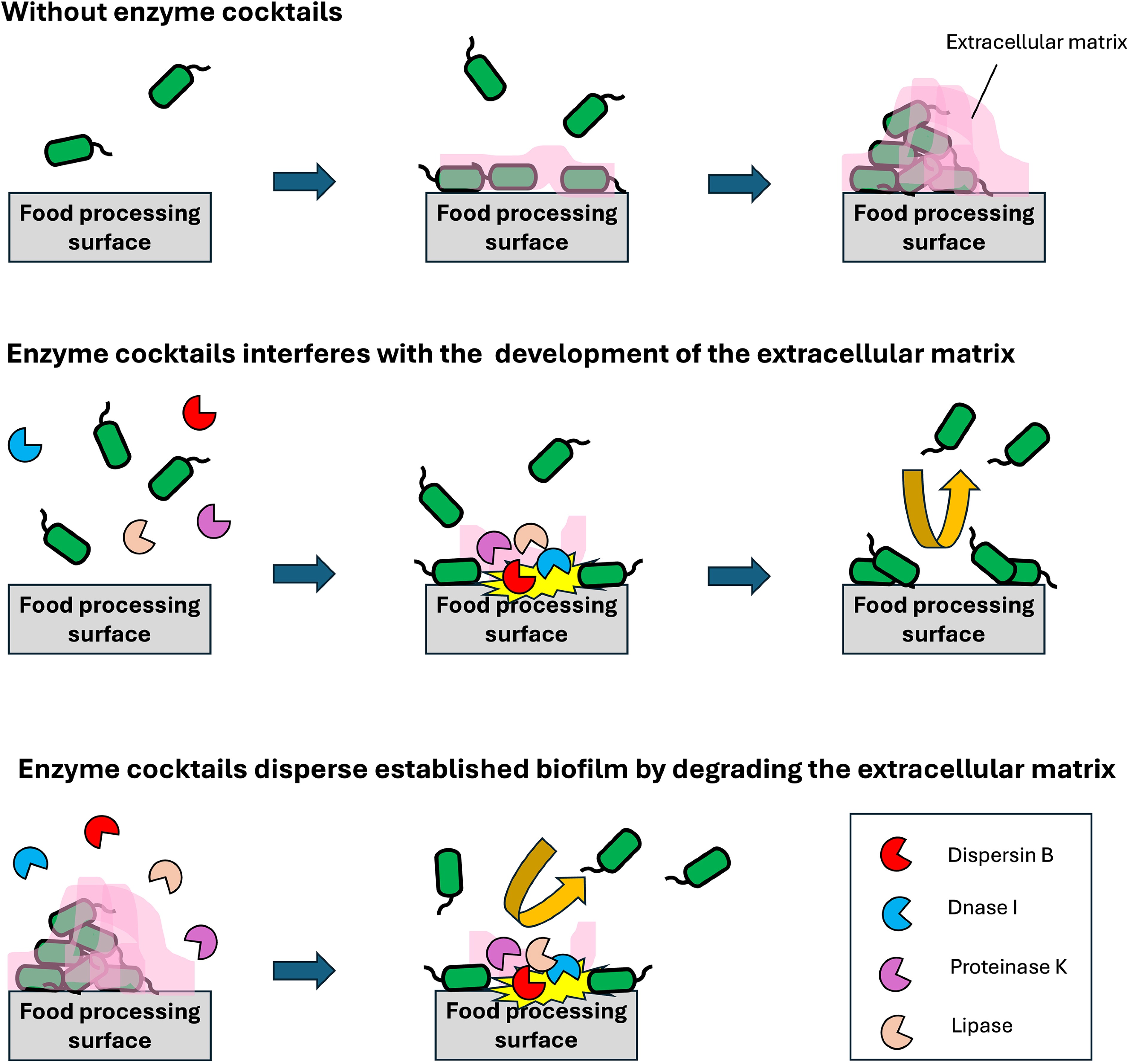
Figure 2.
Synergy between enzymes targeting the extracellular matrix of foodborne biofilms.
-
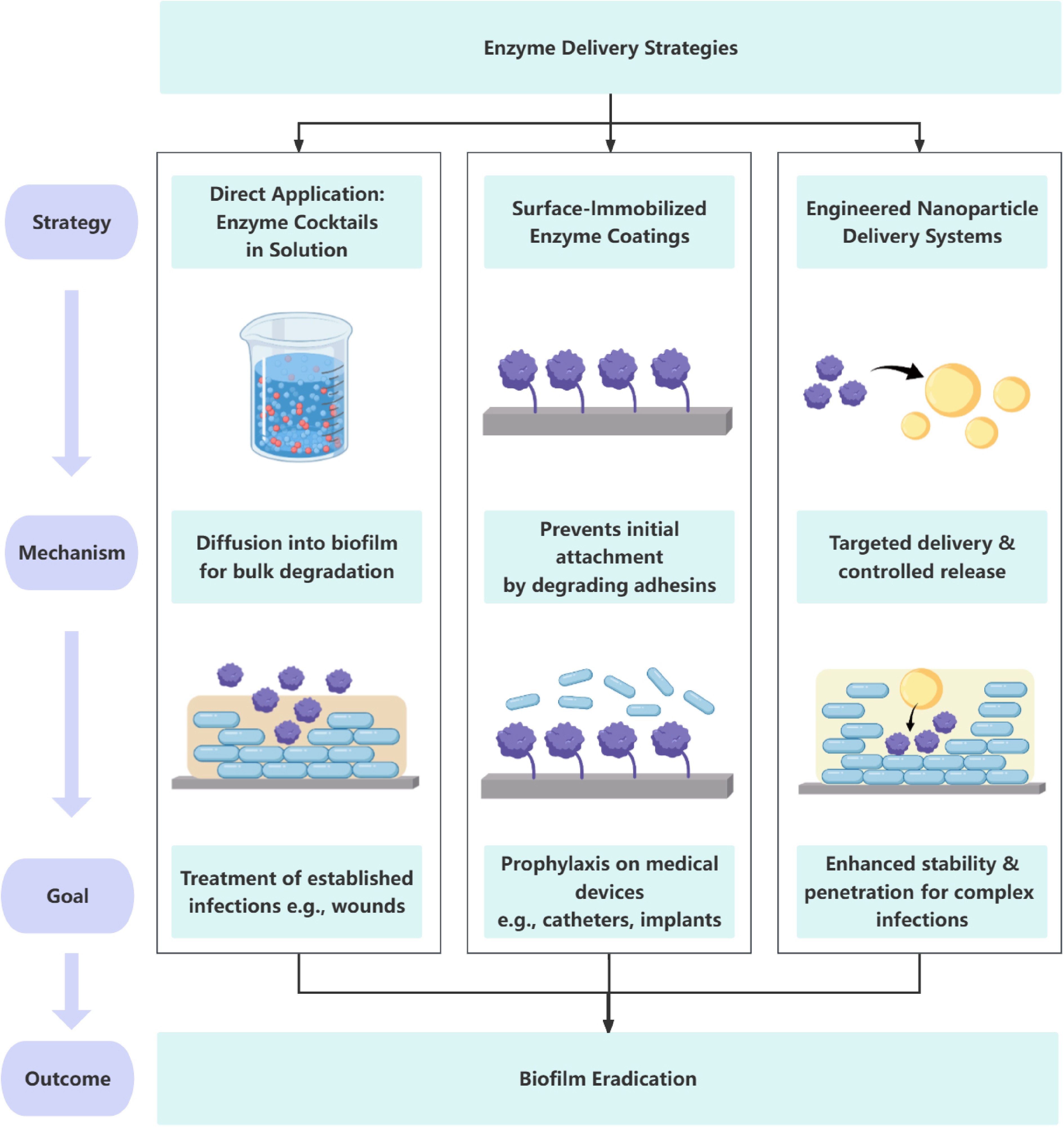
Figure 3.
Mechanisms of enzyme delivery to disrupt the biofilm matrix.
-
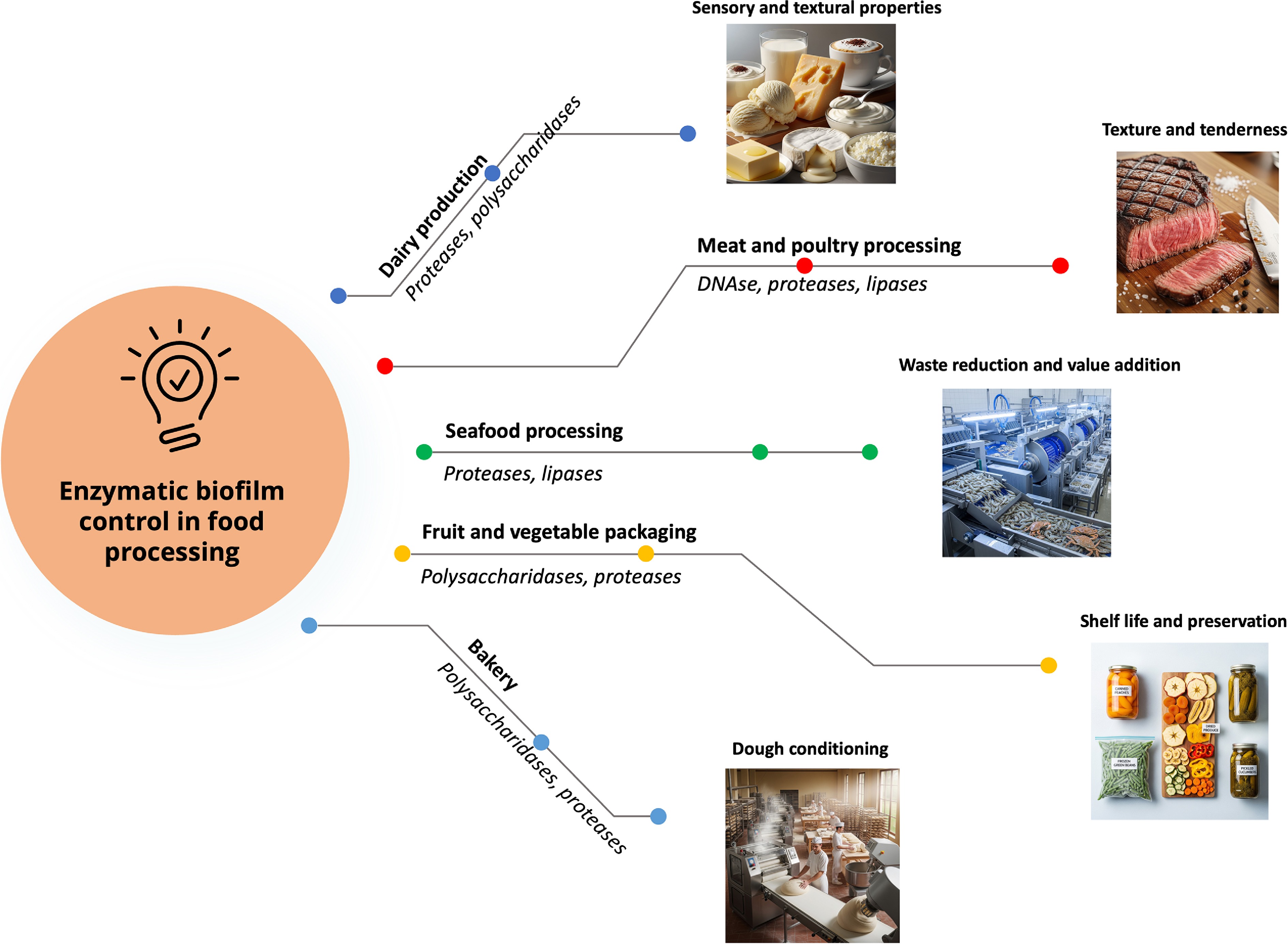
Figure 4.
The dual role of enzymes: safeguarding safety and enhancing quality in the food industry.
-
Enzyme class Primary target substrate(s) in biofilm EPS Mechanism of Action in Biofilm Dispersal α-Amylases Starch, glycogen, and other α-glucans (α-1,4 glycosidic bonds) Hydrolyzes internal α-1,4 linkages in polysaccharides, disrupting carbohydrate-based matrix cohesion. Dextranases Dextran (α-1,6 glucan with α-1,3 branches) Cleaves α-1,6 linkages in dextran, a key matrix polymer in many streptococcal and lactococcal biofilms. Cellulases Cellulose (β-1,4 glucan) Degrades cellulose fibers by breaking β-1,4 bonds, destabilizing the structural scaffold of biofilms. Hyaluronidases Hyaluronic acid (β-1,4/β-1,3 glucuronate-N-acetylglucosamine) Breaks down hyaluronan, a glycosaminoglycan that contributes to biofilm viscosity and adhesion. Pectinases Pectin (α-1,4 galacturonan) Degrades pectin, a plant-derived polysaccharide that can be incorporated into biofilms in produce-handling environments. Dispersin B Poly-β-1,6-N-acetyl-D-glucosamine (PNAG) Hydrolyzes the glycosidic bonds in PNAG, a major adhesin and matrix component in many bacterial biofilms. Xylanases Xylan (β-1,4 xylose backbone) Degrades xylan hemicellulose, which may be present in biofilms formed in grain or plant processing facilities. Table 1.
Polysaccharidases and their targets.
-
Enzymes Antibiofilm efficacy Ref. Protease, polysaccharidase Proteolytic enzymes promote biofilm removal in a diverse range of bacterial species compared to polysaccharidases. Serine proteases are more efficient in removing cells of Bacillus biofilms than polysaccharidases. However, polysaccharidases are more efficient in removing P. fluorescens biofilms than serine proteases. Lequette et al.[55] DNase I, pronase, pectinase CLSM images show significant changes in Listeria monocytogenes biofilm-covered area and volume after DNase I, pronase, and pectinase treatments. Puga et al.[56] Protease, amylase Pancreatic protease exhibits significant antibiofilm effects against S. aureus, Methicillin-resistant Staphylococcus aureus (MRSA), and E. coli. Pancreatic protease combined with bacterial amylase exhibits enhancement of the antibiofilm effects against S. aureus and MRSA biofilms. Jee et al.[57] Protease, DNase I Treatment with Flavourzyme shows a significant reduction of young (24-h-old) and mature (72-h-old) biofilms on both ultra-high-molecular-weight polyethylene (UHMWPE) and rubber surfaces. The overall reduction potential of Flavourzyme was higher than that of DNase I. The Flavourzyme-mediated removal of biofilms appears to be caused by the gradual disruption of amide and polysaccharide stretching bands of the extracellular polymeric substances (EPSs) released by the microbes. Nahar et al.[58] Hydrolase 0.1 mg/ml of glycosyl hydrolases inhibits up to 41% of biofilm formation by Escherichia coli O157:H7, E. coli 25922, Salmonella enterica serovar Typhimurium, and Listeria monocytogenes. Enzyme treatment of all four cell types results in significantly reduced cell surface hydrophobicity and collapse of E. coli 25922 cells imaged by electron microscopy. Mayton et al.[59] Lipase, cellulase, protease The combined enzymes (lipase, cellulase, and proteinase K) significantly inhibit the development of Vibrio parahaemolyticus biofilm. The confocal laser scanning microscopic images confirm that the aggregation of microcolonies and the adhesion of biofilm are inhibited with the combined enzyme treatment. Furthermore, combined enzymes also decrease the concentration of exopolysaccharide (EPS) and disrupt the EPS matrix network. Li et al.[60] Dispersin B Dispersin B increases the susceptibility of S. epidermidis biofilm cells to ciprofloxacin Abdelkader et al.[61] Protease, amylase SL40, a commercial detergent product containing subtilisin protease and α-amylase glycosidase, removes up to 85% of the biofilm biomass compared to tris solutions. SL40's efficacy was strongly influenced by the presence of the enzymes and both temperature and concentration. Le Sénéchal et al.[62] Polysaccharidase Treatment with a mixture of engineered polysaccharide-degrading enzyme (CAase) and bacteriocin (thermophilin 110) yields similar results to treatment with CAase alone, demonstrating that the combination of thermophilin 110 and CAase does not enhance or inhibit the removal of the biofilm relative to CAase alone. Renye et al.[63] Table 2.
Single enzymes and multienzymes targeting the biofilm matrix.
Figures
(4)
Tables
(2)