-
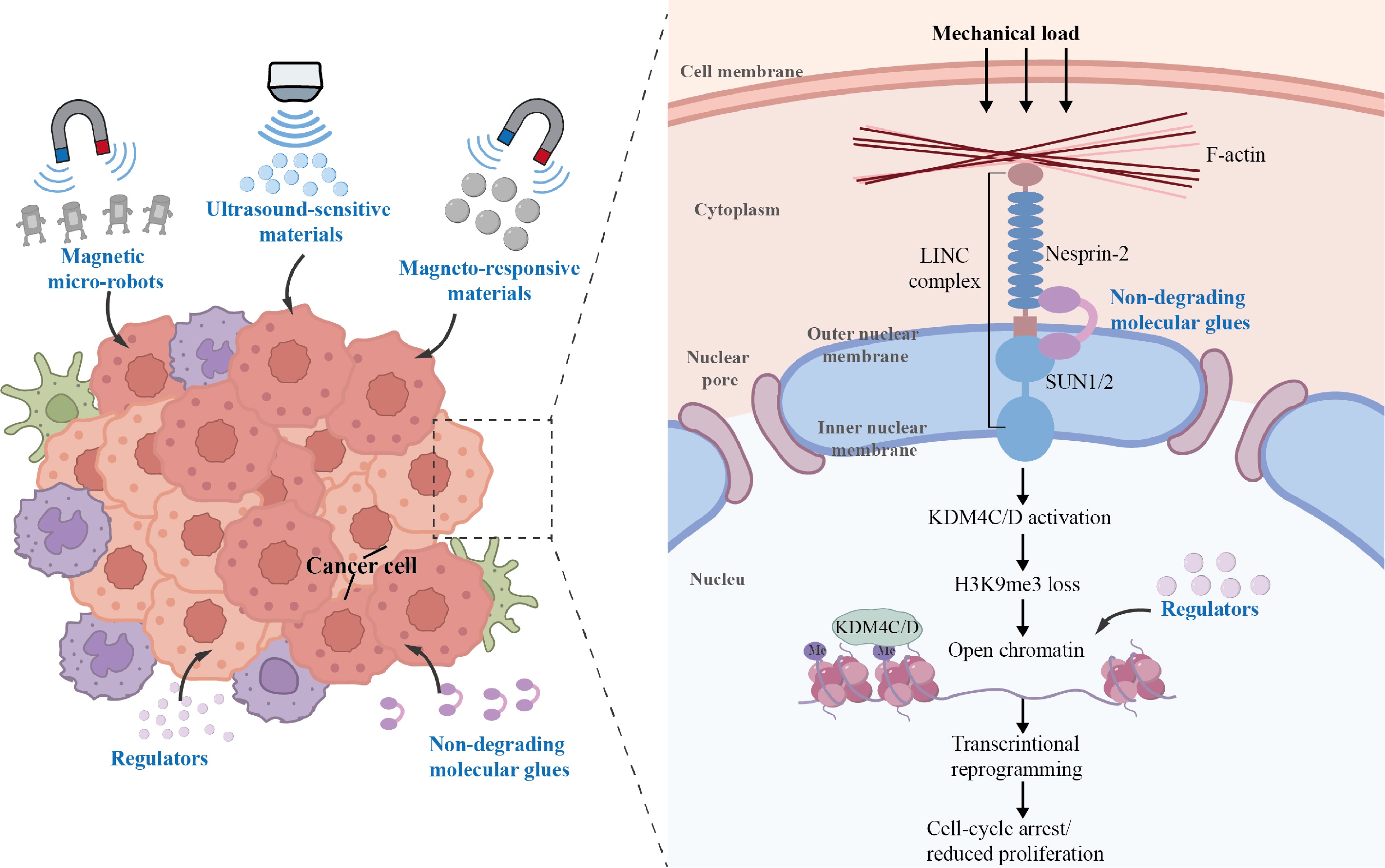
Figure 1.
Schematic illustration of the mechanism underlying mechanical load-induced inhibition of cancer cell proliferation and potential therapeutic strategies. The right panel illustrates the mechanotransduction pathway, in which external mechanical load is transmitted through F-actin to the LINC complex (Nesprin-2 and SUN1/2). This mechanical signal promotes nuclear activation of KDM4C/D, leading to epigenetic alterations, particularly loss of H3K9me3 and subsequent chromatin remodeling. These alterations result in transcriptional reprogramming, ultimately causing cell cycle arrest and reduced tumor cell proliferation. The left panel depicts potential therapeutic approaches, including magnetic microrobots, ultrasound-sensitive materials, magneto-responsive materials, regulators and non-degrading molecular glues used for targeting cancer cells. Therapeutic strategies are highlighted in blue.
Figures
(1)
Tables
(0)