-
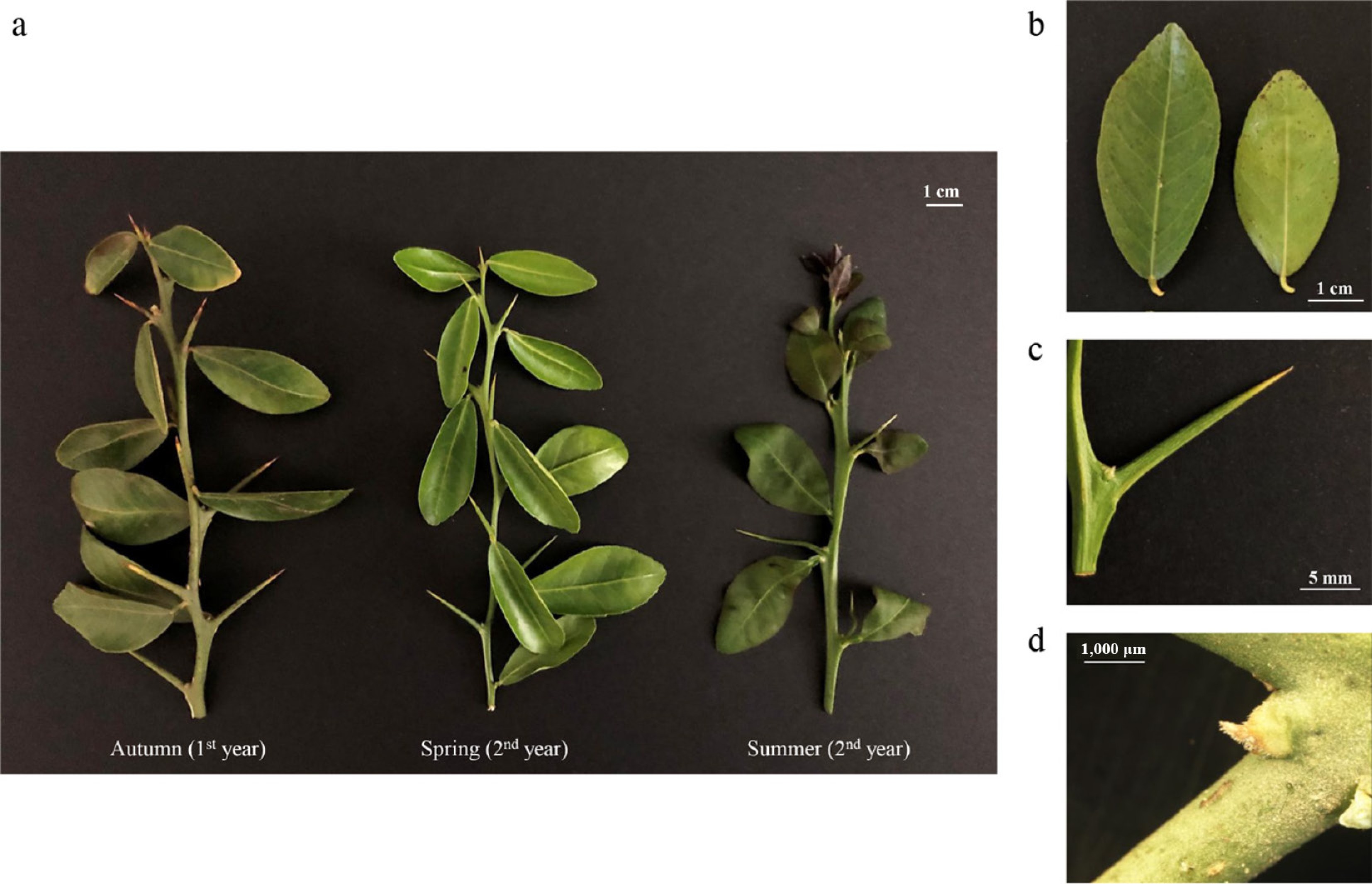
Figure 1.
Three flush shoots of (a) 'Faustrime' finger lime showing leaves and axillary thorns. (b) Leaf detail showing the adaxial and abaxial surfaces, and (c) thorn shown in longitudinal view and (d) in axillary position.
-
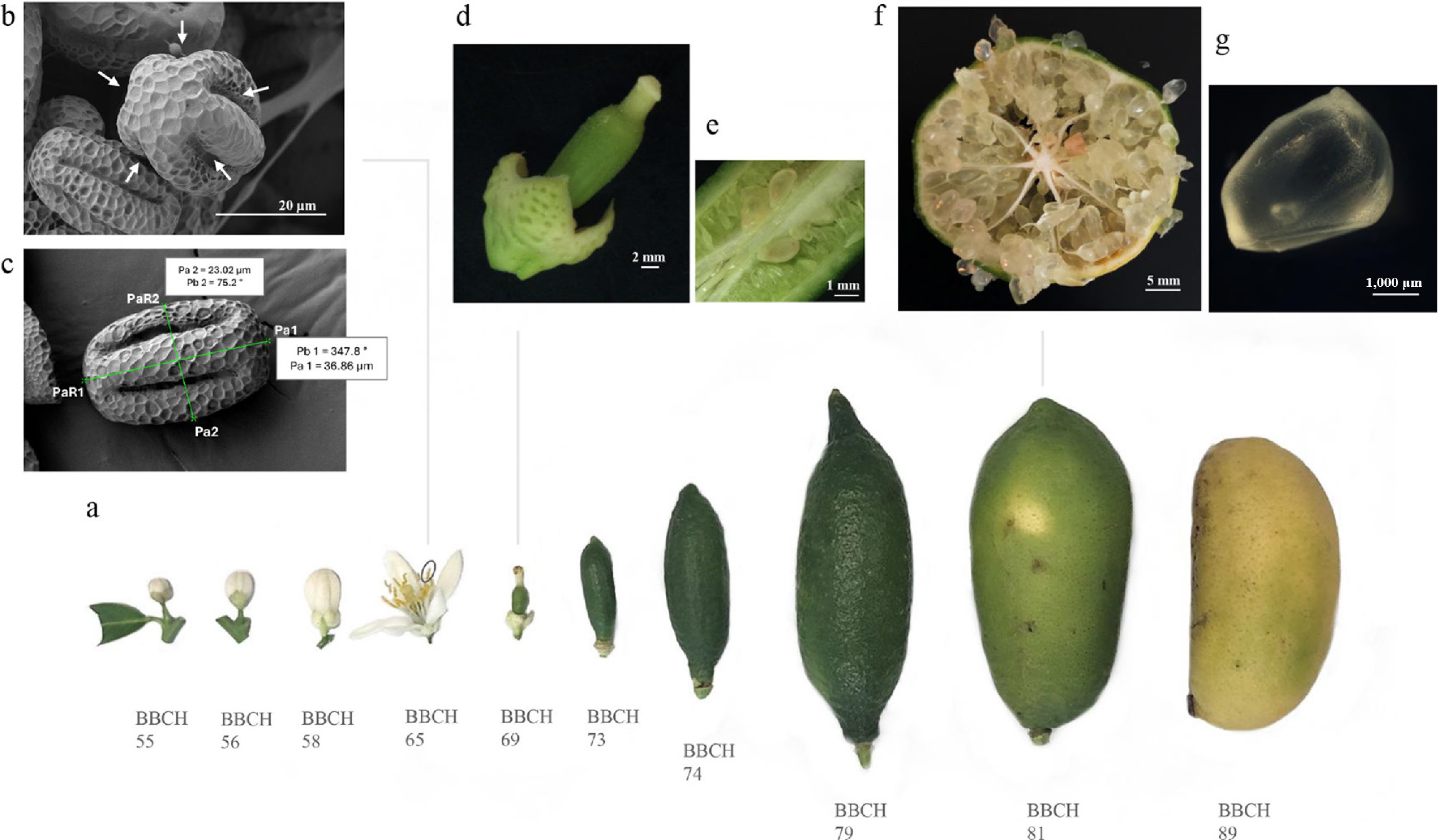
Figure 2.
Phenological stages of (a) flower and fruit development, (b), (c) pollen grains, (d) fruitlet, (e) juice vesicle cell enlargement, and (f), (g) juice vesicles of 'Faustrime' finger lime.
-
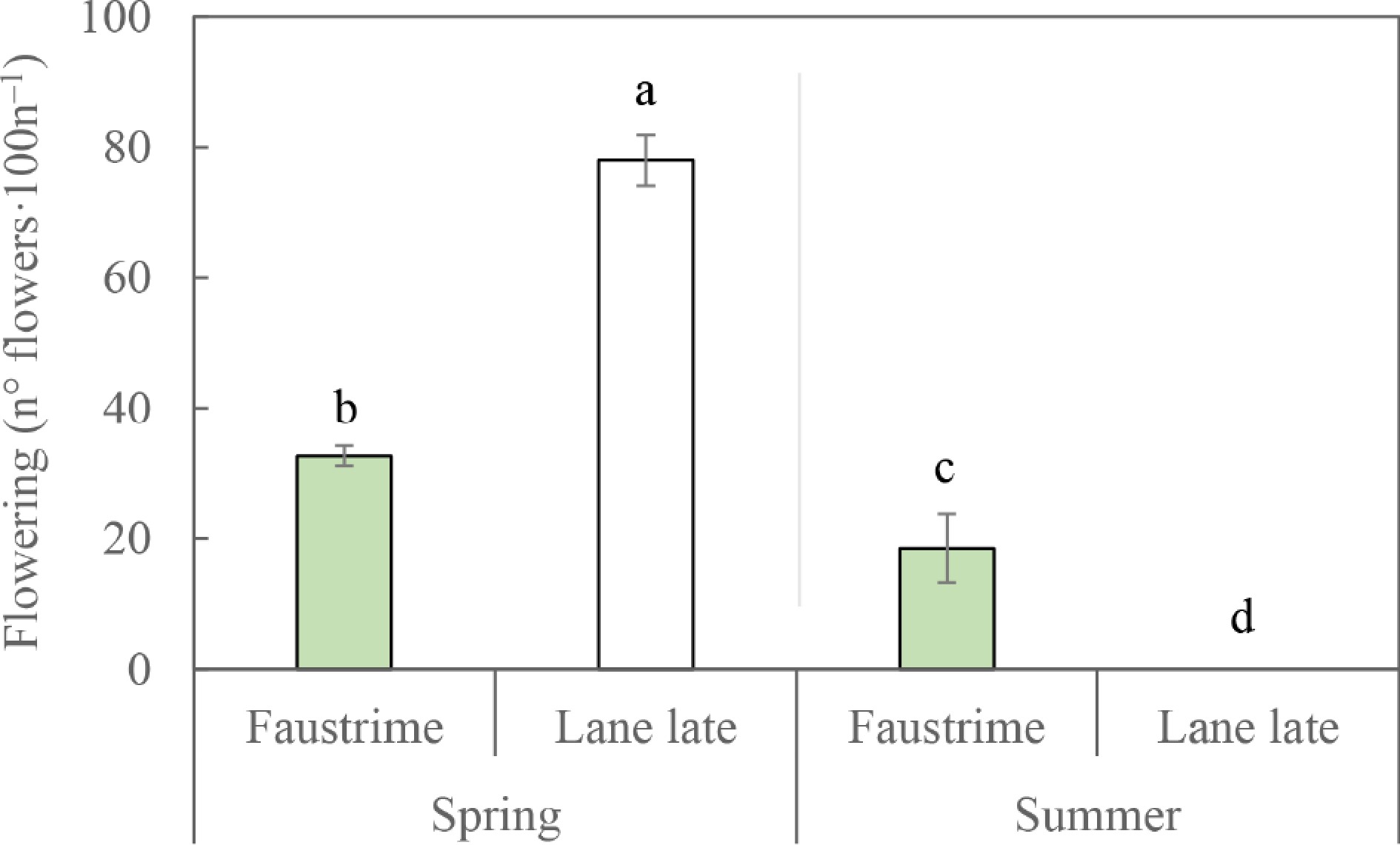
Figure 3.
Spring and summer flowering intensity of 'Faustrime' finger lime and 'Lane Late' sweet orange. Values are the mean of two branches per tree and ten trees. Different letters indicate significant differences (p < 0.05).
-
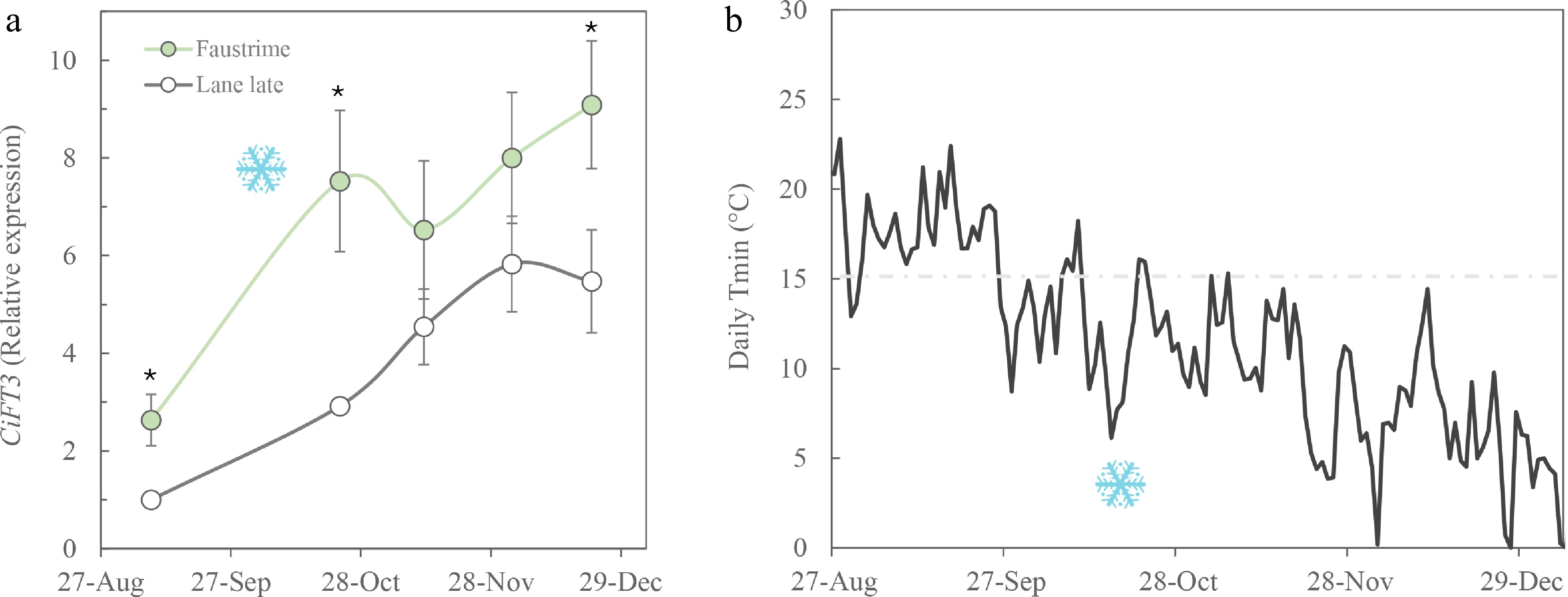
Figure 4.
(a) Time course of CiFT3 expression in leaves of 'Faustrime' finger lime and 'Lane Late' sweet orange from late August to December, and (b) daily mean temperature. Data are the means ± SE of three independent replicates (n = 3). Asterisks indicate significant differences (p < 0.05) for each sampling date. In some cases, SE bars are smaller than the symbol size.
-
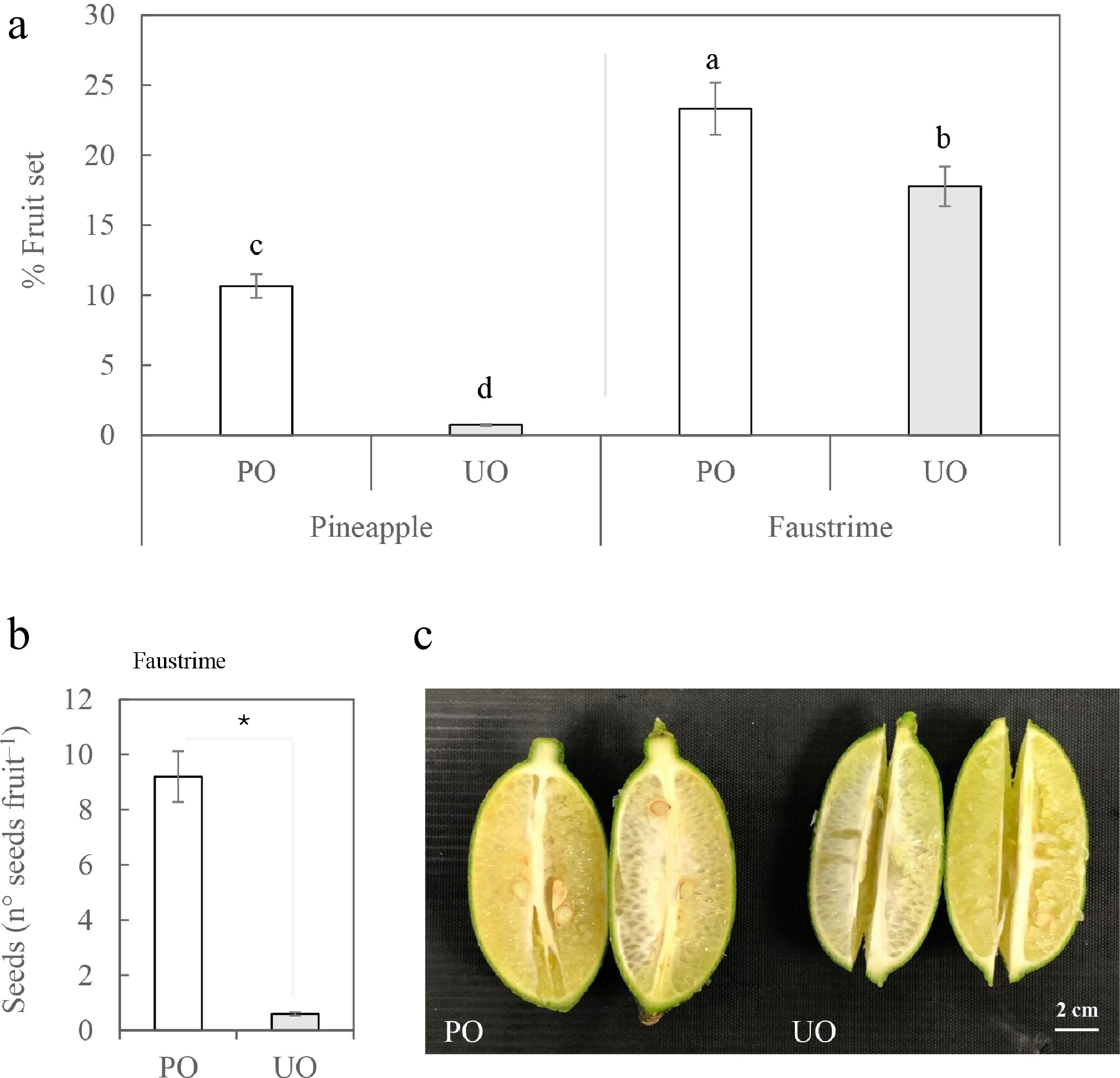
Figure 5.
(a) Fruit set in pollinated (PO) and unpollinated (UO) flowers of sweet orange 'Pineapple' and finger lime 'Faustrime', (b) number of seeds per fruit of 'Faustrime', and (c) final fruit size at harvest. Fruit set values are means ± SE based on 400 flowers per tree and five trees. Seed number per fruit represents means ± SE of five PO and UO fruits per tree and five trees. Different letters or asterisks indicate significant differences (p < 0.05).
-
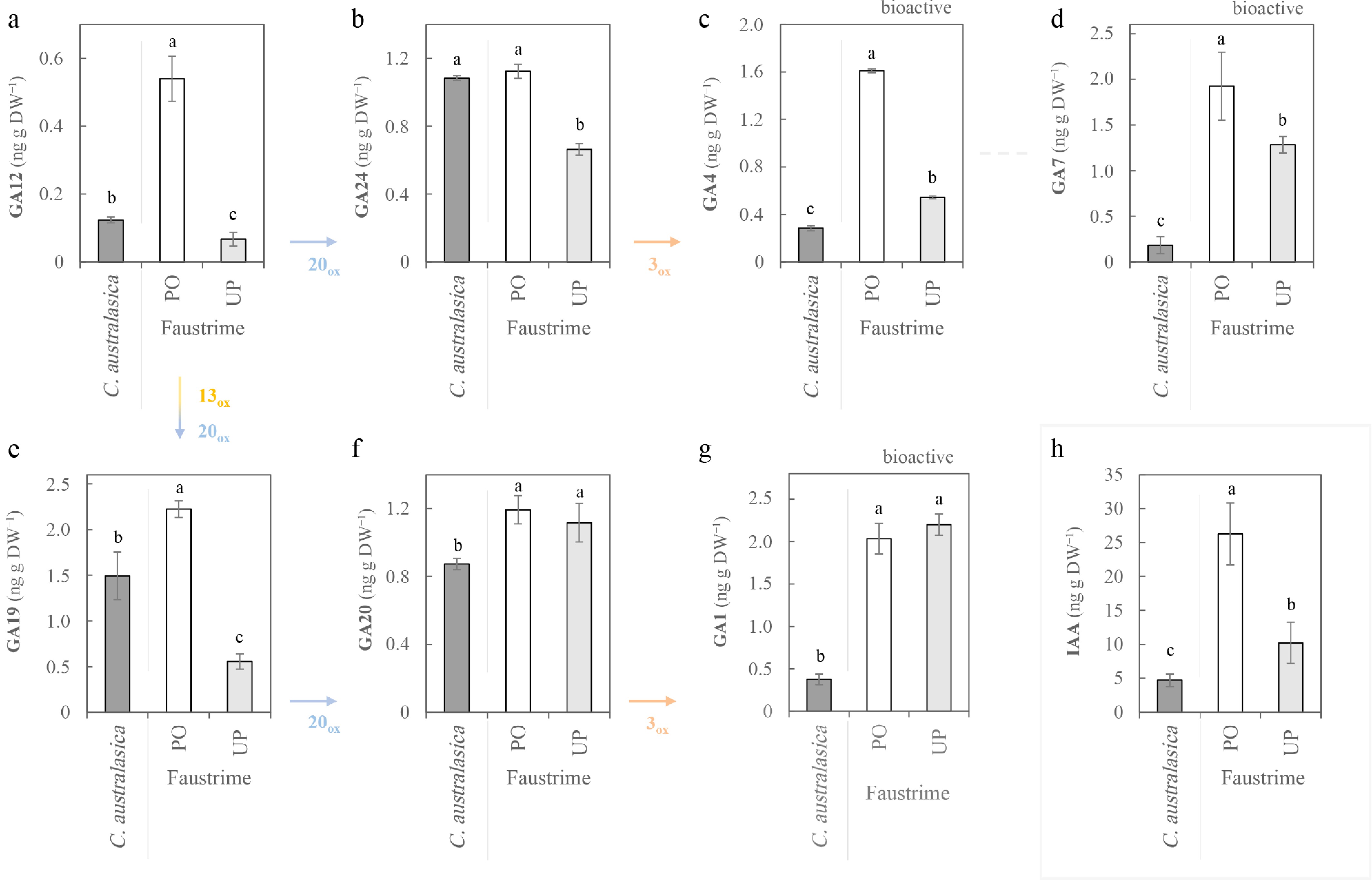
Figure 6.
(a)–(d) Endogenous concentrations of gibberellins from the non-hydroxylation pathway, and (e)–(g) the 13-hydroxylation pathway, and (h) auxin indole-3-acetic acid (IAA) contents in pollinated ovaries of C. australasica and 'Faustrime', as well as in unpollinated ovaries of 'Faustrime' at fruit set (BBCH stage 72). Arrows indicate the gibberellin biosynthetic enzymes GA13-oxidase, GA20-oxidase, and GA3-oxidase. Data represent the mean of three biological replicates, each consisting of five ovaries. Different letters indicate significant differences (p < 0.05).
-
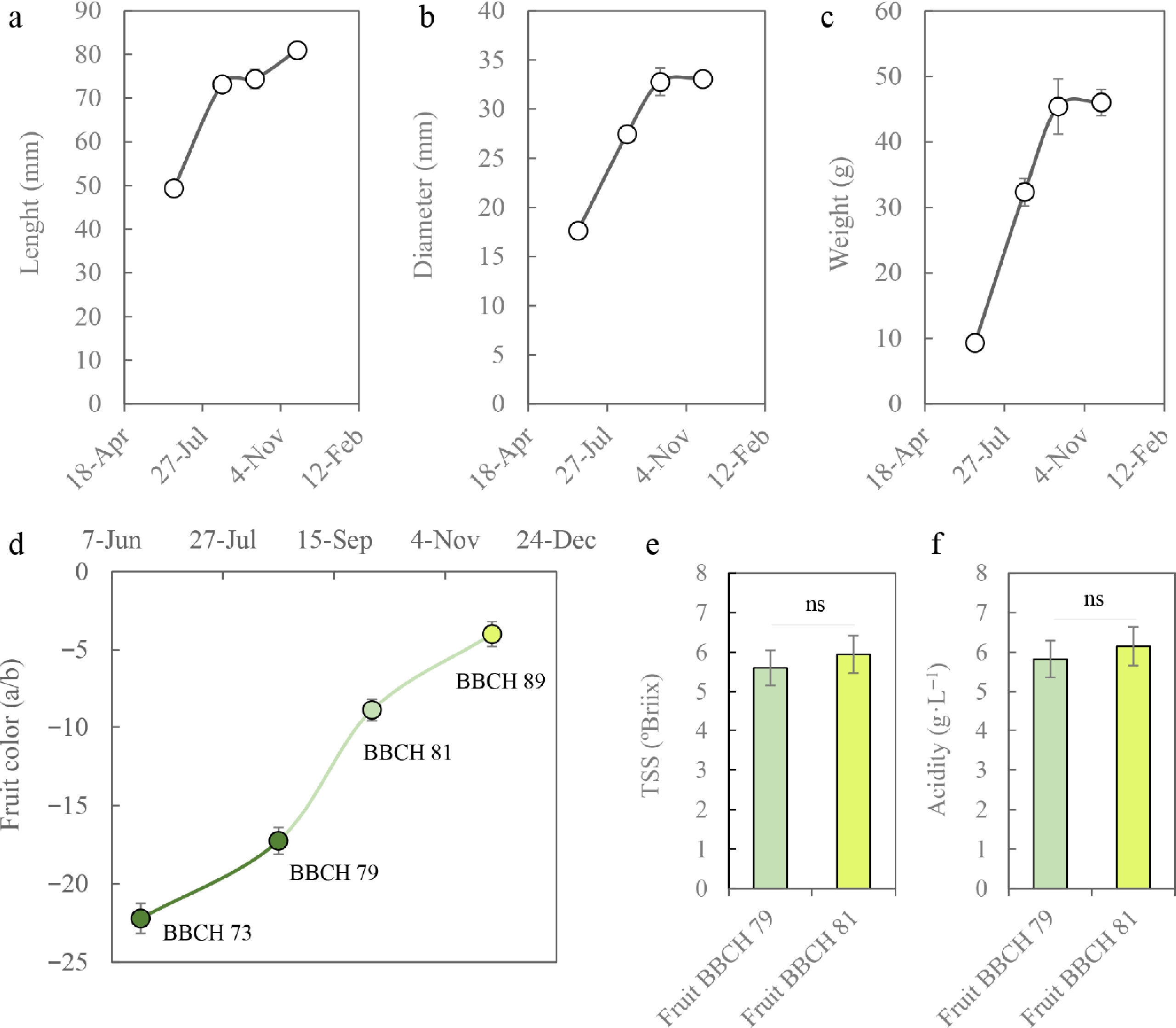
Figure 7.
Time course of 'Faustrime' finger lime development: (a) length, (b) width, (c) weight, (d) rind colour, (e) soluble solids, and (f) titratable acidity. Data are the means ± SE of ten fruits per tree and five trees. In some cases, SE bars are smaller than the symbol size.
-
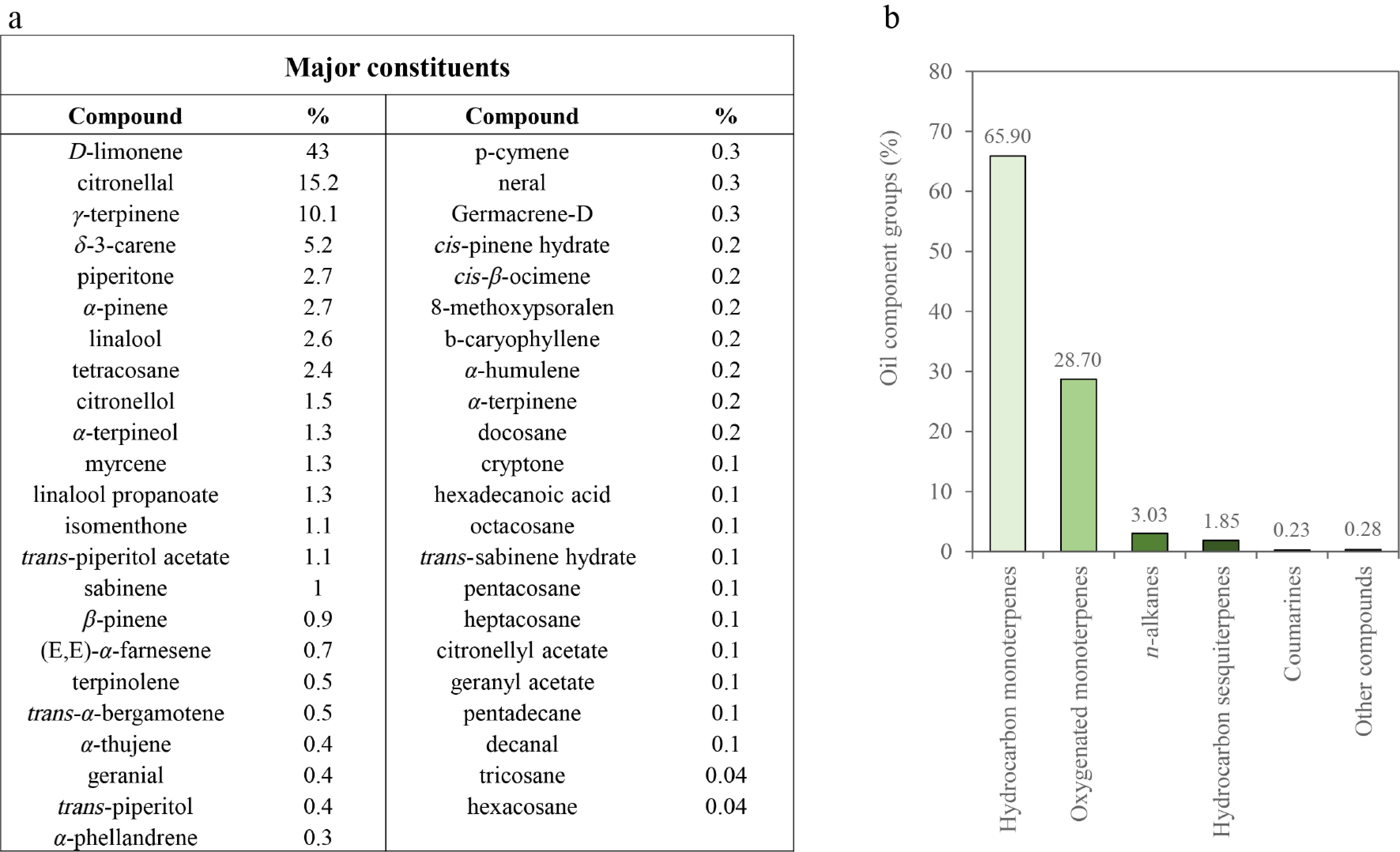
Figure 8.
(a) Essential oil composition of 'Faustrime' finger lime, and (b) their chemical class classification. Data are the means of 400 fruits from five trees.
Figures
(8)
Tables
(0)