-
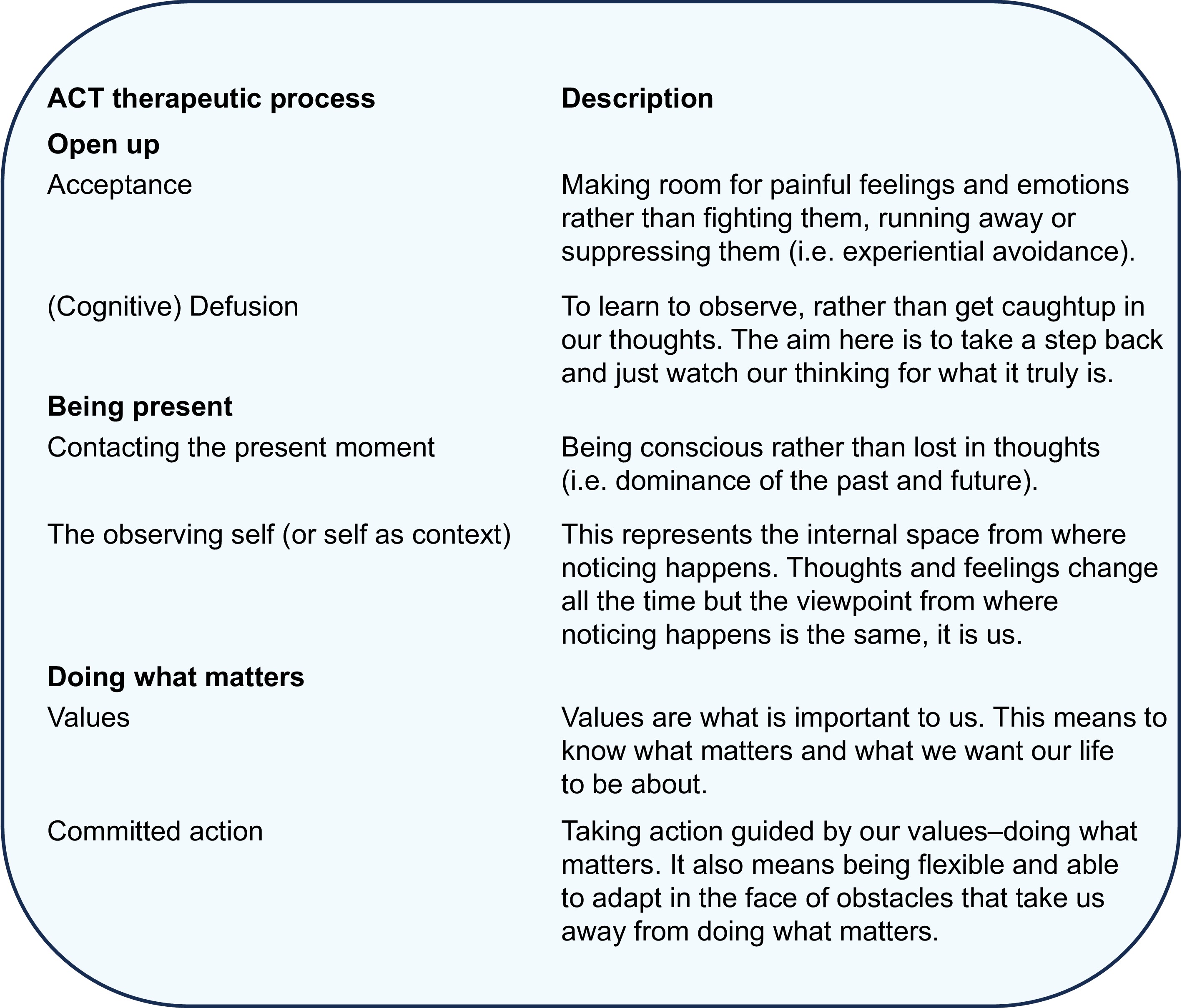
Figure 1.
The six therapeutic processes of ACT to promote psychological flexibility and engagement in valued activities and actions[14].
-
N % Gender Female 18 (75.0) Male 6 (25.0) Age (years) 35–44 2 (8.3) 45–54 5 (20.8) 55–64 14 (58.3) 65–74 2 (8.3) ≥ 75 1 (4.2) Cancer group Breast 10 (41.7) Lower gastrointestinal 9 (37.5) Head and neck 3 (12.5) Haematological 1 (4.2) Urological 1 (4.2) Ethnicity White British 16 (66.7) Asian or Asian British 3 (12.5) Black or Black British African 3 (12.5) Mixed White and Black Caribbean 1 (4.2) Missing 1 (4.2) Employment status at baseline Employed (full or part time, including self-employment) 13 (54.2) Retired 6 (25.0) Unable to work due to long-term sickness 3 (12.5) Looking after home/family 1 (4.2) Missing 1 (4.2) Table 1.
Patient participant demographics.
-
Theme Sub-theme Engagement with ACT+ processes
(deductive)Mindfulness Being present Open up Doing what matters '+' Operationalising ACT+ theory
(inductive)Flexible/individualised approach or 'person-centred' Exercises/metaphors Manual Autopoietic cycles
(inductive)Receptivity and relational influences regarding ACT+ take-up
(inductive)Addressing an unmet need
Willingness and ability to engage
Relational issuesTable 2.
Key themes and sub-themes.
Figures
(1)
Tables
(2)