-
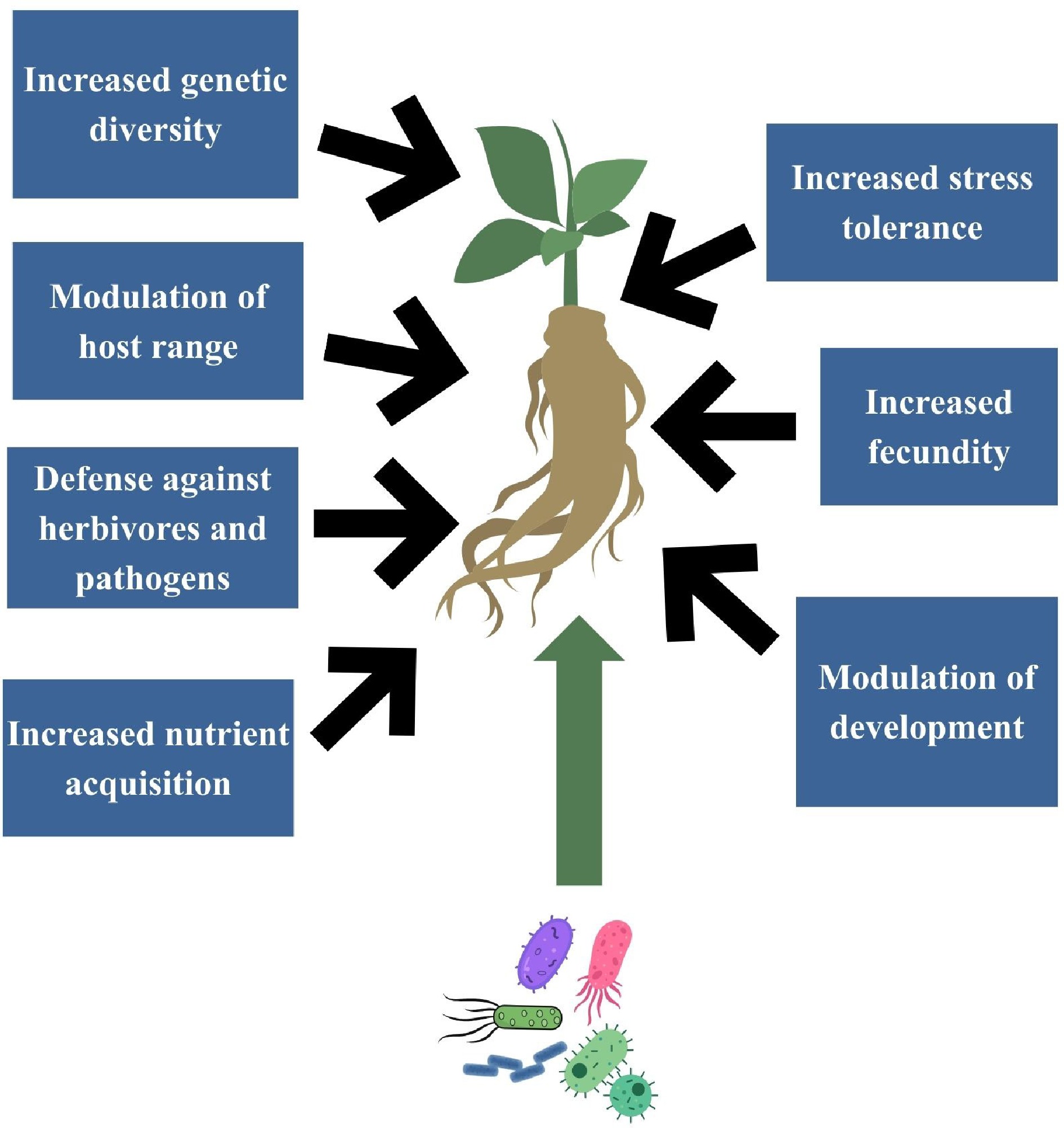
Figure 1.
Potential microbial contributions to weed and invasive plant growth. The benefits may include increased genetic and epigenetic diversity, modulation of host range, increased defense against herbivores and pathogens, increased nutrient acquisition, increased stress tolerance, increased fecundity, and modulation of development.
-
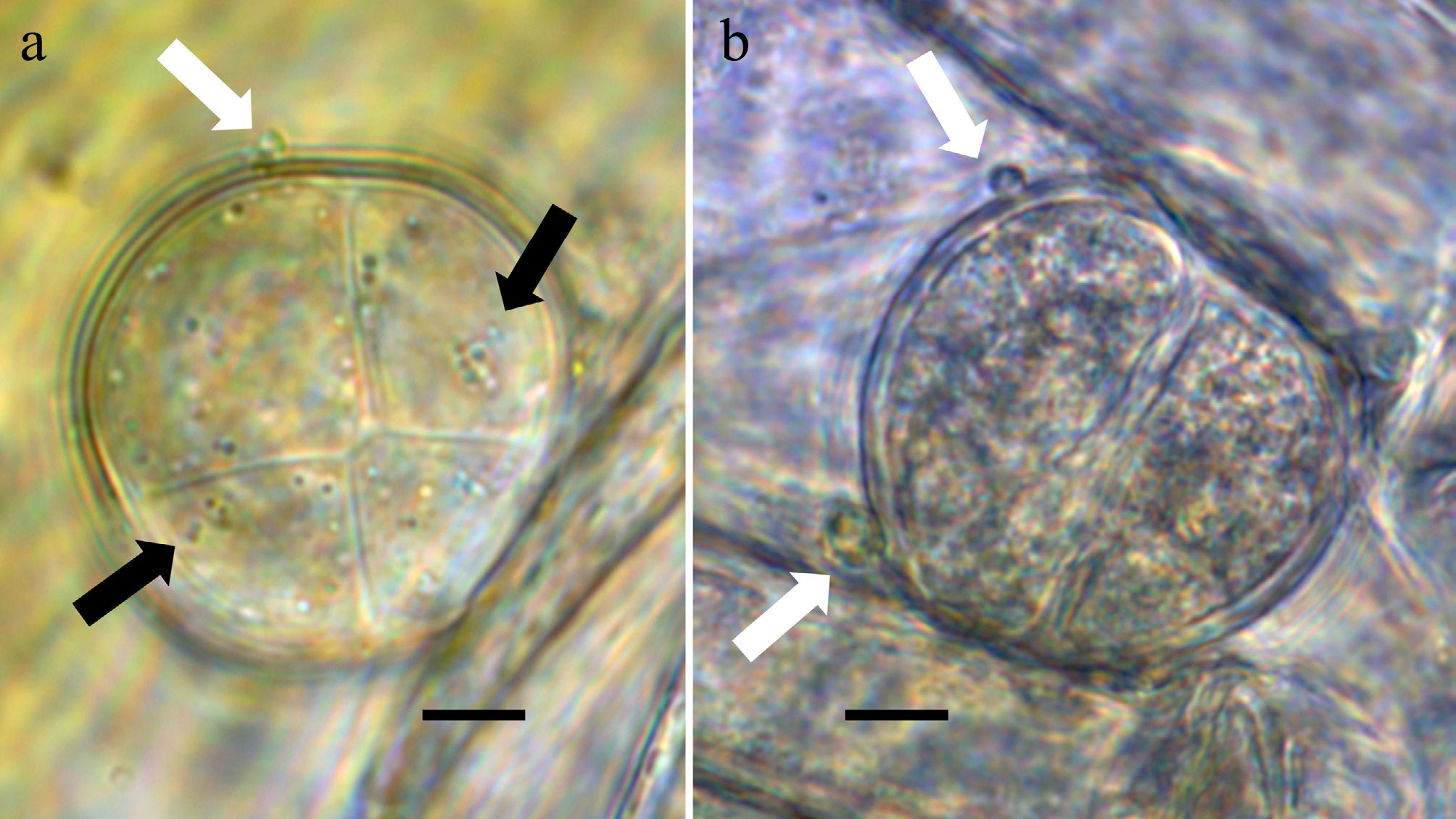
Figure 2.
Glandular trichomes of henbit (Lamium amplexicaule) showing endophytic bacteria within them. (a) Early-developing glandular trichome showing dividing bacteria in trichome cells. Black arrows indicate bacteria within trichomes, while white arrows show bacteria emerging from the trichome (bar = 10 µm). (b) Late-developing trichome filled with bacteria, showing the escape of bacteria from the trichome (white arrows; bar = 10 µm). Images are original and are not previously published.
-
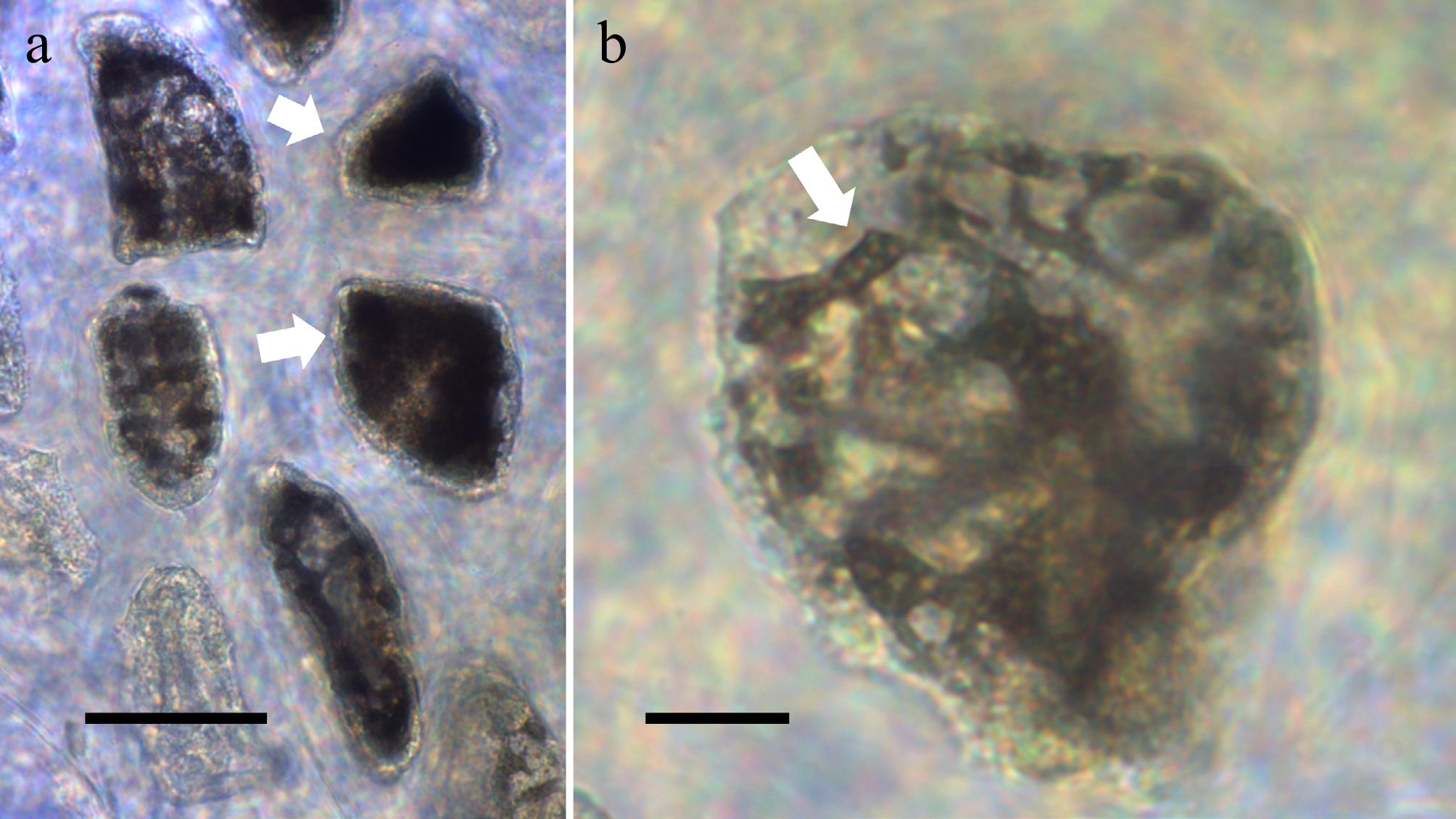
Figure 3.
Leaf margin meristem cells of Jerusalem artichoke (Helianthus tuberosus). (a) Several leaf margin meristem cells (white arrows) showing staining for nitrate (black color) using acidified diphenylamine stain (bar = 40 µm). (b) Single leaf margin meristem cell showing bacteria (arrow) inside the meristem cell (bar =10 µm). Images are original and are not previously published.
-
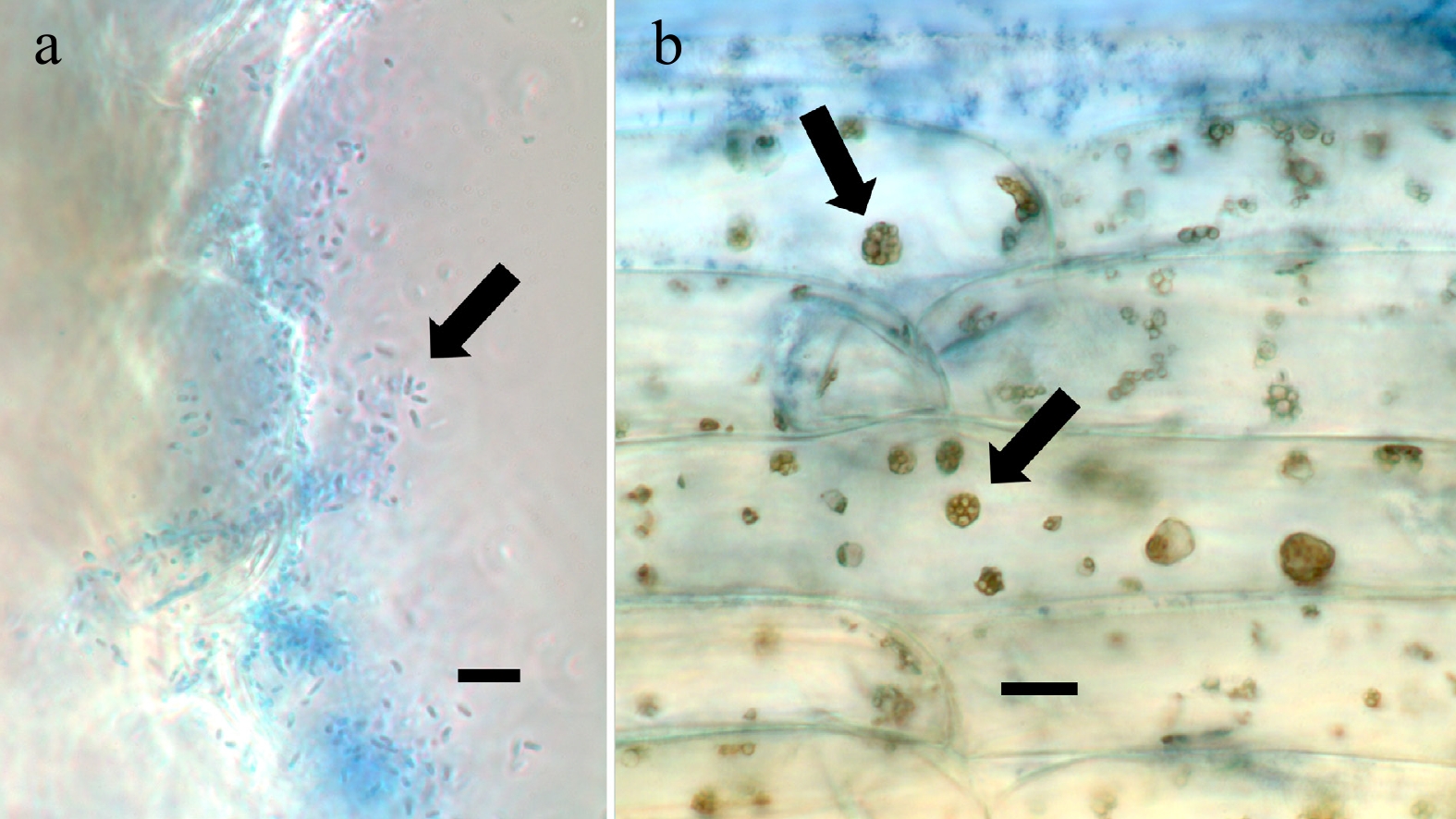
Figure 4.
Cattail (Typha latifolia) seed hairs and seedling tissues showing bacteria. (a) Seed hairs showing bacteria (arrow) vectored with the seed (Bar = 10 µm). (b) Root epidermal parenchyma showing hypothesized intracellular nitrosomes (arrows; bar = 10 µm). Images are original and are not previously published.
-
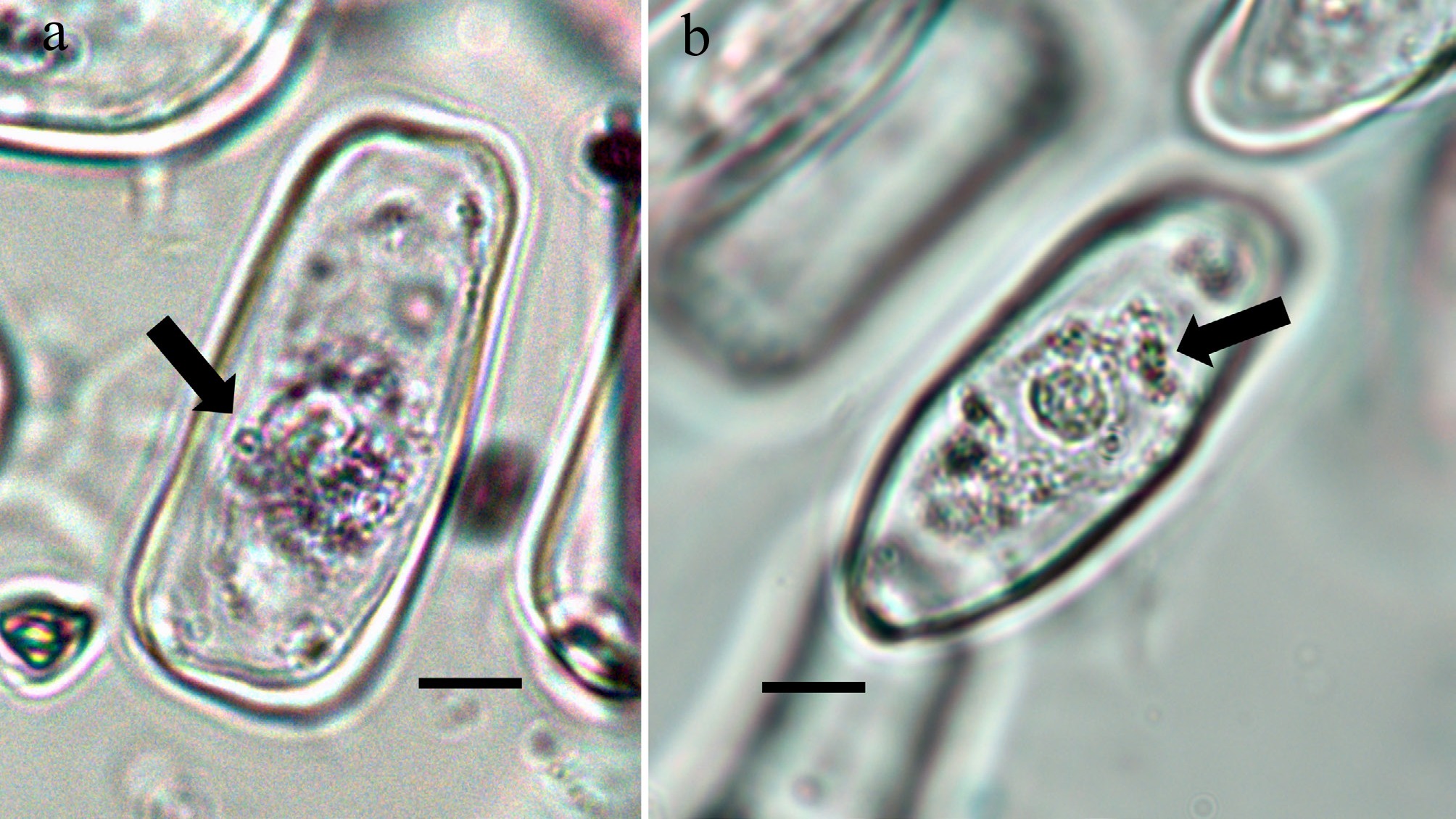
Figure 5.
Root cap cells of Poa annua showing bacterial endophytes around the nuclei after staining with Congo red indicator. (a) Arrow shows bacteria obscuring the nucleus (bar = 10 µm). (b) Arrow shows bacteria surrounding the nucleus (bar = 10 µm). Images are original and are not previously published.
-
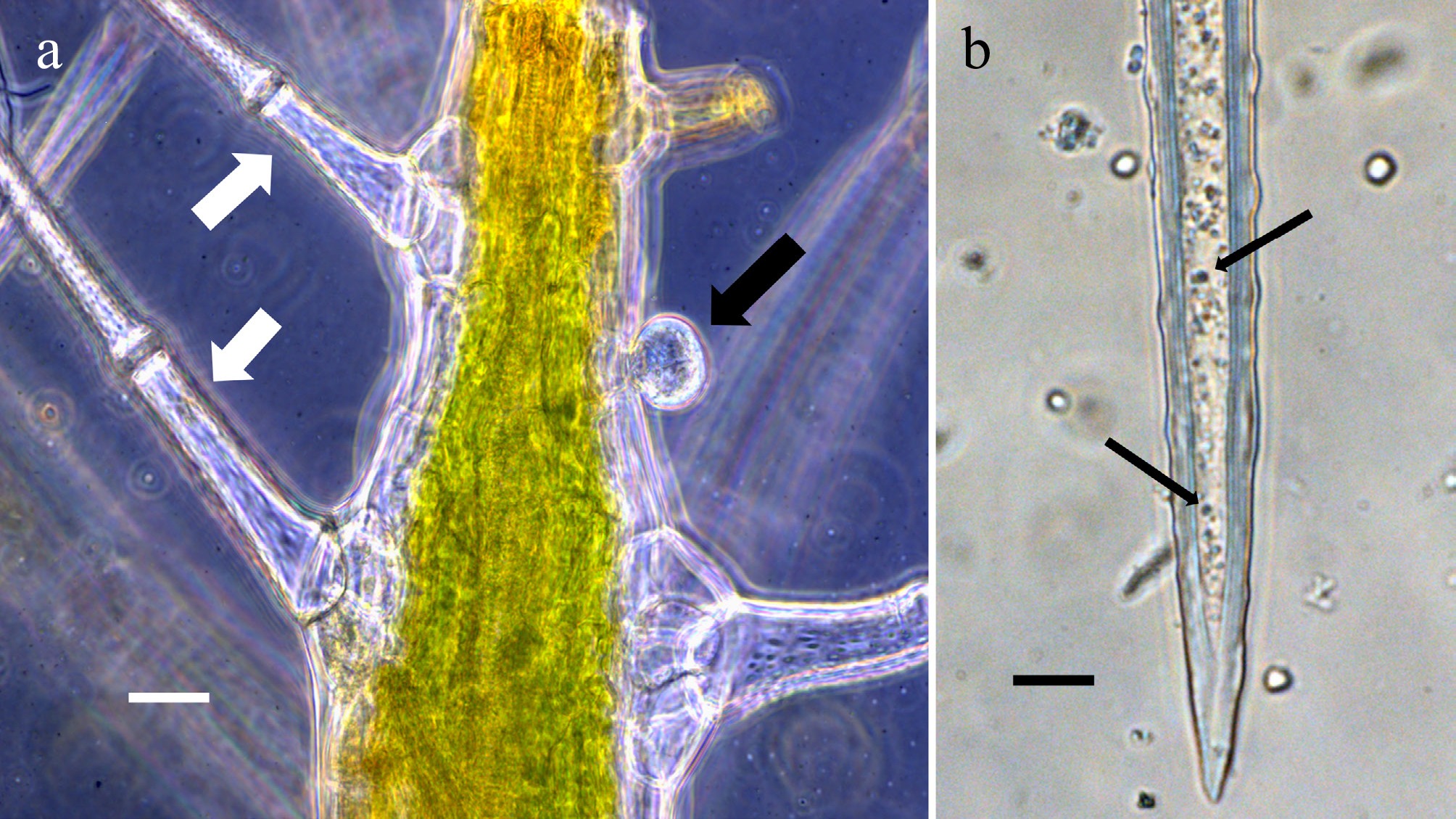
Figure 6.
Henbit (Lamium amplexicaule). (a) Henbit scale leaf tip showing large filamentous trichomes (white arrows) and a glandular trichome (black arrow; bar = 40 µm). (b) Trichome tip showing bacteria (arrows) within trichome cells stained with diphenylamine (bar = 10 µm). Images are original and are not previously published.
-
Weed/Invasive plant species Microbes identified Proposed effects Ref. Achnatherum robustum Epichloë sp. Defense against herbivorous animals [62] Achnatherum sibiricum Epichloë gansuensis, Epichloë sibirica Growth promotion [63] Ageratina adenophora Colletotrichum spp. Drought and nutrient stress tolerance, protection against pathogens [120] Agrostis perennans Epichloë amarillans Increased inflorescence formation in shade [128] Argyreia sp. Periglandula sp. Production of ergot alkaloids, anti-herbivory [64] Astragalus sp. Alternaria oxytropis Alkaloid swainsonine production, anti-herbivory [65] Chromolaena odorata Fusarium sp. Pathogenic effects on native plants (offensive mutualism) [27] Cynodon dactylon Desulfovibrio vulgaris Nitrogen fixation [48] Metabacillus indicus Potassium solubilization, nitrogen fixation, growth due to hormone production [50] Dichanthelium lanuginosum Curvularia sp. Thermotolerance [86] Eleusine indica Alcaligenes faecalis Phosphate solubilization, nitrogen fixation, growth due to hormone production [50] Elymus repens Acinetobacter sp., Bacillus sp., Stenotrophomonas sp., Pseudomonas sp. Generalized growth promotion [25] Ipomoea sp. Periglandula sp. Production of ergot alkaloids, anti-herbivory [64] Jasione sp. Rhodococcus rhodochrous Arsenic stress tolerance [101] Lactuca serriola Kosakonia cowanii Drought tolerance [52] Leymus mollis Fusarium culmorum Stress tolerance by habitat-adapted symbiosis [87] Lolium multiflorum Epichloë sp. Herbicide tolerance [107] Lolium perenne Epichloë sp. Growth promotion, increased nutrient content, increased metabolic activity [92] Phragmites australis Bacillus amyloliquefaciens Growth promotion under low nitrogen, growth due to hormone production, protection against pathogens by lipopeptide production [45] Alternaria tenuissima, Arthrinium arundinis, Bipolaris buchloes Salt stress tolerance [95] Dark septate fungal endophytes Salt stress tolerance [96] Microbacterium oxydans Growth promotion under low nitrogen, growth due to hormone production [45] Phragmites karka Mangrovibacter phragmitis Nitrogen fixation [46] Phytolacca americana Burkholderia sp. Increased germination rate, Increased biomass, Increased potassium availability [26] Phenylobacterium sp. Pathogen control [26] Schedonorus arundinaceus Epichloë coenophiala Production of ergot alkaloids, anti-herbivory, abiotic stress tolerance, range extension [84] Schedonorus pratensis Epichloë uncinata Drought avoidance through control of transpiration [148] Sorghum halepense Xanthomonas melonis, Agrobacterium tumefaciens, Herbaspirillum seropedicae, Sphingobium amiense, Pseudomonas jessenii, Caulobacter vibroides Nitrogen fixation [24] Stellera chamaejasme Acinetobacter sp., Pseudomonas sp., Alcaligenes sp., Lysinibacillus sp. Growth promotion, growth due to hormone production, potassium solubilization, phosphorus solubilization, nitrogen fixation Taraxacum officinale Unidentified microbes Increased production of allelopathic compounds, increased expression of stress response, and DNA methylation maintenance genes [147] Thespesia populnea Bacillus amyloliquefaciens Growth due to hormone production, nitrogen fixation, phosphorus solubilization, salt tolerance, protection against pathogens [149] Turbina sp. Periglandula sp. Production of ergot alkaloids, anti-herbivory [64] Typha angustifolia Staphylococcus sp., Pseudomonas sp., Bacillus sp., Micrococcus sp., Sphingomonas sp. Generalized growth promotion due to hormone production [49] Wedelia trilobata Sphingomonas sp., Pseudarthrobacter sp. Generalized growth promotion [83] Table 1.
Weeds/invasive plants-associated microbes and their proposed effects.
Figures
(6)
Tables
(1)