-
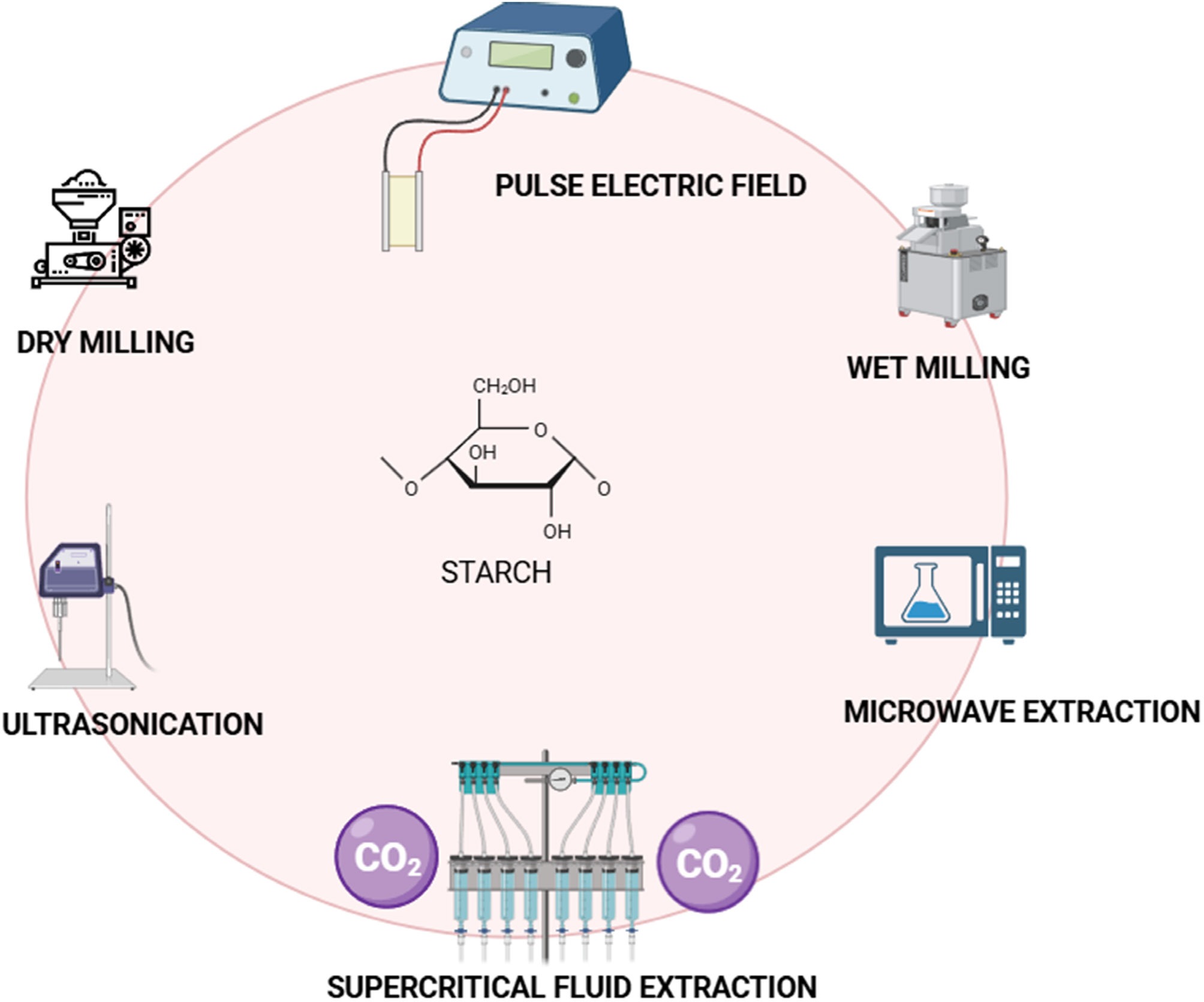
Figure 1.
Different techniques for the extraction of starch.
-
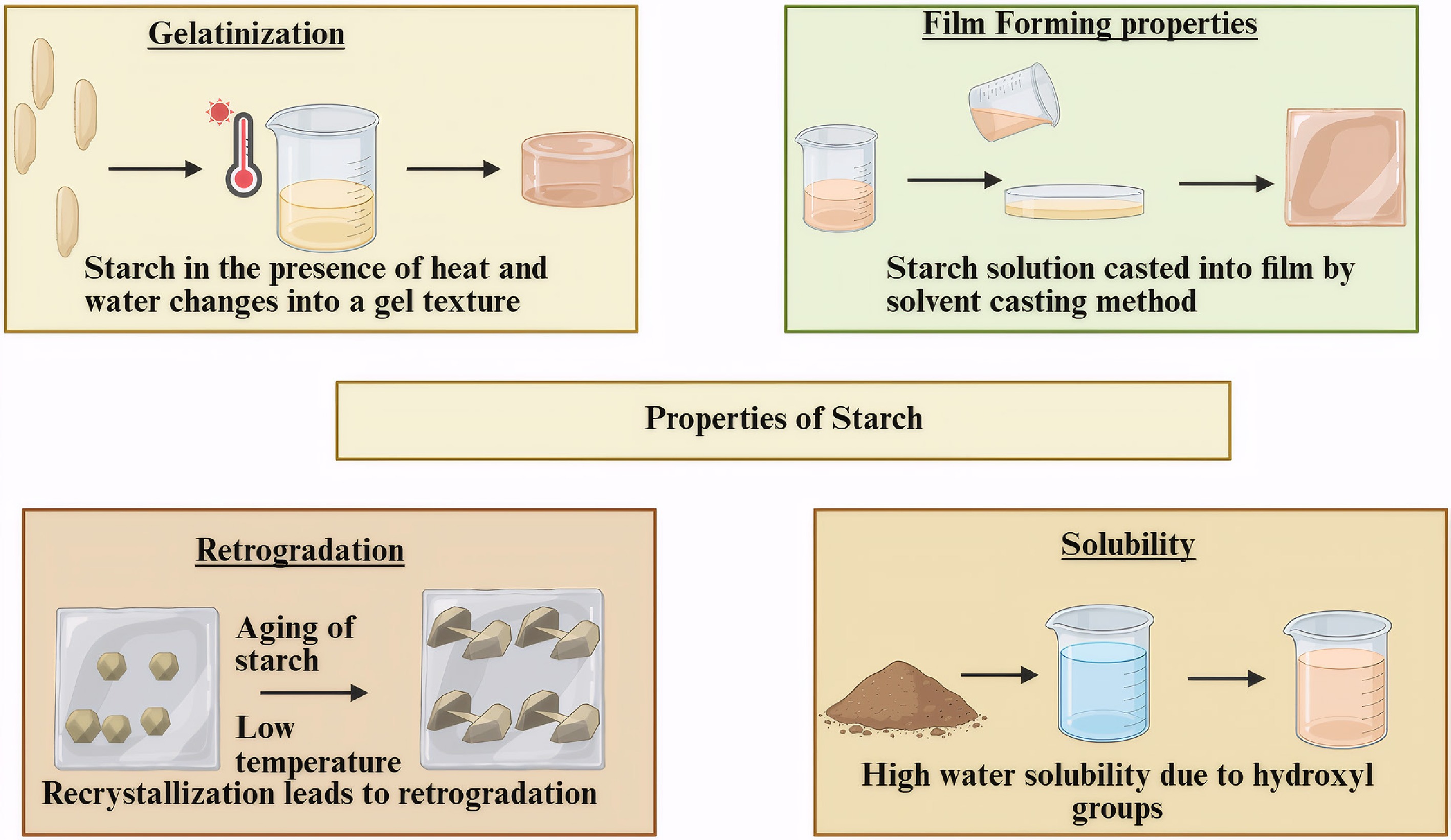
Figure 2.
Schematic representation of different properties of starch.
-
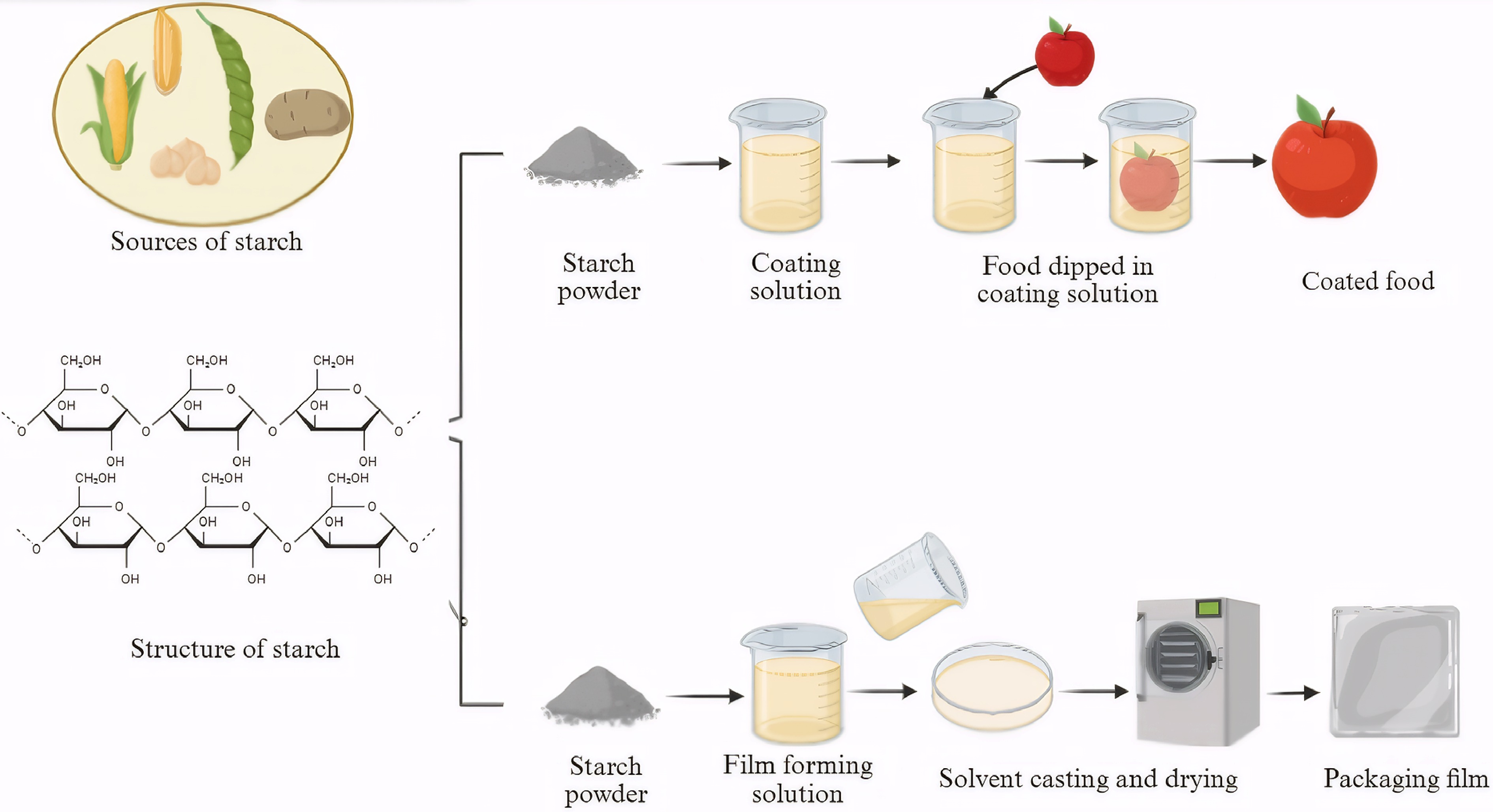
Figure 3.
Fabrication of starch-based coating and film for food application.
-
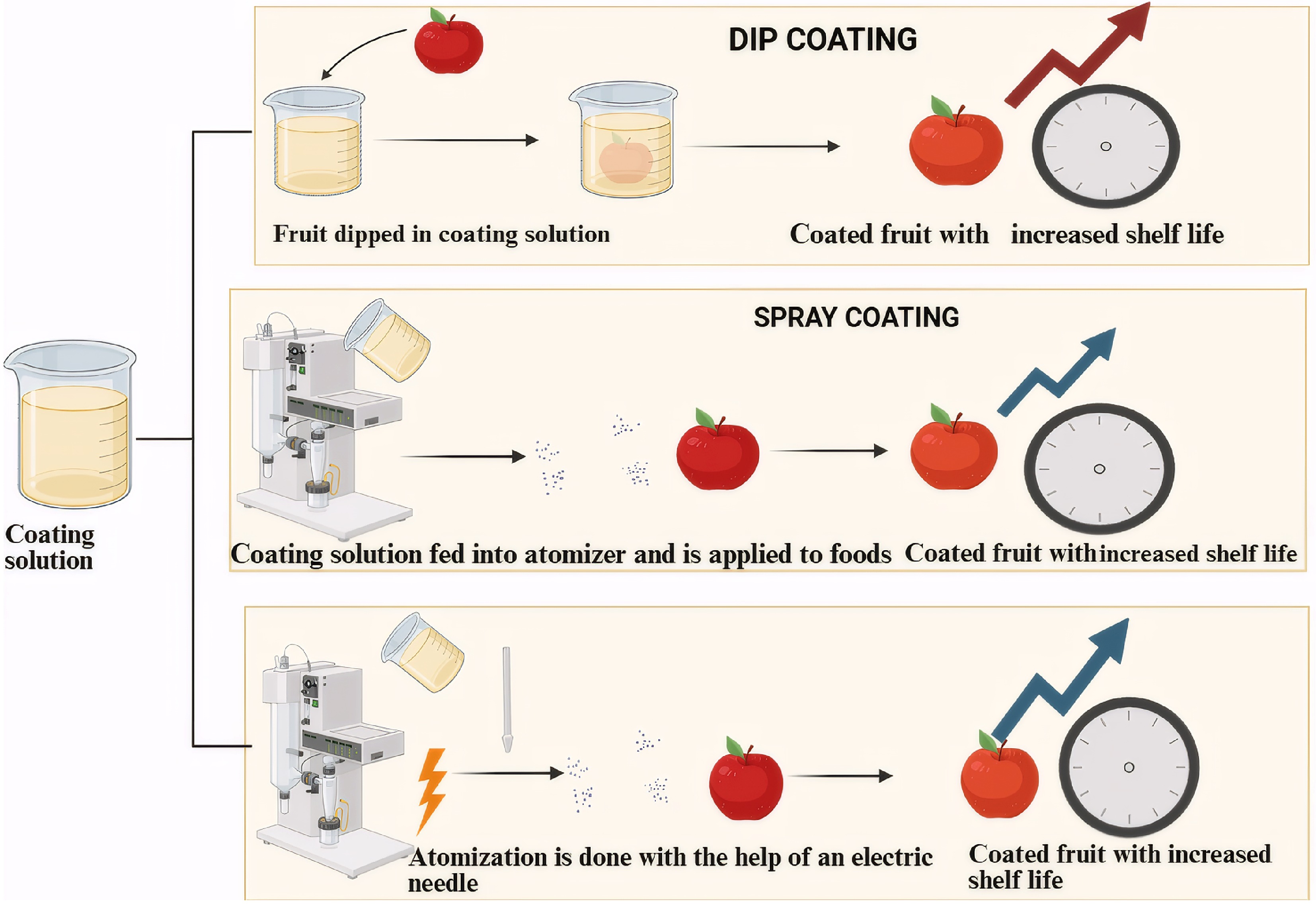
Figure 4.
Schematic illustration of some major methods of edible coating.
-
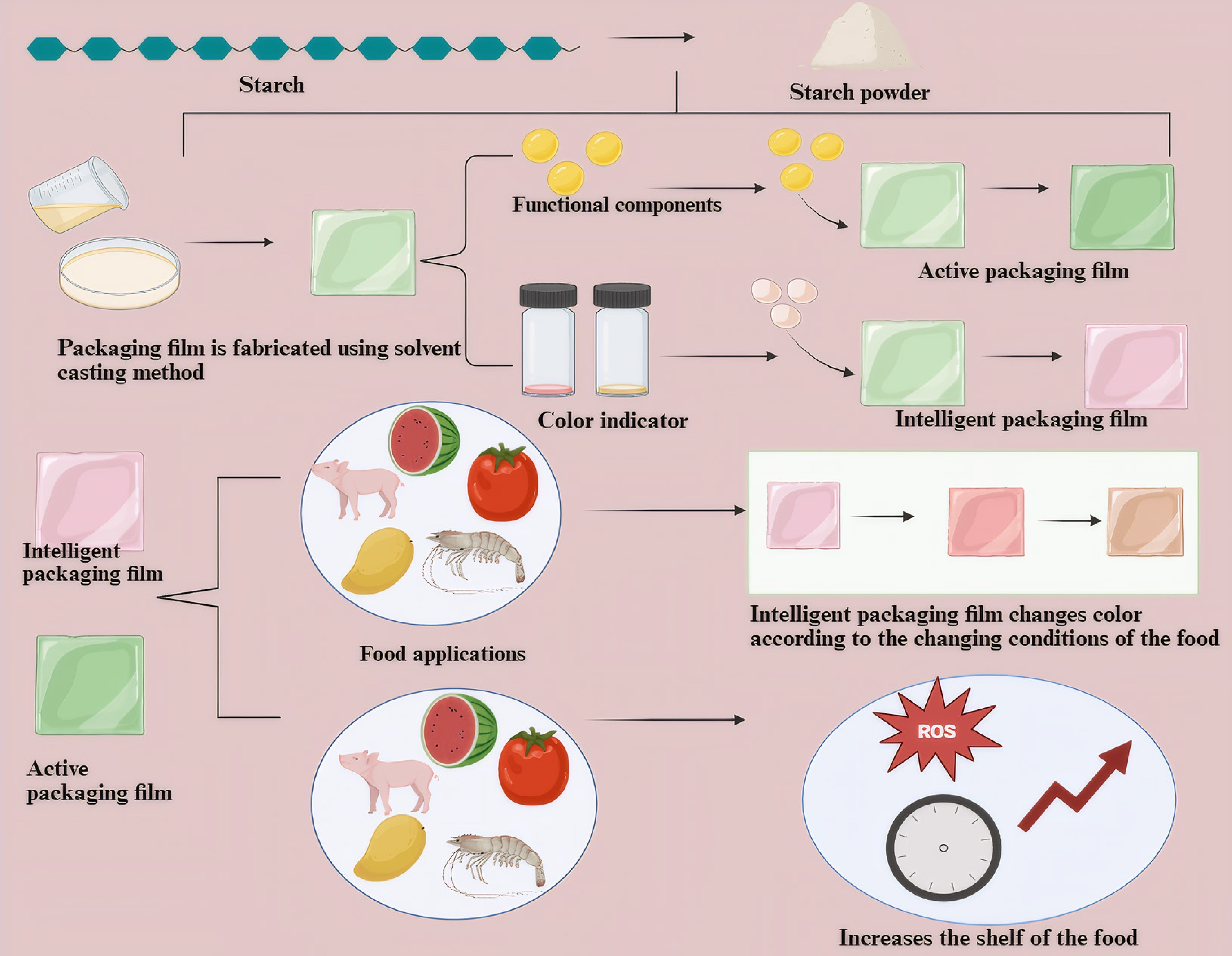
Figure 5.
Applications of starch in active and intelligent packaging technologies.
-
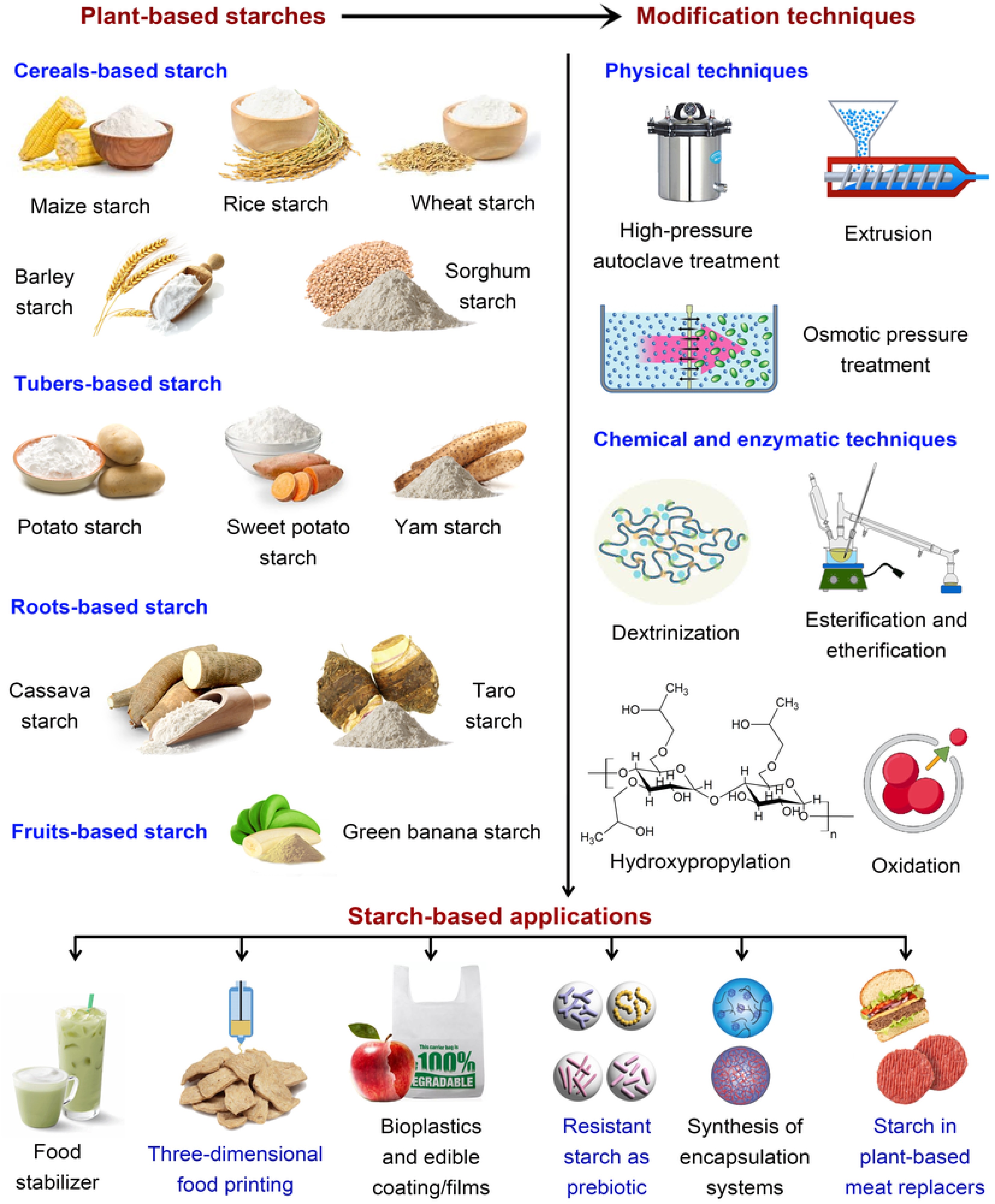
Figure 6.
Different applications of plant-based starch[121].
-
Extraction method employed Features Advantages Disadvantages Ref. Wet milling The efficiency of wet milling process depends on various factors like types of solutes used (acid/alkali), source of starch, nature of starch, amylose and amylopectin content, etc. In general, acid extraction yields lower than the corresponding alkaline steeping extraction with higher protein residues. Water stepping yields better than acid steeping, but is inferior to alkaline method. Compared to dry milling technique, they produce the purest form of starch, but needs more time and water. Compared to dry milling, the purity of the extracted starch is higher. Water requirement is high and needs more time for the extraction purposes. [48−50] Dry milling Dry milling involves the mechanical separation of starch from its outer covering by the usage of abrasions and size reduction tools. This is devoid of any aqueous medium, and the starch is then mechanically sieved out by the use of vibrating screens. Compared to wet milling technique, it is quick and easy to carryout. The extracted starch will be of lower purity than that from wet milling. [50,51] Supercritical fluid extraction As with other nonthermal techniques, SCF yields high-quality starch with a marginal difference in the yield as compared to the conventional wet and dry milling techniques. As it involves less vigorous treatment compared to milling, the starch morphology and the amylose-to-amylopectin ratio always remain unchanged. Solvents such as ethanol and isopropanol can be used along with the CO2 for better extraction efficiency. Provides higher-purity starch than other techniques. Expensive as well as limited scalability. [52] Ultrasonication The sonication time and its type (bath type or probe type) can alter the morphological and physical properties of the food product. They could improve the digestibility of the extracted starch as well as alter the morphological characteristics of the starch. Normally, probe-type sonication produces more profound effects on the starch than bath-type sonication. Ultrasonication has the advantages of very short extraction time and the ability to produce porous structure that can affect the water-related properties. It can also modify the functional properties. Excess power by ultrasonication during the process can cause cracks and fissures in the material. It can also cause gelatinization due to localized temperature elevations in the solution [53] Microwave-assisted extraction (MAE) Granule size and structure could be significantly affected by the duration and frequency of the microwave. The water- and oil-holding capacities of the starch also significantly increase as it undergoes the treatment. Other functional properties like gelling ability, swelling capacity, etc. could be significantly enhanced upon treatment with microwave. The longer the exposure, the weaker the starch will be. Rapid technique for extraction and could potentially improve the functional properties. Chances of fragmentation and scalability issues. [40] Pulse electric field (PEF) As PEF is generally a surface treatment, the morphology of the grains and starch that underwent the treatment shows significant changes. This is attributed to the electroporation effect exerted by the PEF whose effect could drastically increase as the duration and power of the electric current increase. They could increase the digestibility of the starch and also augment the functional properties like gelatinization temperature, pasting behavior, etc. Enhanced functional properties and digestibility are the pronounced advantages of the method as compared to conventional techniques. Like some nonthermal techniques, they also help in manufacturing clean label products. Like other nonthermal techniques, PEF also has scalability issues, and the high cost of the equipment again limits its applicability. Considering the other nonthermal methods, the yield of starch is also less. [54,55] Table 1.
Comparative analysis of different extraction techniques for starch.
-
Type of starch Co-biopolymer Plasticizer Gelatinization temperature (°C) Remarks Ref. Corn starch -gelatin Citric acid Sorbitol 60 The fabricated film shows excellent film properties like solubility, swelling index, and water vapor permeability and mechanical properties as compared to other films. Based on the findings, it was observed that using a composite film-forming solution as a coating formulation could potentially increase the cucumbers' shelf life by up to 16 d. [80] Sago starch − Glycerol 70 The film with the highest transparency and thermal resistance was produced by the longest duration of ultrasonication. In comparison to nonsonicated film, the film's tensile strength increased by 227% and its moisture absorption decreased by 27.39% during the 5-min 25-s duration. In comparison to the nonsonicated film, the melting temperature rose by 7% following a 10-min ultrasonication. [81] Potato starch Titanium dioxide Glycerol 90 The findings showed that TiO2 nanoparticles significantly reduced the values of properties related to water (moisture uptake: 2.15%−11.18%), water solubility: 1.88%−9.26%, and water vapor permeability: 11%−34%. TiO2 incorporation resulted in a minor increase in tensile strength and contact angle as well as a decrease in elongation at film breakage. Over 90% of UV light was successfully blocked by TiO2, improving the films' opacity and white index in the process. The addition of TiO2 nanoparticles had a positive effect on the films' melting point and glass transition temperature. [82] Cassava starch Tetraethyl
orthosilicateGlycerol 70 Films made with 1.25% glycerol produced the best results; in these films, the maximum increase in tensile strength was 109%. Opacity reached a 414% increase, while water vapor permeability fell by 24%. The Young's modulus was very high for the films made with the addition of 0.50% plasticizer, indicating the formulation's potential for development in rigid biodegradable packaging. [83] Pea starch Maize starch Glycerol 85−90 The tensile strength of the composite films was enhanced by the addition of starch nanocrystals, and the highest value of tensile strength was achieved when the starch nanocrystal content was 5% (w/w). As the content of starch nanocrystals increased, there was a significant decrease in the composite films' moisture content (%), water vapor permeability, and water-vapor transmission rate. When the amount of their starch nanocrystals was 1%−4%, the starch nanocrystals were evenly distributed throughout the composite films, producing a comparatively compact and smooth film surface as well as improved thermal stability. [84] Rice starch (RS) Carboxymethyl chitosan (CMCh) Glycerol 85−90 When 50% w/w of CMCh was added to the RS matrix, the tensile strength and elongation at break of the RS–CMCh blend film increased by 35% and 28%, respectively. The RS–CMCh films' thermal stability was enhanced by the addition of CMCh, including 12%, 33%, and 50%. When compared to the RS film, the w/w CMC h in the blend films increased the swelling ratio by approximately 850%, 3985%, and 3404% at 24 h, respectively. With an increase in relative humidity, all of the films' oxygen permeability increased. [85] Table 2.
Modifications of properties of starch by the addition of various compounds.
-
Base polymer Type of modification Type of packaging Applied food system Functional compound/
indicatorRemarks Ref. Yam starch Active packaging Packaging film Pork Eugenol Yam starch was used as a base material for the synthesis of an active packaging film, where eugenol is used as the functional component. The incorporation of eugenol imparts antibacterial function to the film. This packaging film is used to pack fresh cuts of pork. The shelf-life study showed that the film could enhance the shelf life of pork by 50%. [106] Corn starch Active packaging Packaging film Ground beef Red cabbage extract (Anthocyanin) and sweet whey from bovine milk. Solvent casting method was used to fabricate packaging films using corn starch with glycerol as the plasticizer. This packaging film is used to pack ground beef meat. Red cabbage extract consists of anthocyanin, which acts as a functional material and transforms the normal starch film into an active packaging system. Film blended with 64% red cabbage extract and 4% sweet whey was found out to be most effective in preserving the freshness of beef as the beef covered with the film shows minimal difference in pH. [107] Cassava starch Active packaging Packaging film Food packaging application Rosemary extract (RE) RE was added at varying concentrations into the cassava starch film-forming solution. As the RE are rich sources of polyphenols, the antioxidant activity of the film also increases substantially, which could lead to a potential extension in the film's shelf life. [108] Potato starch Active packaging Packaging film Beef Green tea extracts The green tea extract and the synthetic antioxidant agent butylated hydroxy toluene (BHT) were added into the film made from the potato starch. One of the major indicators of the oxidation of meat is the formation of metmyoglobin, as these pigments are the oxygenated form of myoglobin. The metmyoglobin formation was monitored along with the TBARS (thiobarbituric acid reaction assay) value as the latter is an indicator of lipid oxidation. The meat packed with the modified starch film shows a lower value for both metmyoglobin and TBARS value. The meat with normal packaging shows 50% metmyoglobin formation, where the modified packaging shows 44% metmyoglobin formation. The results were obtained after the meat was stored for 10 days. [109] Potato starch Intelligent packaging Packaging film Banana Tea polyphenol Commercially acquired tea polyphenols were added into the film-forming solution containing potato starch as the base polymer. The polyphenols could impart antioxidant properties to the packaging film, which when used to pack bananas could inhibit the browning process. The browning process in bananas could severely affect the sensory properties like color, smell, and flavor. In this study, the browning for the fresh cut bananas covered with the starch film was significantly lower as compared to the control. The L value as measured by the LAB colorimeter shows that packed bananas have a higher L value due to the reduced browning. [110] Cassava starch-chitosan Intelligent packaging Packaging film Shrimp Anthocyanin The extract from the peel of the red dragon fruit consists of anthocyanin, which has the potential to change its color according to the change in pH condition of the film. The extract was incorporated into the film by solvent casting. The film is then used to monitor the freshness of the shrimp. As the pH of the shrimp increases upon storage, the color of the film changes from red to pinkish-yellow. [111] Cassava starch-PVA Intelligent packaging Packaging film Pork Anthocyanin Natural color indicators were extracted from mangosteen rind (MRE) and grape seed extract (GSE). Both these are rich sources of anthocyanin, and these anthocyanins could change the color upon change in the pH. The starch/PVA film was incorporated with GSE, and MRE was fabricated by the usage of solvent casting method. These films were used to pack shrimps, and the corresponding color changes were monitored. As the pork undergoes spoilage, the protein compounds will be broken down, increasing the nitrogen content of the pork. This makes the pork basic, and this drastic change in pH is being reflected in the film. [112] Sago starch Intelligent packaging Packaging film Food packaging Red cabbage anthocyanin extract Different pH buffers were used to study the pH responsiveness of the smart film fabricated by the usage of sago starch with incorporated red cabbage anthocyanin (RCA). The film shows excellent color responses to the changing pH according to the changing buffers. The color response of the film was tested against different pH 3, 5, 9, 11, and 13. The red color of the film changes from red to reddish-purple as the pH increases from 3 to 7. The purplish color also changes to a blueish hue as the pH attains a high basic value. [113] Mango kernel starch Active packaging Edible coating Tomato Sorbitol and glycerol Edible starch extracted from mango kernel was used as an edible coating material, which is incorporated with sorbitol and glycerol as the plasticizer. The starch edible coating could delay the ripening process of tomatoes by 20 d when kept at 20 °C. The edible coating could create a semipermeable membrane around the tomato that could alter the respiration rate of the tomato, thus delaying the ripeness. [114] Rice starch Active packaging Edible coating Cavendish banana Sucrose esters Edible coating for the Cavendish bananas could successfully enhance the shelf life of the bananas by 6 d. The control sample, with bananas without the coating, shows a shelf life of 6 d before it deteriorates by showing changes in texture, color, and taste. The bananas coated with the starch show a shelf life of 12 d as it could substantially reduce the respiration rate of bananas. [115] Rice starch Active packaging Edible coating Plum fruit i-carrageenan with sucrose esters The rice starch blended with sucrose esters and
carrageenan was used to formulate edible coating to prolong the shelf life of the plums. The plums without the coating show a shelf stability for 2 weeks and the spoilage starts. Meanwhile, the plums with starch edible coating display a shelf stability of around 3 weeks.[116] Cassava starch Active packaging Edible coating Cagaita and manga Babbassu flour The edible coating that is fabricated from the starch solution was applied to two Brazilian tropical fruits, cagaita and mangaba. The coated fruits show a decrease in the shrinking rate of 20% compared to the uncoated ones. The coated fruits also show better color retention than the uncoated ones when measured in a LAB color system. [117] Avocado seed starch Intelligent packaging Packaging film Chicken breast meat Chokeberry pomace extract The film-forming solution was prepared from mixing of starch extracted from Avocado seeds as the base matrix and glycerol as the plasticizer. Chokeberry extract was added at varying concentrations (2.5%, 5%, and 7.5 %), and the extract was used as a colorimetric indicator to monitor the freshness of the chicken. The colorimetric indicator shows good response to the change in pH conditions, and this property could be effectively utilized in the spoilage monitoring of chicken. As the chicken deteriorates, the microbial load increases and there will be a drastic change in the pH of the chicken. During the spoilage, the pH of the chicken changes from 5.65 to 7.27, and this is clearly indicated by the shift in the color of the film from red to yellow color, which is visible to the naked eye. [118] Sago starch Active packaging Packaging film Bell pepper Tannic acid along with nanocellulose An active biodegradable packaging was developed with the starch extracted from the sago as the base material. The different properties like mechanical, physical, and functional properties are altered by the addition of nanocrystals fabricated from cellulose, and the antimicrobial feature could also be enhanced by the addition of tannic acid at varying concentrations of 0, 0.25, 0.5, 0.75, and 1.0 % w/w. The fabricated packaging film was used to monitor the shelf life of bell peppers, and it was observed that the bell peppers wrapped with tannic acid-nanocellulose-incorporated starch film show significant enhancement in the color retention and the weight loss of bell peppers. The control film could only preserve the freshness of the packaging for a duration of less than 7 days where they find significant weight loss (55%), whereas the developed active packaging film shows weight retention up to 12 days (7%). [119] Potato peel
starchIntelligent packaging Double-layered packaging films Shrimp Red plum anthocyanins and citral emulsion with bacterial nanocellulose A double-layered packaging film was developed by the incorporation of bacterial nanocellulose and citral emulsions as the first layer. The outer layer is fabricated using potato peel starch and red plum anthocyanin, in which anthocyanin act as the colorimetric indicator. The first layer is for augmenting properties like strength, barrier properties, etc., whereas the outer layer is for the indication of spoilage of the shrimp. The film shows excellent color-changing properties whenever there is a shift in the pH from 2 to 12. The color of the film changes from red to greenish shades when the pH changes from acidic to basic conditions. [120] Table 3.
Some applications of starch-based film and coatings in active and intelligent packaging.
Figures
(6)
Tables
(3)