-
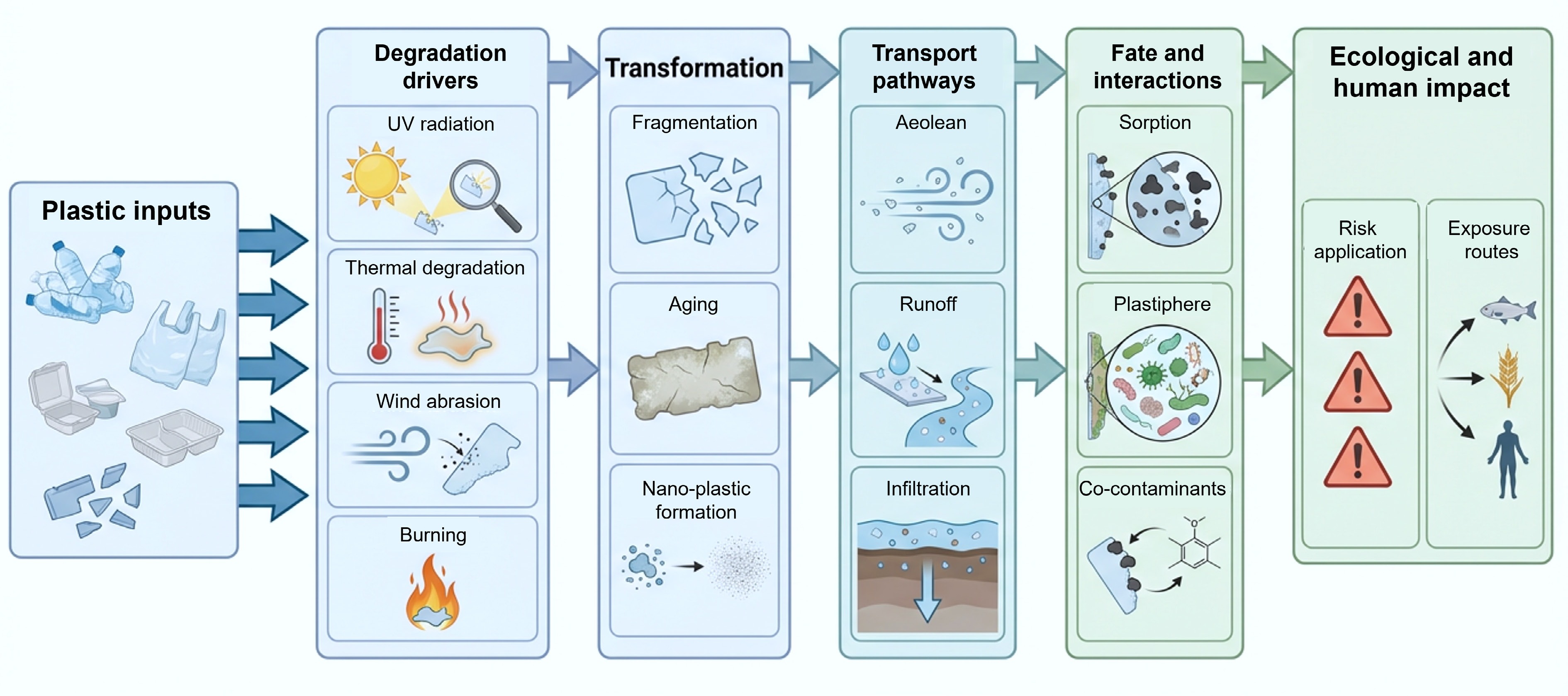
Figure 1.
Integrated source-to-impact framework for microplastics' dynamics in dryland dumpsites: plastic inputs, degradation drivers, transformation processes, transport pathways, fate and interactions, and ecological/human impacts.
-
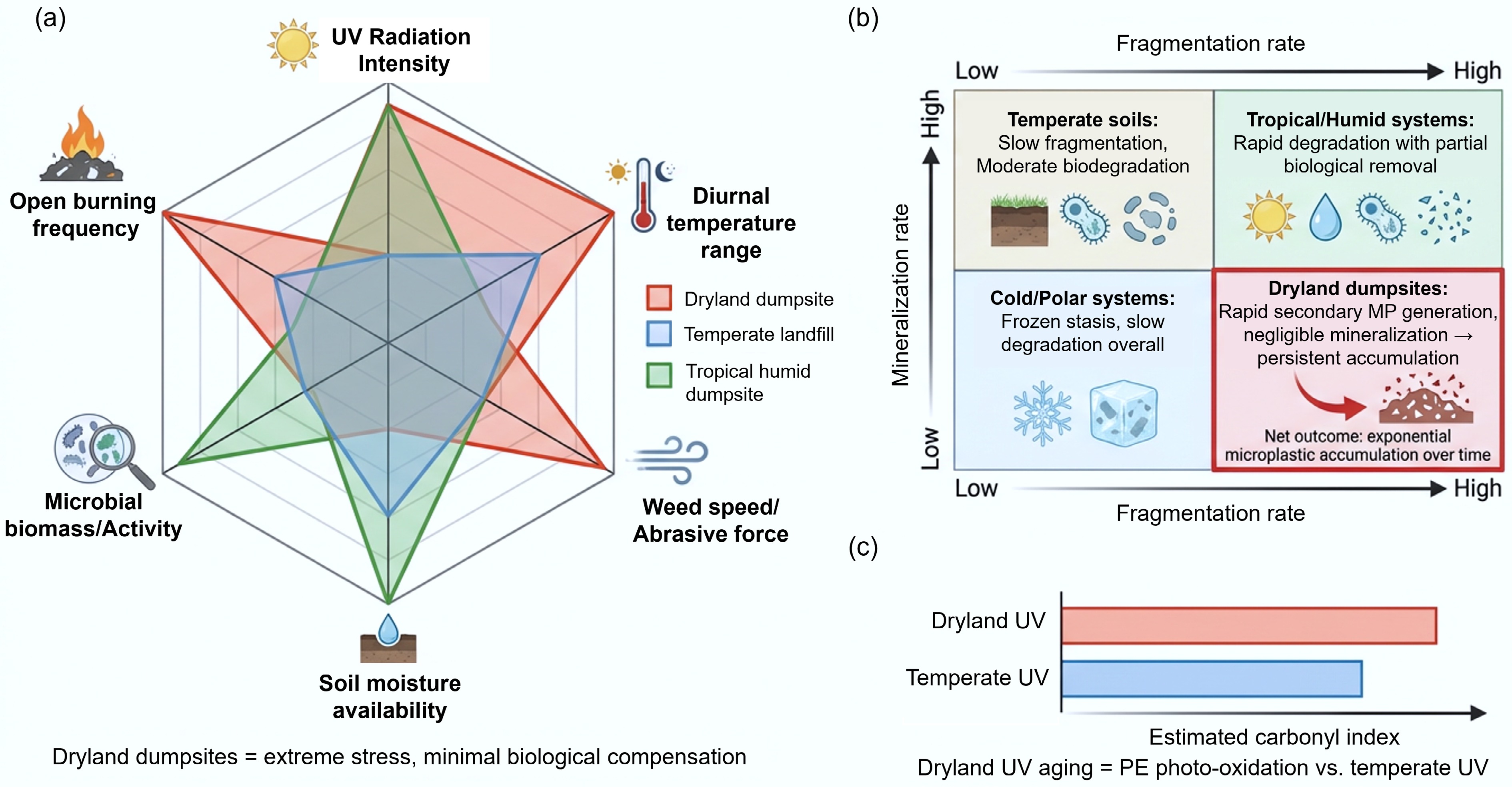
Figure 2.
Comparative environmental drivers and outcomes in dryland dumpsites: (a) Drivers' intensity across dryland, temperate, and tropical-humid systems; (b) fragmentation–mineralization balance across climate regimes; and (c) estimated polyethylene (PE) carbonyl index under dryland versus temperate UV aging.
-
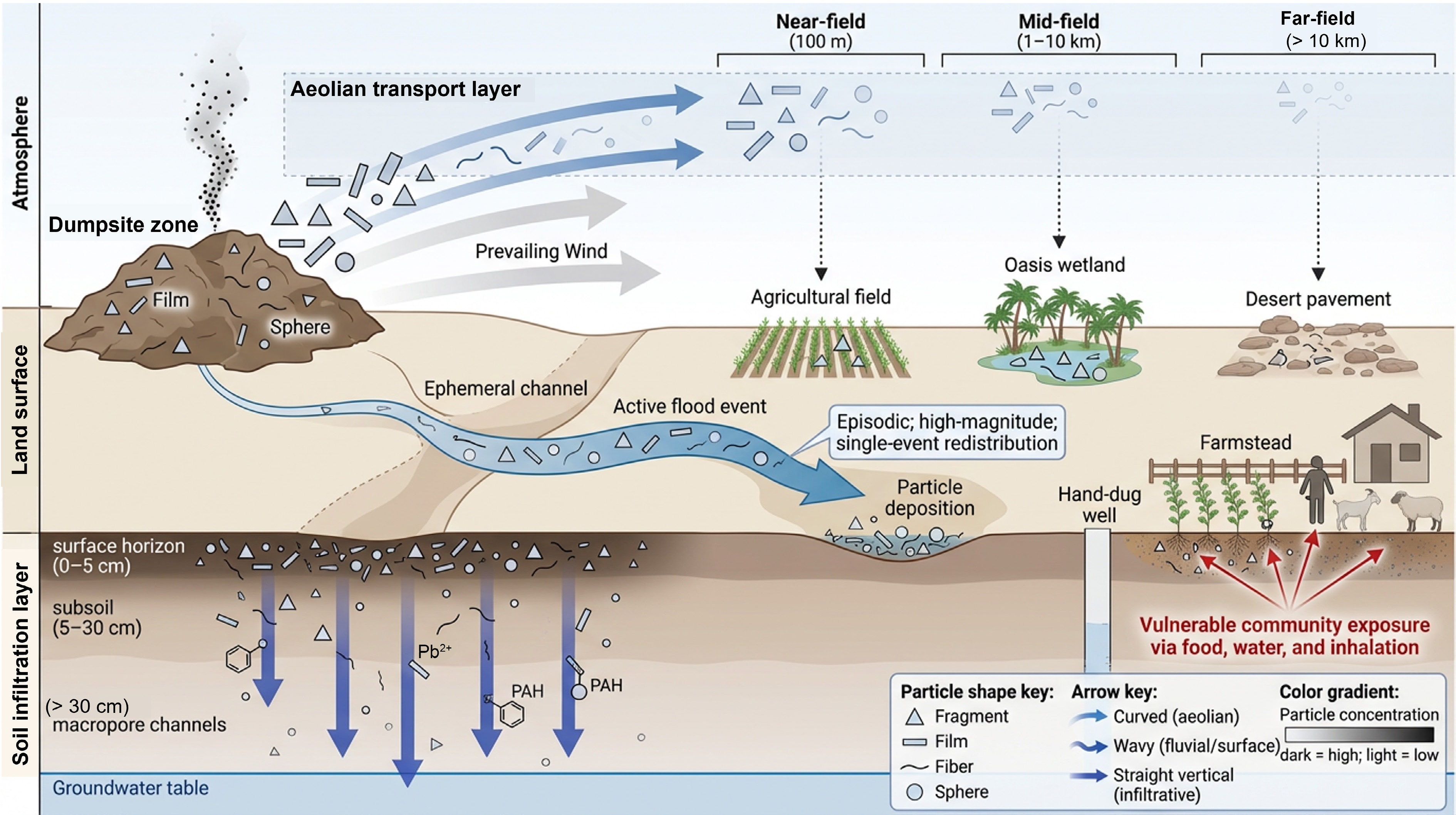
Figure 3.
Transport pathways and the fate of microplastics in dryland dumpsites: Aeolian dispersal, episodic runoff, and vertical infiltration.
-
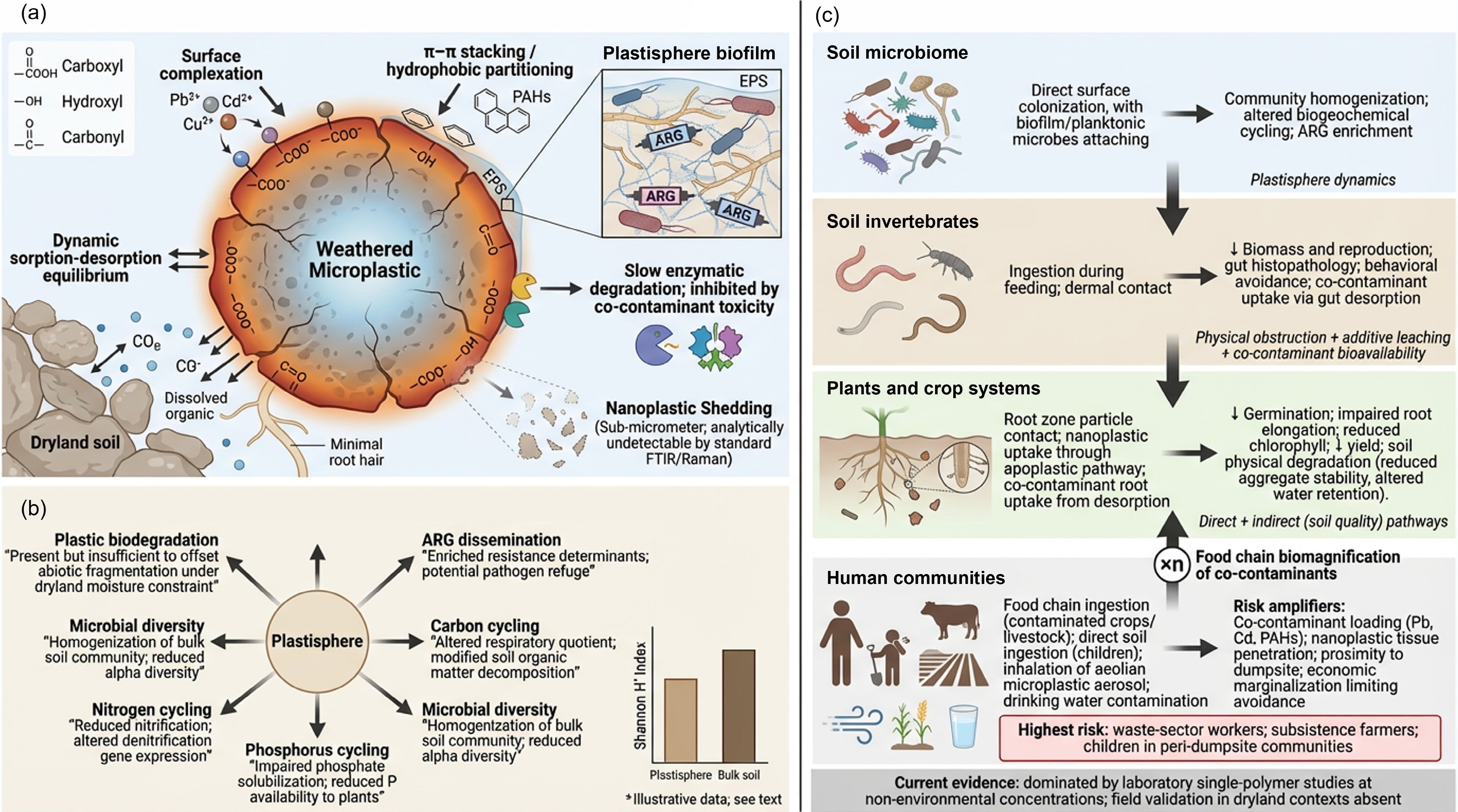
Figure 4.
Ecotoxicological exposure cascade of weathered microplastics in dryland dumpsites: (a) weathered microplastic particles as reactive hubs, (b) the plastisphere's ecological functions and dysfunctions, and (c) exposure pathways and risks to the soil microbiome, soil invertebrates, plants and crop systems, and human communities.
-
Environmental driver Typical dryland conditions Key mechanisms Dominant effects on microplastic formation High UV radiation > 3,000 h/year, minimal cloud cover Photo-oxidation, carbonyl formation, chain scission Rapid embrittlement, surface cracking, fragmentation into films/fragments[33]. Temperature extremes 20–50 °C diurnal range Thermal expansion/contraction, microcrack formation Mechanical failure of semi-crystalline polymers (PE, PP), surface fatigue[34]. Limited moisture < 250 mm per year of precipitation Suppression of microbial activity, dormant soil microbiome Minimal biodegradation, accumulation of weathered fragments[35]. Wind abrasion Persistent winds > 5 m s−1, sand/dust transport Surface erosion, pit/crack formation Generation of angular fragments, exposure of fresh polymer surfaces[36]. Note: UV, ultraviolet; PE, polyethylene; PP, polypropylene. Table 1.
Environmental drivers of plastic degradation in dryland dumpsites and their mechanistic effects
-
Process/pathway Main controls Particle types affected Key compartments Major knowledge gaps Photochemical oxidation UV intensity, exposure duration All polymers Surface soils, atmosphere Rate constants for dryland UV spectra[77]. Secondary MP/nanoplastic formation Multistress cycling (UV + thermal + abrasion) Fragments, films Soil surface layer Nanoplastic generation rates[78]. Surface aging/reactivity Weathering duration All weathered MPs All compartments Sorption enhancement factors of polymers[79]. Aeolian transport Wind speed, particle morphology Films, fibers (<1 mm) Atmosphere, remote soils Long-range deposition models[80]. Episodic runoff Storms' intensity, soil crusting Dense fragments Fluvial systems, oases Flash flood-related MP flux estimates[81]. Soil infiltration Soil structure, rainfall <500-μm particles Vadose zone, groundwater Vertical transport rates by soil type[82]. Note: UV, ultraviolet; MP, microplastics; mm, millimeter; μm, micrometer; <, less than. Table 2.
Transformation processes and environmental transport pathways of microplastics from dryland dumpsites
-
Receptor group Exposure pathways Observed/reported endpoints MP vectors' role Strength of evidence Soil invertebrates Ingestion, gut passage Reduced reproduction, metal bioaccumulation Enhanced metal bioavailability Lab + field evidence Crop plants Root uptake, soil contact Reduced biomass, altered root morphology Nanoplastic translocation Lab evidence Soil microbiome Surface colonization ARG enrichment, N-cycling disruption Plastisphere formation Emerging evidence Ground-foraging birds Ingestion, dust inhalation Sublethal effects, POP transfer Long-range aeolian transport Inferred Scavenger mammals Direct ingestion Fibers in the digestive tract Exposure to waste pickers Field observations Nearby communities Inhalation, dust ingestion,
food chainRespiratory irritation, metal exposure Multipathway exposure Epidemiological gaps Note: ARG, antibiotic resistance gene; MP, microplastic; NP, nanoplastic; POP, persistent organic pollutant. Table 3.
Ecotoxicological impacts of microplastics in dryland dumpsite ecosystems
Figures
(4)
Tables
(3)